Your Tech Story

Technology

Samsung’s Profit Slide Slows in Sign of a Chip Market Bottom

Samsung’s Profit Slide Slows in Sign of a Chip Market Bottom

After stopping losses at its chip division, Samsung Electronics Co. recorded a more gradual decline in quarterly profit, raising the possibility that the worldwide semiconductor sector had turned into a downward spiral.

Samsung’s Profit Slide Slows in Sign of a Chip Market Bottom
Image Source: datacenterknowledge.com

A 78-cent reduction in operating profits was better than expected, according to some investors, and this helped Samsung’s shares rise as high as 4.4%, which is the biggest in more than a month. The biggest corporation in South Korea, along with its smaller competitors SK Hynix Inc. along with Micron Technology Inc., has been experiencing an industry slowdown. In response to sluggish demand for gadgets and an oversupply of chip inventory, dependable clients, such as manufacturers of personal computers and mobile phones, have reduced their purchases.

As per Samsung’s initial figures, operating income decreased to roughly 2.4 trillion won which is approximately $1.8 billion despite a decline of 13 percent in earnings in the three months leading up to September. The figures are better than the record 95 percent year-on-year decline in the previous quarter, which is in line with analyst predictions.

Expectations are rising that Samsung’s semiconductor business “has pretty much passed the bottom,” said Sanjeev Rana, head of Korea Research at CLSA. “And the recovery is underway in the fourth quarter.”

finance.yahoo.com

Samsung now aims to take advantage of the long-expected rise in AI-related technology expenditure, which is being driven by enthusiasm among investors and customers for OpenAI’s ChatGPT launch last autumn.

However, Samsung is lagging behind tiny Hynix, the primary provider of next-generation DRAM to artificial intelligence chip manufacturer Nvidia Corp., in building the tools required to train artificial intelligence models. By 2024, Samsung claims it will have doubled its production capacity for high-bandwidth memory, which has the capability required to accelerate AI training

Samsung is a leader in the memory market, which quickly increased production to satisfy demand brought on by the epidemic. The business continued to spend throughout the recession, burdening itself and its major clients with excessive inventory.

“The result was better than expected,” said Lee Seung-Woo, an analyst at Eugene Investment & Securities. “The bottom for the memory chip industry is behind us and Samsung’s results showed that.”

finance.yahoo.com

Also Read: BlackRock Invests in German Fintech Firm Targeting New Investors

However, Samsung and Hynix have stated they will withstand financial turmoil by reducing the manufacture of NAND chips used in personal computers and smartphones until AI-related demand turns into revenue.

Before trading on Wednesday, shares of Hynix had increased by more than 60 percent compared to Samsung’s rise of 20 percent earlier this year.

BlackRock Invests in German Fintech Firm Targeting New Investors

BlackRock Invests in German Fintech Firm Targeting New Investors

In a strategic move to expand its reach to first-time investors in Europe, BlackRock, the world’s largest asset manager, has acquired a minority stake in Upvest, a Berlin-based digital wealth management fintech. 

BlackRock Invests in German Fintech Firm Targeting New Investors
Image Source: businesstimes.com

BlackRock led a successful 30 million euro funding round for Upvest, demonstrating the asset manager’s commitment to tapping into the growing market of new investors in the region. Upvest specializes in providing settlement and custody infrastructure for digital wealth management. The recent investment, which saw participation from existing backers such as Bessemer Venture Partners, HV Capital, Earlybird, Notion, ABN Amro Ventures, and 10x Capital, is poised to accelerate Upvest’s growth in the evolving fintech landscape.

BlackRock, overseeing an impressive $9.4 trillion, aims to leverage Upvest’s software platform. This platform enables investors, regardless of the size of their investment, to access a diverse range of products across various asset classes, including popular investment vehicles like exchange-traded funds (ETFs). The move aligns with the trend where ETF savings plans have played a pivotal role in attracting a new generation of first-time investors.

The investment comes at a critical juncture as BlackRock anticipates a significant surge in the number of first-time investors in Europe. According to BlackRock’s projections, the number is expected to reach approximately 20 million by 2026, a substantial increase from 4.9 million just two years ago. Germany stands out as a focal point for BlackRock’s expansion strategy in the continent.

This strategic alliance underscores BlackRock’s broader transformation into a comprehensive solution provider for investors, aiming to offer a one-stop-shop experience across various asset classes. The company is not only concentrating on managing assets but is also focusing on delivering technology solutions, data analytics, and financial markets advice to its clientele.

Also Read: China Plans Big AI and Computing Buildup in Boon for Local Firms

The partnership between BlackRock and Upvest not only signifies a vote of confidence in the potential of the German fintech but also signals a commitment to facilitating financial inclusion for a growing number of new investors. As the financial landscape continues to evolve, collaborations between traditional giants like BlackRock and innovative fintechs like Upvest are poised to reshape the investment landscape, providing more accessible and diverse opportunities for investors across Europe and beyond.

Apple’s Challenge for the Next Vision Pro: Making It Easier to Wear

Apple’s Challenge for the Next Vision Pro: Making It Easier to Wear

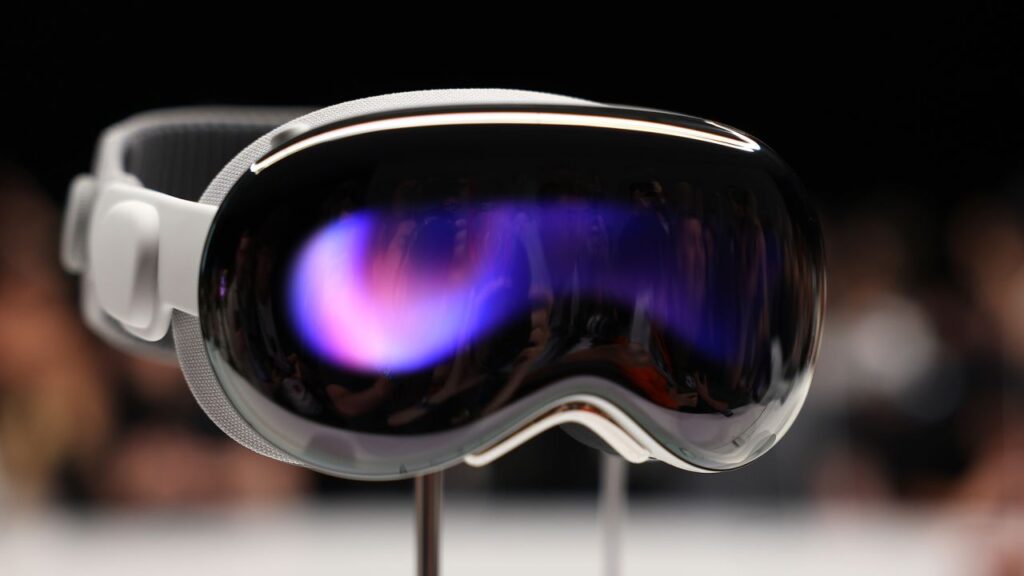
In a recent report by Bloomberg’s Mark Gurman, it has been revealed that Apple is diligently working on enhancing the wearability of its upcoming Vision Pro headset. 

Apple’s Challenge for the Next Vision Pro: Making It Easier to Wear
Image Source: edition.cnn.com

The current iteration of the Vision Pro, a mixed-reality headset combining augmented reality (AR) and virtual reality (VR), has received acclaim for its performance and features. However, a significant concern arises due to its perceived bulkiness and discomfort during prolonged usage.

Gurman’s report indicates that Apple is addressing these concerns through a focus on a “smaller and lighter design” for the next Vision Pro. The current model, weighing approximately a pound, has been deemed too heavy for some users even in short durations. While an over-the-head strap is considered for the initial model, the long-term solution rests in making the hardware itself lighter, possibly incorporating lighter materials. The anticipated launch for this improved headset is speculated to be next year.

One of the prominent issues faced by users of the current Vision Pro is its lack of accommodation for prescription eyeglasses. Apple’s attempt to address this by partnering with Zeiss for special lenses has posed challenges in dealing with various combinations of these lenses. As a potential solution, Apple is reportedly contemplating manufacturing headsets with prescription lenses pre-installed in the factory.

However, this solution is not without its complications. Gurman highlights concerns that Apple might be perceived as a healthcare provider, a role the tech giant may not want to assume. Additionally, the inclusion of built-in prescription lenses may limit the sharing or resale of headsets, and with people’s vision prescriptions changing over time, this approach might not be universally effective in the long run.

Also Read: Japan to Propose Rules for Generative AI to G7 Leaders: Yomiuri

Apple’s commitment to improving the wearability of the Vision Pro signals a strategic move towards making mixed reality a mainstream computing platform. If Apple can successfully create a headset that is comfortable for extended use, it could revolutionize the landscape of AR and VR applications, ushering in a new era of immersive and user-friendly experiences. As technology enthusiasts eagerly await the release, Apple’s pursuit of comfort in the next Vision Pro may indeed mark a significant milestone in the evolution of mixed reality devices.

Japan to Propose Rules for Generative AI to G7 Leaders: Yomiuri

Japan to Propose Rules for Generative AI to G7 Leaders: Yomiuri

Prime Minister Fumio Kishida declared Japan’s commitment to spearheading the establishment of international regulations for trustworthy artificial intelligence (AI) during a speech at the annual Science and Technology in Society forum in Kyoto on Sunday.

Japan to Propose Rules for Generative AI to G7 Leaders: Yomiuri
Image Source: bloomberg.com

Highlighting Japan’s leadership, Kishida announced the proposal of the Hiroshima AI Process, a framework designed to address concerns related to generative AI, while holding the chairmanship of the G7 industrialized nations.

“With a view to ensuring trustworthy AI, Japan is now taking the lead in international rule-making on governance and transparency,” stated the prime minister, emphasizing the nation’s pivotal role in shaping the future of AI governance.

The decision to create the Hiroshima AI Process was made during the G7 summit meeting in Hiroshima in May. The G7 leaders aim to formulate international rules regarding generative AI by the year’s end, addressing issues such as the potential spread of false information and infringement of intellectual property rights, including copyrights.

Key areas of discussion during the international rulemaking deliberations will include the establishment of effective regulations across various fields like education, security, and elections. Additionally, preventing the concentration of generative AI development platforms in the hands of a few IT giants, thus avoiding service monopolization, will be a priority.

Prime Minister Kishida expressed his commitment to promoting advanced technologies like generative AI while acknowledging the necessity of addressing the negative social impacts and ethical concerns associated with such innovations. Disinformation, privacy concerns, and copyright protection were specifically mentioned as areas requiring serious attention.

Also Read: Oyo Talks to Apollo for $660 Million Refinance on IPO Delay

In response to rising concerns over disinformation, a new digital technology named Originator Profile has gained attention. This technology enables internet users to verify the credibility of information through digital signatures attached to online content, including news, corporate websites, and advertisements. These digital signatures are authenticated by a third-party organization, providing a potential countermeasure against the proliferation of false information.

As Japan takes the lead in proposing comprehensive rules for generative AI to the G7 leaders, the international community awaits the development of regulations that balance technological advancements with ethical considerations and societal well-being.

Oyo Talks to Apollo for $660 Million Refinance on IPO Delay

Oyo Talks to Apollo for $660 Million Refinance on IPO Delay

Oyo Hotels, the hospitality startup backed by SoftBank Group Corp., is in discussions with Apollo Global Management Inc. to refinance a $660 million loan. This move comes as Oyo seeks additional time to reduce its debt, following a delay in its initial public offering (IPO), sources familiar with the matter revealed.

Oyo Talks to Apollo for $660 Million Refinance on IPO Delay
Image Source: bloomberg.com

Oravel Stays Pvt, Oyo’s parent company, is reportedly seeking to extend the loan’s maturity to five years, compared to the existing 2026 deadline. The negotiations are ongoing, with a decision potentially being reached as early as next month, according to insiders.

The talks with Apollo come on the heels of Oyo reporting its first-ever annual profit. Fitch Ratings anticipates further improvement in earnings as the travel industry continues to recover. Oyo, initially heralded as the first Indian unicorn to secure debt from foreign institutions, had offered generous terms and maintenance covenants, a practice common among firms considered risky by investors.

A spokesperson for Oyo addressed the refinancing discussions, stating, “Due to an increase in profits, we regularly get approached for cheaper financing options, but the company’s board hasn’t approved anything, including prepaying some portion.” Apollo declined to comment on the matter.

As of now, there’s no final decision on the refinancing terms, and Oyo’s loan was indicated at 86.5 cents on the dollar according to data compiled by Bloomberg.

Oyo’s prolonged wait for its IPO has proven to be more protracted than anticipated. The anticipated proceeds from the IPO could have assisted the company in reducing its debt, but instead, Oyo is exploring refinancing options. The startup’s founder, Ritesh Agarwal, has been striving for years to bring Oyo public. The company, 47% owned by SoftBank, also counts Airbnb Inc. among its backers.

Also Read: Dell Says Servers, Not PCs, Are Its Main Growth Engine in the AI Era

Oyo had initially filed for an IPO in 2021, aiming to raise 84.3 billion rupees ($1 billion). However, it faced challenges as technology valuations plummeted, impacting startups globally. Although Oyo filed fresh IPO documents on April 1, key details such as the amount sought, advisors, and financial specifics remain undisclosed.

The ongoing negotiations with Apollo underscore Oyo’s strategic financial moves as it navigates the complexities of the hospitality industry and seeks to strengthen its position in the market.

Dell Says Servers, Not PCs, Are Its Main Growth Engine in the AI Era

Dell Says Servers, Not PCs, Are Its Main Growth Engine in the AI Era

The corporation that provides technology for data centers, according to Dell Technologies Inc., the organization that assisted in ushering in the age of personal computing, has become its most prospective one.

Dell Says Servers, Not PCs, Are Its Main Growth Engine in the AI Era
Image Source: finance.yahoo.com

The business unit that offers servers, data storage, and various other office equipment will expand by roughly seven percent throughout the next few years, almost doubling the estimate given in 2021, the business said in a statement to investors on Thursday. Dell anticipates PCs to recover from their decline and produce a steady revenue rise of approximately 2.5 percent.

Because artificial intelligence demands increasingly powerful devices, the growing interest in the field throughout the industry is generating some of the benefits, according to Jeff Clarke, chief operating officer at Dell.

He stated that Artificial Intelligence is addictive and it’s going to increase overall technology spend, pointing to the rising demand for servers with high-capacity storage space and graphics processing units like those produced by Nvidia Corp.

For a server supported for AI applications, the business stated in August that it currently has over two billion dollars in piled-up orders. The same lack of high-power CPUs that is limiting the remaining portion of the business is still a problem for Dell, according to Clarke. Demand exceeds the supply, and Clarke is the solo No. 2 to the chief executive officer and founder Michael Dell at Dell following Chuck Whitten’s resignation in August.

Also Read: Amazon and Microsoft Cloud Units Face UK Antitrust Investigation

Due to the significant drops in sales of personal computers following the pandemic, it has been a challenging year for computer manufacturers. Investors have focused on Dell’s server business as a result of the slowdown in computer growth in order to observe how the firm might profit from artificial intelligence, according to Bloomberg Intelligence expert Woo Jin Ho.

Dell refuses to give up on selling PCs, it still generates a total of 58 billion dollars in revenue annually, which accounts for over fifty percent of all sales. Simply put, the market’s potential for expansion has decreased, according to Clarke. However, a cycle associated with fresh purchases may be on the horizon given that Microsoft Corp. is urging customers to upgrade to the most recent version of its operating system, Windows, and that many PCs purchased before the epidemic are aging. Dell said that it will buy back additional stock and raised its long-term earnings growth estimate.