Your Tech Story

Technology

Accel Launches $650 Million Fund to Support European and Israeli Tech Startups

Accel Launches $650 Million Fund to Support European and Israeli Tech Startups

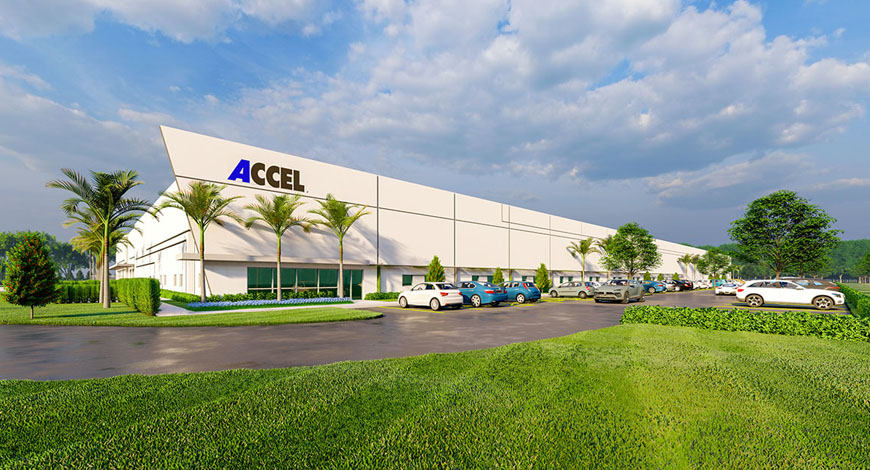
Accel, a venture capital firm, announced on Tuesday the opening of a $650 million fund intended to assist early-stage companies in Israel and Europe. This action highlights Accel’s ongoing dedication to promoting innovation in these areas, where the startup investment scene is dominated by early-stage rounds.

Accel's Dedication to Israeli and European Startups

Accel Launches $650 Million Fund to Support European and Israeli Tech Startups

Image Source: communicationstoday.co.in

Accel has invested in more than 200 firms since opening its London office in 2000, becoming a prominent force in the European startup scene. This new $650 million fund—the ninth of its kind—will help startups all the way up to Series A. This fund is the same size as Accel’s most recent U.S. early-stage fund, demonstrating the company’s faith in the Israeli and European markets.

Prioritise High-Growth Industries

Accel’s general partner Harry Nelis emphasised how the European tech landscape has changed in the last 25 years. Investments currently being made include AI video startup Synthesia, care home marketplace Lottie, and cybersecurity companies Cyera and Oasis. Accel’s investment approach will persist in emphasising industries that tackle urgent problems, like artificial intelligence (AI), smart commerce, and cybersecurity.

Market Patterns and Indices of Recovery

With €16.3 billion invested in the first quarter of this year, up from €13.7 billion in the same period last 2023, venture investing in Europe appears to be rebounding. Even though these numbers are less than the peak years of 2021 and 2022, a recalibrating of the industry could result in growth that is more sustainable. The capacity to raise significant capital in this setting points to a promising future for innovation investments.

Notable Contributions and Effects

Supercell and Spotify are only two examples of the prosperous European firms that Accel has previously supported. This latest fund from the corporation is intended to support comparable high-potential businesses. According to a research published by Accel last year, 1,451 new firms were formed by workers of 248 venture-funded unicorns in Europe and Israel, demonstrating a flourishing ecosystem.

Emerging Markets: Prospects for the Future

Nelis highlighted up-and-coming digital hotspots like Romania and Lithuania, where businesses like Vinted and UiPath are making big progress. Accel intends to use its new fund to invest in 25–30 businesses, demonstrating a wide-ranging hunt for creative startups in many regions.

Concentration on AI

Despite the increased excitement surrounding AI, Accel plans to continue taking a balanced approach and concentrate on useful and significant AI applications. Nelis thinks that by utilising the knowledge of significant hubs like Facebook AI Research in Paris and DeepMind in London, Europe is well-positioned to succeed in AI application companies.

In summary, With its latest $650 million fund, Accel is making a sizable bet on the prospects of Israeli and European firms. Accel wants to empower the next generation of tech innovators by focusing on early-stage startups in high-growth sectors. This approach reaffirms Accel’s commitment to helping ambitious founders and advancing technological improvements in these areas.

Uber to Acquire Delivery Hero's Foodpanda Business in Taiwan for $950 Million

Uber to Acquire Delivery Hero’s Foodpanda Business in Taiwan for $950 Million

In a strategic move that could potentially reshape Taiwan’s food delivery industry, Uber Technologies has announced its acquisition of the Taiwan business of Foodpanda, owned by Delivery Hero, for a staggering $950 million in cash. The acquisition, subject to regulatory approval, is slated to close in the first half of 2025, marking a significant development in the country’s online food delivery sector.

A Shift in Focus: Delivery Hero's Strategic Decision

Uber to Acquire Delivery Hero's Foodpanda Business in Taiwan for $950 Million

Image Source: investing.com

The decision comes as Delivery Hero, the parent company of Foodpanda, aims to refocus its resources on other global markets where it believes it can make a more substantial impact. Niklas Östberg, co-founder and CEO of Delivery Hero, emphasized this shift, stating, “We need to focus our resources on other parts of our global footprint, where we feel we can have the largest impact for customers, vendors, and riders.”

Uber's Expansion Strategy and Market Dominance

Pierre-Dimitri Gore-Coty, senior vice president of delivery at Uber, highlighted the fiercely competitive nature of Taiwan’s market and expressed optimism about the acquisition’s potential to bolster Uber’s presence. The move is expected to strengthen Uber’s position in a market where online food delivery platforms still represent a small fraction of the overall food delivery landscape.

Foodpanda, a major player in Asia’s online food and grocery delivery sector, operates in several key markets, including Singapore, Malaysia, Thailand, The Philippines, and Hong Kong. The 2016 acquisition of Foodpanda by Germany’s Delivery Hero marked a significant consolidation in the region’s food delivery industry.

Potential Monopoly Concerns and Regulatory Scrutiny

With Foodpanda and Uber Eats dominating Taiwan’s food delivery market, concerns about potential monopolistic practices may arise following the acquisition. Data from Measurable AI underscores Foodpanda’s significant market share, with a 52% share by order volume compared to Uber Eats’ 48%. 

The deal, heralded as one of Taiwan’s largest international acquisitions outside the semiconductor chip industry, will undergo thorough regulatory scrutiny before its finalization. This scrutiny is essential to ensure fair competition and consumer protection in Taiwan’s evolving food delivery landscape.

Delivery Hero’s decision to retain its Foodpanda business in Southeast Asia, despite previous talks of selling, underscores the strategic complexities in the region’s delivery sector. The acquisition’s completion and subsequent market dynamics will undoubtedly be closely monitored by industry observers and regulators alike.

US Invests $120 Million in Chipmaker to Expand Facility in Minnesota

US Invests $120 Million in Chipmaker to Expand Facility in Minnesota

With the help of a $120 million grant from the US government, Polar Semiconductor will soon be able to greatly increase its production capacity. This money is a component of the $52.7 billion Biden administration commitment to support national semiconductor manufacturing and research. With the help of the funding, Polar Semiconductor will be able to increase its sensor and power chip production capacity in the United States in the following two years.

Specifics of the Award

US Invests $120 Million in Chipmaker to Expand Facility in Minnesota

Image Source: nytimes.com

The grant was given by the U.S. Department of Commerce, which emphasised the value of sensor and power chips and how shortages caused havoc across several industries during the COVID-19 epidemic. Undersecretary of Commerce Laurie Locascio stated that the aerospace, automotive, and defence industries rely heavily on Polar’s expertise for high-voltage applications. She mentioned that the investment will enable Polar to produce the upcoming generation of semiconductors, enhancing the country’s capacity for production.

Project Expansion and Ownership Shifts

The state of Minnesota will contribute an additional $75 million toward the $525 million expansion project. This cooperative endeavour emphasises how crucial the semiconductor industry is to the state and federal economies. Not to mention, Polar Semiconductor’s ownership structure is changing a lot. At the moment, Allegro MicroSystems owns 30% of the business and Sanken Electric of Japan owns 70%. The recent developments include the plans to invest $175 million to acquire approximately 59% of Polar by U.S. private equity firms Niobrara Capital and Prysm Capital. As a result, Allegro’s ownership will drop to roughly 10% and Sanken’s to roughly 30%, guaranteeing that Polar would be held by Americans to a large extent.

The Semiconductor Industry Context

The Biden administration’s larger plan to strengthen the US semiconductor industry includes this grant. Polar Semiconductor is not the only well-known company that has benefited from substantial funding. Up to $6.4 billion will be given to South Korea’s Samsung to expand its operations in Texas; Intel received $8.5 billion in March; and Taiwan’s TSMC received $6.6 billion last month to improve its production facilities in the United States. Additionally, the Commerce Department has stated that it intends to award Micron Technology a $6.1 billion grant for projects involving local semiconductor factories.

Upcoming Prospects

The funds are intended to ensure a strong domestic supply of essential semiconductor components in order to address and prevent future interruptions like those encountered during the pandemic. The final amounts may change while the Commerce Department completes due diligence on all awards that have been announced.

To summarise, the allocation of $120 million to Polar Semiconductor is a calculated move aimed at fortifying the semiconductor supply chain in the United States, promoting creativity, and augmenting the nation’s technological autonomy.

Refreshworks Raises €750K to Accelerate AI in Dutch Businesses

Refreshworks Raises €750K to Accelerate AI in Dutch Businesses

In a bid to accelerate AI-driven transformations within Dutch businesses, Refreshworks, a prominent player in AI consultancy and solutions, has successfully raised €750K in funding. This investment round witnessed the participation of eleven angel investors specializing in technology, compliance, safety, and consultancy domains.

Empowering Dutch Businesses with AI

Since its inception in 2016 by Diederik Klever and Ebel Slijp, Refreshworks has been at the forefront of empowering Dutch enterprises with AI-driven solutions. The company’s core focus lies in offering consultancy services, developing AI solutions, and ensuring the seamless integration of AI technologies within clients’ organizational frameworks.

Refreshworks Raises €750K to Accelerate AI in Dutch Businesses

Image Source: crunchbase.com

Refreshworks employs a meticulous approach to AI implementation, starting with comprehensive business scans to assess potential impacts. Subsequently, tailored strategies, roadmaps, and implementation plans are devised. The company further deploys skilled interim teams comprising AI architects and engineers to provide ongoing support and facilitate a smooth transition for clients.

Recognitions and Impact

Last year, Refreshworks received the prestigious FD Gazelle Award, solidifying its position as one of the fastest-growing companies in the Netherlands. The company boasts a robust portfolio, having partnered with over 250 entities including renowned names like AkzoNobel, Brunel, and Girav. Through its technological interventions, Refreshworks has generated a remarkable €120 million in business impact.

Simon Neefjes, the founder of TBWA\NEBOKO and soon-to-be shareholder of Refreshworks, emphasized the pivotal role of AI in sustaining business competitiveness. Neefjes highlighted Refreshworks’ prowess in not only introducing companies to AI but also ensuring comprehensive tool implementation for long-term success.

Ebel Slijp, Managing Partner at Refreshworks, expressed enthusiasm regarding the broader integration of AI across Dutch businesses. Slijp emphasized AI’s significance in fostering growth, innovation, and ultimately, maintaining the Dutch economy’s global relevance. The company’s mission to position the Netherlands as an AI market leader has garnered substantial support from clients and investors alike.

With the newly secured funding, Refreshworks is poised to further propel AI-driven transformations, enabling Dutch businesses to leverage cutting-edge technologies and spearhead the 4th industrial revolution.

SoftBank's Arm Plans to Launch AI Chips Next Year Amid Huge Global Demand

SoftBank’s Arm Plans to Launch AI Chips Next Year Amid Huge Global Demand

Arm, the chip designer owned by SoftBank Group, is gearing up to enter the artificial intelligence chip market with plans to launch its own AI chips by next year. The move comes amidst a heated competition in the AI chip sector, as companies race to dominate this rapidly growing market.

Setting Up an AI Chip Unit

According to a recent report by Nikkei Asia, Arm, which has a 90% stake owned by SoftBank, is in the process of establishing an AI chip unit. This unit is tasked with developing a prototype AI chip, expected to be ready by the spring of 2025. The intention is to initiate mass production by the fall of the same year.

Partnerships and Investments

SoftBank's Arm Plans to Launch AI Chips Next Year Amid Huge Global Demand

Image Source: en.amwalalghad.com

Arm is engaging in discussions with prominent contract manufacturers, including Taiwan’s TSMC, to facilitate the production of these AI chips. The initial investment for developing these chips is projected to be substantial, potentially reaching hundreds of billions of yen. However, Arm intends to absorb these development costs, highlighting the strategic importance of this venture for both Arm and SoftBank.

Strategic Moves and Future Plans

Arm’s foray into the AI chip market underscores SoftBank’s strategic focus on artificial intelligence. Masayoshi Son, the Japanese billionaire leading SoftBank, has expressed a strong commitment to AI investments. This includes a planned investment of $960 million by next year to enhance computing facilities for generative AI.

Moreover, SoftBank envisions a broader presence in the AI landscape. It aims to establish AI data centers powered by its proprietary chips across key regions like the U.S., Europe, Asia, and the Middle East by 2026. This ambitious plan signals SoftBank’s determination to be at the forefront of the AI revolution.

Market Response and Financial Outlook

Arm’s announcement has already resonated positively in the market, with its shares rising by nearly 45% this year. As of current data, Arm’s market capitalization exceeds $113 billion, a testament to investor confidence in its strategic direction.

SoftBank is scheduled to report its fiscal year earnings on Monday, providing further insights into its financial health and strategic initiatives. The upcoming launch of Arm’s AI chips and SoftBank’s continued investments in AI infrastructure are poised to shape the future landscape of the tech industry, particularly in the realm of artificial intelligence.

Apple and OpenAI Close In on Agreement to Integrate ChatGPT into iPhones

Apple and OpenAI Close In on Agreement to Integrate ChatGPT into iPhones

A major step toward integrating artificial intelligence (AI) technologies into its devices, Apple is about to close a deal with OpenAI to introduce ChatGPT into the iPhone ecosystem. Negotiations between the two sides are reportedly at an advanced stage, with details being worked out for the inclusion of ChatGPT features in iOS 18, the upcoming iPhone operating system, according to people familiar with the topic. Apart from that, Apple and Google have been in talks over possible Gemini chatbot licensing, though no deal has been made as of yet.

Repercussions for iOS 18

Apple and OpenAI Close In on Agreement to Integrate ChatGPT into iPhones

Image Source: teluguflashnews.com

As part of an array of new AI features that will be unveiled next month, Apple will be able to provide customers with access to the highly popular ChatGPT if the agreement with OpenAI comes to pass. Although the integration and functions of these elements are yet unknown, sources indicate that Apple intends to use its data centres, which are outfitted with Apple Silicon processors, to power some of the AI features of iOS 18. Notably, a large percentage of these capabilities will only function fully on-device, highlighting Apple’s dedication to both performance and privacy.

The AI Vision of Apple

Apple’s long-term goal of providing people with unique and tailored experiences throughout its product ecosystem is in line with its entry into AI integration. Even though the business acknowledges certain issues that need to be resolved, CEO Tim Cook’s support of OpenAI’s ChatGPT highlights the technology’s promise. Cook’s promises to introduce AI features methodically demonstrate Apple’s painstaking approach to product development, guaranteeing that developments in AI improve user experiences while respecting security and privacy norms.

The Art of Strategic Distinction

Cook underlined the company’s trust in the revolutionary power of AI and its distinct edge resulting from the seamless integration of hardware, software, and services during Apple’s most recent earnings conference call. Apple hopes to stand out from the competition by using AI capabilities to provide users with unmatched experiences that skillfully combine cutting-edge technology and user-friendly design.

Future Declaration

With a special presentation set for June 10, Apple is set to make big revelations at the forthcoming Worldwide Developers Conference (WWDC) about iOS 18 and its AI capabilities. Apple aims to redefine the role of AI in influencing mobile technology and improve user interactions through the integration of ChatGPT and other AI capabilities.

As the talks with OpenAI draw to a close, Apple’s partnership with the AI company marks the beginning of a new phase of creativity and refinement in AI-powered experiences on the iPhone platform.