Your Tech Story

tech story

Palantir Technologies

Palantir Technologies – A Software Company Whose Products Are Used For Counter-Terrorism Analytics.

Based in America, Palantir Technologies is a software company which is specializing in big data analytics. Peter Thiel, Nathan Gettings, Joe Lonsdale, Stephen Cohen, and Alex Karp founded the company in 2003. Currently, the headquarters of the company is based in Denver, Colorado, and Alex Karp is the present CEO. Palantir is famous around the world for three main projects, namely, Palantir Gotham, Palantir Metropolis, and Palantir Foundry.

United States Intelligence Community and United States Department of Defense use Palantir Gotham for counter-terrorism analysis. These main three products of Palantir are used by many big clients such as Morgan Stanley, Airbus, Fiat Chrysler, etc. Palantir’s customer base has expanded to healthcare industries and it also works closely with the local and state government.

Early Years of Palantir Technologies

Peter Thiel originally founded the company in 2003 with a single mission to combat terrorism by developing suitable software. After a year, Peter bankrolled a prototype creation and built a team that included a PayPal engineer, two students from Stanford University, and one of his former colleagues from Stanford Law School. Peter made this former colleague (Alex Karp) CEO of the company.

When the company was founded it was headquartered in Palo Alto, California. In the initial days, the company struggled to land investors. Firms like Sequoia Capital and Kleiner Perkins turned them down and demoralized them by saying it was going to be an epic fail. After trying for some time, they received an initial investment of $2 million from In-Q-Tel and then Thiel invested $30 million from his pocket. After receiving the funding, it took three years for Palantir to complete its product. Thiel realized that only artificial intelligence was not enough to build what he was aiming for so he hired analysts who can explore data from multiple sources.

Palantir Technologies
Image source: ctfassets.net

The Success of Palantir Technologies

The company made breakthroughs in 2009 and 2010 when Information Warfare Monitor used the technology of Palantir to uncover the GhostNet and the Shadow Network. Both of them were Chinese espionage that targeted the compromise of several computer networks across 103 countries including Dalai Lama’s office. The Shadow Network hacked into the Indian security system and defense apparatus.

In 2010, Palantir started a joint venture with Thompson Reuters to sell a quantitative analysis tool, QA Studio. The same year, Recovery Accountability and Transparency Board fought fraud by deploying Palantir software. After this success, Biden announced at the White House that further the company’s software will be incorporated in other government agencies including Medicare and Medicaid.

By 2013, several US government agencies used Palantir software for fraud detection and combating terrorism. Initially, the company which struggled to receive funding from private capital firms secured a funding of $196 million in 2013. In December 2014, the company hosted another round of funding from which it raised $450 million from the private funders. The company was gaining a lot of attraction and the number of customers increased rapidly, but Alex Karp decided to not file an IPO. He said that a company like Palantir would become difficult to manage if it goes public. At the end of 2013, the valuation of the company became $9 billion.

Present Days

In the upcoming years, the company gathered more funding and its valuation became $20 billion in 2015. The company also acquired two startups, Kimono Labs and Silk to collect information more efficiently. In 2020, many countries used Palantir technology to track and contain the spread of COVID-19. The company recently developed software called Tiberius that is used for vaccine allocation in the US.

Alex Karp – CEO of Palantir Technologies

Alex Karp is a famous American billionaire whose net worth is $2.1 billion. He went to Haverford College followed by Stanford University, and Goethe University. He studied neoclassical social theory in college. Apart from co-founding Palantir Technologies, Alex is also the co-founder of the money management firm, Caedmon Group.

ESET

ESET – Establishing a Secure Digital Environment for People.

Though having computers connected with the internet has brought lots of benefits for people, making the work faster and accurate, it has also caused some threats to the same work. With the rise in the facilities with the technology, people are now more prone to data theft and malware on their computers. So since we needed the IT field to grow, we also needed some software and techniques to tackle such situations. For that, many companies started to work to provide security in the form of antiviruses and firewalls such that from surfing on the internet to making huge transactions online have become safer.
One of such companies that have been working to make the internet a safer place for people is ESET. ESET is almost 30 years old and has earned a good reputation as a security software development company in the industry. In fact, ESET is one of the most successful Slovak IT companies in the IT industry. The company provides security solutions for Windows, Linux, Mac as well as Android devices.

About the Company

ESET is a Bratislava, Slovakia-based software technology company, founded in 1992. The company mainly deals in the development of antivirus and security software. It has a long product list, among which, ESET Smart Security for Windows, ESET Cybersecurity for Mac, ESET Mobile Security for smartphones, and ESET SysRescue Live the most famous ones. The company is the home for more than 1700 employees and as of 2018, made revenues worth €504 million. In the past thirty years, the company has successfully expanded its operations overseas, having its multiple branches based in over 200+ countries, including the US, Canada, Argentina, Brazil, and Australia, etc.

ESET
Image source: 1000logos.net

The Founding of ESET

Rudolf Hrubý, Peter Paško, and Miroslav Trnka are known as the founders of ESET. Miroslav Trnka and Peter Paško had already worked together on the antivirus software named NOD in 1987. The two met Rudolf Hrubý and partnered with him to build a new company, named ESET. The name was taken from the Egyptian goddess of health, marriage, and love. The three founded the company in 1992 with NOD as their first product. In 1998, they brought the next version of NOD, the NOD32 Antivirus, which in the same year was awarded the first Virus Bulletin Test award. The success of the product helped the company to grow outside the country as well, and they opened branches in countries like the US, Argentina, Singapore, etc., during the same time.
In 2001, ESET went on to open another branch in Prague, Czech Republic, and in 2008, the company established its Research and Development Center in Poland. The next year, the company was honored with the CNET Editor’s Choice Award under the Internet security suite category for ESET’s Smart Security 4. In 2011, the company was awarded the Global Customer Value Enhancement Award, followed by the North American Endpoint Security Products Customer Value Enhancement Award in 2012.
In 2012, ESET established another Research and Development Center in Montreal, Canada. Till now, Company has established 13 such centers in different parts of the world. The company also launched its first authentication product named ESET Secure Authentication as well as the Managed Service Provider (MSP) Program, in 2013. The company’s Endpoint Security software also won the Best Antivirus Software by Maximum PC in 2013. In 2018, the company became a part of 40 companies’ initiative to protect the end-user data providing cybersecurity through the Cybersecurity Tech Accord program.
Compay provides cybersecurity as well as antivirus solutions to homes, offices as well as enterprises. Smart Security, Internet Security, NOD32 Antivirus, Cyber Security, Endpoint, Remote Administrator 6, ESET SysRescue Live are some of ESET’s major products.

The CEO at ESET

Richard Marko is the current CEO at ESET. He has been voted as the “Most Respected CEO” in Slovakia in 2015, by 121 business leaders. Marko went to the Slovak Technical University in KoÅ¡ice and received a graduate degree in Information Systems Department in 1996. He has been with the company from the very beginning and was one of the authors of ESET NOD32 Antivirus scanning engine. He worked as the Chief Software Architect of the scanning core for a period of ten years, and in 2008 he was appointed as the CTO at ESET. In January 2011, he became the CEO of ESET.

InterSystems

InterSystems – A Software Company that Houses high-Performing DBMS and Application Development.

In 1978, Philip Ragon founded InterSystems Corporation. It is a company established in the software sector and its headquarters is based in Cambridge, Massachusetts. InterSystems is better represented as a privately held vendor which provides a range of software systems and technologies.

The main products of the company are high-performance DBMS (database management system), rapid application development, and also healthcare information systems. In 2019, the annual revenue of the company was $727 million. InterSystems have several product lines based on the services it offers. For example, the product called HealthShare is a platform for healthcare informatics systems to securely access sensitive records.

History of InterSystems Corporation

Philip Ragon, a famous American entrepreneur founded InterSystems in 1978 and currently serves as the CEO of the company. When the company was founded, it was one of the original vendors that supplied to M-Technology Systems with a product called ISM. M-Technology which is also known as MUMPS is a high-performance product for managing hospital laboratory information systems. InterSystems was a very old vendor to MUMPS and in the following years, the company started acquiring several MUMPS implementations.

The acquisitions included buying DTM from Data Tree in 1993 and DSM from DIgital in 1995. The first two acquisitions triggered the expansion of InterSystems while the third acquisition of Micronetics in 1998 made InterSystems a very powerful company for M technology. As the company acquired a series of M technology implementations, it was time for InterSystems to launch something of their own.

InterSystems
Image source: www.intersystems.com

New Products

After the acquisitions, InterSystems rolled out a product called OpenM. This product represented an integration of technologies from the series of products they acquired till 1998. The company consolidated all the technologies into a single product and named it Cache. It was released in the late 1990s. The company made a kick start will releasing all the M-based products under its brand name. But, after consolidating the technologies, the company halted any further development in the M-based product lines. They continued to support the customers but their focus shifted to a different technology.

In 2003, InterSystems released an integration platform called Ensemble which marked the companies expansion to other technology areas. Seeing the potential in the demand for high-performance and secure technologies in the healthcare sector, it developed a product called HealthShare. This product was launched in 2006 and it is a platform for scalable healthcare informatics systems which is still existing in the market. In 2007, Company acquired a vendor of TrakCare called TrakHealth. The company used the technology of InterSystems to develop a modular healthcare information system.

After making significant progress in healthcare technology, the company invested some time in developing efficient DBMS. In 2011, InterSystems launched a new product called Globals. The product was built using the same technology as Cache and it was released as a free database based on the technology of multidimensional array storage. The same year, Company made a huge acquisition from the company Siemens as it acquired its Health Services business unit. In 2017, the company rolled out another lucrative product line called InterSystems Iris Data Platform which combined the DBMS capabilities with analytics and interoperability.

Philip Ragon – Founder of InterSystems Corporation

Philip Ragon became famous after he founded InterSystems Corporation, a company that houses several high-tech solutions for multiple business sectors. Philip is also very famous as a philanthropist who along with his wife pledged to donate half of their money to doing good for those in need. He is a member of the Harvard Medical School Board of Fellows as well a member of the MIT Corporation. Last year, Philip Ragon was featured in the Forbes 400 richest people in America list in which he ranked 378.

Micro Focus

Micro Focus – Story Of The First Software Company To Win Queen’s Award.

Micro Focus International plc is a British multinational conglomerate that is based in the IT sector. The company was founded in 1976 and its headquarters is based in Newbury, Berkshire, England. As the main product of the company, Micro Focus provides enterprise application integration, management software, and IT consultancy. It is a public limited company listed on the London Stock Exchange and it is also an element of the FTSE 250 Index.

The company currently generates $3 billion in revenue annually. Micro Focus also claims to be the largest provider of enterprise software on a global scale with 40,000 worldwide customers. Micro Focus has 12,000 employees who work across 48 different countries. A majority of the Fortune 100 companies are customers of Micro Focus.

History of Micro Focus

In 1976, Micro Focus was established in England. The product of the Company that became a big hit in the software industry was CIS COBOL. It was a standard-compliant COBOL that was developed for its implementation in microcomputers. On the basis of developing this software product, Micro Focus became the first company to win the Queen’s Award for the industry. For a new company like Micro Focus, it was quite prestigious and helped acquire more investors and customers.

Micro Focus
Image source: www.irishtimes.com

Expansion and Acquisitions

The company eventually started acquired a lot of businesses to expand in the various domains of the IT sector. In 1998, Micro Focus acquired an application enablement business called Intersolv Inc for $534 million. After the acquisition, Company started a new business with Intersolv and renamed the company Merant. After the first acquisition, the company acquired XDB Systems in the same year. Acquiring this company gave Micro Focus access to XDB Enterprise Server RDBMS (Relational Database Management System). After two years, the merged business with Intersolv was split and again the company took its original name. The demerger of the Company was backed by Golden Gate Capital Partners.

In 2005, Company filed its first IPO and got listed on the London Stock Exchange. MicroFocus, in 2007, acquired the ACUCOBOL-GT product line of the company Acucorp Inc. It is a San Diego-based company that is known for developing modern COBOL development tools using advanced tech for the business growth of COBOL applications. In 2008, Company acquired an Israeli-based public company called NetManage for $73.3 million. It was a software company developed by an Israeli engineer. The growth curve of MicroFocus was moving upwards as it kept on acquiring more and more companies which gave it exposure to a larger customer base.

In 2008, Company acquired Liant Software Corporation for its RM/COBOL and PL/I product lines. It was a Texas-based company that owned assets of one of the main competitors of MicroFocus. In 2009, the company acquired two new businesses. First, it acquired the company that developed application lifecycle management tools, Borland followed by a business unit of another company. The second company it acquired was the Quality Solutions and TestPartner of Compuware.

Present-Day

In December 2013, the company acquired few product lines of Progress Software with include Orbix, Orbacus, and Artix. This line of software was originally developed by IONA Technologies and it had great demand in the market. In 2014, Company showed an interest in buying The Attachmate Group for $1.2 billion in shares. This would give Micro Focus access to a certain number of specific product lines. On the other hand, the owner of The Attachment Group which consisted of several investment partners would hold a 40 percent stake in Company after the deal was closed. The company acquired a few more enterprises after the deal which included Gwava Inc, ATAR Labs, Serena Software, etc.

Stephen Murdoch – CEO of Micro Focus

Stephen Murdoch joined Micro Focus in 2012 as the General Manager of the Product Group. Later, he became the Chief Marketing Officer and became the CEO of the company in 2018. Before joining Company, Stephen has working experience in Dell and also 17 years of experience at IBM.

QlikTech

QlikTech: Providing Analytical Software and Data Solutions.

Qlik, aka QlikTech Inc., is a software solution company that deals with providing a business analytical platform to enterprises to solve their problems. The company was founded in 1993, and for the past almost 30 years, Qlik has helped many big-name companies with its business intelligence software solutions. The company deals in services like data analytics and data integration, having offices all around the world. Qlik is known for its excellence and innovation, has joined its hands with companies like Accenture and Cognizant for multiple programs.

About the Company

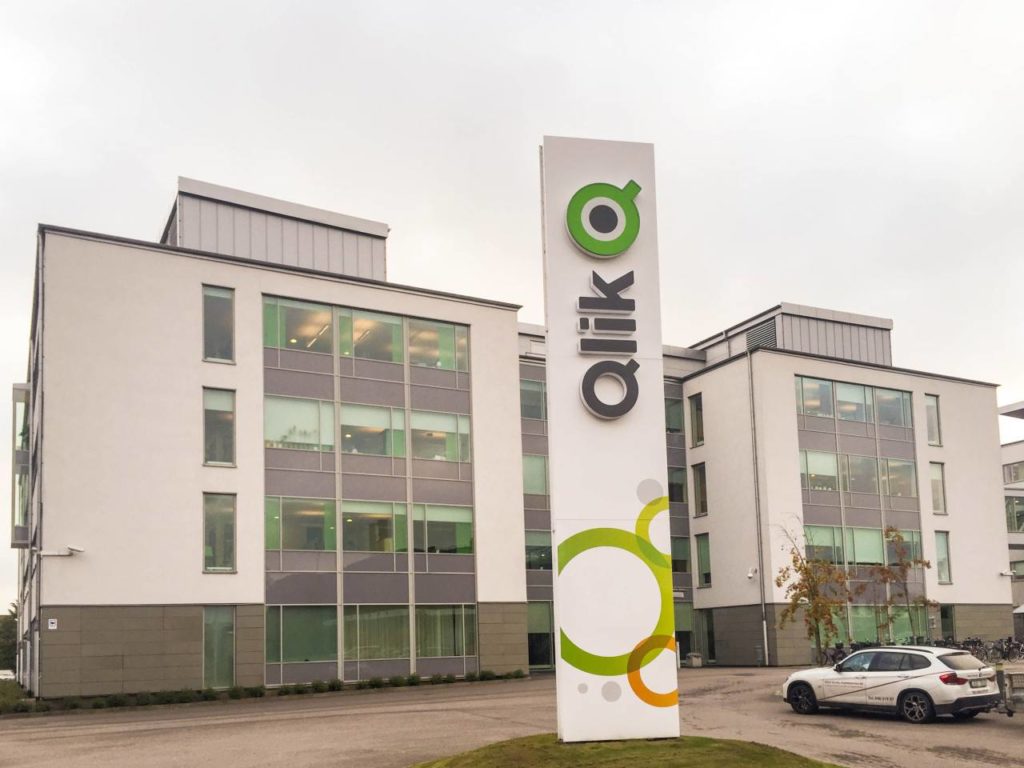
Qlik started its journey 28 years back in Sweden as a company providing detailed data analysis services. The company headquarters is in Lund, Sweden, and about 2500 people are working for it globally. Along with Sweden, the company has established offices in the US, Canada, Latin America, Europe, Middle East, as well as in Africa. Qlik is known for its services in business intelligence, data analytics, data integration, business analysis, and software development. Qlik Sense, Qlik Replicate, and Qlik Catalog are a few of the main products that the company endorses. The Qlik services are compatible with the major web service providers like Amazon Web Services (AWS), Microsoft Azure, Microsoft applications, Google, SAP, etc.

QlikTech
Image source: analyticsindiamag.com

Founding QlikTech

Bjorn Berg and Staffan Gestrelius from Sweden founded QlikTech in 1993 as the providers of data analysis services. The company introduced QlikView as its first product, released in 1994, and got the patent for the same in 1995. In the following years, the company released the other three versions of the product. The popularity of QlikView brought Qlik funding from renowned Swedish investors Handelsbanken and Industrifonden in 1999. This led to the growth in the number of employees as well.
In 2004, Qlik went international and established the company headquarters in the US. The same year, the company also received more investments from Accel Partners and Jerusalem Venture Partners. In 2005, the company released version 7 of QlikView, replacing the single-user desktop with a server-based web tool.
By the end of the decade, the company was already a unicorn, and in 2011, the market capitalization of Qlik reached $2 billion. In the following years, the company made some important acquisitions that helped its expansion. Vizubi, Idevio, Crunch Data, Attunity, Knarr Analytic, and RoxAI are some of the companies acquired by Qlik.
In 2012, Qlik was among the top three fastest-growing tech companies in America. The next year, Qlik opened a new office in Perth, Australia, followed by the opening of a research and development branch in Ottawa, Ontario in 2015. In 2017, Qlik joined hands with Thomas Jefferson University of Pennsylvania to fight the opioid epidemic in the country. The next year, the company received the Best Business Intelligence and Analytics Software award.
By 2019, the Qlik had successfully launched its Software-as-a-Service environment, and the customers were now allowed to deploy its software on Qlik as well as any other public cloud. Wrightington, Wigan, and Leigh NHS Foundation Trust used the Qlik software to keep the record of the patients during the COVID-19 pandemic in the UK.
Qlik Sense and QlikView are some of its major products that run on its Associative Engine, used for big data analytics. Other than those, Qlik Analytics Platform, Qlik Data Catalyst, Qlik Core are some of the products that work using the same engine. Other Qlik products include Qlik GeoAnalytics, Qlik DataMarket, Qlik Connectors, Qlik Catalog, and Qlik Compose, etc.

The CEO at QlikTech

Mike Capone is the current CEO at Qlik. Capone went to Dickinson College to earn a BS degree in Computer Science and later completed an MBA in Finance from Pace University. Before joining Qlik, he has worked with companies like ADP and Medidata. He held the positions like Corporate Vice President of Product Development & CIO as well as the General Manager of the global outsourcing business at ADP. At Medidata, Capone worked as the COO and helped in the product development of the company. In January 2018, he became the CEO of Qlik.

Visma

Visma – A Leading Software Company In The Nordic Region And Europe.

Visma is a computer software company that is owned by a group of private equity firms. The company was founded in 1996 and it is based in Oslo, Norway. The Visma management only owns 6.6 percent of the company and the other owners include Hg and co-investors (major ownership), Cinven, Immediate Capital Group, and Montagu. Back in 1996, Company was formed by the merger of multiple companies are Multisoft, SpecTec, and Dovre Information Systems.

About The Company

Visma is a Nordic software company that mainly provides business software, IT consultancy, and related services. The main market of Company is spread across the entire Nordic region and also in Central and Eastern Europe as well. Some of the countries where the Company has offices are Sweden, Denmark, Finland, the Netherlands, Romania, Hungary, United Kingdom, and many more. Currently, Company has around 900,000 customers out of which the majority are from Northern Europe.

The CEO of the company is Merete Hverven and there are 12,500 employees working under her supervision. Visma is a big organization and it has been divided into five groups for different operations. The five divisions are Visma SMB (software division), Visma Enterprise, Visma Custom Solutions, Cloud Infrastructure Services, and Commerce Solutions. The revenue generated last year by the company was 18.68 billion NOK.

Visma
Image source: kinstacdn.com

History of Visma

The company started its operations officially in 1996 and it got listed on Oslo Stock Exchange and started operating as a public company. The companies that today form Visma were merged in 1996 and together as a single organization rolled out three key products, SpecTec (marine), Visma Logistics, and Visma Business. In 1997, the company faced some financial crisis as the investment company planned for the growth of the company exceeded the company’s resources. In order to survive this turmoil, the company was restructured, and hence most of the management team and board of directors were replaced. A new CEO was hired for the company but at the same time, there were several layoffs.

Two years after reorganizing the company, it started expanding overseas. In 1999, the company opened offices in Denmark and the UK. The company started to prepare itself for the launch of Visma Business e-commerce, developed its web, and WAP extensions for all the applications of Visma. In 2000, Company decided to sell its Marine ASA’s operations. The deal was confirmed with a Dutch company called Station 12 and the cash Visma received was used to offer both software and outsourcing services within finance and payroll.

Growth and Expansion

In 2001, Company acquired a Swedish company called Spcs which was followed by acquiring a Finnish company called Liinos. Through the acquisition of Liinos, Company strategically entered the Finnish market. In the later years, Visma entered into the Norwegian and Danish market and also into the public sector through the acquisition of Møre Datasystemer. In 2003, the company also started a collaboration with Norway’s largest bank (DNB) and the national postal service. By the time the company was growing steadily, it established Visma’s Management Trainee program. In 2006, Company entered the Dutch market after it acquired AccountView, a software company. During this time, the ownership of the company changed as Visma became a private company with majority of ownership going to HgCapital.

Visma as a Private Company

After the change in ownership, the company established its retail IT division. In 2009, Company completed the construction of its new headquarters in Oslo and also became the second-largest accounting firm in Finland. In 2010, Kohlberg Kravis and Roberts acquired 76.9 percent ownership of the company and after this transaction, the valuation of the Company became 11 billion NOK. In the upcoming years, Visma acquired some more companies and rolled out products for medium and small-scale businesses. Last year, the company acquired Yuki, a Dutch company that provides a bookkeeping software platform.

Merete Hverven – CEO of Visma

In 2011, Merete Hverven joined Visma as HR Director and after two years she became the Chief Human Resource Officer. Last year, she became the CEO of the company and she has been awarded several prestigious mentions for her leadership, influence, and passion in tech. In 2019, she became one of the top three most influential women in technology by ODA Award Woman.