Your Tech Story

tech story

blackbaud

Anthony Bakker, From banker to establish a software company that works for social good organizations.

There are an infinite number of software development companies all over the world, but how many are there that are working dedicatedly for social good organizations. Blackbaud is one such company that develops software only to serve the social good communities, like nonprofits, healthcare organizations, fundraisers, etc. The company promotes the idea of strengthening the social economy, and for that, it develops software that would be useful for communities that work for social welfare.

Blackbaud has been there for almost 40 years and has gone through a great growth transition. It started from building a small billing system for a school, and today it is producing similar but advanced cloud-based software. The company products include software for analytics, financial management, fundraising and relationship management, grant and award management, marketing and engagement, organizational and program management, payment services, and social responsibility, etc. Blackbaud also promotes philanthropy by encouraging its employees to join and volunteer in community services. It specifically offers paid vacations to its employees, so that they can volunteer with full heart in such services.

About Blackbaud

Blackbaud is a cloud computing provider and software publishing company founded in 1983, in New York. The company headquarters is based in South Carolina, United States, whereas it serves in about 60 countries, including England, Australia, and Canada, etc. Blackbaud is mainly known for its flagship software named Raiser’s Edge. It is a fundraising SQL database software used by many companies globally. Apart from that, the company builds software like Customer Relationship Management software, Marketing Campaign software, Fundraising as well as Finance and Accounting software, helping communities working for social good. Anthony Bakker is the founder of Blackbaud and Michael Gianoni is the current CEO of the company.

blackbaud
Image source: www.bleepstatic.com

Founding Blackbaud

Anthony Bakker, the founder of Blackbaud, before founding the company worked as a banker. He first developed a billing system for a school, based in Manhattan, New York, in 1981. By 1982, the software became quite popular among a few other clients. This led Bakker to leave his job and start Blackbaud Microsystems in 1983. As a company, Blackbaud launched a student billing system as its first product. The famous Raiser’s Edge is the advanced version of the same student billing system by Blackbaud.

In the year 1989, Blackbaud shifted its headquarters from New York to South Carolina. The company then released its software for Windows 95 in 1995, raising the number of clients for it. The company also made some important acquisitions during the same time, including ACOMS, Master Systems Inc. as well as Master Software.

Blackbaud had its first IPO in 2004. It trades on Nasdaq with the symbol BLKB. Some more acquisitions took place in the further years, Campagne Associates (2006), eTapestry (2007), Target Analysis Group (2007), Target Software (2007), and Kintera (2008) being the most important ones among them. In the next decade, Blackbaud acquired names like Convio (2012), MicroEdge (2014), JustGiving (2017), Reeher (2018), YourCause (2019), etc. Blackbaud has been Forbes Most Innovative Growth Company multiple times.

The CEO at Blackbaud

Michael Gianoni is the current President and the CEO at Blackbaud. He grew an interest in engineering when he was in high school and attended a one-day engineering class. After graduating from high school, he opted for Electrical Engineering from Waterbury State Technical College in 1979. He then joined Charter Oak College to study business and received a master’s degree in Business Administration from the University of New Haven in 1992. He has also been awarded an Honorary Doctorate in Business Administration from the University of Haven in 2014.

Gianoni has worked in some big-name companies in prominent positions. He was the Senior Vice President of DST. He also served Fiserv for seven years as the President and the Group President. Gianoni joined Teradata as the Chair of the Board of Directors in 2015 and still continues to serve in the same position. In January 2014, Gianoni joined Blackbaud as the CEO.

Pluralsight

Pluralsight, Story of company that started from classroom training to a famous online platform.

Pluralsight is an online platform that offers video courses and certification to gain knowledge that will help one stay updated in the 21st century. From various courses on software development to gaining creative knowledge, Pluralsight has made everything available. Aaron Skonnard, Keith Brown, Fritz Onion, and Bill Williams founded Pluralsight in 2004 as a classroom training company. But, to keep up with the time it evolved eventually to an online platform similar to Coursera and Udemy. The company’s headquarters is based in Utah, US and it is owned by Vista Equity Partners.

About Pluralsight

Back when the company was founded, Pluralsight used to send instructors to a business or training event. But today, with the help of an online learning platform, it is making the training courses available for everyone. Pluralsight uses a subscription-based model and focuses mainly on training tech-based professionals like software and security developers, IT professionals, product managers, etc.

Pluralsight has split its training approach into two paths, skills and flow. In the skill path, the platform lets the users learn and adapt new skills, upgrade skills according to needs, etc. In the flow path, a person can compare between old and new codes, fix bugs, use data to measure each team member’s contribution, etc. The minimum cost of the Pluralsight platform starts from $29 per month.

Pluralsight
Image source:

Brief history

The company started as a classroom training service in 2004 but after three years shifted its focus to online video training. Pluralsight started making huge profits in 2011 and it is also in the top 20 list of Utah companies. Inc 5000 also named it as one of the fastest-growing private companies and one of the top education companies. In 2012, the company went into a partnership with Microsoft such that the courses of the company were available for the MSDN subscribers. Pluralsight also launched a free programming coding boot camp that focused on offering coding classes to kids who are 10 and above. The company also provided a free one-year subscription to its training library for the Utah K-12 teachers.

In 2017, Pluralsight ranked #20 on the Forbes Cloud 100 list and also made it into the list of Great Place To Work’s 2017 Best Workplaces (for small and medium-sized companies). Next year, Pluralsight filed for its IPO and began trading publicly but in December 2020 it was acquired by a private equity firm called Vista Equity Partners. The deal was closed by $3.5 billion. In the past decade, Pluralsight has successfully landed many corporate clients, and the majority of them are Fortune 500 companies.

Funding

When Pluralsight was started, it was a self-funded venture as each of the four founders contributed $5000. For a very long time, the company didn’t receive any external funding until December 2012 when the Series A funding round was conducted. In the first funding round, Pluralsight raised $27.5 million from Insight Venture Partners and received an additional $2.5 million later. In 2014, Pluralsight raised another $135 million in Series B funding when some new investors like ICONIQ Capital and Sorenson Capital joined in. During that time, Pluralsight became the first Utah-based company ever to receive that much amount of funding. After the Series C funding round in 2016, Pluralsight became a billion-dollar company.

Acquisitions

Pluralsight started acquiring a series of companies from 2013 starting with e-learning and education businesses. It acquired PeepCode in July 2013 followed by TrainSignal and Tekpub in the same year. In 2014, it acquired Digital-Tutors expanding Pluralsight’s training courses to media and design. Later in the same year, it acquired an online skill assessment platform called Smarterer. Some of the other companies it acquired in the last few years are Train Simple, GitPrime, Next Tech, etc.

About Aaron Skonnard – CEO and co-founder

Aaron started to code from a very young age when his father bought him an Apple II computer. He completed his studies in Computer Science from Brigham Young University and worked at various companies like 3M, Intel, and Axiom Technologies. He also published a few books and invested in start-ups that emerged in Utah.

Qualys

Qualys, Company offering cloud security services to companies for many years.

With the rise of personal computers, and then of the internet, there has also originated the need for security for the data and the stuff one puts on the web. Though there are many companies out there, providing antivirus and anti-data-theft services and applications, some companies are there from the very start. These companies were the first ones to bring new products to fight malware and provide protection from any external threat to data online and offline. Qualys is one such company that has been delivering vulnerability management solutions to the IT industry from the very start. Starting from building applications, today, Qualys Inc. is offering cloud security through its web applications using the SaaS model.

About the Company

Qualys is a more than twenty years old company, founded in 1999. Philippe Langlois and Gilles Samoun are the founders of the company, whereas Sumedh Thakar is the current President and CEO of Qualys. The company trades publically at Nasdaq with ticker QLYS. Qualys is known for its cloud security services, including Certificate Inventory, Certificate Assessment, Vulnerability Management, Threat Protection, Web Application Scanning, Web Application Firewall, and Security Configuration Assessment, etc. The company headquarters is based in Foster City, California, the U.S., and around 2000 people work for it. As of 2020, the company made annual revenues worth $363 million. Big names like BT, IBM, Verizon, NTT, Wipro, etc. are some of the permanent clients of Qualys.

Qualys
Image source: www.itsecurityguru.org

Founding Qualys

Philippe Langlois and Gilles Samoun founded Qualys in 1999. Philippe Courtot was the angel investor in the company who also became the first CEO of Qualys. In 2000, the company brought its first product, QualysGuard to the market, which was also the first type of vulnerability management application. The idea behind the company was to build cloud-based products so to scan any network globally. Based on the same idea, in 2002, Qualys launched QualysGuard Intranet Scanner, an application that could scan an entire LAN. In the next few years, the company launched products like FreeMap (2003), QualysGuard product line (2005), QualysGuard Policy Compliance (2008), and QualysGuard Malware Detection Service (2010).
With the launch of new and innovative products, Qualys managed to get ranked among 5000 fastest-growing private companies in the USA in 2010 in the first decade of its launch. It was also named one of the largest private companies in Silicon Valley in 2012. Later in September 2012, Qualys went public on NASDAQ and raised $87.5 million in its first IPO. In 2014, Qualys won the “Best Security Company” by SC Magazine. The next year, the company launched Cloud Agent Platform as well as a free asset management service named Qualys AssetView. In the following year, the company came with ThreatPROTECT, a cloud-based platform for vulnerability detection. The same year, it partnered with Microsoft Azure Security Center to integrate its services to the latter.
The company also made some major acquisitions like the network analysis assets from Nevis Networks (2017), NetWatcher (2017), 1Mobility (2018), Asset Inventory (2018), etc. The company won the Global Vulnerability Management Market Leadership Award (2017), Cyber Security Leader (2017), Gartner Peer Insights Customers’ Choice Award for Vulnerability Assessment (2019), and Best Vulnerability Management Solution (2020). Today, Qualys is operational in over 130 countries and serves over 10,300 customers globally.

The CEO at Qualys

Sumedh Thakar is the President and CEO of Qualys. He was born and brought up in India. Thakar has an engineering degree in Computer Science from Savitribai Phule Pune University. He started his engineering career at Patni Computers as soon he graduated from college in 1997. In 2001, Thakar joined Intacct. Corp as a software engineer and then started working at Northwest Airlines. In 2003, Sumedh became the Vice President of engineering at Qualys, and then in 2014, was promoted as the Chief Product Officer of the company. In November 2019, he was appointed the full-time President and Chief Product Officer. he became the CEO of the company in February 2021.

Datto

Austin McChord, Started by making the device in the parent’s basement to get the “Unicorn” status.

Austin McChord, a software programmer, created Datto in 2007 in Connecticut. In 2017, the company was merged with Autotask Corporation and it became a subsidiary of Vista Equity Partners. Based in the software sector, Datto specializes in cybersecurity and data backup. Currently, the company has approximately 1,600 members and is led by Tim Weller (CEO of Datto). The company is known for developing both hardware and software products required for data recovery purposes. Datto started expanding to international markets in 2013 and currently, it has customers across the globe.

About Datto

Datto is a leading provider of cloud-based software and security products that are delivered by managed service providers. Datto’s solutions in various domains help its network of MSP Partners serve more than a million businesses worldwide. The products developed by Datto help the MSPs to protect both small and medium-sized businesses against threats.

Datto offers subscription-based pricing models so that there are multiple choices for different types of customers. But, the main focus of Datto is to enable MSP growth. When Austin McChord established Datto he used to sell self-made data backup devices. From that to becoming a unicorn, Datto has grown massively in a few years.

Datto
Image source: techtalk.needonsite.com

The Backstory of the Company

The idea of building a data recovery company came to Austin’s mind when he first developed a backup device in his parent’s basement. He used a LEGO brick to complete the first iteration of the product. After successfully building the backup device, Austin went ahead with the plan of founding Datto and thus started selling hand-made data backup devices. He landed his first customer in 2008 and eventually he was able to build a system that would allow data synchronization between two companies. Later, he successfully built a version of Zenith Infotech.

The sales started increasing slowly and by the end of 2009, the company made $70,000 in monthly sales. In 2010, Datto released a new product but unfortunately, it led to the crash of old computer systems. So, a replacement product was built from scratch to replace the new one and it was called SIRIS. The sales of the company were pretty much stagnant during this period and the company finally rolled out SIRIS as a free upgrade. In 2011, the sales started increasing rapidly and hit $9 million and the next year it increased to $25 million.

Success and Expansion

The funding round of the company started in 2013. In the first round of venture capital financing, Datto raised $25 million. This round was led by General Catalyst Partners. By this time also the company was focusing on various small and medium-sized businesses with clients such as Susan G. Komen for the Cure and several NFL teams. In 2014, Datto purchased a cloud-to-cloud backup company called Backupify. In 2015, the company’s series B funding round was led by Technology Crossover Ventures and it was able to raise $75 million. In the same year, the company also gained the “unicorn” status and became the only company in Connecticut to earn it. After the series B funding round, the company expanded to the Australian and New Zealand markets.

The acquisitions continued as in early 2017 the company acquired Open Mesh. Later in that year, the company was acquired by Vista Equity Partners and the deal was closed for approximately $1.5 billion. The company then merged with Autotask Corporation and Austin became the CEO of the merged company. But he stepped down from his position in 2018 and his place was taken by Tim Weller. In 2020, Datto became a public company and sold 22 million shares to raise $594 million in its IPO.

Austin McChord – Founder of Datto

Austin McChord is a computer engineer and an entrepreneur who became famous after founding Datto. He initially pursued electrical engineering at the Rochester University of Technology. When he was 21-year old, he developed a data backup device from scratch in his father’s basement. Initially, when the company was landing its first few customers, he received a buyout offer for $100 million but turned it down. Instead, he tried to raise some funding and strengthen the foundation of the company.

Netskope

Netskope, Indian Co-Founders who make a huge contribution to the success of the company.

Founded in 2012, Netskope is an American software company based in Santa Clara, California, United States. Netskope provides a computer security platform and offers cloud-native solutions for enterprises such that the companies can protect their sensitive data and defend their application and system against various cyber threats. Netskope is considered a leading company in its sector because of its Cloud Access Security Brokers (CASB). The founders of the company are Sanjay Beri (current CEO), Lebin Cheng, Ravi Ithal, and Krishna Narayanaswamy. Apart from its headquarters that is based in Santa Clara, the company also has a software development facility in Bangalore, India. 

About Netskope

When the team of Netskope was formed, it brought in distinguished engineers from the security and networking field. Some of its early members are ex-employees of Cisco, Juniper Networks, Palo Alto Networks, and VMWare. The company currently has more than 1,000 employees and it has some of the biggest multinational conglomerates as its clients (more than 25% of Fortune 100 customers). 

Netskope has expanded to various international markets including India, Singapore, Melbourne, London, etc. In the 21st century, Netskope is one of the fastest-growing SASE companies and the main idea behind building the company was to give people the power to access the cloud on their devices,

Netskope
Image source:

Founding History of Netskope

Before co-founding Netskope, Sanjay Beri was the VP of the Access & Security business at Juniper Networks. Since Sanjay worked at a very reputed company he made several connections throughout the year. So, for some time he took time and spoke to several CEOs of other companies and finally in 2012 co-founded Netskope. He started the company with initial venture capital of $21 million approximately. During the first six months, an office was set up in Palo Alto from where Netskope operated. When they established the company, the first thing that Netskope put their focus on was hiring the best talents. 

In October 2013, the company launched its first product which was security software available openly. The company also formed an advisory team and brought Enrique Salem, former Symantec Chairman onboard. In the funding round of 2014, the company raised $35 million followed by raising another $75 million in 2015. The latter funding round was led by ICONIQ Capital. The company announced that the latest fundings would be invested to expand in New Zealand and Australia. 

Funding and Acquisition

In 2016, the first two patents of Netskope were finally issued in its name for security and network-delivered services. Next year, the company conducted another funding round which was bigger than all the funding rounds held before that. Netskope was able to raise $100 million in the funding round and it was led by Lightspeed Venture Partners. In the same year, the company acquired Sift Security, a software business that mainly focused on next-generation cloud infrastructure security. Cloud Hunter of Sift Security was renamed as Netskope’s Security Cloud after the acquisition. In 2018, another patent was issued to Netskope for context-aware data loss prevention. By the end of 2018, the company successfully raised another $168.7 million. 

Recent Days

In 2019, the company brought a new CFO of Netskope, Drew Del Matto (former Citrix and Fortinet executive). Earlier in 2020, Netskope conducted another funding round and raised $340 million. This funding round was led by Sequoia Capital Global Equities and the total funding summed up to $740 million. In February 2020, the company launched Netskope Private Access Solution, and the same year the company’s total valuation became $3 billion (tripled within fifteen months). The company has made Forbes Cloud 100 list because of its advanced cloud services that include protection against cyber threats. The company has already entered into a partnership with Cybersecurity and Exclusive Networks. 

Sanjay Beri – Co-founder and CEO

Sanjay pursued computer engineering from the University of Waterloo followed by completing his master’s in electrical engineering from Stanford University. Though Sanjay came on the radar after co-founding Netskope, his first startup was Ingrian Networks which was eventually acquired by SafeNet. Some of the companies that he worked at before building his own company were Microsoft, McAfee, and Juniper Networks. 

LivePerson

When nobody answers Rob LoCascio’s question leads to the foundation of an international conglomerate.

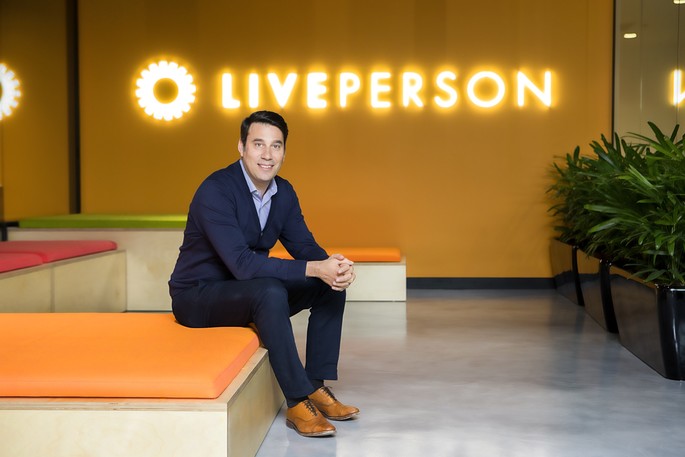
LivePerson is a company established in the internet and computer software sector in 1995. Robert LoCascio (famous as Rob LoCascio) founded the company to redefine conversation among people with the help of AI (Artificial Intelligence). The company’s headquarters are based in New York City and it is currently working in a remote mode so there are no other offices worldwide. LivePerson is a publicly-traded company and it has customers all across the world. LivePerson has two main products, namely, The Conversational Cloud and LP Insights.

About The Company

The main goal of LivePerson is to make the life of normal people and various brands much easier with the help of conservational AI. More than 20 years after the company’s establishment, LivePerson started offering its AI-based product. The main idea behind this conversational AI was to offer customers the technology to create AI-powered chatbots. This would help the brand answer various questions of the consumers thus taking pressure off the human service staff.

LivePerson has more than 18,000 active clients spread across the world and some of them include HSBC, Orange, and GM Financial. In 2020, LivePerson made it into the Fast Company’s World’s Most Innovative Companies list. It was Robert LoCascio who successfully invented the live chat technology for websites back in 1995.

Idea Behind LivePerson

The idea to build LivePerson and provide people with conversational AI struck Rob’s mind when he first started using the internet. Well, he had a query about a product and he dropped a question on its website. He noticed that nobody answered his question so he had to go the conventional way of dialing the number and waiting for the person on the other side to respond. After this experience, he thought that although the main idea behind the internet was to connect people in reality he had a sore experience. Rob proceeded with the idea and built an international conglomerate, LivePerson.

LivePerson
Image source: miro.medium.com

Acquisitions

LivePerson has a big list of acquisitions and started in 2000. LivePerson’s first acquisition was HumanClick, a company that offered real-time customer service applications. In July 2006 it acquired Proficient Systems followed by Kasamba Inc in 2007. It acquired a web analytics and optimization platform called NuConomy in 2010. After a couple of years, in 2012, LivePerson acquired three companies in the same year. They are Amadesa (a web marketing company), Look.io (mobile chat provider), and Engage Pty Ltd (cloud-based customer contact solutions). In 2014, LivePerson acquired NextGraph, Synchronite, and Contact At Once. LivePerson’s latest acquisitions are Tenfold, a customer experience integration platform, and VoiceBase, a voice analytics platform.

Success Of LivePerson

After establishing the company in 1995, Rob took the company public in 2000. It was one of the last companies that became public before the dot-com bubble burst. It took almost ten years for the company to rebound and they survived the most difficult times. In 2011, the company was named Fortune’s 100 Fastest Growing Companies and Forbes 25 Fastest-Growing Tech Companies. Currently, the company is focusing to scale its voice AI innovation and that is why it acquired Tenfold and VoiceBase. In November 2021, the company was named to Inc’s first annual Best-led companies list.

About Rob LoCascio – Founder and CEO

Rob LoCascio, both founder and current CEO of LivePerson is one of the longest-standing founding CEOs in the tech industry. It was Rob who more than two decades ago made this innovative invention that helps initiate an authentic conversation between a company and its customers. He opened the door of massive opportunities for brands so that they can provide quality customer support. Apart from being a famous entrepreneur, Rob is also a philanthropist.

Rob completed his education at Loyola University Maryland and started working for Elders IXL. But, the company laid off employees after six months and Rob lost his job. After losing that job he was determined to open his business and never work for someone else. In 1991, Rob founded Sybarite Media Inc but it was shut down in 1995, the very year he founded LivePerson.