Your Tech Story

tech story

LifeWorks

LifeWorks – A professional services company that was originally famous as Morneau Shepell.

LifeWorks is a leading human resource services and technology company founded in 1966. The company was previously known as Morneau Shepell and in May 2021 the shareholders voted to change its name to LifeWorks. It is a publicly-traded company with headquarters based in Toronto, Ontario, Canada.

The services provided by the company are administrative outsourcing, health, and benefit, management, asset, and risk, etc. LifeWorks is listed on the Toronto Stock Exchange and currently has a market capitalization of $2 billion. The company has made several big acquisitions over the year and offers services to more than 24,000 clients across the globe.

About LifeWorks

The main goal of LifeWorks is to offer personalized solutions to the people who need it and how they need it. In the digital era, every solution in every sector needs to combine with technology to deliver results that are optimal for the customers. So, LifeWorks combine its solutions with AI-based technologies that are simple and easily accessible for HR people. LifeWorks offers financial strategies, physical and mental support, and also choices for building strong social relationships. It covers every aspect of a person’s life to make a real difference in the community.

History of Morneau Shepell

Back in 1966, Frank Morneau founded an actuarial and consulting firm called W. F. Morneau & Associates. The first US office of the company was established in 1987 and after five years established a strategic alliance with Coopers & Lybrand. This alliance led to the acquisition of pension consulting and actuarial business of the latter by Morneau. In 1996, the company launched its administrative outsourcing practice and next year merged with Sobeco. The new company was named Morneau Sobeco where Bill Morneau became the new President and CEO.

After the merger, the company made its first acquisition in 1998 with the Canadian pension consulting firm Deloitte & Touche. After stepping into the 21st century, the company became an income trust, Morneau Sobeco Income Fund (MSIF) in 2005. Morneau eventually started to expand geographically and that led to the acquisition of several companies. In 2006, Morneau acquired Health Benefits Consulting (a Canadian firm) followed by the defined benefit pension business of Cowan Benefits Consulting in 2007.

In 2008, Morneau acquired Shepell-FGI which was the country’s largest provider of employee health and productivity solutions. After the acquisition was completed, Morneau Sebeco’s name was changed to Morneau Shepell. The acquisition was completed for $321.9 million from the Clairvest Group. In the same year, the company also acquired an actuarial firm, Leong & Associates.

LifeWorks
Image source: businesswire.com

Recent Events

In 2011, Morneau Shepell restructured its income trust (MSIF) into a public corporation called Morneau Shepell Inc. The same year it also acquired Jacques Lamarre & Associates to expand its presence in Quebec. In 2012, Morneau acquired a Canadian pension and benefits administration firm, Mercer Canada. To enhance its benefits administration platform, the company acquired SBC Systems in 2012. In 2013, Morneau acquired two companies, namely, Collage Pediatric Therapy and the worker’s compensation business of Dion Durrell.

In 2014, Morneau acquired Blue Ballon Health Services which is one of the many companies it acquired in the healthcare sector. It also acquired Pacific Risk Management Corp and Groupe AST in the same year. Next year, Morneau acquired another healthcare business (health and welfare benefits administration of Ceridian). In 2016, Morneau completed its 50th anniversary. In 2018, it acquired LifeWorks and decided to change its name three years later. Some of the other companies acquired by LifeWorks are MorningStar Health, Pro-Health Group, Chestnut Global Partners, etc.

Stephen Liptrap – President and CEO of LifeWorks

Stephen Liptrap, the current CEO and President of LifeWorks joined the company in 2008 as a member of the senior executive team. When he joined LifeWorks, he had 25 years of experience in the retail and packaged goods sector. He became the general manager and executive VP of the company’s largest business unit. Liptrap has also played his role as the COO of the company for almost a year. He graduated from Harvard Business School in 2016. He is also a Certified Human Resources Executive.

Progress Software

Progress Software, An American software company founded by a group of MIT graduates.

Progress Software is a publicly-held company founded in 1981 by a group of MIT graduates. The company’s headquarters is based in Massachusetts, US. It has offices in 16 countries and currently has over 1,500 employees. Progress Software is a company in the computer software sector and develops, and sells the same to companies who want to deploy business applications. Josep W. Alsop was one of the MIT graduates who have significant contributions in co-founding Progress Software. The present CEO and President of the company are Yogesh Gupta while Paul Jalbert is the CFO of the company.

About Progress Software

Apart from Josep Alsop, two other important founding members of the company are Charles Clyde and Zierring Kessel. Progress Software is a renowned global supplier of software products for information services organizations not only in the industrial sector but also in government bodies. The company also supplies software tools and add-on components to the companies who are building business applications with Microsoft Corporations’ Visual Basic application development environment. Progress has around 20 subsidiaries helping it to maintain a market for selling products in 60 countries in Europe, Asia, Latin America, and Australia.

Progress Software
Image source: fxdailyreport.com

Early Days

When the company was incorporated back in 1981, its original name was Data Language Corporation. The company was officially launched after the founders successfully developed its first product, the PROGRESS Application Development Environment (ADE). This environment was designed so that it can be used for the development and deployment of software applications that were scalable, portable, and reconfigurable. In 1984, the company released the first commercial version of the PROGRESS ADE for Unix followed by another version for MS-DOS. 1985 marked the first profitable year of the company and after a few years, the company released the software for computer networks and CTOS/BTOS operating systems.

By the end of the 1980s, the growth of the company was remarkable and is ranked 38th in the Inc magazine’s list of the 500 fastest-growing private American companies. When the company entered a new decade, its main focus was on value-added resellers who used PROGRESS software to build their commercial software products. These middlemen required deployment licenses from the company which significantly increased the revenue of Progress Software. In 1995, Progress was featured in Forbes’s 200 Best Companies in America list and the next year the company attempted to climb the ladder in the internet market.

As the company’s sales rose, it eventually came into the radar of big companies like Oracle, Sybase, and Informix. Big companies like these became the major competition of Progress. One of the biggest advantages of Progress was that its RDBMS could work on most types of computer hardware. With the changing of the market scenarios, the company is expected to benefit from two business trends, the growth of corporate networks and the decentralization of large conglomerates.

Present Status

Stepping into the 21st century, Progress Software acquired a handful of companies starting with eXcelon Corporation in 2002 for $24 million (approximately). Some of the products developed by the company (XML IDE and Stylus Studio) are now marketed by Progress. In 2003, the company acquired DataDirect Technologies followed by Persistent Software in 2004 and Apama in 2005. In 2006, the company acquired Actional Corporation which previously merged with WestBridge Technologies (an XML security company). The acquisitions expanded the customer base of Progress Software as well as product ranges. Although in 2012 the company announced that it will refocus its strategies and concentrate on a narrower product type. So, it decided to either sell or decommission most of its products. It recently acquired Chef Software Inc and Kemp Technologies.

Yogesh Gupta – CEO of Progress Software

Yogesh Gupta has been serving as the CEO and President of Progress Software since October 2016. He is responsible for improving customer relationships and launching new products in these few years. Before joining Progress, he was the CEO and President of Kaseya Inc, and before that FatWire Software and Oracle Corporation.

Zuora

Zuora – A savior for large enterprises to help with their billing systems.

Zuora is an American enterprise software company that develops software for businesses to manage their subscription-based services. When the company was founded, its main goal was to assist large enterprises with a proper billing system. Zuora provides a cloud-based billing platform that is designed to automate several features like recurring billing, collections, revenue recognition, subscription metrics, etc. Zuora is a publicly-traded company that is currently headquartered in Redwood Shores, California. It has more than 1,200 employees working under Tien Tzuo, CEO of the company.

About Zuora

Zuora was founded in 2007 in a small office at Mountain View, California. The founders of the company are K.V. Rao, Cheng Zuo, and Tien Tzuo. They both had industry experience as they spent several years working at WebEx and salesforce.com. Zuora, today, has become a leading company in the subscription economy industry as its cloud-based platform automates all subscription order-to-revenue operations for its clients.

The company went public in 2018 and got listed on New York Stock Exchange. The same year it established a partnership with maximum automobile manufacturing giants. Recently, Zuora was named one of the best workplaces by Glassdoor (2018) and became Innovator of the Year (2019) by the San Mateo County Economic Development Association.

History of the Company

In 2007, the three founders established Zuora to help enterprise companies in the 21st century with their real-time billing platform. Before founding Zuora, Roa and Zou were engineers at WebEx while Tzuo was an executive at Salesforce. They named the company after their surnames (combination of three surnames) and launched their first flagship product in 2008. In 2008 they launched two products, Z-billing and Z-Force. The latter one was the first billing solution of the company fully integrated with Salesforce CRM.

Zuora
Image source: octotelematics.com

Expansion

Zuora attracted investors from the beginning and hence it was able to raise lucrative funding from many famous investors. This helped Zuora expand in international markets in a short time. In 2010, the company expanded to Europe, and the next year it made it into the OnDemand Top 100 Private Companies list. It was also featured in VentureWire’s FASTech 50 list and JMP Hot 100 Best Privately Held Software Companies.

In 2012 the company expanded to the Australian market and the next year it celebrated its 50th consecutive product release. In 2015, Zuora opened eight new offices worldwide and also entered the Japanese market, and became a total team of 500 employees. It also launched subscribed magazine and bagged the best technology innovation award from Ventana Research. 2016 was an eventful year for Zuora as it launched subscribed podcasts, featured on Forbes 100 Best Cloud Companies, Tzuo named E&Y Entrepreneur of the Year, crossed $40 billion invoice transaction volume, etc. This year Zuora also launched the Subscription Economy Index, a product that tracks revenue growth of subscription businesses.

By 2017, Zuora successfully landed 900 customers and released its 100th product since it was launched. Ken Goldman, CFO of Yahoo, joined Zuora’s board and the company also opened a new data center in Germany. Recently, Zuora has brought many experienced new members into the team like Robbie Traube (former Adobe executive) as Chief Revenue Officer and Todd McElhatton (former employee of SAP) as Chief Financial Officer.

Funding

Zuora successfully led its first round of funding (Series A) on the year that it was founded. It raised $6 million in Series A funding and it was led by Benchmark Capital and Marc Benioff. In September 2008, the Series B funding was led by Shasta Ventures where the company raised $15 million followed by $20 million in October 2010. By 2015 Zuora already conducted a Series F funding round and raised a total amount of $250 million. Major investors include Redpoint Ventures, Greylock Partners, Shasta Ventures, Index Ventures, Vulcan Capital, etc.

Tien Tzuo – Co-founder and CEO of Zuora

Tien Tzuo is a famous American tech entrepreneur who co-founded Zuora. He is currently the CEO of the company and was previously the Chief Strategy Officer of Salesforce. Tzuo was born in Taiwan and moved to Brooklyn when he was very young. He completed his studies at Cornell University and worked at Oracle Corporation for six years.

Virtusa

Virtusa, a company founded by a group of graduated engineer friends.

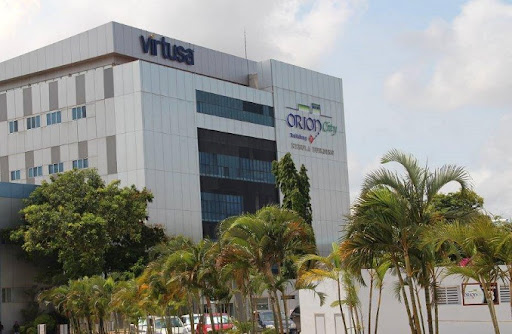
Founded in 1996 in Sri Lanka, Virtusa is an Information Technology company that mainly provides IT consulting and outsourcing services. Their main clients are software vendors and large enterprises. Virtusa is an American company and its headquarters are based in Massachusetts, United States. Kris Canekeratne, Tushara Canekeratne, John Gillis, and Sandy Gillis are the founders of the company. Virtusa offers services worldwide and has offices in several countries including India, Sri Lanka, the UK, Germany, Australia, Malaysia, UAE, Qatar, etc. The maximum number of offices of Virtusa is in US and India.

About Virtusa

When Virtusa was founded back in 1996, Kris Canekeratne became the CEO of the company whose valuation today has crossed billions. He took the company public in 2007 but currently it is listed as a private company as it was recently acquired by Baring Private Equity Asia for $2 billion. The company currently has more than 30,000 employees and some of its biggest competitors in the IT sector are Wipro, TCS, Infosys, and Cognizant. All these companies have a very strong market in India along with Virtusa and that raises the competition even more. The company is also known for its community support program that focuses mainly on education. In all these years, Company has established partnerships with many famous companies like Adobe, Azure, Google Cloud, PEGA, etc.

Virtusa
Image source: googleusercontent.com

Founding History of Company

The co-founders of Virtusa belonged to a common friends circle and they were all graduated engineers when came up with an idea to found Virtusa. They thought that the IT sector was ready for a radical transformation as the primitive methods and the way IT systems operated were becoming inefficient. So, they decided to come up with something to move the entire system off-premise, i.e., online models. Initially, they invested from their pockets, and after several maxed-out credit cards, they founded Virtusa.

The main goal behind the company was to help big enterprises with their IT legacy systems by adding some real value to them and not just reducing cost. Kris Canekeratne said that while their competitors were invested in cost arbitrage (providing the same services from lower-cost geographies), Virtusa emphasized engineering arbitrage (providing companies with all the sustainable benefits of software engineering and cost reduction as a part of it). The initial days were undoubtedly challenging because Virtusa approached the clients with a new perspective and it took time to educate the market on the business value they are offering.

Recent Events

Virtusa started making good profits and expanded rapidly after the early years and the post-dot-com bubble burst. In 2009, Virtusa made a very big acquisition for $7.3 million as it bought Insource, a technology consulting company focused on the insurance and healthcare sector. In 2010, the company acquired ConVista Consulting, LLC, a very influential company in the finance sector followed by acquiring another financial service consulting firm, Alas Consulting, LLC. Virtusa acquired OSB Consulting LLC in 2013, a company that specialized in financial services and insurance domains. Some of the other companies that Virtusa acquired in recent years are TradeTech Consulting, eTouch Systems Corp, and Apparatus, Inc. In 2015, Company also acquired a 53% stake in Polaris Consulting & Services Limited, India and the deal was closed for $270 million.

Santosh Thomas – CEO of Virtusa

Santosh Thomas became the CEO of Virtusa in 2021 as Kris Canekeratne stepped away. Thomas has very rich experience in managing large enterprises and also helping them grow and expand from the early stages. Thomas has been around for several years and has witnessed how to lay down strategies so that a company can survive during market transformation. Before joining the company, Thomas was a part of Cognizant’s Executive Committee. Thomas was born and raised in India and holds a degree in marketing and finance.

Altus Group

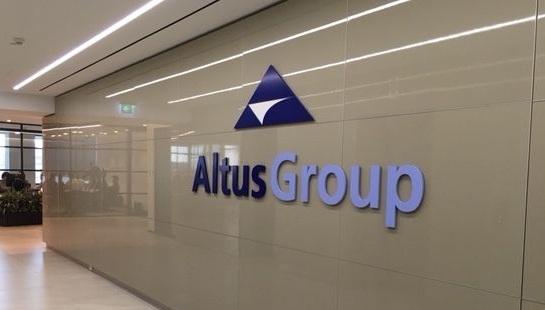
Altus Group, a software company making ease for the real estate industry.

Software is everywhere today, and we are getting quite habitual of doing most of the important daily works using this software. Companies from almost every industry have raised above the physical ledgers and have started to save and process their data on computers using specialized software. Developers have also taken advantage of this opportunity, and we see new sorts of software coming into the market almost every day. Altus Group is one such company that has made it big in the industry by providing similar software for real estate. Yes, there is software customized for easing out the jobs for the real estate industry too. Altus Group is a resultant group that came out of a merger between three famous real estate consulting companies, and today, it has made it big in the industry by building innovative software for the same industry.

About Altus Group

In 2005, three real estate consulting companies came together to merge and make Altus Group. In the beginning, the company offered the same old consultancy services to people, but eventually, it established its base as a software company as well. The company is only about 16 years old, but with its experienced past, it was able to make big in the industry through its two business segments, i.e., Atlus Analytics and Commercial Real Estate Consulting. Altus Group is a publically held company and trades on Toronto Stock Exchange with ticker AIF. The company headquarters is located in Toronto, Ontario, Canada, and about 2200 people are working for it. As per the latest records, Altus Group made revenues worth C$567 million for the last financial year (2020). The company has its clients based in North America, Europe, and the Asia Pacific.

Altus Group
Image source: realestatesindustry.com

Establishment of the Company

Gary Yeoman, a Canadian consultant, came together with two other major Canada-based real estate consultancy companies to build Altus Group. Along with its inception, the company went public on the Toronto Stock Exchange, and Yeoman became the first CEO of the newly founded company. In 2006, the company also entered the land surveying industry by opening a branch in Western Canada.
The real reason behind the growth of the company in such a small period was the strategic expansion it did through acquisitions. In 2007, Altus Group acquired Edwin Hill, and in 2009 it acquired Page Kirkland 2009, followed by the acquisitions of Brazos Tax in 2010, Complex Property Advisors in 2013, SC&H Group’s State & Local Tax Practice in 2014. The journey of the company as a software developer began with the acquisition of PricewaterhouseCoopers’s valuation management practice in 2010 and ARGUS Software in 2011. Altus started to trade for its software with the business name ARGUS.
In 2019, Altus as ARGUS launched the cloud-based version of ARGUS Enterprise product, one of the most popular products by the company. Currently, the company is focusing more on data, analytics, and technology solution. Altus made its latest acquisition was in November 2021, where it purchased an American real estate data company Reonomy.

The CEO at Altus Group

Mike Gordon is the current CEO of Altus Group. He is a Northwestern University Alumn, where he received a BS in Industrial Engineering. Gordon has also got an MBA in Finance and Business Economics from the University of Chicago. After working for a few companies at the start of his career, Gordon became the Vice President at Capgemini in 2001. Then he joined FICO and held different positions in a period of 9 years. In November 2014, Gordon switched to Callcredit Information Group and became the group CEO. He left the company to become the Chairman and Board Member at Hometrack. He has also served Fintech and Constructionline as the non-Executive Director. In September 2020, Gordon joined Altus Group and became the CEO of the company.

Cision

Cision – A media software company that merged from a 154-year old Swedish press agency.

Cision is a public relations and media technology company incorporated in the Cayman Islands. Its history roots back to 1867 when a Swedish press agency called Svenska Telegrambyrån was formed. Its headquarters is currently based in Chicago, Illinois and it provides worldwide services to customers. Cision currently has Abel Clark as its CEO who leads 6,300 employees of the company to achieve better PR and marketing strategies. Recently, Company has also won the Best Feature Set (Cision Communications Cloud) 2021 and Best Customer Support awards by TrustRadius.

About Cision

Though Cision is famous as a web-based PR and media software company, the company also owns other online publicity and media service brands. These include PRNewswire, Canada Newswire, Bulletin Intelligence, PRWeb, etc. Apart from its offices in Canada and US, the company also operates in Europe and Asia. The PR services that are provided to the clients are either through a cloud-based model or SaaS. The customers of Cision include commercial businesses, government bodies, non-profit organizations, and educational institutions.

Cision
Image source: media-exp1.licdn.com

Founding Story of Cision

Svenska Telegrambyrån, a Swedish press agency marks the founding date of Cision in 1867. After this press agency was founded, Henry Romeike in 1881 founded the first clipping bureau in London. In 1892, Svenska Telegrambyrån established its advertising department along with a press clipping service which became famous as Pressurklipp. Between 1932 and 1934, Bacon’s Clipping Bureau was founded for the production of media books and guides on public relations.

Bacon eventually started launching many new services that included a directory for the contact information of every editor and reporter and press release mailing services. In 1972, Bacon along with Romeike & Curtice Ltd collaborated and launched a joint enterprise called Bacon’s Information International. In 1995, K-III Communications acquired Bacon’s Information and later changed its name to Primedia Inc.

A couple of years after the acquisition, Bacon partnered with MediaMap and announced that the companies will combine their media databases and PR software. By this time a company called Sifo Group AB bought Pressurklip and also acquired Romeike Group to become the largest media monitoring company globally (1999). After acquiring Romeike Group, the company changed its name to Observer AB which after two years acquired Bacon’s Information.

After all the global leaders of media and PR came under the same brand name, it acquired a series of companies in the early 2000s. The companies include Chicago News, MediaPulse, Media Clips Inc, Multivision, and many more. In 2007, Observer AB and Bacon’s Information were rebranded as Cision and in the same year, their campaign management software was launched as CisionPoint.

Recent Days

After 2007, all the operations of Observer AB were carried out under the name Cision/Cision AB. In 2011, the company sold its Finish subsidiary, Oy Cision Finland AB to M-Brain Group. By this time every industry witnessed the growing popularity of digital marketing and how social platforms were used to grow. So, Cision acquired a social media analytics company called Visible Technologies in 2014. Later that year, Cision AB merged with another public relations company, Vocus and they agreed upon the deal that the joined entity will be known as Cision. After this merger, Company relocated its headquarters to Chicago.

In 2015, Company acquired a UK-based company called Gorkana that also offered monitoring and analysis services. Cision also acquired PRNewswire from UBM Plc in December 2015 for $841 million. In 2017, the company went public via a reverse merger but again in 2020, it became a private company when Platinum Equity acquired Cision for $2.7 billion. Latest, Compay acquired Brandwatch for $450 million in February 2021.

Abel Clark – CEO of Cision

Abel Clark joined Cision directly as the CEO of the company in 2020. He is a very experienced industrial person who served as the CEO and Chairman of TruSight before joining Cision. Abel also has past working experience with Thomson Reuters as the Global Managing Director. He has high experience in leading management teams, simplifying business, and providing strategic growth solutions. Abel has an engineering degree from the University of Southampton.