Your Tech Story

tech story

monday.com

Monday.com – A Company That Gives The Liberty To Design Their Own Work Management Applications.

Founded in 2012 by three entrepreneurs, Monday.com was built in a way to give companies and individual clients the liberty to develop their own applications. Depending on the needs and goals of a company, it has to buy or develop customized work management software. Monday.com is a publicly-traded company that specializes in several domains including project management, team management, no-code development platform, and many more. The project of Monday.com was started in 2012 and was officially launched two years after that. The company’s headquarters is based in Tel Aviv, Israel and currently, it has more than 1,000 employees.

About the Company

Being an expert in project and work management, the main services offered by Monday.com are sales and CRM, inventory tracking, software development, HR, operations, etc. Monday.com can be best described as a Work Operating System (Work OS) that is a very flexible option, especially for the remote work environment. It helps in shaping the entire workflow in a team from collaboration to developing custom work applications. The UI of Monday.com is very careful and it helps in visualizing a lot of information from a different perspective. Monday.com was originally famous as daPulse and its name was changed in 2017. Recently, the company was also awarded Calcalist’s most promising startups.

History

The founders of Monday.com are Roy Mann, Eran Kampf, and Eran Zinman. These three founders started the project to develop something innovative and easily customizable so that it can be used by everyone. In 2012 the company was started and it was a huge triumph for the company that later in the same year it was able to raised funding of $1.5 million in the seed round. The first step towards developing a new project, the founders tried to understand the pain points of their target customers and eventually built a prototype under the brand name daPulse. In 2014, after two years of hard work the company was finally able to launch its first commercial product, and in the same year, it was able to land its first six customers. The business started out of an apartment in Tel Aviv and in that tiny office, they hosted their first board meeting.

Expansion

The company started growing impressively as within one year of launching its first product its customer base went from having six customers to 3,181 new customers. So, it expanded the team as well and added nine new members. In 2016, the company hosted its Series A funding round and raised $7.6 million. This funding round was led by Genesis Partners and Entrée Capital. By the end of this year, the company was able to acquire more than 7,000 new customers. Monday.com released a new mobile application in 2016. The Series B funding round of the company took place in 2017 and the company successfully raised $25 million. Insight Venture Partners along with existing investors from the Series A funding round. The total customer base of the company exceeded 20,000. Monday.com eventually got some exposure in 2017 when it was featured in Globes Most Promising Startup of the Year and also became one of the top 15 companies in 500 Fastest Growing Companies. By the end of 2017, daPulse was officially branded as Monday.com.

In 2018, the company expanded more as it opened its first international office in New York City. The company also raised $50 million in Series C funding and a new investor called Stripes Group was added. In the Series D funding round, the company was able to raise $150 million and it was raised by Sapphire Ventures. The company became the recipient of the 2020 Webby Award and also achieved unicorn status. It has also expanded to the UK, Miami, and San Francisco.

monday.com
Image source: onlinegeniuses.com

Roy Mann – CEO of Monday.com

Roy Mann is one of the founders of Monday.com and the present CEO of the company. He started his career as a web developer at Finjan. Apart from co-founding Monday.com, he is also the founder of SaveAnAlien.com and served as the former C-CTO of wix.com. Mann studied computer science at Reichman University.

Nemetschek

Nemetschek: Digitalizing the Architecture, Engineering, Construction Industry.

The software has made almost every kind of work easier, the designing and architecture work being one of them. There are several software development companies that have introduced multiple software packages that have become essential for engineer professionals, such that they cannot do without them. Companies like Nemetschek are among those companies that make those architecture software products used to plan, design, and build critical architectural parts. The company works through its four business units, i.e., Planning & Design (Architecture and Civil Engineering), Build & Construct, Manage & Operate and Media & Entertainment. So along with the construction and architectural software, Nemetschek also creates software for the entertainment and media industry.

About Nemetschek

Nemetschek, aka the Nemetschek Group, is a German software development company that makes software for the architecture and construction industry. The company is over 70 years old (founded in 1963) and has headquarters based in Munich, Germany. Prof. Georg Nemetschek was the founder of Nemetschek and Yves Padrines is the cureent CEO at the company. As the company develops the software for the construction industry, this software includes works like planning, designing, building, and managing buildings as well as real estate. The company also builds software for the media and entertainment industry. As per the 2022 records, over 3300 people are working for Nemetschek, and the company made revenues worth € 597 Mio for the financial year 2020.

Nemetschek
Image source: www.nemetschek.com

The Founding

The company history dates back to 1963, when Professor Georg Nemetschek founded Nemetschek as Ingenieurbüro für das Bauwesen. The founder was a certified engineer and wanted to bring a new change in the construction industry. The company was into structural designing from the very beginning and became the first company to make use of computers for designing purposes and also developed software for engineering professionals. Georg himself joined a programming course to make more development in this regard.

In the beginning, the company produced software for its own use, but in 1977 it started to commercialize its Statik 97/77 program for civil engineering professionals. In 1980, Company introduced another software package (a computer-aided engineering software) that enabled instant calculations and designing of some important components used in solid construction. The software was a revolutionary product (and relevant for many years) that was the first to be used on a microcomputer.

In 1987, Nemetschek brought a fully equipped workstation for architects and engineers that also included a printer and a plotter. The next year, the company introduced Allplan, a premium software to create 3D models, and in 1992, Company launched a new high-performance version of the same. In 1994, the company was renamed Nemetschek AG, and it went public in 1999. The company operates in about eight European countries through its different subsidiaries.
The company also started to expand through acquisitions and acquired names like Graphisoft (2006), Data Design System (2013), Bluebeam Software, Inc. (2014), Solibri (2015), dRofus (2017), RISA (2017), MCS Solutions (2018), etc.

The CEO at Nemetschek

Yves Padrines is the current CEO of Nemetschek and has more than twenty years of experience. He started as a consultant at PriceWaterhouseCoopers and worked as a financial & business development manager at Creative Labs, Inc. In 2002, he joined Canal+ as the area sales manager. Padrines worked at NDS for about eight years, where he held posts like Vice president and director of sales and business development. In August 2012, he joined Cisco and later switched to Synamedia. He has also been an advisor for multiple companies. In March 2022, Padrines was appointed as the CEO of Nemetschek Group.

Ashneer Grover

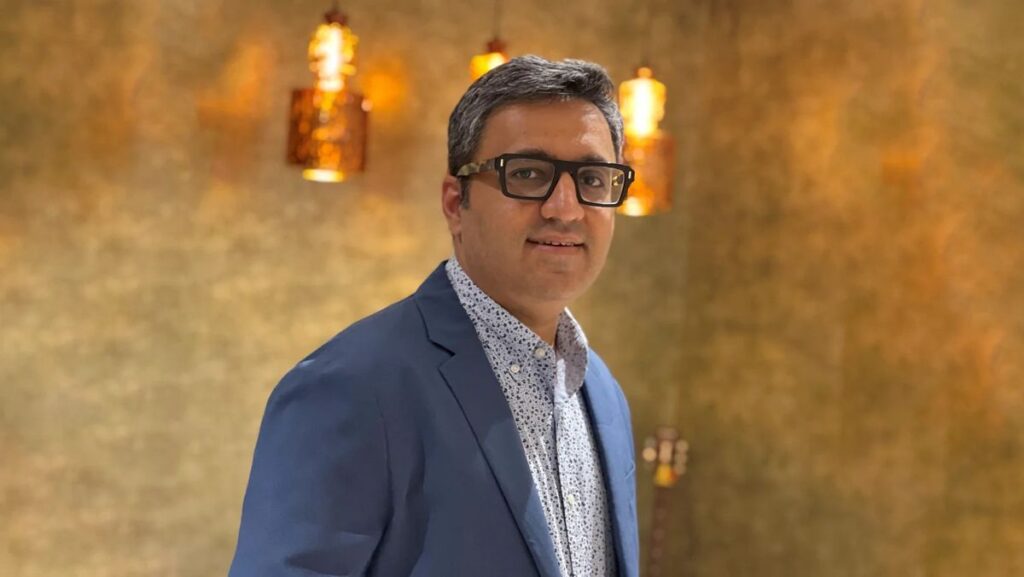
Ashneer Grover – The former MD of BharatPe who took a voluntary leave from the company.

Ashneer Grover is one of the most famous businessmen in the Indian entrepreneurial world. He became famous after taking the position of Managing Director in BharatPe. Grover has been the recipient of several awards and accolades for his contribution to BharatPe and also as a visionary and leader. In 2021, Ashneer Grover was featured in Fortune India’s list of 40 Under 40 India’s brightest young business minds. From 2020, Ashneer Grover’s name has been making headlines as he got involved in some controversies. He was also sent on leave for using inappropriate language against the staff of Kotak Mahindra Bank. These are a few reasons behind his resignation from BharatPe.

Early Life

Grover was born in Delhi in 1982 and was raised in the same city. After completing his schooling, he joined IIT Delhi to study Civil Engineering. While he was studying at IIT, he was one of the six students who got selected for an exchange program for a university in France. After he went to France he also received a scholarship of Rs 5 lakh from the French embassy. After graduating from IIT Delhi, he got enrolled in IIM Ahmedabad in the Finance Program for MBA. During the placement season, Grover secured a job at Kotak Investment Banking and started his career.

Career

When Grover got his first offer, he directly joined the company as its Vice President. After joining Kotak Investment Banking, he worked there for almost 7 years and left the company in 2013. He then joined American Express, a well-known MNC, and worked there for a couple of years. In 2015, he left American Express to join Grofers as the company’s Chief Financial Officer. In these several years, Ashneer tried to expand his network and made connections with several investors as well. After working with multiple companies, he wanted to do something different and thus joined PC Jewellers as Business Head. His main target in the company was to develop an improvement with the payment option.

Ashneer Grover
Image source: the-captable.com

Since he was developing new payment options for the company, he got the idea for a new start-up revolving around the same. So, in 208, Ashneer Grover along with Shasvat Nakrani and Bhavik Koladiya launched BharatPe. Today, it is one of the most widely used digital payment options in the country. It is India’s first UPI interoperable QR code. Launching a startup was quite challenging for Grover in the early days. Initially, he wasn’t able to afford too many employees but he needed someone to manage the operations with him. So, eventually his wife, Madhuri became a part of the company. Grover is also famous as one of the sharks in Shark Tank India, a reality show for startup businesses.

Resignation from BharatPe

There are several controversies and criticism that have surfaced in the last few years against Grover. For example, a lawsuit was filed against Grover and his company, BharatPe by Paytm and a few other companies for distributing pamphlets that suggested that they were not fully India-based companies. The companies that filed the lawsuit also requested the Reserve Bank of India to take appropriate actions against BharatPe. Another battle also took place between BharatPe and PhonePe regarding the usage of the same suffix.

But one controversy that escalated fast and didn’t leave Grover any other option but to retire was an abusive audio clip. In January 2022, the audio of Grover having a conversation with Kotak Mahindra Bank went viral where abusive languages were used. The bank also alleged that both Grover and his wife threatened the staff of the bank. Later, Grover tweeted that it was a fake audio clip. In March 2022, Grover stepped down as the Managing Director of the company and quit from BharatPe.

Personal Life

Ashneer Grover is married to Madhuri Grover who is also an entrepreneur. Before she started working for BharatPe, she was an interior designer and worked with many high-profile people. The couple has two children, a son (Avy Grover) and a daughter (Mannat Grover).

Shark Tank India

Long-lasting Impact of Shark Tank India on Indian Startup Ecosystem.

Startups are the current obsession and way to independence for the youth. Starting from startups like Flipkart and PayTM, the Indian startup industry has come a long way. In fact, in terms of startups, India comes third in the list of the number of startups. Today, we can see an MBA graduate happily running a tea stall or some retired lady running their own food delivery business successfully. There is a huge role of the internet in making startups a passion more than a risk for people, but yes, the will of doing something big is what drives people to take that one decision that would change their lives forever.

Though the internet and good marketing have been one of the reliable sources from where we would get to know about new startups, a reality TV show named Shark Tank has just made us even more aware of the Indian startup industry. Shark Tank is a show that includes a bench of judges who are to invest in new business ideas from the budding entrepreneurs based on the potential of those ideas. It is the first season of the show in India, whereas the Shark Tank franchise has already produced thirteen successful seasons of the same show in the US and given opportunities to multiple startups.

About Shark Tank India

Shark Tank India is the Hindi adaptation of the American reality show Shark Tank. The show has gained popularity in India because of its unique concept of startups trying to grab an investment from the panel of ‘Sharks’ (investors/judges). The show was aired first time on TV on 20 December 2021, and the last episode of the first season came on 4 February 2022.

Shark Tank is a show of its kind, as the budding entrepreneurs of every age with their idea of business participate to represent their business idea in front of the selected investors (Sharks) and convince them to invest in the idea based on its potential. These Sharks are the leaders of their fields and looking for businesses that can multiply their investments. The Sharks in the first season included Ashneer Grover (MD and Co-founder of BhartPe), Aman Gupta (Co-founder and Chief Marketing Officer of boAt), Anupam Mittal (Founder and CEO of Shaadi.com and People Group), Ghazal Alagh (Co-founder and Chief Mama of MamaEarth), Namita Thapar (Executive Director of Emcure Pharmaceuticals), Peyush Bansal (Co-founder and CEO of Lenskart), Vineeta Singh, (CEO and co-founder of SUGAR Cosmetics).

Shark Tank India
Image source: moneycontrol.com

Impact of Shark Tank India on Indian Startup Ecosystem

This is the first time that Indian TV has aired a kind of show that is appealing to every age group and has inspired many budding entrepreneurs to look beyond the 9-to-5 jobs. Shark Tank has given a great platform to people who have dreamt about having their own business but were always afraid of taking that leap of faith. The show not only inspired many but also opened gates for financial literacy for people and made them aware of many financial terms like capital investment, angel investors, series A (B, C, D, E) funding, etc., that are only known to business professionals only.

We can clearly see that not long ago, people were against starting up businesses that are different from the usual fields. Most of the times parents would ask their children to opt for engineering or medical, as these professions have always been the most secure ones. Shark Tank as a show has made a powerful impact on the middle-class population of India, which has always been afraid of taking risks and preferred government jobs over any business any day. The show has been a medium to educate the Indian middle-class parents about the existing flourishing startups and the possible opportunities in the said field.

Shark Tank has a great impact on the Indian audience, as the 35-episode series showcased people of age group from teenage to people of retiring age pitching their business ideas in front of the Sharks and bagging investments in lakhs and crores. This is only the first successful season of Shark Tank and many more to come, where we can see unique ideas making their way towards success and people normalizing startups as a career. India is already producing CEOs for big-name companies in the west, now this is the time, India produces its CEO for its own startups and makes big in the world.

Shark Tank can be a medium of filling people with confidence and becoming independent. The main learning from the show can be to find an opportunity in everything rather than waiting for an opportunity. Shark Tank is an educating show that is a must-watch for not only people looking forward to starting a business but also, for people who want to learn about business, startups, finances, investment, and where the world is moving in terms of startups and investments.

TechnologyOne

Adrian Marco’s TechnologyOne Is Australia’s Largest Enterprise Software Company.

Adrian Di Marco, an Australian entrepreneur founded TechnologyOne in 1987. The company received unicorn status in 2014 and it is mainly known for offering commercial support software. It has its headquarters based in Brisbane, Australia and apart from the Australian market, it has an international presence in the UK, New Zealand, South Pacific, and Asia. TechnologyOne has 1,200 employees and currently, the CEO of the company is Edward Chung. It mainly offers SaaS products as in 2012 the company decided to transfer its business solution from on-premise business software to a SaaS provider. TechnologyOne is a publicly-traded company and it is listed on the Australian Securities Exchange under the symbol TNE.

About TechnologyOne

TechnologyOne is one of the first startups in Australia and when it was founded its main focus was deep research and using innovative cutting-edge technology. The company is known for investing heavily in its R&D unit. It invests 20% of the total annual revenue for research purposes. The company today operates in six market categories. They are local government, education, health and community services, government, asset and project-intensive, and financial services and corporates. TechnologyOne is currently associated with more than 150 health and community organizations for better health outcomes. The company started expanding in the 21st-century by opening international offices and also through several acquisitions.

TechnologyOne
Image source: technologyonecorp.com

History

Adrian Di Marco decided to establish a new enterprise software company when he saw the immense potential to build a new generation of accounting software. The initial investment to establish TechnologyOne was offered by J L Mactaggart Industries (John and Dugal Mactaggart) which was a former client as well. TechnologyOne developed configurable software such that every client can use the same code but the software can be configured to meet individual needs. In the year TechnologyOne was established, the company opened its R&D center in Mactaggart’s hide processing plant.

The company introduced its first product in the market, FinanceOne in 1991. Marco’s idea was to make the foundation of the company based on relational database technology and it paid off. After the first product was released, TechnologyOne was recognized by various magazines. In 1995, the company’s name was on top of the customer satisfaction survey list released by CFO magazine. In the late 1990s, the company opened several other offices in Australia. It also started getting international contracts and big projects. For example, in the 1990s the company built Automated Titling System (ATS) for the Queensland Department of Natural Resource and Mines. In 2000 and the following years, TechnologyOne opened new offices in London and New Zealand and currently it is focusing on the local government market and tertiary education.

Success

There was a shift in the strategy of TechnologyOne in 2005 when it decided to shift from functionality-centric software to people-centric software. In 2004, TechnologyOne recorded $1 billion market capitalization and entered the S&P/ASX 200 Index. Marco was the CEO and COO of the company until 2017 when he decided to step down and his place was taken by Edward Chung. By the end of 2017, TechnologyOne recorded a huge profit from its cloud business for the first time and landed 112 new cloud customers. Currently, its annual revenue has reached $300 million.

Acquisitions

TechnologyOne has also expanded its territory through a series of acquisitions. In 2000, it made the first acquisition when it purchased Tablelands Computer Systems followed by ProClaim software in the same year. In 2002, it acquired Infloplan and Avand Pty Ltd 2007. In 2015 the company acquired three businesses, namely, ICON Software, Digital Mapping Solutions, and Jeff Roorda & Associates.

Edward Chung – CEO of TechnologyOne

Edward Chung became the CEO of the company in 2017 but he has experience with TechnologyOne for more than 10 years. He worked for the products and solution division of the company and also became the COO of the company before getting appointed as CEO. Edward also worked for Queensland Rail and Queensland Audit Office for 10 years.

F5 Inc

Jeffrey S. Hussey, An Investment Banker Behind The Idea Of Foundation Of F5 Inc.

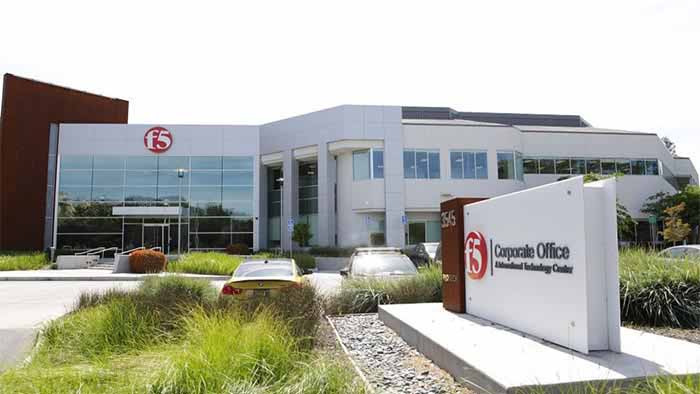
F5 Inc is an American software company that was established in 1996. The company was originally founded as F5 Labs and formerly branded as F5 Networks Inc. The main solutions offered by F5 Inc include application security, online fraud prevention, application delivery networking (ADN), multi-cloud management, network security, and many more. The headquarters of the company is based in Seattle, Washington, US. Apart from the headquarters, the company has 75 offices in 43 countries. Apart from the development of main software products, these offices are built to support marketing, sales, support, etc, especially on the international markets. Apart from America, F5 has a strong market in Europe.

About F5 Inc

F5 Inc was originally a provider of application delivery controller (ADC) technology. Eventually, the company expanded to other related sectors like automation and security services. F5 has landed some of the biggest tech companies in the world as its clients like Microsoft, Oracle, Tesla, and Meta. It also serves many companies from the Fortune 1000 companies and 48 out of Fortune 50 are also clients of F5 Inc. Apart from North America and Europe, F5 is also expanding its market to the Asia-Pacific region. F5 has also made a few significant acquisitions in the last few years. They include NGINX Inc for $670 million, Shape Security Inc for $1 billion, Volterra Inc for $500 million, and Threat Stack Inc for $68 million.

F5 Inc
Image source: golicense.net

History

The original brain behind the foundation of F5 Inc was an investment banker, Jeffrey S. Hussey. After he passed out from the University of Washington, he opened his business in Seattle. At the time when he opened his business in Seattle, that place was the hotspot for all types of IT activities, and his idea revolved around assisting businesses to help with internet traffic. When Hussey started the company, there was no initial product that he had in mind but he relied on the potential of the new economy that was to be formed with the rapid expansion of an internet-based world. After the company was established in 1995, he became the CEO, President, and Chairman of the company and started hiring employees. It took one year to build a product to market and then finally in 1997 the company was ready to roll out BIG/ip Controller.

Expansion

It was only a few months that F5 Inc rolled out its first product in the market that it came under the radar of its gigantic competitors. Companies like Cisco Systems Nortel Networks Corporation were already big companies but F5 got a foothold in the market and its product was good enough to compete with these tech giants. By the end of FY 1998, F5 generated annual revenue of $4.7 million from a single product. Shortly, the company released another product, 3DNS Controller and after launching these two products F5 Inc planned to go public. In April 1999, after the company changed its name from F5 Labs to F5 Networks it went public. By the time the company entered the 21st century, it landed more than 1,600 customers. There was a big change in the year 2000 as Hussey stepped down as the CEO of the company and his place was taken by John McAdam.

The company faced a decline in its sale and there was a loss of revenue in 2000. So, McAdam’s first priority was to improve the reputation of the company and turn around its fate. After a few years, from the mid-2000s, the company again started making profits and in 2004 its profit gain increased by 705%. In 2017, John McAdam was replaced by François Locoh-Donou and the headquarters shifted to the F5 Tower.

François Locoh-Donou – CEO of F5 Inc

François Locoh-Donou joined F5 Inc in 2017 and he has more than 20 years of experience in enterprise technology. Before joining F5 Inc, he was a part of Ciena and Photonetics, a French company. He also co-founded Cajou Espoir, a social enterprise. Donou completed his undergraduate studies in France and then Stanford Graduate School of Business.