Your Tech Story

tech story

spicejet

Ajay Singh : The Man Who Saved SpiceJet From Vanishing into Oblivion

What is good in doing business without risks? When one aims for something bigger and more profitable, it is reasonable to go against the odds and take the chances. But, what about the companies whose strategies are failing and going downwards in the spiral of destruction? Should it give up or just hope for a knight in shining armour to appear and be the lifesaver. Well, the story of SpiceJet clearly narrates a tale, where they well resurrected by none but Ajay Singh. After facing excessive loss through 4 consecutive financial years, Ajay Singh finally stepped in to take over the control once again and re-establish the reputation of the company.

SpiceJet is an Indian airline headquartered in Gurugram whose history dates back to 1984.

Early Life

Singh was born into an influential family from Delhi. His father was an established businessman, Vijinder Singh, and his mother was Kalpana. Singh’s family business was mainly about real estate and fashion accessories.
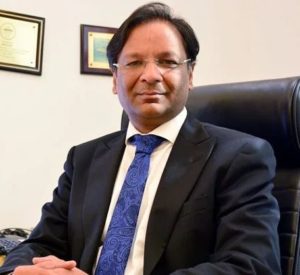
Ajay Singh SpiceJet
Image Source: indianexpress.com

Singh was kind of an all-rounder from a very young age. He went to St. Columba’s School and apart from excelling in his academics, he was very good at playing cricket, table tennis and football. He was also the caption of his school’s football team. After completing his school, he went to IIT Delhi and graduated from there in 1988 with a degree in textile engineering. And, like kids in the family of every other businessman, he went to pursue his MBA. He completed his MBA from Cornell University.

Early Career

At Cornell, he became the President of the Indian Association, and thus, showed a keen interest in the events of India related to government policies. He was also interested in political matters and thought that more educated people are needed in the Indian political system. So, he came back to India in 1992 and pursued law at Delhi University.

In 1996, Rajendra Gupta, a BJP leader who later became Delhi transport minister, hired Singh for Delhi’s transport corporation board. After joining his first responsibility was to stabilize an already bankrupted corporation, which had 40,000 employees. Singh implemented the global transportation strategies and expanded the corporation from 300 to 5000 buses within a span of two and a half years. This was his first achievement after returning to India and stepping into both the political and business world.

In 1998, Singh became an officer on special duty (OSD), where he played a major role in launching DD Sports and DD News. Singh had some plans and suggestions in his mind to reduce the cost of telephony, and thus, persuaded BSNL to drop the incoming charges on mobile. All these developments took place only up till 2004 when BJP lost the general election, and Singh found him unemployed.

Singh Acquired SpiceJet

After BJP lost the election, Singh decided to get back in the entrepreneurial world, and his first move was to acquire ModiLuft and carrying the business as SpiceJet.

Looking back to the history of ModiLuft, it was an airline company established in 1984 by S.K Modi. In 1993, it came into a partnership with Lufthansa, a German airline, but in 1996, it ceased the operations.

So, whatever was left of the company was acquired by Singh after eight years, and this time, he renamed it as SpiceJet and followed the low-cost model to provide a good experience and low fare to the public.

Initially, Singh’s stake was 20% in SpiceJet, but it came to 6% when media tycoon Kalinathi Maran acquired 37.7% in 2010. Eventually, Singh sold his remaining stakes too.

The Downfall of SpiceJet

After Singh stepped down, SpiceJet rocketed in terms of making consecutive losses in three years. In the year 2012, SpiceJet faced a loss of Rs 604 crore followed by Rs 192 crore, Rs 1,001 crore, and Rs crore, in the next three following years.

The market share dropped from 20.9% in 2014 to 9.2% in 2015. Increased number of employees also created a problem, as, after some time, the company was unable to pay them. The oil companies also refused to refuel them, and by 2015, the company was barely able to crawl on the surface with no chance of survival. This is when Singh stepped in.

Bringing SpiceJet Back to Business

Singh was back in the territory of SpiceJet in 2015 and acquired 58.46% stakes of the company. He spotted that over employment was a very big issue with the company and brought down the number of employees to 4,000 from 5,500. After facing crores of loss for four consecutive years, the company finally made a profit of Rs 450 crore in 2016.

Today, SpiceJet has become India’s fourth-largest airline in terms of passengers and operates 306 flights on a daily basis.

4004 Intel Microprocessor (1)

Marcian Hoff : An Electrical Engineer Who Co-invented the First Microprocessor

The modification of an already existing invention is much easier than proposing the idea of creating a new one. With time, advancement in technology and acceptance within mankind both took place, which seemed like far-fetched goals in the earlier days. Even though there were many obstacles in the past, many significant scientists emerged out on the surface with innovative innovations. And, today, these are the innovations that are helping us take a step forward towards building a smarter world.

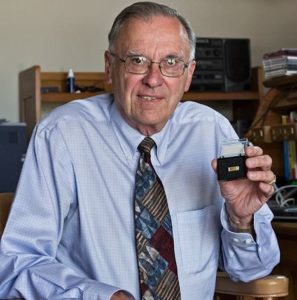
Marcian Hoff, popularly known as Ted Hoff, is one such brilliant innovator who invented microprocessor in the early 1900s. Hoff started co-invented things while he was pursuing a PhD. But, in 1968, his life completely changed its course and became a roller-coaster ride, when he was approached by Robert Noyce, co-founder of Intel Corp.

Early Life and Education of Hoff

Marcian Hoff was born on 23rd October 1937 in Rochester, New York. He was lured by the scientific world from a very young age, especially when he received a subscription to Popular Science from one of his uncles at the age of 12. For his undergraduate degree, Hoff went to Rensselaer Polytechnic Institute and graduated in 1958 with a bachelor’s degree in Electrical engineering. As an undergraduate student, he worked at Rochester’s General Railway Company during the summer breaks. During his time in this company, he worked with magnetic cores and transistors, and also developed his first two patents during this time.

Ted Hoff aka Marcian Hoff
Image Source: blog.parrikar.com

After completing his college, Hoff received a National Science Foundation Fellowship which gave him the opportunity to attend Stanford University. In 1959, he received an MS degree and a PhD from the same university in 1962. During this time, he co-invented least mean square filter with Bernard Widrow, his guide and a professor of Stanford University. The algorithm they invented is still used in modems today.

Hoff chose to stay in Stanford to carry out his studies on neural networks and integrated circuits, hence, continued research for another four years. While he was learning about integrated circuits, he realized how hard it was to build one.

During this time, Noyce was hiring for Intel, and he contacted a professor of Stanford to know if there was anyone in the campus who had the potential to become an Intel employee. And this is how Hoff ended up as Intel employee in 1968.

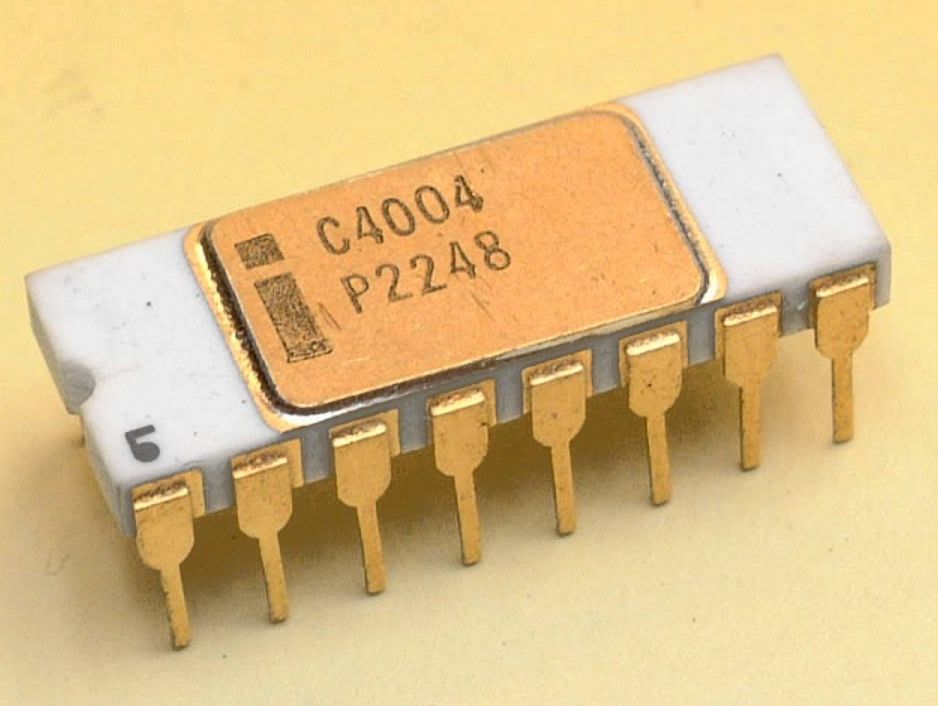
Intel 4004

Marcian Hoff joined Intel in 12th September 1968, as the company’s twelfth member. Intel was established with the main goal to replace all the magnetic core memories with semiconductor memories. Since, it totally diverted from the conventional idea about computer memory, creating a market demand was very tough. So, they decided to take up clients and develop memories as per their requirements. Intel’s first customer for this semiconductor memory was a Japanese company who sold calculators under the name Busicom.

They demanded different types of chips for performing various activities, and hence, both the companies signed a contract to create these chips in April 1969. After this contract, engineers were sent from Japan to work on this design, but at the same time, Hoff on behalf of Intel created another design, which used DRAM (dynamic random access memory). The company liked Intel’s approach better, as a lesser number of chips were able to perform more functions.

Intel, after successfully designing product for this client, wanted to expand the utility of silicon gate, and they hired Dr Faggin in April 1970 to conduct research and make progress on this area. Today, this metal oxide silicon (MOS) process is extensively used in what we call embedded system.

Hoff said that nobody in the company expected as much growth as took place in the following years.

What after Intel 4004 project?

After the 4004 project, Noyce’s next target was to implement their MOS technology in telephony. So, Hoff started working CODEC (a decoder working used in the telephonic industry to convert analog signals to digital and vice versa). Intel was able to come up with monolithic CODEC which could be used commercially.

Hoff left Intel in 1983 and joined Atari as it was working on some really advanced ideas. But, the business strategies of the company were very poor, which resulted in the dropping of the revenue from $2 billion to $1 billion within a single year. Hoff left Atari in 1985 when the company was sold.

From Engineering to understanding Business

Today, Hoff is the part of Teklicon, a company that deals with business and law; established by Gary Summers, who was the head of semiconductor designing in Atari, when Hoff joined the company.

Graphcore

Simon Knowles : A Pioneering Engineer in the Field of AI-ML

In the 21st century, Artificial Intelligence and Machine Learning have spread a cloak of mystique around the world that no one wants to drop off. Today, the prime area of learning, research and improvement have been revolving around these two things which so far seems to the two most important and necessary development of science.

With science already bringing a new wave of inventions to the shore of computation, Simon Knowles is ruling the world with his idea of creating chips for AI and ML which will make the computer’s brain work more like a human’s brain.

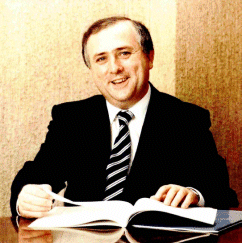
Simon Knowles is a famous entrepreneur and an engineer who is the co-founder of Graphcore, a semiconductor company that he founded along with Nigel Toon. Knowles’s main aim is to create an IPU (Intelligence Processing Unit) that can allow humans to explore the scope of AI more freely and not just scraping the surface.

Education and Early Career of Knowles

Simon Knowles
Image Source: http://scaledml.org

Simon Knowles graduated with a degree in Electrical Engineering from the University of Cambridge. After graduating, he went to study early neural networks at a UK government research lab.

He co-founded his first start-up, Element 14, a wireless processor developing company in the 1990s, which came under the acquisition of Broadcom Inc. in 2000. He sold the company for $640 million and co-founded his second start-up, Icera, in partnership with Toon. The company was established for mobile chip making in 2002, which later was acquired by Nvidia for $436 million.

The Idea of Graphcore

After selling Icera to Nvidia Corp. in 2002, both the co-founders were trying to settle on one single idea, which could be their next field of research or next chance to make billions. Not being able to make a choice, Knowles decided to attend the series of lectures at Cambridge University. One day, he attended the presentation of Steve Young, a Cambridge professor of the Information Technology department, who was elaborating the limits of computational dialogue systems. Young is also known to invent a speech processing service which is now used in Siri.

While Knowles listened to Young’s speech, the former asked him multiple questions about numerical precision and energy efficiency. But, it seemed like Knowles’s questions were out of the field for Young, but that is where Knowles’s interest was stuck as he wanted to invent something instead of just swallowing the lump of information.

Few days after the lecture, Young contacted Knowles to tell him that his students found out that they were using 64 bits of data for one single calculation. They realized that this can be replaced by 8 bits data per calculation, as Knowles suggested in the lecture, which will save the energy that is consumed before. But the calculations won’t be that precise. Well, Knowles said that was his entire idea to manipulate the brain of the computer and make it more human-like. Knowles, in one of his interviews, said that if they could build this kind of processor, the performance factor will be increased by one thousand.

Everyone including, Young and Toon, was very impressed with his idea, and hence, Knowles and Toon decided to found Graphcore, to build this new kind of IPU. They started raising capital from 2013 and were finally able to launch Graphcore in 2016.

Success of Graphcore

After carrying out thorough research, for three years, to create energy-efficient and a cost-efficient chip, that can harness all the power at one single time, but uses less energy than a GPU, they designed a chip with 1,216 processor cores with 24 billion transistors. This chip was manufactured in 2018 and turns out, it was able to detect 10,000 different images per second.

The company is still working on these chips and making it recognize more complex data and not just simple objects. Knowles’s main goal is to provide the machine with lots of data, and the machine should find out a way to complete the given task. Knowles’s dream to make machines behave human-like is bringing a new era, an era of Artificial Intelligence.

The first funding round of Graphcore was led by Robert Bosch Venture Capital in 2016, followed by a round B funding in 2017 by Atomico, and a few months later, by Sequoia Capital. In 2018, Graphcore raised $200 million in series D funding from investors like Dell, Microsoft and Samsung, which resulted in its net worth to $1.7 billion in December 2018. The company also announced that it might hit $50 million revenue this year.

Graphcore also provides server blueprints to many big companies to guide them on how they should manufacture next-generation computers.

FetchMe Wishes

FetchMe Wishes : The Story of Two Delhi University Students, Who Developed Capital’s First Day Delivery Service

FetchMe Wishes is a Delhi based startup which provides on-demand delivery services. It is a platform which allows customers to order anything from anywhere across Delhi NCR. From stationaries to food items, and sanitary to cosmetics; it can deliver it all right at your doorstep within minutes. Apart from this, the startup caters to big business houses and food outlets as well as provides them with many perks like the freedom to expand their reach, save money and maintain a smaller fleet size by outsourcing their deliveries.

The Co-founders

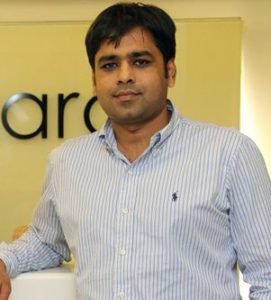
Pranav Gupta and Vaibhav Dara are the co-founders of FetchMe Wishes Pvt. Ltd. Being a commerce student in class 12th, Pranav Gupta still chose Statistics Honours over other mainstream subjects, owing to his love for numbers.

However, the reality of this course was far different from what he had expected. As a result, he lost interest in the subject and fell behind everyone in the batch. Feeling pressurized by this sudden turn and change in the events, he started exploring different ideas, and one day, decided that he wanted to do something of his own.

Founding FetchMe Wishes

FetchMe Wishes Founder

Soon, the time came for Pranav’s sister’s marriage, and he also had his semester exams. Being an only sibling, he was given a lot of responsibilities. On the other hand, he was merely passing in his previous semesters. It was then that he got the idea of FetchMe, a startup that would make people’s lives easier and help them in completing their errands and deliveries.

Pranav looked upon it as an opportunity and brainstormed the idea with his best friend Vaibhav. Vaibhav Dara is currently pursuing mechanical engineering from Delhi Technological University and has the same core beliefs as Pranav when it comes to doing business. It was in June 2018 when both of them shook hands and made FetchMe happen.

Within ten months of FetchMe’s inception, it has already made over one lac+ social media impressions and has a customer retention rate of more than 80%. Major areas that FetchMe is covering in Delhi NCR as of now are East and North Delhi with some parts of Indirapuram and Noida as well. FetchMe has been able to create a fleet size of over 25 people with ten fixed employees and fifteen freelancers.

The Accomplishments

On average, they have more than a hundred orders per day and revenue of over 1.7 lacks per month. FetchMe follows different pricing policies as per the need of its clients. Normally, the charges are INR 40 for the first 3 kilometres and INR 9 per kilometre thereafter, along with some nominal waiting charges, if applicable. They also have special prices for businesses collaborating with them, and those charges vary from INR 25-80 depending upon the number and distance of each delivery. They have already collaborated with over ten such businesses, and their B2B collaborations are growing at a whopping rate of 25% each month.

Recently, FetchMe was able to secure a private investment of 12.5 lakh for 5% of its equity valuing the company’s net worth at INR 2.5 crores.

How it Works

The working is very easy. You can either call, Whatsapp or place an order by visiting their website and click on the order now button. After that, you will be showcased 4 options to select and when you select an option, you will be redirected to a window, where you can give your exact order details and provide them with the correct pickup and drop address. After providing the details you will be given an option to calculate the fare, and once you are good to go with the price, you can then proceed with the payment and review different payment options. For payment, they have various options for online payment like a Credit card, Debit card, PayTm, and other mobile wallets. Along with that, they also provide Cash on Delivery option to their customers.

Michael Aldrich inventor of online shopping

Michael Aldrich : A Connoisseur in the Entrepreneurial World and the Founder of Online Shopping

In the biggest success stories of start-ups of that, we hear from around the world today would have not come into existence today, if online shopping did not exist. From the prospering online shopping sites, like eBay, Amazon, Flipkart, to the very small newly started e-commerce sites should be grateful of the English entrepreneur who came up with the idea of online transactions. That great innovator is none other than Michael Aldrich, who developed e-commerce from scratch in the late 1970s. With an experience of 28 years in the IT sector, he worked for reputed companies before inventing teleshopping (today known as online shopping).

Early Life

Born into a family living in Hertfordshire, England, on 22nd August 1941, Aldrich did his schooling from Clapham College, London. He was a very bright student and even received a scholarship to study history at the University of Hull in 1959. During his time there, he met Sandy Kay Hutchings and got married to her just before completing his graduation. So, Aldrich already established a family before starting his career.

Many say that getting committed and entering into married life at a very young age can create difficulties and stops you from giving your best. But, in this case, it’s diametrically opposite.

Beginning of Aldrich’s Career

Michael Aldrich inventor of online shopping
Image Source: alchetron.com

Aldrich worked for Honeywell and Burroughs in the sales and marketing department of the company for almost 15 years. After that, he joined Redifon Computers, which was a part of the UK Rediffusion Group of Companies. The Rediffusion Group manufactured televisions as well as computers, but Aldrich worked for the department of computer manufacturing.

This is when the journey of the invention of online shopping (he named it teleshopping) began.

The Story

One day in the year of 1979, UK Rediffusion Group sent a colour television to Aldrich’s office, but he didn’t pay much attention to it, as his main concern revolved around selling computers. This television came with a new service called Prestel, a paid commercial service that would be delivered through a telephone line.

Seeing no interest of Aldrich in that television one of the engineers in his company, Peter Champion, decided to learn more about this new TV, and its new feature. After studying about the TV for a few weeks, he told Aldrich that the television came with an auto-dialer that could hold four telephone numbers. He gave Aldrich the idea of building such a controller for a computer, and then, connecting the television. Aldrich noticed his point, but he didn’t give it much of thought at that time.

After a few days, when Aldrich was complaining about the weekly tour to grocery shops, the idea of Peter hit him hard. This was when he thought of connecting the television to the supermarket itself and get the groceries delivered to home. Without wasting a single second, Aldrich started working on this idea.

After days of research and writing papers, finally, a prototype TV to test this real-time transaction process was connected to one of their computers, and the test was successful. There wasn’t any year of research going on to support this idea of teleshopping, and hence, it seemed like a sudden scientific mutation took place in the communication world.

Once it was developed, Aldrich needed to set up a market and build up demand as the entire world wasn’t aware of how to use this new system.

After Reality Hit Hard

Aldrich found himself in a total mess, as he invented a product, but there wasn’t a market to sell it. So, after the invention, he tried reaching out to people for real feedback and everything was done in sheer privacy as their product wasn’t officially launched.

He went to a conference in New Orleans, kept it low and received positive feedback from the people. Returning back to the UK, the company designed the multi-port controller, built the computer interface software, and finally, launched it on April 1980. The entire world was amused by the idea of shopping from home, but no one was actually able to interpret how it worked. So, Aldrich hosted a press conference, and again, launched the product in July 1980.

Marketing Strategy

After launching the product, the idea was very clear to Aldrich that he would sell this to big corporations so that he could connect the agents, customers and distributors directly to the system without the involvement of a third party. He divided the market into leaders and followers and approached the leaders with this product. This business idea was later known as business to business online shopping (B2B).

The company had almost no competition, so it flourished for the next ten years after its launch.

After the great invention

In 1984 Aldrich became a fellow of the British Computer Society, and a Chartered Fellow in 2004. He was also awarded an honorary degree of Doctorate of Letters by the University of Brighton in 2004. In 1987 he was made a Freeman of the City of London, England. Aldrich became the Chairman of Tavistock Institute of Human Relations in 1989. In 2010, University of Brighton named an award after his name, which is given to the talented students excelling in e-commerce.

Aldrich died on 19th May 2014.

nazara technologies

Nitish Mittersain : The Founder of Leading Mobile Games Publishing Company in India, ‘Nazara Technologies’

The thrill gaming world brings to us, especially to the youngsters, is boundless. To plan a start-up based on gaming technologies brings with it a great potential to flourish in future. But, in a country like India, the major part of the crowd doesn’t support this unorthodoxy. Indian families always oppose the idea of gaming and even being a part of it. So, thinking about a gaming start-up is next to being delusional.

But, breaking all the social norms Nitish Mittersain, a boy from a typical Indian Marwari family, made bigger plans and established his gaming company, Nazara Technologies. Nitish Mittersain is an entrepreneur who founded India’s leading mobile gaming company in 2003. He was always passionate about video games and so decided to build his future around his interest without any hesitation.

Early Life of Mittersain

Since Mittersain belonged to a Marwari family, he was expected to join his father’s textile business after he completed a degree in MBA. But Mittersain as a very young kid was strongly attracted to the world of gaming and coding. His room used to be full of modems, video and computer games of all kind. Thinking that every kid loves to play video games, his father gifted him a ZX Spectrum, but little did he know that this is just the beginning of something incredible and unexpected. Receiving this gift was just like a spark that ignited the passion of gaming in him, and he coded his first game at an age of seven.

Nitish Mittersain
Image Source: glaws.in

During his college life, Mittersain started a bulletin board service which helped him connect to many influential and famous people over the internet. And this is how he got an opportunity to come across the 1960s actor, Shashi Kapoor. Apart from being known as a talented actor, he also showed great interest in technology and the internet. After his cinematic career, Kapoor engrossed himself in spreading of technology, and that’s how both, Mittersain and him, hit a common ground to discuss. Mittersain spoke to Kapoor almost every day, regarding the perfect blend of entertainment and technology. And, Kapoor was the one who inspired him and gave him ideas to start his own business. Getting motivated enough, Mittersain decided to launch his gaming company, Nazara Technologies, when he was still in college.

Beginning of the New Business

Nitish Mittersain founded Nazara Technologies in 2000 in Mumbai. But land swept off from under his feet after an unfortunate incident took place. The first dotcom crash in that very year made him question his decision repeatedly and whether to back off or not. But, he didn’t want to shut down his business as it was the doorway to his dreams. He tried his best to survive the bubble burst and with some clear strategies and a little luck he finally survived the crisis.

Stepping Ahead of Others

Being an entrepreneur with an innovative idea, he was already one step ahead of his competitors. And, in the early 2000s, there weren’t many companies in India that planned to develop gaming technologies. So, using it to Nazara’s advantage, Mittersain’s first strategy was to invest in advertisement and brand campaigning. He knew that once it captures the attention of mass, investors would line up in front of his door. So, in 2004, he approached Sachin Tendulkar, the legendary cricketer of that time, to come on board. After months of requesting and convincing, Tendulkar finally made a deal with Nazara Technologies. This strategy of his stirred the existing competitors away from his way.

Soon, Nazara came into a partnership with Electronic Arts (an American video game company) and brought it to India. Once, the company started taking up a good and faster speed, Mittersain planned to expand the market with stronger and bigger partnerships.

Keeping aside Nitish Mittersain’s passion for games, when he developed the company, his dream was as simple as that to make huge profits. But, he also wanted his company to play fair and square in the market, and it is appreciable that even after 19 long years of sustaining, his company doesn’t have any lawsuit against it.

The success of Nazara Technologies

Today, Nazara is doing business in 61 different countries, with more than 130 million monthly visitors. In 2017, nine in-house games of Nazara were listed among the top three games by download on Google Play Store.

Recently, Nazara has acquired 27.42% minority stake in Crimson Code, which will allow the company to offer real money on winning live quizzes. In 2019, the company acquired a 67% stake in Sportskeeda and now expecting an IPO in early 2020.