Your Tech Story

tech story

Precision Castparts Corp

How Precision Castparts Corp Caught Warren Buffett’s Eye?

Warren Buffett has been running Berkshire Hathaway Inc. for over five decades, and the organization has become synonymous with success. So when the 85-year-old billionaire announced at an annual shareholder meet that he was going to buy Precision Castparts Corp, people were up and listening with intent.

He went on to buy the company the Oregon-based company for $37 billion becoming one of his most highly-priced acquisitions. So what was it about this metal dealing company that caught Buffet’s eye? Precision makes parts for the aerospace industry; a greatly untapped market. Thanks to the efforts of CEO Mark Donegan, Precision has grown to become a giant slayer and here’s a look at their remarkable journey.

The Captain of the Ship

Mark Donegan is a 60-year-old, who played football for Villanova University with an eye for detail. This quiet and reserved CEO has made a name for himself, thanks to his great track record and strive for perfection. This is clear by how after heading Precision for 13 years, the company’s stock has grown by over twenty times!
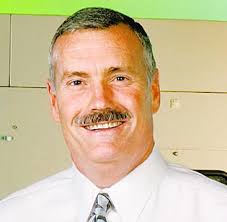
Mark Donegan
Image Source: Google Images

He has also helped Precision quadruple their annual turnover, bringing it up to an astounding $10 billion and has also been a part of several acquisitions. Precision is now a key supplier to industry heavy-weights such as Boeing, Airbus, and General Electric. All these efforts and striving for perfection made him a part of Barron’s list of the best CEOs in 2014. The CEO is a perfectionist who pushes himself as hard as he pushes his employees and even helps managers with their problems at factories.

Humble Beginnings of Precision

Mark Donegan studied accounting at Villanova and started his career at GE under Jack Welch. Precision hired Donegan’s boss Bill McCormick as President in 1985, and he followed soon after. Engineer and MBA graduate Ed Cooley founded and ran Precision in the 1950s. A decade later, the company began supplying to GE via factories in Portland.

McCormick, who became CEO in 1991, stated that on joining Precision, he found it was run like a family-owned enterprise. Under him, the company expanded aggressively by venturing into manufacturing parts for gas turbines.

They also acquired forging company Wyman-Gordon, which had ties to the aerospace industry. Donegan was working his way up the corporate ladder and soon became President. By 2001, McCormick made him Operating Chief and a year later, he became CEO when the former retired.

New Era

Under Donegan, the company began an acquisition spree, buying even more companies that were associated with the aerospace industry. In 2007, Precision bought Cherry Aerospace to further expand their business and as a result became the 568th largest U.S. company.

In 2012, Donegan acquired a titanium supplier for a whopping $2.9 billion, helping to consolidate Precision’s position in the market. His relentless efforts led to the company’s shares hit an all-time high price of $275.09. By 2013, Precision had over 150 factories around the US to help feed its ever-expanding empire. 

Growing Interest

The company went through a rough patch during 2014-15 due to plunging oil prices, which led to their shares dropping by 27%. However, this led to Buffett forming an idea for an acquisition. His investment manager, Todd Combs, had amassed about 3% shares in Precision by 2012. In 2015, Buffett led Donegan to know that he wanted to buy Precision and the duo met in Idaho. The offer on which they settled finally, came up to $235 a share, allowing Donegan himself to pocket $51.8 million. 

Since the acquisition in 2016, Donegan has captained the ship and increased the company’s stock prices. It is one of the only three Fortune 500 companies to be based in Oregon and ranks 9th with regards to the leaders in Aerospace and Defense.

The company boasts of over 29,600 employees and makes more than 9.6 billion USD annually. It is quite easy to see exactly why Buffett took interest in this industry juggernaut and the stalwart who leads it.

autocad

Drafting the Future: Success of CAD

Mechanical engineers rely on computer-aided d for most of their drafting. Most of the products we see around us use principles of CAD/CAM to generate prototypes. The world would not have so many innovative products, buildings and manufacturing tools if not for CAD. But who came with an idea to use computers for drafting? How did the Engineering Graphics we know, evolve to the stage is it has reached now? So, read on to know more about the success story of computer-aided design.

About the Creator

The American computer scientist, Patrick J. Hanratty, is commonly called the Father of CAD/CAM. He founded and served as the President of Manufacturing and Consulting Services Arizona. As per records, more than 70% of the CAD software we use now, is linked to Hanratty’s works.
Patrick J. Hanratty discovered his love for programming by accident! After serving his country during the Korean War, he returned home to figure out his future. One day, while going through the newspaper, Hanratty saw an ad for programmers in San Diego. He took up the offer and was hired at General Dynamic’s Convair Division, picking up programming along the way.

Hanratty earned a PhD from the University of California for his work on magnetic ink character recognition. He then worked for General Electric during the 1950s. In 1957, he wrote one of the first numerical control languages called Pronto. Further, in 1961 he switched to General Motors Research Laboratories. It was here that he helped in developing Design Automated by Computer. Later, he used GE’s equipment to standardise the characters used on bank checks. The American Bankers Association adopted this system in 1958, and their E-13B font is a standard in the industry.

Founding a Design Company

He found ICS in the 1970s as his first venture. Their first product was a CAD/CAM drafting tool which needed a computer few people owned. Also, the program for the tool was in TPL, a complicated language. He tried again in 1971, founding Manufacturing and Consulting Services. MCS wrote their software using Fortran, and their tools ran on most computers.

He named the product Automated Drafting and Machining, switched to AD-2000, and then Anvil-4000. Some of their famous clients were Computervision, Gerber Scientific and McDonnell Douglas. Furthermore, MCS built most of the popular CAD/CAM packages we use now. These include Auto-Grapl, Autosnap 3D, and Intelligent Modeler.

History of CAD

The CAD we know and love today is based on both PRONTO and Ivan Sutherland’s SKETCHPAD. Both these tools demonstrated the feasibility of computer-aided technical drawing. The initial CAD systems worked like replacements to drawing boards. Designers still used splines and arcs to create their drawings, but their productivity increased. Nevertheless, such modifications made CAD more affordable and user-friendly.

With the release of MAGI’s Syntha Vision, 3D features became popular. The sixties saw the rise of solid modelling and NURBS, which came in 1989, made solid modelling an industry standard. CAS Berlin developed NöRBS, a NURB-based PC software in 1993, and changed the industry forever. The 1980’s witnessed the development of parametric modelling. This led to a more intuitive, user-friendly and price method of modelling.

Present Day CAD

Most industries now rely heavily on computer-aided design and manufacturing software. They find use in almost all stages of design and production, and also help in engineering analysis. The systems have undergone massive changes, and simple desktops have replaced the bulky workstations. 3D Modelling is no longer a luxury, but rather a gold-standard and wire-frame models are rarely used anymore.

The application of computer-aided design has grown in recent years. It is not just a part of the design process anymore. But rather finds use in applications such as Google Maps to create outlines and plans of buildings. Also, Finite Element Analysis has grown to become the industry standard when it comes to engineering analysis. The structural integrity of all designs is tried and tested using this method.

Hanratty was an early pioneer of NC and CAD/CAM and changed the way the industry worked. If not for him, we would still be relying on physical drafting tools to design products. From being something used by a wealthy few, to becoming an industry-standard, CAD has come a long way. The future looks bright for the software, as more and more researchers work to innovate and improve the field.

Invensys

INVENSYS, A COMPANY FORMED BY MERGING TWO MULTINATIONAL CONGLOMERATES

The true potential of the internet has been exposed towards the entire world within these couple of decades. There are many flourishing businesses in the tech market especially in the field of advanced software and telecommunication.

But, how many of these companies master their reputation in the technical world and industrial production as well? Software companies and production industry are two diametrically opposite points of a circle. But, Invensys, the global tech company has been successfully running its business for the last 20 years.

Invensys, founded in 1999 is a famous company divided into three segments, namely, software, industrial automation and energy controls. The company was formed by merging two gigantic multinational companies, BTR plc and Siebe plc. Though Invensys was founded in 1999, the actual history of the company dates back to the 1800s when Augustus Siebe started working for the Deane brothers.

In the 1800s

Born in 1788, Augustus Siebe was a famous British Engineering who was hired by the Deane brothers. Since Siebe specialized in designing diving tools and types of equipment, he was giving a project to modify the then-existing helmets for underwater activities.

Seeing his great improvement and contribution in the field, Charles Parsley, leader of the Royal Navy also made some suggestions to improvise his existing inventions. Once his work brought a revolution in the world of marine engineering, he moved to London and opened up his own company in 1819. This great man passed away on 15th April 1872 due to chronic bronchitis.

How Invensys was formed?

Siebe plc was originally formed in 1920 but it started making a significant presence in the world of engineering since the 1970s. The company made a lot of acquisitions starting from 1972. Some of the acquired companies are James North and Sons, CompAir, Foxboro Company, Triconex, Eurotherm, Esscor and many more.

The last company that Siebe acquired before merging with BTR plc was Esscor. All these companies made Siebe a versatile conglomerate pioneering in excellent software products, power industry, petrochemical industry and whatnot.

On the other hand, BTR plc was originally established as B.F. Goodrich Company and transformed itself into BTR Limited in 1956. The company started flourishing under the leadership of Sir Owen Green and made a lot of big acquisitions in 1982.

BTR started buying companies outside the UK which included the U.S, Canada, Australia, South Africa and Germany. By the time BTR merged, it happened to be famous for building products, polymers, packaging and materials engineering.
Finally, in 1999 both the companies shake hands-on mutual grounds to form Invensys.

Fate of Invensys


After a couple of years of the establishment of Invensys, Invensys Rails Systems was formed in 2001. In 2004, Invensys Controls was formed which was mainly created to monitor the control system (also included climate control) and its applications.

During these five years from 1999, Invensys went through a lot of crisis and even had the chance of dissolution. But, the company was somehow saved and opened another new sector, Invensys Operations Management in 2009.

Again after a couple of years, the business started falling with share prices dropping to almost 50%. The company decided to sale Invensys Rails followed by the entire company in 2013 to Schneider Electric. The entire acquisition was finally completed on 17th January 2014. The amount was finalized to £3.4 billion.

About Schneider Electric

The company was built in the 19th century by the Schneider brothers and since then they have owned the steel as well as the machinery market. Gradually, the company also entered into the market of construction and electricity in the 20th century and emerged out as one of the companies in recent days to focus on energy management.

The company invests quite an impressive amount of fund in this area keeping in mind the abrupt environment changes. In 2010, the company with Alstom, created Aster to provide support to the newly founded business in the area of efficient energy consumption and eco-friendly environment.

The company is currently headquartered in France with more than 155,000 employees. The company has gained unexpected recognition in India given that it was given the award of Best French Group in India in 2018.

adp

Pay Up, America! – Success Story of Automatic Data Processing

Automatic Data Processing, Inc., referred to as ADP, is a leading provider of payroll management services in the US. It is regarded as one of the very few companies in the US, that had an AAA credit rating issued by both Standard & Poors and Moody’s. Here’s a look at everything you need to know about the growth of ADP.

About the Founder

Henry Taub was born on September 20, 1927, in Paterson. The American businessman who has both Hungarian and Jewish ancestry co-founded ADP. Taub attended Eastside High School, and did his graduate studies from the New York University in accounting, graduated in 1947. Two years later, in 1949, Taub founded Automatic Payrolls Inc., which was a payroll processing service in New Jersey. That company later came to be Automatic Data Processing and grew to become the leading computerized payroll management service in the U.S.

He retired from ADP in the mid-1980s. Taub served as the president from 1949 to 1970 and then worked as a CEO for seven years till 1977. Also, he was a chairman till 1985, served as an honorary board member till his death.

After retirement from ADP in the 1980s, Taub served as a Board of Governor in American Technion Society between 1990 and 2003. He passed away in 2011, owing to complications which arose as a result of his leukaemia.

While at ATS, his wife and he were responsible for handling several projects such as the Henry and Marilyn Taub Science and Technology Center, a Faculty Recruitment Program and the Taub Fund for the Future.

Founding ADP

n 1949, Henry Taub and his brother Joe together founded Automatic Payrolls, Inc. which served as a manual payroll processing company. The brothers were joined by Frank Lautenberg and in 1957, Lautenberg, who had previously worked in the sales and marketing division, became a partner.

While starting, the brothers had to make do with a shoestring operation and so often delivered payrolls by bus and even cleaned their own offices during the night.

Henry provided the vision and strategy for the company, while Joe managed the operation and regular running of the company. Meanwhile, Lautenberg handled all the sales and marketing the company had to do to gain clients.

After four years, in 1961, the company switched names to Automatic Data Processing, Inc. and upgraded their manual business to a more automated form which utilized card machines, printing machines, and computers.

The company went public the same year, employing over 125 people, and having around 300 clients. ADP generated revenues worth US$400,000 in its first year.

When the business started picking up, the brothers decided to expand, and so, in 1965 they set up a branch in the UK.

By 1970, Lautenberg had taken over as the president and ADP switched over from the American Stock Exchange to the New York Stock Exchange. In 1974, they acquired Time Sharing Limited, which was a company that specialised in providing computer-related services, and a year later they acquired Cybernetics.

By 1972, the company had several dealer franchises and renamed its auto-division, ADP Dealer Services to CDK Global. Lautenberg remained the CEO until he resigned when he became a part of the US Senate in 1982.

Bringing in the Big Bucks

The company grew exponentially in the 1980s and by 1985 was making more than $1 billion a year. The company handled almost 20% of the entire American payroll market. Such growth helped propel them into other avenues such as employee services management.

In the 1990s, ADP acquired HR companies such as Autonom, GSI, and Chessington Computer Centre which handled administrative services. By the early 2000’s they were expanding aggressively, having acquired companies such as Kerridge Computer Co.

which specialised in creating dealer management systems for auto part dealers. A year later, ADP made its foray into the world of brokerage and insurance, by setting up the ADP Brokerage Service Group. In 2010, they bought the auto-marketing enterprise Cobalt, to improve their footing in the field of automobile manufacturing.

Automatic Data Processing Inc

Fast forward seven years to 2017, Automatic Data Processing Inc. was employing more than 56,000 people worldwide and generated revenues over $12 billion.

This helped the company become the largest HR service provider in the Northern half of the world, with services spread across Europe and North America. In 2018, the company acquired WorkMarket, which helps companies manage freelancers and contractors.

The company now operates in over 112 countries and has won several accolades and laurels such as, “Most Admired Fortune 500 Company”, “100% CEI rating” and 47th on a list of Best places to work by Computer World.

Such growth rates and revenues make it clear, without reasonable doubt that ADP is the largest HR service provider for the whole of North America, Europe, Latin America and the Pacific Rim.

With the handling of employees becoming a growing concern for companies around the world, it is safe to say that the company will be making big bucks in the years to come.

EPAM

Teaching America how to Code: Success Story of EPAM

EPAM Systems, Inc., better known as EPAM, is an international company offering software and IT related services. The company has a global presence with centres spread across North America, Asia, Australia and even Europe. EPAM is without a doubt one of the largest companies to emerge out of Belarus. So how did this IT giant spring from such humble backgrounds to become the world’s leading software consultation service provider? Here’s a look at what turned EPAM from just another novel idea to a thriving business.

About the Founder

Dobkin was born and brought up in Minsk, Belarus to a watchmaker father and medical assistant mother. His elder brother is an engineer, while his sister was a programmer with an innate interest in coding. Meanwhile, Dobkin attended the Byelorussian National University and graduated with an MS in electrical engineering. Shortly after college, he migrated to Russia and worked for software companies over there. Programming, Dobkin noticed always brought quick results, and so he realised that if he was going to grow, this was the field he needed to learn and explore.

He started his own programming business in 1991. By the time he was 31, he had emigrated without even knowing how to speak English with just $2000 in his account. But his dedication helped him as he learnt English on the job and he bought a car with his savings. He then got himself a job at Prudential, and he and his family stayed with his sister who was working as a programmer in the US. When his company collapsed, he contacted his childhood friend in Minsk and set up yet another software company. In the US, he continued working, switching from Colgate Palmolive to SAP Labs.

Together with his partner David Scott, he opened EPAM Systems’ first office on Emmons Drive while his daughters were in college and school respectively. As his clientele were mainly companies from the US and from Europe the financial collapse of Russia in 1998 did not affect EPAM. Slowly, yet surely, the company started to grow. Their first major client was the fashion brand Bally, which approached them looking for help building a Salesforce Automation platform for their North America-based operations.

Founding EPAM

EPAM was founded by Belarusians Arkadiy Dobkin in New Jersey, and Leo Lozner in Minsk on a partnership basis way back in 1993. His biggest struggle came in 2001, when the economic crisis hit America, rendering a major client, one who provided about 70% of his total business, went broke. The fall-out from that crisis led to a very tense and stress-ridden period wherein Dobkin had to cut salaries and acquire new clients fast. Within five years, he removed himself from the fickle field of technology and started focusing on management and operations. Dobkin recalls how his biggest challenge during the 1990s was convincing people he could be trusted, due to rising tension between the US and Russia at the time. Potential clients would be very wary regarding security issues, and winning their trust never happened overnight.

EPAM Systems

Initially, people would turn to him when they had no money to approach an American company, but EPAM would take up their work and do it well, convincing them of the company’s quality and reliability. It merged and incorporated to become EPAM Systems in 2002 and has since then grown exponentially, spreading to several continents and employing over 30,100 people. EPAM is an acronym for Effective Programming for America and is also a slogan they use for marketing promises.

Resounding Success

By 2004, the company was generating over $30.1 million in revenues, growing consistently at 1,840.8 %! The number of employees was also doubling, with the company having only 1,001 employees at that time, to its 1400 in each centre now. India’s outsourcing market overflowing, having entered the industry much earlier than others and the fact that Americans trusted Soviet Engineering all helped Dobkin mould EPAM into what it is now.

Soon EPAM roped in clients such as Reuters, Colgate-Palmolive, CareFirst BCBS, Encores, Samsung America and the London Stock Exchange. In 2004, they acquired Fathom Technology, a Hungarian software development company and this sets off an expansion plan that results in more clients in Europe. By the end of 2005, the company had over 1300 employees.

By 2008, the company acquired new clients in the form of Google and UBS and grew its workforce to over 4300 employees. In 2012, the company went public on the New York Stock Exchange and was the first public offering by an Eastern European outsourcing company. In 2018, the company launched a search engine called InfoNgen 7.0, which was extremely intuitive and customizable.

Later the same year, they launched Telescope AI, which is a platform that helps run operations by using Artificial Intelligence. This year, EPAM decided to expand to even more verticals and announced that it was the lead investor for Ben Franklin Technology Partners’ blockchain venture. The company is also on the verge of opening its new office in Ukraine.

The company has continued to grow and expand and now has clients from all over the world, and enjoys a growth rate of 20%, generating over $1.15bn in revenues. The company has over 10 main offices in five countries around the world, each employing over 1400 people. It is safe to say that things are looking up for EPAM as it continues teaching America how to program!

Wadhwani

Romesh Wadhwani, A Billionaire To Be Listed Among World’s Richest Tech People

Romesh Wadhwani is one of the most influential and powerful people in the world of tech start-ups. He is famous for his start-up Symphony Technology Group (STG), a private firm that is created to invest and provide financial backups to the start-ups and operating companies. Wadhwani in spite of suffering from physical disability made it to one of the best engineering institutions of India and curved his career from scratch. He is also a great philanthropist who currently resides in Palo Alto, California, the U.S with a net worth of $3.3 billion.

The life story of Wadhwani

Romesh Wadhwani was born during the most vulnerable phase of India, that is, in 1947 and moved to India from Karachi when he was just an infant. When he was two years old, Wadhwani got affected by Polio. But, throughout his journey, Wadhwani proved that it was not a shortcoming for him. Initially, he faced a lot of trouble to get admission in the junior school but at the end, he made it to IIT Bombay where he studied Electrical Engineering. After completing his Bachelor’s degree, he went to Carnegie Mellon University, Pittsburgh to acquire a Master’s degree followed by PhD from the same university.

Wadhwani was never really interested to do a 9to5 job especially because he hated the thought of working for someone. So, after he graduated in 1972 he decided to stay back in America and start his own company. A lot of trouble came his way because of three main reasons, first he absolutely had no business idea given that he belonged to a family no business background and not acquiring a degree in
the business field, second, the start-up culture was absolutely not developed in Pittsburgh especially related to technology and third, he wasn’t even a citizen of America back then. streaming

Wadhwani overcame a lot of obstacles and finally convinced a venture capitalist to pay him $150,000 for his start-up. Wadhwani developed more than just a single start-up namely Aspect The success of Symphony Technology Group Development (software firm) and Symphony Technology Group. The former one was acquired by i2 Technologies in 1999 for $9.3 billion and the latter was founded in 2002. STG brought an immense amount of success to Wadhwani and currently, he plays the role of Executive Chairman. Since Wadhwani was a great philanthropist, he founded the Wadhwani Foundation mainly to focus on developing economies with huge potential. His main interest was in India because he noticed that when he moved to the U.S and started his own business the start-up culture of India was not developed. He, in one of his interviews, said that it would be impossible for him to start his own business had he planned to do it in India. So, he greatly focused on the economy of India and especially to the entrepreneurial domain.

The success of Symphony Technology Group

Wadhwani founded the firm in 2002 as an investment firm based on Palo Alto. STG is the parent company to other many products of Symphony like Symphony Teleca Corporation, Symphony Health Solutions etc. Symphony Teleca Corporation was formed in February 2012 after Teleca merged with

Symphony and started providing software solutions and Symphony Health Solutions was established in May of the same year after it acquired Healthcare Analytics. In the same year, the company also received a funding of $870 million and declared to invest in making better software solutions and services.

2013 for Symphony started with the acquisition of LexisNexis Screening Business from Reed Elsevier followed by Symphony Health Solutions named as the leading Research Firm in the market in May 2013.
In 2014, the company acquired Jobrapido, a firm known worldwide for talent acquisition; MDdatacor LLC, a data integration company that provided with patient’s information and many more.

This company was acquired by Symphony to form Symphony Performance Health. In September 2014, STG was named as the top R&D service provider by Zinnov and it also acquired McGraw-Hill Construction for $320 million. In April 2015, HARMAN acquired Symphony Teleca from STG which was pretty bad news for the company but STG coped up with it pretty well.

Apart from health solutions, STG also has many other products and released a few more in 2016. Some of the new products were demonstrated in 2016 HIMSS Conference.
In January 2017, the company acquired Fishbowl, a platform for the restaurant industry for $2 billion.
The company made a lot of acquisitions like this which is pretty impressive for a team with less than fifty members. The estimated annual revenue of the company is around $2.6 billion and the latest acquisition of the company was in Aril 2019 (RedSeal).