Your Tech Story

tech news

Google Authenticator

Google Authenticator finally syncs one-time codes in the cloud

You may now synchronize your two-factor authentication codes with your Google account, a feature that has been long requested by users of Google Authenticator.

Thus, Authenticator won’t need to be set up separately when you configure a new phone and log in to your account. This also implies that logging back into your accounts from a different device will be less of a nerve-racking experience if you lose your phone or it is stolen.

Google Authenticator
Image Source: techcrunch.com

While cloud synchronization has become quite popular in other two-factor efforts like Authy, Google took a very long time to add it to Authenticator, which debuted back in 2010. You must upgrade the Authenticator app for Android and iOS to the most recent version in order to enable cloud syncing for two-factor codes.

Also Read: Google TV now has over 800 ad-supported free channels

More information on the feature is available on Google’s support page, which also confirms that “if you’re signed into your Google Account within Google Authenticator, your codes will automatically be backed up and restored on any new device you use.”

Google’s Christiaan Brand stated in a blog post that “one major piece of feedback we’ve heard from users over the years was the complexity in dealing with lost or stolen devices that had Google Authenticator installed.

Since one-time codes in Authenticator were only stored on a single device, a loss of that device meant that users lost their ability to sign in to any service on which they’d set up 2FA using Authenticator. With this update we’re rolling out a solution to this problem, making one-time codes more durable by storing them safely in users’ Google accounts.

This change means users are better protected from the lockout and that services can rely on users retaining access, increasing both convenience and security. While we’re pushing towards a passwordless future, authentication codes remain an important part of internet security today, so we’ve continued to make optimizations to the Google Authenticator app”

However, one-time passcode cloud syncing may make it much more alluring for bad actors to attack Google accounts. If you can hack into a system, you could have access to a lot of private information. Kimberly Samra, a Google spokesperson, verified that account syncing is entirely optional.

Also Read: Google wins appeal of $20 mln US patent verdict

But if you do, don’t anticipate any additional security measures beyond Google’s basic ones. Authy offers an option to allow (or disallow) the usage of numerous devices with an account in addition to a unique password for recovering two-factor backups in order to keep out unwanted visitors.

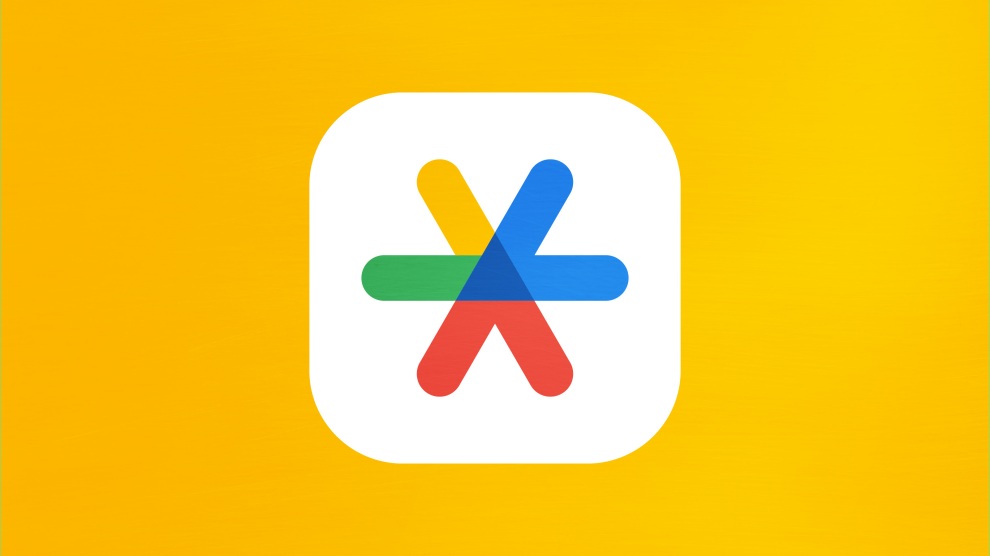
The bland vault design of the Authenticator app will be replaced with an asterisk in Google’s colors with this upgrade.

SAP

SAP reports revenue growth in Q1

Business software manufacturer SAP announced first-quarter earnings that beat analysts’ estimates thanks to advances in its cloud operations, but the sale of its Qualtrics division caused it to cut its outlook for the entire year.

No further restructuring is anticipated for SAP this year, and the company still intends to integrate artificial intelligence techniques such as generative artificial intelligence in its services. It previously revealed plans to lay off 3,000 workers as it sought to reduce expenses.

SAP
Image Source: theprint.in

Giant technology businesses have been upset by the current economic climate, yet the company was able to increase its sales in the first quarter by 10 percent to 7.44 billion euros which is nearly 8.2 billion USD, exceeding the average estimate issued by the firm.

Also Read: Canada offers more than C$13 Billion for the VW battery plant

It claimed to be collaborating with the ChatGPT chatbot from OpenAI, which receives funding from Microsoft Corporation.

We were studying ChatGPT for quite a while… we have built over 50 AI use cases, embedding them with our technology,” CEO Christian Klein said in an interview.

Source: theprint.in

Following the yearly Sapphire meeting he said, these kinds of uses will be accessible to customers the following month.

In order to look for flaws in AI use cases and prevent possible abuse of the technology, SAP additionally has an internal panel involving customers, researchers, as well as analysts, according to Klein.

The business was founded in 1972 and was initially known as System Analysis Programme Development with its German translation as Systemanalyse Programmentwicklung, subsequently becoming SAP. Ever since then, it has expanded from a five-person startup to a global corporation with over 105,000 staff members based in Walldorf, Germany.

SAP developed the global benchmark for the software for enterprise resource planning (ERP) via the release of its initially developed SAP R/2 and SAP R/3 solutions. Now, SAP S/4HANA advances ERP by processing massive volumes of data in memory and supporting cutting-edge technologies like AI (Artificial Intelligence) & ML (machine learning).

The profitable cloud business of business had revenue growth of 24 percent year over year, roughly in line with expectations. Profits from Qualtrics, a business SAP dissolved last month, have already been subtracted from the most recent income assessment.

SAP projects a non-IFRS operating profit for the year of between 8.6 and 8.9 billion euros, which is a 200 million euro decrease from the prior year. Forecasted cloud revenue is now expected to range from 14 to 14.4 billion euros, a decrease of 1.3 billion euros.

“Underlying guidance is essentially unchanged, although updated to reflect the disposal of Qualtrics,” Jefferies analysts wrote in a client note.

Source: theprint.in
Canada

Canada offers more than C$13 billion for the VW battery plant

According to a government source, Canada has agreed to offer up to C$13 billion ($9.7 billion) in subsidies and a C$700 million grant to entice Volkswagen AG to locate its North American battery production in the nation.

According to the source, the entire Canadian investment—which might possibly include money from the Ontario government—will be roughly equivalent to what Volkswagen would have received from the United States under the Inflation Reduction Act (IRA).

Canada
Image Source: finance.yahoo.com

The source stated that the subsidies will be paid out over a ten-year period, but the automaker chose not to respond. The source told Reuters that the plant’s construction will cost roughly C$7 billion, corroborating a previous story by Bloomberg News.

Also Read: Meta lays off tech teams, battering employee morale

The agreement demonstrates how the United States’ green package, which provides $369 billion in subsidies for electric automobiles and other green technologies, is pressuring foreign governments to increase financial incentives to entice investment.

According to Handelsblatt, which cited a business source with knowledge of the situation, the brand-new Volkswagen battery plant in Canada is expected to have a maximal capacity of 90-gigawatt hours, which will be sufficient to produce batteries for more than a million vehicles yearly.

Volkswagen opted not to respond to the Handeslblatt story. More information on the project is anticipated to be released on Friday during a meeting between the leadership of its battery unit PowerCo and Canadian Prime Minister Justin Trudeau in Ontario, where the plant would be located.

The contract is drafted in such a way that Canada’s production subsidies are only guaranteed for the duration of the Inflation Reduction Act. Canada’s incentives for clean production will decrease proportionately if those in the US are cut.

Additionally, under its Strategic Innovation Fund, Canada is providing Volkswagen with capital expense grants totaling nearly C$700 million. Despite its name, the Inflation Reduction Act actually implements substantial incentives for low-carbon companies, primarily via production tax credits.

According to a board member for technology at Europe’s largest automaker who spoke to Reuters in March, PowerCo aspires to become a global battery provider and meet half of its own requirements with plants mostly in Europe and North America.

By 2030, PowerCo, which was founded last year, wants to have annual sales of over $21.94 billion. In Ontario, production is anticipated to begin in 2027.

Also Read: Google wins appeal of $20 mln US patent verdict

Chrystia Freeland, Canada’s finance minister, cautioned that democracies need to prevent a “race to the bottom” in corporate subsidies that might erode their tax bases and social protection systems in an address in Washington last week.

The Volkswagen contract in Canada also makes one wonder how much financial assistance other automakers and battery manufacturers may be eligible for. A $4 billion joint venture between LG and Stellantis was announced last year in Windsor, Ontario, a city close to Detroit.

Meta

Meta lays off tech teams, battering employee morale

Another round of employment layoffs was implemented by Meta on Wednesday, this time affecting engineers and related tech teams as CEO Mark Zuckerberg continued to restructure the company in an effort to make 2023 a “year of efficiency.”

The second round of mass layoffs at Meta, which it estimated would affect 10,000 workers, was announced in March, making it the first Big Tech company to do so. It was stated that 10,000 employees would be impacted over a period of months and in three main groups.

Meta
Image Source: livemint.com

According to one of the dismissed workers who spoke with CNBC, the most recent job cuts also affected teams that worked with products, and Meta plans to eliminate business-related positions like those in finance, law, and human resources starting next month.

Also Read: Google wins appeal of $20 mln US patent verdict

This individual also said that technology teams who were not affected by the layoffs on Wednesday might be affected by those scheduled for the following month. The Business Programme Manager at Facebook, Teresa Jimenez, wrote on LinkedIn: “I woke up this morning to the awful news that I was one of the many laid off from Meta today.

While I am undoubtedly disappointed, I am also really #grateful for the chance to have collaborated with some of the most creative people for almost three years! (sic)”

Zuckerberg had stated in March that “We anticipate announcing reorganizations and layoffs in our tech groups by the end of April 2023, followed by our business groups by the end of May 2023.

In a small number of cases, it may take through the end of the year to complete these changes. Our timelines for international teams will also look different, and local leaders will follow up with more details.”

After a pandemic-driven surge in online advertising and cloud computing, Meta’s initial wave of layoffs in the fall affected more than 11,000 workers, or 13% of its total staff at the time, and came before other significant IT businesses laid off thousands of workers.

Along with the restructuring, Meta is “flattening” the levels of middle management and shelving lower-priority projects. The corporation has benefited from shrinking thanks to investors. In comparison to the tech-heavy Nasdaq Composite, Meta shares have increased by almost 80% this year.

The company, which will release its first-quarter earnings on April 26, is anticipated to profit from regulatory pressure on primary rival TikTok and a minor uptick in the digital advertising sector

Google

Google wins appeal of $20 mln US patent verdict

Search Engine Giant, Google, a subsidiary of Alphabet, successfully persuaded an appeals court in the United States on Tuesday to invalidate three anti-malware copyrights that were at the center of a Texas court’s twenty million-dollar infringing acts decision against the firm.

Google
Image Source: communicationstoday.co.in

Alfonso Cioffi & Allen Rozman’s copyrights, according to the U.S. Appeals Court for the Federal Circuit, were found to be inapplicable because they covered ideas that were not covered by a prior version of the claim.

Also Read: Twitter Clashes With Brazil Over School Violence Posts

Google welcomed the choice, according to spokesman José Castada. An inquiry for comment was not immediately answered by the inventors’ attorneys.

In 2013, Cioffi along with the daughters of the late Rozman filed a lawsuit against Google in the Federal court in East Texas, claiming that Chrome’s malware protection features violated their patents for a system that stops malware from gaining access to sensitive information on a computer.

A jury found that Google violated the patents in 2017 and granted the complainants a total of 20 million USD in addition to continuing payments, which according to the plaintiff’s representative at that point in time were anticipated to reach approximately seven million dollars yearly for the following nine years.

However, the Federal Circuit declared all of the patents invalid on Tuesday. The three-judge bench reached a unanimous conclusion that the three claims had been reissued from a previous anti-malware claim and that federal law needed the newly issued patents to encompass the same idea as the first.

The new patents described web browser-specific technology that was absent from the original patent, according to the appeals court.

Contrary to popular belief, the defendants in Big Tech’s latest patent litigation argue that bigger firms utilize their clout to squeeze rivals.

The British competition regulator declared that Alphabet’s child firm Google’s measures to permit app developers to bypass Google Play’s invoicing mechanism appeared to be adequate to allay its reservations about in-app purchases.

Also Read: Scan.com raises $12m for US and UK expansion

The entire monopoly Google has over in-app purchases has, according to the Competition and Markets Authorities (CMA) of Britain, unjustly constrained developers by requiring them to adopt Google Play’s charging system, decreasing competition and harming users.

According to the CMA, Google’s suggestions would let app creators provide another means of payment of their choice or give customers the option of choosing from that method and Google Play’s payment system.

Scan.com

Scan.com raises $12m for US and UK expansion

An ineffective public medical system has provided an ideal environment for health IT businesses to thrive, tackling issues like shortages of staff and enhancing radiologists’ software infrastructure. One such business is Scan.com, a healthcare imaging firm with offices in London that links patients with facilities for MRI, ultrasound, CT scans & X-ray scans.

Scan.com
Image Source: techcrunch.com

As it seeks to improve on its latest U.S. debut, the firm today revealed that it has raised twelve million dollars in an initial round of funding.

Also Read: Google TV now has over 800 ad-supported free channels

The issue, stated by Scan.com, lies in the fact that regardless of whether a patient can schedule an initial visit with a doctor, the referral procedure that follows to obtain the necessary scan can take months to complete, and they may then endure waiting even longer for the results to arrive.

Scan.com is collaborating with numerous scanning facilities to provide users with convenient reports that are complete with clickable graphics and are provided within a week. This allows people to get healthcare imaging services regardless of a general practitioner’s referral.

By paying in advance to guarantee their scan, members of Scan.com’s digital referral program are then scheduled for a virtual meeting with a doctor within forty-eight hours.

If a scan reveals a critical issue, the patient is placed in Scan.com’s urgent findings pathway, during which a clinical team gets in touch with them to talk about the findings and provide advice to determine what to do next.

Our clinical team offers consultations and guidance to all patients once they’ve booked, which is a core part of the service we offer,” Scan.com CEO Charlie Bullock explained to TechCrunch. “Their time is included in our scan pricing, which is why we take payment at the point of booking. During the consultation, the clinician can amend the scan type, add or amend body parts, and ensure the scan is both safe and medically justified for the patient’s needs.”

Khalid Latief & Jasper Nissim, two doctors who organized testing for the patients they treated, launched Scan.com about five years ago after growing frustrated with the inefficiencies in the process. Scan.com debuted its service in the United States two months back, and as of now, it has about 30 staff working in both the UK as well as the US.

Also Read: South Korea fines Google $32 million for squeezing out rival

With an additional 12 million USD in cash on hand, Scan.com is well-positioned to keep up its U.S. broadening and expanding the scope of its offerings to include things like DEXA scans, echocardiograms, as well as mammograms. The company is also well-funded to pursue business contracts with companies that offer digital health services, staff benefits platforms, and other trade associations.

Medical imaging covers such a variety of modalities that our focus is to launch as many of these as we can,” Bullock said. “Alongside scans, we also want to design pathways to add value for our patients, such as guided injections for pain relief, or adding in-vitro testing and pathology solutions to our preventative screenings to make them more comprehensive.”