Your Tech Story

tech news

Nvidia

Chip giant Nvidia nears trillion-dollar status on AI bet

In among of the biggest single-day surges in value around a U.S. stock, Nvidia Corporation’s shares soared 24 percent following its excellent income prediction revelation on Thursday that Wall Street had not yet priced in the AI technology’s ability to change the world.

The rise surpassed doubled the price of the stock during the year and brought the overall market worth of the chip designer up to over 939 billion dollars, which is a rise of roughly 184 billion dollars.

Nvidia
Image Source: businesstoday.in

Thus, Nvidia is now almost two times as big as TSMC, the second-biggest chip manufacturer in Taiwan. It is only behind Apple Inc., Alphabet Inc., Microsoft Corp., as well as Amazon.com Inc. in terms of US market worth.

Also Read: OpenAI’s ChatGPT app tops 500K downloads in just 6 days

The positive news also prompted a surge in the chip manufacturing sector and for businesses with a strong focus on artificial intelligence, propelling share markets from Japan to Europe. While the stock of Advanced Micro Devices, Inc. closed 11 percent better, the other Tech Giant companies ended in the range of 0.6 percent and 3.8 percent higher in the US.

consequently, the business’s strength in the marketplace for the processors that power ChatGPT along with many other services like it, experts hurried to increase their price objectives on Nvidia stock, including 27 raising their opinion that all paths in AI led to it.

Over the past twelve months, the average price goal has nearly doubled. Nvidia’s worth is expected to be near that of Alphabet under the maximum scenario, a 644.80 dollar price goal from Elazar Advisors, which values the company at 1.59 trillion dollars.

“In the 15+ years we have been doing this job, we have never seen a guide like the one Nvidia just put up with the second-quarter outlook that was by all accounts cosmological, and which annihilated expectations,” Stacy Rasgon of Bernstein said.

Source: money.usnews.com

The 5th most valuable US firm, Nvidia, forecast a quarterly profit on Wednesday that was over 50 greater than the usual Wall Street prediction & stated that it might have a greater number of AI chips available in the second half to satisfy an increase in consumption.

As generative artificial intelligence is included in each good and service, CEO Jensen Huang estimated that a total of one trillion dollars of present equipment in data centers would need to be substituted with AI chips.

The outcomes are encouraging for giant Tech firms, who have moved their attention to artificial Intelligence in the belief that the technology can boost need at a time when their key revenue generators, cloud computing as well as digital advertising, are experiencing force from an economic downturn.

Also Read: Windows 11 finally gets native RAR support

According to several analysts, Nvidia’s outcomes demonstrate that the generative artificial intelligence surge may be the next major economic catalyst.

“We’re really just seeing the tip of the iceberg. This really could be another inflection point in technological history, such as the internal combustion engine – or the internet,” said Derren Nathan, head of equity analysis at Hargreaves Lansdown.

Source: money.usnews.com

ChatGPT

OpenAI’s ChatGPT app tops 500K downloads in just 6 days

The ChatGPT app from OpenAI has had a fantastic start despite only being available on iOS and in the United States until today’s extension to 11 more international regions.

In its first six days of availability, the app has already topped half a million downloads, according to a recent report by app intelligence firm data.ai. It is only surpassed by the debut of the Trump-backed Twitter clone, Truth Social, in February 2022 in terms of new app releases that have had the highest performance over the course of this year and the previous year.

ChatGPT
Image Source: techcrunch.com

The App Store has become flooded with third-party apps identifying themselves as “ChatGPT” or “AI chatbot” as customer demand for AI chatbots increased.

Despite the fact that many of these were really “fleece are,” aiming to deceive users into paying for pricey memberships to access their AI, a collection of top applications nevertheless managed to generate millions in revenue from users.

It might have been more difficult for an official ChatGPT app to gain popularity given the competitive environment among AI chatbots. In actuality, though, such was not the situation.

Also Read: Windows 11 finally gets native RAR support

The majority of its competitors, including other well-known AI and chatbot apps as well as Microsoft’s Bing and Edge apps, which provided some of the first important third-party integrations of OpenAI’s GPT-4 technology, were outperformed by the ChatGPT app from OpenAI.

Though Bing and Microsoft Edge undoubtedly benefited from ChatGPT’s initial popularity, they saw 340,000 and 335,000 downloads on iOS and Android, respectively, in their best five-day periods in February. However, OpenAI’s ChatGPT app easily outperformed them, producing 480,000 installs in the initial five days of its United States launch, when the app was iOS-only

The app outperformed other top AI chatbot apps in the U.S., many of which had generic names to take advantage of consumer searches for terms like “AI” and “chatbot” on the App Store, according to Data.ai’s data. When compared to other apps’ best five-day periods throughout the App Store and Google Play in 2023, OpenAI’s ChatGPT came in at number five in terms of downloads.

According to the data, “Chat with Ask AI,” the sole app that outperformed it, got 590,000 installs between April 4 and 8, 2023, as opposed to ChatGPT’s 480,000 downloads between May 18 and 22. Even though it has only been launched for a week, ChatGPT is already among the top five AI chatbot apps in terms of downloads in May 2023 in the United States.

Tan Hooi Ling

Grab co-founder Tan Hooi Ling to step down from operational roles

Tan Hooi Ling, a co-founder of Singapore-based Grab Holdings Ltd, announced on Thursday that she will leave her operations position at the ride-hailing business by the end of this year. Hooi Ling, who started Grab in 2012 alongside CEO Anthony Tan, will move into an advising position, the business announced.

Tan Hooi Ling
Image Source: todayonline.com

Tan stated in an internal message to staff that Hooi Ling will also give up her board directorship and that her succession plan has been in place for some time. An idea for a 2011 Harvard Business School venture challenge inspired Tan and Hooi Ling to create Southeast Asia’s largest ride-hailing and food delivery company.

Also Read: Micron expects revenue impact following China ban

Hooi Ling won’t be replaced right away, according to CEO Tan’s memo. Later this year, the nominating committee will consider individuals to strengthen the board. She has been a board member since the company’s public listing in December 2021 and presently serves as the head of Grab’s technology section.

Tan Hooi Ling is one of the co-founders of Grab, a Southeast Asian ride-hailing and on-demand delivery company. She, along with Anthony Tan, launched Grab (originally known as MyTeksi) in 2012. Tan Hooi Ling served as the Chief Operating Officer (COO) of Grab until 2020.

As COO, she was responsible for overseeing the day-to-day operations of the company, ensuring smooth service delivery, and driving strategic initiatives. She was known for her operational expertise and played a pivotal role in expanding Grab’s services beyond ride-hailing to include food delivery, digital payments, and more.

Throughout her tenure at Grab, Tan Hooi Ling made significant contributions to the company’s success and helped shape its growth trajectory. She played a crucial role in building strategic partnerships, securing funding, and driving Grab’s expansion into new markets.

She has been recognized for her contributions to the industry and has received several accolades, including being named in Forbes Asia’s 2017 list of “30 Under 30” and Fortune’s 2018 “Most Powerful Women International” list.

Grab operates primarily in Southeast Asia, serving over 400 cities in countries such as Singapore, Malaysia, Indonesia, Thailand, Vietnam, and the Philippines. It has become one of the leading super-app platforms in the region, offering various services through a single mobile application.

Also Read: Australia hits buy-now-pay-later sector with consumer credit law

Over the years, Grab has secured significant funding from investors and has engaged in strategic partnerships with other companies. It has also acquired several businesses, including Uber’s Southeast Asian operations in 2018. Grab has attracted significant funding from various investors, including SoftBank, Toyota, and Didi Chuxing, among others.

In 2021, Grab went public through a merger with Altimeter Growth Corp, a special purpose acquisition company (SPAC). The merger valued Grab at around $39.6 billion, making it one of the largest SPAC deals in history.

Windows 11

Windows 11 finally gets native RAR support

Place a vote for WinRAR, since Microsoft has recently revealed that Windows 11 will have native support for RAR and several additional archive file formats, which users of Windows have been awaiting for years. This is ideal if you are swimming in a sea of documents.

Windows 11
Image Source: bleepstatic.com

“We have added native support for additional archive formats, including tar, 7-zip, rar, gz and many others using the lib archive open-source project,” says Windows chief Panos Panay in a blog post today. “You now can get improved performance of archive functionality during compression on Windows.”

Source: theverge.com

Microsoft said that following this week, compatibility with the new formats will likely be available in an updated work-in-progress version.

Also Read: Microsoft Build 2023: Big Announcements

In either scenario, those using Windows 11 will benefit greatly from the incorporation of tar, 7-zip, rar, and numerous other formats. You won’t need to download any additional programs in order to view these types of files. Although probably somewhat more effective compared to native ZIP functionality is the incorporation.

It went on for more than 30 years for Windows to finally allow support for the.rar file despite the need for any other software to be installed. It was one of many competing compression software or “applications,” because that’s how they were known back then, that were utilized to reduce large file collections so that they would be transported more quickly over our dreadfully slow internet connection.

But as time went on, the demand for applications such as WinRAR decreased because both drive space, as well as network bandwidth, expanded rapidly.

If you are considering calling your connection as broadband, the few MBs that used to take overnight to be downloaded and took up a sizeable section of the hard disc have become the absolute minimum that can be sent in just one second. Additionally, there are a growing number of open-source protocols and solutions, such as the “libarchive” project.

Also Read: WhatsApp to allow users to edit messages?

Given that many users pay bucks to utilize WinRaR’s file compression software, it is going to be fascinating to observe how it responds to this development, and what occurs to people who already purchased WinRaR given that everyone with a Windows 11 Computer can use it free of cost. 

“First of all, we feel honored with Microsoft’s decision. This will hopefully make RAR compression even more popular and more accessible to those users who are not familiar with WinRAR,” Louise in the sales and marketing division at Microsoft wrote.

Source: techcrunch.com
micron

Micron expects revenue impact following China ban

A restriction by China on the distribution of Micron memory chips to important domestic corporations represented the most recent turning point in the Sino-American business spat, and a US-based micron technology corporation predicted a blow to earnings in the low-single to high-single-digit percent.

Micron
Image Source: investing.com

 late on Sunday, China’s cyberspace watchdog announced that Micron, the largest US memory chip manufacturer, was unsuccessful in its network safety examination and would be prohibited from selling to controllers of critical assets.

It did not elaborate on the threats it had identified or the products of the business that would be impacted.

Experts noted that the majority of Micron’s major Chinese clients are firms in the customer electronics industry, and thus they foresaw little immediate effect on the company. However, they cautioned that political hazards may cause some businesses to remove Micron products from their supply networks.

Also Read: Australia hits buy-now-pay-later sector with consumer credit law

At a press conference, Mark Murphy, Chief Financial Officer of Micron, said it was unknown what worries Beijing had and those direct and indirect sales to businesses with headquarters in China were responsible for around a quarter of the chipmaker’s earnings.

“We are currently estimating a range of impact in the low single-digit percentage of our company’s total revenue at the low end, and high single-digit percentage of total company revenue at the high end,” Murphy said.

Source: malaymail.com

The comments allowed Micron’s stocks to recover some of their damages, the stock’s Nasdaq closing value was down 2.8 percent at US$66.23 (RM301.20).

Washington disagreed with Beijing’s action, however, it boosted the stock prices of Micron’s competitors in China along with South Korea, who are thought to profit as mainland enterprises look for memory chips from additional suppliers.

“We firmly oppose restrictions that have no basis in fact,” a spokesperson from the US Commerce Department said on Sunday.

“This action, along with recent raids and targeting of other American firms, is inconsistent with (China’s) assertions that it is opening its markets and committed to a transparent regulatory framework.”

Source: malaymail.com

Amid Chinese officials’ inspections and excursions to US management consultancy firm Bain and business surveillance group Mintz Group, hostilities between the US and China have risen recently.

Considering a succession of export restrictions by Washington on specific American products including chipmaking equipment to prevent them from being utilized to boost China’s defense potential, Beijing has now aimed at Micron as the primary US chip manufacturer.

Also Read: Will AI Take Over The World?

During an argument over semiconductor technology and deteriorating ties between Washington and Beijing, China started the assessment in late March.

The move also comes shortly after the Group of Seven nations agreed to “de-risk, not decouple” economic engagement with China and as US President Joe Biden called for an “open hotline” between Washington and Beijing.

The U.S. Business Department declared that it would communicate with Beijing officials officially to get more information about their conduct.

buy-now-pay-later

Australia hits buy-now-pay-later sector with consumer credit law

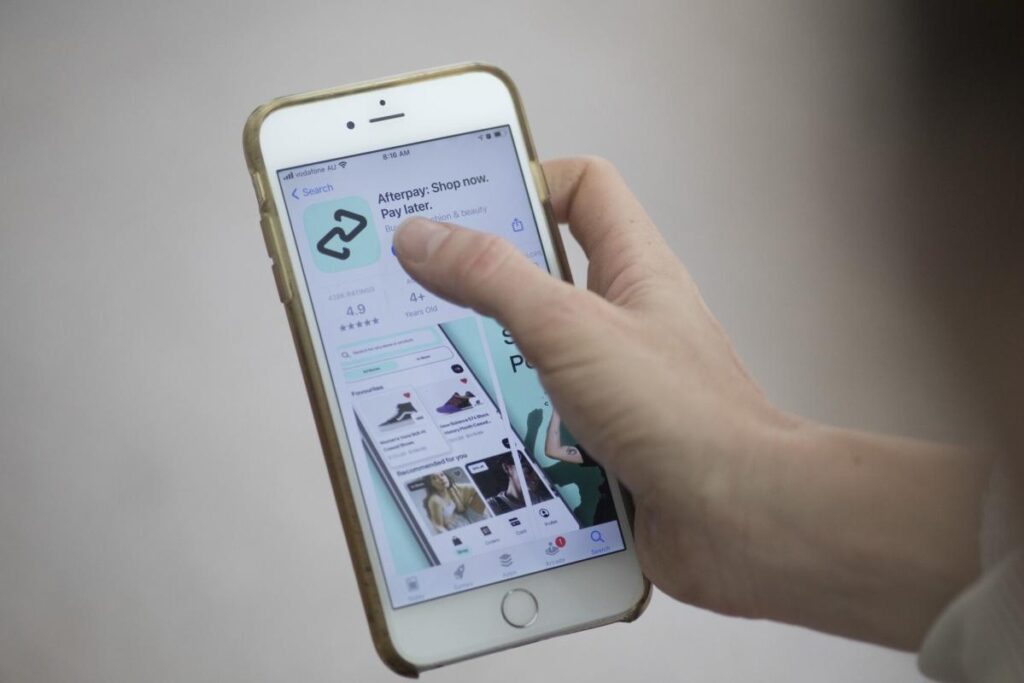
Australia said that it would govern buy-now-pay-later assistance as customer credit under the new legislation, requiring providers of BNPL to conduct history checks before providing what it said is expected to be one of the strictest regulations worldwide for the emerging sector.

With this change, Block by Jack Dorsey Inc (SQ.N)-owned Afterpay as well as Zip Co would fall under the jurisdiction of the Australian Securities and Investments Commission (ASIC), putting Australia second only to the United Kingdom among nations that have attempted to monitor buy-now-pay-later as a normal credit product.

buy-now-pay-later
Image Source: finance.yahoo.com

Cash-strapped consumers who take on debt, often more than they can handle, frequently employ BNPL firms, which usually provide on-the-spot free-of-interest loans for short periods with minimum verification of credit which disperse payments throughout weeks or months.

Also Read: OpenAI to introduce ChatGPT app for iOS

Since BNPL service providers refrain from charging interest, they are now immune from customer credit regulations. As a result, their company has soared during the e-commerce craze sparked by COVID-19 stimulus funds and extremely low-interest rates.

However, as Australia faces rising prices, which are currently at close to 30-year peaks, worries about repaying have grown. According to Australia’s center-left Labour administration, BNPL needs to be deemed credit as it exerts the same effect on debtors.

“BNPL looks like credit, it acts like credit, it carries the risks of credit,” Financial Services Minister Stephen Jones said in a speech in Sydney on Monday.

“Our plan prevents lending to those who cannot afford it, without stopping safe, prudent BNPL use.”

Source: reuters.com

Australia, which has approximately a dozen registered BNPL service providers, had roughly seven million operational BNPL user accounts throughout 2021–22, generating A$16 billion which is $11 billion in dealings, an increase of 37 percent.

Shopping industry data reveals that Australians made A$63.8 billion in transactions via the Internet in 2022, with 26 percent of Australians claiming to have paid using buy-now-pay-later.

The majority of the money made by BNPL companies comes from costing merchants a share of their earnings in return for sending customers to them. They impose late fees on borrowers but claim that by promising increased credit limits, they promote timely returns.

Although BNPL companies claim to carefully track the debtor’s behavior, a recently enacted Australian law would oblige these individuals to adhere to “responsible lending” constraints, which involve carrying out credit checks before lending, informing clients when their credit limits are increased, and adhering to legally mandated settlement procedures.

Also Read: Meta announces AI training and inference chip project

Later in the year, government officials will make the draught law available for comment, and by the finish of the year, the measure will have been submitted to parliament.

“The buy now, pay later business model is still a structural growth model,” said Shaun Ler, a Morningstar analyst.

“You end up in a situation where everyone is suffering but your competitors are suffering even more and the demand is still there,” Ler added.

Source: reuters.com