Your Tech Story

tech news

Tesla China Price Hike With Competitors Cuts the Price

Tesla China Price Hike With Competitors Cuts the Price

In a surprise move that is a sharp departure from industry trends, Tesla has announced a significant price increase for its vehicles in China, setting itself apart from price cuts by other carmakers in the world’s largest auto market. Is done. The decision comes at a time when the electric vehicle (EV) sector is witnessing intense competition, with manufacturers competing for market share through aggressive pricing strategies.

Tesla's Bold Strategy Amidst Fierce Competition

Tesla China Price Hike With Competitors Cuts the Price

Image Source: hindustantimes.com

Tesla, the EV giant known for its innovative technology and market-leading electric vehicles, has raised the prices of its cars in China by as much as 5%. This adjustment is seen as a bold strategy, especially considering the current economic environment and the aggressive pricing tactics adopted by other automakers to attract consumers.

Industry analysts speculate that Tesla’s decision could be attributed to several factors, including rising production costs, supply chain challenges, and the company’s confidence in its brand and product superiority. “Tesla’s move is unconventional in the current market climate,” stated an automotive industry expert. “It reflects their positioning of the brand as a premium offering, despite the broader industry’s race to lower prices.”

Rival Carmakers Slash Prices to Capture Market Share

In stark contrast, several of Tesla’s competitors have announced significant price reductions for their EV models in China. These price cuts, ranging from 10% to 15%, are aimed at capturing a larger share of the rapidly growing Chinese EV market, which is seen as critical for global automotive players.

Companies like BYD, Nio, and Xpeng, among others, have been at the forefront of this pricing strategy, leveraging lower costs to entice a broader customer base. The price war reflects the intense competition within the Chinese EV market, where local manufacturers are increasingly challenging established global brands like Tesla.

Consumer Response and Market Implications

The reaction from Chinese consumers to Tesla’s price hike and the subsequent price cuts by other carmakers will be closely watched. Consumer preferences in China have been evolving, with a growing emphasis on value for money, technological innovation, and environmental sustainability.

The differing strategies between Tesla and its rivals highlight a broader debate within the automotive industry on how to balance brand positioning with market competitiveness. Tesla’s price increase could either reinforce its premium image, leading to sustained or increased demand among its target consumers, or it could drive potential buyers towards more competitively priced alternatives.

Looking Ahead

As the EV market in China continues to expand, the strategies employed by Tesla and its competitors will be crucial in shaping the future landscape of the automotive industry. With the Chinese government’s support for electric vehicles and the increasing importance of the Chinese market on the global stage, the outcomes of these pricing strategies will provide valuable insights into consumer behavior, market dynamics, and the evolving competition between leading EV manufacturers.

In conclusion, Tesla’s decision to increase prices in China amidst a wave of price cuts by competitors marks a significant moment in the automotive industry, highlighting the complexities and strategic calculations involved in competing in the world’s largest car market.


U.S. Consumers Spend an Average of $61 per Month on Video Streaming Services, Study Finds

U.S. Consumers Spend an Average of $61 per Month on Video Streaming Services, Study Finds

A recent study conducted by the Digital Media Association found that American consumers are now spending an average of $61 per month on video streaming services. This figure represents a significant increase compared to previous years, underscoring the changing landscape of entertainment consumption in the country.

The growth in streaming service subscriptions can be attributed to several factors, including expanding content libraries, the rise of original programming, and the ongoing pandemic that has led to increased demand for home entertainment options. The study highlights that the average American household is subscribed to at least four streaming platforms, with many opting for additional subscriptions to cater to diverse tastes and preferences within the household.

The Shift in Entertainment Consumption

U.S. Consumers Spend an Average of $61 per Month on Video Streaming Services, Study Finds

Image Source: nz.finance.yahoo.com

The traditional cable TV model has seen a steady decline as streaming platforms like Netflix, Amazon Prime Video, Hulu, and Disney+ continue to dominate the market. The absence of long-term contracts and the ability to watch on multiple devices, as well as the convenience of on-demand content, have attracted a wide range of demographics.

However, this shift has also given rise to a phenomenon called ‘subscription fatigue’, as consumers face the complexities of managing multiple subscriptions and the cumulative costs associated with it. Despite this, the value proposition of access to extensive libraries of movies, TV shows, documentaries, and exclusive content keeps audiences engaged.

Implications for the Industry

The study’s findings shed light on the rapidly evolving video-streaming industry and its implications for traditional broadcasters, advertisers, and content creators. With streaming services investing billions in original content to attract and retain audiences, competition has become fierce, pushing platforms to constantly innovate and differentiate their offerings.

Furthermore, the study suggests that as the market matures, consolidation may become more common, with consumers looking for bundled services that offer more content under a single subscription fee. This could potentially pave the way for new business models and partnerships within the industry.

Consumer Trends and Future Outlook

The study also examines consumer behavior and trends, indicating a growing preference for ad-supported tiers or hybrid models that offer lower subscription costs in exchange for limited advertising. This trend may influence the future strategies of streaming services as they seek to maximize revenue while accommodating consumer demand for more affordable options.

As U.S. consumers’ appetite for video streaming continues to grow, the industry is at a critical point, with opportunities for innovation and challenges to overcome. The coming years will see even more changes in the way content is produced, distributed, and consumed, with streaming services playing a leading role in redefining the entertainment landscape.

This study serves as an important indicator of the changing dynamics in entertainment consumption, providing valuable insights for stakeholders in the digital media ecosystem.

Huawei's Profit Increased Due to Taking Stake from Apple and Alibaba

Huawei’s Profit Increased Due to Taking Stake from Apple and Alibaba

In an impressive financial performance, Huawei Technologies Co. has reported a significant increase in profits, attributing its success to gaining market share from industry giants Apple Inc. and Alibaba Group Holding Ltd. The Chinese tech giant, known for its telecom devices and smartphones, has demonstrated remarkable flexibility and strategic acumen in dealing with the highly competitive tech landscape.

Strategic Expansion and Diversification

Huawei's Profit Increased Due to Taking Stake from Apple and Alibaba

Image Source: techwireasia.com

Huawei’s recent financial disclosures highlight a year of strong growth, with the company successfully expanding into new markets and diversifying its product lineup. Analysts point to Huawei’s aggressive investments in research and development, especially in areas such as 5G technology, cloud computing and artificial intelligence, as key factors behind its recent achievements.

By focusing on innovation and expanding our product offerings, we’ve been able to appeal to a wider audience and meet the evolving needs of our customers,” said a Huawei spokesperson. “Our ability to gain share from competitors like Apple and Alibaba is a testament to the strength of our technology and the dedication of our team.”

Gaining Ground in a Competitive Market

Despite facing significant challenges, including international investigations and trade sanctions, Huawei has managed to outperform expectations. Its success in gaining market share from Apple comes at a time when the smartphone market is highly saturated, with consumers looking for innovative features and value. Similarly, by offering competitive cloud services, Huawei is positioning itself as a strong rival to Alibaba in the cloud computing sector.

An industry analyst said, “Consumers and businesses alike are increasingly recognizing the quality and innovation that Huawei offers.” “This change in market dynamics is a clear indication that Huawei is not only surviving but thriving amid global competition.”

Looking Forward

As Huawei celebrates its recent successes, the company is also setting its sights on future growth opportunities. With an emphasis on developing cutting-edge technologies and expanding its global footprint, Huawei aims to consolidate its position as a leading player in the tech industry.

However, the path ahead is not without challenges. Huawei continues to navigate the complex geopolitical landscape and regulatory environment. Yet, with its latest financial performance, the company has sent a clear message: it is a force to be reckoned with, capable of competing with and even surpassing some of the biggest names in technology.

In conclusion, Huawei’s profit increase is more than a financial milestone; It is a declaration of the company’s enduring strength and strategic vision. As it continues to take market share from competitors like Apple and Alibaba, Huawei is reshaping not only its future but also the landscape of the global tech industry.

Google Launches AI Travel Enhancements for Search and Maps

Google Launches AI Travel Enhancements for Search and Maps

Google has unveiled a set of innovative tools designed to revolutionize the way travelers plan and navigate their trips. The tech giant’s latest updates to Google Search and Maps promise to provide users with personalized and seamless travel experiences. One of the standout features introduced is the AI-powered trip itinerary creation tool within Google Search.

Google Launches AI Travel Enhancements for Search and Maps

Image Source: fastcompany.com

Users opting into this experimental feature can now prompt Google Search to generate detailed itineraries for specific destinations. These itineraries include flight and hotel options, along with recommendations for attractions and dining experiences. Leveraging a wealth of data from across the web, user reviews, and photos, Google’s AI algorithms curate personalized travel plans that cater to individual preferences.

Moreover, users can easily export these trip ideas to Gmail, Docs, or Maps, streamlining the planning process further. Although currently available only in English within the U.S., Google’s ongoing experiments with generative AI showcase its commitment to enhancing user experiences and shaping the future of travel planning.

Recommendations and Customizable Lists in Google Maps

In addition to AI-driven trip itineraries, Google Maps is receiving a significant upgrade aimed at enriching users’ exploration of destinations. The app now offers detailed recommendations from locals and trusted publishers like The Infatuation, presenting users with curated lists of trending, top-rated, and hidden gem restaurants.

Furthermore, a new AI-based feature within Google Maps provides users with key photos and summarized reviews of places, facilitating informed decision-making while exploring unfamiliar locations. Users can also organize their lists within the app, linking them to social media content for added context and sharing capabilities.

Threats and Opportunities in the Travel Tech Landscape

As Google continues to expand its suite of travel tools, industry analysts speculate on the implications for smaller companies and established players like Tripadvisor. With Google’s vast resources and cutting-edge AI technologies, competitors face the challenge of staying relevant and innovative in an increasingly AI-driven travel landscape.

The integration of translation capabilities into Google’s Circle to Search tool further enhances its utility for travelers navigating language barriers. This feature, set to roll out on select Android devices, exemplifies Google’s commitment to empowering users with seamless and inclusive travel experiences.

In conclusion, Google’s latest AI-powered travel tools represent a significant leap forward in redefining how travelers plan, explore, and experience the world. While posing challenges for competitors, these innovations offer unparalleled convenience and customization, setting a new standard for the future of travel tech.

UK at Risk of Losing 8 Million Jobs to AI, Analysis Warns

UK at Risk of Losing 8 Million Jobs to AI, Analysis Warns

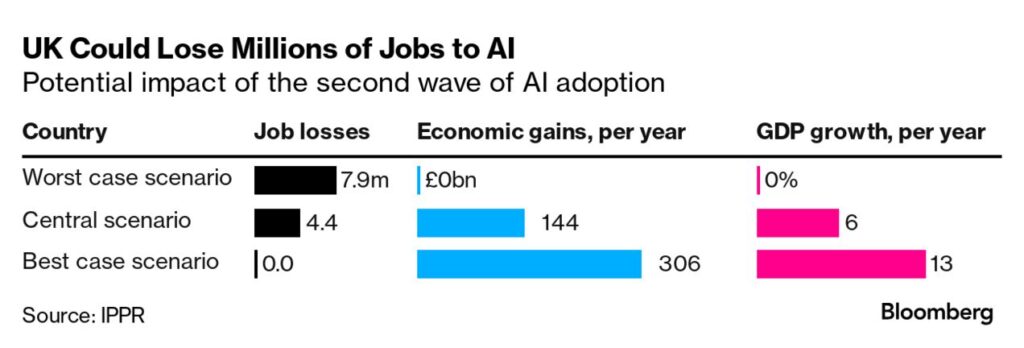
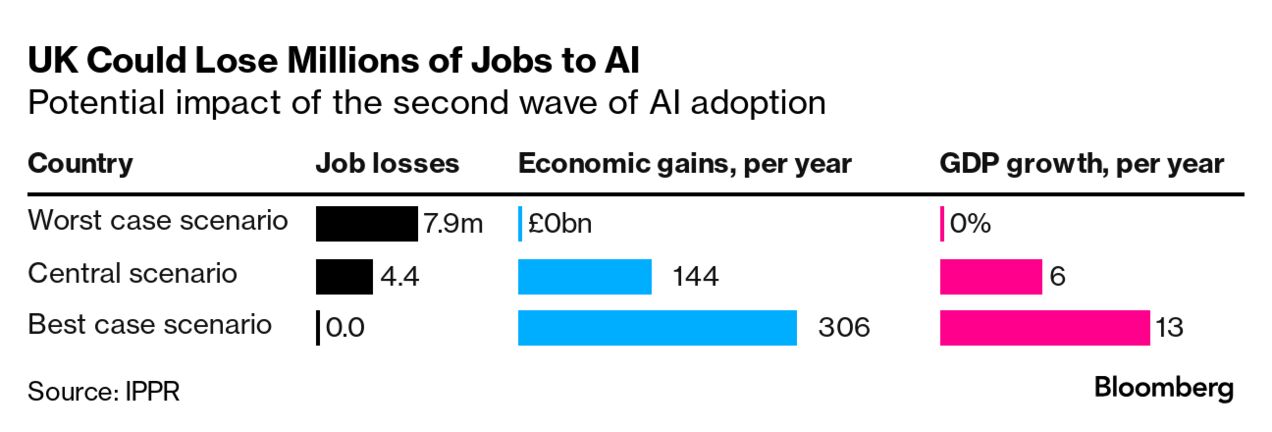
The growing integration of artificial intelligence (AI) in the workforce is putting up to 8 million jobs in the UK in danger, according to a dire warning from the Institute for Public Policy Research (IPPR). The ramifications of this trend and the policies in place at the government level might have a significant impact on both the job market and the economy as a whole.

AI's Effect on Jobs in the UK

UK at Risk of Losing 8 Million Jobs to AI, Analysis Warns

Image Source: bloomberg.com

The IPPR analysis states that AI is already having an effect on 11% of the tasks that UK workers complete. This number is expected to increase dramatically as businesses continue to use AI technology, possibly impacting over 60% of tasks. Part-time, entry-level, and back-office jobs like customer service are among the most susceptible. However, advances in AI might also have an impact on higher-paying employment.

Possibilities and Difficulties

Although the UK government has been utilising AI technology to increase productivity, the IPPR paper emphasises that the possible outcomes must be carefully considered. Senior economist at IPPR Carsten Jung highlights the critical role that companies, unions, and the government play in developing laws that prevent job loss and maximise AI’s economic advantages.

Policy Suggestions

According to the IPPR, an industrial AI strategy should be developed to facilitate job transitions and fairly distribute the benefits of automation. This approach should involve legislative adjustments, financial incentives to promote job creation rather than displacement, and assistance for sectors of the economy that are less vulnerable to automation, such as the green employment sector.

Gender Inequalities and the Development of Skills

According to a LinkedIn study, the UK is less skilled than other nations in AI, with just a small percentage of professionals having this level of knowledge. The risks of displacement are higher for women and young people, who are disproportionately employed in jobs that might be disrupted by AI. To effectively navigate the AI-driven employment market, firms and the government must prioritise skill development and address gender imbalances.

In summary, In order to minimise job losses and optimise economic potential, preemptive steps are crucial as the UK struggles with the transformational effects of AI on its workforce. The UK can effectively tackle the difficulties presented by artificial intelligence (AI) and promote equitable growth and job opportunities for everyone by enacting sensible legislation and allocating resources towards skill enhancement.

 
Samsung to Upgrade Older Galaxy Models with S24 AI Features

Samsung to Upgrade Older Galaxy Models with S24 AI Features

In an exciting announcement for Galaxy smartphone lovers, Samsung has revealed plans to roll out AI features for older Galaxy models, which was previously exclusive to its S24 series. This strategic move aims to enhance the user experience across its product lineup and reaffirm the company’s commitment to innovation and customer satisfaction.

Samsung to Upgrade Older Galaxy Models with S24 AI Features

Image Source: phonearena.com

The South Korean tech giant is set to update its Galaxy smartphone range with cutting-edge artificial intelligence capabilities, which debuted on the S24. These features include advanced photography enhancements, AI-powered battery management, and personalized user interface adjustments. This rollout is expected to breathe new life into previous models, extend the lifecycle of devices and add value for users.

Key AI Features Coming to Older Galaxy Phones

Advanced Photography Enhancements

Galaxy phone users can look forward to a significant upgrade to the photography capabilities of their devices. The AI-powered scene optimization and photo editing tools that have received praise for their performance on the S24 will now be available on older models, allowing users to easily capture and edit stunning images.

AI-Powered Battery Management

One of the most awaited features is the AI-based battery optimization technology. This intelligent system learns from user behavior to optimize battery consumption, potentially extending the battery life of Galaxy smartphones and ensuring that devices run efficiently throughout the day.

Personalized User Interface Adjustments

Samsung is also introducing AI that tailors the user interface to individual preferences and usage patterns. This personalization extends to app suggestions, screen brightness, and sound settings, making Galaxy phones more intuitive and user-friendly.

Rollout and Availability

Samsung has announced a phased rollout of these AI features, starting with its flagship models for the past two years before expanding to other eligible devices. Galaxy users can expect to receive these updates as part of a scheduled software upgrade in the coming months. Samsung encourages users to keep their devices updated to take advantage of new features as they become available.

A Strategic Move by Samsung

This expansion of AI features to older Galaxy phones is seen as a strategic effort by Samsung to increase customer loyalty and compete more effectively in the crowded smartphone market. By enhancing the capabilities of existing models, Samsung not only extends the lifespan of its devices but also provides continued value to its customers, a move that could set a new standard in the tech industry for post-purchase support and stability.

As the AI ​​feature rollout begins, Samsung Galaxy users around the world have a lot to look forward to, with their smartphones becoming more intelligent, personalized and capable than ever before.