Your Tech Story

tech news

Apple Releases the iOS13 Beta for Public

Apple just launched the public beta of its next operating system, iOS13, for the iPhone and iPad. The company has developed separate operating systems for iPhone and iPad for the very first time, naming them iOS, for the iPhone and iPadOS, for the iPad. The iOS13 will also empower the iPod touch. And, both the OSs are now available as a beta for the general public.

The company plans to release the original iOS13 by the coming fall, but before that, it will be testing the OS and will keep on updating it to fix the bugs prior to the original release.

iOS13
Image Source: macrumors.com

With the release of the iOS13 beta, it revealed the various features that will be embedded to the OS, including the dark mode, new photo gallery and editing options, revamped Apple maps and reminders, etc.

The company has finally brought the dark mode to iPhones and iPads. There are various options to activate the dark mode. The user can apply the dark mode manually or can schedule the on and off time for the same. There is also an option through which the iPhone and the iPad automatically adapt to the dark mode when it senses darkness around. For now, all Apple’s pre-installed apps are enabled with dark mode, whereas the third party apps that do not support dark mode will not respond to the iOS dark mode.

With the iOS13, Apple has brought a new photo app, that sorts pictures on the basis of time, date, month and year, and also provides various new editing features. These amazing editing features allow you to make changes to the white balance, definition, vignette, brilliance, contrast, saturation, sharpness, noise reduction on pictures, highlights, and shadows, etc. This new app has got great UI and is faster.

iOS13 also brings new renovated Apple Maps that allow the users to set icons for the places they visit often, like their home, office, a favourite restaurant, a friend’s house, etc. The new app now has more precise data about locations and is faster when showing the directions. The company has also made some good changes to the app’s street view and CarPlay features. The street view option is now better with its new 3D feature ‘Look Around’.

The old Reminder app that Apple offered to its users was quite a useless one, but this time, the users will be able to add geofences, times, or pictures to reminders. The app has got new options, like filters for the due work, for the work that is already done, and for the scheduled work. Siri will also play a role in the Reminder, and the user will also be able to add contacts to the app.

Apple has also worked on enhancing the security for the Apple devices, and has introduced a new signup option called “Sign in with Apple”. Along with that, it has also released new permissions for the Bluetooth, wifi, as well as location tracking.

The other new features include adding a profile picture to the messaging app, which will be visible to the user’s contacts only, Mail with new formatting options, and Safari with a new website settings menu, etc.

Nasa’s Curiosity Detects Methane Spike on the Martian Surface

Many of the scientists are curious about the whereabouts of Mars, and the biggest space organisation, NASA, is one of them. According to a report by the New York Times, Curiosity, the motor vehicle sent by Nasa to Martian surface, has discovered the largest amount of methane ever measured during its mission. Times published the news on Saturday, after receiving a private email from Ashwin Vasavada, one of the project scientists on the mission.

Curiosity Mars Rover
Image Source: bgr.com

NASA on Monday confirmed the news, by saying that the amount of the methane that Curiosity has found, in the span of seven years of its mission, is about three times higher than previous detections. The organisation also doubts that the origin of the gas may be biological, arising hopes for the possibility of life on Mars, one of the sources of methane can be microbial life. Though, methane can be originated through other sources including geothermal reactions involving water and heat, or through interactions between water and rock. But, Curiosity lacks the tools that can identify the origin of methane on Mars, and from where it is generated. So Nasa has also denied commenting on the same.

According to the blog post published by Nasa on Monday, the finding reveals that the rover discovered about 21 parts per billion units by volume (ppbv) of methane, through its Sample Analysis at Mars (SAM) tunable laser spectrometer. And, one ppbv means that if a volume of air is taken to Mars, one billionth of the volume of air will be methane.

The organisation also revealed that the rover has detected Methane on the Martian surface several times before, and always there was a difference between the level of methane during every other season. Nasa hasn’t been able to know the reason behind the difference in the level of methane in these different seasons. The organisation also detected the gas on the surface of Mars in 2004, but the scientists were unable to detect its source, at that time.

Nasa will be conducting a few more experiments to know more about the sources of Methane and will be collaborating with different space organisations, including the European Space Agency’s Trace Gas Orbiter. The latter has been exploring the Mars’ orbit and has notified that it has not detected any methane during the period of one year of its research. Nasa mentioned that it will be matching up the reports from the latter and will carry out some experiment to get extra details on the finding.

Razer Collabs with Visa to Move Forward with its Fintech Arm

Razer and Visa Partenership
Image Source: comentr.com

Razer the fintech gaming company has joined its hands with the world’s leader in digital payments, Visa, to initiate an unusual type of partnership. The two companies will be working together to develop a new virtual prepaid solution for many of Southeast Asia’s, especially the unbanked and underserved, consumers.

The company announced that its fintech arm, Razer Fintech, will be joining the fast-track program from Visa, as a revolutionary idea, aiming to transform the way the gamers make payments. The fast-track program from Visa has been specially designed for fintech companies to help them easily access 54 million merchant locations around the world that accept Visa.

The partnership between the two companies will lead to developing a new virtual payment service, that will empower the Razer Pay e-wallet and give its users access to the global Visa payment network. With this new service, the unbanked users will be able to top up the wallet, make online payment through it, and also, will be able to withdraw cash through it. The scope of Visa is already huge, and with the collab, the two companies will be targeting to the 60 million Razer users. Noticeably, the company has not talked about rolling out a physical payment card along with the service.

“We are pleased to partner with such a forward-looking and innovative company that understands the value and importance of expanding access to digital payments. This announcement reaffirms Visa’s commitment to the fast-growing and digitally savvy Southeast Asia region. Together, Visa and Razer Fintech have the opportunity to transform the payments experience for not only the gaming community but many of Southeast Asia’s unbanked and underserved consumers as well”, Chris Clark, Regional President, Asia Pacific, Visa, stated during the announcement.

The two companies have said that they will be rolling out a mini app for the new payment service and will also include great offers for its users. The app will be integrated into Razer’s virtual wallet app.

Reliance Plans to Launch Jio GigaFiber Next Few Weeks

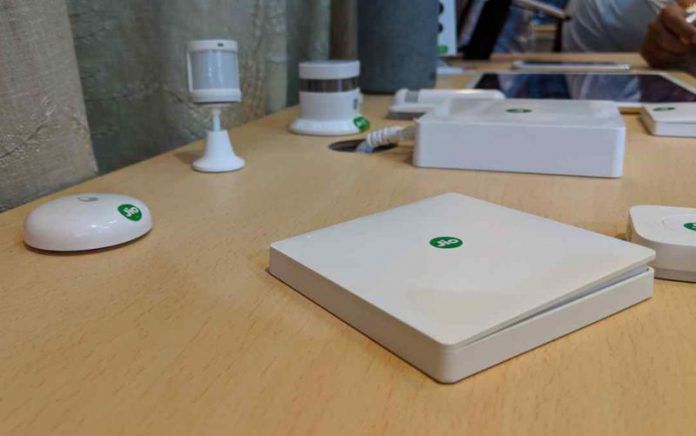
Reliance Jio, the biggest telecom company in India, had released the beta of its Jio GigaFiber last year, and since then, there have been many talks about the same. The Jio GigaFiber claims it will replace the old fashioned cables with all fibre cables, enhancing the speed for the broadband and TV connections. Reportedly, the company is planning to end the beta and officially launch the GigaFibre in the coming weeks.

Jio GigaFiber
Image Source: mysmartprice.com

Since the company had made the testing open for the public, too, many of the common people were able to enjoy the unlimited internet after paying a sum of Rs. 4500. This way, there have been numerous leaks on the details about the upcoming Jio GigaFiber.

The new Jio GigaFiber is faster and offers three different services altogether, i.e., landline, broadband, and a TV connection. With the new network connection, Reliance intends to provide its users with a connected ecosystem for their homes through a single package, and that too, at a cheaper price.

Though there are various network providers that use optical fibre for the connection, they mix these connections with the conventional cables. With Jio GigaFiber, the whole network will rely on fibre optics, leading to up to 100Mbps network speed with no or negligible loss in the connection. The people who were using the beta of the service have confirmed a similar speed on the network. The TV connection and the landline will also rely on the internet, such that JIO TV will stream the TV channels in HD, and people will be able to make free calls through the landline. Even if we believe the rumours, the Jio TV will stream 600 TV channels for Rs. 600.

Also, unlike the other network providers, GigaFiber includes the dual-band Wi-Fi routers. Currently, the company is offering the GigaFiber beta connection for a security deposit of Rs 4500. The other plan includes a single-band router rendering speed of 50Mbps, which will cost the users a sum of Rs 2500.

GigaFiber can be a big game changer for Reliance as it may empower other home devices as well, and this way, people will not have the need for different service providers for separate home internet services.

Renault-Nissan Partners with Waymo to Experiment with Self-driving Cars

The French automobile company, Renault has partnered with Waymo, the automobile subsidiary of tech giant Alphabet Inc., to bring new autonomous cars to France and Japan. The venture also includes Renault’s Japanese partner Nissan, which will be responsible for the launch of those self-driving cars in Japan.

waymo Self-driving cars
Image Source: engadget.com

With this partnership, Renault and Nissan will be researching on how self-driving cars can help in easing-out the transportation of humans as well as goods and develop driverless mobility services for the same. Noticeably, Waymo has already brought such vehicles in Arizona called Waymo One and a limited robo-taxi pilot program in suburban Phoenix last year. Though the launched cars are fully-autonomous, there is always a human monitor sitting on the other front seat of the car for emergencies.

The companies will also work on the commercial, legal and regularity issues, that are related to the development of self-driving cars and making the transportation-as-a-service for both the countries.

According to the reports, the agreement between the companies has been done for a limited but unspecified time. There has been no comment on the same from either of the company. The agreement also has restricted all the three to work with other companies on a similar project.

“This is an ideal opportunity for Waymo to bring our autonomous technology to a global stage, with an innovative partner. With the Alliance’s international reach and scale, our Waymo Driver can deliver transformational mobility solutions to safely serve riders and commercial deliveries in France, Japan, and other countries,” said John Krafcik, CEO Waymo, in a statement.

Though Waymo is quite excited about this merger, the venture will be a 50-50 partnership between Renault and Nissan for both the countries, and there has been no hint on the role of Waymo for the same. The two companies will be setting up a joint committee to work together in France and Japan.

Earlier, the two companies were in talks with Fiat Chrysler Automobiles (FCA) to bring next-generation technology and work in the field of self-driving cars. But the merger could not take place, and FCA withdrew the agreement.

Kano and Microsoft Bring New DIY Windows 10S PC Kit

Reportedly, Microsoft has partnered with Kano, a London-based startup, that specializes in building build-your-own PC DIY kits for the kids. The two companies have joined their hands to bring a DIY touchscreen laptop for its little users, that will be running the Windows 10S.

Kano PC
Image Source: venturebeat.com

Windows 10S is the lighter version of the Windows 10, and it will be the first time that any of the Kano computers will be operating a Windows OS. Though using the Windows 10S will restrict Kano laptop to run apps only from Microsoft. Previously, Kano laptops ran the Raspberry Pi 3s OS and the OS from Kano itself.

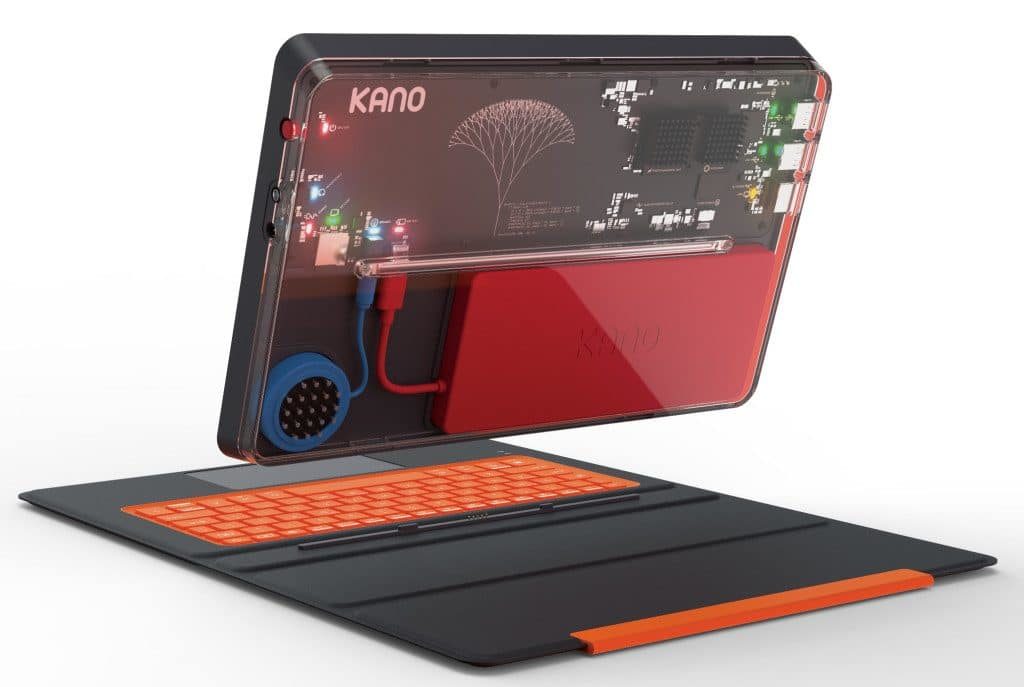
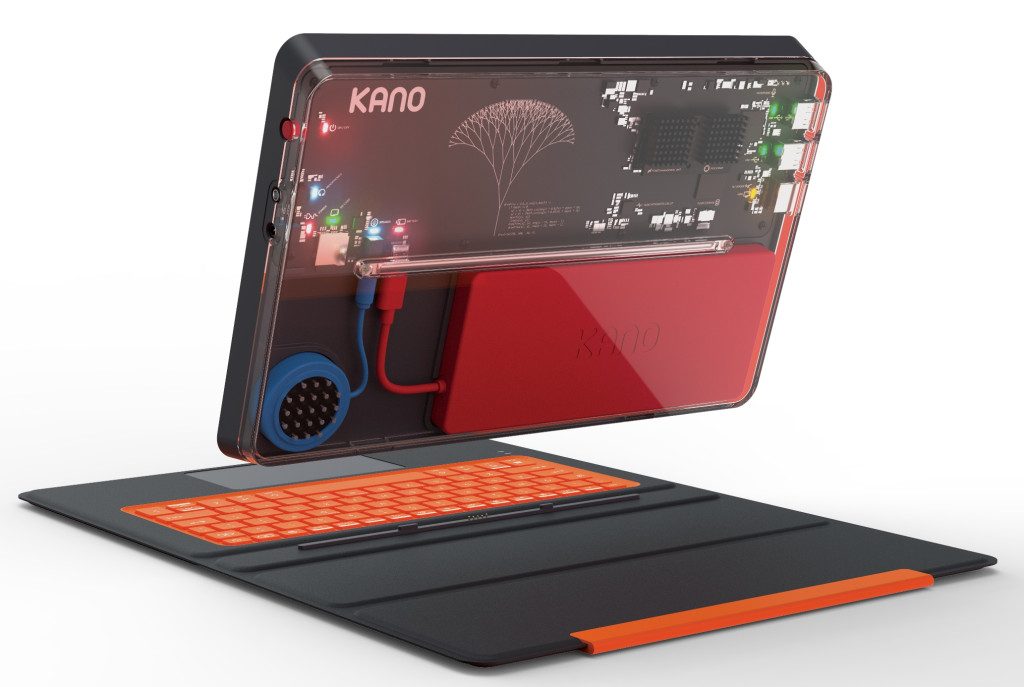
The new Windows-based Kano PC is a laptop/tablet, which is a similar version of most of the Microsoft’s Surface PCs, but having a transparent back on its 11.6” screen. The screen of the laptop is a touch screen, and the transparent back shows the components of the upper flap of the laptop.

The laptop comes into detachable pieces, such that the kids will need to assemble the entire system themselves. The laptop is empowered with the 1.44 GHz Intel Atom x5-Z8350 quad-core processor, supporting a 4GB RAM, and 64GB of eMMC storage. The laptop also supports expending the storage with the help of microSD card. It also has got an HDMI port, microphone, detachable speakers, headphone jack, and 2 ports for USB extensions. The laptop also renders support for WiFi and Bluetooth for connectivity.

Since the kids will need to assemble the laptop by themselves, the company has provided a storybook kind of instruction manual for the kids, on how to attach the parts of the PC together and make the experience even more interesting.

The company has included some educational apps to the laptop, including ‘How Computers Work’, in order to teach the kids more about coding and computing. Other applications that are included in the PC are some educational apps from Minecraft, Microsoft’s 3D Paint and Pong-based game development apps. The kids will also be able to create 3d models and learn binary codes, with the help of Kano PCs.

Kano is known for bringing computing DIY kits for the kids, and it has already launched various famous DIY kits, including Harry Potter-themed coding kit with the wand and a computer running a Kano OS operating system. The new Windows-based Kano PCs have been made available for preorders on Kano’s official website and also at the Microsoft Store for a price $299.99 and £299.99. These PC kits will go live on sale in the US and UK starting from Oct 21.