Your Tech Story

tech news

Google logo

Google urged the EU to provide flexibility while setting the Digital Rule Book

On 3rd September 2020, Google urged the European Commission to bring flexibility to the upcoming Digital Services Act. Google further said that one single rule book is hard to fit all and thus amendments should be made accordingly. On 8th September 2020, the public consultation period on this matter ends. Google made a 135-page submission urging the European legislature to bring more clarity to the rules and regulations of the online platforms.

Why a new strategy?

On 1st July 2020, the new rules by the European Union to boost competition rolled out mostly because of losing Google’s market grip. The main reason to set a new rule book was the conclusion of multiple antitrust actions against Google proving ineffectual. The new Digital Rule Book set by the EU mainly focuses on two things- laying ground rules for data sharing and how the digital marketplace should operate.

Margrethe Vestager, digital chief of EU and top antitrust enforcer informed Reuters in June that the new rule book has been set up to prevent history from repeating itself. The nation doesn’t want to witness what happened with the Google cases and wants to boost competition at the same time. Google didn’t choose to reply in response to this statement.

Many actions have been taken on the operations of Google’s search engine, its OS on the Android mobile, and advertising business-related to anti-competitiveness. The rivals of the company have said that they are yet to see more competitors. So, in response to all these cases, the U.S. antitrust enforcers are preparing a case against Google. Moreover, the Digital Services Act of the EU can force the giant tech companies to give access to data under certain conditions to their small rival firms.

Why did Google ask for clarity and flexibility?

After the EU has decided to roll out the new set of rules, Google asked to reconsider all the facts and operations of every company being different from others. It said that though it is important to identify and put a stop to all the illegal contents, the mandating use of technology can “overblock Europeans” which is a very big negative point.

Google, DIgital rule book tech news

New rules should come with new features that will improve the current situation, filter the content judiciously, etc. The company further said that the rules should be laid out in such a manner that it will get rid of the extra burden of undue costs from European businesses. Because in the time of the pandemic, that is the least desirable thing for any nation.

Companies other than Google

But, is it only Google that has fallen victim to this unhealthy situation? The new template formed by the EU will become a very good example for other governments around the globe on how to tacitly rein in companies like Apple, Amazon, and Facebook. It seems that after Google, Amazon and Apple are next in line.

Targeting unfair contractual terms will harm Amazon if the investigation is carried out for the company against a dual role. One for the digital marketplace for its customers, and second as a competitor against other traders. Apple might also suffer antitrust investigation by the EU after Spotify has raised complaints about unfair curbs on its music streaming platform and a 30% fee for its in-app purchase system. Both Amazon and Apple declined to comment on this matter.

Imposing DSA will endanger the reputation of Facebook as the Digital Services Act focuses mainly on catching the frauds earning money through false advertisements. There are many business advertisements on the web that makes high profit by providing false information. So, it is clear that the EU Commission is hell bound to lay strict rules which will not only affect Google but the topmost companies of the 21st century to date. In response to rolling out the Digital Rule Book, a Facebook spokesman said that the company is supporting the EU for laying off “a harmonized EU framework” that will help in content regulation.

 In a nutshell, some of the biggest companies have been placed in the EU crosshair and both the offender and the defender will try their best to keep a better part of their negotiation. But, one thing is for sure that the U.S. Department of Justice is expected to file a case against Google soon.

daimler logo

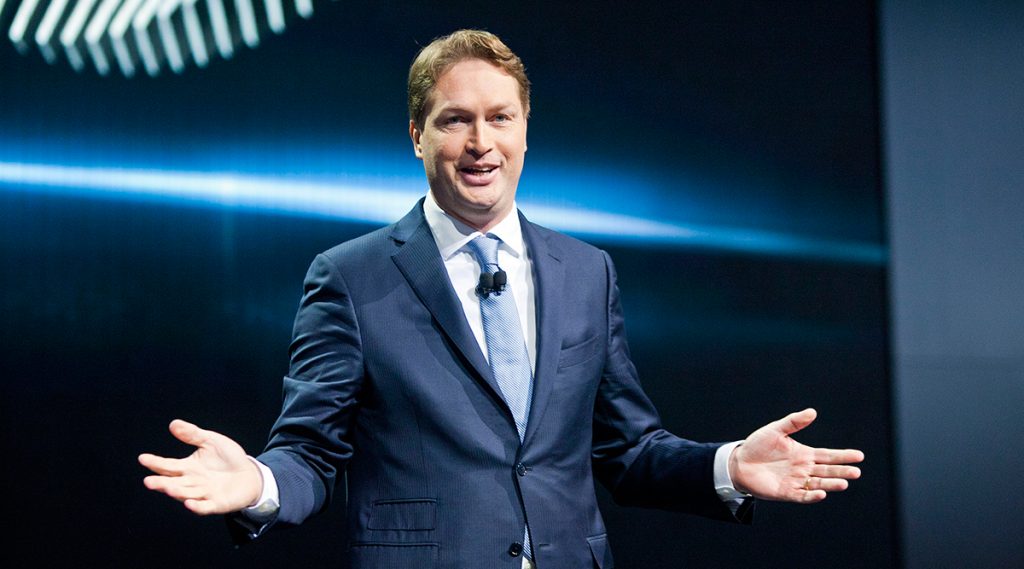
Daimler CEO Ola Kallenius Expects Daimler to Export Mercedes-Benz Cars from India

India has a large and growing automobile manufacturing industry, which has in recent years showed much promise. The COVID-19 pandemic has led to a decline in sales for large manufacturers. However, the industry is looking for ways to grow past this slight hiccup. It might have received such an invite through the Daimler CEO’s recent statement. As per CEO Ola Kallenius’s interview with the Times of India, the auto giant is looking to source specific components exclusively from India. Here’s a look at the major highlights of the interview, and how Daimler has positioned itself as an automotive ally in the last few years.

Validation for India

India’s the automobile and manufacturing industries have grown exponentially in recent years. This move by Daimler serves as a significant validation for its growth and reliability. As per the interview, the Daimler CEO has stated that the company would use India as an exclusive base for global sourcing of specific important components and software. Furthermore, he also said that Daimler was considering plans to export cars from India on a large-scale. However, the final plans regarding these projects will depend on their economic feasibility and financial viability.

More Praise for India

Ola Kallenius also had a lot of praise and good faith for India, expressing how he was an “Indian fan”. He also described how the movement of the manufacturing of individual parts to India permanently had been a good move. As a result, the company would remain focused on making more such engineering efforts to better their production, and ally with India strategically. However, the CEO was unclear to what extent such a partnership or alliance would grow as that depends on several factors. The CEO was in Germany, unveiling a new S-Class limo while making these statements.

Ola Kallenius
Image Source: ttnews.com

Furthermore, he was also clear about how the growth of software development in India also poses favorable conditions for the expansion of such alliances. He also made it clear that expansion in India could be for more than bare vehicle engineering, but also the IT side of things. He was also quick to point out that India has been a “solid pillar of their house” for several years.

Presence in India

Daimler has two active and functioning factories in India. Their factory in Pune houses and creates Mercedes-Benz cars, while the one in Chennai churns out their Bharat Benz range of trucks. Furthermore, the company also has a large Research and Development centre based in Bangalore, which focuses on global R&D. Kallenius also stated that the export of Mercedes-Benz cars from India would serve as a purely economic decision. As a result, the project depends heavily on the economic feasibility and viability of the decision. However, Kallenius also stated that such a case had never come up till now and that he isn’t sure when such an opportunity would arise. He also reiterated that if and when they do have to make such a decision, it would rely heavily on the financial aspect of things.

Previous Plans for the Future

The German auto legend set up the factory in Chennai, which produces trucks and buses to help with serving its Latin American market from 2022.  Earlier reports had stated that shipments would start going out to Brazil, Chile, and Mexico between 2021 and 2022. The reports for the same had come in September of last year, following the Indian government’s move towards BSVI technology. Around that time, the company also stated that globally it had sold over 1.4 million vehicles which are Euro-VI, or BS-VI equivalent compliant. The company has also invested about INR 500 crores in India to localize, test, and improve its Euro-VI technology.

Two years ago, Daimler exported the GLC SUV, which is an Indian-made vehicle to the US. The company went on to mention that their Indian plant was a back-up set up to help deal with a rise in global demand for their vehicles. Furthermore, on being asked about the low sales of luxury vehicles in India, the Daimler CEO said that numbers did not do any justice to the true size of India, it’s economy and the population. He concluded by stating they had a fair market position but just had to work some things out. The analogy he employed included shaking a good ketchup bottle but having difficulty with bringing out the ketchup. It will be interesting to see whether the deal goes through after financial analysis, as it could breathe some much-needed life into India’s automobile manufacturing industry.

facebook logo

Facebook Takes the Battle to the Government by Planning to Block Australian Publishers from Sharing Articles

Facebook in a new statement has announced that it will block publishers and users from Australia from sharing news pieces and articles. However, this move will serve as a significant pushback against a newly proposed law that will force Facebook to pay media companies for their articles and content. Furthermore, this new announcement will also escalate tensions between the tech giant and the Australian government. Both parties have been caught in a bitter antitrust battle, with the government holding Google and Facebook responsible for paying publishers for the content they provide these platforms. Here’s a look at how the battle came to heads and what this move could mean to users and publishers.

New Law In-Play

The Australian government is yet to approve and ass the new legislation. However, an arbitration panel tasked with working out the by-laws and clauses has proposed that tech companies must pay their content publishers if the two sides cannot agree. Facebook hit back through a blog post yesterday, claiming that such a proposal was hugely unfair. The social media giant also stated that such a law would allow content creators and publishers to charge any amount they wanted. Furthermore, the company said that if the law did come through, it would be forced to prevent Australians from sharing any media on Facebook and Instagram. 

Facebook Takes A Stand

Facebook’s VP of Global News, Campbell Brown, said that this decision was hard to take for the company. However, he reiterated that it was the only way to protect Facebook against a move that would hurt them and Australia’s media outlets. She went ahead to state that the social media giant was still working on a full-proof method to block Australian media from sharing articles. Following this announcement, Josh Frydenberg, who serves as Australia’s Treasurer, said that these were nothing but heavy-handed threats.

facebook

Instead, he stated that such a law would help make the media landscape more sustainable as digital platforms would have to pay for the content they put out. Rod Sims, who serves as Australia’s competition regulator, also said that such threats were misconceived and ill-timed. He went on to say that the newly proposed law would go a long way in ensuring that the media remains fair and transparent.

Google Follows Suit

Since the Australian legislation will also affect the Alphabet’s Google, the tech giant has also been vocal about its displeasure regarding such a law. They too raised alarms and said that such a measure would force them to put out much less efficient versions of Google Search and YouTube. As a result, such a move, Google Australia and New Zealand MD, Mel Silva, said would critically damage the use of free internet services, like Google in Australia. 

Fighting for Transparency

The Aussie government claims it is only trying to make things more fair and transparent for its media bodies. Furthermore, it states that such a law would help level the playing field and give local media a chance against large tech companies. For instance, the local media is struggling as a result of the free sharing of news by such tech giants with News Corp, a media agency owned by Rupert Murdoch planning to cut jobs in Australia.

Murdoch’s decision will result in the closing down of over 100 regional and local newspapers in Australia, putting these media persons at risk. Murdoch has long asked Facebook and Google to pay for the articles, news pieces and content that appear on their platforms. Hence, it was obvious that New Corp would laud the government’s efforts to make this a reality. Michael Miller, who serves as the executive chairman of News Corp, stated that such a move would put an end to the tech giant’s free-riding on the content created by others. Since such companies derive a lot of benefit from such content, it is only fair that they pay the people making such content out of their own pockets.

Impact and After-Effect

However, if Facebook does follow through with its plans as per the announcement, publishers would no longer have access to a broad audience. Facebook claims that in just the first five months of this year, it sent over 2.3 billion clicks to news websites based in Australia from its News Feed. As a result, blocking such news from their feed could result in a massive loss of audience for news channels, while also limiting the appeal the platform enjoys in Australia. Australia’s new rules come as a part of a global push to make tech giants more accountable and regulated.

France came out with a statement asking Google to pay media companies for the articles it shares in April. Two months later, Google said it would start paying for certain news services in Brazil and Germany. Facebook came out with its separate News Feed last October and pays certain publishers for stories. The tech giant is also in plans to extend this News tab on a global basis but will block the sharing of news if governments try to intervene in its efforts. It will be interesting to see whether the social media giant is capable of halting this global push for more regulation and whether that would be a wise choice for the consumers.

neuralink

Elon Musk’s Neuralink puts computer chips in a Pig’s brain to treat disease.

On 29th August 2020, Elon Musk’s startup, Neuralink revealed a big experiment they are carrying out. The main source of the news is Reuters. Neuralink has put a coin-sized computer chip inside a pig’s brain for the past two months. The name of the pig is Gertrude and it is in the early stage of the experiment to analyze if the same concept can be applicable for human brains. According to Elon Musk, this can be a way to cure many diseases in the human body.

Neuralink is a neuroscience-based startup founded in 2016 by Tesla Inc and Elon Musk. Current experimentation of the company involves treating major human diseases by implanting wireless brain-computer interfaces. Musk delivered this news on a webcast last Friday. The timeline for human trials has not been mentioned yet.

Three little pigs

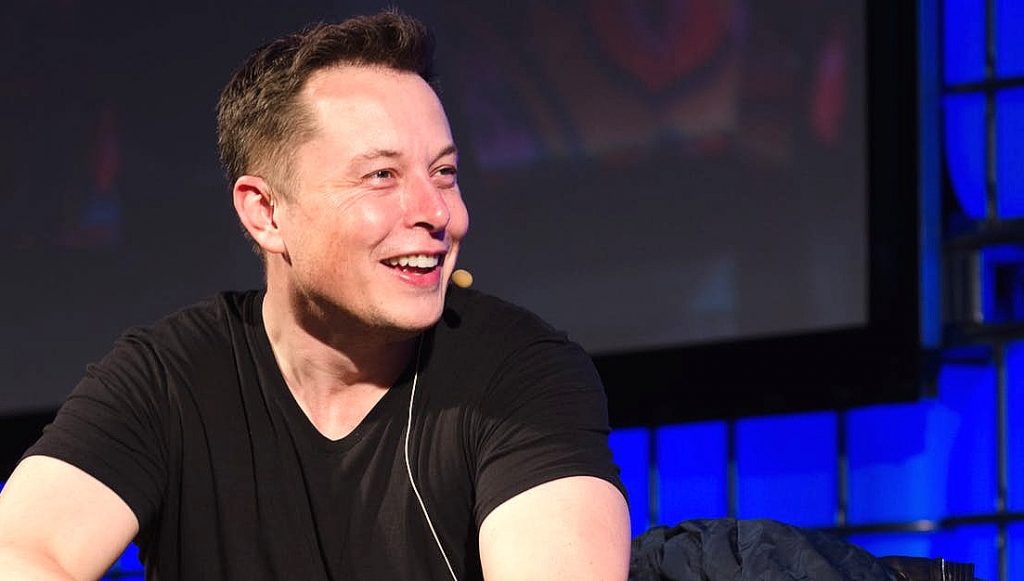
Musk has given a presentation virtually and it is called “three little pigs” demo. The demo showed Gertrude, the pig whose brain has been implanted with the computer chip in a position that controls the snout. After some coaxing by Elon Musk, it began performing some activities like eating off a stool and sniffing the straws which led to show striking changes in the graphs monitoring the neural activity.

Musk also revealed that the experimentation has been carried out in three such pigs having two brain implants each. The implanted pigs are physically indistinguishable from any regular pigs and there are no abnormalities in them. Moreover, the pigs with implantation have shown greater accuracy in limb movement during a treadmill run. The conclusion has been reached using the implant data. These pigs are now often described as “Cypork”.

Human trial

Previously, Musk has mentioned about the human trials beginning at the end of this year. But, on Friday, Elon Musk has not mentioned any specific timeline for the beginning of the human trail. Dr. Matthew MacDougall, the head surgeon of Neuralink said that the first clinical trial on humans will focus on a small group of patients suffering from paraplegia or paralysis. The company also confirmed that it has made many great innovations for the past four years and the long studies have come to an end. This might mean that the trails will begin shortly since the implantation in animals has shown positive results.

Elon Musk
Image Source: teslarati.com

Treating several diseases 

Elon Musk has said the implantation device can solve many actual diseases in the human body like memory loss, hearing aid, depression, and insomnia. There are thousands of electrodes present in the computer chip which interacts with the human brain to cure complex neurological problems. Severe conditions like Alzheimer’s disease, dementia, spinal cord, injuries, etc can be cured as well. The size of the Neuralink’s chip is approximately 23 mm in diameter. Musk described it as “a Fitbit in your skull with tiny wires.” So, it is impossible to distinguish a person with implantation from a normal person. In 2020, around 5.8 million Americans are diagnosed with Alzheimer’s dementia. So, an invention like this will be a big scientific and medical breakthrough. But, once it becomes a success, viability will be the main concern.

Expert’s feedback

In response to the high success rate of this experimentation, Graeme Moffat, a neuroscience research fellow from the University of Toronto said that Neuralink’s advancements are ahead of its time. The superior design of the computer chip with efficient power management, wireless technology, and smaller size makes it very innovative and impactful. One of the neuroscientists from Stanford University said that the company has made huge progress since last year’s demonstration about the chip.

But, some of them have contradicted the statement regarding the end of longer studies. A few fellow researchers around the world said longer studies might be required to determine the longevity of the device. Since the experts can read the brain waves after the chip has been implanted it will lead to a better understanding of the brain activity while suffering a disease.

Similar advancements

Musk’s neuroscience start-up, Neuralink has received $158 million in funding. But, he said that the main reason for Friday’s event was recruiting and not fundraising. Musk also spoke about AI and its role in this new Neuralink’s chip. He also said other companies like Kernel and Paradromics are carrying out similar experiments.

cleverbot

Story of Cleverbot and Rollo Carpenter

Google Assistant surely helps us by setting reminders, sending texts, playing music and calling people on behalf of us. These are just a few things from the ample of benefits it provides. But, have you ever experienced a friendly conversation with a machine without realizing that you are talking to one.

Almost every smartphone users at least once tried to have a funny conversation with either Google or Siri, but after some point, it becomes evident that we are talking to a human-built program. The replies from the bot are not always friendly and not how humans speak to each other. This is where the true power of AI was unleashed by Rollo Carpenter when he came up with Cleverbot.

Cleverbot, a web application to serve the purpose of a chatbox was created by Rollo Carpenter. The application went public in 1997 and even passed the Turing Test with 59.3% accuracy while the minimum criterion is 30%. The application is developed entirely based on AI algorithm. It was built to serve the humans by chatting where the latter one won’t feel like it is speaking to a bot at all.

Rollo Carpenter

Having played the role of managing director for more than one company, Rollo Carpenter did some excellent works throughout his career. Born in 1965, Carpenter started his career as the co-founder of Bizfinity Inc. Through the years, Carpenter vehemently experimented with AI and ML and came up with the idea of developing a chatbox.

His main motive was to build AI-based software that can learn from the conversations carried out with humans and reply accordingly. When Cleverbot was developed, it initially conversed with Carpenter and his associates and it turned out to be very friendly and entertaining.

In 2005 and 2006, Carpenter acquired the first position in Loebner Prize Contest for his AI-based software. In October 2005, Carpenter joined Icogno Ltd as its Managing Director followed by acquiring the same position in Existor Ltd after three years. Carpenter launched his project, Jabberwacky to create AI-based entertaining chatbox and hence Cleverbot was launched as one of its product.

About Jabberwacky

Carpenter started working on Jabberwacky since 1986. He launched Cleverbot in 1997 as a product of his project, Jabberwacky. Today, Cleverbot is nothing but the updated and modified version of Jabberwacky in the market.

Carpenter started programming for a very young age and became quite impressive in managing databases at an early teen. The idea of programming a chatbot clicked in his mind when he was working with these hardcore programming languages.

The first strategy that came into his mind was building a feedback system for the bot which will help it learn from the humans. His main goal was to make the chatbot learn from humans today and implement on them tomorrow.

When Jabberwacky went online in 1997, the bot received almost 20,000 entries and carried out different conversations with every individual. In 2003, Jabberwacky crossed more than a million interactions which turned up to 150 million in 2019.

The most unique feature of this chatbot is its model is based on AI. When you speak to Google Assistant you might notice that after a certain point of time it keeps repeating a particle sequence. This elaborates the fact that any normal chatbot has a particular pattern easily distinguishable by humans. But, Jabberwacky has proved that its borrowed intelligence makes it different from most of them.

Jabberwacky’s new version, Cleverbot performed so well in convincing humans that they are not talking to a program that it passed the Turing Test with a whopping 59%.

Cleverbot

After the Cleverbot went online and passed the Turing Test a lot of modifications have been done to it. The test was conducted by IIT Guwahati on 3rd September 2011. It was declared a success when it entertained and fooled around 59.3% of participants to be exact. Since Cleverbot saved the responses from previous human interactions it improvised itself every day.

Today, Cleverbot can easily carry out around 7 million interactions at a time efficiently. Since 2014 Cleverbot has started using GPU techniques. The entire team is working on launching a new version of the chatbox implementing machine learning. Carpenter, in an interview, said that the data accumulated is more important for the software since the stored data helps it responds differently.

AT&T TV now

AT&T Applies New Price Hikes to its TV Now Streaming Service

Streaming services are slowly taking over the TV audience, but yet to stay in the field and ahead of the competitors, these streaming services need to apply new strategies, now and then. Despite the tough competition, AT&T’s TV Now, previously known as DirecTV Now, is yet again up to increase its prices.

AT&T at the beginning of the year had revised its streaming service plans and launched two types of streaming packages, i.e., the $50 Plus package that offers the users the access to over 45 channels, and the $70 Max package that allows the users to access over 60 channels and offers more sports coverage. But now, the company has again decided to increase the prices and that too, by 30% for the Plus package and 14% for the Max package.

It means the Plus package will now cost $65 and the Max package will be worth $80. But unlike the previous price hikes, the hikes this time will apply to both existing and the new customers, whereas in the previous price rise, the existing customers did not have to pay the extra money on their current plans.

AT&T TV now
Image Source: variety.com

AT&T is not having much good experience with its streaming business, as it has not been able to attract more customers to the services, instead is losing them slowly. Yet the company has to earn some profits, so it has decided to raise the prices.

Last year, AT&T ended the year with 1.6 million customers, whereas the number of customers in Q2 2018 was 1.8 million. Today, the customer count for the service remains at 1.3 million, which is a huge decline.

Despite the loss of last year’s customers, the company isn’t much worried about how the price hikes will affect the existing ones. For the users, there is an option to stay on the service or opt-out without paying any extra charges. Though AT&T offers a number of great services through the streaming TV, i.e. live TV and original contents from companies like HBO, it is up to the users to decide whether they think the 30% hike is valid for these services or not. The price hikes will take effect starting from 19 November 2019.