Your Tech Story

tech news

Nokia T20

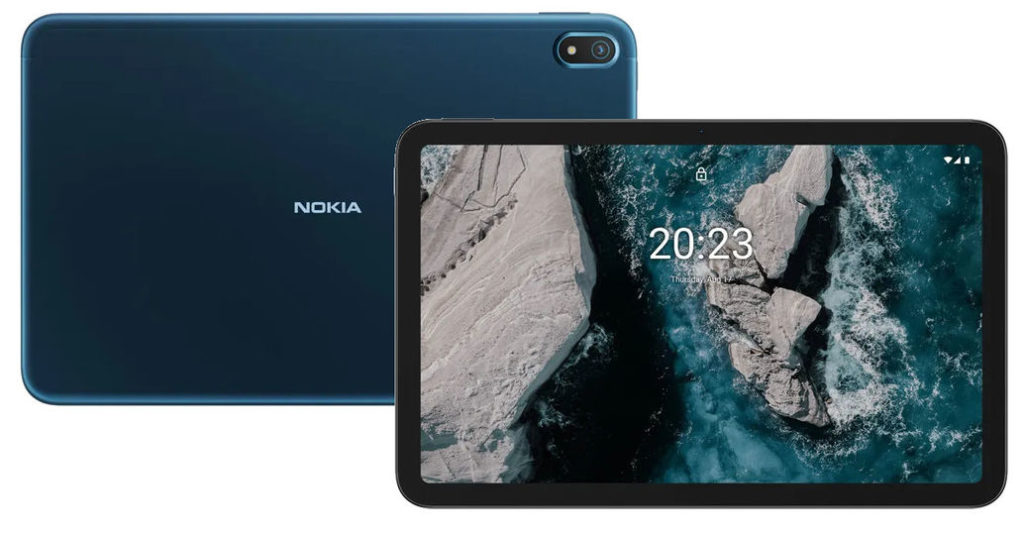
Nokia T20 Tablet With 2K Display, Stereo Speakers Now Available in India, Price Starts at Rs. 15,499.

HMD Global, the Nokia brand licensee, launched the Nokia T20 in India on Monday as the first Android tablet. The Nokia tablet features a 2K display and an 8,200mAh battery that is capable of providing up to 15 hours of Web browsing on a single charge. The Nokia T20 also has dual microphones and stereo speakers. In addition, HMD Global has promised that the tablet will come with up to three years of free monthly security updates and two years of free operating system upgrades. In India, the Nokia T20 will face off against the Realme Pad, which was released in September and has a starting price of Rs. 13,999.

Nokia T20: Specifications And Features

The Nokia T20 is powered by Android 11 and has a 10.4-inch 2K (2,000×1,200 pixels) display with a peak brightness of 400 nits. The tablet is powered by a Unisoc T610 octa-core processor with up to 4GB of RAM. It has a 5-megapixel front-facing selfie camera sensor and an 8-megapixel back-facing camera sensor. There’s also a back-mounted LED flash for better low-light results. The tablet also includes OZO Playback and stereo speakers. Dual microphones for noise cancellation are also included. The Nokia T20 comes with 32GB and 64GB of storage options. There’s also a microSD card slot for adding up to 512GB of storage.
The Nokia T20 has 4G LTE (optional), Wi-Fi 802.11ac, Bluetooth v5.0, USB Type-C, and a 3.5mm headphone jack for connectivity. The tablet also has an 8,200mAh battery with a 15W fast charging capability.

Nokia T20
Image source: fonearena.com

Price And Availability

In India, the Nokia T20 starts at Rs. 15,499 for the Wi-Fi-only variant with 3GB RAM and 32GB storage. The Wi-Fi-only model of the tablet has a 4GB + 32GB configuration and costs Rs. 16,499, while the Nokia T20 4G model costs Rs. 18,499.
In terms of availability, the Nokia T20 will be available on Nokia.com and offline retail stores in India starting today, and on Flipkart starting tomorrow. Customers who buy the tablet will get Spotify access right away. There will also be a variety of finance options available from major brands across all channels.
The Nokia T20 was released in Europe last month for EUR 199 (roughly Rs. 17,200) for the Wi-Fi-only model.

About The Company

Nokia develops technology that enables people all over the world to work together. They deliver critical networks to help address global issues through technology leadership and trusted partnerships. They have the ability to connect the world’s people, machines, and devices in real-time, sensing and acting on a massive scale. Their critical networks go beyond connectivity to enable local and global self-optimizing, intelligent systems. With their customers, they deliver solutions that address climate change by more efficiently using and reusing the world’s resources, restoring productivity growth by bringing digital to the physical industries where it has yet to reach, and providing more inclusive access to work, healthcare, and education around the world.
Nokia has found and nurtured success in a variety of industrial sectors over the years, including cable, paper products, rubber boots, tires, televisions, and mobile phones, since its humble beginnings in 1865 as a single paper mill operation. Nokia’s shift to a telecommunications-focused company began in the 1990s. In 1991, Nokia equipment was used to make the first GSM call. Nokia became the best-selling mobile phone brand in the world by 1998, thanks to its rapid success in the mobile phone industry.
Nokia released the first camera phone in 2003. Nokia and Microsoft formed a strategic partnership in 2011 to combat the growing competition from iOS and Android operating systems. Nokia’s mobile and devices division was sold to Microsoft in 2014. Nokia re-entered the mobile handset market in 2016 after signing a licensing agreement with HMD Global that allowed them to sell Nokia-branded phones.


Redmi Note 11 5G

Redmi Note 11 5G, Redmi Note 11 Pro, Redmi Note 11 Pro+ With MediaTek SoCs Released: Price, Specifications.

On Thursday, the Redmi Note 11 series of smartphones was unveiled in China. The Redmi Note 11 5G, Redmi Note 11 Pro, and Redmi Note 11 Pro+ are the three models in the lineup. The latter is the most expensive of the bunch. Apart from the battery and fast charging support, the Redmi Note 11 Pro and Redmi Note 11 Pro+ have nearly identical specifications. The Redmi Note 11 Pro+ comes with a 4,500mAh battery that supports 120W fast charging. The Redmi Note 11 Pro, on the other hand, comes with a 5,160mAh battery that supports 67W fast charging. All three models have multiple cameras on the back and a hole-punch display.

Redmi Note 11: Specifications And Features

The Redmi Note 11 5G is equipped with a 6.6-inch full-HD display with a refresh rate of 90Hz and is powered by the MediaTek Dimensity 810 SoC. It comes with up to 8GB of RAM and 128GB of internal storage.
In terms of optics, the Redmi Note 11 has a dual-camera setup on the back, with a 50-megapixel primary sensor and an 8-megapixel secondary sensor. The phone has a 16-megapixel selfie camera on the front.
The Redmi Note 11 has a 5,000mAh battery and supports 33W fast charging. A 3.5mm audio jack and a USB Type-C port are available for connectivity. It has an IP53 rating.

Note 11 Pro: Specifications And Features

The 6.67-inch 120Hz AMOLED display on the Redmi Note 11 Pro has a DCI P3 wide color gamut and a 360Hz touch sampling rate. It is equipped with a more capable MediaTek Dimensity 920 chipset, as well as up to 8GB of LPDDR4X RAM and 256GB of internal storage via UFS 3.1. The phone is powered by a 5,160 mAh battery that supports 67W fast charging and runs on Android 11.
On the back of the Redmi Note 11, Pro is a 108-megapixel camera. It’s worth noting that the Redmi Note 10 from last year had a 64-megapixel primary camera. JBL speakers with Dolby Atmos support will be included in the smartphone.

Redmi Note 11 5G
Image source: i.gadgets360cdn.com

Note 11 Pro+: Specifications And Features

The best features were saved for the top-of-the-line Redmi Note 11 Pro+. It is equipped with a MediaTek Dimensity 920 chipset, 8GB of LPDDR4x RAM, and 256GB of UFS 3.1 storage. OnePlus used the chipset in the Nord 2 earlier this year.
The camera setup on the back of the Redmi Note 11 Pro+ is identical to that of the Redmi Note 11 Pro. It should have a 16-megapixel selfie camera on the front. It has a 4500 mAh battery and supports 120W fast charging. Xiaomi claims that the phone can charge from zero to 100% in under 15 minutes. JBL speakers with Dolby Atmos support will be included in the smartphone.

Price And Availability Details

For the 4GB RAM and 128GB storage variant, the Redmi Note 11 starts at CNY 1199 (roughly Rs 14,000). The 6GB RAM and 128GB storage model costs CNY 1299 (roughly Rs 15,200), the 8GB RAM and 128GB storage model costs CNY 1499 (roughly Rs 17,500), and the 8GB RAM and 256GB storage model costs CNY 1699 (roughly Rs 17,500). (around Rs 19,800).
The 6GB RAM and 128GB storage Redmi Note 11 Pro costs CNY 1599 (roughly Rs 18,700), CNY 1899 (roughly Rs 22,200), and CNY 2099 (roughly Rs 24,500) for the 8GB RAM and 256GB storage variant.
Finally, the Redmi Note 11 Pro+ with 6GB of RAM and 128GB of storage will cost CNY 1,899 (roughly Rs. 22,200). It’s also available in 8GB RAM + 128GB storage for CNY 2,099 (roughly Rs. 24,500) and 8GB + 256GB storage for CNY 2,299 (roughly Rs. 25,500). (roughly Rs. 26,900). Misty Forest, Mysterious Black, Shallow Dream Galaxy, and Time Quite Purple are the colours available on the two Pro models. From November 1, all three phones will be available for purchase.

Intel

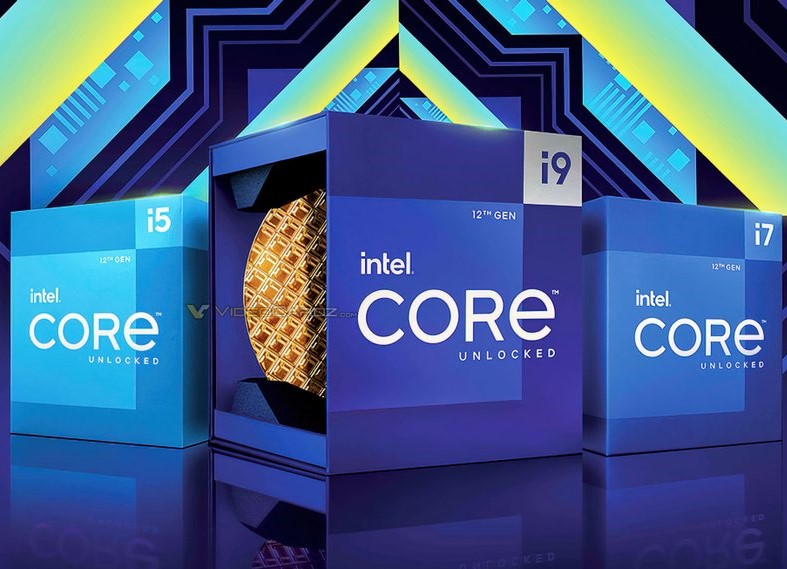
Intel ‘Alder Lake’ 12th Gen Core i9, Core i7, Core i5 Desktop CPUs Released With Up to 16 Heterogeneous Cores, PCIe 5.0, DDR5, Z690 Chipset.

After months of teasers and architecture-level revelations, Intel’s ‘Alder Lake’ 12th Gen Core i9, Core i7, and Core i5 CPUs have been released for gaming, workstations, and enthusiastic desktop PCs. Six new models, all of which are unlocked and overclockable, have been released. For the first time in an X86 PC, the customer introduces a mix of heterogeneous performance and performance cores with these new CPUs, which are the first in the ‘Alder Lake’ family. It also ushers in DDR5 RAM and the PCIe 5.0 interconnect standard.
Intel is calling its new 12th Gen ‘Alder Lake’ CPUs ‘Performance Hybrid Architecture,’ which combines two different core types. This works in a similar way to how ARM-based smartphone processors have been developed for a number of years. This single architecture will support all of Intel’s consumer CPU categories, with various core types and mixes. The newly renamed 10m ‘Intel 7’ process will be used to manufacture all 12th Gen Core CPUs.

Specifications And Features Of The CPUs

The new ‘Golden Cove’ Performance (P) cores in the current ‘Tiger Lake’ architecture replace the ‘Willow Cove’ cores, while the ‘Gracemont’ Efficiency (E) core architecture is a descendant of the former Intel Atom CPU range. Intel’s first hybrid CPU, codenamed ‘Lakefield,’ was released in 2020, but it has only been seen in a few real-world devices. The 16 cores (8 P + 8 E) in the 12th Gen desktop Core i9 CPUs announced so far, while 12 cores (8 P + 4 E) in Core i7 models and 10 cores (6 P + 4 E) in Core i5 models.
Background tasks and more multi-threaded tasks can be assigned to the E core, while the P core is for high-impact light threaded workloads. Also, P cores continue to benefit from hyperthreading, which allows two threads to run at the same time, but E cores do not, resulting in non-linear core/thread counts in the 12th Gen Core CPU. Intel has developed a new dynamic scheduler called the Thread Director to balance workloads and ensure that the best tasks are assigned to each type of core. This requires Windows 11, and Intel claims that performance on Windows 10 and other operating systems will not be optimized. Thread Director will prioritize the P cores first, then the E cores, and only after those are fully utilized will thread be assigned to the P cores’ Hyper-Threading capacity.
The L2 caches of each P core are private, whereas the L2 caches of clusters of four E cores are shared. These feed into a standard L3 cache, allowing for fast knowledge transfers and low latency in workloads that are optimized for each core type. Based on the Xe LP architecture, CPUs without the -F suffix will also have built-in Intel UHD 770 graphics.

Intel
Image source: www.notebookcheck.net

The new Z690 platform controller has been released, and 12th Gen Core desktop CPUs now use the LGA1700 socket, which is larger. This generation’s platform features include the first use of DDR5 RAM, with official support for 128GB (dual-channel) at 4800MT/s with XMP 3.0 profiles. DDR4-3200 RAM is also supported, with motherboard manufacturers choosing which standard to use depending on the model. Alder Lake CPUs have up to 16 PCIe 5.0 lanes, which doubles the bandwidth of PCIe 4.0. Overclocking controls for the CPU and RAM have also been added.
The Core i9-1200K is billed as “the best gaming processor in the world,” with Intel claiming that it outperforms the octa-core Core i9-11900K in gaming and content creation workloads. It has a clock speed of 5.2GHz. The base and turbo speeds of two different core types are 2.4-3.9GHz for E cores and 3.2-5.1GHz for P cores. 125W and 241W are the base and peak power ratings, respectively.
The P cores have a 19 percent gen-on-gen efficiency boost, according to Intel. The Core i9-12900K is said to have a 50 percent higher multi-threaded efficiency than the Core i9-11900K, with a peak energy consumption of 241W instead of 250W. Efficiency is up to 30% higher at the rated 125W inventory TDP, whereas the same level of efficiency can be achieved within a 65W power limit. Intel claims that when gaming and streaming at the same time, body charges increase by up to 84 percent. That figure is said to be 47 percent when exporting edited video while processing RAW photographs. It is claimed that performing these tasks sequentially rather than concurrently is faster.

The Core i9-12900KF, which has nearly identical specifications, as well as the Core i7-12700K, Core i7-12700KF, Core i5-12600K, and Core i5-12600KF, round out the lineup. The -F suffix indicates that the model does not have integrated graphics, whereas the -K suffix indicates that it is unlocked and overclockable. Lower-cost versions of these CPUs are expected to debut in Q1 of next year, possibly as early as CES 2022.

Price And Availability Details

The top-end Core i9-12900K costs $589 (roughly Rs. 43,380 before taxes) in the US, while the Core i5-12600KF costs $264 (roughly Rs. 19,445 before taxes). Models without built-in graphics are only slightly less expensive than those with built-in GPUs. These are per-1000-item costs, which may or may not reflect retail prices. Regardless of global semiconductor scarcity, Intel expects strong retail availability, and a number of PC OEMs are also on board to deliver pre-built desktops. Official prices in India have yet to be confirmed, but some retail listings without prices appeared on the internet as recently as last week.

Samsung Galaxy Book

Samsung Releases New Galaxy Book, Galaxy Book Odyssey, Galaxy Book Pro 360 5G Laptops With Windows 11.

Samsung has released the Galaxy Book, Galaxy Book Odyssey, and Galaxy Book Pro 360 5G laptops with Windows 11 OS. With the launch of the aforementioned new laptops, the South Korean tech company has expanded its Galaxy Book lineup in the United States. These newly released laptops feature 5G connectivity and Intel Core processors from the 11th generation.
Furthermore, the Galaxy Book model comes pre-installed with the latest Windows 11 operating system. The Galaxy Book Pro 360 5G uses a 360-degree hinge mechanism, as the name suggests. Apart from that, Samsung has revealed the Galaxy Book and Galaxy Book Odyssey. Furthermore, Samsung’s new laptops come with a number of noteworthy features. A dual array microphone, a 720p HD webcam, and stereo speakers with Dolby Atmos support are among the features.

Samsung Galaxy Book: Specifications And Features

Up to an 11th Gen Intel, Core i7-1165G7 processor with up to 16GB of RAM can power the Samsung Galaxy Book. The CPU is paired with Intel’s Iris Xe Max integrated graphics. SSDs with capacities of 256GB and 512GB are available. The notebook has a touch-enabled 15.6-inch full HD LED display. The laptop is 1.59 kg in weight and has a 54Wh battery.
Samsung has included two 2W stereo speakers as well as Dolby Atmos support. Wi-Fi 6 is available, as well as two USB Type-C ports, two USB 3.2 ports, and an HDMI port. A microSD card slot and a 3.5mm headphone jack are also included on the laptop. In addition, the new Galaxy Book weighs 1.59 kilograms and has a 54Wh battery.

Samsung Galaxy Book
Image source: www.gizchina.com

Galaxy Book Odyssey: Specifications And Features

The 15.6-inch full-HD LED display on the new Samsung Galaxy Book Odyssey has a 170-degree viewing angle and a 5.4mm slim bezel. The display also has a peak brightness of 300 nits and an anti-glare coating on top. The new Galaxy Book Odyssey is powered by an Intel Core i7-11600H processor with Nvidia GeForce RTX3050Ti Max-Q graphics and 8GB, 16GB, or 32GB of RAM. In addition, the laptop has 512GB and 1TB SSD storage.
The new Galaxy Book Odyssey has two 2W stereo speakers and Dolby Atmos on the multimedia front. A pro keyboard with Numeric keys is also included with the laptop.
Two USB Type-C and three USB 3.2 ports are included in the new Galaxy Book Odyssey. A microSD card slot and a 3.5mm headphone jack are also included. In addition, the laptop has Wi-Fi 6E connectivity.
With the new Galaxy Book Odyssey, Samsung has included an 83Wh battery. The laptop is also 1.85 kilograms in weight.

Galaxy Book Pro 360 5G: Specifications And Features

The Galaxy Book Pro 360 5G has a touch-enabled 13.3-inch full HD AMOLED display. The notebook is powered by an Intel Core i5 or Core i7 processor from the 11th generation. Up to 16GB of RAM and 512GB of SSD storage are available on the Galaxy Book Pro 360 5G. However, the laptop’s graphics are limited to Intel Iris Xe integrated graphics.
An S Pen and a Pro keyboard are included with the Galaxy Book Pro 360 5G. The new Galaxy laptop weighs 1.10 kg and has a 63Wh battery. Wi-Fi 6 and 5G Sub-6GHz connectivity are also available on the Galaxy Book Pro 360 5G.

Price And Availability Of The Laptops

The new Samsung Galaxy Book is available in Silver and has a starting price of $749.99 (roughly Rs. 56,300). Starting at $1,399.99, the new Samsung Galaxy Book Odyssey and Samsung Galaxy Book Pro 360 5G are available (roughly Rs. 1,05,100). Starting November 15, it will also be available at Best Buy retail locations. The Galaxy Book Odyssey and Galaxy Book Pro 360 5G, on the other hand, will be available from November 11 on Samsung.com and BestBuy.com.
The new Galaxy Book models’ pricing and availability in international markets have yet to be revealed.
Samsung released its previous Galaxy Book, Galaxy Book Odyssey, and Galaxy Book Pro 360 models in April, with features like fast charging and touchscreen support (optional).

Lenovo Tab K10

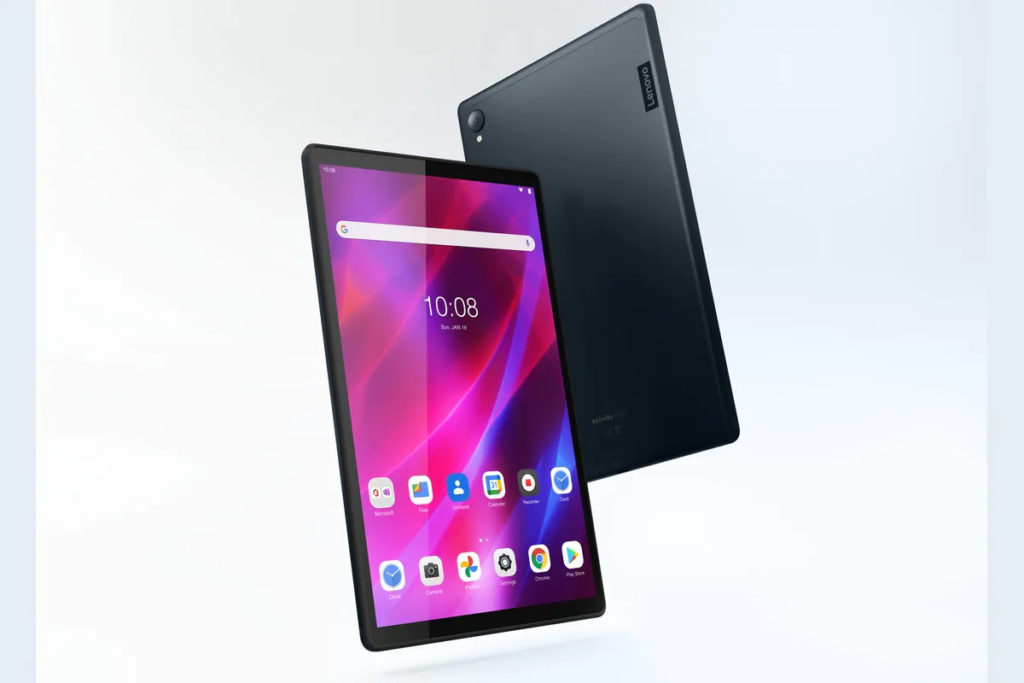
Lenovo Tab K10 With MediaTek Helio P22T SoC, 7,500mAh Battery Released in India.

In India, Lenovo recently released the Yoga Tab 11 tablet. The Lenovo Tab K10 is the latest addition to the brand’s tablet lineup. The tablet is powered by a MediaTek processor and comes with a large battery. A battery-free version is available for enterprise customers. It also has a 7,500mAh battery that supports 10W charging. Its dual speakers support Dolby Audio, and the Lenovo Active Pen stylus is an optional accessory that can be used with the display. Enterprise customers can also purchase a battery-free version.

Lenovo Tab K10: Specifications And Features

The Lenovo Tab K10, as previously stated, runs Android 11 and will be upgradeable to Android 12. It has a 10.3-inch TDDI display with 400 nits peak brightness, 70.3 percent NTSC coverage, and Lenovo Active Pen support. The Lenovo Tab K10 is equipped with an octa-core MediaTek Helio P22T SoC, a PowerVR GE8320 GPU, and up to 4GB of LPDDR4x RAM. It has onboard storage of up to 128GB that can be expanded with an SD card (up to 2TB).
The Lenovo Tab K10 also runs Android 11 OS (upgradable to Android 12). There is an 8MP single rear camera with LED flash and a 5MP front-facing selfie camera sensor. The tablet is powered by a 7,500 mAh battery that supports 10W charging. The Lenovo Tab K10 tablet has dual-band Wi-Fi (802.11 a/b/g/n/ac), 4G LTE, Bluetooth v5, USB Type-C port, and 3.5mm headphone jack for connectivity. Face unlock is also supported by the tablet, which has dual speakers with Dolby Atmos.

Lenovo Tab K10
Image source: i.gadgets360cdn.com

Price And Availability

The Lenovo Tab K10, which was recently released, has a starting price of Rs. 25,000. The company’s website, however, is running a festive sale discount at the time of writing, with both the Wi-Fi only and Wi-Fi + 4G LTE versions of the 3GB RAM + 32GB storage variant listed at Rs. 13,999, though the Wi-Fi-only model is out of stock. The 4GB RAM + 64GB storage variant’s Wi-Fi only and Wi-Fi + 4G LTE versions are priced at Rs. 15,999 and Rs. 16,999, respectively. The cost of the 4GB RAM + 128GB storage variant is currently unavailable.
The Lenovo tablet is only available in one colour: Abyss Blue. The Lenovo Tab K10 is available on the official website with a 6-month no-cost EMI starting at Rs 2,333. For enterprise customers, there’s also a battery-free version aimed at the retail, manufacturing, banking, finance, and education industries.

About The Company

Lenovo, one of the world’s largest personal technology companies, manufactures cutting-edge PCs and mobile internet devices. According to the Fortune 500 list, Lenovo is the world’s largest PC vendor and the fourth largest smartphone company.
Despite the fact that Lenovo was founded in 2004, it has a much longer history. Continue reading to learn more. Legend Holdings was established in 1984 with 200,000 RMB (US$25,000) in a guardhouse in China. The company was headquartered in Hong Kong in 1988 and had grown to become China’s largest PC manufacturer. This company, which was previously known as Legend Holding, changed its name to Lenovo in 2004 and acquired IBM’s Personal Computer Division in 2005, which was at the forefront of PC development.
Lenovo has major research and manufacturing facilities all over the world. Lenovo purchased Motorola Mobility in July 2014, continuing its rapid expansion into new personal technologies. With the acquisition of Motorola Mobility, Lenovo becomes the world’s third-largest smartphone company. It also strengthens its position as a leader in innovation.
Lenovo manufactures the products that customers require, including PCs, smartphones, tablets, smart TVs, servers, workstations, and storage devices. Lenovo distinguishes itself from the competition thanks to its vertically integrated, end-to-end business model. We have developed a model that is unique among major technology companies and a significant source of competitive advantage as a result of our PC+ strategy.

Vivo Y71t

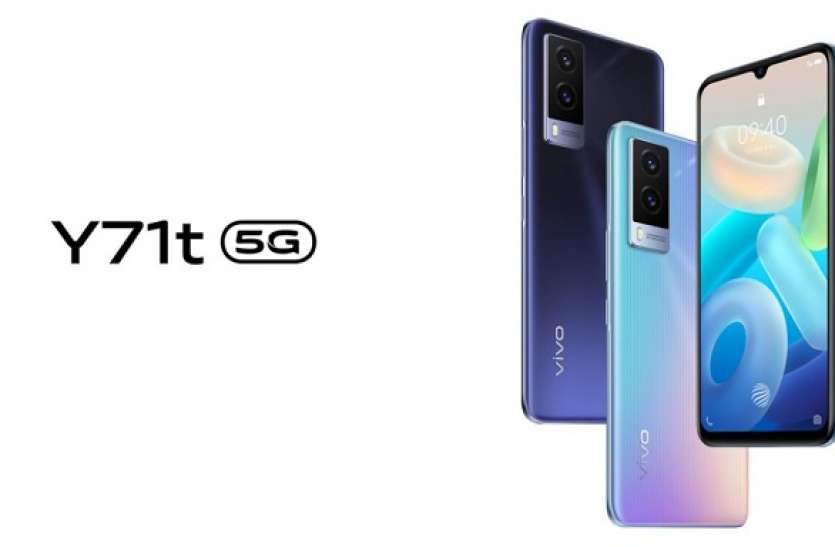
Vivo Y71t With a 20:9 AMOLED Display, MediaTek Dimensity 810 SoC Released: Check Price And Specifications.

The Vivo Y71t is the newest smartphone in the company’s Y series. The screen on this new Vivo phone is a 20:9 AMOLED with a waterdrop notch. Dual rear cameras, 44W fast charging, and an octa-core MediaTek Dimensity 810 SoC are also included in the Vivo Y71t. It also comes in two color schemes and has a storage capacity of up to 256GB. A 64-megapixel main camera, a five-layer liquid cooling system, and a DCIP3 wide color gamut of 98 percent are also included in the Vivo Y71t.

Vivo Y71t: Specification & Features

The Vivo Y71t has a 6.44-inch fullHD+ AMOLED display (1,080×2,400 pixels) with a 20:9 aspect ratio and a screen-to-body ratio of 90.1 percent. It’s based on Android 11 and has OriginOS 1.0 on top of it. The MediaTek Dimensity 810 octa-core SoC, as well as a MaliG57 GPU and 8GB of LDRR4 RAM, come standard on the Vivo Y71t. The integrated RAM can be virtually expanded up to 4GB to improve multitasking.
The Vivo Y71t has a dual rear camera setup with a 64-megapixel primary sensor with an f/1.79 lens and an 8-megapixel sensor with an f/2.2 ultra-wide lens for photos and videos. A 16-megapixel selfie camera sensor with an f/2.0 lens is also present on the front.
The default storage space on the Vivo Y71t can reach 256GB UFS 2.1. Connectivity options include 5G, 4G VoLTE, WiFi, Bluetooth v5.1, GPS/AGPS, USB TypeC, and a 3.5mm headphone jack. Accelerometer, ambient light, gyroscope, magnetometer, and proximity sensor are some of the onboard sensors. A fingerprint sensor is also included on the screen.
Vivo has included a 4,000 mAh battery which is rated to provide up to 14.5 hours of talk time on a single charge over the 4G network. Fast charging with 44 W flash charging is also possible with this battery. The Midnight Blue color on the phone measures 160.63×73.91×7.67 mm and weighs 166.3 grams, while the Mirage color measures 160.63×73.91×7.79.mm and weighs 167.9 grams.

Vivo Y71t
Image source: patrika.com

Price And Availability

The Vivo Y71t comes with 8GB of RAM and 128GB of storage and costs CNY 1,799 in China (roughly Rs. 21,000). For CNY 1,999, you can get the phone with 8GB of RAM and 256GB of storage. (approximately 23,400 rupees) It comes in two colors: Mirage and Midnight Blue, and it’s currently on pre-order in China, with a November 1st release date. In the United States, the Vivo Y71t won’t be available until the end of the year.

About The Company

Vivo is a Chinese multinational cellphone producer based in Dongguan, Guangdong Province, China. Vivo entered the telecommunications and patron electronics enterprise in 1995 with landline and wireless phones. Vivo began out making smartphones in 2011. Vivo is China’s 5th most famous smartphone brand and the world’s 10th most famous cellphone brand, consistent with 2014 statistics.
The annual manufacturing potential is 60 million units. Vivo is now one of the top 5 most worthwhile smartphone producers in China. From hardware layout and production to software program development, Vivo has created a whole and sustainable ecosystem (Android-based Funtouch OS). Vivo continues to push the envelope in terms of creativity and technology. In 2012, the Vivo X1 changed into the first Smartphone to consist of a Hi-Fi chip, ensuing in unmatched audio quality. Since then, all Vivo smartphones have included the technology that the organization pioneered.
Vivo is presently available in India, Malaysia, Indonesia, Thailand, Myanmar, Vietnam, and the Philippines. In December of 2014, Vivo made its debut in India. Vivo has quickly hooked up itself as a hi-fi and smartphone producer. Vivo presently employs 8,000 people and operates a network of 10,000 stores throughout 22 Indian states, serving clients in over 300 cities.