Your Tech Story

tech news

Asus ROG Fusion II

Asus ROG Fusion II 300, ROG Fusion II 500 Gaming Headphones With Quad DAC, AI Noise Cancellation Launched In India.

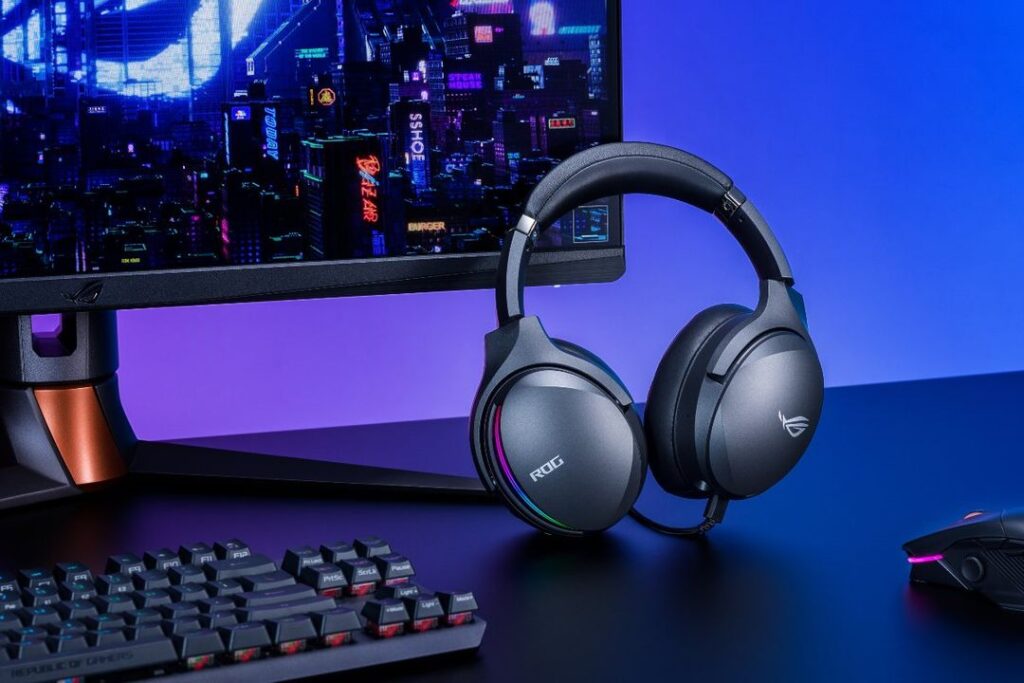
On Tuesday, Asus launched the ROG Fusion II 300 and ROG Fusion II 500 in India. The new gaming headphones feature virtual 7.1 surround sound and ESS 9280 Quad DAC technology for high-resolution audio. Beamforming microphones powered by artificial intelligence (AI) are also included in the Asus headsets. Both the ROG Fusion II 300 and Fusion II 500 have RGB lighting and a variety of customization options to please gamers. A dedicated Game Chat volume control and a 3.5mm headphone jack are included with the ROG Fusion II 500. Both of these features are not available on the ROG Fusion II 300, which is the less expensive model.

Asus ROG Fusion II 300 & Asus ROG II 500: Specifications And Features

The Asus ROG Fusion II 300 and ROG Fusion II 500 are very similar in terms of specifications. The gaming headsets are equipped with dedicated Quad ESS 9280 DAC amplifiers that are said to provide lossless audio processing. To deliver spatial sound, each of the four DACs dedicates its processing to a subset of the audible frequency range – low, mid, high, and ultra-high. According to the company, its DAC technology has a signal-to-noise ratio (SNR) of 130 dB. This is higher than the 90-100dB SNR provided by a typical DAC.

Asus Essence 50mm drivers are included with the ROG Fusion II 300 and ROG Fusion II 500, with a frequency range of 20 to 40,000 Hz. The headsets are also said to provide virtual 7.1 surround sound for a “realistic” experience, thanks to the integrated ROG Hyper-Grounding technology.

Asus ROG Fusion II
Image source: gadgets360cdn.com

Asus has also included AI noise cancellation in the AI beamforming microphones. The headsets also have Discord and TeamSpeak certifications and are advertised as being able to create an acoustic zone that focuses on users’ mouths while filtering and distracting background noise from all directions. Furthermore, AI noise cancellation technology is claimed to reduce up to 90% of background noise, including chatter, keyboard clicks, and mouse clicks. The headset microphones, on the other hand, are not visible and are hidden beneath.
The headsets have Aura RGB lighting, and gamers can use Armory Crate software to create over 16.8 million color combinations and six preset lighting effects. Static, Breathing, Strobing, Music, Color Cycle, and Rainbow are some of the effects available. The ROG Fusion II series includes two types of ear cushions: ROG Hybrid Ear Cushions and ROG Protein Leather Ear Cushions.
Dedicated buttons for turning on and off the built-in microphone and virtual 7.1 surround sound are included on the gaming headset. On one of the ear cups, there’s also volume control.

Game Chat volume control is also included with the Asus ROG Fusion II 500, allowing gamers to adjust the volume of in-game audio and voice chat using a slider on the ear cups. The ROG Fusion II 500 has USB Type-C, USB Type-A, and 3.5mm jack ports. On the other hand, has USB Type-C and USB-A connectivity but no 3.5mm headphone jack. Both the ROG Fusion II 300 and the ROG Fusion II 500 are 310 grams.

Price And Availability

In India, the Asus ROG Fusion II 500 and Fusion II 300 will be available from leading online stores, authorized Asus outlets, and partner brick and mortar stores beginning in March 2022. The ROG Fusion II 500 costs $22,999, while the ROG Fusion II 300’s price has yet to be determined.

PriceRunner

PriceRunner Sues Google For 2.1 Billion Euros.

Sweden’s price comparison website on Monday, PriceRunner filed a lawsuit against Google for EUR 2.1 billion (roughly Rs. 17,930 crores) for promoting its own shopping comparisons in search results.

In recent years, Europe has tightened regulations on Big Tech’s business practices, and the EU is working on legislation to do so. US behemoths are facing fines and legal challenges in a number of European countries.

The Swedish tech startup expects the “final damages amount of the lawsuit to be significantly higher” because “the violation is still ongoing.”

According to CEO Mikael Lindahl, the lawsuit is also a fight “for consumers who have suffered tremendously for the past fourteen years and still today from Google’s infringement of competition law.”

PriceRunner
Image source: dw.com

The Swedish tech startup filed its lawsuit with the Patent and Market Court in Stockholm after the European Union General Court ruled that Google “breached EU antitrust laws by manipulating search results in favor of their own comparison shopping services.”

The European Commission imposed a EUR-2.4 billion (roughly Rs. 20,490 crores) fine on Google in 2017, claiming that results from Google’s own comparison service were “displayed in a more eye-catching manner.” An EU court upheld the fine in November, claiming that results from Google’s own comparison service were “displayed in a more eye-catching manner.”

PriceRunner said it was pursuing restitution for profits lost in the UK since 2008, as well as Sweden and Denmark since 2013.

Google has a “monopoly-like position” in the European Economic Area (EU plus Iceland, Liechtenstein, and Norway), according to PriceRunner, with more than 90% of the market share for internet search engines.

The price comparison website is headquartered in Sweden, with offices in Denmark, Norway, and the United Kingdom. It has previously stated its intention to expand into additional countries.

PriceRunner was bought by Swedish fintech Klarna in November for an undisclosed sum, though media reports put the price at over $1 billion (roughly Rs. 8,540 crores).

About PriceRunner

PriceRunner is a product and price comparison service with a global user base of 18.2 million people. The website is completely free to use and contains 2.2 million products from 5 900 shops. Users can compare prices on a wide range of items. In addition to price and product comparison, there are hundreds of product tests and guides available. The company operates in the United Kingdom, Sweden, Denmark, and Norway, among other countries.

PriceRunner’s mission is to make online shopping more convenient for consumers by assisting them in finding the best products and deals available. PriceRunner offers hundreds of product reviews and comparisons from a variety of retailers, as well as the ability to compare products, prices, and delivery options. Product experts carry out the tests over a long period of time in order to simulate the product’s intended use.

PriceRunner does not sell products; rather, it makes money by sending traffic to online stores and by displaying banner ads. PriceRunner currently employs 175 people in Sweden, Denmark, the United Kingdom, and Norway. Nicklas Storkers has been the company’s CEO since 2016. In October 2021, PriceRunner acquired the Norwegian price comparison site Prisguiden, expanding its operations to Norway.

Motorola Moto G Stylus

Motorola Moto G Stylus 2022 with 90Hz, 5000mAh Battery Now Available: Check Price and Specifications

Motorola has finally revealed the Motorola Moto G Stylus 2022 after a series of leaks and renders. The phone has a 90Hz refresh rate, a 5000mAh battery, and a 6.8-inch LCD display, among other features. The smartphone is a step up from the Moto G Stylus 2022, which was released earlier this year.
Three sensors are housed in an oval-shaped camera island on the Motorola Moto G Stylus 2022. The Motorola logo is located in the center of the back panel, but it does not serve as a fingerprint sensor. The display has thin bezels around the edges and a chin that is also relatively thin. On the front, there’s a punch-hole cutout for the selfie camera. The phone includes a stylus that can be stored inside the phone. So, let’s take a look at the device’s specifications and price.

Specifications and Features

The Moto G Stylus 2022 has a 6.8-inch IPS LCD display with a Full HD+ resolution of 2460 x 1080 pixels and a refresh rate of 90Hz. An octa-core Helio G88 processor is paired with a Mali-G52 GPU to power the smartphone. The device has 4GB of RAM and 64GB of internal storage out of the box. There’s also a top-of-the-line model with 6GB of RAM and 128GB of internal storage.
The phone has a fingerprint sensor on the side, as well as stylus support and a 3.5mm audio jack. On the software front, the phone comes preloaded with Android 11 and My UX. The device will be updated to Android 12 in the future.
The Moto G Stylus 2022 has a triple-camera setup that includes a 50MP primary camera, an 8MP ultra-wide sensor, and a 2MP depth sensor for imaging. The smartphone has a 16-megapixel front-facing camera. A 5,000mAh battery powers the entire system and supports 10W charging.
The device is 170.2175.909.45mm in length and weighs 216 grams in weight. Last but not least, the handset supports microSD cards for additional storage.

Motorola Moto G Stylus
Image source: www.techspot.com

Price and Availability

Starting today, the Moto G Stylus 2022 is available for pre-order at Walmart, Amazon.com, Best Buy, and Motorola’s official website for USD 299.99 (roughly Rs 22,411). The device will be available for purchase through Consumer Cellular and Cricket in the coming months. Twilight Blue and Metallic Rose are the two color options for the device.

About the Company

Motorola, Inc., a leading designer, and manufacturer of cellular phones, cordless phones, two-way radios, pagers, cable modems, broadband set-top boxes, and other communications products and systems, is a pioneer in electronic communications. Motorola develops and markets products, technologies, and services for mobile and wireline digital communication, information, and entertainment. Smartphones running the Android operating system, feature phones, media tablet devices, wireless accessories, and more are among the company’s offerings.
The Moto X first generation, Moto X second generation, Moto G first generation, Moto G second generation, and other smartphones are among the company’s offerings. Moto 360, a smartwatch that provides services such as notifications, updates, and other related features, is also made by the company. It also sells monitors, cordless phones, software, and accessories like cases, wireless headsets, and wireless speakers, among other things.
With a market share of about 17%, the company is the world’s second-largest manufacturer of mobile phones (behind Nokia Corporation), and the world’s largest manufacturer of two-way radios. Motorola is also the world’s leading producer of embedded processors, with a focus on high-growth areas like wireless communications, transportation, and Internet networking, through its Semiconductor Products Sector.
Motorola’s Integrated Electronic Systems Sector also develops and manufactures electronic components and systems for the automotive, computer, industrial, transportation, navigation, energy, consumer, and lighting industries. Motorola generates nearly 60% of its revenue outside of the United States. Motorola has won awards for its commitment to quality, which earned it the first annual Malcolm Baldrige National Quality Award in 1988, as well as for its innovative employee welfare and training programs.

Digital Rupee

What Industry Stakeholders Think Of The Digital Rupee In 2022–23?

The anticipated Central Bank Digital Currency (CBDC), the Digital Rupee, will be launched in 2022-23, according to Finance Minister Nirmala Sitharaman, who presented the Union Budget for the financial year 2022 on Tuesday. The Reserve Bank of India (RBI) will issue the digital currency, which will be based on blockchain technology, according to the minister. It will, however, differ from traditional cryptocurrencies such as bitcoin and ether, which are decentralized.

In her budget speech, Sitharaman, 62, said the digital rupee aims to “give a big boost to the digital economy” and lead to a “more efficient and affordable currency management system.” The exact name of the digital rupee will be decided later. The finance minister gave no further details about the long-awaited CBDC in her hour-and-a-half speech. She later explained in a press conference, however, that the digital rupee will be treated differently than other digital assets and cryptocurrencies.

“Currency is only currency when it is issued by the central bank, even if it is cryptocurrency. Anything beyond that, loosely speaking, we all refer to cryptocurrencies, they are not currencies,” she explained.
Plans for a digital rupee, for example, have been rumored for some time. In response to a question from the upper house, Finance Minister Anurag Singh Thakur proposed its formation in February of last year.
The government’s decision to create its own digital currency was applauded by the industry.

Digital Rupee
Image source: assettype.com

The news of the launch of digital rupees on the blockchain, according to Nischal Shetty, CEO of crypto exchanges and wallet WazirX, is “amazing,” indicating that the country is on the road to legalizing the crypto sector. Yes, I am.
“This move will pave the way for the adoption of cryptocurrencies and put India at the forefront of innovation,” he said.
Other cryptocurrency stakeholders agree with Shetty’s viewpoints and are optimistic about the future.

“The introduction of a CBDC clearly shows that India is a digital-first, efficiency-driven, and transparency-led system,” said Sumit Gupta, co-founder, and CEO of cryptocurrency exchange CoinDCX.
The launch of the digital Rupee by the RBI, according to Avinash Shekhar, CEO of cryptocurrency exchange ZebPay, will help familiarise Indian consumers with the benefits and efficiency of virtual currency and build an appetite for crypto and blockchain.

“The Budget focused heavily on integrating technology across sectors, and the gradual acceptance of a digital currency, blockchain, and virtual digital assets has the potential to make India a leader in this new paradigm of blockchain-enabled revolution,” Shekhar said.
The launch of the digital currency, according to Shivam Thakral, CEO of cryptocurrency exchange and wallet BuyUcoin, will catalyze the growth of blockchain infrastructure in the country.
“If RBI allows the trading of CBDC on private exchanges, it will add a new dimension to public-private partnerships in India’s fintech space,” he said. The arrival of the new currency, according to Ashish Singhal, Founder, and CEO of cryptocurrency exchange CoinSwitch Kuber and Co-Chair of the Blockchain and Cryptocurrency Assets Council (BACC), will accelerate digitization in the country.

“We also believe that various budget measures to improve digital payments adoption will induce more digital-savvy Indians into the financial ecosystem willing to explore newer forms of investing and wealth creation,” Singhal added.
Fintech companies have reacted positively to the government’s announcement to enter the digital currency space, in addition to cryptocurrency exchanges.
“The official announcement of India’s CBDC (Digital Rupee) launch is a long-awaited positive move that will create a wave of preparatory work among retail payment providers,” he said.
The introduction of digital rupees, according to Harshil Mathur, CEO, and co-founder of payment gateway RazorPay, will help reduce the financial and physical effort required to manage money.
Puneet Gupta, managing director and vice president of data management firm NetApp India, agreed that the announcement would aid in the creation of a framework for emerging technologies.
Users can only go from traditional digital senders to digital recipients, according to digital payment strategist Ram Lastgi, when it comes to how central bank digital currencies, or CBDCs, can help boost the domestic digital economy. He stated that he would be able to conduct digital transactions. From a digital sender to an offline receiver, in a sense.

He explained that “smartphone users can make payments for digital currencies via QR codes, while non-smartphone users can make payments via SMS string-based electronic vouchers.”
Payments via SMS string-based electronic vouchers, he added, will gradually allow people who don’t have smartphones to accept digital methods.
Market analysts also believe that the addition of a digital currency to the existing Rupee would reduce economic leakages by reducing reliance on physical cash.
Abheek Barua, Chief Economist at HDFC Bank, believes that digital currency will have an impact on banks. “The implications of the same will have to be thought through further,” he said.

According to Pankit Desai, Co-Founder, and CEO of Mumbai-based cybersecurity startup Sequretek, the government should focus on raising awareness and education among businesses and consumers about the importance of cybersecurity, privacy, and data security, as well as bringing technological advancements in digital payments for sustainable growth.
Madhusudan E, a member of the Fintech Association for Consumer Empowerment (FACE) and Co-Founder and CEO of personal loan platform KreditBee, also emphasized the importance of paying attention to the digital currency’s implementation process.
While the government is finally moving to launch the country’s digital currency as an alternative to cryptocurrencies, some experts have pointed out that the government does not recognize any other digital currencies in the country.

Micromax

Micromax Returns With “In Note 2”: Check Price And Specs.

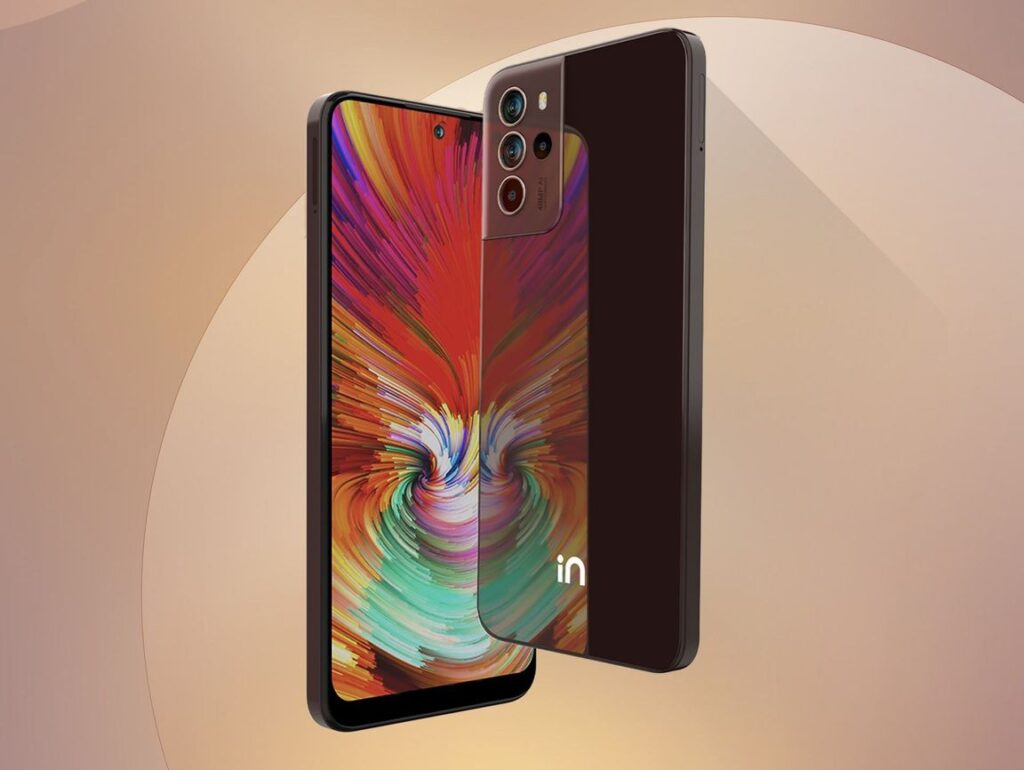
Micromax announced the Micromax IN Note 2 budget device earlier this week, marking the company’s return to the Indian smartphone market after a long absence. The IN Note 2, the brand’s first smartphone for 2022, will go on sale for the first time on Flipkart tomorrow, January 30. If you’re looking for a new phone under Rs 15,000, the Micromax IN Note 2 is a good option because it has an AMOLED display, a 48MP quad-camera, a large 5,000mAh battery, and 30W wired fast charging. Let’s take a look at the IN Note 2’s price, specifications, and availability.

Specifications and Features

Powered by Android 11, the Micromax In Note 2 is a dual-SIM (Nano) smartphone. It has a Corning Gorilla Glass Victus-protected 6.43-inch full-HD+ (1,080×2,400 pixels) AMOLED display with a 20:9 aspect ratio and 550 nits of peak brightness. It is powered by a MediaTek Helio G95 SoC with 4GB of RAM. The onboard storage of 64GB can be expanded using a microSD card (up to 256GB).
Micromax In Note 2 has a quad-camera setup with a 48-megapixel primary sensor for optics. A 5-megapixel ultra-wide-angle sensor, a 2-megapixel macro sensor, and a 2-megapixel depth sensor round out the camera’s features. A 16-megapixel selfie camera is on the front of the phone.Connectivity options include 4G LTE, Wi-Fi 802.11ac, Bluetooth v5, GPS/ A-GPS, USB Type-C, and a 3.5mm headphone jack.A fingerprint sensor is also located on the phone’s side.
The Micromax In Note 2 has a 5,000mAh battery with 30W fast charging support. When using a compatible charger, the battery is said to charge to 50% in 25 minutes. It weighs 205 grams and measures 159.9×74.3×8.34mm.

Micromax
Image source: www.gizmochina.com

Price and Availability

At 12 p.m. IST today, the newly launched Micromax In Note 2 will go on sale in India for the first time. The only 4GB + 64GB storage variant of the Micromax In Note 2 costs Rs. 13,490. There are two colors available for the smartphone from Micromax: black and brown (oak). It can be purchased both on the company’s official website and on Flipkart.
Micromax In Note 2 is available at a special introductory price of Rs. 12,490 for a limited time. In addition, Flipkart is giving customers a 10% discount on Citibank cards and a 5% cashback on Flipkart Axis Bank credit cards.

About The Company

Micromax is a major smartphone manufacturer in India with a significant retail presence. It is a consumer electronics and smartphone manufacturer headquartered in Gurugram, Haryana, India. YU Televentures, an Indian consumer electronics brand founded in December 2014, is also owned by the company.
Micromax was once one of the most prominent players in the Indian smartphone market until Chinese manufacturers entered the market a few years ago when it began to lose ground. However, the company has made a comeback in order to take advantage of the Indian government’s Production Linked Incentive Scheme (PLI) and compete against international brands.
Micromax products have become an extension of the dynamism and lifestyle of the Indian youth. When it comes to the mobile handset market, the company has many firsts to its credit, including the 30-day battery backup, Dual SIM Dual Standby phones, QWERTY keypads, universal remote control mobile phones, and the first quad-core budget smartphone. Today, the brand’s product portfolio includes more than 60 models, including dual-SIM phones with a lot of features, 3G Android smartphones, tablets, LED televisions, and data cards.

Apple

Apple Will Continue To Be The Most Valuable Brand, Followed By Amazon, Google, And Microsoft.

According to a report, Apple will retain its title as the world’s most valuable brand in 2022, with a valuation of $355.1 billion (roughly Rs. 26,72,600 crores). The Cupertino company’s value has increased by 35% as a result of its increased market recognition. After Apple, Amazon, and Google were named among the year’s top three most valuable brands. TikTok, on the other hand, has become the world’s fastest-growing brand, with a valuation that is expected to increase by 215 percent by 2022.

Apple has become the first brand to reach a market valuation of $3 trillion, according to Brand Finance’s latest ranking report. In 2021, the company’s branding increased from $263.37 billion (roughly Rs. 19,83,000 crore) to $355.1 billion in 2022.

According to the report, Apple’s brand value increased by 35% year over year to reach a new high. The success of the iPhone 12 and iPhone 13 around the world was a major factor in the company’s growth. The company’s slew of products across other verticals, however, only added to this. The new generation of iPads, iMacs, MacBooks, and the AirTag are among them.

Apple
Image source: tosshub.com

In addition, Apple’s diverse range of services has grown significantly. Apple Music, Apple Pay, Apple TV, and other platforms grew in popularity and revenue, propelling Apple’s brand value to new heights.

“The iPhone continues to account for roughly half of Apple’s sales. “However, with a new generation of iPads, an overhaul of the iMac, and the introduction of AirTags, Apple has given more attention to its other suite of products this year,” the company said.

In 2022, Amazon is ranked second in Brand Finance’s Global 500 ranking, following Apple. With a 38 percent increase to $350.3 billion, the US e-commerce behemoth joined the iPhone maker in surpassing the $300 billion mark (roughly Rs. 26,36,800 crore).
“Amazon considers logistics to be critical, and it is building its own end-to-end supply chain with a growing fleet of trucks, vans, and planes. The brand has invested an estimated $80 billion in its logistics division between 2020 and 2021, compared to a combined $58 billion in the previous five years, according to the firm.

According to Model Finance, Google’s model worth increased by 38 percent this year to $263.4 billion (roughly Rs. 19,82,880 crore). According to the agency, because Google relies on advertising for the vast majority of its revenue, it was initially harmed by the COVID-19 pandemic as advertising spending fell. The search giant’s business, on the other hand, rebounded as the world adjusted to the new standard, according to the report.
This year, Microsoft remained in fourth place in Model Finance’s World 500 ranking, trailing only Google. The company’s value has increased by over 31% to $184.2 billion (roughly Rs. 13,86,390 crore).
Walmart has surpassed Samsung to become the fourth most valuable brand in 2022, according to Brand Finance. The company now has a brand value of $ 111.91 billion, up 20% from $ 93.18 billion last year.
Samsung, on the other hand, dropped to fifth place with a brand value of $ 107.28 billion (about 860,200 rupees). The company has risen to the top 25 most valuable brands in brand finance, making it the only Korean company to do so.
In this year’s Brand Finance 500 rankings, Huawei, unlike Samsung, has risen from 21st to 9th place. The value of Chinese companies has increased by 29% to $ 71.2 billion, according to the company.

“US sanctions hit Huawei’s smartphone business hard, but the company responded positively by ramping up investment in both domestic technology companies and R&D, as well as shifting its focus to cloud services,” according to Brand Finance.

Source: gadgets.ndtv.com

TikTok has been named the world’s fastest-growing brand by Brand Finance, in addition to the leading top-value brands. Over the last year, the short-video app’s brand value has increased by 215 percent to $59 billion (roughly Rs. 4,43,300 crore). It ranked 18th among the top 500 most valuable brands in the world, according to the brand valuation consultancy.

Snapchat, like TikTok, became a popular app this year, with its brand value increasing. According to Brand Finance, the app’s brand value increased by 184 percent to $6.6 billion (roughly Rs. 49,600 crore).
For the second year in a row, the firm has named WeChat the world’s most powerful brand. According to the report, it had a brand value of $62.30 billion (roughly Rs. 4,68,100 crore) in 2022.

In the Brand Finance Global 500 ranking for 2022, the technology sector was once again the most valuable. According to the firm, the sector’s total brand value has surpassed $1.3 trillion (roughly Rs. 97,66,315 crore).
It’s important to note that the brand values reported by Brand Finance are calculated independently by the company and do not reflect the brand’s market capitalization.