Your Tech Story

tech news

Chrome OS 107 update

Google Rolls Out Chrome OS 107 Update With ‘Save Desk for Later’ Feature

In an effort to enhance user experience, technology giant Google has unveiled the Chrome OS 107 update with a “Save Desk for Later” feature.

Chrome OS 107 update
Image Source: indulgexpress.com

In the past few months, Google has vowed to continuously update its ChromeOS operating system. The search engine giant has just released an upgrade called ChromeOS 107 that includes a number of new features.

Users now have the option to save their Desks for afterward in addition to merging them. When a user saves a desk, all of the open tabs on that Desk are also saved so that one can return to them later.

As per 9to5Google, the new release brings two enhancements to Desks. The first enhancement will allow a user to quickly “Save desk for later” from the overview screen by clicking the button located above the leftmost window. When a user clicks the button the “Saved for later” screen, which can be found to the right side of “New desk,” appears.

Users may give it a name, view the creation date, and quickly see the icons. It is now simpler to close open desks from the Overview menu, and if you accidentally close a desk and wish to undo it, a brief “Undo” prompt appears. 

A merge feature that enables a user to consolidate opened Desks into a single one is apparently also being tested by Google. One of the most widely used productivity tools to appear in ChromeOS in recent times is Virtual Desks, which has gained popularity swiftly. The max number of virtual desktops is now eight, but Google is working to extend it to sixteen.

With so many areas to manage, Google has included a helpful function that allows users to merge one desk with the desk adjacent to it with just one click. In ChromeOS 107, users will see an icon to the left of the “X” used to close a desk when viewing a desk in overview mode. Users can delete that desk from their lineup and relocate its content to the desk just to the left by using this merge icon.

A new “Documents” filter has been added to the “Recent” view in the Files app, and the list underneath has been arranged by time to make it simpler to navigate. Users can now access “accent letters” by simply long tapping on the virtual keyboard. U By, users of Chrome OS 107 update will be able to perform the same action by pressing down on physical keys. Users might need to manually enable it if that fails.

Chrome OS 107 update also introduces auto-framing to the platform, enhancing the productivity toolkit of the platform. When auto framing is activated while using the camera on a device that supports it, the camera will intelligently zoom on the user’s face to keep one in front and center in the frame.

ChromeOS is a Linux-based operating system developed by Google. Its primary user interface is the Google Chrome internet browser, and it is adapted to the open-source ChromiumOS operating system.

bluesky

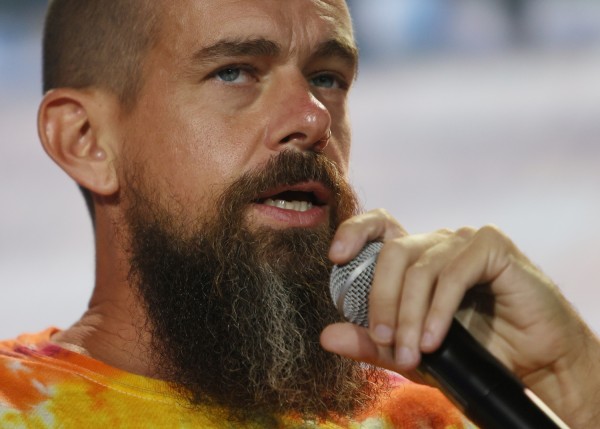
Jack Dorsey to take on Elon Musk’s Twitter with new app Bluesky

Jack Dorsey, the co-founder of Twitter, is apparently testing another social networking application Bluesky to compete with Twitter.

Image Source: techtimes.com

Just as Elon Musk wraps up his $44 billion acquisition of Twitter, a small tech company created by former Twitter CEO Jack Dorsey has revealed the creation of a new social media app. Earlier this month, Bluesky announced that it would soon release a beta version of its Bluesky Social app.

Dorsey’s latest social media platform aims to be “a competitor to any company trying to own the underlying fundamentals for social media or the data of the people using it.” According to the press release, the new app will make use of the federated social network known as the Authenticated Transfer Protocol (AT Protocol), which is hosted by numerous sites instead of just one.

Bluesky announced, “The next step is to start testing the protocol. Distributed protocol development is a tricky process. It requires coordination from many parties once a network is deployed, so we’re going to start in private beta to iron out issues. As we beta test, we’ll continue to iterate on the protocol specs and share details about how it works. When it’s ready, we’ll move to the open beta.”

The company stated in its press release, “The word ‘Bluesky’ evokes a wide-open space of possibility. It was the original name for this project before it took shape, and continues to be the name of our company. We’re calling the application we’re building Bluesky because it will be a portal to the world of possibility on top of the AT Protocol.”

Jack Dorsey originally introduced Bluesky in December 2019, as Silicon Valley was bracing for a global “techlash” and a wave of disinformation and election meddling around the 2020 US election. Twitter, like all other big social networks, was battling a conundrum on how to control the voice of millions of users without running the danger of overreaching.

In order to build “an open and decentralized standard for social media,” Dorsey claimed Twitter would sponsor a “small independent team” of five software developers, with the eventual objective of transforming Twitter itself to this standard. Importantly, Twitter does not hold a majority stake in BlueSky. It has reportedly gotten $13 m in financing from Twitter as of April of this year, with the sole stipulation that its research is continued.

In a Q&A at the time, Dorsey stated that the primary and long-term objective is to create a sustainable and open framework for public conversation. Without any involvement from Twitter, Bluesky is controlled by its team itself. Bluesky aims to create a decentralized social network protocol so that various social media networks, each with its own systems of moderation and curation, can communicate with one another using an open standard.

Bluesky has been in the research stage since 2021, with 40–50 members of the decentralized technology community working to evaluate choices and putting together protocol ideas.

In 2006, Dorsey co-founded Twitter. He served as CEO of Twitter for a number of years after which he resigned. He was replaced by Parag Agrawal, the company’s CTO at the time. Recently, Agrawal was fired from the company along with the chief legal officer Vijaya Gadde, CFO Ned Segal, and the general counsel Sean Edgett shortly after Musk took over Twitter.

Twitter Blue

Twitter Blue to charge $20 Per Month for Blue Tick

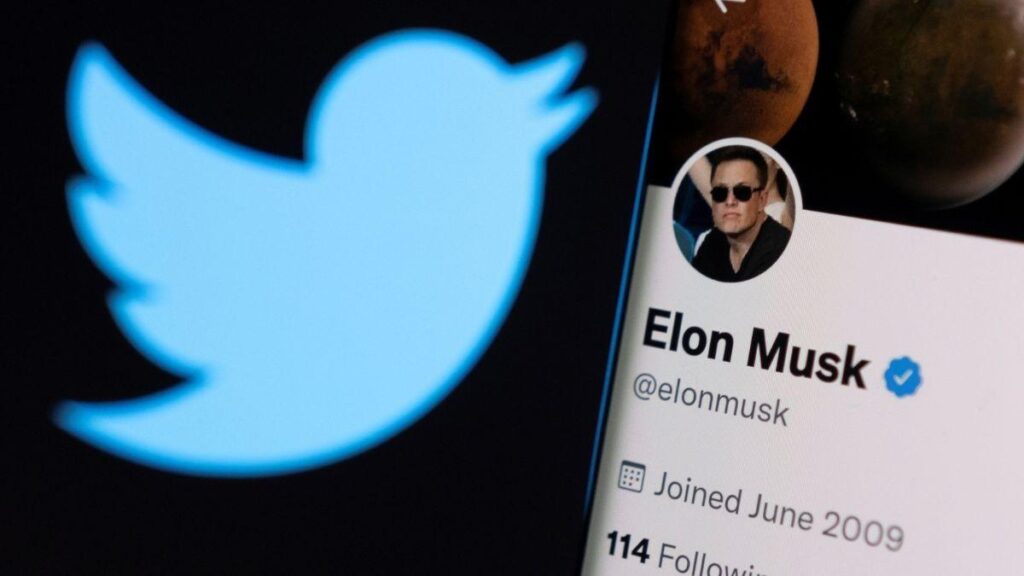
Elon Musk has instructed Twitter employees to start charging more for Twitter Blue, which is the firm’s optional 4.99 USD per month subscription that provides some additional features for authenticated users. Musk has directed that the new Twitter Blue subscription, which also offers verified customers with a blue tick on the social networking platforms, cost approximately 19.99 USD, according to The Verge. The news comes as the “Chief Twit” presses to increase subscription revenue from the microblogging site.

Twitter Blue
Image Source: businesstoday.in

Furthermore, verified consumers will have 90 days to sign up or subscribe to the new plan or their blue checkmark would be removed. Besides that, On Sunday, Twitter staff members who were working on that project were told that they would be fired if the feature was not launched by November 7, according to The Verge.

On Sunday, Elon Musk tweeted, “The whole verification process is being revamped right now.” At present, Twitter Blue is operational in the US, Canada, Australia, and New Zealand.

Source: yourstory.com

Elon Musk dismissed some of Twitter’s top executives last week, after acquiring the social media company for 44 billion USD. These top executives included CEO Parag Agrawal, Chief Financial Officer Ned Segal, legal executive Vijaya Gadde and General Counsel Sean Edgett.

According to The New York Times, Musk has “planned to begin laying off workers” at Twitter as soon as on Saturday. Citing people with knowledge of the situation, the report said that some managers were asked to “draw up lists of employees to cut.”

Source: yourstory.com

Along with plans to bring back banned accounts, including that of former United States President, Donald Trump, Elon Musk hosted a poll on Monday to reinstate Vine.

Musk has acted fast to implement changes at Twitter, beginning with changing the homepage for logged-out users. He’s also planning mass layoffs of intermediate managers and developers who haven’t recently made a significant contribution to the code base with the help of Tesla technicians he’s brought in as advisors at Twitter.

Managers are already curating lists of employees to lay off, and the cuts are anticipated to begin this week. Employees tasked with carrying out Musk’s projects since his takeover Thursday evening have been operating late into the night and throughout the weekend.

The Twitter Blue Tick subscription became widely available almost a year ago as a way to see ad-free articles from selected publishers and make other changes to the app, such as changing the colour of the home screen icon.

Advertising stayed the large majority of Twitter’s revenue in the few quarters following its initial public offering. Elon Musk wants account subscriptions for half of the company’s whole revenue.

Paid Subscribers

Apple’s Paid Subscribers Doubled to 900 Million in 3 years

Apple has about 900 million paid subscribers on its platform, which has more than doubled in just three years, according to company CEO Tim Cook.

paid subscribers
Image Source: business-standard.com

According to the company, paid subscribers are rising exponentially than transacting accounts, so paid account penetration is increasing.

“We have a great subscription business, 900 million paid subs now on the platform and growing very fast. We doubled in 3 years. This is the part that is really interesting to us because we really believe that the engine for services growth is there, foreign exchange is a temporary thing and the fundamentals are very good,” Tim Cook said during the company’s earnings call for the September quarter.

Source: business-standard.com

Services as well set a new high in the September quarter, with 19.2 billion USD in revenue.

Tim Cook, CEO of Apple, also said that they have reached one more record on their installed base of active devices which is all thanks to a quarterly upgraders’ record and double-digit development in switchers on iPhone, and they also reached the latest revenue record for said quarter throughout nearly every geographic segment.

In terms of silicon supply constraints, he stated that they were not noticeable in the quarter.

He also stated that he wants to admit that we are still living in unprecedented times, from the war in Eastern Europe to the tenacity of Covid-19 and also from environmental disasters all around the world to a growingly difficult economic environment.

Also, he added that, through it all, they have aimed to help their customers navigate the challenges while also providing them with the tools they need to continue driving progress for both their organizations.

Apple iPhone revenue increased 10% year on year to a September quarter record of $42.6 billion, according to the company, as the Indian market perceives bumper iPhone sales led by the new 14 series.

Apple CEO Tim Cook stated that customer demand was “stronger and more favorable than they anticipated. According to a report, the Apple iPhone 15 Series will have a USB-C charging port and four models with significant feature differences.

“Customers are loving our iPhone 14 line-up. Loaded with camera upgrades for sharper photos, Action Mode for smoother videos and new safety features like Crash Detection and Emergency SOS via Satellite, iPhone is even more indispensable to our daily lives,” Cook told analysts during the company’s quarterly earnings call late on Thursday.

Source: latestly.com
hotspot

Now users can connect to Android Phones via hotspot on Windows 11

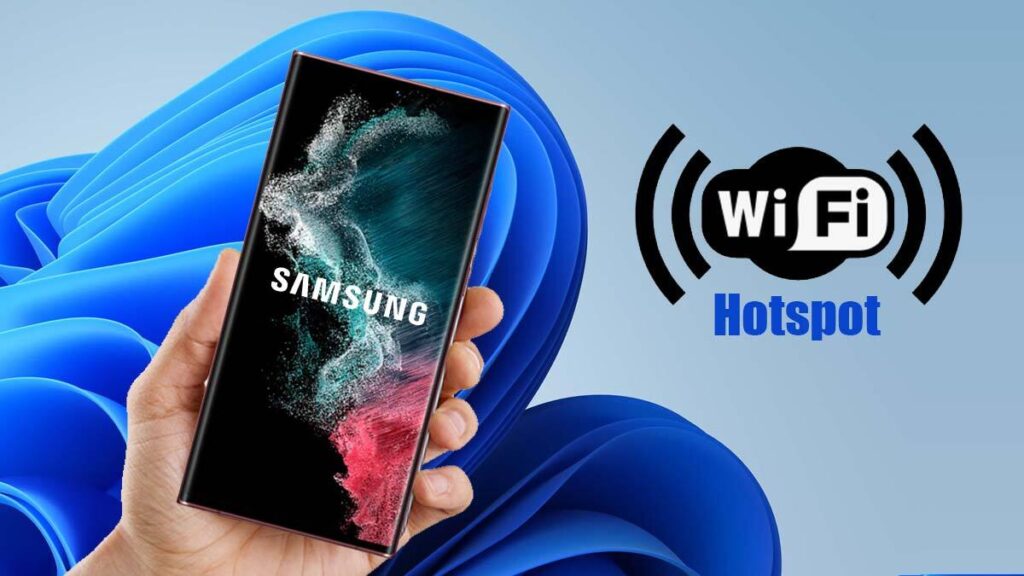
Tech giant Microsoft has launched a Windows 11 preview build with an update for “Phone Link” that will allow users to directly link their computer to their Android phone through a mobile hotspot.

hotspot
Image Source: gizbot.com

The “Phone Link” feature of Windows 11 will soon allow laptops and desktop computers to instantly connect to your smartphone. The new feature only works with a restricted range of Android phones. Phone Link, which was made public as a component of the Windows 11 25231 preview build for Windows Insiders, will now enable the hotspot on your smartphone right from your desktop.

Microsoft noted in a blog post, “We’re excited to announce that you can now instantly access your mobile phone’s hotspot on your PC via the Phone Link app. The instant hotspot feature lets you securely start and connect to your phone’s Wi-Fi network without touching your phone.

When your phone is within range it will appear in the Wi-Fi network list on your PC where a single click turns on the phone’s hotspot and connects to it. No more remembering and typing passwords or searching for hotspot settings on the phone. This provides an easier and faster way to repeatedly connect to your hotspot when you are on the go.”

According to Android Authority, Windows Central has reported that Microsoft is now releasing a Windows 11 preview release that is exclusively available to the company’s Insiders on its Dev Channel.

This preview’s build version offers a few improvements and fixes. With this upgrade, users will now be able to use the Windows Wi-Fi bar to instantly link Windows 11 to the mobile hotspot on their phone.

The feature is comparable to Apple’s macOS and iPhones, which enables seamless hotspot connection without requiring passwords between the two devices. When both Apple devices are linked to the same Apple ID, users can link their Macbook to their iPhone hotspot.

Since Windows and Android belong to distinct ecosystems, the same has not yet been possible on those platforms. However, now Windows PCs and Android devices can sync via the Phone Link app. The app was first released in 2018 under the name “Your Phone,” which allowed users to get texts and other alerts from their smartphones on their PCs.

The Phone Link feature, however, is presently restricted to Samsung smartphones with Android 12 and above. Users must have a laptop or PC running Windows 11 (22H2 Build 22621), Wifi, Bluetooth, and the Phone Link app((v1.22082.111.0) in order to use this new feature.

A Samsung Galaxy device with One UI 4.1.1 (or higher) like Galaxy Z Fold 4, Galaxy Z Flip 4, Galaxy S21, or Galaxy S22 is also required. Reports suggest that Microsoft might eventually decide to support additional devices like the Surface Duo.

To modernize the experience, the Preview Build also contains changes to the System Tray and tablet-optimized taskbar. The UWP app icons’ appearance has been fixed, and the font in the Wi-Fi portion of Quick Settings has been made uniform. Another bug that caused applications like Windows Terminal and Paint to crash whenever users attempted to display a tooltip was also patched by Microsoft.

Over the past few years, Samsung has intensified its partnerships with Google and Microsoft. For over a year, Samsung was the only company to provide the Wear OS 3 OS, and now the Samsung Galaxy phones are the first to receive the new Microsoft Phone Link feature.

google

Google To End Support for Windows 7, 8.1 in 2023

Google will stop Chrome support on Windows 7 and Windows 8.1 from February 7, 2023, onwards.

Google
Image Source: engadget.com

Both Windows 7 and Windows 8.1 won’t support Chrome 110, which is set to go live on February 7th. On Windows 7 and 8.1, earlier releases of Chrome will still work, but users will be unable to install updated builds, which will incorporate new enhancements and security upgrades.

Users of these operating systems won’t receive any new updates, but earlier Chrome versions will continue to work. Google advised transitioning to Windows 10 or Windows 11 in order to continue receiving Chrome updates. However, this may be challenging for those whose systems don’t support more modern versions of Microsoft’s operating system, companies that are still using Windows 7 or 8.1, and individuals who can’t afford to purchase a new computer.

Google had to eventually stop providing support, though. The company noted that its plan coincides with Microsoft’s decision to cease extended support for Windows 7 and Windows 8.1 from January 10th onwards. Microsoft officially stopped support for Windows 7 in 2011, although due to the product’s popularity, it provided additional years of extended support.

Google noted, “With the release of Chrome 110 (tentatively scheduled for February 7th, 2023), we’ll officially end support for Windows 7 and Windows 8.1. You’ll need to ensure your device is running Windows 10 or later to continue receiving future Chrome releases. This matches Microsoft’s end of support for Windows 7 ESU and Windows 8.1 extended support on January 10th, 2023.”

Data indicates that Windows 7 is still being used on a large number of devices, even though it was originally launched in 2009 and Microsoft formally ended support for it in 2020. As late as last year, it was estimated that at least 100 million PCs were still running Windows 7. That might pose a serious security concern because many users may soon have both an outdated operating system and a web browser.

According to a recent report, Google Chrome is the most vulnerable browser currently in use, with over 303 vulnerabilities and a combined total of 3,159 vulnerabilities as of 2022.

According to the report, the findings were based on information drawn from a database covering the period from January 1 to October 5. Of the five days in October, only Google Chrome had vulnerabilities, including CVE-2022-3318, CVE-2022-3314, CVE-2022-3311, CVE-2022-3309, and CVE-2022-3307. The CVE program monitored security vulnerabilities and weaknesses on various platforms. The report stated that the vulnerabilities could cause memory corruption in a system, however, the database does not provide information about them.

Google Chrome is a cross-platform web browser created by Google. It was created using open-source technologies from Mozilla Firefox and Apple WebKit. It was first made available in 2008 for Microsoft Windows. With a market share of almost 65 percent, Google Chrome is the most popular web browser, followed by Safari (18%) and Microsoft Edge (4.32%).