Your Tech Story

tech news

Neuralink

Neuralink brain chip to begin human trials in 6 months

After the company missed prior deadlines he had set, Elon Musk said on Wednesday that he anticipates a wireless brain chip developed by his company Neuralink to start human clinical testing in six months.

Neuralink
Image Source: linkedin.com

Elon Musk, a multibillionaire and the CEO of Twitter, stated on Wednesday that a wireless gadget built by Neuralink is set to start human clinical testing in six months. Neuralink is a neurotechnology company. According to Reuters, Musk stated that the restoration of vision is one of its initial intended uses.

The company, which has offices in Texas and the San Francisco Bay Area, has been involved in testing on animals as it waits for US regulatory approval for human clinical trials.

Read More: Elon Musk claims Apple has threatened to remove the Twitter app

Musk noted, “We want to be extremely careful and certain that it will work well before putting a device into a human. The progress at first, particularly as it applies to humans, will seem perhaps agonizingly slow, but we are doing all of the things to bring it to scale in parallel. “So, in theory, progress should be exponential.”

According to Musk, the Neuralink device’s first two human uses would be to restore vision and allow muscle movement in people who are unable to do so. Musk said, “Even if someone has never had a vision, ever, like they were born blind, we believe we can still restore vision.” A tiny device, electrode-laced wires, and a robot that removes a little portion of a person’s skull and inserts it into the brain are the components of the Neuralink product.

The event was initially scheduled for October 31 but Musk canceled it a few days early without providing a reason. More than a year ago, Neuralink gave its last public demonstration, which featured a monkey playing Pong on a computer.

Musk, who also owns the electric vehicle maker Tesla, the rocket company SpaceX, and the social networking site Twitter, is renowned for his aspirational plans to save humanity and colonize Mars. He holds the same lofty goals for Neuralink as well, which he founded in 2016.

He intends to create a chip that would enable the brain to control intricate electronic equipment, eventually restoring motor function to paralyzed persons and treating disorders of the brain including Parkinson’s, Alzheimer’s, and dementia. He also discusses combining artificial intelligence with the brain. However, Neuralink is going behind schedule.

In a 2019 presentation, Musk stated that his goal was to win regulatory permission by the end of 2020. Then, in late 2021, he declared at a conference that he wanted to begin human trials this year.

Current and former employees claim that Neuralink has routinely missed internal deadlines for obtaining FDA approval to begin human studies. According to Reuters, Musk approached rival Synchron early this year about a prospective investment after complaining to Neuralink staff members about their sluggish progress.

By successfully implanting its device in a patient in the United States for the first time in July, Synchron achieved a significant milestone. In 2021, it got regulatory approval from the US for use in human trials, and studies involving four Australians have been completed.

Snapchat

Snapchat Finally Comes to Microsoft Store for PC Users

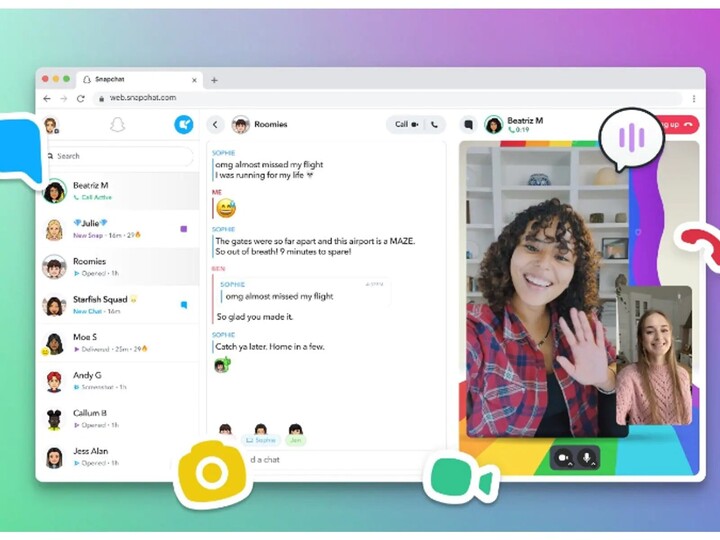
Snapchat, an instant messaging and photo-sharing application is now available on Windows via the Microsoft Store. Individuals can now Snap using their PCs.

snapchat
Image Source: news18.com

Snapchat, a picture-sharing and instant-messaging app, has resisted coming to Windows, but it has now made its formal debut as a Progressive Web App on the Microsoft Store. Based on the recently released web version of Snapchat, Snapchat for Windows is a Progressive Web App (PWA) that can only be used with Microsoft’s Edge Browser.

There are no glaring differences or benefits between the mobile and web app. Since Snapchat Web is primarily a web app, its install size is tiny (1.4 MB) and it always stays up to current with any updates.

Read More: Evan Spiegel – The Founder of Snapchat

The user interface is similar to other web applications such as WhatsApp and Instagram. Based on the app store summary, one can install the PWA edition on up to 10 Windows systems as long one is signed into their Microsoft account.

Snap has also intensified its focus in regions like India, where it didn’t initially notice much demand a few years ago. In certain countries, including India, a paid edition of the application called Snapchat+ is now available. The app’s paid edition, Snapchat Plus, gives users greater benefits. In India, a subscription to Snapchat+ costs Rs 49 per month.

The Snap service is intended for “power users,” who must spend a monthly fee in exchange for access to certain premium features not offered to normal app users. 

In India, Snapchat has also released the in-app Family Center and parenting settings. The controls enable parents to view contacts that their children have contacted in the past week as well as who their children communicate online.

In addition, Snapchat has teamed up with Amazon to offer users an AR try-on experience. Snapchat users will be able to test out eyewear designs from a variety of well-known brands on the e-commerce platform. According to Amazon, some of these are Persol, Maui Jim, Oakley, Ray-Ban, and Costa Del Mar.

A number of new shopping lenses will be released along with the debut of the eyewear line, and they will fall into three categories: reading glasses, sunglasses, and seasonal eyewear. This partnership between the two businesses comes after Snapchat recently announced a number of brand-friendly updates. This includes building AR shopping lenses, updating product details like pricing, and much more.

Given Snap’s treatment of Microsoft throughout the years, the revelation comes as a bit of a surprise. It may be recalled that the corporation previously declined to develop specific software for Windows phones, restricting its service to a particular demographic utilizing the Microsoft OS.

Despite this, some developers have attempted to introduce the Snap experience to the Windows ecosystem in the past by releasing third-party Snapchat applications on the Windows Phone application store.

One of these was the 6snap app, which was eliminated from the location in 2014 along with other outside apps. Snap even banned the accounts of those who used the “unauthorized programs” in an effort to dissuade Windows phone users from using such apps.

Apple

Elon Musk claims Apple has threatened to remove the Twitter app

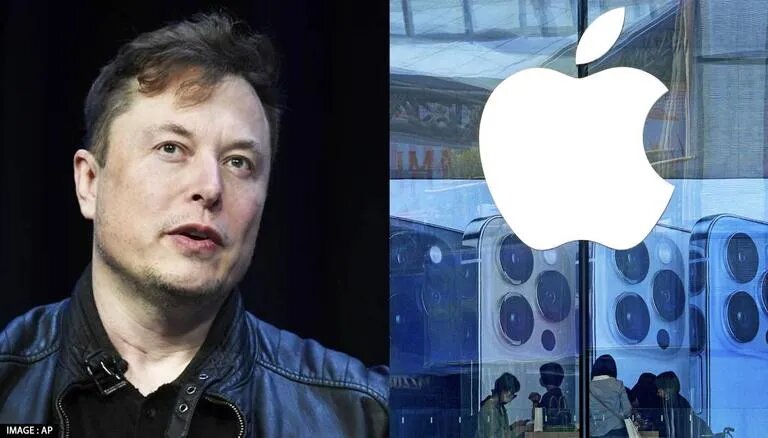
Elon Musk went on a rant against Apple, Twitter’s top advertiser, on Monday after claiming that the company threatened to remove the social media network from its App Store without any clarification and had pretty much-stopped marketing on Twitter.

Apple
Image Source: republicworld.com

The rant highlighted the enormous power that Apple, the world’s biggest firm, possesses over the fate of the world’s richest man’s Twitter gamble. The rant also hinted at Apple’s potential role as a check on Musk’s chaotic reign at Facebook; Apple has previously annulled App Store permissions from companies that violated its security protocols or supported violence and other troublesome content.

If Twitter is removed from the App Store, new users will be unable to install the app on their iPhones and iPads, and current users will be unable to access updates. The accused threat tends to add to the marketer pressure, staff departures, and regulatory scrutiny that Musk is facing as he pursues to overhaul years of Twitter guidelines and account expulsions in his quest to promote “free speech.”

Read More: Twitter Closes Brussels Office As Elon Musk’s Reforms Spread To Europe

Under a document analysed by The Washington Post that was prepared from internal Twitter data, Apple was the top advertiser on Twitter in the first quarter, paying 48 USD million on advertisements on the social network. That quarter, Apple’s spending accounted for much more than 4 per cent of Twitter’s revenue.

Elon Musk attempted to pressurize the firm and CEO Tim Cook in several tweets for halting spending during the holiday shopping season.

Requests for comment were not returned by Apple. Musk’s tweets sought to rekindle long-standing concerns and political scrutiny about Apple’s market dominance. He posted a link to a 2020 parody video made by Apple for Epic Games criticising the App Store as a “monopoly.”

The video is a parody of Apple’s famous “1984” Super Bowl commercial, which Epic, the creator of the Fortnite video game, launched after it was removed from Apple’s store for violating its in-app payment rules. He also asked his and over 119 million followers to vote on whether Apple should publish all censorship acts it has carried out that affect its customers.

“Did you know Apple puts a secret 30% tax on everything you buy through their App Store?,” Musk tweeted, with the caption “Spoiler alert.”

Musk hinted in a tweet that he may go to war with Apple.

Source: washingtonpost.com

“This is a battle for the future of civilization. If free speech is lost even in America, tyranny is all that lies ahead,” Musk said later.

Source: news18.com
Data Centers

Google and Microsoft announce new pacts to use renewable energy in the data center

Both Microsoft and Google have made fresh commitments to use renewable sources of energy in their data centers, reducing the carbon impact of their IT operations.

data centers
Image Source: business-standard.com

Microsoft and Google have made new commitments to reduce the carbon footprint of their IT operations through the use of renewable sources of energy in their data centers. In order to power its facilities in the UK, Google has entered into a power purchase agreement (PPA) with the French utility company Engie for 100 MW of energy produced by the Moray West offshore wind farm.

According to Google, the new agreements would help the business to nearer to its goal of completely running its cloud regions and UK offices on carbon-free energy by 2030. According to Matt Brittin, president of Google EMEA, consumers in the UK and Europe are growing more concerned about energy sources and climate change.

He stated that Google has similar worries and thinks technology will be crucial in resolving the energy crisis by lowering emissions both internally and externally.

Read More: Nvidia and Microsoft Collaborate To Build AI Supercomputers

Microsoft, meanwhile, publicly disclosed PPAs in Ireland that encompass more than 900MW of brand-new renewable power capacity to operate its data centers there. Microsoft did not identify the providers for its renewable power contracts, but other media has named two of them as Statkraft of Norway and Energia Group of Ireland.

The energy is derived from a combination of solar and wind projects. The Redmond powerhouse predicted that by 2025, all of the energy used in its Irish data centers would be renewable and sourced from new initiatives backed by PPAs like these. Microsoft already agreed to a 20-year contract with AES Corporation to operate its data centers in California using renewable energy.

The action follows past agreements by both businesses to purchase US renewable energy. While Microsoft signed a 20-year agreement with AES Corporation earlier this year to supply renewable power to its data centers in California from a portfolio of 110MW solar and 55MW four-hour storage projects, Google struck a deal with SoftBank subsidiary SB Energy for 900MW of solar energy for a datacenter in Texas.

Although these initiatives have admirable goals, they won’t necessarily reduce the carbon emissions of these megacorps, particularly if they are growing more quickly than they are acquiring carbon credits or making investments in renewable energy.

For instance, Microsoft acknowledged in its sustainability reports report for 2021 that although its personal CO2 emissions had decreased by around 17% year over year, its carbon emissions had increased due to considerable expansion during the same time. Microsoft stated that in addition to growing its data centers to accommodate customers’ requirements, it has also increased its commitment to decreasing carbon use and assisting in the bigger climate change challenges.

The series of announcements is a boost for the commercial power purchase agreement (PPA) market in Europe, which wind and solar industry organizations claimed last month had experienced a year-over-year decrease during the first three quarters of 2022.

Galaxy S23

Samsung Galaxy S23 series may feature a next-gen Qualcomm fingerprint scanner

The Galaxy S23, Samsung’s flagship smartphone series, is expected to feature Qualcomm’s 3rd Generation ultrasonic fingerprint scanner.

The Galaxy S10 became the first Samsung phone to include an ultrasonic fingerprint reader beneath the display. However, its performance was inconsistent. Qualcomm’s second-generation ultrasonic fingerprint sensor was included in the Galaxy S21. It appears that Samsung’s next-generation rising smartphone will include an even improved fingerprint reader.

Galaxy S23
Image Source: smartprix.com

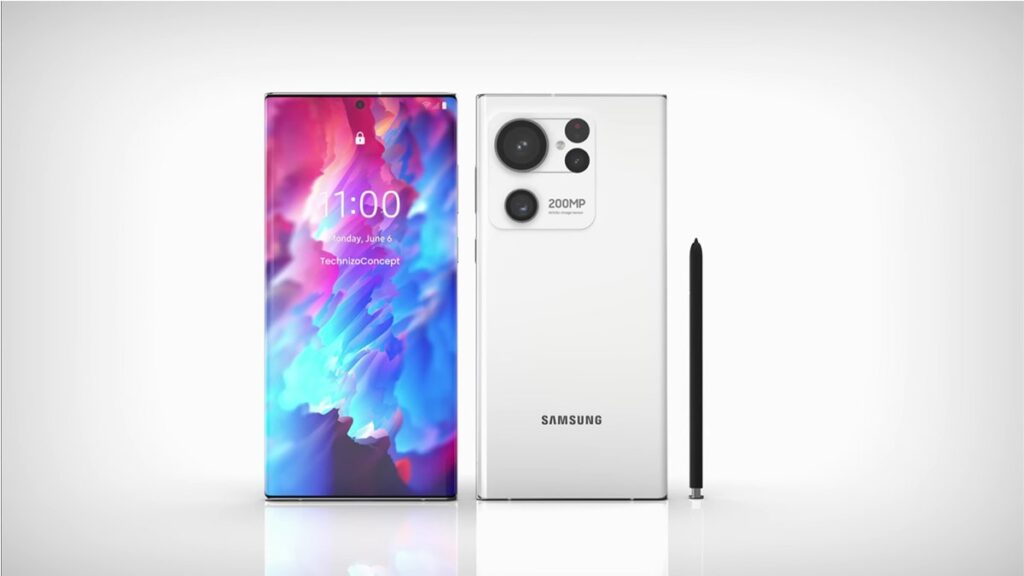
The Galaxy S23, according to rumours, will include Qualcomm’s 3rd Generation ultrasonic fingerprint reader. However, we’re not sure whether it’s the same 3D Sonic Max sensor Qualcomm introduced earlier this year or a completely new fingerprint scanner. We’re in for a treat if it’s the 3D Sonic Max, which is the world’s largest and most advanced fingerprint reader.

The Qualcomm 3D Sonic Max scanner has a surface area of 20mm x 30mm, which is nearly 10 times larger than the 3-dimensional Sonic Gen 2 8mm x 8mm scanner utilized in the Galaxy S21 Ultra and Galaxy S22 Ultra. It’s already in the iQOO 9 Pro as well as the Vivo X80 Pro.

It has five times the accuracy of the 3-dimensional Sonic Gen 2 and can cater to two fingers at the same time for added security. It even claims to support one-tap fingerprint registration, which greatly simplifies the procedure of registering fingerprints.

The Galaxy S23 series is also expected to include an E6 LTPO 3.0 Super AMOLED display with 2,200 nits of peak brightness, a 200 MP ISOCELL HP2 camera sensor S23 Ultra only, a Snapdragon 8 Generation 2 processor, LPDDR5X RAM, Wi-Fi 7, UFS 4.0 storage and urgent or emergency messaging through the use of satellite communication.

All eyes are now on the release of Samsung’s next flagship smartphone. The Galaxy S23 series has already been the subject of numerous rumours and reports. The launch is already expected to take place in early 2023. A new report now offers some additional information.

According to reports, Samsung will hold a complete Unpacked event for the Galaxy S23 release in San Francisco. It’d be the first live event as they were halted due to the global epidemic.

Brussels Office

Twitter Closes Brussels Office As Elon Musk’s Reforms Spread To Europe

As per reports, Twitter’s Brussels office has been closed. According to reports, Twitter’s Brussels office has been closed, which may make it more challenging for it to comply with new European Union rules governing content moderation.

Brussels Office
Image Source: yahoo.com

The office had less than ten employees, but despite its tiny size, the office was crucial because of its connections to the EU. After Musk took over, the Brussels office staff was reduced from six to two. Last Monday, Twitter’s last two remaining public policy executives, Julia Mozer and Dario La Nasa, left the company completely dissolving the Brussels office.

They may have quit the company or been dismissed, but they left after Musk gave his employees an ultimatum, asking employees to work “long hours at a high intensity” or face termination with three months’ worth of severance compensation.

Read More: Elon Musk Blames ‘Activists’ for His Twitter Moderation Council Lie

Mozer and La Nasa were in charge of Twitter’s public policy in Europe. They were in charge of making sure Twitter conforms with both the Digital Services Act and the EU’s disinformation guidelines. More control over how platforms censor material and when tech corporations must remove unlawful content is granted to EU governments as a result of the new law.

The platforms will have to be open about the factors that go into their content moderation choices. If a user’s content is taken down or accessibility to it is restricted, they have the right to appeal the moderation decision. Twitter might face severe penalties if it doesn’t follow the DSA’s regulations.

Regulators have the power to penalize Twitter up to 6% of its annual global revenue or even shut it down completely. Musk has been cautioned by Thierry Breton, the EU’s commissioner for the internal market, that Twitter must adhere to the bloc’s content laws.

Two significant pieces of digital legislation that will establish previously unheard-of criteria for the accountability of digital companies operating in a free and vibrant digital market were adopted by the European Parliament in July of this year. Mass layoffs at Twitter, meanwhile, have already concerned the Commission and prompted Brussels to become more confrontational with Twitter.

The EU vice-president in charge of the disinformation code, Vera Jourova, expressed alarm about the closure of the Brussels office to the Financial Times. She noted, “If you want to effectively detect and take action against disinformation and propaganda, this requires resources. Especially in the context of Russian disinformation warfare, I expect Twitter to fully respect the EU law and honor its commitments.”

Since Musk took over, concerns about increased levels of misinformation on the network have intensified, especially since he made it possible for anybody to get a verified tag for $8. This resulted in trolls posing as Tony Blair, George W. Bush, and other public figures as well as corporations like Nintendo and McDonald’s. Musk has since put the paid verification program on hold, but he’ll probably resume it soon.

While this is going on, several Democratic senators have requested the FTC to investigate if Twitter has broken any consumer protection laws or a consent order with the agency. The latter mandates Twitter to examine new features for any privacy concerns, among other things.

According to a report from earlier this month, Twitter engineers must “self-certify” that they are abiding by FTC guidelines and other regulations. In a recent statement, the FTC stated that it is “tracking recent developments at Twitter with deep concern.”