Your Tech Story

tech news

client-side encryption

Google expands Gmail client-side encryption to more users

After launching in the beta the previous year, Google recently made public that Gmail’s client-side encryption mode has now become readily accessible for companies and education providers.

The feature prevents even Google from viewing the contents of the emails it hosts, with data encoded before it enters Google servers. According to the firm, this can be beneficial for businesses that must meet stringent compliance or confidentiality standards.

client-side encryption
Image Source: uctoday.com

Although Workspace “encrypts data at rest and in transit by using secure-by-design cryptographic libraries,” CSE gives organizations total control over their encryption keys. “Starting today, users can send and receive emails or create meeting events with internal colleagues and external parties, knowing that their sensitive data (including inline images and attachments) has been encrypted before it reaches Google servers,” Google wrote in a blog post.

Source: engadget.com

Also Read: Are all Google One subscribers now able to access Magic Eraser?

Claims about the firm striving to enhance the encryption for its email service date as far as 2014, so it’s encouraging to discover that client-side encryption is officially ready.

Even So, the functionality is not aimed at everyone; it’s solely accessible by individuals who have Education Standard, Workspace Enterprise Plus, or Education Plus accounts and not personal accounts. It’s also not especially simple to install, as the process seems to be geared toward IT departments.

This functionality is disabled by default, which will annoy many security professionals, and can be activated after a consumer deploys an important management service incorporated with their authentication server.

Although encrypting Drive files & Calendar events are a great addition, CSE protections might be most impactful in Gmail. After all, organizations can send an email to third-party companies instead of sharing data as well as calendar invites with them. In any case, Google claims that CSE is now available for all vital Workspace applications.

“Users can continue to collaborate across other essential apps in Google Workspace while IT and security teams can ensure that sensitive data stays compliant with regulations,” the Googlers said.

Source: theregister.com

Also Read: Google tests blocking news content for some Canadians

Whilst also Gmail is undoubtedly among the most efficient applications for client-side encryption, Google has also made the feature available in a number of its various other Workspace apps, including Drive, Docs, as well as Meet.

It also stated earlier in the month that client-side encryption is now readily accessible for Google Calendar, allowing businesses to add extra security to an event’s synopsis and attachments.

snapchat

Snapchat launches A.I. chatbot powered by OpenAI’s GPT

Snapchat has just launched an AI chatbot backed by the latest edition of OpenAI’s ChatGPT. As per the CEO of Snapchat, Evan Spiegel, AI chatbots will progressively get to be a component of everyday lives in a very short period of time.

Snapchat’s bot, termed as “My AI,” will be wedged into the app’s chat section above messages with friends. Whilst the bot will originally be accessible only to Snapchat Plus subscribers for 3.99 USD per month, Evan Spiegel informs The Verge that the primary objective is to ultimately make it accessible to all of Snapchat’s 750 million users every month.

Snapchat
Image Source: smartmobsolution.com

The big idea is that in addition to talking to our friends and family every day, we’re going to talk to AI every day,” he says. “And this is something we’re well positioned to do as a messaging service.”

Source: theverge.com

Also Read: Microsoft brings iMessage to Windows 11, will it last?

At the moment, My AI is mainly just a smartphone-friendly edition of ChatGPT within Snapchat. The main distinction is that Snap’s edition is more limited in its ability to respond. Snap workers have trained it to follow the firm’s trust and safety guidance rules and not respond with profanity, violence, sexually explicit material, or political opinions.

My AI can recommend birthday gift ideas for your BFF, plan a hiking trip for a long weekend, suggest a dinner recipe, or even write a haiku about cheese for your cheddar-obsessed pal,” the company wrote in a blog post. “Make My AI your own by giving it a name and customizing the wallpaper for your Chat.”

Source: techcrunch.com

It has additionally been removed from features that have previously resulted in ChatGPT being blacklisted inside some schools, such as, when attempting to get it to write a thesis or dissertation on different topics, and it respectfully refused. Snap intends to continue fine-tuning My AI since more persons make use of it as well as report inappropriate behavior.

Also Read: Twitter Cuts More Engineering, and Product Jobs to Curb Costs

Whilst also ChatGPT has rapidly become a productivity tool, Snap’s approach to generative AI is more akin to a persona. My AI’s profile page is similar to that of a regular Snapchat user, albeit featuring an alien Bitmoji. The style implies that My AI is intended to serve as a Snapchat friend you’re able to hang out together with, rather than a search engine.

Twitter

Jack Dorsey’s New ‘Decentralized’ Twitter Hits the App Store

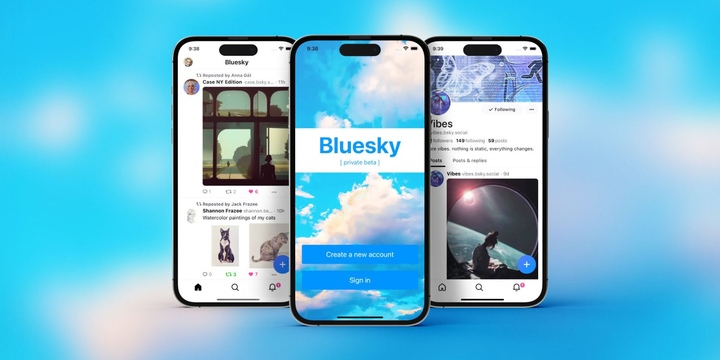
More beta testers are getting access to Bluesky, the Twitter substitute supported by Jack Dorsey, co-founder and CEO of Twitter. Even though the application is still only accessible via invite, its appearance on the App Store suggests that a public debut may be close.

Initially intended to be a “decentralized social network” and a Twitter extension, Bluesky eventually split off to create its own network.

Twitter
Image Source: coinscreed.com

Early in the previous year, the company made the announcement that it had become independent, writing on Twitter, “Both Twitter and Bluesky realized that our independence is important to the success of the project, which is why we established an independent company to ensure that we serve the broadest possible interests.”

Also Read: Twitter Cuts More Engineering, and Product Jobs to Curb Costs

Last year, Bluesky reported receiving $13 million to guarantee it had the autonomy and liberty to begin working on R&D. It also mentioned having Jack Dorsey on its board of directors. Furthermore, it stated that the funding provided by Twitter to Bluesky was “not subject to any conditions except one: that Bluesky was to research and develop technologies that enable open and decentralized public conversation.”

Authenticated Transfer Protocol, or AT, is Bluesky’s primary focus, and the Bluesky mobile app functions as a demonstration of the protocol in use. AT gives users the ability to build a federated, decentralized social network in a manner akin to the ActivityPub system that powers Mastodon.

The project has drawn some criticism, particularly from Mastodon and other devs who noted that ActivityPub, a suggested W3C standard, already drives a sizable and expanding “Fediverse” of connected servers. And since Musk bought Twitter, Mastodon, an open-source, decentralized alternative, has been growing in popularity among Twitter users who switched to the fediverse.

Users who want to participate can send their emails to be added to a waiting list and download the Beta app from the App Store, which is available only by invitation.

The interface of Bluesky, according to TechCrunch, is similar to that of Twitter with a few minor variations, such as asking “What’s up?” in the text box rather than “What’s happening,” but it simplifies it through the addition of a plus icon to add 256 characters with the feature to add pictures.

Moving to Bluesky might be seen as a hassle given the destruction of much more than a decade’s worth of tweets, recollections, and hot takes, leading users to wonder why they should do so. In 2021, during the Twitter ban imposed by then-president Donald Trump, Dorsey began pushing the concept of Bluesky. He challenged if the suspension was the best course of action.

Also Read: Uber’s Redesigned App Puts The Focus On Personalization

An open and free global internet can’t be eroded by these things, according to Dorsey, who also argued that the platform should examine how its service might encourage damage and diversion.

Dorsey stated that he thought Bluesky would separate from Twitter in a manner that would slow content moderation on larger platforms and lessen their influence over who is in charge of moderating that content.

Twitter

Twitter Cuts More Engineering, and Product Jobs to Curb Costs

Twitter Corporation fired more employees late Saturday in a new round of cost-cutting measures at the social media corporation presently controlled by Elon Musk.

As per individuals acquainted with the matter, the layoffs affected staff members across the corporation, such as engineering as well as the product. Some employees were informed of their dismissal via email late Saturday, according to the sources, while others learned of their dismissal when they were unable to enter the internal network.

Twitter
Image Source: gulfbusiness.com

It’s uncertain how many staff members were affected, but dozens, according to sources. The Information priorly stated that more than 50 people had been laid off.

Read More: Twitter to start charging developers for API access

Outside of normal working hours, Twitter did not reply to a request for comment from Bloomberg News.

Esther Crawford who was one of the chief executive officers of Twitter Blue, the app’s subscription plan, was one of the employees let go, Platformer’s Zoe Schiffer disclosed in a tweet on Sunday.

In the days that followed Musk’s acquisition of Twitter last year, she famously posted on Twitter a famous post that staff members will often have to #SleepWhereYouWork to stay on schedule and fulfill deadlines.

Crawford wasn’t quick to react to a comment request which was sent out after normal business hours.

A few young entrepreneurs who entered Twitter through takeovers in recent years, along with the founders of the newsletter enterprise Revue as well as the design company Ueno, wrote on Twitter on Sunday that they, too, had been fired.

Originally, Twitter avoided laying off founders to avoid having to accelerate the disbursement of greater stock grants, according to people who are acquainted with the business.

According to three persons acquainted with the compensation packages, several pioneers got additional compensation packages as a result of the purchase of their businesses, presumably raising the cost to fire them off because their stock and incentives are compensated out.

Read More: Will Twitter now start charging for SMS two-factor authentication?

Saturday’s other round of job cuts was the biggest as Mr. Elon Musk informed staff members in late November at a meeting held internally that there were no further intentions for job cuts.

The layoffs accompanied a widespread layoff at the start of November when Mr. Elon Musk fired roughly half of Twitter’s working population just a week after taking over the corporation.

Elon Musk cut over 3,700 job positions at Twitter the previous year, which represents fifty percent of the firm’s workforce, in an attempt at cost reduction succeeding his $44 billion takeover.

uber

Uber’s Redesigned App Puts The Focus On Personalization

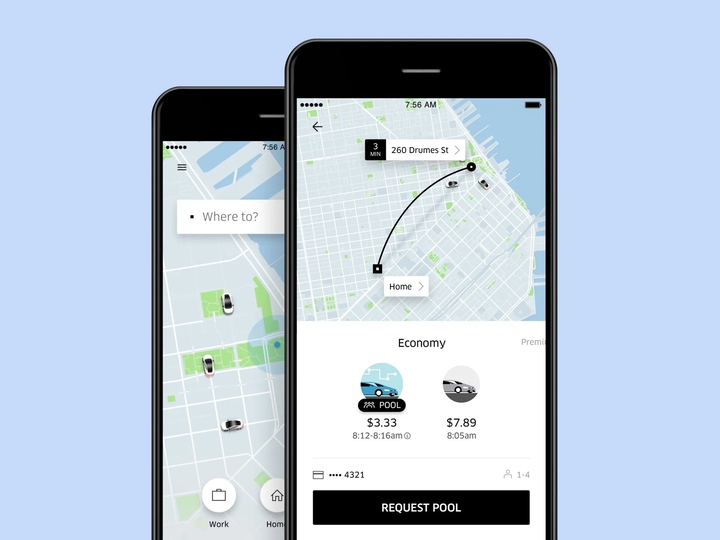
Uber has unveiled an upgraded version of its application that focuses on simplifying and customizing the user experience.
The updated app has a simpler home screen, which eliminates the resistance of a few additional clicks when making reservations for a ride or placing orders for delivery.

Uber
Image Source: wired.com

It also simplifies the way consumers can view saved venues, as well as some iPhone users can monitor the advancement of a trip on their lock screen.

Also Read: Google tests blocking news content for some Canadians

With the redesign, Uber wants to make the user experience so effortless and intuitive that more customers see Uber as the “one-stop shop for going anywhere and getting anything,” according to Jen You, head of product for rides at Uber.


“The redesigned Uber app has increased awareness and consideration to a wider array of products, which has driven growth to several lines of business,” You told TechCrunch. “This redesign leans into our platform strategy by expanding the breadth and relevance of products that Uber customers can engage with every time they open the app, especially Uber One members who use more of our products more often and will now have easier access to all the offerings in their city.”


Reference is taken from: https://techcrunch.com/2023/02/22/uber-redesigns-app-for-simpler-more-personalized-experience/
As per Uber, the update will be distributed to “tens of millions” of consumers in 1,200 cities worldwide on Wednesday. Customers must ensure that their devices and the Uber application have been upgraded to access the new app.


A simpler Home Screen
Several Users have had a glimpse of the updated home screen for several weeks now. The latest home screen incorporates carousels that prompt users with “More ways of using Uber,” “Ways to prepare with Uber,” or “Ways to save with Uber,” which would offer choices for facilities such as introducing a stop across a route, linking with public transportation, riding a Lime e-scooter, or selecting an even smoother riding experience.


At the screen bottom, the latest “Services” tab lists all of the trips and delivery resources obtainable in that city, such as e-scooters, supper choices, rental cars, delivering packages, and bus charter facilities. A new “Activity” button at the bottom of the screen lets customers keep a record of past and forthcoming trips and Eats bookings.


Getting to know you better
“Saved Places” will show up as a recommendation of locations and travel types predicated on a user’s preferences, previous trips, and also most probable locations whenever a user presses “Where to?” on the latest app. The app will keep gathering information about the user to provide more personalized suggestions in the future.

Also Read: Amazon Web Services pairs with Hugging Face to target AI developers


Updates to live tracking
iPhone owners running iOS 16 or subsequent can monitor their trips without manually opening the Uber app by using a “dynamic island,” which is essentially a little sphere that shows content that’s operating in the background. Users now receive alerts on their lock screen whenever a driver seems to be on their way or near to pick-up.

The dynamic island would then consistently show information such as automobile details which includes the driver’s photo, license plate, model of vehicle, and image of the vehicle as well as the most recent ETA and ride status.

Google

Google tests blocking news content for some Canadians

Google, a subsidiary of Alphabet Inc., announced on Wednesday that it is implementing tests that may restrict access to news material for certain Canadian users as a potential countermeasure to the government’s internet news law.

The Liberal government of Justin Trudeau unveiled House of Commons Bill C-18, the “Online News Act,” in April. This legislation outlined regulations that would compel Google and Facebook to enter into business agreements and compensate news publishers for their material.

Image Source: economictimes.indiatimes.com

In an email statement to Reuters, a Google spokesperson stated, “We’re briefly testing potential product responses to Bill C-18 that impact a very small percentage of Canadian users. We run thousands of tests each year to assess any potential changes to Search.”

Also Read: Amazon Web Services pairs with Hugging Face to target AI developers

As it considers potential responses to the bill, the company said on Wednesday that it is momentarily restricting access to news material for less than 4% of its Canadian users. The update affects both its widely used search engine and Android’s Discover tool, which offers news and sports content.

The test, which will last for approximately five weeks, has an impact on all forms of news content, the company said. The tech giant acknowledged that the time-limited tests “limit the visibility of Canadian and international news to varying degrees”.

Canadians won’t be frightened, according to a spokesperson for Minister of Canadian Heritage Pablo Rodriguez, who also criticized Google for copying Meta’s strategy. She stated, “Canadians need to have access to quality, fact-based news at the local and national levels, and that’s why we introduced the Online News Act.

Tech giants need to be more transparent and accountable to Canadians.” Due to worries about laws that would require digital platforms to compensate news publishers, Facebook issued a warning last year that it might restrict the sharing of news material on its network in Canada.

A government report claimed that a similar law in Australia, which went into force in March 2021 after negotiations with major tech companies resulted in a brief suspension of Facebook news feeds there, has largely succeeded. The Canadian news media sector has fought Facebook and requested more control of tech firms from the government in order to make up for the financial losses the sector has endured as a result of Facebook and Google’s steady increase in market share of ads over the years. Since 2008, more than 450 Canadian news organizations have shut down, with 64 of those happening in the previous two years.

Also Read: Google Chrome rolls out long-awaited battery-saving features

Google voiced concerns about the proposed law to a House of Commons committee, saying that it would favor big publishers over smaller outlets, would not require publishers to follow fundamental journalistic standards, and could lead to the spread of “cheap, low quality, clickbait content” rather than public interest journalism.

The corporation has stated that it would prefer to contribute to a fund that would compensate news publishers indirectly, comparable to the Canada Media Fund. The bill was approved by the House of Commons in December and will soon be reviewed by the Senate.