Your Tech Story

tech news

china

U.S. set to further tighten chipmaking exports to China

According to Bloomberg, the United States intends to impose even stricter limitations on the export of machinery for the manufacture of semiconductors to China.

The US government reportedly informed US businesses of the plan and informed them that the restrictions might be revealed as soon as next month. According to the report, the Biden government intends to collaborate with Japan and the Netherlands.

China
Image Source: theprint.in

The action would further disrupt the chip-making sector, which is already adjusting to regulations put in place in October. These limitations prohibited US citizens from working in China as well as other nations that might represent a threat to national security and demanded export licenses for specific machines. Additionally, there are clauses that restrict the selling or support of technology for particular product categories.

Also Read: Germany planning to ban Huawei, ZTE from parts of 5G networks

The administration intends to work with the governments of Japan and the Netherlands, two other important nations for chip manufacturing equipment, in accordance with the most recent rules. Currently, licenses are necessary for the purchase of about 17 of the expensive machines necessary for producing semiconductors, especially if Chinese clients are involved.

When Tokyo and The Hague’s limitations are taken into account, that number is expected to double. The three largest semiconductor equipment producers in the US are Applied Materials, KLA Corp., and Lam Research Corp.

They control the market along with ASML Holding NV of the Netherlands and Tokyo Electron Ltd. of Japan. Building factories with the capacity to produce the most cutting-edge chips is impossible without the availability of their finest products.

US businesses have been compelled to inform investors that losing access to the Chinese market will result in billions of dollars in lost revenue. The Biden administration has pushed Tokyo and The Hague to impose the same restrictions on their businesses in order to level the playing field and close the ring around China’s fledgling chip efforts.

The Dutch government announced earlier this week that it was planning restrictions on specific chipmaking equipment. An additional restriction to those already in place for the most advanced lithography equipment would be placed on the export of so-called immersion DUV lithography products.

The manufacturing of the most sophisticated chips in the world requires this technology. Mao Ning, a spokesman for the Chinese foreign ministry, stated on Thursday that China was adamantly opposed to the limitations because they would “intervene and limit normal economic and trade exchanges between Chinese and Dutch companies.”

Also Read: Why Did Silicon Valley Bank Collapse?

Late last year, the US enacted a number of export controls, one of which barred China from obtaining certain semiconductor chips produced anywhere in the world using US equipment.

There are several areas where US-China ties are strained. Along with technology, the debate between the two factions frequently centers on Taiwan. China does not rule out using force to annex Taiwan because it views it as part of its own land. The US is Taiwan’s largest foreign supporter.

Google

Google rolls out AI writing assistant to Gmail and Docs

Google has unveiled a set of integrative Functionalities for its Workspace apps, which include Google Docs, Sheets, Gmail, and Slides.

The latest Google updates incorporate advanced AI techniques to produce, summarize, and enhance text content in Google Docs. This technology is equivalent to the capacity of ChatGPT powered by OpenAI, which is widely used by many people.

Google
Image Source: theverge.com

Additionally, Gmail users can now generate full emails based on their brief main points using this feature. Furthermore, Google Slides now have the capability to create AI-generated visuals, sound, and videos for presentations, similar to the functionalities available in Microsoft Designer, backed by OpenAI’s DALL-E, and Canva, supported by Stable Diffusion.

Also Read: Google expands Gmail client-side encryption to more users

These new updates bring cutting-edge technology to Google’s suite of tools, providing users with improved capabilities and an easier way to create, edit, and present their content.

We’re now making it possible for Workspace users to harness the power of generative AI to create, connect, and collaborate like never before,” writes Johanna Voolich Wright, VP of Product at Google Workspace.

Source: freethink.com

The official statement demonstrates Google’s willingness to overtake opponents in the latest AI race. Ever since the introduction of ChatGPT a year ago and the release of Microsoft’s chatbot-enabled Bing in February, the internet giant has indeed been rushing to release similar AI functionalities.

The tech giant decreed a “code red” in December, instructing employees to add Ai technologies to all of its user products, which are utilized by a billion individuals, within months.

We’re so excited by the potential of generative AI, and the opportunities it will unlock,” Kurian wrote in a blog post.

Source: cnbc.com

But search engine giant Google is getting way ahead of itself. Despite the firm’s announcement of a slew of innovative capabilities, just one of them which is the AI writing software in Docs as well as Gmail will be made accessible to a team of US-based trustworthy testers this month.

Also Read: Google tests blocking news content for some Canadians

This is also the method by which the search engine giant officially confirmed ChatGPT competitor Bard’s presence. Google has confirmed that these and additional features will be made accessible to everyone later this year but doesn’t say when.

Google expands on these potential functions in its press release, “Whether you’re a busy HR professional who needs to create customized job descriptions, or a parent drafting the invitation for your child’s pirate-themed birthday party, Workspace saves you the time and effort of writing that first version. Simply type a topic you’d like to write about, and a draft will instantly be generated for you. With your collaborative Al partner, you can continue to refine and edit, getting more suggestions as needed.”

Source: theverge.com
Meta

Meta to end news access for Canadians

Facebook-parent Meta Platforms Corporation told reporters Saturday that if the nation’s Online News Act is enacted in its present form, it will end the accessibility of news and information for Canadians on its portals.

Meta
Image Source: gadgetsnow.com

The bill would require Meta and Google to discuss advertising deals and charge news publishing houses for their information. A Meta spokesperson argued that the proposed legislation was “neither sustainable nor workable,” and expressed concern that it would force them to pay for links or content that they did not post.

Also Read: Google tests blocking news content for some Canadians

The move follows Google’s recent tests on news censorship and both firms’ ongoing expansion of their market share in branding. The Canadian news media industry has called for more regulatory oversight of tech businesses.

The “Online News Act,” or House of Commons bill C-18, which was implemented in April of last year, outlined rules that would require platforms such as Meta as well as Alphabet Inc child company Google to discuss advertising deals as well as charge news publishing houses for their information.

“A legislative framework that compels us to pay for links or content that we do not post, and which are not the reason the vast majority of people use our platforms, is neither sustainable nor workable,” a Meta spokesperson said as a reason to suspend news access in the country.

Source: usnews.com

Meta’s move follows after Google began testing restricted news censorship as a possible reaction to the legislation last month.

The Canadian news media industry has pressed the government regarding more regulatory oversight of tech businesses so as to recover financial losses sustained over the years as technical behemoths such as Google as well as Meta progressively expand their market share in branding.

Pablo Rodriguez, Canadian Heritage Minister, stated in a statement issued on Sunday that it was disheartening to see Facebook stooping to threats rather than cooperating with the Canadian government in good conscience and that the C-18 bill was not related to how Facebook tends to make news media accessible to Canadians.

“All we’re asking Facebook to do is negotiate fair deals with news outlets when they profit from their work,” Rodriguez said. “This is part of a disappointing trend this week that tech giants would rather pull news than pay their fair share.”

Source: usnews.com

The year before, Facebook expressed concern about the legislation as well as warned that it could potentially be pressured to inhibit news-sharing on its platform.

Also Read: Instagram starts testing its age verification tools in more countries

Other nations which have questioned businesses like Facebook and Google to pay news publishing houses for material featured on their portals include New Zealand as well as Australia.

In December, New Zealand Broadcasting Minister Willie Jackson said, “It’s not fair that the big digital platforms like Google and Meta get to host and share local news for free. It costs to produce the news and it’s only fair they pay.”

Source: timesofindia.indiatimes.com
bing

Bing Search Engine Surpasses 100 Million Daily Active Users

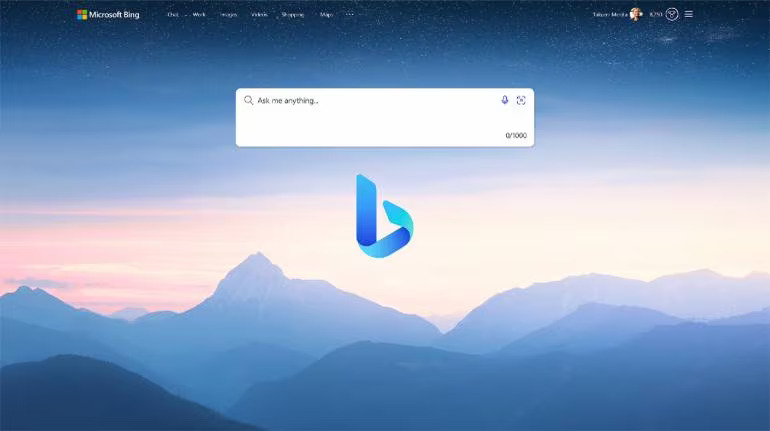
This week, Microsoft CEO Satya Nadella’s pursuit of Google hit a new high when the company revealed that the number of daily active users of its AI-powered Bing search engine had exceeded 100 million.

Bing’s statistics were revealed in a blog post on Wednesday by Yusuf Mehdi, corporate vice president, and chief consumer marketing officer at Microsoft. Notably, Mehdi noted that a third of Bing’s active users are brand-new to Bing. Bing preview is a constrained early-bird form of its upcoming search engine.

Bing
Image Source: moneycontrol.com

The company viewed this as “validation” of its belief that search needs to be reinvented and evidence of the attraction of providing search, responses, chat, and creativity all in one spot.

Also Read: Google expands Gmail client-side encryption to more users

Even though Google, which has over 1 billion users on a daily basis, is still the market leader, this is a promising start for Microsoft. Mehdi wrote in the blog, “This is a surprisingly notable figure, and yet we are fully aware we remain a small, low, single-digit share player. that said, it feels good to be at the dance!” The Microsoft executive continued by claiming that users were using Bing more frequently, though he withheld precise figures.

Mehdi outlined the two variables that influence Bing usage and trial. According to The Verge, the company has actively pushed its browser, Microsoft Edge, onto users through Windows updates and prompts in an effort to deter them from downloading Google Chrome.

According to Mehdi, Microsoft intends to keep utilizing Edge to promote Bing in the future. The Microsoft executive said, “We expect new capabilities, like having Bing search and create in the Edge sidebar, will bolster further growth.”

Mehdi noted that another element influencing the growth is Bing’s improved core web search ranking, which has improved in quality and relevance as a result of the recent inclusion of OpenAI’s Prometheus model. Microsoft claimed at a news conference last month that Prometheus was “more powerful than ChatGPT”.

It should come as no surprise that users are visiting Bing to communicate with the famous search engine. An average of 3 chats are had per session by about one-third of users every day on Bing chat. Since the preview started on February 7, Bing has recorded over 45 million chats.

The Bing chatbot was introduced by Microsoft a month back in a “limited preview,” and it makes use of an OpenAI large language model (LLM). In reaction to the bot’s occasionally strange and threatening conversations, the company changed the behavior of the bot in a number of ways.

Also Read: Snapchat launches A.I. chatbot powered by OpenAI’s GPT

Microsoft recently added a few “personalities” for the chatbot to make replies either more direct or more entertaining. One alteration limited the number of answers the chatbot could deliver in a single occasion because it was simpler for the chatbot to go off the rails during longer sessions.

Microsoft has updated its Edge browser, Skype, the Windows 11 taskbar, as well as certain developer tools since last month to include “new Bing” features. The organization is also testing “multimodal AI” technology, which can process data in a variety of formats, including text, audio, video, and images.

apple

Apple announces new classical music app

Apple is introducing an innovative classical streaming service for music. As per Apple, the latest Apple Music Classical app which is based on its 2021 merger with streamer Primephonic based in Amsterdam will provide Apple Music subscribers with availability to ever more than 5 million classical soundtracks, such as the latest updates in high-quality sound, in addition to thousands of playlists, hundreds of exclusive album tracks, and other functionalities such as composer bios and profound dives on major works.

Image Source: violinist.com

Provided its composition in the new Os upgrades rolled out to devs, the facility was rumored to be expected to be completed, but the precise date of the release was unknown.

Also Read: Taiwan’s TSMC to recruit 6,000 engineers in 2023

Even so, whilst the app was revealed today, it is currently only on App Store, accessible by preorder. The App will be launched the following month, on 28 March 2023. Furthermore, at rollout, the app would only enable iOS devices that run iOS 15.4 or later.

The firm’s decision to select classical music fans with a separate app is a distinguishing factor for its Apple Music monthly subscription facility, but it’s a far cry from the functionalities main competitor Spotify introduced this week, which included tech-forward functionalities like AI as well as video-based exploration feeds.

Alternatively, Apple Music Classical will offer a straightforward user interface for interacting with classical works.

To identify and track recordings, consumers will have the ability to browse by songwriter, work, conductor, and even catalog number. These can be started streaming in up to 192 kHz/24-bit Hi-Res Lossless sound quality. In addition, large numbers of audio will indeed be accessible in Apple’s interactive spatial audio.

Users will be able to dig deeper into the recordings and read editorial notations about the artists as well as characterizations of their major works. Renowned composers will be able to purchase high-resolution digital portraits accredited by Apple from painters.

Color palettes as well as artistic citations from the noteworthy classical era were used to create these, and additional ones will be incorporated in the future. Portraits of Ludwig van Beethoven, Frédéric Chopin, as well as Johann Sebastian Bach would be accessible from the beginning.

Also Read: Tesla Could Start Making Cars in Mexico Next Year

The facility will also be enhanced by fresh music over time. Apple notes that it has been collaborating with classical musicians and music organizations to provide exclusive material and audio files at release and that this will keep happening going forward. For the time being, users can follow the @appleclassical Twitter account for information and announcements about the app and current music releases.

Tesla

Tesla Could Start Making Cars in Mexico Next Year, Governor Says

Tesla corporation may start manufacturing cars next year in Mexico, with the electric vehicle manufacturer near to receiving final approvals enabling factory development to start in Nuevo Leon, adjacent to the US-Mexico boundary, the governor of the state stated on Monday.

Tesla
Image Source: mexico-now.com

“They are waiting for the final permits … once that’s done, they can start, hopefully, this very month, in March,” Nuevo Leon Governor Samuel Garcia said in an interview.

“I think by next year, in 2024, there will be the first autos.”

Source: reuters.com

Also Read: Tesla’s ‘Master Plan’ Fails to Impress Investors: What Went Wrong?

A request for clarification was not promptly returned by the firm.

 Elon Musk, CEO of Tesla, officially confirmed the financing the other week, asserting the Austin,  company based in Texas had chosen Mexico to build its next “gigafactory,” with the goal of manufacturing a “next-generation vehicle.” 

Also Read: Germany planning to ban Huawei, ZTE from parts of 5G networks

Mexican officials have stated that the manufacturing company will be the world’s largest for producing electric vehicles, with an investment of 5 billion dollars. 

Garcia stated that future stages of the plant could include the manufacture of parts such as chips & batteries.

“That’s why they bought a very large plot of land,” he added.

Source: reuters.com

According to the city politician, the location in Santa Catarina, close to the state capital of Monterrey, extends so many thousand acres.

Garcia stated that the funding would act as an “anchor” hoping to attract Tesla distributors and that the approval granted after the latter showed concerns about water scarcity, sent a positive signal to other potential investors. to Tesla Andres Manuel Lopez Obrador who is the President of Mexico. 

“It’s like a kind of guide, that when they want to come set up here, it’s very important they follow the law,” he said, noting he had sent Lopez Obrador technical memos about the state’s industrial water supply.

“The president, by authorizing and backing Tesla, sent a message to the world that they should come to Mexico.”

Source: reuters.com

Also Read: Taiwan’s TSMC to recruit 6,000 engineers in 2023

It is anticipated that by 2025, 20 percent of all emerging world car sales would be electric, increasing to 40 percent by 2030. As per investment bank UBS, nearly all cars worldwide sales will be electric by 2040. According to a Thomson Reuters study, even if all sales of new cars are electric by 2040, half of the cars on the roads will still be fueled by gasoline or diesel.