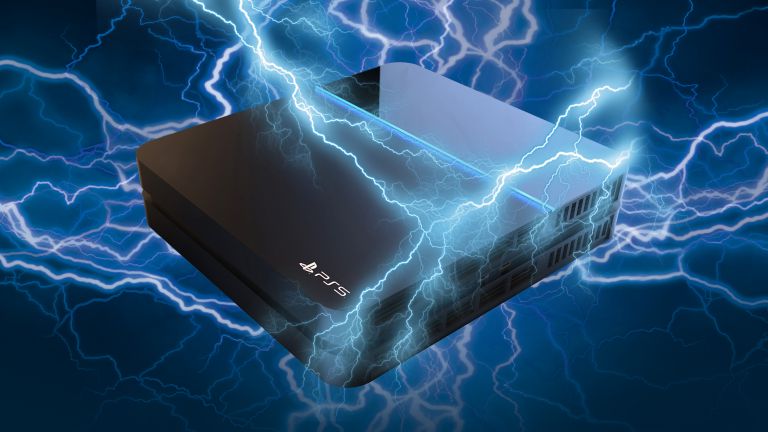
According to a Wallstreet Journal, Sony through a Q&A session has revealed that the launch of its Next-Generation PlayStation or we simply say PS5 has delayed to more than a year. The launch of PS5 has been the most awaited event, but believing Sony, it won’t occur at least this year, and the delay may extend more than a year.
Image Source: t3.com
The
company has indicated that it may roll out the Next-Generation
PlayStation in summer 2020, most probably in the month of May. This
way, the PlayStation fans can expect to get a glimpse of the features
of this new gaming console in the upcoming E3 event on June 11 this
year.
Noticeably,
Sony started talking about PS5 earlier last month, and people also
began making guesses on its launch date and the feature it would
have. Here, the company gave some hints on the capabilities of the
gaming platform, like support for 8K graphics, much-improved 3D audio
experience, SSD storage, and compatibility with all the gaming titles
of PS4, etc. If we believe on the rumours, the new PS5 will run upon
an 8-core, third-gen Ryzen CPU based on AMD’s 7nm Zen 2
architecture.
Also,
the console is an improved version of PS4 and has also got the
support for Radeon Navi graphics as well as ray tracing. The news of
the release of the upcoming PlayStation gaming console had reduced
the sales of PS4 to a greater extent. But since the console’s
release has been extended, the people who have recently bought their
PS4 can take the breath of relief.
Sony announced the news of the delay in the launch while talking about its impressive financial year. Despite the reduced PS4 sales, 2018 was the best financial year for the company, earning some 31.1bn yen from the past year’s console sales, having gained a total of 36.4 million PlayStation Plus subscribers. But still, due to the high manufacturing cost of PS5, the operating profits may fall by 10 per cent for the next quarter.
Yashica is a Software Engineer turned Content Writer, who loves to write on social causes and expertise in writing technical stuff. She loves to watch movies and explore new places. She believes that you need to live once before you die. So experimenting with her life and career choices, she is trying to live her life to the fullest.
The conglomerate company Sony has been a leader in various fields of technological product manufacturing. From video games to smartphones, and from television to home appliances, the company has marked its name in all those fields. But now with its new S.Ride app, the company is stepping into the business of taxi-hailing service.
Image Source: trendingonlinenow.in
The company has launched a taxi-hailing service in Japan, along with an app, i.e. S.Ride app, through which the users will be able to hire a taxi for them. Though the service is a similar car-rental service to Uber and other car-rental services, the app is the main attraction of this service.
According to the advertisement, the company has produced for the service, the S in the S.Ride does not stand for Sony, but it refers to “simple”, “smart” and “speedy”. The app is based on AI technology, and the UI of the app works on the sliding gesture. According to Sony, the app with the help of artificial intelligence is able to figure out the area with the most demand for the taxis, and this way the driver can be sent to that very location.
Though
the ride-sharing service is banned in Japan, and Uber is one of the
leading taxi-hailing services of the country, Sony is likely to
become popular in the field really soon, as it has partnered with
five other leading taxi-hailing services of Japan. The app is
officially launched by Minna no Taxi, a joint venture launched by
Sony Corporation, Sony Payment Services and several Japanese taxi
companies, last year.
Currently,
Sony’s taxi-hailing service will be available only in Tokoyo, with
over 10,000 taxis available for hire. The company has provided the
S.Ride users with various payment option, including through cash,
credit/debit card and digital wallets.
Sony had made an announcement about starting the car-hailing service, last year in the month of February. The company has never been in providing services but is a leader in the hardware manufacturing and supply. After Sony’s new CEO, Kenichiro Yoshida, took his position in the company last April, the company has been trying its hands in selling content and the services to its users.
Yashica is a Software Engineer turned Content Writer, who loves to write on social causes and expertise in writing technical stuff. She loves to watch movies and explore new places. She believes that you need to live once before you die. So experimenting with her life and career choices, she is trying to live her life to the fullest.
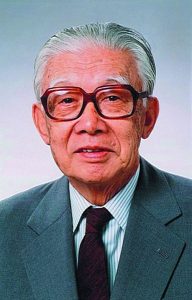
Don’t work for the profits, work for innovation, this is what the Japanese researcher and the entrepreneur, Masaru Ibuka, had always followed. The co-founder of Sony Co. is one of the revolutionary figures of Japan’s electronics industry. The believer of hard work, Ibuka, is the biggest inspiration for not only the people of Japan but people from around the world. His dedication and hard work gave new means to the global electronics industry.
Early
Life
Ibuka was born on 11 April 1908, in Nikko, Tochigi Prefecture, Japan. He was a studious kid at school and loved performing experiments in the labs. He completed his bachelor’s degree in electrical communications from the Waseda University, in 1933. During the college, he researched on experimental projection-type television system using a nitro-benzol Kerr cell and wrote his college thesis on the same.
Image Source: prabook.com
After graduating from the
college, Ibuka started working at the Photo-Chemical Laboratories
Inc. He was employed as a researcher and was involved in the research
work for the technology of sound recording on movie films. In 1937,
he joined Nippon-Ko-On where he worked on the development of the
home-based movie sound equipment. Later, in 1940 he left Nippon-Ko-On
and joined the Japan Measuring Instrument Co., Ltd where he was
involved in the research work on the mechano-electronic
frequency-selective relays and telecommunication system. In the wake
of World War II, he joined the department of Imperial Navy Wartime
Research Committee.
Founding
Sony
In 1945, Ibuka left his job in
Navy and opened a radio repair shop at the Hirokiya Department Store
in Nihonbashi, Tokyo. Later, with the capital of 190,000 Yen, he
founded Tokyo-Tsushin Kenkyusho (Tokyo Telecommunications Laboratory)
Co., following a merger into the Tokyo-Tsushin-Kogyo Co. In 1946,
another Japanese researcher, Akio Morita, found out about Ibuka’s
venture through the newspaper and was wanted to work with him. So he
met Ibuka and the two co-founded Tokyo Telecommunications Engineering
Corporation. Morita’s helped the two raise the funds for the
company.
With the end of World War II
and the big atom bomb attacks on Japan, the economy of Japan was
devastated. Both the co-founders wanted to help in the economy of
Japan and started their research work under the name of their newly
founded company. In 1950, they were able to get a license to work on
the transistor technology, becoming one of the first companies to use
the transistor technology to non-military purposes. In the same year,
the company launched Japan’s first tape recorder, the “G type.”
In 1958, the company released another transistor radio, which was
first of its kind. The company was soon providing its services to its
international clients.
In 1958, the Tokyo
Telecommunications Engineering Corporation was re-branded as Sony,
after the co-founders realized that the Americans had trouble saying
the name of the company. The next big invention of the company was
the world’s first transistor television. In 1967, Sony Co. launched
its first colour TV named Sony Trinitron.
Ibuka served the company as the president from 1950 to 1971, and then became the chairman of Sony from 1971, and retired in 1976.
Sony Co., released its first
Walkman personal stereo in 1979, followed by a Handycam video camera
in 1989, the famous PlayStation in 1994, and a Blu-ray Disc recorder
in 2003. The company is a conglomerate and currently manufacture
almost everything from a Smartphone to laptops, cameras to
television, the electrical vehicle to home-based products. Sony Co.
has built an international empire and has set its arms into the
finance, entertainment and health sector as well.
According to the records, the
company made a total revenue of 507.6 billion yen in the financial
year 2017. In 2018, the company had 117,300 employees working in its
different branches in different countries.
The company headquarter is
located at Minato, Tokyo, Japan.
Personal
Life
Ibuka was one of the prominent
research engineers who brought innovation in the field of his
interest. For his contributions in the rise of technology and the
economy of Japan, he was awarded multiple awards. He even received
the three doctorate degrees from three different institutions, i.e.
from the Sophia University (1976), Tokyo, Waseda University, Tokyo
(1979) and Brown University, US (1994). He also received the IEEE
Founders Medal in 1972 from IEEE and the highest distinction of the
Scout Association of Japan, the Golden Pheasant Award, in 1989.
Ibuka also wrote a book named
‘Kindergarten is Too Late’ in 1971. According to the book, the
leaning for humans begins at the age of 3. On 19 December 1997, he
died at the age of 89 in Tokyo, Japan.
Yashica is a Software Engineer turned Content Writer, who loves to write on social causes and expertise in writing technical stuff. She loves to watch movies and explore new places. She believes that you need to live once before you die. So experimenting with her life and career choices, she is trying to live her life to the fullest.
Its been around more than two weeks after the Anki’s Vector was launched. Now, Sony has also announced the launch of its Aibo does robot in the US by the coming October this year. Interestingly, The Anki robot has been a success with its launch having a low price of $250. The Sony Aibo, comparatively bigger in size robot has also got more features than the Vector robot and also the price is even higher. The cost of the Aibo robot will be $2,899, and the presale will start in September. Although before delivery they will be exhibited at the Sony Square in Manhattan from Friday through Oct. 14.
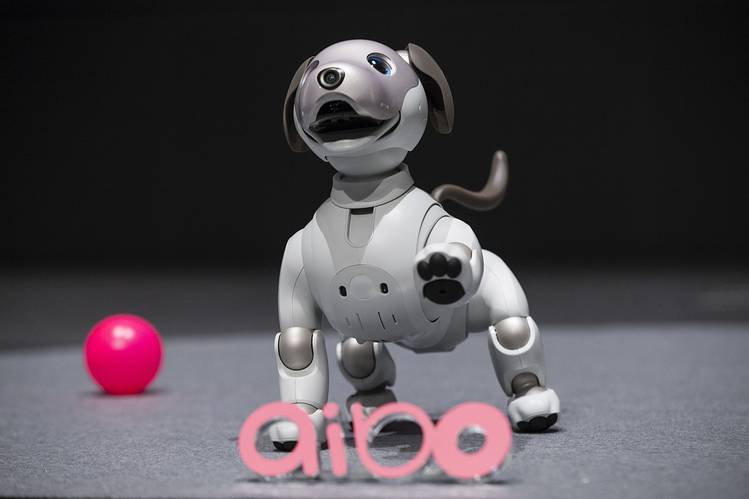
The Sony Aibo is a smart dog robot, sleeker than its ancestor Boxy robot and is capable of remembering over 100 different faces, through its OLED-screen eyes. The robot can sense the smile, touch, praise and can play music. It can speak 1,000 words and is enabled with the feature to imitate a real dog, responding to its owner’s commands with a bark. Having a camera on its back and different sensors embedded into it, are helpful to map your house so that it can walk freely in your house. You can add new tricks to its knowledge base and also, using its Aibo app, you can map its activities, give it commands and also manage your house by enabling its camera feature on.
The new Aibo dog robot comes with a charging station, a pink ball and an Airbone. Even having many features included to it, the Aibo robot’s sale may be a little less than the Anki’s Vector due to its high price. As earlier in Japan too its sale was much lesser than the other home robots.
Yashica is a Software Engineer turned Content Writer, who loves to write on social causes and expertise in writing technical stuff. She loves to watch movies and explore new places. She believes that you need to live once before you die. So experimenting with her life and career choices, she is trying to live her life to the fullest.