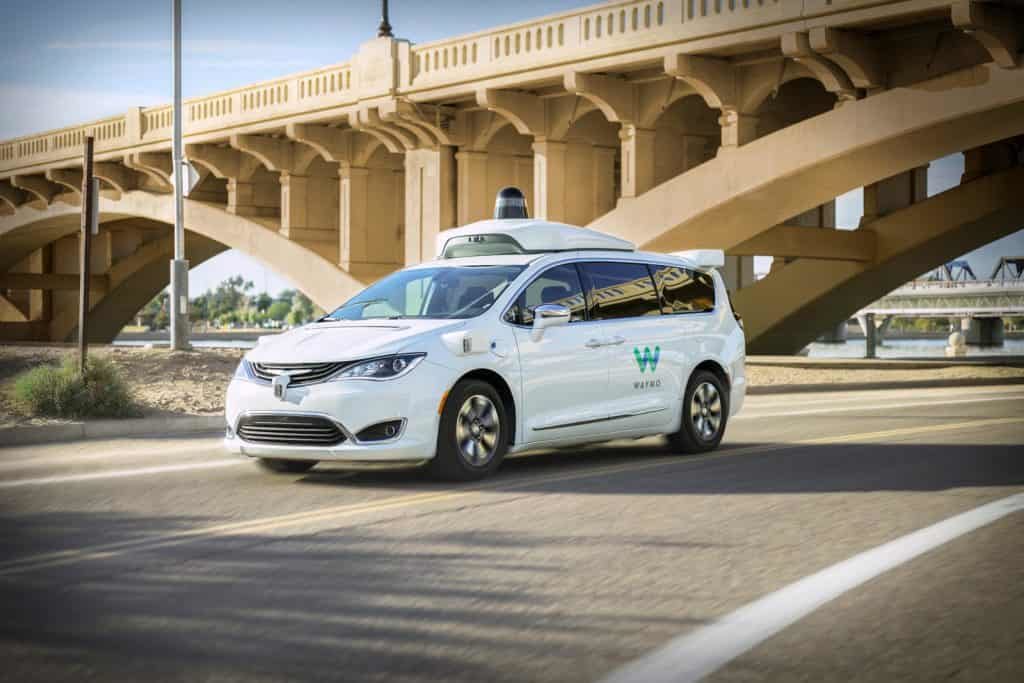
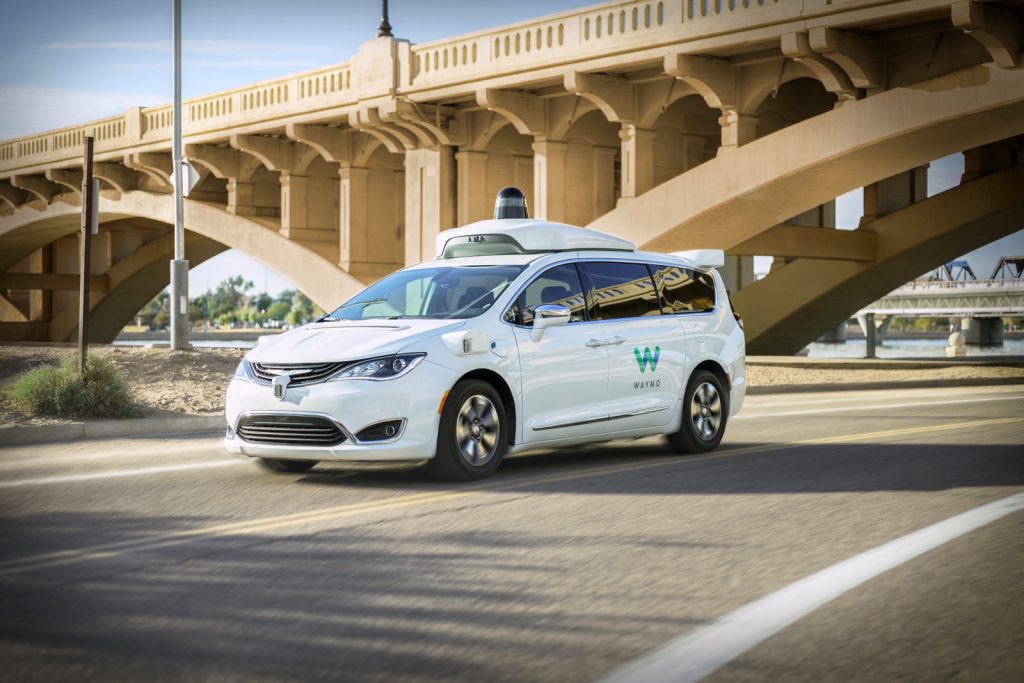
The French automobile company, Renault has partnered with Waymo, the automobile subsidiary of tech giant Alphabet Inc., to bring new autonomous cars to France and Japan. The venture also includes Renault’s Japanese partner Nissan, which will be responsible for the launch of those self-driving cars in Japan.
Image Source: engadget.com
With
this partnership, Renault and Nissan will be researching on how
self-driving cars can help in easing-out the transportation of humans
as well as goods and develop driverless mobility services for the
same. Noticeably, Waymo has already brought such vehicles in Arizona
called Waymo One and a limited robo-taxi pilot program in suburban
Phoenix last year. Though the launched cars are fully-autonomous,
there is always a human monitor sitting on the other front seat of
the car for emergencies.
The
companies will also work on the commercial, legal and regularity
issues, that are related to the development of self-driving cars and
making the transportation-as-a-service for both the countries.
According
to the reports, the agreement between the companies has been done for
a limited but unspecified time. There has been no comment on the same
from either of the company. The agreement also has restricted all the
three to work with other companies on a similar project.
“This
is an ideal opportunity for Waymo to bring our autonomous technology
to a global stage, with an innovative partner. With the Alliance’s
international reach and scale, our Waymo Driver can deliver
transformational mobility solutions to safely serve riders and
commercial deliveries in France, Japan, and other countries,” said
John Krafcik, CEO Waymo, in a statement.
Though Waymo is quite excited about this merger, the venture will be a 50-50 partnership between Renault and Nissan for both the countries, and there has been no hint on the role of Waymo for the same. The two companies will be setting up a joint committee to work together in France and Japan.
Earlier,
the two companies were in talks with Fiat Chrysler Automobiles (FCA)
to bring next-generation technology and work in the field of
self-driving cars. But the merger could not take place, and FCA
withdrew the agreement.
Yashica is a Software Engineer turned Content Writer, who loves to write on social causes and expertise in writing technical stuff. She loves to watch movies and explore new places. She believes that you need to live once before you die. So experimenting with her life and career choices, she is trying to live her life to the fullest.
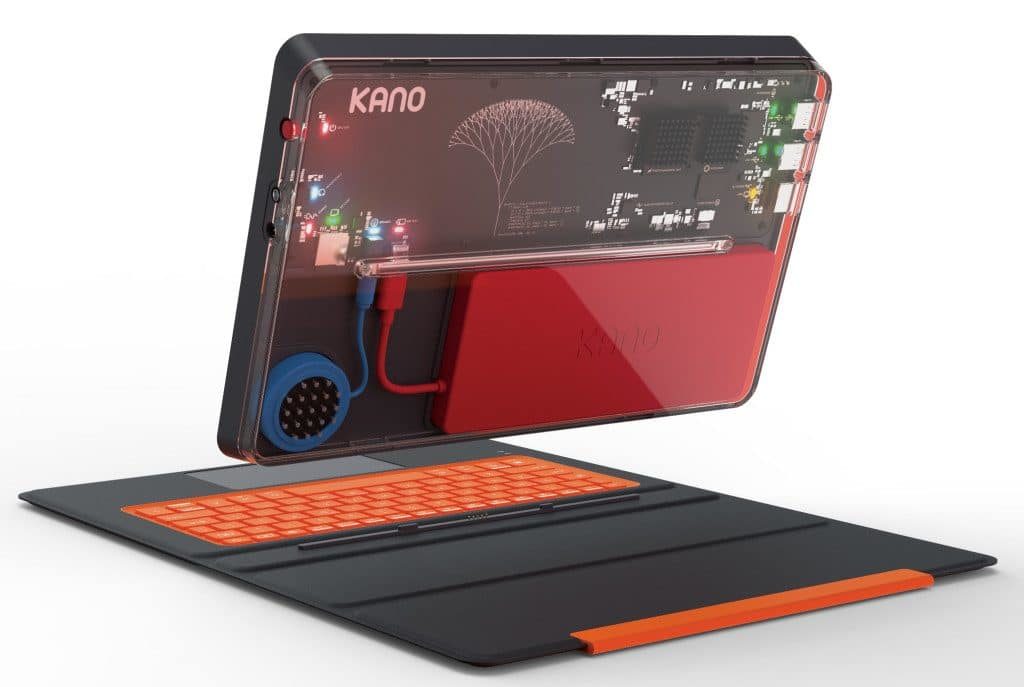
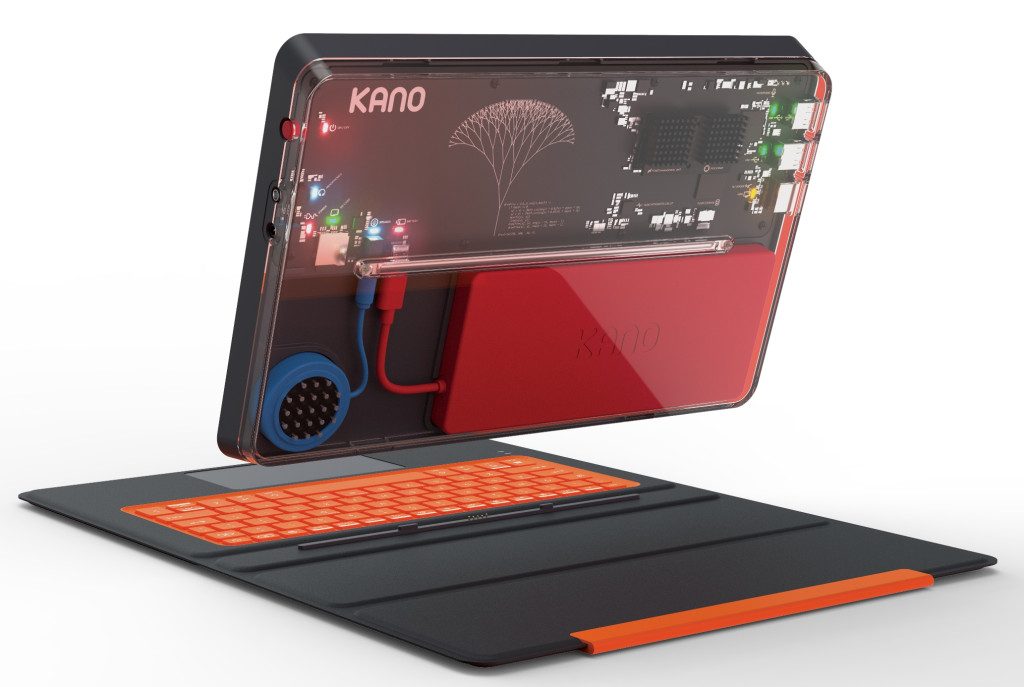
Reportedly, Microsoft has partnered with Kano, a London-based startup, that specializes in building build-your-own PC DIY kits for the kids. The two companies have joined their hands to bring a DIY touchscreen laptop for its little users, that will be running the Windows 10S.
Image Source: venturebeat.com
Windows
10S is the lighter version of the Windows 10, and it will be the
first time that any of the Kano computers will be operating a Windows
OS. Though using the Windows 10S will restrict Kano laptop to run
apps only from Microsoft. Previously, Kano laptops ran the Raspberry
Pi 3s OS and the OS from Kano itself.
The new Windows-based Kano PC is a laptop/tablet, which is a similar version of most of the Microsoft’s Surface PCs, but having a transparent back on its 11.6” screen. The screen of the laptop is a touch screen, and the transparent back shows the components of the upper flap of the laptop.
The
laptop comes into detachable pieces, such that the kids will need to
assemble the entire system themselves. The laptop is empowered with
the 1.44 GHz Intel Atom x5-Z8350 quad-core processor, supporting a
4GB RAM, and 64GB of eMMC storage. The laptop also supports expending
the storage with the help of microSD card. It also has got an HDMI
port, microphone, detachable speakers, headphone jack, and 2 ports
for USB extensions. The laptop also renders support for WiFi and
Bluetooth for connectivity.
Since
the kids will need to assemble the laptop by themselves, the company
has provided a storybook kind of instruction manual for the kids, on
how to attach the parts of the PC together and make the experience
even more interesting.
The company has included some educational apps to the laptop, including ‘How Computers Work’, in order to teach the kids more about coding and computing. Other applications that are included in the PC are some educational apps from Minecraft, Microsoft’s 3D Paint and Pong-based game development apps. The kids will also be able to create 3d models and learn binary codes, with the help of Kano PCs.
Kano
is known for bringing computing DIY kits for the kids, and it has
already launched various famous DIY kits, including Harry
Potter-themed coding kit with the wand and a computer running a Kano
OS operating system. The new Windows-based Kano PCs have been made
available for preorders on Kano’s official website and also at the
Microsoft Store for a price $299.99 and £299.99. These PC kits will
go live on sale in the US and UK starting from Oct 21.
Yashica is a Software Engineer turned Content Writer, who loves to write on social causes and expertise in writing technical stuff. She loves to watch movies and explore new places. She believes that you need to live once before you die. So experimenting with her life and career choices, she is trying to live her life to the fullest.
Only over ten days ago, an article from ‘The Information’ talked about Facebook’s rumoured cryptocurrency project, ‘Libra’, and today, the company has come out in open to announce that it will be launching its own cryptocurrency by the first half of 2020.
The biggest social network company, Facebook Inc., revealed on Tuesday, that it is ready to launch its cryptocurrency in 2020, in order to move its focus from social media to eCommerce and online payments.
Image Source: fortune.com
The
company reported that the new cryptocurrency won’t be a speculative
asset, like Bitcoin or the other major cryptocurrencies, but will be
a type of digital currency, as stable as the dollar, that people will
be able to use for normal expenditures or to transfer money globally.
According
to one of the spokespersons from Facebook, the company aims to
establish Libra as the first mainstream cryptocurrency, by offering
people to pay for online as well as offline services through it. In
the beginning, Libra will support online money transfer for the
countries that lack traditional banking facilities. And, after some
time, it will be used for day-to-day transactions.
Along with the cryptocurrency, the company is also working on its subsidiary, Calibra, a digital wallet, that will be used for the online transactions through the cryptocurrency. According to the company, Libra will be backed by the reserve of assets. Also, the new cryptocurrency will have its own new blockchain platform.
Facebook
is excited about Libra but has also got the regulatory concerns. It
has been facing backlashes from its users and the regulatory
authorities due to the data breaches alligations it holds. A
cryptocurrency from a company which has been responsible for these
hacks and breaches is quite questionable for the lawmakers and the
regulators.
The
company has already in talks with the regulators in the United
States, Europe and from the other countries, about the launch of its
own cryptocurrency. And, these regulators are also going in depth of
the announced project from Facebook to get to know more about it.
Since it is not purely a cryptocurrency, many of these regularities
doubt its privacy.
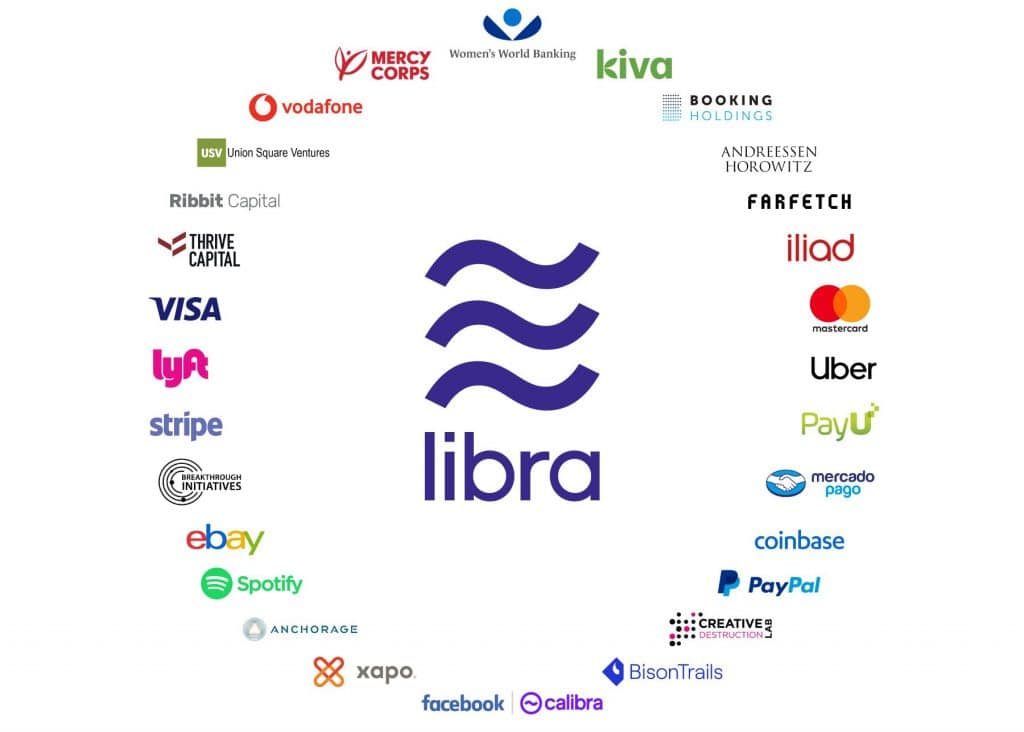
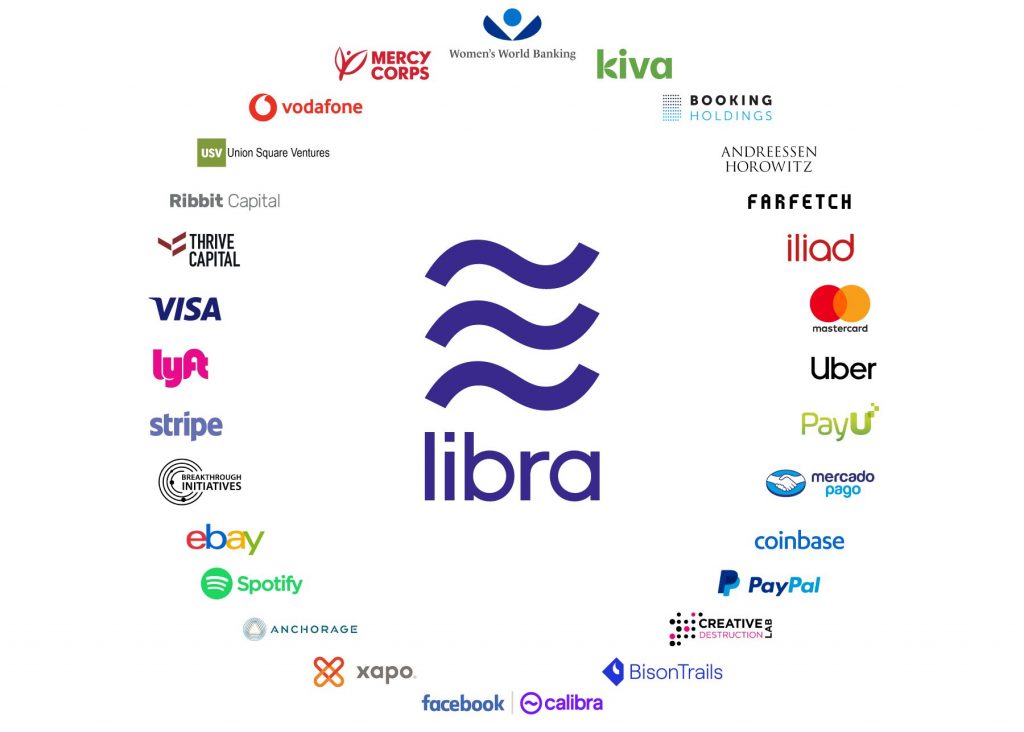
Facebook revealed that it has partnered with the Geneva-based association Libra for the development of its cryptocurrency. The organisation have been founded by some major companies from around the world, including Mastercard, Visa, PayPal, Stripe, eBay, Uber, Lyft, Spotify, Coinbase, Xapo, Andreessen Horowitz, Union Square Ventures, Mercy Corps, and Women’s World Banking, along with Facebook. So these companies will also be playing a crucial role in decisions to be taken for Libra.
Yashica is a Software Engineer turned Content Writer, who loves to write on social causes and expertise in writing technical stuff. She loves to watch movies and explore new places. She believes that you need to live once before you die. So experimenting with her life and career choices, she is trying to live her life to the fullest.
Most of us, especially, the working class of our society, hardly get any time to go through the newspaper every morning. Reading each and every news in details and catching the office bus on time is next to impossible. But, it is like one of the fundamentals of our life to stay updated and follow up with the current news. Majority of the population rely on Google for that, just reading the headlines every day. But, India has brought something better for you.
An Indian company, Inshorts, has created a mobile app that summarizes the news for you in less than sixty words, covering all important highlights of the news. The app includes global news on business, education, politics, sports, technology, and everything you need to know about. The application is available for both Android and iOS.
Image Source: financialexpress.com
Inshorts was founded in 2013, and
within a span of six years, the app received more than 6 million
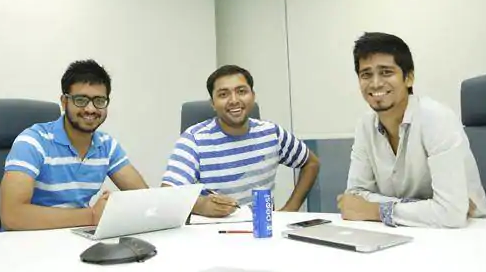
users. The company was founded by Azhar Iqubal, Deepit Purkayastha
and Anunay Arunav. All of them dropped out from Indian Institute of
Technology to start a business of their own. Azhar Iqubal and his
friend, Anunay Arunav, were from IIT Delhi, whereas Purkayastha was
from IIT Kharagpur. These three young potential entrepreneurs were
pursuing computer science.
History
All of it started with creating a
Facebook page on 23rd March 2013. Iqubal created the page to deliver
summarized news for the readers. This caught the attention of many
social media users, as it helped them stay updated about the
whereabouts, without spending too much time in reading the entire
stories.
The company, first, released its application in 2013 for Android, and for iOS, in 2015. After Inshorts started gaining popularity, it was admitted to the TLabs startup accelerator (it helps new startups to reach their full potential by proving them with capital and proper mentor). Soon, the company was shortlisted as one of the Nasscom’s 10,100 startups, and by December 2014, the company’s app had 1 lakh subscribers. In the same year, the company received funding from Sachin and Binny Bansal, co-founders of Flipkart. Other early investors, include Gaurav Bhatnagar, Manish Dhingra, Ankush Nijhawan and Times Internet.
In February 2015, the company
received funding from Tiger Global, Rebright Partners and raised $4
million in Series A funding, which was followed by raising another
$20 million in Series B funding by the Bansal brothers and existing
investor Tiger Global. In one of the interviews, Takeshi Ebihara,
founder of Rebright Partners, said that Inshorts has a very bright
and enthusiastic founding team, which is a pre-requisite for any
startups at the initial stage. In the same year, the company was
rebranded as Inshorts from its previous name News in Shorts.
The company announced that it
intended to hire over a hundred content writers, by the end of 2015.
In October 2015, Inshorts acquired a Bangalore-based company,
Betaglide, the originator of Retention.ai. Retention.ai is,
basically, a technology that helps to track the number of users
uninstalling the app, the reason behind it and reducing the
maintaining cost for the user. So, this was incorporated in the app
of Inshorts to track the number of uninstallation, and thus, make
strategies to perk up user retention.
By the end of 2015, the company
already started adding images and videos along with the news, and
also, added links which directed the user to the entire news if
somebody wished to read it. Thus, the company collaborated with many
news websites to ensure better news reporting. Though the company
raised an appreciable amount of fund and reputation within a couple
of years, there was a lot of criticism labelling Inshorts as a
startup without a firm strategy. Iqubal, in response to these
disparagements, said that they are looking forward to experimenting
with the revenue models, and it might take another couple of year for
the company to settle with one.
In 2016, the three co-founders got
featured in Forbes magazine’s ’30 under 30′ list. They also received
the award for ‘Best Innovation App’ by the Internet and Mobile
Association of India.
Understanding that India has stepped
into the digital era, wrapping it within the cloak of advertisement,
it can bring massive profit to the company. So, in July 2016, the
company launched the first ad on the platform, which ultimately ended
up having more than a hundred advertising partner on board till 2018.
Future Plan of Inshorts
Since digitalized advertisement has become a key to make more profit, the company looks forward to luring more advertisers and increase the net revenue rate by four times. Also, the purchases through the app have increased significantly, and hence it plans to direct the readers to sites, like BookMyShow, MakeMyTrip, etc. The company also aims to incorporate more video contents, even for the ads, and put more emphasis on the regional languages. They are planning to curate more Hindi content as a major part of India’s population is still not comfortable with English. So, focusing on languages, apart from English, has produced more room for growth.
Annasha Dey is an NIT student, who apart from studying engineering is also a content writer. She has a great interest in photography, writing, reading novels, and travelling as well. She is a foodie who loves socializing and hanging out with her friends. She is also a trained Kathak dancer and a big fashion enthusiast. Dey also loves watching TV series, which includes F.R.I.E.N.D.S. and Big Bang Theory. To be a better writer she prefers to read more
Continuing with the collaborations with Arm, a British semiconductor design company, now Nvidia is again working together with the company to support the processors built by the former. Nvidia announced the news at the International Supercomputing Conference (ISC) going on in Frankfurt, Germany, saying that the partnership will be able to build supercomputers which will “exascale” on performance.
Image Source: memeburn.com
According to Nvidia, the two companies are working towards developing the energy-efficient supercomputers that will be carrying out at least a quintillion (a billion) floating point, i.e. Flops, computations per second. Noticeably, one flop is equal to the multiplication of two 15-digit numbers.
Nvidia’s founder and CEO Jensen Huang, while announcing the news at the event, said, “As traditional compute scaling has ended, the world’s supercomputers have become power constrained. Our support for Arm, which designs the world’s most energy-efficient CPU architecture, is a giant step forward that builds on initiatives Nvidia is driving to provide the HPC industry with a more power-efficient future”.
The company will be
extending its support for Arm with its high-performance computing and
AI-focused software by 2020. The other services that the company will
be offering Arm, includes software development kits, profilers,
CUDA-X libraries, PGI compilers with OpenACC support, and
graphics-accelerated frameworks, etc.
The partnership
between the two companies will help Arm to expand its business and
build trust among the investors, as no computer architecture from the
company will be without the support of Nvidia. Though it is not the
first time that the two are working together, previously, the two had
joined hands for Nvidia’s AGX platform that incorporated Arm-based
chips and also Nvidia’s Deep Learning Accelerator (NVIDIA).
On the other hand,
with this partnership, Nvidia will be getting access to the most
energy-efficient chip designs, specially built for mobile devices.
According to Nvidia, the energy saving products are the next big
thing that is going to be the most important in the coming future.
Yashica is a Software Engineer turned Content Writer, who loves to write on social causes and expertise in writing technical stuff. She loves to watch movies and explore new places. She believes that you need to live once before you die. So experimenting with her life and career choices, she is trying to live her life to the fullest.
Alibaba, the biggest eCommerce giant from China, is all set for its IPO listing, which the company has filed in Hong Kong. The IPO may take place in Q3 this year, and it is expected that it may raise up to $20 billion, biggest in Hong Kong after 2010.
Image Source: yahoo.com
Reportedly, Alibaba
has proposed to split its one ordinary share into eightfold, in order
to raise more funds. The company’s single ordinary share stands at
4 billion, and dividing one to eight will make it $32 billion.
Alibaba will be proposing the idea at its annual general meeting to be held on July 15, in Hong Kong. Here, the investors will be asked to vote for in favour or against the proposal, as they would want to. And, if the proposal gets the winning votes, the company will carry out the spilt by July 2020.
“The Board of
Directors is proposing the Share Subdivision to increase the
flexibility for the Company in future capital market activities.
Among other reasons, the one-to-eight share subdivision will increase
the number of shares available for issuance at a lower per share
price, and the Board of Directors believes that this will increase
flexibility in the Company’s capital raising activities, including
the issuance of new shares,” stated Alibaba in the
filing,explaining the reason behind the splitting up of share.
According to the reports, the company’s board is already in favour of the proposal and just waiting for the investors to poll. The reports also suggest that Alibaba has already submitted its papers for IPO.
The company went for
an IPO in 2014 in the U.S. citing the lack of flexibility, as one of
the reasons to not to go for Hong Kong for the listing. It was one of
the biggest IPOs and had raised $20 billion at that time. But almost
two years ago Hong Kong made some relaxation in its listing rules,
such that most of the Chinese companies, now, are seeking for filing
IPOs in Hong Kong.
Yashica is a Software Engineer turned Content Writer, who loves to write on social causes and expertise in writing technical stuff. She loves to watch movies and explore new places. She believes that you need to live once before you die. So experimenting with her life and career choices, she is trying to live her life to the fullest.