Your Tech Story

News

Neural Network Training

Intel and China’s Baidu Collaborates to Develop Neural Network Training Chip

Baidu is hosting its Create conference for AI developers at Beijing, and it has announced a new partnership with Intel at the same. The two companies have plans to work together to build a new Nervana Neural Network Processor for training, aka NNP-T 100.

Neural Network Training
Image Source: themarketreportsworld.com

The Nervana Neural Network Processor for training is a 16nm NNP-T, and as the name suggests, it is specifically designed for the purpose of deep learning and research of the neural network. The two companies have collaborated for both the software and hardware manufacturing of the chip, such that it will provide full support for the Baidu’s PaddlePaddle deep learning framework. The PaddlePaddle framework focuses on deep learning and research of the neural networks, to utilize it for the AI applications. Intel already provides its support for the framework through its Intel Xeon Scalable processors.

The chip is being built under the code name Spring Crest and is based on a new class AI model. According to Intel, the chip has got a different architecture than the other chips made by Intel. The new NNP-T 100 is enabled with image recognition and has got the software support for the on-chip memory. The company claims that the chip is much faster at performance and has been equipped with the high-speed on- and off-chip interconnects.

The corporate vice president of Intel Naveen Rao made the announcement during the event, where he said, “The next few years will see an explosion in the complexity of AI models and the need for massive deep learning compute at scale. Intel and Baidu are focusing their decade-long collaboration on building radical new hardware, codesigned with enabling software, that will evolve with this new reality – something we call ‘AI 2.0.’”

The company had released the first version of NNP in 2017 and plans to ship this version of NNP by the end of this year. The two companies have been working together since 2016, and their future collaborative plans also include MesaTEE, a memory-safe function-as-a-service (FaaS) computing framework based on the Intel Software Guard Extensions (SGX) technology.

Samsung Launches the Bixby Marketplace to Offer Third-party Capsules

After Apple’s Siri became popular as the smart assistant for iPhones, other rival companies, including Google, also started working to bring their own smart assistants for their mobile users. Though Google brought Google Assistant for Android, other companies focused on bringing smart assistants for homes. This way, Amazon introduced ‘Alexa’, Microsoft brought ‘Cortana’, and Google chose to expand its Android assistant, Google Assistant, as the home assistant. Samsung too, following the league, finally, launched Bixby.

Bixby
Image Source: xda-developers.com

Being a bit late, the smart assistant from Samsung could not make the mark. But Samsung had to do something, so it introduced third-party integration to Bixby and opened the platform for third-party developers. Opening Bixby for third-party developers was a great idea as it started getting the updates that Samsung had promised while launching the app. But still, the company need to do a lot more to get the product to success.

For the same, the company has launched a new marketplace, called ‘Bixby Marketplace’, where the users will get the ‘Bixby capsules.’ The capsules are nothing but the services that Bixby will be providing to its users with third-party app integration on their voice instructions. The popular third-party apps, including Spotify, Yelp, YouTube, NPR, iHeartRadio, and Google Maps, have already been made available as capsule through the store. And, Samsung has claimed that it will also bring the other famous and useful capsule to the platform in the coming future.

“To add even more customization, users can set a capsule as the ‘preferred capsule’ for certain types of requests. For example, if a user says ‘Get me a ride to San Francisco airport’, Bixby will prompt the user to pick one of the supported Rideshare capsules. Users will have the option to set their favourite provider as their preferred Rideshare capsule. Once that is set, any Rideshare request would automatically go to the user’s preferred provider, even if the user does not mention the capsule name. The ability for users to customize their own personal Bixby experience allows them to easily incorporate a wide range of capsules into their everyday lives.” Samsung said during the launch announcement.

The Bixby Marketplace is already opened for the U.S., South Korea and Spain users. The company is looking forward to luring more users to Bixby and has also integrated the smart assistant to many of its home appliances, including its smart TVs.

Nasa to Fly Dragonfly a Drone-like Lander on Titan to Find the Traces of Life

Our solar system and space beyond have always been the topic of interest for the humans. For a few years now, most of the big space agencies are exploring the Martian surface, and now, the American space organisation, NASA has decided to explore ‘Titan’, one of the 62 moons of Saturn.

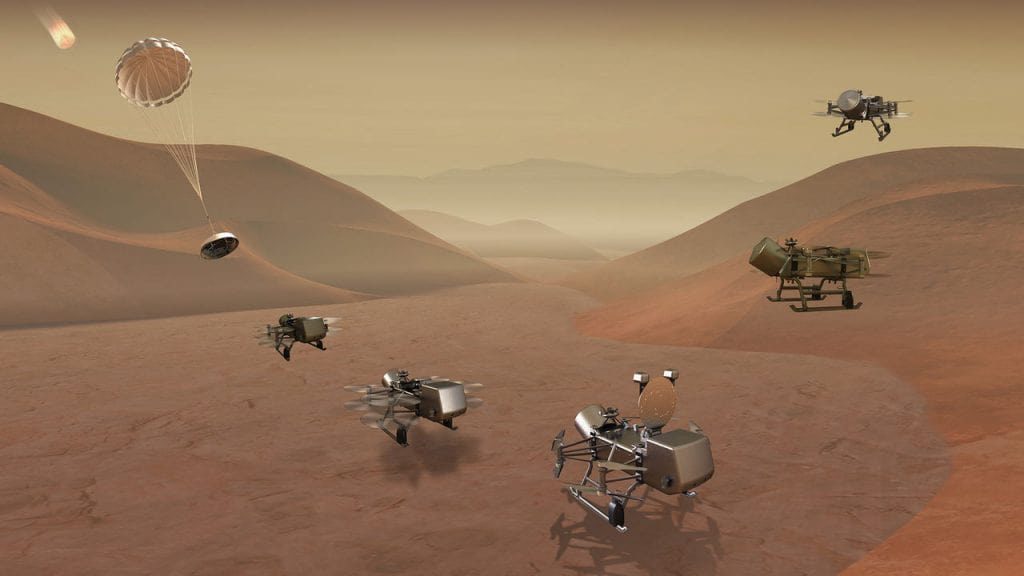
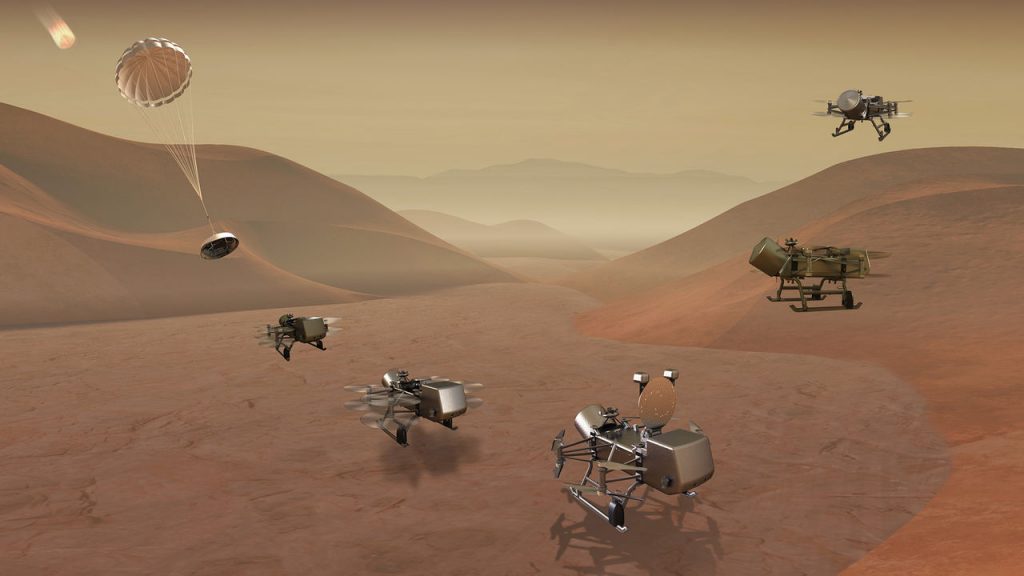
Nasa has revealed that it will send a drone-like lander, named Dragonfly, on the surface of Titan, capable of flying 8 or 9 miles in an hour. The Dragonfly will be a 10-foot-long, and 10-foot-wide dual-quadcopter, similar to the size of the Mars rover and will be a look-alike of a giant drone.

Nas's drangonfly on Titan
Image Source: sciencemag.org

Since the Titan has the best environment for flying rather than walking or rolling over the surface, the drone is specifically designed to hop and fly over it. The gravity of Titan is equal to one-seventh of the Earth’s gravity and has a far thicker environment than that of the Earth, providing the suitable conditions for Dragonfly to fly in it.

According to Nasa, the drone will be exploring the surface of Titan and will discover places for landing over it. It will be collecting samples for research, observe the weather conditions and will notify the agency if it finds something unusual. The drone is equipped with drills and probes, to investigate the surface and has got cameras embedded to it, through which will it will be sending HD pictures of the objects found on Titan back to Nasa. Dragonfly will spend about 16 days at a single place and examine the environment. After 16 days, it will move further with the help of the eight rotors it possesses.

Elizabeth Zibi Turtle, the lead investigator of the mission, said during the announcement that Nasa will launch Dragonfly in 2026, which will land on the dune-filled equatorial region of Titan through a parachute. The drone will be back to Earth in 2034.

Nasa has already touched down the surface of Titan with the Huygens probe via the Cassini mission earlier, but according to Turtle, with Dragonfly, it will be a more in-depth mission and will discover major alien things on it.

“We know that Titan has rich organic material, very complex organic material on the surface. There’s energy in the form of sunlight, and we know there’s been water on the surface in the past. These ingredients, that we know, are necessary for the development of life, as we know it is sitting on the surface on Titan. They’ve been doing chemistry experiments, basically, for hundreds of millions of years, and Dragonfly is designed to go pick up the results of those experiments.” said Turtle.

With the rivers and other organic material found on Titan, it has always been considered as a prototype of Earth, before life on Earth. So the interest of the researchers has always been to find the traces of life over it.

India Plans on Building its own Chat App for Official Use After Huawei U.S. Ban

A report from Economic Times has revealed that the Indian government is looking forward to bring an official messenger or chat app, similar to Whatsapp, to be used by the government employees for official communications.

According to the report, the Delhi government said on Thursday that it is considering to develop a chat application, email, and the other homegrown secure communication networks, for the government officials, in order to insulate the intimate communication with one another.

indian communication app
Image Source: express.co.uk

The decision has come as one of the results of the U.S. government banning Huawei and some other Chinese companies from operating in the country, due to the friction with Beijing. In fact, Washington has recently set up the sanctions against many Chinese companies, which the U.S. tech giants, like Google and Facebook, have already started working upon.

Also, there has been some cold vibes between the U.S. government and the Indian government, as result of removal of the South Asian nation from a special trade program by the U.S. government, as India could not assure the U.S. president Donald Trump of India “providing equitable and reasonable access to its markets” to the U.S.

This incident has caused tension among the two nations. “Tomorrow, if the U.S. finds us unreliable for some reason, all they need to do is ask their companies to slow down networks in India, and everything here will come to a standstill. We are vulnerable, and we must take steps to cover that,” an unnamed official said over the matter.

Though it will be the first time that Indian government will be taking an initiative in developing mediums for the messaging and emails for the official communication, it is not the first time that any other nation is building such software for the government-only use.

At the beginning of this year, France released its official chat app, named Tchap, an open source app, which can only be used by France’s government officials. Other than France, there are nations like China and North Korea, that have got their own operating systems for use in government offices.

Even the Indian government has attempted on building its own Linux-based desktop operating system named BOSS, but with least success, Microsoft‘s Windows is still the most common OS in the government offices of India.

Google Maps Comes With a New Feature ‘Stay Safer’ for the Indian Users

The ride-hailing services like Uber and Ola have been already providing the safety features over the apps, and now for the first time, Google Maps is going to introduce a safety feature for the Indian users. The new safety feature is called ‘Stay Safer’ and will be another India-first feature.

Google map stay safer
Image Source: zeebiz.com

Though people are already able to track their path through the Google Map, the new Stay Safer feature, will notify the users if they are on the right path or not, while riding a taxi or an autorickshaw. The users will also be able to share the live status of their trip, similarly as they can using an Uber and Ola app, with their family members or friends.

“Through our extensive research across India, we found that a lot of people limit their mobility due to safety-related concerns. To address this, we are launching another India-first feature that will deliver a more relevant and reliable experience to our users. Our new ‘Stay Safer’ feature on Google Maps will alert users who are travelling in taxis, auto-rickshaws etc. in case their vehicle goes off route, giving them peace of mind.” said Amanda Bishop, the Product Manager at Google Maps, while announcing the new feature on Wednesday.

How to Use the New Stay Safer Feature on Google Maps

The feature has already been launched for Android, and the users will now be able to see it on the updated Google Map app. To use Stay Safer, the users need to select a destination, where they want to go. Like earlier, the users will get to choose the direction and will see the shortest path to the destination. Now with the ‘Start’ option, they will also be able to see the ‘Stay Safer’ option. Upon clicking the option, they will further see two more options ‘Share Live Trip’ and ‘Get Off-route Alerts’.

By choosing the first option, there will appear multiple options to share the trip status with their contacts, like Hangouts, Whatsapp, Facebook, Gmail, Instagram, etc.

With the ‘Get Off-route Alert’, the users will be able to get the notification on whether they are following the right path or have got off the route. If they will get an off-route notification from Google Maps, they can share their live location with their contacts for any emergency.

The feature is another India-first feature after Google Map recently launched three new India-focussed public transport features including the live train status, bus, auto-rickshaw and public transport total travel time calculated by looking at the live traffic.

Apple Acquires Drive.ai, a Dying Startup that Once Valued $200M

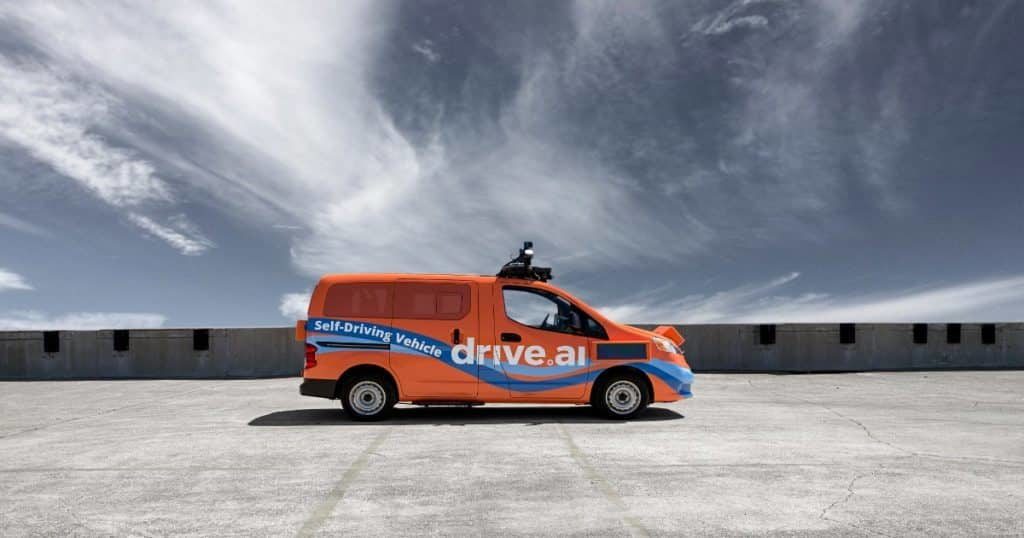
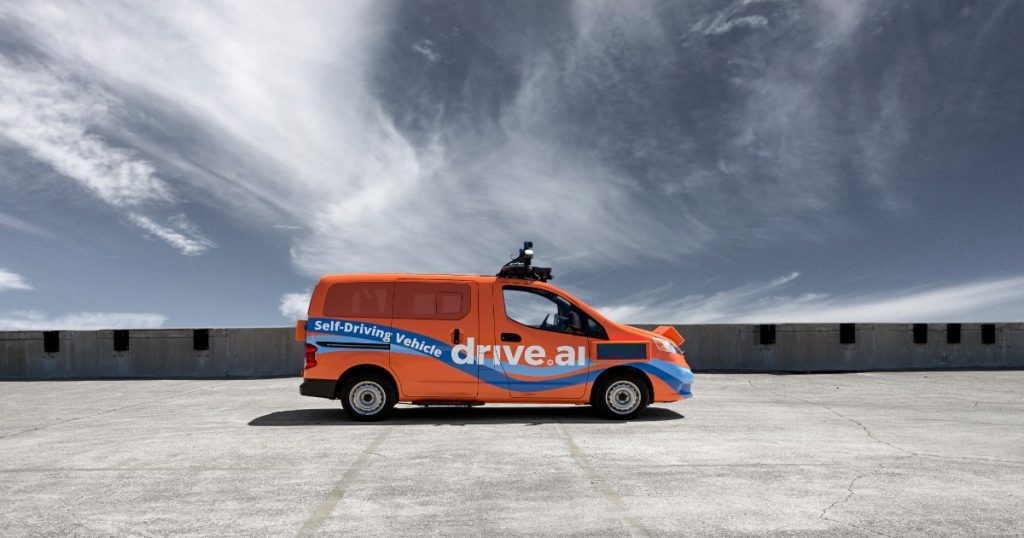
Drive.ai van
Image Source: macobserver.com

Reportedly, Apple has just acquired the California based technology company, Drive.ai, for an unknown amount. Noticeably, around a fortnight ago, Drive.ai started planning to cease all its operations, and now, Apple has taken over its regulations, in order to strengthen this four years old self-driving startup, which once even valued a $200 million.

The startup was founded by a group of PhD students in 2015, and since then, it has developed various retrofit kits to transform a simple vehicle into a self-driving car. The kits developed by Drive.ai includes camera-based and LIDAR sensors that help the vehicles drive by themselves. In fact, it is the second AI company that removed the human assistance from its autonomous vehicles. The company had been successfully operating a ride-hailing service in Texas, but due to some failed experiments, it had to shut down.

According to a June 12 filing with California’s Employment Development Department, the company decided to cease its operations and layoff over 90 employees. In fact, the cofounders Sameep Tandon and Tao Wang left the company in June only, and there are a few other key people who have left the company till now.

But with the acquisition, there are chances that the company may be back in the business. According to a report, with the takeover, Apple has also hired a dozen engineers from Drive.ai. All the company’s autonomous and the other assets have also come under Apple’s acquisition. But still Apple would be cutting off 200 of Drive.ai’s employees from Drive.ai’s Titan self-driving car project, and that would be at the beginning of 2020.

The acquisition of a dying autonomous vehicle manufacturing company is only indicating that Apple is still interested in self-driving car software development. This way, it will be a great step for the company in the field of the self-driving car business. The issue here again maybe for Drive.ai, as it has already raised a good amount of money from the biggest of the investors around the world, but it could not survive the pressure. Now we need to see if it can survive with Apple or not.