Your Tech Story

News

NASA collaborates with US based Space Agencies

NASA to Collaborate with Commercial U.S. Based Space Agencies to Advance Mars, Moon Technologies

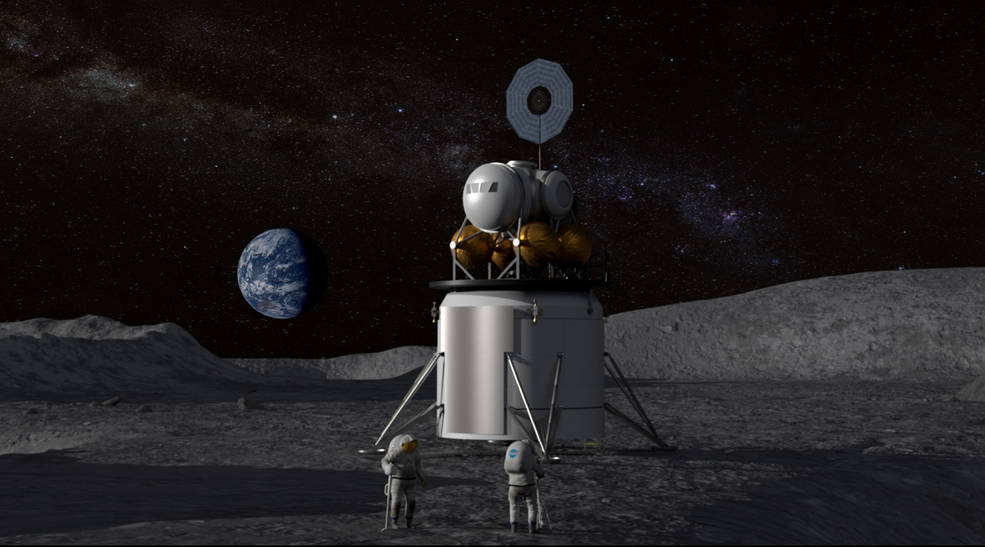
NASA is the first agency to land on the surface of the moon, and the world’s top space agency, too. But it seems to further extend its operations, NASA needs the support of other organisations as well. Leading to this, the organisation has announced a partnership with the long list of various commercial U.S. based space agencies, including SpaceX, BlueOrigin, and Lockheed Martin.

NASA has partnered with thirteen U.S. based space agencies and has formed partnerships on 19 different technologies that will help it advance its operations for reaching out and landing on other planets and extend its research on Mars and the lunar surface.

Through the Announcement of Collaborative Opportunity initiative, NASA had invited proposals from different space organisations. The agency had asked those organisations to submit proposals for the technology they want to work upon. On the basis of various factors, the agency has selected thirteen different organisations.

NASA collaborates with US based Space Agencies
Image Source: nasa.gov

With those agencies, NASA will be providing appropriate resources and support, such that they can continue their research work on the selected technology. The organisations will be working collaboratively on different operations, including landing on other planets, navigating over the surface of the Moon, transferring propellant in space, improving spacecraft operation, etc.

The Blue Origin, Jeff Bezos’s space company will work on a fuel cell-based power system to be used in the company’s Blue Moon lander. The company will be collaborating with NASA’s Johnson Space Center and the Goddard Space Flight Center. Along with that, the company will work on a new navigation system. The system will help in an accurate and safe landing of spacecraft on various parts of the Moon. It will also be developing a new power system, that will empower the landers on the Moon in the lunar nights or for at least two weeks.

On the other hand, SpaceX will be collaborating with the Kennedy Space Center. The two will be working on improving the technology that helps in verticle landing of bigger landers, at the place where the gravity is not that strong, like on the moon and other zero-gravity environments. Other than that, the company will work on improving the workability of the reusable rockets. With the new technology, the rocket propellent can be moved through one vehicle to the other efficiently, within the orbit.

The third biggest company, Lockheed Martin, will be working on robotics and autonomous technologies that would help in plantation and farming in the space so that it will be possible to harvest plants in the deep space in the coming future.

Other than these three companies, Advanced Space will be the part of NASA’s lunar navigation technologies research works and Vulcan Wireless will be helping NASA test the CubeSat radio transponder, and its compatibility with NASA’s Space Network.

Aerogel Technologies, Spirit AeroSystem Inc., Anasphere, Bally Ribbon Mills, Sierra Nevada Corporation, Maxar Technologies, Aerojet Rocketdyne, Colorado Power Electronics Inc., are the other companies that have been selected by NASA to work on its various operations, related to Mars and the Moon missions.

Google Cloud and VMware

Google Cloud to Add Support for VMware Workloads to Attract More Enterprise Customers

Google has just announced that it has joined its hands with the software company, VMware, to expand its cloud services. This way, Google will be able to court the enterprise users of VMware who will be able to run their workloads over Google Cloud.

Through the partnership, the two companies are planning to start a new hybrid cloud service called Google Cloud VMware Solution (developed by CloudSimple). The service will let the VMware enterprise customers use the Google Cloud Platform (GCP) to run their vSphere-based workloads. The partnership will make Google provide its support for the VMware Cloud Foundation. The VMware Cloud Foundation is mainly responsible for deploying and running hybrid clouds.

VMware has got a long list of enterprise customers, and it would be great for Google if it bags them for its hybrid cloud service. Though Google is a long-time rival for VMware and many of the enterprises won’t be moving to GCP, there are many who themselves had requested Google to provide support for VMware cloud over its cloud service. Migrating the VMware workloads to a VMware software-defined data centre (SDCC) running in GCP, will render the organisations to have full, native access to the complete VMware services, i.e. vCenter, vSAN and NSX-T.

Google Cloud and VMware

“Customers have asked us to provide broad support for VMware, and now with Google Cloud VMware Solution by CloudSimple, our customers will be able to run VMware vSphere-based workloads in GCP. This brings customers a wide breadth of choices for how to run their VMware workloads in a hybrid deployment, from modern containerized applications with Anthos to VM-based applications with VMware in GCP.” said Google in the announcement.

Google is moving forward towards internet-based computing and storage, and it is estimated that the company may raise its cloud business to $8 billion this year. The partnership is also going to add up some more to the annual revenue of the company. Where its rival companies like Alphabet Inc. has already been in such deals, Google has just started on this way.

“Our partnership with Google Cloud has always been about addressing customers’ needs, and we’re excited to extend the partnership to enable our mutual customers to run VMware workloads on VMware Cloud Foundation in Google Cloud Platform. With VMware on GCP, customers will be able to leverage all of the familiarity and investment protection of VMware tools and training as they execute on their cloud strategies, and rapidly bring new services to market and operate them seamlessly and more securely across a hybrid cloud environment.” VMware’s Sanjay Poonen said in a statement.

VMware is not new to such partnerships and has recently partnered with Microsoft and formed the Azure VMware Solutions, which is again developed by CloudSimple. In 2016, the company had also joined its hands with Amazon in order to integrate the cloud services from both the companies altogether.

iPhone models

Apple Confirms that all Three iPhone Models Releasing in 2020 will be 5G

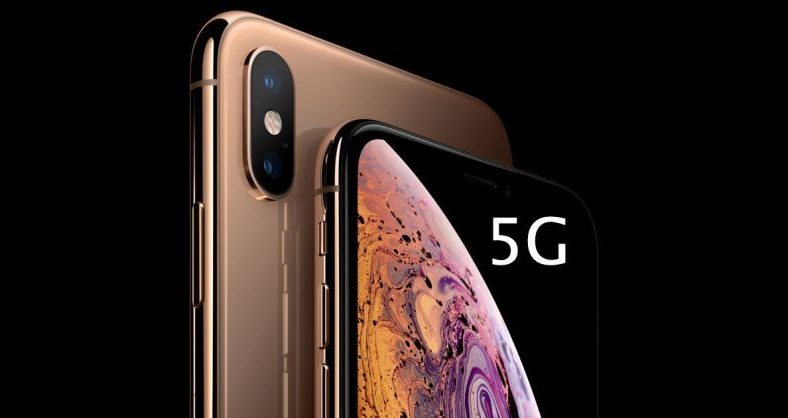
Most of the network providing companies have got their hands on the 5G technology, and so, the least we can expect from Apple is to incorporate the next iPhone models with the 5G compatibility. The rumours were already making rounds that the latest iPhone models will have support for 5G, and now, a note sent by Apple analyst Ming-Chi Kuo to the Apple investors has confirmed that three of Apple’s latest iPhone will render support for 5G.

Though in the past the company had suggested that it would be including the support for 5G in the two models of the three, it is going to launch in 2020. But since the competition is increasing and most of the Android phone developers have opted for 5G, the company has decided to get 5G to all three models it is going to release in 2020.

The previous reports also gave a hint on the sizes of the iPhones, i.e. 5.4, 6.7-inch and a 6.1-inch. All the three iPhones will have an OLED display, the first two models being the high-end iPhones. Previously, it was decided that except the 6.1-inch iPhone model, the other two would be supporting 5G, and it being the cheaper one, will have support for 3G/LTE network.

iPhone models
newslair.com

Reportedly, Apple will be including a smaller TrueDepth camera with all the three iPhones, that will be able to shrink the notch on OLED screens. Also, the company will be adding a seven-piece lens system for their rear cameras.

All the three iPhones will also be including support for mmWave and Sub-6GHz spectrum. Though rising competition is one of the main reasons for adding the 5G support in all its new iPhones coming in 2020, having acquired Intel’s 5G business, the company, now, has more resources for bringing the 5G technology to its new phones. But the company will still be using the Qualcomm chips to make the 5G technology work on the upcoming iPhone models.

“Apple may have the intention to launch the 5G iPhone, which only supports Sub-6GHz, to gain market share by lowering the cost/price for markets which only support Sub-6GHz (e.g., Chinese market). However, 5G iPhone, which only supports Sub-6GHz and the version which supports mmWave & Sub-6GHz are regarded as different projects even though they share the same form factor design,” said Kuo.

Apple currently is working on the launch of its next range of iPhones in coming September. These iPhones are said to be the revision of the iPhone models the company released in 2018. There will be successors to all the three previously launched models, i.e. iPhone XR, XS and XS Max. The iPhone XR will have an LCD display, whereas the other two iPhones will be incorporated with Sport OLED displays. The all three iPhone models will be the premium version of their ancestors and will also have dual cameras.

Apple and Intel

Apple and Intel Agrees on Apple Acquiring the Intel’s Smartphone Modem Business for $1B

Apple, through a blog post, announced on Thursday that it is going to acquire the majority of Intel’s smartphone modem business. According to the post, over 2200 Intel employees will switch to Apple. The agreement between Apple and Intel also includes the acquisition of IP and equipment from Intel and the payable amount for Apple is set to be $1 billion.

The deal between Apple and Intel is no surprise for most of the people, as there have been rumours making rounds that Apple will be taking over the Intel’s modem business so that it will not have to rely on other companies for the modems for its smartphones.

After the deal is closed, Apple will be independently building its own 5G modems for iPhones. Recently the company settled its dispute with its longtime modem supplier Qualcomm. But it seems Apple is no more interested in taking the help of a third party supplier for the equipment. The company will also be taking over the right on Intel’s 17,000 wireless technology patents.

Apple and Intel
Image Source: appleworld

“We’ve worked with Intel for many years and know this team shares Apple’s passion for designing technologies that deliver the world’s best experiences for our users. Apple is excited to have so many excellent engineers join our growing cellular technologies group, and know they’ll thrive in Apple’s creative and dynamic environment. They, together with our significant acquisition of innovative IP, will help expedite our development on future products and allow Apple to further differentiate moving forward.” said Johny Srouji SVP Apple.

Apple leads towards in-house production

Apple and Intel broke the news two months after the former made a settlement with Qualcomm in April. In fact, Intel had also announced that it plans to stop all its operations of producing smartphone modems after the two companies had ended their years’ long-running dispute. However, Intel will still be developing the modems for PCs, laptops, Internet of Things, etc.

According to Apple, the two companies will close the deal by the end of 2019, after going through all the legalities. Beliving the rumours, Apple may start 5G modem production as soon as the mid of 2020. The deal will lead Apple towards in-house production, and this way, it can focus better on the quality of its products as well as save a lot of money.

Samsung Galaxy fold

Galaxy Fold : Samsung to Finally Launch its ‘Improved’ Foldable in September

Though not required, many of the smartphone development companies have announced their own foldable smartphones Samsung being one of the first to do so. Samsung had revealed that it is working on a foldable smartphone, Galaxy Fold, earlier this year, and even got to launch one. But the foldable from Samsung had numerous problems. This led to many controversies, and it became a fail.

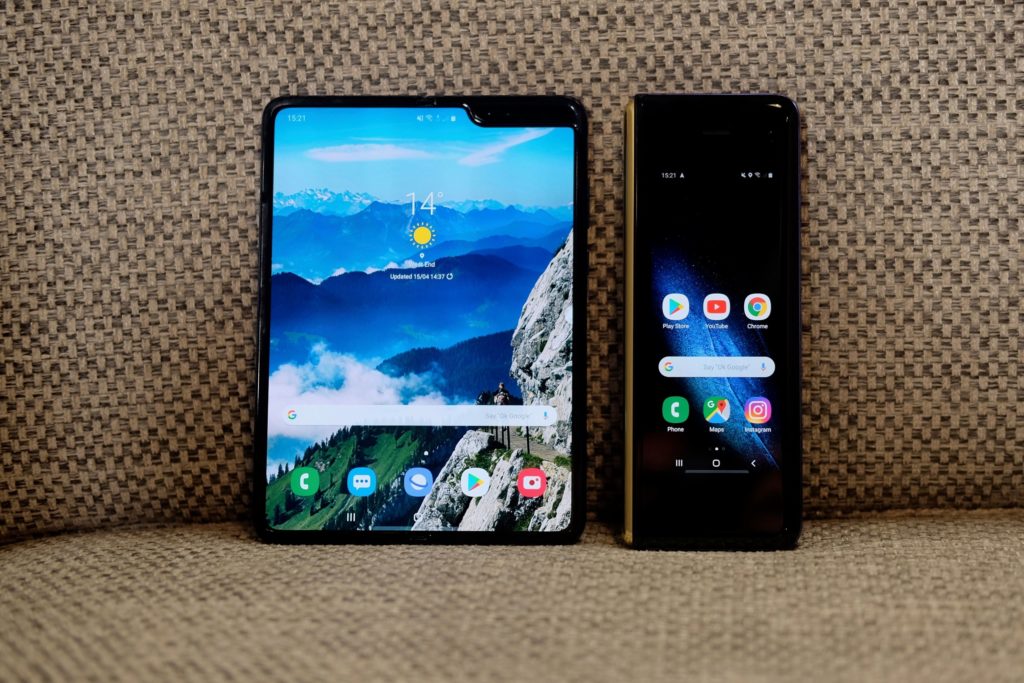
But now the company has again come up with its foldable smartphone Galaxy Fold, and that, according to an announcement made by Samsung, will be launched in September. The company said that it has made all the required improvements to its Galaxy Fold, and it is ready for the launch.

“Earlier this year, we announced Galaxy Fold-Samsung’s first foldable device and the beginning of an entirely new mobile category. Since then, we’ve made improvements to the Galaxy Fold to ensure consumers have the best possible experience.” said one of the spokespersons from Galaxy Fold development division.

Samsung Galaxy fold
Image Source: trustedreviews.com

The main issue with the previous version of the foldable was the cracking of the screen when folded. But now the company has made some good changes to the smartphone that, according to the company claims, will protect the screen.

What are the New Improvements?

The foldable has a protective layer over the Infinity Flex Display. Samsung has extended this very protective layer beyond the bezel of the phone, making it attached to the phone. Thus the user cannot remove it by mere scratching.

The company has added the protection caps to the top and bottom of the hinge area of the smartphone. This way, it becomes even stronger. The company also took time to reduce the space between the body of the phone and the hinge.

To provide extra protection to the screen, Samsung has added an extra metal layer under the Infinity Flex Display.

“Samsung has taken the time to fully evaluate the product design, make necessary improvements and run rigorous tests to validate the changes we made,” said Samsung.

Reportedly, the company is aiming to improve the user experience and has even made some changes to the UX/UI of the smartphone. The company has not specified a particular date for the launch, but before September, it will be undertaking all sort of tests over the new Galaxy Fold.

nest max hub

Google to (may) Launch the Nest Max Hub in the Coming September

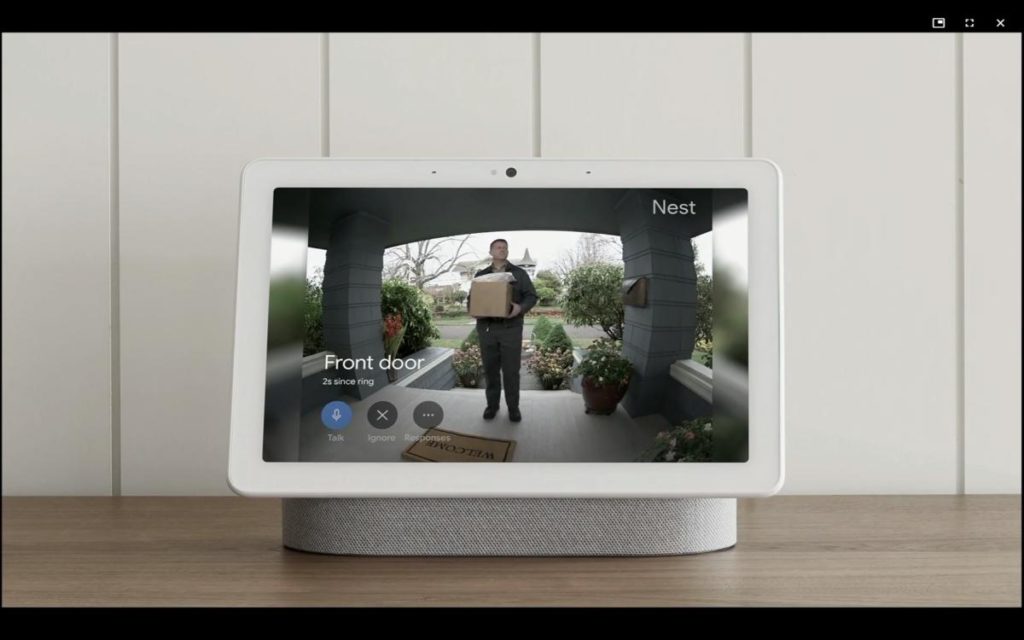
Recently, Alphabet’s subsidiary smart home device maker was rebranded to Nest from Google Home, and in the last Google I/O 2019 event, the company announced a new and big Smart Display, i.e. Nest Max Hub. Well, the company has also mistakenly revealed the date of launch for the said product. The revealed date though was 9th of the coming Septemeber, but the company has just removed the date from its support page.

Previously the company had launched the Nest Hub, a 7” display, that opened the door to things like guided recipes, song lyrics, appointment calendars, etc. The brand new Smart Display from Google is 10” HD display and is empowered with Google Assistant.

This time, the company has also included Nest Cam to the display, such that if the user is away from home, and the Nest Cam captures any new faces, it alerts the user. For the alerts, the company has included the Nest Aware subscription service into the display. The camera uses the Face Match technology to identify faces and can recognize up to six people. For these six people, it then creates personalised settings, too.

nest max hub
Image Source: techhive.com

The camera offers a 127-degree field of view that covers a larger area. The display also lets the user scroll through the recording history. Having a camera on the display, the users can also make video calls through it using Google’s Duo app.

Having the assistance of the Google Assistant, the Smart Display can create personalised calendars for the users, and on their preferences, it can also incorporate new playlists.

Quick Gestures is another new feature added to the display, such that the user can control some of its apps through the hand gestures only. Like for the music, the user can ask the smart display to reduce or increase the volume through their hand’s gestures.

The new Smart Display has also inherited a few features from its previous version. Like Nest Hub, it will render built-in Chromecast and will also have access to Google Photos. It has also got a 2-channel speaker setup, that includes two tweeters and a woofer.

The Nest Max Hub is an all-in-one device that has been designed to serve almost every type of solutions to the user. According to the company’s keynote at the Google I/O conference, the Nest Max Hub, for users, is their kitchen TV, a security camera, a smart home controller as well as their Smart Display.

According to the announcement, the Smart Display will be first available in the U.S., UK and Australia. The price of the product has been set at around $299, which is a bit pricier than its ancestor. But based on the various specifications of the new Smart Display, it is quite a steal deal.