Your Tech Story

News

South Korea’s Nand Flash Memory Chip Exports Return to Growth

South Korea’s Nand Flash Memory Chip Exports Return to Growth

Nand flash memory shipments from South Korea increased for the very first time in the past twelve months, adding to the indications that the decline in semiconductor demand had peaked.

South Korea’s Nand Flash Memory Chip Exports Return to Growth
Image Source: finance.yahoo.com

In contrast to an 8.9 percent decline in August, shipments rose 5.6 percent from a year prior in September, the commerce ministry reported in a statement on Monday. Dynamic random access memory exports (DRAM), another segment of the memory-chip industry, fell by 24.6 percent in the same time frame, a less dramatic decrease than the 35.2 percent drop seen a month prior.

Memory chips are a key component of Korean exports, which are highly dependent on the demand for technological products on a worldwide scale. Nand is less profitable than DRAM, but it is a preferred material among manufacturers of memory cards, digital cameras, as well as other gadgets that are portable due to its capacity to store data even in the absence of electricity.

In an effort to support economic development in an era when worldwide interest rates are anticipated to rise for longer and impact total spending, Korean officials are banking on a rebound in chip demand.

The majority of the worldwide memory market is controlled by Samsung Electronics Co. along with SK Hynix Inc., while Japanese wafer and equipment producers hope to benefit from a rebound in semiconductor sales. The electronics sector of Samsung is primarily recognized for its well-liked smartphones and televisions. Due to shortages, the corporation has increased its reliance on providing semiconductors to manufacturers worldwide in the past few years.

According to data from the Commerce Ministry, total semiconductor shipments to China continued to struggle in September, down 22.7 percent from a year before. While shipments to the US fell by 30 percent, those to the European Union (EU) increased by 56.5 percent.

With an estimated 230-billion-dollar investment by memory chip juggernaut Samsung Electronics, South Korea claims it will construct a sizable facility to manufacture memory chips in the bigger Seoul area.

President Yoon Suk Yeol revealed the intentions on Wednesday, and the electronics behemoth later confirmed them.

Also Read: TCS Seeks to Use Microsoft AI Partnership to Improve Margins

“We will build the world’s largest new ‘high-tech system semiconductor cluster’ in the Seoul Metropolitan area based on large-scale private investment of almost 300 trillion Korean won,” he said.

“In addition, we will grow the ‘semiconductor mega cluster’ to the world’s largest in connection with the existing memory semiconductor manufacturing complexes.”

edition.cnn.com

X Faces European Union Investigation for Israel-Palestine Content

X Faces European Union Investigation for Israel-Palestine Content

The European Commission has initiated a thorough investigation into social media giant X amid escalating concerns over the proliferation of misinformation and illegal content related to the Israel-Palestine conflict. This move comes despite executives from the platform, previously known as Twitter, asserting their commitment to cracking down on such content following the recent attacks by the Palestinian militant group Hamas on Israel.

X Faces European Union Investigation for Israel-Palestine Content
Image Source: nationalheraldindia.com

Linda Yaccarino, the CEO of the platform, revealed in a post on X that the company had taken substantial measures to combat the surge in propaganda and depictions of violence on its platform. Yaccarino stated that hundreds of Hamas-linked accounts had been removed, showcasing the platform’s purported dedication to eradicating content that violates community standards.

Moreover, Yaccarino claimed that thousands of pieces of content had either been labeled or removed since the outbreak of the conflict around the Gaza Strip. This assertion aligns with the platform’s insistence that it is actively working to address the concerns raised by the European Union regarding the moderation of illicit posts, photos, and videos depicting the ongoing carnage.

In response to inquiries from a top European Union official regarding the steps X was taking to moderate the content, Yaccarino shared a letter on the platform. In the letter, she detailed the company’s intensified efforts, explaining, “In response to the recent terrorist attack on Israel by Hamas, we’ve redistributed resources and refocused internal teams who are working around the clock to address this rapidly evolving situation.”

Also Read: Microsoft’s $69 Billion Activision Blizzard Deal Cleared by Britain

Despite these assurances, the European Commission remains steadfast in its investigation, highlighting the growing pressure on social media platforms to adopt more stringent content moderation measures. The 27-nation bloc’s scrutiny reflects a broader international concern over the role of social media in disseminating potentially harmful content during times of conflict and crisis.

As the investigation unfolds, X faces the challenge of proving the effectiveness of its content moderation policies and responding adequately to the European Union’s apprehensions. The outcome of this inquiry could have significant implications not only for the platform but also for the broader debate surrounding the responsibilities of social media companies in the face of global conflicts.

Google’s Pichai Decried Bad ‘Optics’ of Search Engine Deal With Apple

Google’s Pichai Decried Bad ‘Optics’ of Search Engine Deal With Apple

In a revealing twist in the ongoing Justice Department’s antitrust case against Alphabet Inc.’s Google, emails from 2007 have emerged, featuring concerns raised by Google’s current CEO Sundar Pichai about the company’s deal with Apple Inc.

Google’s Pichai Decried Bad ‘Optics’ of Search Engine Deal With Apple
Image Source: business-standard.com

The emails, submitted as evidence in the case, showcase Pichai’s apprehensions about the lack of choice for users in selecting a search engine in Apple’s Safari browser. At the time of the emails, Pichai was overseeing Google’s Chrome browser, and he expressed discomfort with the agreement to pay Apple for being the pre-selected search option. “I know we are insisting on default, but at the same time I think we should encourage them to have Yahoo as a choice in the pull-down or some other easy option,” Pichai wrote.

The crux of the Justice Department’s case is the allegation that Google has been paying substantial amounts to Apple and other smartphone makers, including Samsung, in revenue-sharing agreements to stifle competition from rival search engines. The agreements ensure that Google remains the default search option on browsers and smartphones.

The Justice Department claims that Google pays over $10 billion annually for these contracts, though the exact figures are confidential. Google, however, denies that these agreements impede competition, asserting that users can easily opt for alternatives.

Key negotiator Joan Braddi, Google’s vice president for product partnerships, testified on Tuesday about the agreement with Apple. During questioning, the prosecutor raised concerns about the benefits of Google search compared to the cost of supporting Apple, its major competitor in mobile operating systems. Braddi, who negotiated the initial deal in 2002, stated that the agreement between Google and Apple had no limits on how Apple utilized the money received.

The 2002 deal, which started without any monetary exchange, evolved into a revenue-sharing arrangement in 2005. It subsequently expanded to include the iPhone in 2007 and the iPad in 2010. Braddi disclosed that amendments were proposed by Apple in 2007, 2009, and 2012, seeking more flexibility on the search default. In 2014, an amendment was signed allowing Apple to use other search engines in some countries.

Also Read: US Space Force Pauses Generative AI Use Based on Security Concerns

Interestingly, the 2014 amendment took 17 months to negotiate, emphasizing concerns about potential diversions of queries to other companies. Braddi clarified that the intention was not to obstruct Apple’s services but to ensure that the search engine was used in a “substantially similar” manner.

As the case unfolds, questions linger about the financial impact of the revenue-sharing on Apple’s operating income. Google has been monitoring Apple’s earnings calls since 2018 to gauge the significance of the revenue share, but exact figures remain undisclosed. The trial continues, shedding light on the intricacies of these behind-the-scenes dealings between tech giants.

US Space Force Pauses Generative AI Use Based on Security Concerns

US Space Force Pauses Generative AI Use Based on Security Concerns

In a move reflecting growing concerns over data security, the US Space Force has issued a temporary ban on the use of web-based generative artificial intelligence tools and large language models (LLMs). 

US Space Force Pauses Generative AI Use Based on Security Concerns
Image Source: gizchina.com

The ban, detailed in a September 29 memo seen by Bloomberg News, applies to the Guardian Workforce, the term for Space Force members, and restricts the use of government data on web-based generative AI tools unless specifically approved.

Generative AI tools, including chatbots and platforms like OpenAI’s ChatGPT, have gained immense popularity for their ability to create text, images, or other media from simple prompts. Lisa Costa, Space Force’s chief technology and innovation officer, acknowledged the transformative potential of generative AI in the workforce but expressed concerns over cybersecurity, data handling, and procurement requirements in the memo. The adoption of AI and LLMs, she stressed, must be conducted responsibly.

While the memo did not provide specific details, experts have raised alarms about potential risks associated with handling voluminous and potentially non-public data. There are fears that such data, used to train models and generate content, could be vulnerable to leaks or hacking.

The decision has already impacted users of generative AI platforms, including at least 500 individuals relying on Ask Sage, a secure generative AI platform. Nicolas Chaillan, the founder of Ask Sage and former chief software officer for the Air Force and Space Force, criticized the decision as short-sighted, especially given the Defense Department’s push for accelerated AI adoption. In August, the Pentagon established a generative AI task force to explore use cases for LLMs across the department.

Chaillan argued that his platform already meets security requirements and has been “whitelisted” and approved for use by the Air Force. He raised concerns in a September email, expressing that the decision would set the US back in the AI race, particularly against China.

Also Read: Adobe Releases New AI Models Aimed at Improved Graphic Design

The impact of the Space Force’s decision extends beyond national defense, affecting over 10,000 customers in the Defense Department, including 6,500 in the Air Force, who utilize Ask Sage for tasks such as report writing. The CIA has already developed a generative AI tool for use within the intelligence community, indicating the broader interest in leveraging AI capabilities across various government agencies.

As the Space Force plans to release new guidance within 30 days, the decision to pause generative AI use reflects a delicate balancing act between embracing cutting-edge technologies and addressing pressing security concerns in an era where data vulnerability is a growing global challenge.

Adobe Releases New AI Models Aimed at Improved Graphic Design

Adobe Releases New AI Models Aimed at Improved Graphic Design

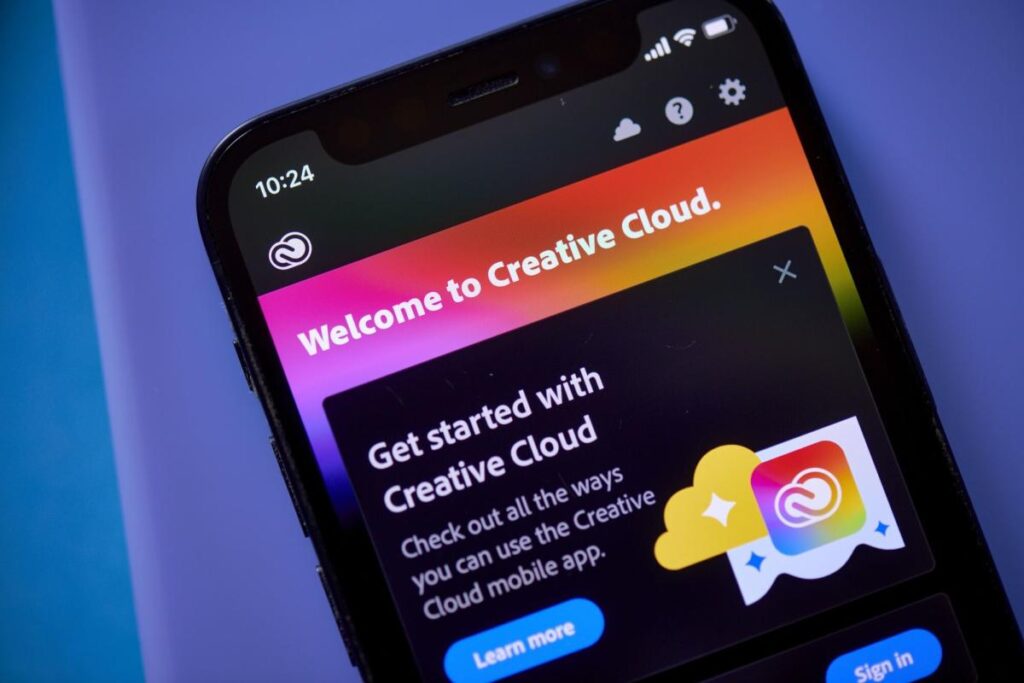
Today, Adobe revealed new AI-driven Generative Fill & Text to Template tools at Adobe MAX, the most prominent creative summit in the world, as well as Translation and Drawings along with Painting functions in Adobe Express, advancing a new age of “Creativity for All.” Adobe Express enhances the one-stop creation software with even more artificial intelligence features, making it quick, simple, and enjoyable for people of any level of skill to create and share exceptional content.

Adobe Releases New AI Models Aimed at Improved Graphic Design
Image Source: finance.yahoo.com

Express customers can now effortlessly add, delete, or replace objects, people, and other elements in any image with just a description by utilizing Generative Fill, an artistic co-pilot driven by Firefly.

The newly introduced Text to Template generative artificial intelligence capability, built upon the new Firefly Design Model, makes starting with the design process even simpler. Users can now generate outstanding customised templates by employing just a text explanation, allowing them to quickly and easily create professional-quality social media posts, brochures, posters, as well as digital cards. With a selection of 45 languages, Translate saves users time when localizing material. With the addition of more than 50 colorful paintbrushes that imitate the textures of charcoal, pencil, and watercolor as well as student-friendly drawing blueprints that are included in the Express for Education offering, the latest Drawing and Painting features make it simple and fast to create lovely effects such as flowers, hearts and more.

Express is revolutionizing the way people and organizations all around the world transform ideas into outstanding content and beautiful social media marketing with revolutionary generative artificial intelligence that is safe to use for business. Millions of users around the world use Express to create appealing content for social media, intriguing videos, eye-catching PDFs, digital cards or flyers, interacting book reports, distinctive resumes, and more. These users range from students to independent business owners to creative specialists to small enterprises to the biggest corporations.

Also Read: Samsung’s Profit Slide Slows in Sign of a Chip Market Bottom

“The groundbreaking AI-first innovations in Express are empowering our Creative Cloud members and creators of all levels to bring their ideas to life in completely new ways that are fast, easy and fun,” said Govind Balakrishnan, senior vice president, Adobe Express and Digital Media Services at Adobe. “Express users are generating hundreds of millions of beautiful images using the latest AI-powered features. We’re excited to be rolling out even more revolutionary AI-first capabilities across image creation, design, video, audio, PDFs and more, in the coming months.”

finance.yahoo.com
Apple’s Challenge for the Next Vision Pro: Making It Easier to Wear

Apple’s Challenge for the Next Vision Pro: Making It Easier to Wear

In a recent report by Bloomberg’s Mark Gurman, it has been revealed that Apple is diligently working on enhancing the wearability of its upcoming Vision Pro headset. 

Apple’s Challenge for the Next Vision Pro: Making It Easier to Wear
Image Source: edition.cnn.com

The current iteration of the Vision Pro, a mixed-reality headset combining augmented reality (AR) and virtual reality (VR), has received acclaim for its performance and features. However, a significant concern arises due to its perceived bulkiness and discomfort during prolonged usage.

Gurman’s report indicates that Apple is addressing these concerns through a focus on a “smaller and lighter design” for the next Vision Pro. The current model, weighing approximately a pound, has been deemed too heavy for some users even in short durations. While an over-the-head strap is considered for the initial model, the long-term solution rests in making the hardware itself lighter, possibly incorporating lighter materials. The anticipated launch for this improved headset is speculated to be next year.

One of the prominent issues faced by users of the current Vision Pro is its lack of accommodation for prescription eyeglasses. Apple’s attempt to address this by partnering with Zeiss for special lenses has posed challenges in dealing with various combinations of these lenses. As a potential solution, Apple is reportedly contemplating manufacturing headsets with prescription lenses pre-installed in the factory.

However, this solution is not without its complications. Gurman highlights concerns that Apple might be perceived as a healthcare provider, a role the tech giant may not want to assume. Additionally, the inclusion of built-in prescription lenses may limit the sharing or resale of headsets, and with people’s vision prescriptions changing over time, this approach might not be universally effective in the long run.

Also Read: Japan to Propose Rules for Generative AI to G7 Leaders: Yomiuri

Apple’s commitment to improving the wearability of the Vision Pro signals a strategic move towards making mixed reality a mainstream computing platform. If Apple can successfully create a headset that is comfortable for extended use, it could revolutionize the landscape of AR and VR applications, ushering in a new era of immersive and user-friendly experiences. As technology enthusiasts eagerly await the release, Apple’s pursuit of comfort in the next Vision Pro may indeed mark a significant milestone in the evolution of mixed reality devices.