Your Tech Story

Tech Story

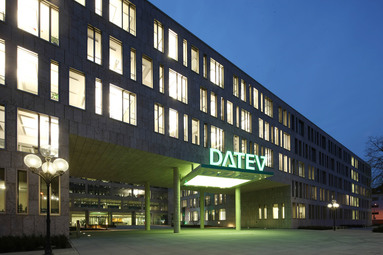
DATEV

DATEV – A Data Center That Emerged As A Successful German Registered Cooperative Society.

DATEV is a German-based registered cooperative society. The primary role of DATEV is in the IT industry as it provides technical information services to the accountants, attorneys, and members of the tax department. Founded in February 1996, DATEV was originally a data center that is now famous in the IT industry. Currently, DATEV is known for developing and delivering software directly to end-users. The company is also known for providing consulting services for these occupations. Though DATEV is a leading technology provider in Germany, its main interest lies in the tax market.

About The Company

DATEV mainly provides software for accounting, tax computation, personnel management, business consulting, and company organization. It was founded in 1966 and currently has more than 400,000 customers. The headquarters of DATEV is based in Nuremberg and apart from that, it has 23 other subsidiaries in Germany. More than 8,000 people work for the company in their main office and subsidiaries.

DATEV is a very popular company in Germany such that around 2 million enterprises in the nation use their software to perform financial accounting. More than 11 million payslips are generated every month using the DATEV software. The company also has a data center that is used by both the members of the company and its clients. Data security is the prime focus of every employee of the company.

DATEV
image source: www.datev.com

History of DATEV

On 14th February 1966, 65 tax consultants from Nuremberg founded DATEV. It was founded as a cooperative self-help organization whose main focus was to facilitate bookkeeping tasks. The main five founding members of the company are Edmund Rudolph, Horst Preißner, Joachim Mattheus, Heinz Sebiger, and Klaus Hartmann. The company initially founded a data center where the accounting data of the members were processed. This was a step up from the primitive punch tape. The DATEV center was opened after the number of members in this organization started increasing rapidly and was finally inaugurated in 1969.

In 1974, Company introduced remote data transmission. First, the data was recorded on magnetic tapes, and then from the employee side, it was transmitted to the DATEV data center via the telephone lines. After a couple of years, the company established its first personal network for transmitting electronic data between tax consultant offices and the DATEV data center. But, the company dismantled the career network in 2002 because by then it was no more an economically viable choice.

Business Growth

In 1972, DATEV formed a joint allegiance with the Japanese company TKC and it was after ten years both the companies document the alliance. TKC is also a data processing service company and the joint partnership aimed to support more tax consultants with electronic data processing. Even today both the companies are tied up through business exchange programs. In the 1990s, Company started establishing its first Information Center starting in Dresden followed by Schwerin, Leipzig, Magdeburg, and Erfurt.

In 1996, one of the founders of DATEV, Dr. Heinz Sebiger retired from the company after 30 years of successfully monitoring the administration. By this time, the company started generated revenue in billions and employed more than 4,000 people. For the next two years, employers and clients in DATEV witnessed the transformation from the DOS system to 32 bit Windows OS.

The 21st century brought several opportunities for DATEV to explore and establish itself in the European market. The company established itself in the Czech Republic, Austria, Hungary, Spain, Italy, and many more. In 2003, the company expanded to Poland as it started a joint venture with Poland-based software manufacturer Matrix. pl S.A. In 2011, the company expanded its data center and included new trending services like cloud computing and data security. In 2021, a new management team was formed at DATEV with Dr. Peter Krug as the new CMO and Prof. Dr. Christian Bär as the new CTO of the company. Dr. Robert Mayr is the present CEO of the company.

Robert Mayr – CEO of Company

Robert Mayr joined DATEV in 2011 as a member of the board of directors as well as head of finances, purchasing, production, and internal data processing. Robert Mayr became the CEO of the company in 2016. Before joining the company, he was the managing partner at Solidaris Revisions GmbH. He also has seven years of working experience at Deloitte, one of the Big Four companies.

Cadence Design Systems

Cadence Design Systems – The Leading Computational Software Experts.

Integrates circuits are the most valuable invention of humankind. These ICs have reduced the size of a computer and have helped scientists bring PCs into being and available for every individual. The companies that are developing those ICs and computational software are major contributors to the development of IT, Cadence Designs Systems being one of them.
Cadence Design Systems is an American multinational company, known for its work in designing ICs, systems on chips (SoCs), and printed circuit boards. Apart from that, the company also develops computational software. Known as one of the world’s most innovative companies, Cadence has been there for about 33 years serving its clients with its software, hardware, and IP design services.

About The Company

Cadence Design Systems is a company that thrives on innovation and client satisfaction. It has been serving its clients for the past 33 years and has brought many new technologies to ease out the burden for its clients. From software to hardware and IP design, Cadence has covered it all for its global clients. Apart from designing and developing chips and boards, the company has developed systems for a wide range of clients covering consumers, hyperscale computing, 5G communication, automotive, aerospace, industrial, and health.
Cadence is a public company, having its headquarters based in San Jose, California, United States. The company is home to about 8900 employees and has won six awards in a row for being one of the 100 Best Companies to Work For.

Cadence Design Systems
Image source: undo.io

Founding Cadence Design Systems

Cadence Design Systems, Inc. was founded in 1988 but has a history beyond 1988 as it is a result of the merger of two already established companies of that time, Solomon Design Automation (SDA) and ECAD. ECAD came into being in 1982, and James Solomon founded SDA in 1983. ECAD was doing exceptionally well and made sales worth $24 million in 1987. In 1988, ECAD and SDA agreed on a merger, where ECAD acquired SDA for a stock swap of $72 million, forming Cadence Design Systems, an electronic design automation (EDA) company. Joseph Costello, the founder of SDA became the first CEO of the newly founded company.
From the beginning of Cadence Design Systems, it started to expand by acquiring other companies, Gateway Design Automation being the first company that it acquired in 1989. The same year, it also established one of its subsidiaries in Tokyo, Japan. In the next few years, the company made acquisitions like Valid Logic (1991), Comdisco Systems (1993), Cooper & Chyan Technology (1997), Bell Labs Design Automation (1998), Quickturn Design Systems (1998), and OrCAD Systems (1999).
In 1997, Costello left his position as CEO in Cadence. The company established a new subsidiary named Tality Corporation in 2000 and made revenues worth $1.43 billion in 2001. In the next ten years, the company made some more important acquisitions, including IBM‘s DFT tools & group (2002), Celestry Design (2003), Verplex (2003), Neolinear (2004), Verisity (2005), Praesagus (2006), Invarium (2007), Chip Estimate (2008), and Denali Software (2010), etc.
The company started with ECAD’s 197 employees and SDA’s 161 employees, but by 2011, the number of employees for Cadence reached 4900. The company also made revenues worth $1.1 billion in the same year. In 2019, the company was ranked 45 in PEOPLE magazine’s Companies that Care and #5 on the Best Environmental, Social, and Governance (ESG) Companies list by Investor’s Business Daily.
The product range by Cadence includes software, hardware, intellectual properties (IP) used to design chips, systems and printed circuit boards, etc. It produces the products under Custom IC technologies, Digital Implementation & Sign-off Technologies, Verification technologies, Intellectual Property, PCB & Packaging technologies, System Analysis categories.

The CEO

Lip-Bu Tan is the current CEO at Cadence Design Systems. He is an American executive and entrepreneur, having Malaysian roots. He was born on 12 November 1959 in Malaysia and grew up in Singapore. Lip-Bu Tan completed his BSc degree in physics from Nanyang University. Later, he moved to the US to earn an M.S. degree in nuclear engineering from the Massachusetts Institute of Technology (MIT), followed by an MBA from the University of San Francisco.
Before joining Cadence as the CEO, he has worked in many well-known companies like EDS. He also founded his venture capital firm named Walden in 1987. Apart from handling his unicorn company, Tan then joined the board of Cadence in 2004. In 2008, he was appointed as the interim co-CEO at Cadence, and the next year, he was named the president and CEO of Cadence Design Systems.

Infor

Infor – A Private Software Company To Make Over Forty Acquisitions Until Now.

Based in New York City, United States, Infor is one of the largest multinational software conglomerates in the nation. It is an enterprise software company that develops business applications that are further delivered via cloud computing. Infor was originally founded in 2002 as Agilsys. Some of the main business areas in the focus of the company are developing software for financial systems, enterprise resource planning (ERP). supply chain, and customer relationship management.

Since Infor delivers its application through cloud computing, the company uses Amazon Web Services (AWS) and many open-source platforms. Infor has made several acquisitions to date and many of them involved closing deals in billions. The company has expanded to 300 countries and territories where it has more than 90,000 corporate customers. Some of the clients include Ferrari, EBSCO, Legacy Health, Heineken, etc. Currently, Kevin Samuelson is the CEO of the company.

Foundation of Infor

In June 2002, Infor was launched as Agilsys in Malvern, Pennsylvania. In the beginning, it had around 1,300 customers for whom it developed enterprise software. The foundation of the company is based on a series of acquisitions which was led by Summit Partners and Golden Gate Capital. From the very beginning, Agilsys started acquiring multiple companies which today had resulted in a big organization. Starting in 2002, the company acquired Brain AG and Future Three. Soon, Agilsys also moved from Pennsylvania to Atlanta.

Agilsys acquired many companies in 2004 which includes a German-based company called Infor Business Solutions, Daly commerce, Lily Software Associates, and VISUAL ERP. The same year, Agilsys changed its name to Infor Global Solutions. In 2005, Infor acquired a company called MAPICS for $347 million. Next year, it acquired an Ontario-based company called GEAC ARP for $1 billion. In 2006, Infor was planning to buy SSA global but the deal was halted due to a lawsuit filed by some shareholders. Later, Infor merged with the company after a negotiation with the shareholders.

Started with only 1,300 customers, Company had increased the figure by thirteen times in 2006. In 2009, Infor acquired a line of entertainment and hotel business, SoftBrands which in turn acquired MAI Systems Corporation and The LodgingTouch Property Management System. Till 2009, the company acquired many companies in various business sectors, and now it was time for a new management team.

Infor
Image source: wikimedia.org

New Management Team

In 2010, the board of directors of Infor decided to form new management for the company. They brought in senior executives from Oracle Corporation. Charles Philips became the new CEO, Pam Murphy the new COO, Duncan Angove, and Stephen Scholl became co-presidents. As the new CEO of the company, Charles put out new strategies to gain the market share on Oracle and SAP. The company decided to make user-friendly applications and rewriting applications into new code. IN 2011, the company again made a big acquisition by buying Lawson Software for $2 billion. Next year, the company again relocated its headquarters to New York City.

Recent Acquisitions

After the formation of a new management team and relocating to New York City, Infor acquired more prominent companies. After acquiring Lawson Software, Company bought Approva and Enxsuite in the same year. It also bought SM-Plus, a company that provides service management tools. In 2012, it acquired EasyRMS, Group Laurier, and Orbis Global. In 2013, Infor acquired a US-based learning management software called CERTPOINT Systems Inc and next year acquired a talent management platform, PeopleAnswers.

Infor has acquired companies in consulting sectors, healthcare management, risk management, etc. In 2020, it acquired Intelligent Insites, a company that provides location-based healthcare services. Earlier last year, Koch Equity Developement LLC purchased full equity in Infor and the company is currently valued at $11 billion.

Kevin Samuelson – CEO of Infor

Kevin Samuelson became the CEO of Infor in 2019. He is attached to the company from the very beginning when it was founded as Agilsys. Kevin left the company in 2013 and went to work for big SaaS companies. He again rejoined the company in 2016 and served as the Chief Financial Officer until 2019. Kevin completed his education at the University of California at Berkeley.

NetSuite

NetSuite – The Leading Cloud-based Business Management Software Providers.

The past thirty to forty years have been the years of growth for the IT industry. With time, the size of the computer started to decrease, whereas the storage capacity of these computers started to increase. Slowly computers reached almost every person’s home, and all the industries were using them. This led to the increase in demand for storage, and cloud technology came to the rescue. Many companies tried their hands on this new technology, and now, they are a few of the famous ones. NetSuite is one such company that has been there for about thirty years, providing cloud computing services to its clients. NetSuite is an American cloud computing company that became part of Oracle in 2016.

About the Company

Evan Goldberg founded NetSuite as NetLedger in 1998 in California, US. Currently, it operates as the subsidiary of Oracle Corporation, having its headquarters in Redwood Shores, California. The company started as a business consultancy firm and provided services, like business finances, operations, and customer relations, etc., small and medium-sized enterprises being its target customers. Later, the company grew to become one of the leading Cloud-based business management platform providers.
The product range of NetSuite includes accounting software, applicant tracking system, customer relationship management, e-commerce enterprise resource planning, human resource management system, etc.

NetSuite
Image source: erpsoftwareblog.com

Founding of NetSuite

Evan Goldberg founded NetSuite in 1998 in California as NetLedger in a small office above a hair salon next to a liquor store. In the very beginning, the company was providing web-hosted accounting software, Oracle CEO Larry Ellison being one of the major investors in the company. Ellison had put all his money into the venture.
The very next year of the founding of the Company, it started to work on Cloud-computing, technically making Company the first cloud computing software company. After successfully running as a leading cloud-computing company, it went public in December 2007 on NYSE.
In the next few years, Company expanded its operations overseas, establishing offices in countries like Denver, Chicago, New York, Boston, Toronto, the Philippines, etc. In November 2016, Oracle acquired Company for a sum of US$9.3 billion, transforming the company into Oracle NetSuite Business Unit. After the acquisition, the founder and CEO Evan Goldberg became the President of the Oracle NetSuite Business Unit.
The Company’s expansion included some major acquisitions. Some of the NetSuite’s acquired companies include OpenAir (2008), QuickArrow (2009), Retail Anywhere (2013), TribeHR (2013), LightCMS (2013), Venda (2014), eBizNET Solutions (2014), Bronto Software (2015), and Monexa (2015), etc.
NetSuite is known for custom development of software for its clients on basis of their needs. The products by NetSuite are able to manage management reporting, human resources management, accounting, billing, payroll accounting, sales tools, etc. The cloud support for all the software extends the scope of the NetSuite software.

The Founder

Evan Goldberg is the founder of NetSuite Inc. He is a Harvard graduate having a degree in Computer Science. Goldberg started his career at Oracle as a member of the database team at the company. He met the future investor for NetSuite, Larry Ellison at Oracle, as he was one of the interviewers for Goldberg. After switching to various roles in Oracle, he became the vice president role at Oracle for the launch of mBed Software.
While working at Oracle, Goldberg had already developed the idea of NetSuite. He left his job at Oracle in 1995 to found a website development company. Though the company failed to make any mark, it helped Goldberg grow as an entrepreneur. NetSuite was his next venture, and Larry Ellison also showed his interest in the same. He invested $2000 in the company, and they founded NetSuite as NetLedger in 1998.
Goldberg served NetSuite as the CEO from the beginning, and in 2016, after Oracle acquired the company, he became the President of the newly formed Oracle NetSuite Business Unit.

Palantir Technologies

Palantir Technologies – A Software Company Whose Products Are Used For Counter-Terrorism Analytics.

Based in America, Palantir Technologies is a software company which is specializing in big data analytics. Peter Thiel, Nathan Gettings, Joe Lonsdale, Stephen Cohen, and Alex Karp founded the company in 2003. Currently, the headquarters of the company is based in Denver, Colorado, and Alex Karp is the present CEO. Palantir is famous around the world for three main projects, namely, Palantir Gotham, Palantir Metropolis, and Palantir Foundry.

United States Intelligence Community and United States Department of Defense use Palantir Gotham for counter-terrorism analysis. These main three products of Palantir are used by many big clients such as Morgan Stanley, Airbus, Fiat Chrysler, etc. Palantir’s customer base has expanded to healthcare industries and it also works closely with the local and state government.

Early Years of Palantir Technologies

Peter Thiel originally founded the company in 2003 with a single mission to combat terrorism by developing suitable software. After a year, Peter bankrolled a prototype creation and built a team that included a PayPal engineer, two students from Stanford University, and one of his former colleagues from Stanford Law School. Peter made this former colleague (Alex Karp) CEO of the company.

When the company was founded it was headquartered in Palo Alto, California. In the initial days, the company struggled to land investors. Firms like Sequoia Capital and Kleiner Perkins turned them down and demoralized them by saying it was going to be an epic fail. After trying for some time, they received an initial investment of $2 million from In-Q-Tel and then Thiel invested $30 million from his pocket. After receiving the funding, it took three years for Palantir to complete its product. Thiel realized that only artificial intelligence was not enough to build what he was aiming for so he hired analysts who can explore data from multiple sources.

Palantir Technologies
Image source: ctfassets.net

The Success of Palantir Technologies

The company made breakthroughs in 2009 and 2010 when Information Warfare Monitor used the technology of Palantir to uncover the GhostNet and the Shadow Network. Both of them were Chinese espionage that targeted the compromise of several computer networks across 103 countries including Dalai Lama’s office. The Shadow Network hacked into the Indian security system and defense apparatus.

In 2010, Palantir started a joint venture with Thompson Reuters to sell a quantitative analysis tool, QA Studio. The same year, Recovery Accountability and Transparency Board fought fraud by deploying Palantir software. After this success, Biden announced at the White House that further the company’s software will be incorporated in other government agencies including Medicare and Medicaid.

By 2013, several US government agencies used Palantir software for fraud detection and combating terrorism. Initially, the company which struggled to receive funding from private capital firms secured a funding of $196 million in 2013. In December 2014, the company hosted another round of funding from which it raised $450 million from the private funders. The company was gaining a lot of attraction and the number of customers increased rapidly, but Alex Karp decided to not file an IPO. He said that a company like Palantir would become difficult to manage if it goes public. At the end of 2013, the valuation of the company became $9 billion.

Present Days

In the upcoming years, the company gathered more funding and its valuation became $20 billion in 2015. The company also acquired two startups, Kimono Labs and Silk to collect information more efficiently. In 2020, many countries used Palantir technology to track and contain the spread of COVID-19. The company recently developed software called Tiberius that is used for vaccine allocation in the US.

Alex Karp – CEO of Palantir Technologies

Alex Karp is a famous American billionaire whose net worth is $2.1 billion. He went to Haverford College followed by Stanford University, and Goethe University. He studied neoclassical social theory in college. Apart from co-founding Palantir Technologies, Alex is also the co-founder of the money management firm, Caedmon Group.

ESET

ESET – Establishing a Secure Digital Environment for People.

Though having computers connected with the internet has brought lots of benefits for people, making the work faster and accurate, it has also caused some threats to the same work. With the rise in the facilities with the technology, people are now more prone to data theft and malware on their computers. So since we needed the IT field to grow, we also needed some software and techniques to tackle such situations. For that, many companies started to work to provide security in the form of antiviruses and firewalls such that from surfing on the internet to making huge transactions online have become safer.
One of such companies that have been working to make the internet a safer place for people is ESET. ESET is almost 30 years old and has earned a good reputation as a security software development company in the industry. In fact, ESET is one of the most successful Slovak IT companies in the IT industry. The company provides security solutions for Windows, Linux, Mac as well as Android devices.

About the Company

ESET is a Bratislava, Slovakia-based software technology company, founded in 1992. The company mainly deals in the development of antivirus and security software. It has a long product list, among which, ESET Smart Security for Windows, ESET Cybersecurity for Mac, ESET Mobile Security for smartphones, and ESET SysRescue Live the most famous ones. The company is the home for more than 1700 employees and as of 2018, made revenues worth €504 million. In the past thirty years, the company has successfully expanded its operations overseas, having its multiple branches based in over 200+ countries, including the US, Canada, Argentina, Brazil, and Australia, etc.

ESET
Image source: 1000logos.net

The Founding of ESET

Rudolf Hrubý, Peter Paško, and Miroslav Trnka are known as the founders of ESET. Miroslav Trnka and Peter Paško had already worked together on the antivirus software named NOD in 1987. The two met Rudolf Hrubý and partnered with him to build a new company, named ESET. The name was taken from the Egyptian goddess of health, marriage, and love. The three founded the company in 1992 with NOD as their first product. In 1998, they brought the next version of NOD, the NOD32 Antivirus, which in the same year was awarded the first Virus Bulletin Test award. The success of the product helped the company to grow outside the country as well, and they opened branches in countries like the US, Argentina, Singapore, etc., during the same time.
In 2001, ESET went on to open another branch in Prague, Czech Republic, and in 2008, the company established its Research and Development Center in Poland. The next year, the company was honored with the CNET Editor’s Choice Award under the Internet security suite category for ESET’s Smart Security 4. In 2011, the company was awarded the Global Customer Value Enhancement Award, followed by the North American Endpoint Security Products Customer Value Enhancement Award in 2012.
In 2012, ESET established another Research and Development Center in Montreal, Canada. Till now, Company has established 13 such centers in different parts of the world. The company also launched its first authentication product named ESET Secure Authentication as well as the Managed Service Provider (MSP) Program, in 2013. The company’s Endpoint Security software also won the Best Antivirus Software by Maximum PC in 2013. In 2018, the company became a part of 40 companies’ initiative to protect the end-user data providing cybersecurity through the Cybersecurity Tech Accord program.
Compay provides cybersecurity as well as antivirus solutions to homes, offices as well as enterprises. Smart Security, Internet Security, NOD32 Antivirus, Cyber Security, Endpoint, Remote Administrator 6, ESET SysRescue Live are some of ESET’s major products.

The CEO at ESET

Richard Marko is the current CEO at ESET. He has been voted as the “Most Respected CEO” in Slovakia in 2015, by 121 business leaders. Marko went to the Slovak Technical University in KoÅ¡ice and received a graduate degree in Information Systems Department in 1996. He has been with the company from the very beginning and was one of the authors of ESET NOD32 Antivirus scanning engine. He worked as the Chief Software Architect of the scanning core for a period of ten years, and in 2008 he was appointed as the CTO at ESET. In January 2011, he became the CEO of ESET.