Your Tech Story

Tech Story

Varonis Systems

Varonis Systems – A Software Company That Started To Mainly Protect Unstructured Data.

In 2005, Yaki Faitelson and Ohad Korkus founded Varonis Systems to help organizations track, visualize, and protect their unstructured data. Varonis Systems is based in New York City, US and it has R&D offices in Herzliya, Israel. Varonis offers services globally and it has approximately 1,700 employees and more than 7,000 customers.

Though Varonis is a computer software company working to protect the unstructured data of its clients, it works a bit differently than other conventional cybersecurity firms. With the help of various platforms and data-tracking technology of Varonis, organizations can keep a real-time awareness of how every employee is accessing and using data to stop any malicious attacks.

About Varonis Systems

Since data is at the center of every organization, Varonis builds advanced platforms to help clients protect their unstructured data. In every organization, multiple malicious attacks that compromise sensitive data take place both from an external and internal source. To protect data, Varonis performs User Behavior Analytics (UBA) to identify any abnormal behavior before a cyberattack. The principle working pattern of Veronis is to extract the metadata from an organization’s IT infrastructure and then use the necessary information to map relationships among employees, data, etc.

Varonis has multiple types of products as per the need of a customer. Some of them are DatAlert (UBA and Data Security), DatAdvanatge (Data Governance and Data Protection), DatAnywhere (Enterprise File Sync and Sharing), etc. In 2008, the company made it to the list of Fast 50 Reader Favourites. Earlier this year, the company was awarded a Cyber Catalyst designation for its data security platform.

Varonis Systems
Image source: tadviser.com

The Idea Behind Founding Varonis

A big idea doesn’t emerge out of thin air. Whenever we are trying to find a solution to fix our problem, we hardly have any idea that how many people can benefit from an effective solution. The idea to establish Varonis Systems always emerged as a solution when the two founders were trying to find a solution to protect data. In 2003, an oil and gas company almost faced a disaster when they took high-resolution images of the ocean floor. But, one day the photographs suddenly disappeared from their server and no experts were able to discover what took place.

Unable to understand if the data was deleted by an accident or deliberately, the security experts saw an opportunity in the software industry. With every passing data, data is becoming more valuable to an individual, an enterprise, a nation, and to the whole world. So, security and systems experts (who previously worked at NetVision and NetApp), Yaki Faitelson, and Ohad Korkus founded Varonis Systems in 2005. They wanted to give organizations more visibility to their data and protect sensitive information.

History Of The Company

Varonis offers multiple ways for an organization to protect its data from both the employees of the company and external sources. The company mainly addresses issues like file activity tracking, access control, and information rights management. Varonis enables a company to track the behavior of an employee in the data server and if there is any abnormal behavior the system will be alerted. The co-founders created a system such that it would be able to extract metadata in the file systems.

While they were developing the product, they brought Dr. Jacob Goldberger, statistical modeling and machine learning expert onboard. He mainly helped the team to develop the algorithms that would provide the user data link. In 2005, these three people filed a patent and it was approved in 2006. The same year, Veronis released its first product, DatAdvanatge so that enterprises can monitor their file activity, data access rights, user behavior, etc. After a few years, the company added the IDU Classification Framework so that the system was able to search for various keywords and phrases. The main investors of the company are Accel Partners, Evergreen Venture Partners, Gitano Venture Capital, and EMC.

Yaki Faitelson – CEO Of Veronis Systems

Yaki Faitelson is the co-founder and current CEO of Veronis Systems. He is also the Chairman of the Board. Before co-founding Veronis Systems, Yaki served at many leadership positions in the global professional services and systems integration divisions of NetVision and Network Appliance.

Mindtree

Mindtree – An 22-year Old Indian IT Company That Operates Under Larsen & Toubro.

Mindtree is a publicly-traded company that is established in the IT industry. It was founded in 1999 by a group of 10 people. Most of them were Indian IT professionals while three of them invested through an entity incorporated in Mauritius. Mindtree provides various IT services including outsourcing and consulting. The company’s headquarters is based in Bangalore, India and it is currently a part of L&T Group. Debashis Chatterjee is the present MD and CEO of the company.

About Mindtree

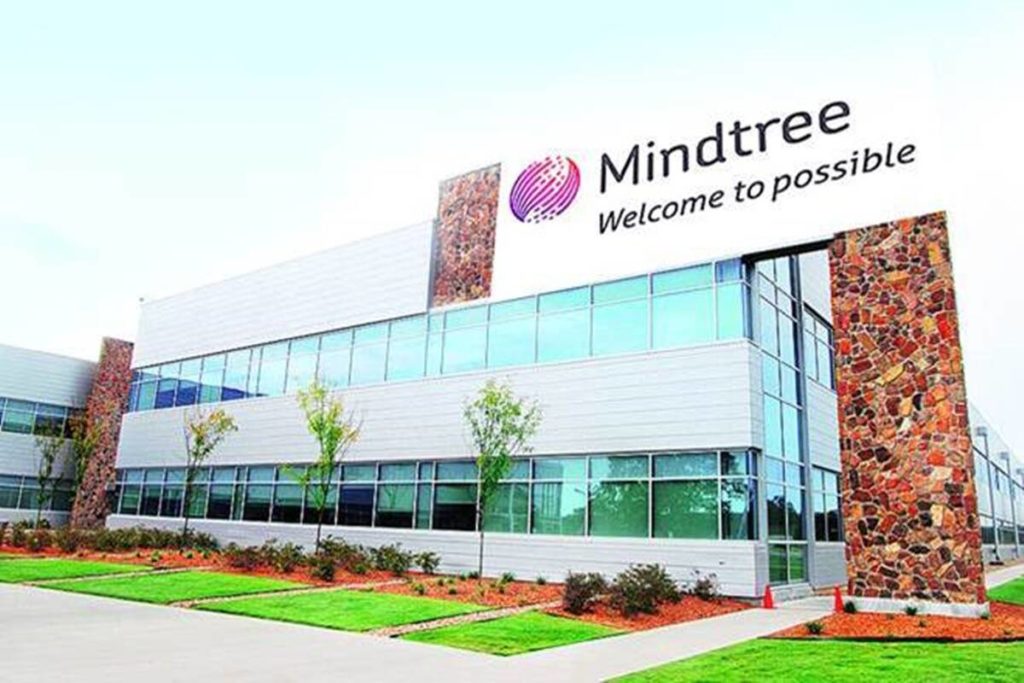
Mindtree is an Indian IT company offering services on a global scale. It has hired more than 23,000 people over the past two decades who serve more than 300 active clients. Mindtree has business across 18 countries and the major areas that the company deals with are e-commerce, cloud computing, data analytics, digital transformation, resource planning, etc. The company offers services in various sectors like banking, insurance, consumer packed goods, manufacturing, entertainment, hospitality, etc. Mindtree has five overseas subsidiaries located in China, the UK, the US, Malaysia, and Singapore.

Mindtree
Image source: financialexpress.com

Founding History Of The Company

Mindtree was officially incorporated on 5th August 1999. The group of 10 IT professionals started the company with an initial investment of Rs 169 million. The company raised this amount by subscription of equity shares during the first round of funding. Mindtree received the initial funding from LSO Investment (P) Limited, Walden Software Investments Limited, Amalgamated Holdings Limited, and Vaitarna Holdings Private Limited. In 2001, Mindtree conducted the second round of funding where it raised another Rs 590 million from existing and new (Capital Group and Franklin Templeton) investors.

In 2006, the company filed for its IPO and became a public company. It was listed on both the Bombay Stock Exchange and National Stock Exchange. After the company became public, it rebranded itself with a new logo and brand identity. The company eventually started planning its expansion in various Indian states like Chennai and Bhubaneshwar. It also acquired two companies in the early 2000s, namely, ASAP and ARPSL (software division) and Linc Software Services Private Limited. It also established a partnership with Volvo Information Technology for IT outsourcing.

Expansion And Growth

In 2008, the company changed its name from Mindtree Consulting Limited to Mindtree Limited. In 2009, the company signed an agreement with the world’s largest private equity firm, Carlyle Group. The agreement was such that Mindtree would provide its IT infrastructure management and services that would help in monitoring Carlyle’s IT production servers. Later in 2010, the company also launched security services so that businesses can solidify their security and compliance strategies. In 2011, Mindtree was recognized as a top outsourcing company in India. It also won the Marathon Awards South Asia 2010 for its Assist Technologies Program. Mindtree also won the prestigious Corporate Governance Award in 2012. It also became one of the top five companies at an international level for R&D services providers.

In 2012, Mindtree established its first delivery center in the US (Gainesville, Florida). And once it started expanding overseas after five years it has established offices in 17 countries. In 2015 and 2016, Mindtree acquired a few companies outside India that helped it strengthen its American and European markets. In 2015, it acquired three companies, namely, Discoverture Solutions LLC, Bluefin Solutions Limited, and Relational Solutions Inc. IN 2016, it acquired a USA-based company called Magnet 360. In 2019, Larsen & Toubro, one of the biggest Indian conglomerates took control over Mindtree, and currently, it owns a 61.08% stake in the company.

Debashis Chatterjee – CEO

Debasish Chatterjee hails from a very rich industrial background as he has 30 years of working experience in various fields including IT, relationship management, strategic alliance, etc. Before joining Mindtree, he worked at Cognizant as the President of Global Delivery and Digital Systems and Technology. He also has working experience at TCS, Mahindra & Mahindra, and IBM. He completed his education at Jadavpur University.

SenseTime

SenseTime – A Chinese AI Unicorn That Came Up With Some Of The World’s Most Advanced Technologies.

Based in Hong Kong, SenseTime is known as the world’s most valuable AI (artificial intelligence) company. It was founded in 2014 and within 7 years it has gained unicorn status and developed some of the advanced AI algorithms. A computer science professor, Tang Xiao’ou, and a computer scientist, Xu Li co-founded the company with others. It started as an academic project and by 2019 its valuation became $4.5 billion. It has landed some of the biggest conglomerates as its clients including Alibaba, Honda, Qualcomm, and Weibo.

About The SenseTime

It is almost hard to believe that a young seven-year-old company develops such advanced Ai-based technologies that it is one of the finest in the world. The company develops AI technology including image and facial recognition, object detection, medical image analysis, video analysis, remote sensing, etc. Its products are used in several different industries from entertainment to healthcare.

When the company was founded in 2014, it developed DeepID, a facial recognition algorithm that was the first of its kind to detect accuracy better than human eyes. SenseTime is working with the Chinese government on a project to make the country economically autonomous by 2025. Currently, SenseTime is a privately-held company.

SenseTime
Image source: wire19.com

Early History

In October 2014, Tang Xiao’ou and Xu Li co-founded SenseTime and in the founded year it unveiled the best algorithm for better detection accuracy than human eyes. This algorithm is called DeepID and it is even ahead of Facebook. The company also presented and published several papers on computer vision and they were accepted into the Conference on Computer Vision and Pattern Recognition (CVPR).

Within one year of its establishment, a total of 9 papers were accepted. In 2016, the company enrolled itself in the ImagineNet competition and it bagged the first price in several fields including object detection, video object detection, and scene analysis. The number of papers accepted in the CVPR Conference also rose to 16 by the end of the year.

Success Of SenseTime

In 2017, SenseTime broke all of the records of past company’s in the AI industry in terms of the highest rounds of financing. The number of publications kept on increasing and by the year-end, it surpassed both Google and Facebook with 43 publications. It was in the same year that SenseTime raised $410 million in the Series B funding. SenseTime started collaborating with several companies and government bodies of China. For example, in October 2017 it started a joint venture with Qualcomm followed by collaborating with Shanghai Municipal Government, and Honda by the end of the year.

In 2018, the company declared a collaboration with MIT for advanced research in the field of AI but after a couple of years, the program was canceled by MIT. In April 2018, a non-profit AI lab called HKAI Lab was founded to make Hong Kong a global AI hub. SenseTime founded this lab jointly with Alibaba and the Hong Kong Science and Technology Parks Corporation. SenseTime was also named as China’s National Open Innovation Platform for Next-Generation Artificial Intelligence on Intelligent Vision in September 2018.

Recent Days

Since 2014, SenseTime has tried to develop more advanced AI technologies that are equally focused on the research and development side of the company apart from the business part. In 2019, it became the first company in the world to join MIT’s Quest for Intelligence Campaign. The company is planning to go public as it filed IPO this year on the Hong Kong exchange. Though the company has given the world’s largest computer vision model, the profit curve is not very impressive. SenseTime heavily invests in R&D (60% of funding) and plans to expand to more and more industries both in domestic and overseas countries.

About The Founders

Tang Xiao’ou, apart from being the co-founder of SenseTime is also an information engineering professor at the Chinese University of Hong Kong. He is an alumnus of MIT and worked at Microsoft Research Area for four years. In 2009, he received the best paper award at CVPR Conference.

Xu Li is the co-founder and current CEO of SenseTime. He studied at the Chinese University of Hong Kong followed by Shanghai Jiao Tong University. He has published more than 50 academic works in the field of computer vision and won many awards.

Asana

Asana – The Makers Of Simplified Management Tools To Help Companies Focus On Their Goals.

Small or big, goals are necessary for every type of growth, be it personal growth or growth as a big company. To achieve these goals, one needs to have a system or discipline that would help manage the tasks required to be fulfilled for those goals. The idea behind founding Asana has been the same. The company was founded to provide companies with software and web applications that would help them reduce the complexity of managing their teams, daily tasks, etc. so that they can achieve their targets (small or big) with lesser efforts and in time. The applications by Asana do not only help companies manage their teams and tasks, but also help the employees increase their productivity.

About Asana

Asana is a task management and productivity software development company founded in 2008. Dustin Moskovitz and Justin Rosenstein founded the company to reduce the complexity of daily office work for the companies so that they can focus on the major part of the work. Asana is a Sanskrit word that means Yoga pose. The company headquarters is based in San Francisco, California, US and offers services to its clients globally. The software and applications by Asana include tasks like organizing and managing daily office work, managing the teams, and tracking the progress. Apart from web applications and software, Asana also provides API integration to third-party applications. Gmail, Outlook, Google Drive, Dropbox, and Slack are some of those applications with Asana API integrations.
As of 2019, around 1000 people are working at Asana, and it made annual revenues worth $142.2 million in the same year. The company is publically traded, trading on New York Stock Exchange as ASAN.

Asana
Image source: thisweekinstartups.com

The Company History

Dustin Moskovitz and Justin Rosenstein were working together at Facebook in its beginning years. The two worked on improving the productivity of the Facebook employees, as CTO and the engineer manager, respectively. In 2008, the two left their jobs at Facebook to establish Asana. The company launched the beta version of their software in 2011 and offered it for free to companies. Later in 2012, Asana released the software for commercial use. The software from Asana is to manage the collaboration of the employees and daily tasks. It is a software-as-a-service that provides multiple features helpful for companies to handle their projects and their teams.
In 2013, Asana launched another software named Organizations providing administration tools for companies. The next year, the company released Calendar View for iOS and the Android app for the same came in 2015, including team conversations feature. By the next year, Company had added more features to its software like team management, member management, status updates, task dependencies, custom fields, Boards, pre-made project templates, and security features, etc.
Asana partnered with Microsoft in 2017 and integrated its features into Microsoft Teams. The same year, Gmail also integrated some Asana features into it, resulting in the release of comment-only projects. Asana also released its versions in French, German, Spanish, and Portuguese in 2017 and 2018. CSV importer and Timeline came in 2018. In 2021, Asana launched a special app for Zoom as well as a new Enterprise Work Graph suite.
Though Asana is not a very old company, it has been successful in bagging contracts and partnerships from big names like Google, Slack, Wufoo, Okta, Uber, Zoom, IBM, eBay, and Microsoft, and over 100,000 other paying customers. The company has won a few recognitions, like “one of the best collaboration and productivity apps for teams” by PC Magazine in 2017 and “one of the Best Workplaces for Parents” by Great Place to Work in 2020.

The Founder/CEO

Dustin Aaron Moskovitz is one of the co-founders and the present CEO of Asana. He was born on 22 May 1984 in Gainesville, Florida, U.S. Moskovitz went to the Vanguard High School and joined Harvard University to pursue a graduate degree with an economics major. He was one of the four roommates with Mark Zuckerberg at the university. So when Zuckerberg decided to drop from college to work on a Facebook full time, Moskovitz too joined in and moved to Palo Alto with him. Moskovitz was the first CTO at Facebook and spent four years at the company. In 2008, he, along with Justin Rosenstein, left Facebook and started Asana. Moskovitz became the first CEO of Asana and is still serving the company as the CEO.

Qihoo 360

Qihoo 360 – Story Of The Biggest Cybersecurity Company In China.

The Chinese internet security company, Qihoo 360 was born in 2005 in London. The headquarters of the company is based in Beijing, China, and its products and services are used all over the world. Zhou Hongyi is the co-founder and the current CEO and Chairman of the company. He co-founded the company with Qi Xiangdong who is the present director of Qihoo 360. The company is famous for its antivirus software, 360 Safeguard, and its web browser, 360 Secure Browser. This antivirus software is available for both PCs and mobile phones. Qihoo 360 is a privately held company and it has more than 4,000 employees.

About Qihoo 360

Qihoo 360 is the largest provider of cybersecurity and mobile security software in China. The company is known for its widely used products like 360 Total Security, 360 Mobile Security, enterprise security browsers, etc. The company also works closely with the government for national security products. The company has crossed more than 500 million daily active users for its software products. Apart from the software products, the company provides services like security consulting, security maintenance, security training, etc. Qihoo 360 has more than 10,000 patents for its original and core technology.

Qihoo 360
Image source: blogspot.com

Early History Of Qihoo 360

Back in 2005, when the company was founded, it was mainly known for its anti-virus software product. After operating for six years as a private company, it decided to file its IPO in 2011. When the company filed its IPO it raised $175 million and it marked a date in history for being the largest IPO of a Chinese company in the US. So, in March 2011, Qihoo 360 got listed on the New York Stock Exchange as QIHU.

After Qihoo 360 started operating as a public company, it eventually expanded its business and entered the smartphone market in 2012. In a joint venture with Haier, a Chinese electronics company, it released a new product line Battleship (phone). On the first day of releasing the new phone, the company received over 200,000 pre-orders.

Later in 2012, the company released a search engine so.com and it became a competitor of Baidu, China’s one of the most prominent search engines. With this new search engine, China captured around 10% of the total search engine market. In 2013, the company released another search engine called leidian.com to strengthen its presence in the mobile market. As the sales started increasing, Qihoo decided to set up a venture capital fund in Silicon Valley in 2014.

Privatization Of The Company

In 2015, the company announced that it is being acquired by a group of investors and will enter into a privatization agreement valued at $9.3 billion. For privatization of the company in NYSE, the funding came from mortgaging the building of the company and also a $3 billion loan from China Merchant Bank. Qihoo 360 officially became a private company in July 2016. Getting delisted in the US also became an opportunity for the company to grow in its domestic market and also become a key member of the national security of the nation. After the privatization of the Company, China International Capital Corporation (CICC) estimated that the value of the company will increase six-folds than its US value.

Recent Days

After Qihoo 360 became a private company, it decided to go public in China by means of a reverse merger. Qihoo 360 made the deal of reverse merger with a public company called SJEC Corp. The deal was to make Qihoo the dominant entity while SJEC survives as the subsidiary of the company. The reverse merger was completed in February 2018 which led Zhou Hongyi to hold 12.14& shares of Qihoo 360 and 51.56% shares of the two shareholding firms.

Zhou Hongyi – Founder and CEO

Zhou Hongyi is a famous Chinese entrepreneur and billionaire. Famous for co-founding Qihoo 360, he ranked number 45 on the Forbes China Rich List in 2018. Zhou is one of the first internet entrepreneurs in China who was responsible for changing the internet landscape of the nation.

Wise

Wise – A Multimillion-Dollar Fintech Company That Emerged Out Of A Sudden Plan.

Wise is a young fintech company based in Shoreditch, England. Kristo Käärmann and Taavet Hinrikus founded the company in 2011. Earlier in 2021, Wise went public through a direct listing on London Stock Exchange and it was valued at $11 billion. The journey of Wise refers to one of those stories when two people meeting at a party started talking about their life problems. From figuring out a viable solution to making millions in revenue, Wise has achieved massive success in ten years. The company also received an impressive amount of funding since 2011 which could be because both the founders were already established in their professional careers.

The Idea Behind Wise

Kristo Käärmann and Taavet Hinrikus both were living in London when they met in 2007. The two co-founders started a conversation at a party only to realize that they share a common problem. Both Kristi and Taavet send money back to their home countries and every month they need to convert the currency. Taavet used to convert his Estonian salary to pounds whereas Kristo converted his salary to Estonian kroon for paying his mortgage. So, initially, these two fellows devised a solution that was exclusively for both of them. Every month Kristo topped up Taavet’s bank account, setting the amounts according to the mid-market exchange rate while Taavet did the same for Kristo. This arrangement helped them make big savings but none of them decided to open up a company.

After Kristo and Taavet made arrangements for themselves the word traveled fast to other Estonian experts. Due to the huge amount of savings that came with the idea, they turned it into a business without any plan of doing it in 2007. In 2011, they officially established this money-exchange forum and it was called TransferWise. The business started flying only after 15 fifteen minutes of TechCrunch publishing an article. Kristo said that the transactions never stopped.

Wise
Image source: www.gavi.org

Executing The Plan

When Kristo and Taavet came up with this idea of overseas transfer, they were both working at different companies. In 2011 they decided to quit their jobs and for the first year, they self-funded the company. The company eventually started attracting many investors that also include the famous billionaire, Peter Thiel. Today, the company processes transactions for more than ten million active customers who save around $1.5 billion every year that goes as bank fees. The first year when Wise operated, the total amount from the transactions summed up to €10 million. The company gained popularity so fast that after a year it was named “East London’s 20 hottest tech startups.”

In 2012 the company was featured by several big magazines as one of the top startups in the country. Till 2013 the company also allowed its users to purchase bitcoin but due to pressure from banking providers, it was discontinued. The same year, a comparison site called Monito revealed that transactions in Wise are 83 cheaper on average as compared to big banks of the UK. In 2015, the company also made it to the top 10 on CNBC’s 2015 Disruptor 50 list. Later in 2015, Wise was named World Economic Forum Tech Pioneer. In February 2021, the company rebranded itself Wise from TransferWise. This rebranding wanted to reflect on the fact that the company has expanded its services as it goes beyond just international money transfers.

About The Founders

Kristo Käärmann is the famous co-founder of an extremely successful startup called Wise (earlier TransferWise). He studied mathematics and computer science and started his career as a consultant at PwC. Before co-founding Wise with Taavet Hinrikus, he worked at Deloitte for more than four years. He is also the current CEO of Wise, which filed its IPO in 2021.

Taavet Hinrikus is a famous entrepreneur and investor who started his career at Halo Interactive DDB. It worked at several companies before co-founding Wise that also includes being the Director of Strategy at Skype. After he and Kristo came up with the solution of overseas transfer, he spread the word on Skype which helps them gain a potential customer base before officially launching the company.