Your Tech Story

Tech Story

TomTom

TomTom – Leaders In The Navigation As Well As The Consumer Electronics Industry.

Online map and navigation systems are the one revolutionary product that is being used by almost every third person on earth. They use them to locate a restaurant, to be safe when in a different place by sharing their location, or just to reach a certain destination. Though the paper maps have been there for a while, the technology-backed online maps are the most useful in today’s time. The navigation technology has not only helped big organizations like the vehicle manufacturers, Apple or Google (for their navigation software for earnings) but has empowered the common people, too. Today, the common people can independently roam around using those maps in a place, where they have never been before. Apart from the famous Google Maps, these navigation technologies are available with Apple, Bing, Here, Jawg and MapBox, etc. Most of the automobile companies are also including navigation systems into their vehicles, one big example includes the electric car manufacturer Tesla. Having navigation at one’s fingertips is the work of companies like TomTom. TomTom is a multinational Dutch company that is one of the leaders in the navigation as well as the consumer electronics industry. Apple’s maps app is also empowered by TomTom’s navigation data.

About the Company

TomTom is a thirty years old company, founded in 1991 and has its headquarters based in Amsterdam. The company started as a software developer (meter reading and bar-code reading) for corporate handheld devices (palmtop, mobile phones). But by end of the 90s, it started to focus on satellite navigation software development. Today, the company is counted among the leading navigation software developers. The company is a publically traded company and trades on Amsterdam Stock Exchange. In the past thirty years, the company has grown to have over 4500 employees. As per the 2019 records, TomTom made annual revenues worth 701 million, and its estimated operating income was € 56 million.

TomTom
Image source: webassets.tomtom.com

The Back Story

Corinne Vigreux, Peter-Frans Pauwels and Pieter Geelen founder TomTom as Palmtop Software in 1991 in Amsterdam. As the name suggests, the company started to develop software for corporate handheld devices, such as the meter reading and bar-code reading software. The company mainly focused on developing the Psion devices software. In fact, TomTom had partnered with Psion and developed EPOC32. Along with that, the company also released its first map software a route planning application in 1996 that worked on mobile devices. By the end of the 90s, TomTom had developed mapping software like EnRoute, Citymaps, and Routeplanner, etc.

In 2001, with a name change from Palmtop Software to TomTom, the company also released its first car satellite navigation software named TomTom Navigator. Later, in 2004, the company added a new feature, a subscription-based traffic update service to TomTom Navigator. In the same year, the company also released TomTom Go, a personal navigation device for common people.

TomTom went public on the Amsterdam Stock Exchange in 2005 and valued at approximately €50 million. The next year, the company introduced water-proof navigation devices for motorcycle users and also, added the text-to-speech feature for road names to its existing navigation software. In 2007, TomTom partnered with Vodafone to develop a real-time traffic data service for its consumers. The very feature was also released for the Netherlands, and in further years it reached the other countries, including the United Kingdom, France, Germany, and Switzerland. TomTom released its software for iPhone in 2009, and for Android, the software came in 2015.

2013, the company released a GPS sports watch named TomTomRunner, the next year, it came with the Runner Cardio GPS, and in 2015, it brought a new action camera named Bandit. By 2018, TomTom had bagged a contract from Apple to be its main GPS data supplier for Apple’s map app. TomTom reported in 2019 that it had earned over 800 million users for its various software and devices. Apart from Apple using TomTom maps data, the company’s main clients from the auto industry include Volvo, Nissan, Fiat Chrysler, Porche, Lamborghini, Bentley, etc.
In the past thirty years, TomTom has also made some strategic acquisitions that have been an additional benefit for its growth. Companies acquired by TomTom include Datafactory AG (2005), Applied Generics (2006), Tele Atlas (2008), etc.

The CEO at TomTom

Harold Goddijn is one of the founders and the CEO of TomTom. He is a native of the Netherlands and was born on 23 April 1960 in Oegstgeest, Netherlands. Goddijn is an Economics graduate from the University of Amsterdam and started his career at a venture capital firm. Later in 1989, he founded Psion Netherlands BV, becoming the managing director of Psion Computers. Goddijn left the company to full-time join Palmtop Software in 1999. With the name change of Palmtop to TomTom, Goddijn became the CEO of the company in 2001.

Insignia Systems

Insignia Systems – One Of The Biggest Advertising Media Companies In The United States.

Insignia Systems, famous as Insignia, is one of the three market leaders in the United States that dominates the promotional media service industry. The company was founded in 1990 in Minnesota, US by G.L. Hoffman and David Eiss. Insignia is a publicly-traded company that currently serves clients in the US region. It has a very experienced team comprised of shopper engagements experts who are thorough with everyday consumer behavior. The company mainly offers a point of sale in-store signs and promotional advertisements of various consumer packaged good businesses.

About Insignia Systems

Insignia Systems is one of the top 50 pop companies in North America according to Creative Magazine. The company has restricted itself to the US to date but it is one of the three dominating companies in its sector in the region. Insignia Systems is a company that is divided into two parts. One division is responsible for managing a direct relationship and engagements with retailers for placing signs in stores and the second division is responsible for marketing and providing these signs to the fast-moving consumer goods (consumer packaged good companies). These signs are placed in various retail locations.

During the COVID-19 pandemic, the company’s sales started declining, and currently, it is looking for any merger or acquisition so that the company remains afloat. In 2021, Insignia reported a net loss of $2.6 million for the first nine months. It might take some time for the company to recover, at least for the few upcoming quarters.

Insignia Systems
Image source: insigniasystems.com

The Backstory of the Company

More than three decades ago when Insignia was founded on the 2nd of January 1990, the company started selling impulse signs machines. These machines could print in-store signs and labels and that was the primary focus of the company. One year after the company was founded, Insignia decided to go public in 1991 and started trading on NASDAQ. It started trading in the national market after a decade.

In 1993, new software was introduced as the precursor of the Insignia like which was known as the Stylus software. It was for Insignia’s POPS line and a few years later the impulse machine sold in the initial days was replaced by the SignRight machine. And, in 1998, Insignia’s POPS program became the featured product of the company. This program is the consumer-facing brand of the company where it consists of a sign mainly out up in the grocery stores. Through this POPS Program, Insignia has access to more than 23,000 stores all over the US.

Success

The POPS Program became the new face of the company and the reason why Insignia became famous rapidly. In the late 1990s, the sales of the company started dropping and it became a tough year to cope up. So, in May 1998, Insignia POPS signs were introduced in the market and it became the company’s primary focus. The company also decided to bring in new members into the leadership team as Scott Drill took the position of CEO in the company. It was under his leadership that the POPS business was established and executed properly. The business started growing so rapidly that from 1 million signs in 2001 to the number reached 14 million by next ten years. In 2006, the company also landed a long-term partnership with Valassis Communications for filling the in-store void for the company.

In 2011, Insignia became a part of the lawsuit that was between the company and News America Marketing. The ground of the lawsuit was engaging in various antitrust practices but after the settlement of the lawsuit, Insignia became the one and only third-party provider of in-store signs with the price. In the following years, Insignia has made its POP signs graphically customizable and also introduced The Like Machine as one of their marketing solutions.

Kristine Glancy – CEO of Insignia Solutions

Kristine Glancy is an experienced executive with more than twenty years of experience in the retail industry. She joined Insignia in 2016 and since then launched several new products. When Kristine joined the company, it was having a downward trend but under her leadership, the company reversed operating loss of nearly $3 million in 2018. She completed her bachelor’s from St. Mary’s University of San Antonio, Texas.

Capita

Capita – The Leaders of Consulting, Transformation, and Digital Services.

The way of doing things has become really easy today. For that, we can thank the internet, various communication channels as well as various outsourcing companies. These outsourcing companies are the aptest for other companies which are in need of people to work for them, without actually sitting inside the very company office. Most of the big names like Amazon, Apple, Microsoft, like to hire a third party for services like customer care or backend admin operations so that they can focus on their core process. Several companies are offering such outsourcing services and are successfully doing their job. London-based Capita is one such name, which is the largest business process outsourcing company in London and is also expanding its operations worldwide.

About the Company

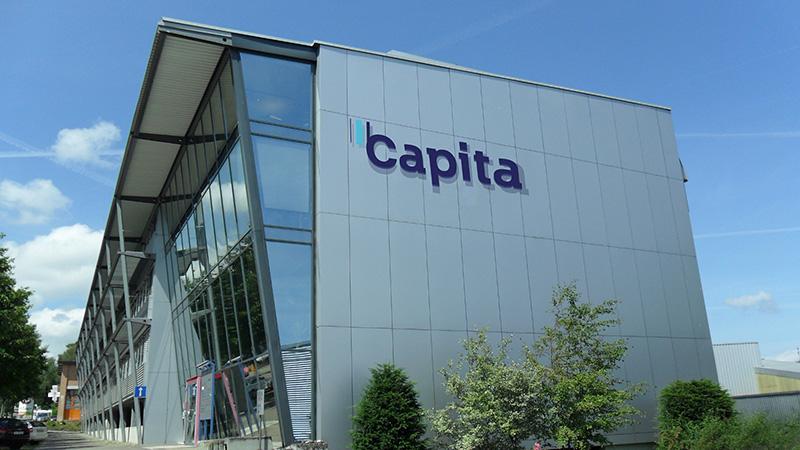
With more than thirty years of experience in the outsourcing industry, Capita is known as the largest company in the very field. The company came into being in 1984 and has become the largest business process outsourcing company in the UK. Capita is known for its BPO and Human Resource services and includes Back office administration, Customer service, Finance & Treasury, ICT & software as well as Corporate services in its catalog of services. The company headquarters resides in London, and over 60,000 people are working for it. Capita’s operating income as per the 2020 records was estimated to be £32.0 million, and it generated revenues worth £3,324.8 million in the FY2020.
Capita has expanded its operations to the UK, Europe, India, and South Africa and operates through three main divisions, i.e., Capita Public Service, Capita Experience, Capita Portfolio. The company’s operations are divided into various sub-departments, i.e., Consultancy division, Healthcare recruitment, Capita Financial Administration, Legal Services, Constructionline, NHS Services, Education Services, and Ministry of Defense Services, etc.

Capita

Capita Success Story

Capita was a division of CIPFA (Chartered Institute of Public Finance and Accountancy) when founded in 1984. In just three years, the division got separated from its parent company and became an independent entity in 1987. In 1991, the company went public on London Stock Exchange. In the next decade, the company saw rapid growth. For the growth, the Capita made some major acquisitions that included Ventura (2011), Team24 (20122), Fire Service College (2013), Avocis (2015), Constructionline (2015), Orange Bus (2016), NYS Corporate events and travel agency (2017), etc.
Along with the multiple acquisitions, Capita expanded to different countries, mainly in Europe, Africa, and Asia. The company also grew its operations to different industries, such as in 2006, it included financial services to its list of services, and in 2011, it added healthcare into its service area. Later, it expanded to legal services, defense as well educational sectors. The company has bagged multiple high-level projects from not only the private sector but also from the governments of different countries. It was awarded a £1.3 billion worth recruiting project from the British army in 2012. The company has shown immense growth in the past twenty years, and its consulting and recruitment wings are the most profit-earning ones.

The CEO at Capita

Jonathan is the residing CEO at Capita. He is a Geology graduate but has worked in the technology industry for past many years. Lewis received a Bachelor’s degree from Kingston University and has completed a PhD in Geology from the University of Reading.
Lewis started his career as a research fellow at Imperial College London and then, joined the Heriot-Watt University as the Geology Lecturer and Commercial Research Manager. In 1996, Lewis started to work at Landmark Graphics Corporation, where he held job posts like the Vice President of Marketing and Innovation. After working for ten years at Landmark, he became the Senior Vice President of the completions and production division at Halliburton. In 2016, Lewis became the CEO at Amec Foster Wheeler and worked for a year and a half at the company. Lewis left the job at Amec and joined as the Chief Executive Officer of Capita in December 2017.

Life360

Life360 – A Family Networking App That Received Funding From Both Google And Facebook.

Life360 is a social family networking app that was initially released in the market in 2008. Chris Hulls is the founder of the company and it’s currently based in San Francisco, US. Life360 is a publicly-traded information technology company that is operated by consumers across the world except in China. The application offers location-based services, alarming with notifications, sharing location, etc. The idea behind Life360 was to design software that would virtually keep a family together and safe. The Life360 app is available for both Android and iOS users.

About Life360 app

The Life360 app has got several features to always get a real-time update on your friends and family members. There are alerts when your family is entering or leaving any specific places or even when they are driving or just walking. One will also receive a notification after the completion of every drive and get to know if they are running low on battery. One of the features called the Driver Protect offers crash detection, roadside assistance, and updated weekly driver reports. The app is designed in a way that it can automatically detect an accident and dispatches emergency services if needed. This feature can also connect the drivers to trained advisors that can assist during minor accidents.

There are two other important features offered by Life360, namely, Check-In and Help Alert. It is a bit worrisome for parents to let their kids or senior citizens travel alone. So, the Check-In feature helps in getting quick updates for when they are traveling, leaving a place, or arriving. The Help Alert button sends an alert to all the emergency contacts and in the Life360 circle with a click of a single button. It also shows the other users when that button was pressed.

Life360
Image source: www.techjunkie.com

Initial Days

Chris Hulls had the idea for Life360 when he was an undergrad student. The initial prototype was launched in the Android marketplace in 2008. Chris received initial funding for Life360 from both Facebook and Google. Life360 participated and won Google’s Android Developer Challenge in 2008 and received $275,000 as of the grant money. This was a huge amount and got the company started in the early stage. After the company started growing it received the funds of $5.5 million, $17 million, and $50 million in Series A, Series B, and Series C funding respectively.

In 2013, Life360 entered into a partnership with BMW such that the location services of the company would be integrated into the navigation system of BMW cars. In this same year, the company also crossed more than 34 million, outrunning Foursquare. By the end of 2013, Life360 had over 40 million registered users. Another reason that Life360 witnessed a growth in the number of users was Google decided to discontinue its platform, Google Latitude in August 2013. Eventually, the company also added more languages to the app other than English and added international SMS.

Recent Events

With every year, the company kept on adding more and more features to the app making it helpful in every way. In 2016, Life360 launched the feature of automatic car crash detection and contacting the people on the emergency list. Life360 started a joint venture with ADT Go and the news was announced by ADT at the CES 2018. ADT has a very expansive security infrastructure to connect and protect its customers outside the home.

Life360 became a public company in 2019 as it was listed in the Australian Securities Exchange and the fund raised was invested to expand globally and partner with various insurance companies. Life360 has recently acquired two new companies. They are a guide app called ZenScreen and an American electronics company, Tile.

Chris Hulls – Founder of Life360

Chris Hulls is a travel enthusiast and a tech entrepreneur. He served in the military after passing high school and was deployed to the Middle East. As an undergrad student at the University of California Berkely, he got an internship with Goldman Sachs. He always wanted to go to the South Pole but in a medical test, he got to know that he has a tumor and life took a different turn.

Avid Technology

Avid Technology – The Pioneers of Video Editing and Multimedia Software.

The day people discovered video and film making, that too with audio, was one of the most revolutionary days for humankind. The devices to develop those videos and platforms to run those videos have come a long way and today making videos and editing them according to one needs has become really easy. There are different people behind making those complex works easy, and few include the ones who make that user-friendly editing software for videographers and other multimedia companies. Avid Technology is one such company that has been in the software industry for the last 34 years and developing dedicated software products for the multimedia industry.

About Avid Technology

Bill Warner had founded Avid Technology in August 1987. It is an American software and multimedia company, with its headquarters based in Burlington, Massachusetts, United States. The company is best known for its software and editing products for the multimedia industry, and its key products include Pro Tools, Media Composer, Sibelius, Avid VENUE, Avid NEXIS, MediaCentral, FastServe, etc. Media Composer is the flagship product of Avid Technology. In the past 34 years, Avid Technology has gained the trust of clients from all over the world, and over 1500 people are working for it globally. Aspiring artists, creative professionals, production teams, and media enterprises cover the major part of the Avid client base. As per the 2020 records, the company made annual revenues worth US$360.5 million, and its estimated operating income for 2018 was US$13.684 million.

Avid Technology
Image source: www.avid.com

The Back Story

Bill Warner, the founder of Avid Technology, was working as a marketing manager at Apollo Computer before he founded the company in 1987. After establishing the company, he started to work on the first product of the company, a non-linear editing system named Avid/1 Media Composer. The company presented the very product in April 1988 at the National Association of Broadcasters (NAB). Avid Technology was the first to launch such a product for video editors. The innovative idea behind the product made it the most loved product of the 90s and replaced many conventional and existing but outdated products. The very product made it way easier for the editors to edit the videos in lesser time and more effectively.
Avid Technology, in almost ten years of its inception, bagged the technical Emmy award for Outstanding Engineering Development for its unique video editing system. In 1994, Avid launched another product named Open Media Framework, and in the next ten years, it launched products like Avid Interplay and Unity Isi, software different from a video editor. Avid Technology also won an Oscar for its revolutionary Avid Film Composer at the 71st Academy Awards in March 1999.
Avid Technology saw steady but rapid growth from the very beginning. Some of the credit of its growth also go to its strategic acquisitions. These acquisitions include names like DiVA Corporation (1993), Digidesign (1994), Basys (1994), Elastic Reality, Inc. (1995), Softimage (1998), NewStar (1998), Pluto Technology (2000), iKnowledge (2002), Rocket Networks (2003), Bomb Factory (@004), Sundance Digital (2006), Blue Order Solutions AG (2010), Rocket Networ (2012), Orad Systems (2015), etc.

The CEO at Avid Technology

With over thirty years of experience, Rosica has served many well-known companies at different prominent positions. He completed his graduation from Sierra College and then went to Sacramento State University for further studies.
In 1991, Rosica joined Philips Electronics and became the Vice President and General Manager of the company’s Digital Video Systems division. Later, in 2002, he became the Senior Vice President of the Strategic and Business Development wing of Thomson. Rosica also served Grass Valley as the Executive Vice president and Chief Sales & Marketing Officer for two years. In January 2013, Rosica joined Avid Technology, and for the past nine years, served the company in various positions, including Senior Vice President of Worldwide Field Operations and Chief Sales & Marketing Officer, etc. In December 2016, he was promoted to be the President of the company, and in February 2018, Rosica became the CEO of Avid Technology.

Linx S.A.

Linx S.A. – A 35-years old Brazilian software company recently merged with StoneCo.

Established in 1985, Linx S.A. is a Brazilian company that was recently merged with StoneCo over a transaction worth $1.1 billion. It is a publicly-traded company and the largest software house in Latin America in the retail management sector. The company retains approximately 40% of the retail management software in its home country. In the early 2000s, the company was consecutively featured in the Valor 1000 annual report as one of the biggest Brazilian companies. It has also made plenty of acquisitions both before and after the merger with StoneCo.

About Linx S.A.

Nércio Fernandes is a Brazilian entrepreneur who has founded Linx S.A. in 1985. Linx S.A. has established itself in the management software industry and it offers cloud-based solutions that are easy to use and affordable. It has a SaaS business model that it offers to retailers in Latin America. Like every other software company, Linx also witnessed high growth in revenue during the pandemic as only the subscription revenue accounted for R$866.6 million. Linx S.A. has also received many awards for its rapid growth and technology. In 2009, Linx became the fifth-largest company in the country in terms of sales. In 2017, the company was acknowledged by BR Week for Best Software Provider of Receipt Emission.

Linx S.A.
Image source: miro.medium.com

History

When the company was founded by Nércio Fernandes and his other partners, it was named Microserv Comércio & Consultoria Ltda. Nércio Fernandes wanted to invest in the microcomputing field and so he established this company even though he was from a civil engineering background. Initially, the company started serving small businesses in the regions of Brás and Bom Retiro in São Paulo. A few years later, Microserv created software for fashion retail management and it was called MicroMalhas. In 1990, the company’s name was changed to Linx followed by Linx ERP. During this time, the flagship product of the company focussed on several industries ‘ retail management.

In 2000, the company opened a new unit, Linx Logistica for internal logistics. The company eventually opened other divisions of Linx as the business expanded and the structure evolved. Some of the other divisions are Linx Sistemas and Linx Telecom. These segments focused on telecommunication and connectivity for retail. Linx thought a holding company will be necessary to unify the business units and hence LMI S.A. emerged in 2004 and was later renamed Linx S.A. As Linx S.A. was expanding, it moved its main office in 2011 to a commercial building in São Paulo. It also landed an investment from an American private equity firm, General Atlantic.

Merger and Acquisition

Linx acquired Quadrant Informatica Ltda in 2008. The deal was closed for R$39.9 million. In the next year, it acquired Formata Data Business for R$41.1 million followed by Intercommerce Retail Software for R$13.6 million. In 2010, Linx acquired two new companies, namely, CNP Engenharia de Sistemas S.A. and Dia System Informática Ltda for R$16 miilion and R$13.8 respectively. It also acquired Custom Business Solutions Ltda, Spress Informatica, and Microvix Software in 2011. In 2012, Linx S.A. made a deal with itix Consultoria em Tecnologia da Informação Ltda. for the transfer of its technology. The size of acquisitions got bigger as in 2014, Linx acquired a series of companies and the total transaction amount exceeded R$100 million. In 2020, Linx celebrated its 35th anniversary and acquired PinPag, Neemo, Humanas, and a few other companies.

Nércio Fernandes – Founder of Linx S.A.

Nércio Fernandes started his studies in civil engineering. But, his greater interest in the computer field led to entrepreneurship. At the age of 22, he decided to drop out of college and start his venture. His first company was Linx S.A. after which he founded a few other companies. These companies include Okean Yachts, TAQE, and Predicta. Currently, he is a Board Member of all these companies including Linx S.A.