Your Tech Story

Tech Story

Babylon Health

Babylon Health – Digitizing Healthcare And Offering Online Health Consultation.

Digitization has spread like a virus. There might be a field that is not touched by IT and hasn’t adopted digital means for its working. The healthcare department also has gone a step forward by integrating technologies like Artificial Intelligence into its, and hence, becoming more advanced and reliable. The healthcare industry is also getting into making apps, such that the patients have quick access to their health solutions, in fact, to their doctors. These healthcare apps are good for tracking one’s health, making appointments and also, and connecting to specialists. Babylon Health is known for its digital-first health services based on artificial intelligence and virtual reality. The company is only a decade old and has made a big name in the industry globally.

About the Company

Ali Parsa, a British-Iranian healthcare entrepreneur founded Babylon Health in 2013. The company was founded in the UK, and hence, the headquarters has also been set up in London. Today, Babylon Healthcare has established its offices in countries like Hong Kong, India, Saudi Arabia, the US, Canada, Rwanda, Indonesia, Laos, the Philippines, Singapore, etc. Babylon was founded as a private firm, and today it is trading on New York Stock Exchange as BBLN. The company offers a subscription business model where patients can connect to healthcare specialists through both web and mobile applications by Babylon. The mobile application is for both iOS and Android mobiles. The most popular Babylon products include Babylon 360 and Babylon Cloud Services. As per 2021 records, over 2100 people are working for Babylon Health, and it made revenues worth US$322.9 million in the same financial year.

Babylon Health
Image source: securecdn.pymnts.com

Founding Babylon Health

Ali Parsa founded Babylon Health to bring advancement into the old-fashioned way of healthcare. In fact, he claimed that the launch of Babylon Health is the end of the traditional healthcare system that is used generally. The company provides virtual consultations with doctors and health care specialists through both text and video calls. Babylon endorses its mobile and web application, which is easy to use and accessible from any internet-connected device.

Parsa founded Babylon as Babylon Health Services Ltd in 2013. Today, the company is owned by Babylon Holdings Limited. The service provided by Babylon was one of its kind and hence became popular from the very beginning. In 2014, it partnered with Care Quality Connection of England. The company held a Series A round in 2016 and raised $25 million from investors, including Hoxton Ventures and Kinnevik AB. The next year, Babylon raised $60 million, invested directly to integrate artificial intelligence into its existing platform.

In 2018, WeChat also integrated the artificial intelligence technology by Babylon. The same year, the company had another partnership with Bupa. As per the 2021 records, Babylon saw a 372% rise in its third-quarter revenues compared to the previous year. Today, the company has expanded to countries like the US, Canada, Rwanda, India, Hong Kong, etc. Babylon has a customer base of 20 million people and offers over 5000 consultations every day.

The Founder

Ali Parsa is the founder of Babylon Health. He is a British-Iranian entrepreneur of Persian ethnicity. Parsa was born on 24 January 1965 in Rasht, Imperial State of Iran. He earned a bachelor’s civil and environmental engineering from University College London (UCL). At the university, Parsa also wrote for the student newspaper named Pi. In 1995, he completed a PhD in engineering in physics. While studying, Parsa co-founded his first company named Victoria & Gilan (V&G), and won the Royal Award for the Young Entrepreneur in 1993. He also worked as an investment banker at Credit Suisse First Boston. Apart from that, Parsa has also worked at Merrill Lynch and Goldman Sachs. In 2004 Parsa founded Circle Health.

ForgeRock

ForgeRock – Accessing the Internet With Security.

The past two decades have brought a lot of changes in almost every industry. From personal computers to having multiple personal virtual accounts on various sites and for work, we are all about usernames and passwords today. Having a different account for each client helps the companies manage them better, hence, from having a work identity to a shopping identity, we have to have those IDs for almost everything. But when we are logging in to various such sites, whether for shopping or work only, we have constant doubt of identity theft. Therefore, companies like ForgeRock are there.

ForgeRock is an American company building an enterprise-grade platform for managing, securing, and governing different types of organisations. The ForgeRock platform from the company helps the organisations to work faster and in a safer environment. With the changing technologies, the company is using cloud architecture to make every site, app or any other platform using ForgeRock accessible from anywhere securely.

About ForgeRock

ForgeRock is an identity and access management software company founded in February 2010. A group of people who worked at Sun Microsystem had founded the company in Norway, and the headquarters of the company resides in San Francisco, California, United States. It is a publically traded company and trades as FORG on NYSE. Its flagship product is identity management software named after the company’s name, i.e., ForgeRock. The company produces identity solutions for big organizations and offers its service in over 50 countries. As per the 2021 records, over 700 people are employed at ForgeRock, whereas it has gained more than 1300 permanent clients globally. The company made annual revenues worth $100 million for FY2019.

ForgeRock
Image source: solutionsreview.com

The Back Story

A group of people, who were employed at Sun Microsystems founded ForgeRock in 2010, in Norway. ForgeRock was a concept upon which Sun was already working, but after Oracle acquired the company, it discontinued the project, and the founders of the Company started to work on the same project and eventually founded the company. In the very beginning, only the employees of a company using computers for their work needed identity protection, but the founders of ForgeRock had a larger vision. They knew that the concept of identity management has a bigger scope in general. This vision helped the company build a platform that is sufficient to manage identities across and for the workforce, consumers, and things.

The company provides two different types of products, i.e., a platform for organisations and SDKs for building apps. The company also offers training and certification programs for developing and deploying identity solutions under its ForgeRock University.

For the establishment of the company, the founders bagged investments worth $250 million from investors like Accel Partners, Meritech Capital Partners, Riverwood Capital, etc., in venture capital. Names like BMW, Toyota, BBC, Philips, Geico, Richmond, etc., are a few of the permanent clients of ForgeRock, and the company serves industries including financial services, healthcare, government, retail, manufacturing, telecommunication, media, auto, smart mobility, etc.

ForgeRock is a publically traded company and went public on NYSE in September 2021. The ForgeRock platform offers services like Access Management, Identity Gateway, Directory Services as well as Identity Management, etc. The company has also won some recognition, including the SC2020 Awards, 2020 Fortress Cyber Security Award, Silver 2020 Stevie Award, etc.

The CEO at ForgeRock

Fran brings is the current CEO at ForgeRock. He has over twenty years of experience as a management leader in various leading name companies, including VeriSign and Symantec. Rosch holds B.S. in industrial engineering from Lehigh University in Bethlehem, PA.

Lightspeed

Lightspeed – Leading Montreal-based Software Provider For e-Commerce Services.

Lightspeed Commerce, most commonly known as Lightspeed is a leading Montreal-based software provider for e-commerce purposes. Dax Dasilva is the founder of the company and founded this international conglomerate in 2005. Lightspeed, till now, offers its services and products mainly in the retail, restaurant, and hospitality businesses. Silva served as the CEO of the company for a long time until he stepped down in February 2022. The current CEO of the company is JP Chauvet who served as the President of Lightspeed and Dasilva took the position of Executive Chair. In the last 16 years, Lightspeed has expanded to various international grounds including New York, Silicon Valley, Amsterdam, Ghent, etc. 

History

Founded in 2005, the main aim of the company was to offer point-of-sale and e-commerce software to various businesses. Though Lightspeed’s first focus was getting a good grip on the retail sector then it eventually expanded its customer base to other sectors. With the help of the commercial software offered by the company, the small and medium-sized industries got a chance to compete with the larger chains. Due to the smart data-driven decisions that Lightspeed helped its customers make, it grew rapidly and expanded on a global scale. After almost a decade of doing business with the retail industry, the company decided to enter the hospitality sector in 2014. By this time it opened offices in various locations including Washington, Berlin, New York City, Olympia, etc. Lightspeed is financially backed by Accel Partners and iNovia Capital. 

In an investment round that took place in 2012, $30 million was raised by the company. By the end of 2013, the company’s report showed that it grew by 120% within a year in terms of annual transactions. Since it was growing at an impressive rate along with the funding it received, Lightspeed started making acquisitions. In 2013, Lightspeed acquired MerchantOS, a point of sale software developer followed by an HTML5 web-based product. By the end of 2013, the company had more than 15,000 store locations and its customers processed $7.5 billion.

Lightspeed
Image source: betakit.com

Success

As Lightspeed continued to make several acquisitions, it added Advanced Analytics to the company’s retail feature roster in 2014. In September 2014, the company led a funding round where it raised $35 million and it was mainly hosted by iNovia Capital. During this time, the company was preparing itself to expand into the restaurant and hospitality business, especially through a Belgian startup POSIOS. By the end of the year, Lightspeed was serving more than 21,000 businesses and its annual transactions increased from $6 billion to $8.2 billion. As the number of clients kept on increasing in 2015 Lightspeed was serving global clients spread across 30 countries. The client base also increased from 21,000 to 23,000 in a year. In an investment round in 2015 that was led by Caisse de dépôt et placement du Québec and Investissement Québec along with existing investors, the company raised $61 million. 

In October 2015, Lightspeed acquired an e-commerce software developer, SEOShop, and announced that it will be serving both brick and mortar and online retailers. SEOShop was further rebranded as Lightspeed eCom and then integrated with the company’s retail POS software. In 2017, there was a new venture capital funding round in which the company raised $160 million. In 2018, the company brought new members into the leadership and executive teams like Patrick Pichette and Paul McFeeters. Recently, the company has made three acquisitions, namely, Gastrofix (2020), ShopKeep (2020), and Vend (2021). 

About the Founder

Dax Dasilva is originally from Vancouver but he emigrated with his family to Canada when he was a kid. He was interested in coding from a young age and then he attended the University of British Columbia to study computer science. But later, he decided to explore some creative opportunities. He is also a well-known advocate for LGBTQ+ rights and he came out as a gay at the age of fourteen. After founding Lightspeed, it became one of the fastest-growing tech startups in Canada. 

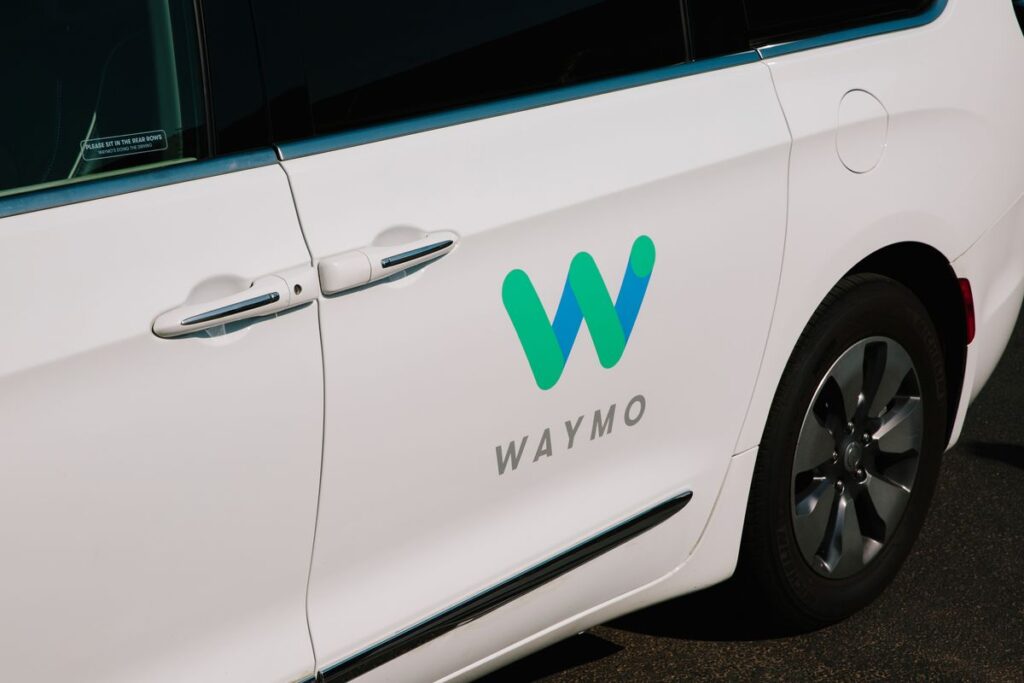
Waymo

Waymo – Facilitating Safe Movement Of People And Goods With Autonomous Driving Technology.

Tesla is very much ahead of its time in terms of autonomous driving technology. But names like Alphabet are also trying to expand in the very field and provide its customer with the best of them all. Alphabet Inc., the parent company of Google, has another subsidiary named Waymo, which dedicatedly works to developing autonomous driving technology. In fact, the said company also runs a commercial self-driving taxi service in the Arizona region, named Waymo One, the only self-driving taxi service. The taxis under this project runs without having a standby driver for emergencies. Apart from Waymo’s self-driving taxis, the software developed by the company is also used by some other car companies, like Stellantis, Jaguar, Daimler AG, Land Rover, Volvo, and Nissan-Renault.

About Waymo

Waymo LLC is a subsidiary of Alphabet Inc. and has its headquarters based in Mountain View, California, U.S. It is a 13-years-old company founded in January 2009 by Sebastian Thrun and Anthony Levandowski. Till 2016, Google was the parent company of Waymo when it started a self-driving car project in 2009, but in 2016 Alphabet became the parent company of the same, when the same project had a name change to Waymo. Dmitri Dolgov and Dmitri Dolgov (Co-CEO) Tekedra Mawakana are leading Waymo as the co-CEOs.

The basic concept behind the idea of Waymo is to avoid the accidental deaths that happen due to various negligence reasons of humans. The company makes use of artificial intelligence, sensors, and hardware-enhanced vision system to provide safer transit for both humans and goods.

Waymo
Image source: bwbx.io

Founding Waymo

Waymo wasn’t founded as a company but was launched as a project by Google in its Google X lab. The project was headed and launched by Sebastian Thrun, who had gained much experience in artificial intelligence after being a part of organisations like SAIL (Stanford Artificial Intelligence Laboratory) and Anthony Levandowski. During 2006-07, Google was already working on improving its maps and street view, and for that, the Street View team of Google has launched Ground Truth, a project that became the basis of Google’s self-driving program.

Anthony Levandowski, the other co-founder of Wymo, was also in self-driving vehicles and had built an autonomous two-wheeled motorcycle named Ghost Rider for the 2004 DARPA Grand Challenge. Being a Google employee, Levandowski sold his technology to Google, which was an addition to Google’s self-driving program. In 2012, Google obtained a driverless technology license from the Nevada Department of Motor Vehicles (DMV), and it carried out its first experiment with the self-driven car. The license was the first of its kind in America.

Under project Chauffeur, Google launched a new driverless car prototype (100% autonomous) without any steering wheel, gas pedal, and brake pedal in May 2014. Another prototype came in December with the name Firefly, mainly built for learning and experimentation. In 2015, the company introduced the world’s first fully driverless ride on public roads, and the experiment included no test driver.

This project Chaufwur was renamed Wayno in 2016 and was established as a start-up company as well as a subsidiary of Alphabet. By October 2017, the company was testing driverless minivans on roads, and in 2019, it started to build its cars in a Detroit manufacturing plant. Waymo also started integrating its technology into the existing car models rather than building new designs for them. In 2020, the company raised a sum of $3 billion from its various investors. The same year, Waymo also partnered with Volvo for the integration of its technology into Volvo’s vehicles.

The CEO at Waymo

Dmitri is a Russian-American businessman, whereas Tekedra has been a lawyer and a well-known businesswoman in America.

Dmitri is an alumnus of the Moscow Institute of Physics and Technology, where he earned a Bachelor of Science and a Master of Science degree in physics and math. He also got a PhD degree in computer science from the University of Michigan and a postdoctoral from Stanford University. He has vast experience in the field of self-driving technology and has worked at Toyota and Google.

Tekedra, on the other hand, was already working at Waymo as the COO before she held the post of CEO. She has also worked with companies like Steptoe & Johnson, AOL, Yahoo!, eBay, etc. Tekedra holds a Doctorate in law.

IonQ

Christopher Monroe and Jungsang Kim, Two Masterminds Behind Developing The World’s Most Powerful Technologies.

IonQ is the world’s most renowned quantum computing company that was founded by two professors. The company was established in 2015 and currently it is based in College Park, Maryland. IonQ’s most unique factor is the approach they are using to generate and carry out functionalities with quantum circuits. This approach is called ion trapping and with the help of this technology, the errors can be minimized with better calculations, something the world has never seen before. IonQ claims that accuracy is not the only factor why ion trapping is a better approach, it also improves scalability, coherence time, and predictability.

About IonQ

IonQ is developing quantum computing and taking it to a new level such that complex mathematical problems can be solved with a better approach. The true potential of a quantum computer is not yet unleashed but if one can develop a stable and powerful quantum computer, it can overdo the best supercomputers in the world. IonQ is using ion trapping technology to develop the best quantum computing.

In this technology, an atom is first converted into an ion followed by using a linear iron trap (specialized chip) to hold that ion in a 3D space. Electromagnetic force helps to hold the ion in place and is completely isolated from the environment. Linear chains are formed by holding several ions in the ion traps which helps in running the complex algorithms. IonQ has proved only in a few years that their concept is very powerful and offers the world the most powerful quantum computer. In March 2020, IonQ was named one of Time’s 100 Most Influential Companies.

IonQ
Image source: dbknews.com

The Idea of Ion Trapping

Christopher Monroe, a professor at the University of Maryland, and Jungsang Kim, a professor from Duke University are the two masterminds behind developing one of the world’s most powerful technologies. They co-founded IonQ with the help of two partners at a venture firm, namely, Harry Weller and Andrew Schoen. IonQ was born as a result of rigorous research that these two professors carried out for 25 years. Their research field was quantum information science and today it has become a public company.

Monroe went into the quantum computing research field when he joined the National Institute of Standards and Technology (NIST) as a Staff Researcher. During this time, Monroe worked with the famous Nobel-laureate physicist, David Wineland. Wineland’s team was working on the application of trapped ions to produce controllable qubits and controllable quantum logic gates. This was the initial stage for building a large-scale trapped-ion computer.

Founding IonQ

Monroe and Kim became acquaintances of each other through various research activities that were funded by Intelligence Advanced Research Projects Activity (IARPA). They were collaborating formally and wrote a review paper together whose title was Scaling the Ion Trap Quantum Processor. Their collaboration for research purposes eventually led to the founding of IonQ, especially after New Enterprise Associates showed interest in investing in the technology mentioned in that review paper. So, the company received initial funding of $2 million to commercialize the technology.

Eventually, the team was expanding and the company hired David Moehring as the new CEO of the company in 2016. In 2017, the company received $20 million in Series B funding and it was led by Google Ventures and the existing investor. Peter Chapman joined the company in 2019 directly as its new CEO followed by which the company made a deal to make the quantum computer public through AWS, Google Cloud, and Microsoft Azure.

Peter Chapman – CEO of IonQ

Peter Chapman is the CEO and President of IonQ as well as a member of the board. Before joining IonQ, Chapman was leading a team for Amazon Prime where his main work was being responsible for Prime’s 2-Day delivery. His position was Director of Engineering at Amazon. Chapman is a remarkable software engineer with more than 40 years of experience including several managerial positions and writing software from scratch as well. He went to MIT and worked there at Artificial Intelligence Lab. Chapman has also served as the President and CEO of Media Arc and eMusic.

Sabre Corporation

Sabre Corporation – A Famous Travel Tech Company That Was Originally A Part Of American Airlines.

Sabre Corporation is a very well-known tech company in the travel industry. It was established in 1960 by American Airlines but in 2000 it was spun off and became an independent entity. Currently, it is a publicly-traded company with its headquarters based in Southlake, Texas, United States. The main goal of the company is to make travelling easier for the customers and offer a personalized travel experience with the help of innovative technology. Sabre has expanded to the Asian market with offices established in Bangalore and Singapore. It also has an office in London, Poland, and a few other places. 

Idea Behind Sabre

The idea behind founding Sabre dates back to 1953 when two legendary personas met on a flight. These two people are C.R. Smith, the then President of American Airlines, and Blair Smith, an IBM salesman. When they were travelling, they came up with the concept of the semi-automatic business research environment concept, i.e., Sabre. This new concept that they came up with was based on SAGE (Semi-Automatic Ground Environment) which was the first-ever major system to use interactive real-time computing. This SAGE system was developed by IBM for military purposes. So, with the idea based on IBM’s existing concept, American Airlines founded Sabre Corporation in 1960. 

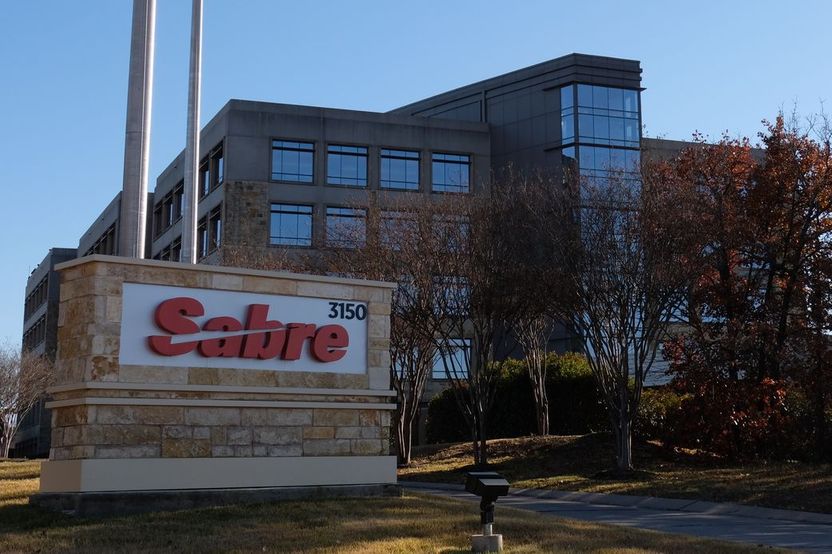
Sabre Corporation
Image source: amazonaws.com

Early Days

After the company was founded, Sabre installed its first reservation system in Briarcliff Manor in New York City. This reservation system was comprised of two IBM 7090 mainframe computers. This system was efficient was to processing 84,000 calls per day. In the next few years, Sabre Corporation was completely invested in building the nationwide network and by 1964 it became the largest commercial data processing (real-time) system across the globe. In 1965, the company was handling approximately 7,500 passenger reservations per hour. The Sabre system was relocated to a new centre in Tulsa, Oklahoma in 1972, and the system was also upgraded to IBM System/360. 

In 1976 Sabre’s journey started in eventually entering the travel sector as the system was installed for the first time in a travel agency. This was very beneficial for the customers because the travel agents would have instant access to flights. Within a year, 130 more locations installed the system for convenience. In 1984, Sabre introduced a new tool called BragainFinder and it was the first-ever automated low-fare searching solution for the industry. In the next year, another product was launched that gave the customers direct access to reserve hotels, airlines, etc. During the end of the decade, the company launched an online travel agency called Travelocity and started a joint venture with Abacus International. 

Sabre in the 21st Century 

Entering the 21st century, American Airlines spun off Sabre Corporation and became an independent company. Sabre acquired several companies in 2000, namely, Preview Travel, Dillion Communication Systems, Gradient Solutions, and GetThere. In 2001, the company’s airline hardware and communications business was acquired by Electronic Data Systems (EDS). This year it also established Sabre Pacific and acquired Site59 and David R. Bornemann Associates. Some of the other companies that it acquired in the next few years were Showtickets.com, Lastminute.com, Calidris, Flight Explorer, etc. 

In 2007, Sabre Corporation was acquired by Texas Pacific Group and Silver Lake Partners. The acquisition continued and in 2012 the company launched Sabre Red App Centre. In 2014, the company went public on NASDAQ. The companies acquired by Sabre after it went public are Abacus International, Trust International, and Airpas Aviation.

Sean Menke – CEO of Sabre Corporation

Sean Menke became the CEO and President of Sabre Corporation in 2016. But currently, he is the CEO and the board member of the company since a new President was appointed. Sean joined the company in 2015 as the President of Sabre Travel Network. Before joining Sabre Corporation, he also played his role as the CEO of Frontier Airlines and Pinnacle Airlines. Sean went to Ohio State University followed by the University of Denver.