Your Tech Story

Tech Story

Mercari

Mercari – A Japanese e-Commerce Company That Became The Country’s First Unicorn.

Shintaro Yamada, a famous Japanese businessman founded Mercari, a Japanese e-commerce platform in 2013. The business was started in Japan, but it eventually entered the United States after a few years. So, currently, it serves two markets because in 2018 the European branch of Mercari was shut down as a “temporary retreat.” The present CEO of the company is Shintaro Yamada who has been holding the position since 2013. The mobile application of Mercari is a big hit among the Japanese people for two main reasons, security and ease to use. The Mercari marketplace app is the largest community-powered marketplace in Japan. Transactions worth more than 10 billion JPY are carried out on this platform every month. 

Early Days

When Mercari was officially launched in Japan, it had competitors like Yahoo!. But the reason why Japanese people rapidly accepted the usage of Mercari was some of its unique features that increased the convenience of the customers. Back in February 2013 when Yamada founded Mercari, its original name was Kouzoh, Inc. After a few months, the mobile app of the company for both Android and iOS devices was launched. It was shocking to witness that more than a million people signed in for this online shopping platform within a year. 

When Yamada decided to build the app, he planned to develop something similar to an online flea market. So, the features that were added in Mercari were well-thought and implemented. For example, putting up an item online for sale can be a rather lengthy and tiresome process and it requires to be done from a computer. Since It was developed mainly for smartphones, the selling process through this platform became a lot easier. Many Japanese people were attracted to Mercari due to this reason, especially who didn’t own a personal computer. Mercari increased the scope of customer-to-customer market service among the Japanese population. 

Mercari
Image source: prnewswire.com

Growth & Expansion

From the very beginning, the growth of Mercari has been spectacular. After a year, Mercari witnessed approximately 4.5 million people using the app and more than 100,000 new items getting listed on a daily basis. The total transaction per day also exceeded $10 million. As the company was becoming the hype, it attracted investors including Global Brain Corporation, Globis Capital Partners, World Innovation Lab, East Ventures, and many more. Due to its early and rapid growth, Mercari was taken into the international market (United States) in 2014. The company expanded so soon in the international market due to high funding (raised $75 million in Series D funding). 

After a couple of years in 2016, Company reached the $1 billion mark and became Japan’s first startup to gain unicorn status. This was a very big achievement in the startup community of Japan inspiring the people to come up with more innovative ideas. After expanding to the United States, the company’s next target was the UK but the European market of Mercari was closed shortly after its opening. This happened because the company was unaware of the local conditions there and thus the idea to launch Mercari in the European market backfired. As the company became bigger, it decided to go public in 2018 and offered its IPO. After the IPO, the company’s valuation became $7.4 billion. The company was also named “Best App” by Google Play for two consecutive years. 

Shintaro Yamada – Founder & CEO of Mercari

Being the CEO and founder of Mercari, Shintaro Yamada currently owns one-third of the company. Yamada started his career with Rakuten, a little e-commerce company that he joined as an intern. While he was in Rakuten, he developed an auction website for the company and he started getting rough ideas about the company’s operations and how an e-commerce company functions. After a few years, he decided to start his own venture and founded Mercari. 

Tesla Inc

Tesla Inc – Manufacturing Electric Vehicles And Green Energy.

Founded in 2003, Tesla Inc is currently one of the well-known companies especially when it comes to manufacturing electric vehicles and green energy. The company also designs battery energy storage, solar panels, solar roof tiles, and other related products that help in minimizing the usage of non-renewable resources. When talking about Tesla Inc, we find pictures of Elon Musk crawling in the media with big headlines. But, the original founders of the company are Martin Eberhard and Marc Tarpenning. The founders named the company Tesla to pay a tribute to the famous scientist and inventor, Nikola Tesla. Tesla’s main markets are Europe, North America, Oceania, and East and West Asia. Elon Musk is the current CEO of the company and he is serving in this position since 2008.

Early Days

The two founders, Martin Eberhard and Marc Tarpenning officially incorporated Tesla on July 1, 2003. They served as the CEO and CFO of the company respectively. When Tesla Inc was founded, Eberhard expressed his interest that he wanted to build a car manufacturer that is a technology company as well. As the number of employees started increasing, Ian Wright joined as the third member of the company. In early 2004, the company’s Series A funding round took place in which it raised $7.5 million and the major contribution of $6.5 million was from Elon Musk. Thus, Musk became the largest shareholder of the company and he was also made the Chairman of the Board of Directors. In May 2004, J. B. Straubel joined the company as its CTO. In 2009, after a lawsuit was settled, Musk, Wright, and Straubel became the co-founders of the company along with the original founders. 

After Musk became one of the c-founders of the company, he participated very actively. The main target of the company was to start with a premium sports car and then eventually shift to mainstream and more affordable vehicles. Tesla’s Series B funding round took place in February 2006 in which it raised $13 million followed by a Series C funding round after a few months in which it raised $40 million. Google’s co-founders and Jeff Skoll, former eBay President also invested in the company. A year later, Tesla raised $45 million in a Series D funding round. In 2008, the original co-founders left the company and Musk succeeded as the new CEO. He started the production of Roadster in the same year. 

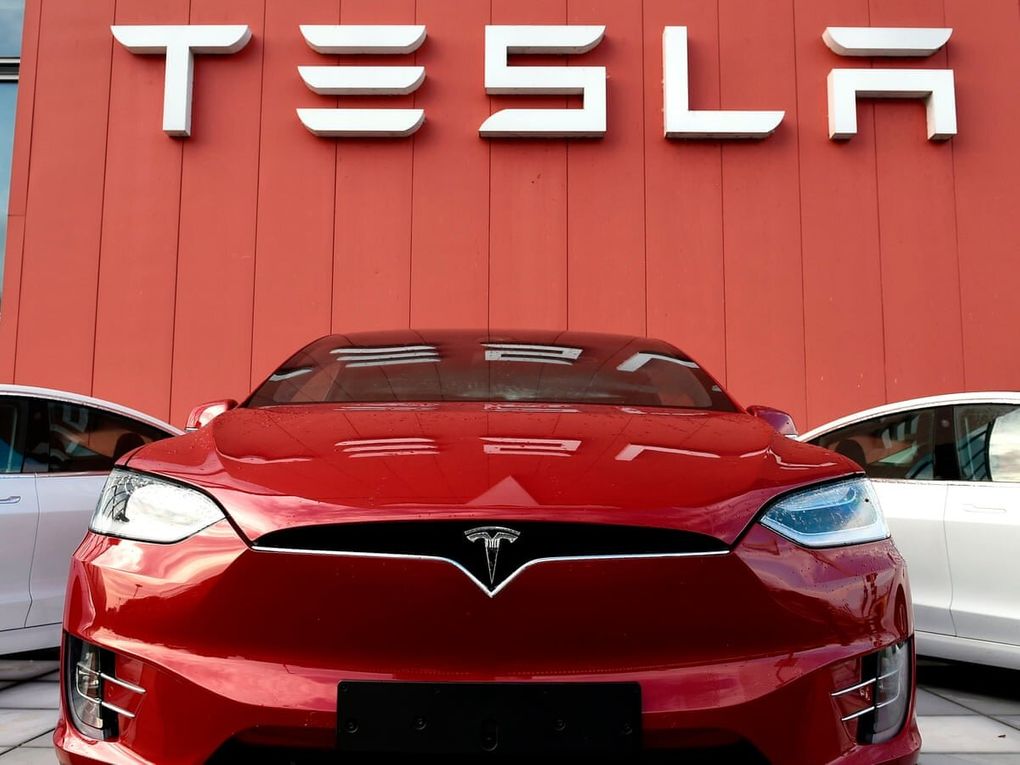
Tesla Inc
Image source: i.guim.co.uk

Tesla Going Public

To expand the production of various models, Tesla bought what today is known as Tesla Factory from Toyota in 2010. The deal was closed for $42 million. In the same year, the company offered an IPO and became the first American car company after Ford to go public. After a couple of years, Tesla discontinued the production of the Roadster and launched the Model S luxury sedan. This model became Motor Trend Car of the Year in 2013. The company also rolled out Tesla Autopilot, a driver-assistant system in 2014 and eventually started shipping all its cars with the same technology. 

In 2015, Tesla entered the energy storage market and within a year acquired SolarCity for $2.6 billion. As Tesla started expanding its business to the energy sector, the company changed its name from Tesla Motors to Tesla in 2017. In the same year, the company started selling the Model 3 sedan which became the world’s best-selling plug-in electric car in 2018. In 2019, the company opened its first “Gigafactory” outside the US in China and it was built within six months. Next year, the company started delivering its fifth vehicle model, the Model Y crossover. The future products of the company are Roadster (second generation), Tesla Semi, and Cybertruck. 

Elon Musk – Co-founder and CEO

Elon Musk is one of the most prominent businessmen and investors in the world. Apart from being the CEO of Tesla, he is also the founder, CEO, and chief engineer at SpaceX. He also founded The Boring Company and co-founded Neuralink and OpenAI. According to both Forbes and Bloomberg Billionaires Index, he is currently the wealthiest man in the world. His entrepreneurial journey started when he co-founded a web software company called Zip2 along with his brother. He is also the President of the Musk Foundation, an organization that donates to scientific research and education. 

United Microelectronics Corporation

United Microelectronics Corporation – Taiwan’s First Semiconductor Company.

United Microelectronics Corporation is a chipmaker based in Taiwan with around a $10 billion market capitalization. It sells CMOS wafers, memory chips, and high-voltage integrated circuits, among other things. UMC has offices in Taiwan, Japan, South Korea, China, Singapore, the United States, and Europe, with over 17,000 employees worldwide.

About United Microelectronics Corporation

The silicon foundry business was where United Microelectronics Corporation (UMC) established its niche. UMC is a leading silicon foundry, or contract semiconductor maker, trailing only archival Taiwan Semiconductor Manufacturing. Design, engineering, manufacturing, packing, sorting, and testing are among the company’s production services. It supplies complementary metal-oxide-semiconductor logic wafers, mixed-signal wafers, radiofrequency complementary metal-oxide-semiconductor wafers, embedded memory products, high voltage integrated circuits, and complementary metal-oxide-semiconductor image sensors through its semiconductor foundry. UMC has offices in Taiwan, Japan, Korea, China, Europe, the United States, and Singapore, and it continues to expand capacity and invest in sophisticated manufacturing technology. Taiwan is the company’s largest market, accounting for 33% of net sales. Singapore (24 percent), the United States (12 percent), and China are the other key markets (9 percent ).

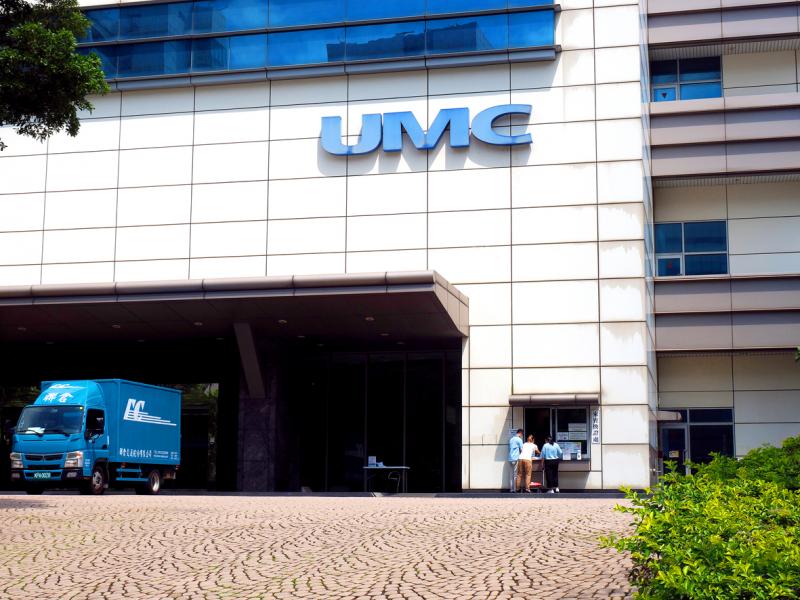
United Microelectronics Corporation
Image source: www.taipeitimes.com

UMC is aggressively developing internationally. The corporation invested $48 million in a subsidiary of Fujitsu Semiconductor, which has a 12-inch wafer manufacturing facility in Japan. In Xiamen, UMC has formed a joint venture with the city government of Xiamen and the state-owned Fujian Electronics and Information Group to establish a semiconductor fabrication plant. Starting in 2015, UMC will invest $1.35 billion in the initiative over five years. In January 2015, the company bought a 33 percent share in Xiamen-based chipmaker United Semiconductor as part of the plan. Taiwan’s first semiconductor company, UMC, was formed in 1980. Since 2012, Yen Po-wen, who joined UMC in 1986, has served as CEO.

Manufacturing Diversification

With numerous modern 300mm fabs in operation, UMC is a foundry production leader. Since 2002, Fab 12A in Tainan, Taiwan, has been producing client products in volume and is currently producing 14 and 28nm products. Phases 1&2, 3&4, and 5&6 make up the multi-phase complex, which is essentially three independent fabs. The entire monthly production capacity of Fab 12A is currently above 87,000 wafers. Fab 12i, UMC’s second 300mm fab, is located in Pasir Ris Wafer Park in Singapore. With a monthly capacity of 50,000 wafers, this second-generation 300mm plant is also in volume production. United Semi, UMC’s third 300mm fab in Xiamen, China, began volume production in Q4 2016. When fully equipped, United Semi’s overall design capacity is 50,000 wafers per month. In October of this year, UMC bought USJC in Japan. This 300mm fab in Mie Prefecture has a monthly capacity of 33,000 wafers for logic and specialty processes down to 40nm. UMC provides reliable and diversified manufacturing with leading production efficiency, thanks to its seven 200mm fabs and one 150mm specialized fab.

John Hsuan and Robert Tsao

From 1979 to 1981, Mr. Tsao was appointed Vice Chairman of the Electronics Research & Service Organization (ERSO), where he played an important role. He was a driving force behind the establishment of the Industrial Technology Research Institute (ITRI), where he oversaw the development of Taiwan’s first integrated circuit manufacturing line, which later became the foundation for United Microelectronics Corporation (UMC), a semiconductor contract manufacturer that produced chips based on the designs of its customers.

John Hsuan, who is soft-spoken and aloof at times, has been a driving force behind UMC’s recent metamorphosis from a small Taiwanese chip producer to a major IC wafer foundry. UMC was one of the first foundries to implement a 0.25-micron process, is a pioneer in 0.18-micron technology, and aims to ship products with copper interconnects early next year. UMC is the world’s second-largest pure-play foundry, behind Taiwan Semiconductor Manufacturing Co. Ltd., with sales expected to increase from $1.3 billion in 1998 to $1.75 billion this year.

Intercontinental Exchange

Jeffrey Sprecher – Journey From Being A Power Plant Developer To Foundation Of Intercontinental Exchange.

Jeffrey Sprecher, an American businessman, founded Intercontinental Exchange in 2000. It is a Fortune 500 company and has offices worldwide, including in the United States, Canada, London, Amsterdam, Tel Aviv, Rome, Singapore, India, and many other countries. Intercontinental Exchange is famous across the globe as ICE and it mainly operates global exchanges, and clearinghouses, offering mortgages, and many other financial services. ICE currently operates 12 regulated exchanges and marketplaces, including CE Clear U.S., ICE Clear Europe, ICE Clear Singapore, ICE Clear Credit, ICE Clear Netherlands, and ICE NGX. ICE has approximately 8,800 employees and the company’s founder is ruling as the present CEO and Chairman. 

Foundation of ICE

Before founding ICE, Jeffrey was in the natural gas business as a power plant developer. While doing business, he realized that there is a need for a seamless and transparent market where market prices are easily accessible by anyone from any part of the world. So, he wanted to build an internet-based platform to distribute these prices for OTC energy commodity trading. With this objective in mind, Jeffrey acquired Continental Power Exchange, Inc. in the late 1990s. Following the acquisition, Jeffrey along with a small group of technologists shaped the structure of the company in the interest of all buyers and sellers of energy. 

The main groundwork behind building the company took place between 1997 to 2000. During this time, Jefferey had eight colleagues who focused on the original version of the ICE trading platform. On the other hand, Jeffrey along with Chuck Vice (former COO of ICE) got on the field and started talking to potential customers. Since the company’s main target was the energy sector, it approached more than 100 companies in the power, oil, and natural gas business. During this time, electronic trading was not the trend but at the same time, these companies were looking for transparency in a trading model. So, ICE developed its technology by focusing on the workflow of its customers and successfully launched the company in May 2000. Today more than 70 companies are successfully transacting in ICE’s markets. 

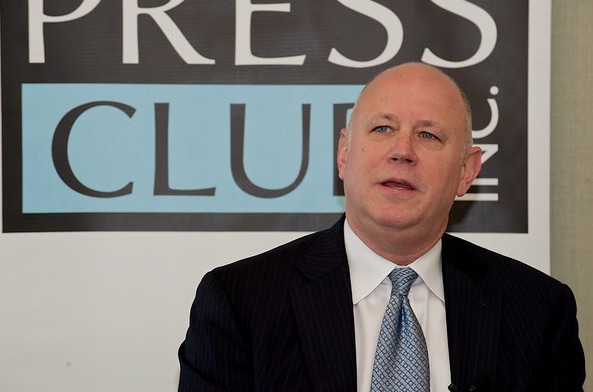
Intercontinental Exchange
Image source: amazonaws.com

Expansion

When the Intercontinental Exchange was founded in 2000, it was backed by some prominent banks like Goldman Sachs and Morgan Stanley. Though the company was established to primarily focus on the energy sector, eventually it also expanded its focus into soft commodities like sugar, cotton, and coffee, and also in foreign exchange. In June 2001, ICE acquired International Petroleum Exchange (IPE) which was then a regional exchange offering oil future contracts. ICE entered into futures trading through this acquisition. In 2007, the company went public and was also added to the Russell 1000 Index. After it became a publicly-traded company, it started expanding rapidly. In the same year, ICE acquired the New York Board of Trade, ChemConnect, and the 120-year-old Winnipeg Commodity Exchange. 

As the financial crisis hit the US in 2008, the company formed ICE US Trust (now known as ICE Clear Credit LLC) for serving as a limited-purpose bank, and also as a clearing house for credit default swaps. The company also worked closely with Federal Reserve such that it gets to serve as its over-the-counter (OTC) derivatives clearing house. Later that year, the company partnered with Canada’s TSX Group’s Natural Gas Exchange and also acquired Creditex Group Inc. In the upcoming years, ICE acquired many more companies including Climate Exchange PLC for $622 million, NYSE Euronext for $8.2 billion, SuperDerivatives Inc for $350 million, Interactive Data Corporation (IDC) for $5.2 billion, and the list could go on. Recently, the company acquired Black Knight Inc, a software and data analytics company

About the Founder

Jeffrey Sprecher, famous as the founder and CEO of ICE is also the Chairman of the New York Stock Exchange. He studied Chemical Engineering at the University of Wisconsin-Madison followed by acquiring an MBA from Pepperdine University. Jefferey started his career at Trane Technologies where he was offered a job at Western Power Group. He started the biggest venture of his life when he decided to buy Continental Power Exchange in 1996 from MidAmerican Energy Holdings Company. 

Veeco

Veeco – Leading Provider Of Smart Solutions In The Semiconductor Market.

Veeco is a New York-based global equipment supplier that was originally founded in 1945. It is a leading provider of smart solutions in the semiconductor market, especially for nanoscale devices and smart packaging production. Some of its well-known advanced solutions are laser processing systems, lithography systems, dicing and lapping systems, and many more. Apart from semiconductors, it also offers various data storage products and scientific materials. Veeco has more than 1,100 employees who are working coherently to deliver services around the clock. The technologies that are offered by Veeco are used by various enterprises to enable AI, virtual and augmented reality, cloud storage, 5G wireless communication, etc. 

Back in the 1940s

Two scientists, Frank Raible and Al Nerken established Veeco in 1945. The company was founded as a business that specializes in leak detector equipment. Originally, the name of the company was Vacuum Electronic Equipment Company, and in short, it made the current name of the company “Veeco.” During the 1960s, the company decided to merge with another company, Lambda (a power supply manufacturing business) which was followed by the merged company’s acquisition by Unitech in the 1980s. 

In the late 1980s, discussions took place to split Veeco’s instrument business from Unitech. And, this was successfully acquired by Edward H. Braun, the then COO of Veeco, and a group of senior executives from the company. It was a management buyout and Braun became the new CEO of the independent company. The new company was named Veeco Instruments and it completed an initial public offering in 1994. Veeco Instruments raised $27.5 million from the IPO. After it went public, Veeco acquired a series of companies including Ion Tech Inc through which it entered the optical coating market. 

Veeco
Image source: amazonaws.com

Veeco in the 21st century

In the new decade, the company’s first acquisition was Applied EPI, which is the current-day Molecular Beam Epitaxy group. This group currently maintains a leadership position in MBE technology worldwide. In 2003, Veeco acquired Emcore which helped the company start a business in metal-organic chemical vapor deposition technologies. Thus, it entered the advanced LED, VCSEL, and photonics market. From 2007 to 2010, the company released several MOCVD and MBE compound semiconductor systems. The company also did heavy research in the ALD field for more than a decade and published several papers. 

In July 2007, Braun became the chairman of the board of Veeco whereas former president of JDSU’s Communications Test and Measurement Division, John Peeler joined the company as the new CEO. Next year, Veeco settled patent litigation that it brought against Asylum Research Corporation in 2003. In late 2010, Veeco decided to sell its metrology business to Bruker Corporation and the deal was settled for $229.4 million. After a couple of years, John Peeler became the new chairman of the company’s board. In 2014, Veeco acquired Solid State Equipment Co. which helped to expand its portfolio to solvent-based wet etch and clean technologies for semiconductors. In recent years, the company is focussing on the advanced packaging market, hence it decided to acquire Ultratech in 2017. Through this acquisition, it also acquired Cambridge Nanotech, a Boston-based company specializing in atomic layer deposition technology. 

Bill Miller – CEO of Veeco

Bill Miller is the present CEO of the company and has also served as the company’s President since 2016. He is associated with the company for a long time as he held several executive positions before becoming the CEO. Dr. Miller studied Mechanical Engineering at the University of Pennsylvania and thus he held various engineering and operations positions in other companies he worked for. Before joining Veeco, he worked at Advanced Energy and Exxon. 

Xunlei

Xunlei – One Of The Top Internet Companies In China.

Xunlei is a publicly-traded Chinese multinational technology company that was founded in 2003. Based in the technology sector, the company is mainly a provider of online services. It is one of the most widely used internet brands in the country but it is primarily famous for computing and blockchain technology. The headquarters of Xunlei is based in Shenzhen, China. It also has a subsidiary called Shenzhen Xunlei Networking Technologies Co Ltd. Xunlei offers products and services to both individual and enterprise users and the solutions include cloud computing, download acceleration, blockchain, etc. It has also received several awards and accolades for its digital technology, and innovative products, and for consistently being one of the top internet companies in China. 

Story of Xunlei

Although Xunlei was officially founded in 2003, the company’s first prototype emerged in Silicon Valley, the USA in 2002. After one year, when Xunlei was established, Thunder 2 was released for the first time. Within the next year, the company witnessed an increase in the number of users and eventually released Xunlei 3 and Xunlei 4. In 2005, the company hosted a funding round in which it successfully raised $10 million approximately. In the same year, it also released Mini Thunder and Thunder 5. 2006 was a benchmark year for the company as it crossed 100 million users. Moreover, the company’s download-acceleration software became a software with the largest user scale. In 2007, Xunlei signed a strategic cooperation framework agreement with Google in Beijing. The company also incorporated many implementations in the cross-protocol download section. 

Xunlei
Image source: sinaimg.cn

Expansion

In 2008, the company released a chain of new products together including Thunder Software Assistant, Thunder Game, Thunder Security Assistant, and many more. Later that year, the company held a press conference regarding China’s internet content distribution. Again in 2009, a lot of new products and upgraded versions of some products were released. For example, Xunlei released its Home Digital Entertainment products and along with that launched Thunderbolt Heroes Web Game. In 2010, the number of Xunlei users exceeded the 300 million mark, and paid users reached 1 million. The company also released Thunder 7 that year, thus opening a new era for internet downloads. 

In 2011, it finally released its products for iPad, and the Mac version for Thunder was also released. The company’s online video site, Xunlei Kankan became the first online video site in China to achieve high definition on the whole network. In 2013, the total Xunlei users reached 460 million and the paid users reached 5.2 million. Earlier in 2014, the company received a huge amount of funding of $200 million from Xiaomi followed by which it went public and got listed on the Nasdaq Stock Exchange. After the investment, Xioami also partnered with Xunlei to jointly release Star CDN. In 2017, it occupied 42nd place in the list of China’s top 100 internet companies. Recently, the company has released its BaaS platform such that users can deploy their chain with a click, thus making the process much more convenient. 

Jinbo Li – CEO of Xunlei

In April 2020, Jinbo Li became the Chairman and CEO of Xunlei. Li comes with industrial expertise of more than 20 years exclusively in China’s internet and technology sector. He is associated with the company from the very beginning as he helped in establishing and running the core R&D team of the company from 2004 to 2009. In 2010, Li left the company and worked for two other internet ventures for the next four years followed by which he founded Itui International Inc, a mobile application development company. Jinbo Li went to Shandong University followed by Peking University.