Your Tech Story

Tech Story

Cognos

Cognos – IBM Business Intelligence Performance Management Application.

Cognos is an IBM business intelligence performance management application that enables technical and non-technical staff in any firm to analyze, extract, and generate interactive dashboards that help the company make important choices. The Cognos tool combines a number of products to allow for contact with a variety of third parties. SAPs, relational databases, and other systems are examples. Cognos is a business intelligence-gathering platform that offers a scalable and self-service analytical solution for company purposes. Because of its highly dynamic nature, it’s an excellent tool for building user-friendly dashboards and reports for any business.

About The Company

Cognos began as a consultancy firm in 1969, founded by Alan Rushforth and Peter Glenister, and eventually expanded into software sales. Cognos was acquired by IBM on January 31, 2008, and the software suite’s history was preserved. It originated as a consultancy firm for the Canadian government, and its first software product, QUIZ, was released in 1979. Cognos switched its concentration from consulting to software sales during the Canadian recession of the 1980s. In 1982, it changed its name to Cognos from Quasar Systems Limited. The word “cognos” is derived from the Latin word “cognosco,” which means “knowledge gained by personal experience.”

It’s a sophisticated business intelligence tool that can be used for data mining, data analysis, event monitoring, and metric visualization. It provides a powerful analytics medium for any firm to foresee market trends and take relevant steps ahead of time, allowing them to stay ahead of the competition. It’s a business intelligence application that lets you create interactive dashboards so you can make better business decisions by anticipating market developments. Almost every organization now employs Cognos for their analytical work, as making vital business decisions at the appropriate time is critical to surviving in today’s competitive market.

Cognos
Image source: newintelligence.ca

Cognos has made working for businesses and organizations a lot easier, and here are some of the ways it does so.

  • Artificial Intelligence and Machine Learning are used to fuel it, allowing it to generate future predictions and develop intelligent dashboards.
  • It employs pattern detection to uncover hidden patterns in data that would otherwise go unnoticed or unanticipated in regular situations.
  • Cognos’ ability to produce interactive dashboards in a variety of forms to meet corporate demands is one of its primary advantages. It allows stakeholders to study the charts in the way that they choose and aids in decision-making.
  • Natural language processing is a technique for extracting data from unstructured text and making intelligent predictions. Cognos uses AI that is powered by natural language to let people get intelligent answers to their questions.

Growth

With an estimated 8% wallet share in the BI and analytics software industry, it is one of the top three players. IBM Cognos Analytics continues to grow at a rapid pace, setting new standards for its competitors. Fortune 100 corporations prefer IBM Cognos, and it is used by some of the world’s most powerful organizations.

IBM Cognos has approximately 31400 clients in all major US regions, and BARC has dubbed it a market leader in integrated planning and analytics portfolios.

IBM Cognos provides significant capabilities for a variety of BI applications, including web-based OLAP analysis, structured reporting, ad-hoc reporting, and dashboards. IBM Cognos manages everything from data modeling and integration to exploration and visualization as an all-in-one platform. It’s an excellent solution for managing massive data volumes and supporting the needs of multiple users at the same time.

Rob Ashe- Ceo

Bridge Growth Partners’ Rob Ashe is an Executive Partner. He was the company’s previous President and Chief Executive Officer after joining in 1984. He was named President in 2002 and CEO in 2004, and he held both positions until IBM bought the company for $4.9 billion in 2007. After the acquisition, he worked at IBM as the General Manager of Business Analytics until 2012.

Mr. Ashe held many top executive positions at Cognos before becoming President and Chief Executive Officer, including Senior Vice President (“SVP”) of Application Development Tools, SVP of Products, SVP of Worldwide Customer Services, and Chief Corporate Officer, and Chief Financial Officer. He has served on Bridge Growth Partners LLC’s Technology Advisory Board. He has a Bachelor of Commerce in Accounting and an Honorary Doctorate from the University of Ottawa. Rob is a business visionary, a successful corporate leader, a community-minded influencer, and a proponent of higher education’s value and growth.

Blackboard

Blackboard Inc: Leading Web-Based Educational Software And Services Supplier.

Blackboard Inc. is the primary provider of web-based educational software and services to American postsecondary schools. The Blackboard Academic Suite and the Blackboard Commerce Suite, the company’s two primary products, enable students, professors, and administrators to connect to the Internet for a range of academic tasks, extracurricular activities, and commercial transactions. Blackboard’s core customers are colleges and universities, but it also serves K–12 schools and other education providers and student-focused merchants and publishers of textbooks. Blackboard’s products are utilized by millions of people at academic institutions in more than 60 countries worldwide, and the company is headquartered in Washington, D.C., with offices in Boston, Phoenix, Vancouver, Amsterdam, Australia, China, and Japan.

About The Company

Matthew Pittinsky and Michael Chasen had previously worked together on a software program that assisted high school students in selecting a college. KPMG saw that schools, particularly colleges and universities, were developing Internet-based learning initiatives. They recognized a lot of potential in the online education industry and decided to start a company that would let colleges offer their classes online. Pittinsky, 24, and Chasen, 25, abandoned their jobs at KPMG and formed Blackboard Inc. in the basement of a Dupont Circle townhouse in June 1997.

Blackboard Learn, the company’s main product, is a full-featured LMS that brings together students, educators, and administrators in a comprehensive digital learning environment. Moodlerooms, Blackboard Collaborate, Bb Student, Bb Grader, Bb Planner, Blackboard Open Content, Blackboard Mass Notifications, Blackboard Transact, and Blackboard Analytics are some other tools available. In addition, Blackboard offers managed hosting, platform consulting, enterprise consulting, online program management, training, and student services. Their job is to enhance the educational experience through the use of Internet-enabled technology that unites students, teachers, researchers, and the community in a developing network of educational environments dedicated to better communication, commerce, collaboration, and content. Every day, all throughout the world, Blackboard’s huge and diverse community of practice supports enhances, and extends services. The Internet has enormous potential for education and educational experiences. While platforms play a vital role, communities of practice produce the finest solutions. The network’s worth is its connectivity. As a result of the link, each Blackboard client makes the solution of every other Blackboard client more valuable.

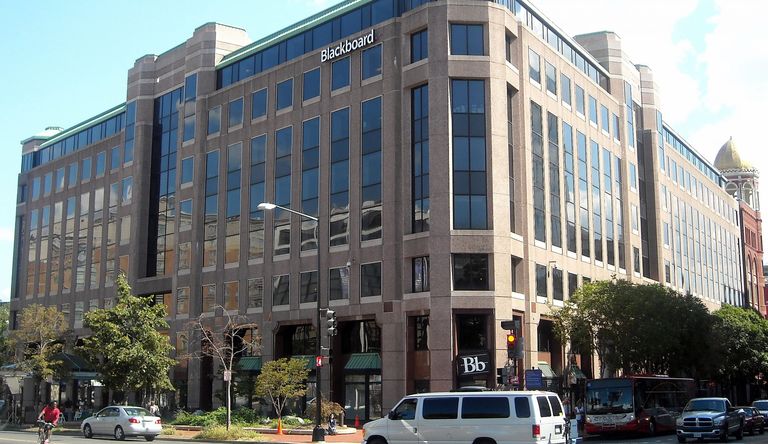
Blackboard
Image source: www.thesoftwarereport.com

Global Expansion

In May 2002, Blackboard established an association with LearningMate, a branch of Delhi-based Educomp Datamatics Ltd, to offer goods and services in India’s e-learning sector. In July, Company announced another long-term strategic agreement with Bell & Howell Company’s XanEdu. Blackboard Learning System ML, the company’s multilanguage course management system and the industry’s first multilanguage enterprise-class learning system, was released in August. Learning System ML enabled the user interface to show a variety of languages, including Chinese, French, German, Japanese, Spanish, and English. With a distribution collaboration with Australia-based Harvest Road, Blackboard maintained its push into the worldwide market and connection building in September. The company launched a strategic agreement with Learn-ingMate and World Links, an international non-profit organization, in December to enhance e-learning possibilities for instructors in rural and underserved schools across Africa, Asia, Latin America, and the Middle East. According to Inc. magazine’s annual top 500 rankings, Blackboard’s revenue growth from 1998 to 2002 was 11,047 percent, making it the fastest-growing private education company and the nation’s sixth fastest-growing corporation.

William L. Ballhaus – CEO

Bill serves as the chairman, president, and CEO of Blackboard. Bill is deeply committed to developing an industry-leading suite of solutions and products serving students and educators, as well as innovating on their behalf to expand student reach and improve learning outcomes within the education community, based on his experience leading global technology businesses.

Prior to joining Blackboard, he was President and CEO of SRA International, where he developed an innovative culture that focused on anticipating client demands and expanded the company’s portfolio in agile system development, mobilization, cloud computing, cyber security, and data analytics, and ERP.

Silicon Graphics

Silicon Graphics – Founded By Professor From Standford University.

The American company, Silicon Graphics was founded late in 1981 in Mountain View, California. SG was built as a manufacturer and producer of high computer hardware and software products. The brand of Silicon Graphics was renamed after it went bankrupt and Rackable Systems acquired it. The assets of the company were split and two new brand names emerged but none of them were able to acquire their original position in the market. Eventually, Silicon Graphics lost its existence in the market under its original name. Back when the company was founded, its initial product was 3G graphics computer workstations but eventually, priorities shifted with the evolution of the technology market. 

Establishment of Silicon Graphics

Jim Clark is the founder of Silicon Graphics and he was working at Standford University before founding the company. The foundation of the company started at the university as the early systems used by SG were based on the Geometry Machine developed by Clark and Marc Hannah. After developing this machine, Clark shortly left his position at the university as an electrical engineering associate professor. He started working on founding SG along with seven graduate students from the university and a few research staff. The main people who were involved in laying the foundation for the company are Kurt Akeley, David J. Brown, Tom Davis, Rocky Rhodes, Marc Hannah, Herb Kuta, and Mark Grossman along with Abbey Silverstone and a few others.

So, from 1982 the company became operational and Ed McCracken served as the CEO of the company from 1884 to 1997. During these thirteen years, the annual revenue of SG grew from $5.4 million to $3.7 billion. Though the annual revenue of the company was rising, SG faced a decline in demand for its product line during the late 1990s. There were several challenges in the marketplace and the share price was also falling. Due to this McCracken was replaced by Richard Belluzzo and under his leadership, the company started accelerating again. During this time, the company was trying to shift its main product line which also led to the creation of a new logo (making SG to SGI). All these initiatives taken by the company didn’t help much in its net growth and in 2005 the company was delisted from NYSE. 

Silicon Graphics
Image source: i.pinimg.com

Ups and Downs

To cope with the immense financial and growth crisis, the company hired Alix Partners in 2005 to advise the company on how to return back to profitability. The best way to deal with the NYSE delisting was a reverse stock split. Next year, the company appointed Dennis McKenna as the new CEO and Chairman of the Board of Directors. In the same year, the company also filed for Chapter 11 bankruptcy protection for the company itself and its US subsidiaries. It also decided to end the production of the MIPS/IRIX line and the IRIX operating system. By October 2006, the company emerged from bankruptcy protection and it was again listed on NYSE but under a new symbol. As the company eventually stabilized, it reentered the virtualization market in 2008. 

Unfortunately, in December 2008, the entire phase of delisting was repeated once again as the company share price declined under the minimum requirement. In 2009, the company decided to sell all its assets to Rackable Systems for $25 million. Ultimately, the deal was finalized for $42.5 million and Rackable Systems announced that they would adopt the “Silicon Graphics International” global name and brand. In 2016, Hewlett Packard Enterprise acquired Silicon Graphics International. 

Jim Clark – Founder of Silicon Graphics

Jim Clark (full name James Henry Clark) is a famous computer scientist who founded several companies apart from Silicon Graphics. His other ventures include myCFO, Netscape, and Healtheon. Clark’s main contribution to the research field led to the development of high-performance computing systems for the fast rendering of 3D computer images. He went to the University of Utah and after completing his Ph.D., he started working at NYIT’s Computer Graphics Lab. 

PeopleSoft

PeopleSoft – Company Fulfilling The Evolving Corporate Expectations.

PeopleSoft is a package of programs used by mid-sized to large businesses as a workforce management solution. PeopleSoft is a piece of software in the Oracle product range. It was originally meant to support finance and human resources, but it has since expanded to incorporate more tools and applications for broad business processes. Many different management components, such as materials, communications, and payroll management, are some of the uses that enterprises and corporations have for implementing software.

About The Company

Dave Duffield and Ken Morris launched PeopleSoft in 1987 to debut the application of their human resources. Their objective was to provide software to fulfill the evolving corporate expectations.

The corporation turned its focus to the internet in 1999. In addition, in 2000, the business developed PeopleSoft8, a web-based version of its software, as well as PeopleSoft e-centre, an in-house application service provider (ASP). Its web-based apps are designed to make system integration simple, allowing a company to link consumers, employees, and suppliers more cost-effectively. An organization can streamline processes since information is easily available by a wide range of personnel at any time and from any location, including mobile devices such as personal digital assistants (PDAs) and mobile phones.

Oracle owns the People Soft e-business software product line. The company began by providing human resources and financial applications. It has grown throughout time to include tools and applications for broad business operations like materials management, as well as solutions for specific industries such as automotive, communications, and higher education.

PeopleSoft currently offers users an integrated ERP software solution to help with the day-to-day execution of various business operations. Human resource departments in large corporations use PeopleSoft systems. Human resource management systems (HRMS), customer relationship management (CRM), finance and supply chain management (FSCM), and enterprise performance management are examples of these applications (EPM).

PeopleSoft
Image source: clubutilisateursoracle.org

Oracle Cloud and PeopleSoft

Oracle Cloud provides access to PeopleSoft products. Users can access and deploy HCM, FSCM, and other business apps using Oracle’s Compute Cloud and the Oracle Cloud Marketplace.

Users can transfer data to virtual machines in the Oracle Compute Cloud using Deployment Framework and PeopleTools 8.55. PeopleSoft Development and Testing instances can also be migrated to the Oracle Compute Cloud. Users can also use custom data with PeopleSoft and build multinode PeopleSoft clusters on the Oracle Cloud.

The Merger

PeopleSoft and competitor JD Edwards combined in 2003. Prior to its merger with PeopleSoft, JD Edwards’ product lines, World and OneWorld, were aimed at midsize businesses that were too small to benefit fully from PeopleSoft’s applications. It was able to appropriately offer for these enterprises by merging with JD Edwards, thus expanding its customer base. PeopleSoft rebranded OneWorld as PeopleSoft Enterprise One later on.

Oracle paid $10.3 billion and acquired PeopleSoft in 2005, adding CRM software to its product range. Oracle cut off 5,000 employees shortly after acquiring the firm. People Soft Enterprise One became JD Edwards EnterpriseOne, and PeopleSoft World became JD Edwards World, as Oracle rebranded the previous JD Edwards product line.

David Duffield – Founder

David is a successful executive and visionary in the company management, government, and higher education software industries. David launched PeopleSoft in 1987 and served as its CEO and board chairman prior to joining Workday. Before being bought in 2005, The company had grown to become the world’s second-largest ERP application software firm. David also founded Integral Systems, Business Software, and Information Associates. The company went public in 1992 and was purchased by Larry Ellison’s Oracle for $10.3 billion in 2005. He started Workday in 2005, which offered cloud-based management software and other solutions. In 2012, the company went public and raised $637 million. Duffield stepped aside as CEO of Workday in 2014, but he remains chairman. He currently controls approximately 25% of Workday.

Palm Inc

Palm Inc – Jeff Hawkins’ Tech Venture Whose Operations Revived Recently Through A Shelf Company. 

Founded in 1992, the Palm brand is associated with manufacturing personal digital assistants (PDAs). The company became famous after designing PalmPilot, the first successfully marketed PDA in the world. Since its founding, the company has been through several mergers and acquisitions. For a period of time, the Palm brand almost evaporated from the tech industry but then in 2014 the operations again started after an acquisition. Palm Inc is also known for developing the Treo 600, one of the first smartphones, and several versions of Palm OS. HP acquired Palm in 2010 but after a year decided to discontinue the Palm brand. Again in 2014, HP sold the Palm trademark to TCL Corporation and the latter announced its plan to revive the brand. 

The Original Palm Brand

In 1992, Jeff Hawkins incorporated the Palm brand and shortly brought Donna Dubinsky and Ed Colligan into the team. These three people are the main brains behind the invention of PalmPilot. When Palm was born, it wrote software for a consumer PDA, Zoomer. Casio was the manufacturer of this PDA and the Zoomer devices were distributed by Casio and GRiD. Palm mainly played the role of offering the PIM software. Though in a few years, Zoomer became a huge turndown, Palm stayed in business by selling software for HP devices. In 1995, Palm was acquired by U.S. Robotics Corp and after a couple of years, the latter was acquired by 3Com. So, Palm became a subsidiary of 3Com and the original founders left the company. 

Splitting Of The Company 

In 2000, Palm became an independent publicly-traded company as 3Com decided to take it public. Palm’s IPO was filed during the dot-com bubble so within a year the price of shares dropped and lost 90% of their value. In June 2001, Palm became the worst performing PDA manufacturer that was listed on the NASDAQ. After a year, Palm established a wholly-owned subsidiary, PalmSource for developing and licensing Palm OS. PalmSource and Palm became two different companies but the Palm trademark was held by a jointly owned holding company. By the end of 2003, the hardware division of the business merged with Handspring, and the business was renamed as palmOne Inc. 

After a couple of years, palmOne purchased PalmSource’s share in the common trademark for $30 million. Thus, the brand name of palmOne was changed to Palm Inc, bringing back the old brand name. In the same year, PalmSource was acquired by a company called ACCESS. The new Palm Inc started a partnership with Verizon and Microsoft in 2006 to release Palm Treo 700w. The company entered into a strategic partnership with Elevation Partners who purchased a 25% equity stake in Palm.  In 2008, the CEO of the company announced that Palm would no longer develop any new handheld PDAs. In early 2009, the share price increased to the WebOS hype but again dropped after a year. 

Palm Inc
Image source: pi.tedcdn.com

Acquisition By HP

In April 2010, HP announced that it would be purchasing Palm for $1.2 billion and the deal was completed two months later. After a year, HP unfolded a new line of WebOS products but they were not under the brand name Palm. In 2011, HP also decided to discontinue the use of the Palm brand and after a few months ended the production of all Palm and WebOS services. After this decision, many Palm staff members started leaving HP. In 2014, the Palm brand name resurfaced again as HP sold the trademark to a shelf company, a regional president of TCL Corporation. In 2015, TCL confirmed the acquisition of the Palm brand and that Palm would be recreated by a team in Silicon Valley.

About Jeff Hawkins 

Jeff Hawkins is the founder of both Palm Inc and Handspring. He studied electrical engineering at Cornell University and started working for GRiD Systems in 1982. After founding Palm and Handspring, Jeff co-founded Numenta in 2005 along with Dubinsky and Dileep George. Jeff has also made contributions in the field of neuroscience and founded Redwood Center for Theoretical Neuroscience in 2002. 

Nexon

Nexon – Kim Jung-ju Founded The Company While Pursuing A Doctorate At KAIST.

Pioneering in the world of digital entertainment, Nexon is a world-famous video game publisher. The company has brought several innovations into the gaming industry since 1994. For example, it was Nexon that first introduced a massively multiplayer online role-playing game (MMORPG) in the world. The founders of the company are Kim Jung-ju and Jake Song and the current CEO of Nexon is Owen Mahoney. Though Nexon is famous all over the world as a Japanese enterprise, it was originally a South Korean venture in the gaming industry. At present, the headquarters of the company is based in Tokyo, Japan. Nexon has a very large market and it is the fourth largest online gaming company in Asia. The company offers video games for both PC and mobile users. 

Foundation & Initial Expansion 

In 1994, the two founders, Jung-ju and Song founded Nexon in Seoul, South Korea. Two years later, in 1996, the company published its first video game, Nexus: The Kingdom of the Winds, which still today is available in the market. Many other titles followed this including QuizQuiz, Elance, Shattered Galaxy, and many more. After a few years, the company went into a mutual agreement with Solid Networks in 2000 and started its online gaming service in Japan. After a couple of years, the alliance with Solid Networks was dissolved and Nexon Japan Co., Ltd was formed as a subsidiary of the parent company. Though the company initially opened offices in South Korea and Japan, the games were available in several locations including Taiwan, China, Thailand, Brazil, Vietnam, Europe, Singapore, and North America. 

As the Japanese market of Nexon was expanding very rapidly the company decided to move its location to Tokyo. So, in 2005 the company relocated its headquarters, but South Korea’s market was also operational. In the same year, the company also entered the American market and established NX Games Inc. In 2008, Nexon made a big acquisition when it acquired Neople Inc. Through this wholly-owned subsidiary, the company became the developer of Dungeon & Fighter which is one of the most popular video games in China. In 2009, the company changed its name from Nexon Corporation to Nexon. 

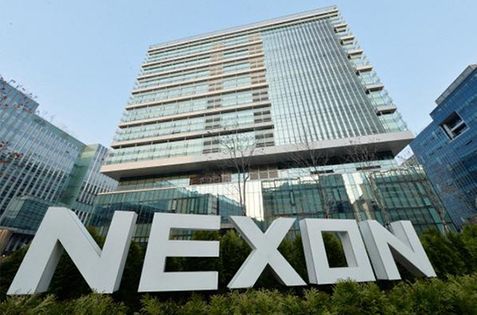
Nexon
Image source: mk.co.kr

Present Days

In 2010, the South Korean business of the company acquired two companies in a row. They are Ndoors Corporation and GameHi Co., Ltd. The Korean business changed its name from Nexon Corporation to Nexon Korea Corporation in 2011. Eventually, the company decided to go public and filed its IPO by the end of 2011. The IPO was the largest in Japan in that year and also the second-largest for a technology company that year worldwide. A few years later, Owen Mahoney became the CEO and President of the company. 

Under the new leadership, the company eventually expanded to Taiwan in 2015. In 2016, the company acquired Big Huge Games in the United States followed by i Digital Connect Co., which eventually became Nexon Thailand Co., Ltd. Two more companies that have been acquired in recent years are Pixelberry Studios and Embark Studios AB. In 2020, Nexon showed interest to invest an amount of $1.5 billion in listed entertainment companies. But the company also announced that it doesn’t have any interest in acquiring the companies that it is investing in. Recently, AGBO, a film production company has sold a $400 million minority stake to Nexon which is currently valued at $1.1 billion. 

The Man Behind The Success

Kim Jung-ju is a South Korean businessman and an investor. He co-founded the company, Nexon while pursuing a doctorate at KAIST. Nexon is currently the largest gaming company in South Korea and under Kim’s leadership, the company released many innovative developments that the world has witnessed for the first time. Unfortunately, Kim passed away at the age of fifty-four and before his death, he was receiving treatment for severe depression. When he died, he was the third-wealthiest person in South Korea.