Your Tech Story

Tech Story

Creative Technology

Creative Technology – Started From Preparing Add-On Memory Board For The Apple II PC.

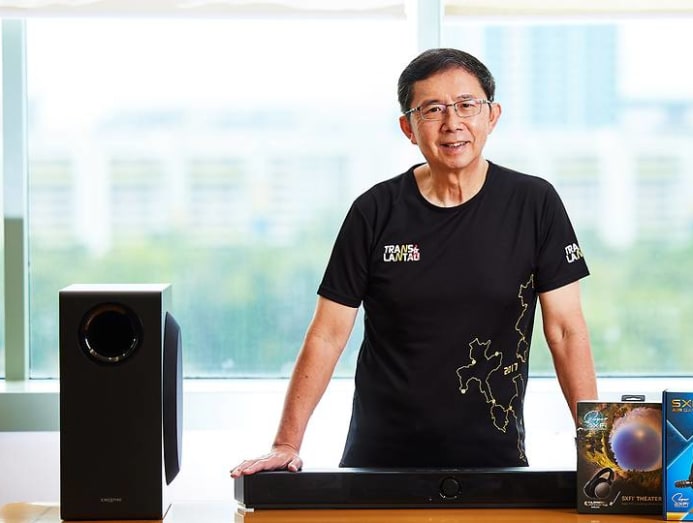
Creative Technology Limited is a Singaporean Multinational consumer Electronics firm. It was founded in 1981 by two childhood friends having its headquarters in Jurong, Singapore. Also, It has overseas offices in Shanghai, Tokyo, Dublin, and Silicon Valley. Its branch in the United States is known as Creative labs. Sim Woo Hong is the Chief Executive Officer of Creative Labs. Its Chief Financial Officer is Ng Kai Wa, who also played a Crucial role in its foundation.

Creative Labs provide services such as design, manufacture, and distribution of digitalized video and sound boards, computers, and related multimedia and personal digital entertainment products. It collaborates with mainboard manufacturer companies and renowned laptop brands to embed its Sound Blaster technology on its products.

History

Creative Technology Limited was founded 41 years ago, on 1st July 1981, by two childhood and Ngee Ann polytechnic schoolmates. It was first established in Jurong, Singapore. Then it expanded to various countries overseas. Initially, It was just a computer repair center located in Chinatown. The firm prepared an add-on memory board for the Apple II PC. After that, it spent nearly 500,000 USD on creating the Cubic CT, an IBM-compatible computer advanced for the Chinese language containing innovative features like enhanced colour graphics and a built-in audio board capable of generating speech and melodies. Since there was no demand for multilingual PCs and the availability of only a few multimedia software applications, it became a massive failure.

Sim decided to establish a creative technology subsidiary, Creative Labs in Silicon Valley united states. He convinced Many software Developers to offer their assistance in supporting their sound card, renamed game Blaster, marketed by RadioShack’s Tandy division. It became a huge success and resulted in the development of a Standalone Sound Blaster Sound Card.

In 1992, former Ashton-Tate CEO Ed Esber joined creative labs as Chief Executive Officer for the proper management and company’s rapid growth. He brought together a team of US executives consisting of talented personalities such as Rich Buchanan (graphics), Rich Sorkin (sound products, communication, OEM, and business development), and Gail Pomerantz (marketing). This team played a crucial role in lifting the shares market. Specifically, Rich Sorkin drastically enhanced the firm’s brand position via crisp licensing. However, the Esber team and the founders had some strategy and positioning-related opinion differences. So, they gave up their positions in 1995, except for Sorkin. He was promoted to general manager of audio communication products and afterward vice-president of business development and corporate investments. In 1996, He also left creative labs and went to work in Elon Musk’s first startup and internet explorer zip2.

Creative Technology
Image source: external-preview.redd.it

Revenue

Due to the Sound Blaster’s massive success, there was an immense revenue increase. It increased from 5.4 million USD in 1989 to 650 million USD in 1994. By 1996, the firm’s revenue reached 1.6 billion USD. Currently, its annual revenue is 84 million USD (2021).

Renowned Products

It became famous for its sound blaster in the 1980s and creative X-fi Sonic carrier in 2016.

Court Cases

Creative technology sued Aureal claiming patent violation over a MIDI technology controlled by E-mu Systems on 5 march 1998 with Aureal filing a counterclaim for defamation and indulging in unfair competition to damage them. After the launch of sound Blaster, they filed another suit against Aureal which went bankrupt due to expenses and investor pressure in 1999. Creative technology acquired it in 2000.

Subsidiaries

It has many Divisions and brands overseas which are the following:

  • Cambridge SoundWorks
  • Creative MuVo
  • Creative NOMAD
  • Creative ZEN
  • E-mu Systems/Ensoniq
  • Sound Blaster
  • SoundFont
  • ZiiLABS (previously 3Dlabs)

Founder – Sim Wong Hoo (Weng fu Shen)

Sim Woo Hong is a Singaporean Inventor, a billionaire, and a great entrepreneur. He was born in 1955 and studied at Bukit Panjang Government High School. He graduated from Ngee Ann polytechnic university in Electrical and Electronic engineering. He has won many awards for his inventions which include, Singapore’s Public star medal and Asia’s Businessman of the year in 2001. He became the youngest billionaire at the age of 45. He also authored a book named “chaotic Thoughts from The Old Millennium”.

KPIT Technologies

KPIT Technologies, Founded by Two Accountants working In The Same Accountancy Firm.

KPIT Technologies Limited is a leading Indian Multinational firm formerly known as KPIT Cummins Infosystem Limited. It was established in 1990, with its headquarters in Pune, Maharashtra, India. It is a software development company that provides software to automotive corporations and is an integration partner leading mobility to an advanced, clean, and safe future. Its business contains six domains i.e. Autonomous Driving, Connected Vehicles, Electric and Conventional Powertrain, AUTOSAR, Mechatronics, and Vehicle Diagnostics, working with leaders in the automotive and mobility industry.

It has its development centers in the USA, Germany, Korea, Japan, Thailand, India, and China. Over 7,000 (2019) employees are working in the firm specializing in Artificial Intelligence, embedded software, and digital solutions. The firm works on speeding up the clients’ performance of the next-gen technologies for the future mobility blueprint.

History

KPIT Technologies was founded in 1990 by Ravi Pandit and Kishore Patil, two accountants working in the same accountancy firm. In the year 2002, A firm known as Cummins Infotech merged its Information technology Department with KPIT, and from then on it was known as KPIT Cummins Infotech limited. After eleven years of this arrangement, Cummins technologies decided to reduce the shareholding in KPIT, focusing on its primary business in Generator and engine manufacturing. Therefore, in 2003, It changed its name back to “KPIT technologies”. It has created many software solutions one of the great ones is Revolo, which became the first ARAI- certified JNNURM II flexible with On- bus intelligent transport system. KPIT launched its new firm logo on June 6, 2019.

KPIT Technologies
Image source: www.punekarnews.in

Renowned Customers

Its renowned clients are BMW, Cummins, Paccar, Lafarge, GM, DICV, and others.

Revenue

The firm made its stock launch in 2019, which was 50 times oversubscribed. It has achieved a revenue of Rs. 2432.38 crores i.e. 320 million USD (2022), and has a net value/income of Rs. 274.24 crores i.e. 36 million USD.

Split-Up And Merger

In January 2018, an It company known as Birlasoft and KPIT decided to merge and promptly split up into two new firms. This proposal was approved by the competition commission of India. Afterward, two new firms, an IT firm, and an automotive firm were formed. The IT company was called Birlasoft and the automotive corporation was called KPIT Technologies. Birlasoft received 22 shares of the combined company for every nine shares they have in Birlasoft. KPIT received one share of every share they have in KPIT. According to the founders, this deal was made to segregate Information technology and automotive tech business to focus on each.

Founder – Ravi Pandit

Ravi Pandit is an Indian Entrepreneur, Co-founder, and chairman of KPIT Technologies Limited, born in Pune, Maharashtra. He holds a master’s degree in Management from MIT Sloan School of Management. He holds membership in two renowned institutes of India of chartered accountancy one is the Institute of Cost Accountants of India and the other is the Institute of Chartered Accountants of India. Also, He has been the president of Mahratta Chamber of Commerce, Agriculture and Industries between 2004-2006.

CEO – Kishore Patil

Kishore Patil is a great Entrepreneur, co-founder, managing director, and Chief Executive officer of KPIT. He led his team through its crucial time. His achievements are endless such as he was presented with the CA business leader Award in 2014 and the prestigious golden lotus national award.

Version 1

Version 1, Assisting Customers In Navigating The Digital-First Environment We Live In.

Version 1 is an Irish company that specializes in providing various kinds of professional and technological services. The company demonstrates how IT can improve customers’ businesses. Global brands rely on this organization to provide IT services and services that enable customers to succeed. 

About The Company

Founded in 1996, Version 1 is an Irish business specializing in cloud computing, software development, an international management consulting, and software asset management. The company’s staff of over 2000 committed change-makers works relentlessly to create meaningful changes and impartial advice to assist customers in navigating the fast-evolving Digital-First environment we live in. In 2021, the company had a revenue of over €195 million. 

Version 1
Image source: www.version1.com

History Of The Company

Version 1 was founded by Justin Keatinge and John Mullen. It was initially headquartered in Dublin, Ireland. Until 2011 the company had more than 150 consultants working for it and had yearly revenues of over €17.5 million. It was also included on the Deloitte Fast 50 list. The company expanded its Northern Ireland branch in 2014 and opened an office in London, United Kingdom. Version 1 was named as one of the best 50 workplaces in Europe after acquiring the UK-based Tieto Corporation. They later acquired UK companies named Patech Solutions and Roccella Group. By the end of the year, they had eight worldwide offices, over 500 consultants, and yearly revenues of €60 million. In 2017, Volpi Capital LLP acquired the majority of shares in Version 1 in a €100 million buyout of the company. With the money from the buyout, Version 1 was able to increase its activities in UK and Europe. After Justin Keatinge, the previous CEO, resigned in 2017, Tom O’Connor was chosen to lead Version 1. Keatinge stayed on the board of Version 1 and is still a significant stakeholder.

In 2018 the company declared an investment of €1 million in its Innovation Labs, whose core focus areas are: IoT, ChatBots, Virtual Reality, Machine Learning, and Augmented Reality. In 2018 the company acquired Cedar Consulting Ltd., an expert in HR Transformation. 

OneZeroOne, Version 1’s own podcast, debuted in April 2019. The podcast is a collection of interviews with UK and Irish technology and innovation specialists who share their thoughts, insights, and lessons with listeners. Its six podcast episodes are accessible on Spotify, AudioBoom, Deezer, and other streaming platforms.

Partners

Currently, the company works with Oracle Corporation, Microsoft, and Amazon Web Services as its three primary technological partners. Version 1 has the biggest Oracle competence in the UK and Ireland and has been an Oracle Platinum Partner for Cloud Managed Services. Since 2006, It has been a Gold Microsoft Partner and has collaborated with the software giant. Version 1 is a Premier Consulting Partner in industries like migration, the public sector, and managed services providers. It was amongst the first Amazon Web Services members in Europe.

Founder – Justin Keatinge, John Mullen

Together with John Mullen, Justin Keatinge launched Version 1 in 1996. Through both strategic acquisitions and organic growth, both have guided Version 1 to become one of Western Europe’s fastest-growing providers of IT services.

CEO – Tom O’Connor

Tom O’Connor assumed the position of CEO at Version 1 in 2017 after serving as the company’s Chief Operating Officer for three years. Tom worked as a management consultant for the first several years of his career before holding executive positions with companies like Andersen Consulting. He joined the company in 2001 and quickly assumed a leadership position in several customer engagements. As a result, he helped to ensure the effective completion of numerous high-profile technical and consultancy services projects.

Vocus Group

Vocus Group – Operating a 30,000 km Fibre-Optic Network Specifically For Government And Business.

Vocus Group is a top provider of specialised network and fibre solutions. The company was formerly known as Vocus Communications. Vocus Group owns and operates a 30,000 km fibre-optic network that is maintained and designed specifically for government and business. The company provides straightforward and reasonably priced broadband and internet services through their well-known retail brands.

About The Company

Vocus Group was established in 2008 as a wholesale, commercial, government, and customer telecommunications service provider. The company is the second-largest provider of inter-capital fibre network in Australia. It directly offers various network services like Internet, IP WAN, dark fibre, telephony, unified communications, and cloud solutions to small, large, and corporate firms. The company also supplies its services wholesale. In addition to having an onshore networking operations centre staffed by the engineers who created the network, Vocus Group owns and runs 18 data centres in Australia and New Zealand.

Vocus Group
Image Source: campaignbrief.com

History Of The Company

Entrepreneur James Spenceley established Vocus in March 2008. In 2015, Vocus Group bought Perth-based Amcom. Vocus declared profits of AU$62.25M before its merger with M2 Group on February 22, 2016, for a combined value of AU$3.75 billion. With 471,000 subscribers, this merging made Vocus Group Australia’s fourth-largest telecoms company. To improve board independence, M2 Group’s founding MD and CEO Vaughan Bowen resigned from his position as non-executive chairman of the Vocus Board in March 2018. Robert Mansfield AO, a former Telstra chairman and the first CEO of Optus, was appointed to take his place. From 28 May 2018 until Kevin Russell was appointed CEO, Michael Simmons served as Interim CEO. In October 2016, the company paid $861 million to purchase Nextgen Networks. This gives Vocus access to the infrastructure and backhaul of the National Broadband Network in Northern Australia, which serves offshore gas projects. In 2021, a consortium of MIRA and Aware Super acquired Vocus.

Vocus Group’s Acquisitions

Vocus has acquired several businesses to diversify its products and service portfolio. Vocus paid $11.7 million to ASG Group in 2014 for its data centre. For $11.7 million, it also purchased the Bentley data centre from IT service company ASG in 2014. The same year, it bought New Zealand-based FX Networks, a provider of fiber services to many of the country’s largest businesses, including numerous government organizations, telecom carriers, ISPs, and companies. [25] For $23.5 million, it purchased Enterprise Data Corporation, which included two data centres in Sydney and Melbourne. Vocus increased its stake in Western Australia in 2015 by buying a 10% interest in Telecom NZ’s SEA-ME-WE 3 Cable.

CEO – Kevin Steven

Kevin Steven Russel serves as the CEO, Executive Director, and Group Managing Director of Vocus Group. He has international expertise and has worked in the telecoms sector for more than 20 years in Australia, the UK, the United States, and Israel. He has proven through time that he has the leadership skills necessary to drive change and enhance corporate performance. He is a Member of the Institute of Chartered Accountants Scotland and possesses a Bachelor of Arts in Accounting and Computer Science from Heriot-Watt University in Edinburgh.

Founder – James Spenceley

James Spenceley founded Vocus Communications, which is now known as Vocus Group. After increasing its yearly sales to $67 million in 2013, Spenceley ranked 81st on the BRW’s Young Rich list. After Vocus merged with Perth-based Amcom, he became one of the youngest Aussies in history to lead a business valued at over $1 billion. In addition to being inducted into the Telecommunications Industry Hall of Fame in 2018, he has twice been recognized for his entrepreneurial accomplishments by taking home the Ernst and Young Australian Entrepreneur of the Year Award.

Enphase Energy

Ehpase Energy – A Cutting-Edge Microinverter Manufacturer.

Enphase Energy is an American company that revolutionized the solar business with its cutting-edge microinverter technologies that transform sunlight into a secure, dependable, robust, and sustainable energy source.

About The Company

Founded in 2006, Enphase Energy is a company that sells and manufactures solar microinverters, software for monitoring energy generation, and various energy storage solutions. Its products are mainly designed for residential clients. Headquartered in California, USA, the company’s business was the first to effectively commercialize the micro-inverter, which transforms the electricity produced by a solar panel i.e. direct current, into grid-compatible alternating current. It has installed over 45 million microinverters in more than 2 million homes in more than 135 countries, giving millions of people access to reliable, affordable, clean energy while also generating excellent jobs and a future less dependent on carbon emissions.

Enphase Energy
Image source: ornatesolar.com

History

The majority of solar energy systems require a central inverter to convert the direct current (DC) electricity generated by the panels into grid-compatible alternating current(AC). The panels are connected in a series to form a string. This method’s primary flaw is that the energy output from the panel that performs the worst limits the energy output of the entire string. By converting the DC into AC in a tiny inverter positioned at the back of an individual solar panel, solar micro-inverters solve this issue.

Martin Fornage, the founder of Enphase, became aware of this problem when he noticed the subpar operation of the central inverter of the solar panel on his property. He approached his fellow Current Corporation coworker, Raghu Belur, with the idea of building micro-inverters, and together they founded PVI Solutions. Paul Nahi was appointed s a CEO by the two in 2006, and in 2017 the group established Enphase Energy. In 2008, after successfully securing $6 million in private funding, Enphase introduced the M175, its first microinverter.

In 2020, Enphase held a market share of roughly 48% for residential home installations in the USA, accounting for 72% of the global micro-inverter market. Enphase purchased ClipperCreek, a producer of charging points, in November 2021.

Current Products

Enphase has been selling its “IQ” series micro-inverters since 2017. These devices feature a streamlined wiring arrangement with two conductors (instead of four), which does away with the necessity for a neutral line. The IQ6 was the first to be released, with the earlier M215, M250, and S280 staying in production but being modified to use the updated cabling system. The revised IQ7 series debuted in 2018, and the IQ8 followed in 2021. With the addition of the IQ8, electricity generation can continue during daytime grid disruptions without using batteries. In 2022, the company also launched the IQ Battery, which is a residential energy storage system/device.

CEO – Badri Kothandaraman

Badri Kothandaraman is the current CEO of Enphase Energy. He joined the company in 2017 as its COO and was later appointed as the CEO and President. He has over 21 years of experience in product development and management in the semiconductor sector. He has a B. Tech degree from IIT Madras and also a Master’s degree from U.C Berkeley. Badri’s expertise in his field is evident from the fact that he holds eight patents in the USA.

Founders – Raghu Belur, Martin Fornage

In 2006, Martin and Raghu Belur formed Enphase Energy together. Martin Fornage oversaw technology development at Enphase for the first microinverter system in history. From 2006 to 2019, Martin served as Enphase’s chief technology officer, leading a team that created the cutting-edge technologies essential for upcoming energy systems. On the other hand, Raghu Belur was instrumental in creating Enphase’s most advanced integrated energy system.

StarClinch

From Star Managers To Star Providers – Story Of StarClinch.

– How this solution-oriented startup set its foot in the most unorganized, unstructured industry in an attempt to streamline the infamous ecosystem.

Entrepreneurs are natural at thinking up solutions to problems people face. They have a vision of correcting a wrong in their environment and end up creating something exceptional and offering succor to everyone around them. Similar is the story of Mr. Varun Agrawal, founder, and CEO – StarClinch aka disruptor of the entertainment industry.

The reputation of the Entertainment and Arts industry has been besmirched brutally due to various reasons openly known to the public and followers of footlights. The showbiz industry seeks to captivate, shock, inspire and amuse audiences of every stripe, in spite of all the attractiveness of this arena, some risk-taking is certainly essential — but this industry is likely among the most difficult to manage.

StarClinch
Founder: Mr. Varun Agrawal

The challenges and risks associated – some already established and some emerging are third-party liability, surety/guarantee of performance deliverance, shortage of talent, digitization, non-standardization, etc.

Today, the global market for art is over 50 billion dollars. It is not standardized, the prices are not transparent, and there is no regulation of the sector as a whole. The aforementioned elements are crucial characteristics of any investment asset. The absence of these qualities leaves the art market open to manipulation. These limitations were unimportant in the past because art was mostly purchased for personal use. An example would be if you purchased a painting because you liked it and put it in your living room where you could enjoy looking at it. However, it wasn’t yet a valuable investment asset. Today, however, things are different; art is more diverse than just paintings, and not all artists focus exclusively on producing them.

To consider the art, entertainment, and recreation industry as an investment asset, rectifying the challenges and risks is an uphill struggle. It requires a great deal of determination, vision, ceaseless efforts, and ardent passion to create a smooth ecosystem out of unorganized industry.

The art, culture, and entertainment domains today include audiovisual, cinema, live performance in all its disciplines, music in all its components, museums, and heritage, visual arts, design, architecture, crafts, video games, books, and press. A wide variety of opportunities is available for the artists to express themselves as well as explore what the market has to offer. However, due to the disorganized and unstructured nature of this arena, artists and clients are unable to connect effectively with each other. To provide a solution for this untapped space in the gig economy, the aim of StarClinch is to act as a trust layer and ensure a transparent, efficient business between parties.

Starting in 2015 from a basement with just 3 people and tremendous zeal in their minds, Varun entered the arts and event industry with a vision to capture the management aspect of it. Cut to 2022 with a workforce of 15 people equivalent to 30 in a co-working space, survived a deadly pandemic and its consequences, and completely digitized its website for easy browsing, shortlisting, and booking of talent, the journey of StarClinch has been no less than a rollercoaster.

Back in 2015, StarClinch was more or less an offline business with a website as a listing platform for artists primarily focussing on Live Bands and Singers. The team physically visited their clients which were mainly restaurants and bars in and around Delhi to provide them with lower-budget artists who performed at the cafes. In the good old days, the website was not used as a gateway for online transactions and was not technically forward.

The team started to analyze the problems and issues they experienced firsthand and decided to shift their gear towards adopting an online model of business and scale their product for a smoother interface for both artist buyers as well as artist providers. In 2018, they upped their game by introducing the “See Price” & “Book Now” options on the website which allowed the clients to initiate payments via the website itself after exploring and ruminating the artists’ profiles.

At present, StarClinch is the first Indian company to be VC funded that works in the entertainment sector and is eyeing to capitalize on the opportunity while addressing unstructured talent discovery, reference checks, and performance assurance. The objective is to act as an umbrella platform for its customers and be a one-stop solution for booking any live artist. It is a product that would help budding entertainers & artists make a presence in the gig economy. They recently have assisted organizations such as Maersk Tankers, Twilio, JTB India, and Meesho to procure artists for their events.