Your Tech Story

Tech Story

LiveRamp

LiveRamp, A Data Networking Platform For Efficient And Secure Data Utilization.

LiveRamp is a data networking platform for efficient and secure data utilization. LiveRamp allows firms and their partner organizations to better interact, regulate, and invoke data to reshape user experiences and produce more valuable business outcomes. Some of the greatest companies, agencies, and publishers in the world receive end-to-end addressability via LiveRamp’s entirely neutral and interoperable infrastructure.

About The Company

Located in San Francisco, California, LiveRamp is a SaaS company that provides a data connectivity platform. One of its services is data onboarding, which involves transferring offline information online for marketing reasons. After being established in 1969, the firm underwent a number of name changes before acquiring the LiveRamp brand from a business it had acquired. This happened after the Acxiom Marketing Services (AMS) unit of the company was spun off and transferred to the multinational ad network Interpublic Group of Companies.

LiveRamp
Image source: mms.businesswire.com

History

In 1969, Charles D. Ward founded the company Demographics, Inc. in Arkansas. The business’s initial activities included processing payroll and creating mailing lists from phone books. Conway Communications Exchange became the company’s new name in 1980, and in 1983 it became a corporation under the name CCX Network, Inc. and completed its initial public offering. It took the name Acxiom Corporation in 1988. The largest business database in the world belonged to Acxiom until 2018. After the Cambridge Analytica controversy, Acxiom and the data trading sector were the subject of intense public scrutiny. New privacy regulations in California and the EU fundamentally altered the sector. In response, Acxiom sold its databases and brand for $2.3 billion, changed its name to Liveramp, and positioned itself as a standard for data interchange among global data marketplaces. In 2019, LiveRamp acquired Faktor, a developer of consent management platforms. LiveRamp paid $150 million to acquire the Boston-based TV analytics startup Data Plus Math. In 2020, the company unveiled Privacy Manager, its own platform for managing consent. Later in the year, the company introduced Safe Haven, a technology that enables media owners and advertisers to share consumer data while upholding privacy regulations.

Products

IdentityLink( now Data Marketplace) is LiveRamp’s flagship product today. It gives data owners the ability to use its algorithms to match a person’s data with hundreds of identifiers and to augment it with data from third parties. Organizations can enter the content of their CRM or POS platforms, and it will be linked utilizing AI technology with sources of data including publicly available data and ‘contextual cues’ like the weather in your present location. The procedure currently referred to as “Data Onboarding” relies heavily on browser cookies to integrate additional data. The company’s Authenticated Traffic Solutions (ATS) tool helps publishers and marketers to connect their data sources without utilizing browser cookies. The company’s Data Plus Math product helps firms, advertisers, cable operators, streaming platforms, and networks to know who is viewing their advertisements, Data Plus Math offers media measurement services.

Founder – Auren Hoffman

Auren Hoffman is the former CEO and co-founder of LiveRamp. Hoffman cofounded Rapleaf in 2006 and ran it as CEO until 2012 when he resigned to lead LiveRamp, a spinoff of Rapleaf that had been acquired by TowerData, an email marketing firm. In 2014, Acxiom acquired LiveRamp. Hoffman left the company after a year of this acquisition.

CEO – Scott Howe

Scott Howe is the CEO of LiveRamp. Howe headed Acxiom, the previous parent company of LiveRamp, from 2011 to 2018. Howe held executive positions at Microsoft and aQuantive before joining Acxiom in 2011. Scott obtained a bachelor’s degree in economics from Princeton University and an MBA degree from Harvard University.

FANUC

FANUC – The Largest Manufacturer Of Industrial Robots Worldwide.

Established in 1956, FANUC is a pioneer in automation technology and a specialist in Japanese-made CNC, Robots, and Robomachines. Additionally, FANUC provides customer service as long as its clients continue to utilize its products By encouraging automation and effectiveness in its clients’ factories, the company supports the growth of the industrial sectors in Japan and abroad.

About The Company

FANUC aka Fuji Automatic NUmerical Control is a Japanese conglomerate of businesses that offers automation services and products such as robotics and wireless computer numerical control systems. The conglomerate is the largest manufacturer of industrial robots worldwide. It has offices in more than 46 countries and more than 240 joint ventures and subsidiaries. With over 65% share in the global market, it holds the top spot as the leading manufacturer of CNC controls. The company is listed on the Tokyo Stock Exchange and is a part of the Nikkei 225 and TOPIX stock indices.

FANUC
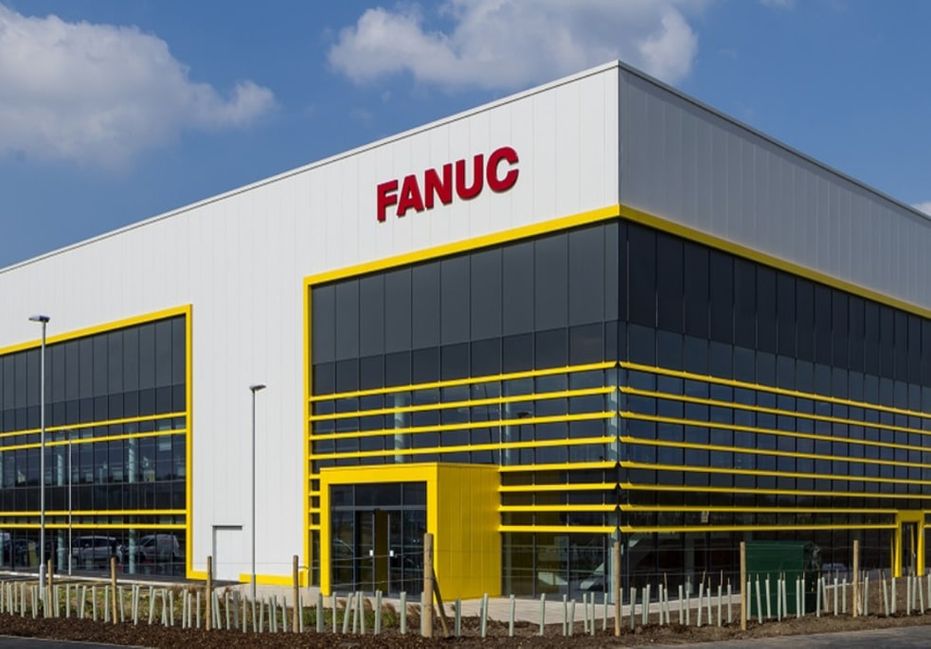
Image source: industryeurope.com

History

Seiuemon Inaba, a young engineer at the time, was asked by Fujitsu Ltd. to head up a new company with the aim of developing the domain of numerical control(NC).  To create programmable versions of the lathe machine, presses, and milling machines, this early form of automation included transmitting instructions encoded into punchcards or magnetic tapes to motors that regulated the operation of tools. After investing a lot of money in research and development, he and his team of 500 people shipped Fujitsu’s first NC machine to Makino Milling Machine in just three years. FANUC Ltd. was created in 1972. CNC, which was the next stage of growth, was based on G-code, a common programming language. The ten largest CNC firms in the world at the time were American-based, but by 1982, the Japanese company had seized half of the global CNC market. In order to manufacture and sell robots in the United States, FANUC and General Motors formed a joint venture known as GMFanuc Robotics Corporation in 1982. Numerous Japanese and American electronics and vehicle manufacturers are among the company’s clients. Corporations like Panasonic are able to operate factories that manufacture over 2 million TV sets per month (mainly premium plasma LCD panels) with just 25 employees by the use of company industrial robots. The company is a top producer of factory automation solutions.

Subsidiaries

The main subsidiaries of the company are the Japanese FANUC Corporation, Fanuc America Corporation, and the Luxembourg-based FANUC Europe Corporation S.A. FANUC Europe Corporation, with its headquarters in Luxembourg, which serves European clients and offers sales, service, and support both domestically and internationally. FANUC America Corporation is primarily responsible for companies’ operations in South & North America.  The most recent edition, which was established in 2013, integrates FANUC operations in the Americas, including those of the old FANUC Robotics America Corporation (1992–2013) and FANUC CNC America (2010–2013), which superseded an earlier edition of FANUC America Corporation.

Founder – Seiuemon Inaba

Japanese roboticist Seiuemon Inaba founded FANUC and served as its honorary chairman. He played a crucial part in the growth of the robotic industry. For his groundbreaking work in numerically controlled machine tools, factory automation, and services to engineering research and education, he was elected a fellow of the National Academy of Engineering in 1992.

CEO – Dr. Eng. Yoshiharu Inaba

Dr. Eng. Yoshiharu Inaba is the CEO of FANUC. Since January 2012, Yoshiharu Inaba has also held the positions of President, Chief Director of Marketing, and Representative Director of FANUC CORPORATION. In September 1983, he began working for the company. He has held the positions of Senior Managing Director and Managing Director in the past. He was formerly employed with Isuzu Motors Limited.

Stryker Corporation

Dr. Homer Stryker, Founded Stryker Corporation Manufacturers Of Medical Technologies.

Stryker Corporation is amongst the leading manufacturers of medical technologies. Through the commitment of over 43,000 employees worldwide, the company provides a wide range of cutting-edge products and services in the fields of orthopedics, medicine and surgery, neurotechnology, and spine that assist enhance patient and hospital outcomes.

About The Company

American global medical technology company Stryker Corporation is headquartered in Kalamazoo, Michigan. The company manufactures various products like surgical instruments and surgical navigation systems, endoscopic and communications systems, patient handling as well as emergency hospital instruments, neurosurgical, neurovascular, and spinal devices. The majority of Stryker’s items are advertised directly to physicians, hospitals, and other healthcare organizations in the United States. Stryker products are available internationally in more than 100 nations via company-owned sales divisions, branches, as well as independent dealers, and distributors.

Stryker Corporation
Image Source: tipranks.com

History

Dr. Homer Stryker, an orthopedist from Michigan founded The Orthopedic Frame Company, the forerunner of Stryker Corporation, in 1941. Among other things, Stryker invented the walking heel, the cast cutter, a device that eliminated cast material without harming underlying tissues, and the Turning Frame, a portable hospital bed that enabled the shifting of injured patients whilst maintaining necessary body immobility. The corporation was formally renamed Stryker Corporation in 1964. Stryker had its IPO in 1979, and after acquiring Osteonics Corporation, it entered the market for orthopedic implants such as replacement hips and knees. Annual sales peaked at $2.1 billion in 1999, and Stryker first appeared in the famous Forbes Platinum 400 and S&P 500 in 2000. Sales topped $3 billion in 2002, and Stryker made its debut in the Fortune 500. By 2012, the company had a global workforce of about 22,000 people and $8.7 billion in sales. Overseas sales accounted for 35% of those sales. Stryker, with an overall portfolio sales exceeding $8.6 billion, was placed at number 10 in a 2012 world market overview of the leading medical technology companies. Additionally, the company retains market shares of 35% globally for reconstructive surgery, 50% globally for medical surgery, and 15% globally for neurotechnology and spine.

Controversies

The Food and Drug Administration has issued three warning letters to the corporation since early 2007 due to non-compliance issues. There is a legal issue involving a subpoena linking Stryker Corp. to the aforementioned product sales misbehavior between the corporation and the US Department of Justice. In 2012, Stryker recalled several medical vacuum devices sold underneath the Neptune Waste Management System name. When the vacuum was accidentally used to draw a passive drainage tube, the devices—some of which had not been approved by the FDA—caused an accident that resulted in death. After it was determined that the Stryker Rejuvenate hip replacement was deemed faulty and could result in adverse effects comparable to those of DePuy hip implants, the FDA issued a warning for the hip replacement in 2012. As a result, Stryker was hit with fines of $1 billion and $2 billion in 2014 for their products which can result in severe agony.

Founder – Homer Stryker

The founder of Stryker Corporation is Homer Stryker. He is most recognized for his innovations that revolutionized orthopedic care and made life easier for medical professionals and hospital employees while also giving comfort to patients. In 1946, he established Orthopedic Frame Company Inc. to manufacture and market his inventions, even though his hospital bed product hadn’t yet been granted a patent. In 1964, Homer Stryker left the practice of medicine, and his business, formerly known as the “Orthopedic Frame Company,” changed its name to “Stryker Corporation.”

CEO – Kevin A. Lobo

Kevin A. Lobo has served as Stryker’s CEO since 2012. In 2014, he was appointed chair of the board. He joined the company in 2011. Mr. Lobo has a lengthy business career spanning several sectors. He has worked for reputed companies like Rhone-Poulenc, KPMG, Unilever, and Kraft Canada.

Magna International

Magna International – Manufacturing Vehicle Parts For Renowned Automakers.

Magna International is the largest manufacturer of original equipment vehicle parts in North America. It creates automobile systems, components, modules, and assemblies that are sold to a variety of automakers, including General Motors, Ford Motor Company, FCA, Mercedes, BMW, Volkswagen, Tesla, Toyota, and Tata Motors.

About The Company

Magna International is a Candian company that produces automobile parts. In 2020 it was listed on the Forbes Global 2000 and is one of Canada’s biggest corporations. The company has appeared continuously in the Fortune Global 500 rankings for 20 years in a row since 2001. The company’s head office is in Ontario, Canada. Magna is controlled by a corporate charter that provides for the transfer of profits to the company’s shareholders and employees. Frank Stronach, the company’s founder, described the provisions of this agreement as a “fair enterprise system.”

History

Frank Stronach established Multimatic Investments Ltd. in a Toronto tool and die rental garage in 1957. In 1959, it signed its first deal with General Motors for metal solar interior brackets The company had eight plants operational by the late 1960s. Stronach merged aerospace, defense, and industrial components manufacturer Magna Electronics Corporation with Multimatic Investments to bring the company public in 1969. The combined company was renamed Magna International in 1973. Magna International divested its defense and aerospace operations in 1981 so it could concentrate on the automobile sector. The 1990s saw it spreading into Asia and decentralizing large systems into separate, publicly traded companies. In 2005, Magna started designing automobile rear-view cameras for Hummers on its assembly line in Michigan even though they were not yet mandated by the government. It was among the first companies to create rear view cameras for automotive manufacturers, and by 2007, it had a deal for 350,000 units. In August 2015, the company sold Grupo Antolin its interiors division, which included instrument and door panels, overhead systems, and freight management components. In 2018, the company collaborated with Lyft to provide high-tech kits that convert automobiles into self-driving cars.

Magna International

Acquisitions

Magna International declared in 2002 that it had signed a deal with DaimlerChrysler to buy the Austrian company’s Eurostar Automobilwerk division. In September 2004, Magna acquired eighty percent of New Venture Gear and consolidated it with Magna Powertrain. In 2007, it acquired complete ownership, and the business was shut down in August 2012. In November 2005, Magna acquired CTS Fahrzeug-Dachsysteme, a manufacturer of foldable roofs, from Porsche. Magna paid $1.9 billion in July 2015 to acquire Getrag, a German business that was among the biggest providers of automobile transmissions globally. The acquisition increased the Chinese market’s potential for growth. In 2018, the business purchased the German motion-based software developer Haptronik GmbH, the Italian automotive lighting maker OLSA S.p.A., and the Spanish automotive seating firm Viza Geca SL. It collaborated with Innoviz Technologies to make solid-state lidar for BMW Group’s autonomous vehicles. In January 2022, Boston-based firm Optimus Ride was acquired by Magna.

Technology

In the course of its history, Magna International has collaborated with automakers to advance vehicle safety and technology, developing advanced driver assistance systems (ADAS), lane departure warning systems, blind-spot detection, as well as smart mobility seating systems like minivan seats that stow into the floor. The organization is the third-biggest auto parts supplier globally and the largest in North America. It creates tailored computing for fully automatic driving systems using mobility technologies. In 2018, it unveiled autonomous emergency braking technologies and an Icon radar system to assist automakers in achieving Level 5 autonomy.

Founder – Frank Stronach

One of the biggest providers of automobile systems and components worldwide, Magna International Inc., was founded by Frank Stronach. With its headquarters in Ontario, Magna employs over 158000 employees across 342 manufacturing facilities in 27 different nations.

CEO – Seetarama Kotagiri

Swamy Kotagiri is the sole representative of management on the board and the CEO of Magna. He provides vast experience and knowledge of the automotive business and has worked in the field for more than 30 years, including 21 years with Magna.

Johnson Controls

Johnson Controls – Electronic And Automotive Parts Company With Operations In Over 150 Countries.

Johnson Controls is a multinational HVAC, electronic, and automotive parts company with operations in over 150 countries and annual revenue of over $30 billion. Additionally, it offers technical support, energy management advice, and portfolio management services for properties in the non-residential building sector.

About The Company

Johnson Controls is an American multinational corporation with headquarters in Cork, Ireland. The company manufactures security, HVAC, and fire systems for buildings. In 2017, it was ranked 389th in the Fortune Global 500, but now it is no longer eligible for inclusion in the Fortune 500 due to its non-American headquarters.

Johnson Controls
Image source: forbes.com

History

The first electric room thermostat was patented in 1883 by Warren S. Johnson. His creation catalyzed a new business and helped establish the building control sector. To produce, install, and maintain automatic temperature regulating systems for buildings, Johnson founded the Johnson Electric Service Company in 1885 with a group of Milwaukee businessmen led by William Plankinton. The company decided to concentrate on its thermal management business for non-residential buildings after Johnson’s passing in 1911. The corporation acquired the clockmaker Standard Electric Time Company in 1970. In 1974, the company adopted the name Johnson Controls. Johnson Controls purchased the battery manufacturer Globe-Union in 1978. The Standard Electric Time Company was sold to Faraday in the same year. Hoover Universal and Ferro Manufacturing, manufacturers of car seating, were purchased by Johnson Controls in 1985. Keith Wandell, the company’s president, pressed Congress for a bailout of the businesses that Johnson supplied during the recession of 2008–2009. In late March 2010, the Johnson Controls facility in Lakeshore, Ontario, shut down, and the land was thereafter sold.

In 2016, the Johnson Controls Automotive Experience unit of the company was separated into its own publicly traded company, Adient, and started trading on the NYE. It was announced in 2017 that 3M would acquire Scott Safety, the company’s safety equipment division, for $2 billion. In 2021, Johnson Controls announced that Ava Robotics would power its new “Tyco Security Robot.” This completely autonomous security robot combines access control, video surveillance, and security robots by integrating sensors, a touchscreen, and two Tyco Illustra cameras.

Business Units

Building Efficiency and Global WorkPlace Solutions are the two business segments that make up the company’s operations. For both commercial and residential structures, the Building Technologies and Solutions product line develops, manufactures, installs, and provides maintenance for HVAC, industrial refrigeration, building management, fire and security, and mechanical systems. This business unit produces products under the TempMaster, York, Metasys, Frick, Panoptix, and Sabroe brands. The business unit Global WorkPlace Solutions offers outsourced services for facility management all around the world. On behalf of its clients, it also oversees corporate real estate management, which includes purchasing and selling property, maintaining leases, and overseeing building-related initiatives like replacing equipment. In 2015, this unit was acquired by CBRE.

Controversy

In 2016, Johnson Controls and Tyco International announced that they would merge to form Johnson Controls International, an organization with its headquarters in Cork, Ireland. . By integrating with the Irish business, Johnson Controls was able to undergo a tax inversion, which allowed it to transform into an Irish corporation with significantly reduced corporate taxes. The workforce suffered greatly as a result of this restructuring. Hillary Clinton criticized the corporation for trying to use the acquisition to avoid paying taxes in the United States after it had “begged” the administration for financial assistance in 2008. Because Tyco stockholders now held 44% of the business, the Johnson deal, which Fortune magazine called “outrageous,” qualified as a “super inversion” and escapes the penalties the US Department of the Treasury has levied on past inversion deals. The company calculated that by avoiding American taxes, it would save around $150 million a year.

Founder – Warren S. Johnson

Warren S. Johnson. Johnson founded the Johnson Electric Service Company, which later evolved into Johnson Controls, to produce and market his thermostat technology. He was a university lecturer who had difficulty controlling the temperatures in every classroom. The issue was resolved by his multi-zone pneumatic management system. Offices, schools, hospitals, hotels, and practically any large facility with numerous rooms that needed temperature regulation adopted Johnson’s approach for temperature control on a global scale.

CEO – George Oliver

Johnson Controls chairman and CEO is George R. Oliver. Before taking over as CEO, he was the company’s president and COO, in charge of its running operations and in charge of overseeing the merger of Tyco and Johnson Controls.

Carrier Global

Carrier Global – Producing And Distributing HVAC systems.

Carrier Global Corporation is a top global producer of healthy, safe, intelligent, and sustainable building and cold storage solutions. The company sells products under Carrier, Tempstar, Riello, Automated Logic, Carlyle, Bryant, BrokerBay, Marioff, GST, Autronica, Edwards, Carrier Transicold, Carrier Commercial Refrigeration, Carlyle, and other brand names.

About The Company

Carrier Global Corporation provides cutting-edge technology for heating, refrigeration, ventilation, fire, security, air conditioning, and building automation. Its three business divisions are refrigeration, fire & security, and heating, ventilation & air conditioning (HVAC). The company is headquartered in Florida, USA. Carrier was established in 1915 as a stand-alone business producing and distributing HVAC systems. Since then, the company has grown to include industrial refrigeration and food service systems as well as fire and security technologies. It had a market value of $18.6 billion in 2020 and employed more than 53,000 people to serve clients in 160 nations across six continents. United Technologies bought Carrier in 1979, but 41 years later, in 2020, Carrier was spun off as a separate company

Carrier Global
Image source: amazonaws.com

History

Willis Haviland Carrier created the first contemporary air conditioning system on July 17, 1902. As a division of the Buffalo Forge Company, the Carrier Air Conditioner Company of America was established in 1908, with Willis Carrier serving as vice president. The Buffalo Forge Company, where Carrier had worked for 12 years, chose to focus only on manufacturing once World War I broke out in late 1914. As a result, Carrier and six other engineers combined their $32,600 to found the Carrier Engineering Corporation in 1915. In 1920, they bought their first facility in New Jersey. In the 1950s, the company that bears his name began marketing its air conditioners to the housing markets, which resulted in the development of huge suburbs in previously sparsely populated regions like the American Southwest. Air conditioning transformed American living by boosting industrial output during the summer. The widespread move to the Sunbelt was sparked by the 1920s development of domestic air conditioning. Carrier amalgamated with Affiliated Gas Equipment, Inc. in 1955. In 1979, United Technologies Corporation (UTC) acquired Carrier Corporation. Carrier Corporation was called the Carrier Air Conditioning Company before it was acquired by UTC. United Technologies declared on November 26, 2018, that it would separate UTC Climate, Controls & Security into Carrier Global Corporation, a standalone business.

Controversy

The sports stadium at Syracuse University was given the name Carrier Dome in 1980 when Mel Holm, the company’s then-CEO, donated $2.75 million to the project’s development. Despite being named after a company that makes air conditioners, the Carrier Dome didn’t have air conditioning for the first 40 years of its existence; that was only added during repairs that were finished in 2022. Despite having finally installed air conditioning, Syracuse University ended the permanent naming rights agreement for the dome with Carrier Global. JMA Wireless, a nearby wireless company, was instead given the stadium’s naming rights.

Founder – Willis Carrier

Engineer Willis Haviland Carrier is most known for developing the modern air conditioner. In 1902, Carrier created the first electric air conditioner. In 1915, Willis Carrier established Carrier Engineering Corporation. Currently, Carrier Corporation is the global leader in the production of HVAC systems and equipment for homes and businesses. As the business he created continues to develop and produce energy-efficient HVAC systems, Willis Carrier’s legacy endures.

CEO – David Gitlin

David Gitlin is the CEO and Chairman of Carrier Global. He served as the president and CEO of Collins Aerospace, before joining Carrier. Dave has a master’s degree in business administration from MIT’s Sloan School of Management and a bachelor’s degree from Cornell University.