Your Tech Story

Tech Story

Shou Zi Chew

Shou Zi Chew Success Story: From Ex-Facebook Intern to TikTok CEO

Shou Zi Chew is the CEO of TikTok. He was the former CFO of ByteDance, the parent company of TikTok. He is in charge of the app’s government and public relations, cybersecurity, and legal compliance issues. His effort has helped TikTok achieve one billion downloads globally, inadvertently helping launch the career of many individuals.

Shou Zi Chew
Image Source: gadgets360.com

After working for Goldman Sachs for two years, he joined the then-young investment business DST Global before taking the helm of the Chinese smartphone giant Xiaomi.

Early Life

He graduated from University College London with a bachelor’s in economics before enrolling in Harvard Business School to obtain an MBA in 2010. Chew spent two years as an investment banker at Goldman Sachs after graduating from UCL. Chew made the decision to continue his education in 2008.

He was awarded a fellowship to study at the esteemed Harvard Business School. It was a wise decision for him to continue his study. His two-year MBA program at Harvard, which placed a strong emphasis on real-world skills, gave him the expertise he needed to achieve his goals.

Success Story

Chew’s education at UCL served as a launching pad for his career at the prominent investment bank Goldman Sachs. From that point on, the TikTok CEO simply kept moving up the corporate ladder. Chew claimed in a post on the Harvard Alumni website that he worked for a company that “was called Facebook” while he was a student.

Read More: Success Story of Dyslexic Kid becoming Billionaire

Shou Zi Chew had interned at Facebook which was just a startup at that time. He also spent five years working for the Russian IT tycoon Yuri Milner’s investment company DST. While he was working there in 2013, he managed a team that later became an early investor in Bytedance.

In 2015, he was appointed CFO of the Chinese smartphone juggernaut, Xiaomi. Shou Zi Chew assisted in securing significant funding and guided the business throughout its 2018 IPO, which turned out to be one of the biggest tech IPOs in the country. He was also named the president of Xiaomi’s global business in 2019.

He left the CFO position in April 2020, but he continued to serve as the company’s International Business President until March 2021, after which point he completely severed ties with Xiamoi. Shou Zi Chew acknowledged having a history with ByteDance dating back to when he assisted in making investments in the company about ten years ago.

Chew was hired as the CFO of ByteDance in March 2021 After two months, TikTok named Chew as the CEO of the company citing his strong grasp of the business and the industry. Kevin Mayer, the previous CEO, had left the organization just after three months of serving the role due to criticism from politicians regarding the platform’s security issues.

Chew left his position with ByteDance in the latter part of last year to concentrate on TikTok. With more than 1.2 billion monthly active users, TikTok has continued on its path of explosive growth under Chew’s direction.

Do Won Chang

Do Won Chang: The success story of the founder of Forever 21

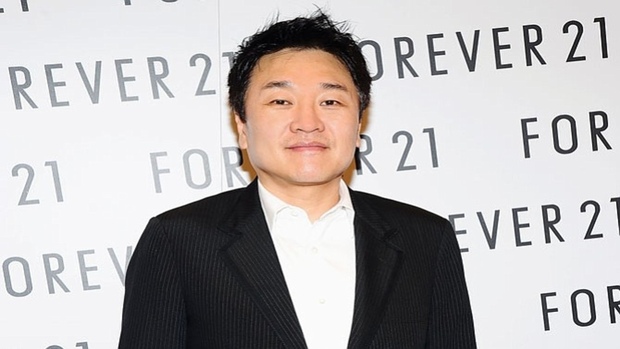
Do Won Chang is an American businessman of Korean descent. Together with his partner Jin Sook Chang, he established the popular clothing retailer brand Forever 21.

Do Won Chang
Image Source: failurebeforesuccess.com

Early Life

Do Won Chang was born in Seoul, South Korea. He developed a strong work ethic early from an early age. He never went to college. Growing up, he worked at coffee shops before launching his independent coffee delivery business. Don Chang and his wife Jin Sook immigrated to the United States in 1981.

They worked almost 19 hours every day to sustain themselves after arriving in Los Angeles. Chang had to work multiple jobs at once. He held jobs as a janitor, a gas station attendant, and a barista in coffee shops. However, after settling in the United States for some time, he realized that a career in fashion might be his passport to success. He observed that all the rich people around worked in the fashion industry.

Success Story

The pair was able to save $11,000 after working three years in the country. They started a 900-square-foot clothing boutique. Do Wan Chang opened his first clothing store in the Highland Park neighborhood of Los Angeles in 1984 utilizing the earnings from previous jobs.

He promoted it to his fellow Korean Americans under the name Fashion 21. Sales increased tremendously from $35,000 to $700,000 in just the first year of the launch. But as the company prospered, he desired to increase the diversity of his customers. In order to draw in more people, Chang renamed his store Forever 21.

By 2013, there were over 480 outlets and $3.7 billion in sales. With $4.4 billion in worldwide sales in 2015, Forever 21’s sales hit an all-time high. In 2016, the business generated $4.4 billion in revenue and employed 43,000 people over 790 outlets throughout 48 nations, including his home South Korea.

Do Won Chang and his spouse successfully built Forever 21 utilizing their own resources. Many business owners around the world are inspired by their success. Unfortunately, in 2019 the company sought bankruptcy protection as a result of the rise in internet merchants. Forever 21 remains one of the most well-known brands in the world, despite this.

Do Won claimed that he values his family more than any other standard of achievement. Linda and Esther, his two daughters, are also working for the company. Riley Rose, a line of cosmetics and accessories sold in Forever 21 stores, was founded by Esther and Linda Chang.

Forever 21 has been sued numerous times in recent years for allegedly violating the copyright of designers like Diane Von Furstenberg and Gwen Stefani. The family has never, however, been held accountable for copyright violation. In fact, jewelry designer Alexis Bittar was ecstatic when they began selling inexpensive replicas of his jewelry because he saw it as praise that someone considered his ideas were significant enough to replicate.

Chang and his spouse immigrated to the United States with only a high school degree,  In order to provide for his family, he worked three jobs. The pair put forth a lot of effort early on and never gave up. Their success story suggests that anything is possible if one has faith in themselves.

Kevin O’Leary

Kevin O’Leary: Success Story of Dyslexic Kid becoming Billionaire

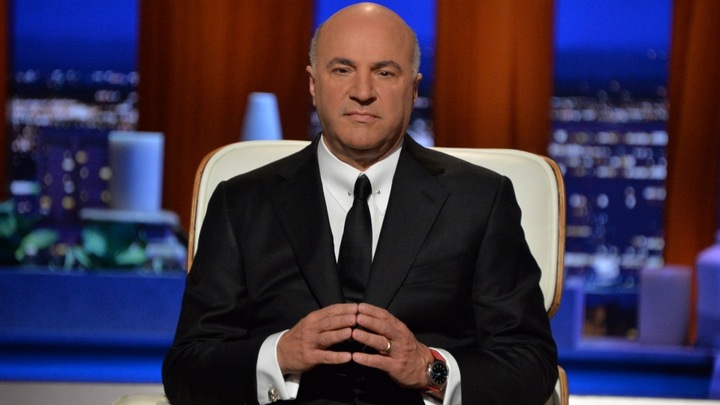
Kevin O’Leary, also known as “Mr. Wonderful,” is a Canadian entrepreneur, businessman, and television personality. O’Leary was a co-founder of SoftKey Software Products, a tech business that offered software for family entertainment and education. 

Kevin O'Leary
Image Source: techstory.in

Early Life

In 1954, Kevin O’Leary was born into a middle-class household. His mother was a skilled investor. Most of Kevin’s business insight comes from his mother. She gave him important financial and economic lessons at a young age. These ideas were Kevin’s guiding principles and the cornerstones on which he eventually construct his empire.

Kevin O’Leary experienced additional difficulties in school when he was growing up due to dyslexia. When O’Leary was a student at St. George’s School, his dyslexia started to hinder his academic performance. He had trouble reading and doing simple addition and multiplication problems.

He had to use supplemental tools to keep up with the learning content because his teachers did not assist him as they were unaware of his dyslexia. While pursuing MBA, O’Leary interned for Nabisco. O’Leary started a short-lived stint as a TV producer after leaving Nabisco. He co-founded Special Event Television(SET) with two of his fellow MBA classmates.

SET produced original sports programs as a freelance television production firm. With small television programs, soccer movies, sports documentaries, and quick intermission ads for nearby professional hockey games, the company had only little success. Later, for $25,000, one of the partners bought out Kevin’s portion of the business.

Success Story

In 1986, O’Leary established Softkey in a Toronto basement with partners Gary Babcock and John Freeman.SoftKey made hostile takeover approaches to buy competing businesses in the late 1980s and early 1990s, including Compton’s New Media, The Learning Company, and Broderbund. Later, SoftKey changed its name to The Learning Company.

Softkey’s well-known position in the software sector finally aided “Mr. Wonderful” in becoming a millionaire. In 1999, Mattel recognized the software company’s absolute supremacy in the market and decided to acquire Softkey for an astounding $4.2 billion. 

In 2003 he joined “StorageNow Holdings,” a company that builds climate-controlled storage facilities, as a Director and co-investor. In 2007, the company was acquired by InStorage REIT for a staggering $110 million. O’Leary sold his shares in the company, which had a starting value of $500,000, for close to $4.5 million.

After experiencing incredible success at his software firm, Kevin began appearing on television. He soon established himself as a popular host and personality on a variety of programs, including CBC’s Dragons’ Den and Shark Tank.

Later he took control of his capital from his unreliable money managers and established his own mutual fund business, O’Leary Funds. Since then, Kevin has established O’Leary Fine Wines and a best-selling financial literacy book series.

In 2014, Kevin established the O’Leary Financial Group, a collection of companies and products that adhere to his core values of transparency, simplicity, convenience, and, excellent value.

Kevin O’Leary is a passionate supporter of environmental rights and makes an effort to invest in companies that share his views. He even co-hosts Project Earth on the Discovery Channel, a program dedicated to combating global warming. O’Leary also ran for the position of Canadian Conservative Party leader in 2017. Despite being in the lead, he withdrew one month prior to the election in April.

Joe Belfiore

Who is Joe Belfiore? The Face of the Windows Phone

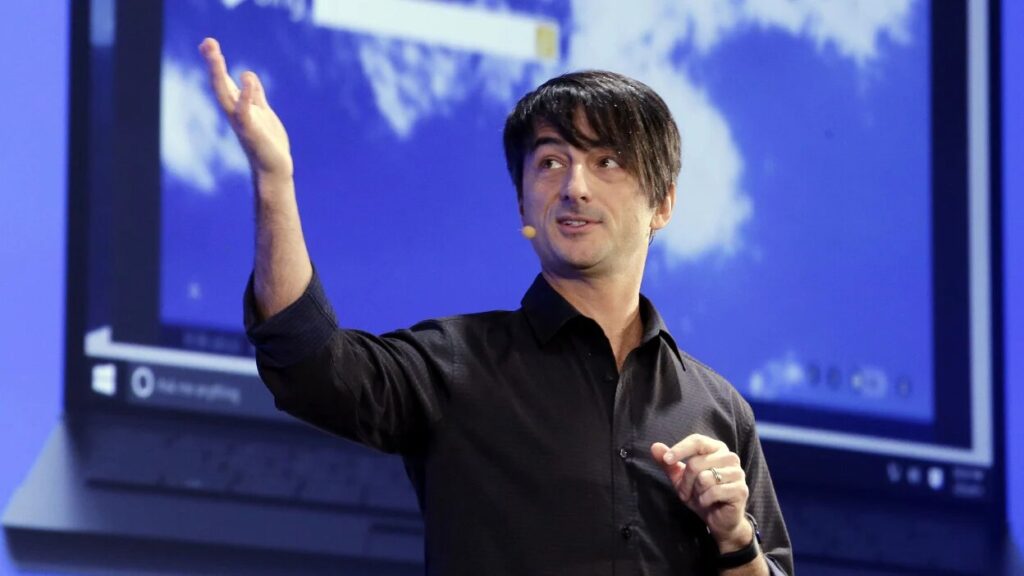
Joe Belfiore is an American corporate executive. He has served in a variety of positions at Microsoft, primarily in the area of user experience. He presently holds the position of Corporate Vice President for Microsoft’s Experiences and Devices division. Joe Belfiore is a prominent speaker who has attended numerous Microsoft conferences and frequently performs live demos for the company’s products.

Joe Belfiore
Image Source: mashable.com

Joe Belfiore will be leaving Microsoft after serving the company for over 32 years. His internal email to staff (via ZDNet) announcing his retirement plans was eventually made public on Twitter. Belifore is best known as the face of Windows Phone, From 2009 until 2013, under his co-leadership of that division, Microsoft acquired Nokia. After that, Belfiore oversaw the Windows 10 division for over five years.

“Today I shared with my team that after 32 fantastic years, I will be retiring from Microsoft. I’m staying on until summer to help with the transition, then focus on the two kids still at home and the 1 who just started college”, Belifore wrote in a tweet on Friday.

Belfiore began working on the Windows Phone in 2009 and oversaw the creation of the Metro user interface, for which the platform is most known and which eventually appeared in Windows 8. With Windows 10, Joe Belfiore shifted to overseeing platform development for all types of consumer devices, namely Windows 10 PCs, tablets, and Windows 10 Mobile.

One may easily recall Microsoft’s initial promises and eventual disappointments while discussing Windows Phone. The platform for Windows Phone has always been a little shaky. Belfiore initially promised that Windows Phone 7 handsets could be upgraded to Windows Phone 8, however, this fell short, disappointing many users at the time.

The bulk of Nokia Lumia devices was also left behind during the switch from Windows Phone 8.1 to Windows 10 Mobile, despite Microsoft having initially said that most or all of the current Windows Phone 8.1 devices will be supported. Microsoft originally owned Nokia’s Lumia mobile phone division, which it acquired in 2013 for $7.6 billion.

However, the experiment was a failure, which caused the corporation considerable embarrassment. Belfiore eventually acknowledged in 2016 that Windows 10 Mobile would only continue to receive security updates going forward, with no new features. Windows has since turned its attention mostly to desktops.

Belfiore, who was born in Florida, fell in love with computers as a young child after using a Timex Sinclair 1000 that belonged to the father of a neighboring kid. He completed his schooling in 1986 at Clearwater Central Catholic High School. Later, he enrolled at Stanford University, where he earned a bachelor’s in computer science in 1990.

Joe Belfiore’s career and method of product design have both been motivated by empathy. Products must be created with the actual user in mind if they are to truly affect people’s lives. At Microsoft, Belfiore promoted a useful story-based strategy that invites customers to engage in product design and testing which completely altered interface and product design operation.

Roman Abramovich

Roman Abramovich Success Story: From Poor Orphan to Billionaire

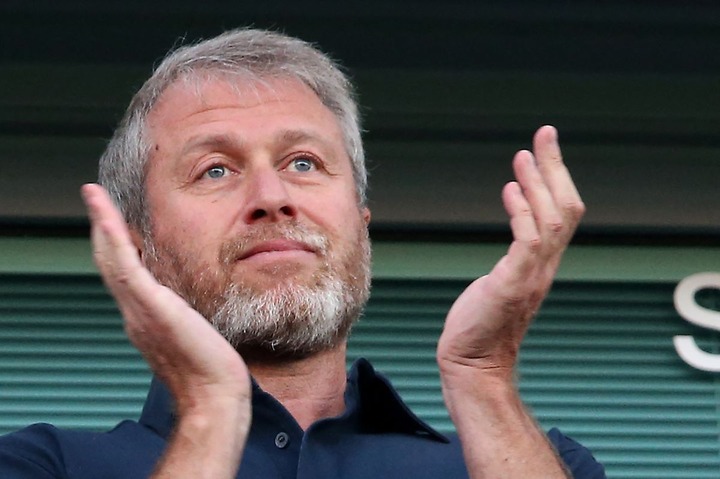
Roman Abramovich is a Russian politician and oligarch. He is the main shareholder of the private investment firm Millhouse LLC and the previous owner of Chelsea, a Premier League football team in London, England.

Roman Abramovich
Image Source: bloomberg.com

He holds citizenship in Russia, Israel, and Portugal. Forbes estimates that Abramovich’s net worth was $14.5 billion in 2021, making him the richest person in Portugal, the second-richest person in Israel, and the eleventh-richest person in Russia.

In the years that followed the fall of the Soviet Union in the 1990s, Abramovich amassed wealth by purchasing state-owned Russian assets at rates much below market value under Russia’s contentious loans-for-shares privatization program.

Early Life

Roman Abramovich lost both his parents by the age of three and was raised by his relatives in Russia. While attending a technical college in Ukhta, he made his first foray into business by reselling worn tires and vehicle components out of his flat to supplement his income.

He continued his education at the Gubkin Institute of Oil and Gas in Moscow before starting his service in the army in 1974. While he was serving in the army, he realized that the military wasn’t the field for him. He used his business savvy to sell fuel to troops as a side business.

He was able to start saving money as a result, and his first company was the Comfort Co-op, which sold imported plastic toys. Roman Abramovich owned this children’s toy manufacturing company during the Perestroika era in Russia when economic liberalization permitted small enterprises. He used the profits from the toy company to open his first oil company in the Omsk region.

Success Story

He grew close to businessman Boris Berezovsky, and this helped Abramovich get opportunities. Abramovich was welcomed to significant meetups and dinners because Berezovsky had close ties to the former president, Boris Yeltsin. He started various diverse businesses after branching out, including pig farms, bodyguard hiring, sugar, lumber, and culinary goods.

Even in a nation where it wasn’t simple to become wealthy, he was able to establish a successful career as an entrepreneur. Abramovich had some difficult moments before being one of the world’s richest people, so it wasn’t all smooth sailing for him.

In particular, his Swiss-based trading company, Runicom, failed in 2003, and he allegedly had to repay a debt to the bank. Roman Abramovich was well on his way to becoming the first billionaire when the Soviet Union’s industrial assets were divided. He had acquired Sibneft, a sizable oil corporation, as a result of Russia’s contentious loans-for-shares program.

Sibneft was privatized by President Yeltsin, and Abramovich and Berezovsky were able to acquire the company for just $100 million, which was far less than its $600 million market value. This served as the basis for his enormous wealth, which he later realized after selling his Sibneft stake for over £1.8 billion.

By acquiring Chelsea Football Club in 2003, he enlarged his economic empire. He then launched a massive program of commercial development intending to turn Chelsea into a global brand, similar to the football empires like Real Madrid and Manchester United. The club has captured 18 major titles since he came over.

To continue assisting the people of Chukotka, he established a nonprofit organization called the Pole of Hope. In 2019, he personally gave $5 million to the Jewish Agency for Israel to fight anti-Semitism around the world.

Masayoshi Son

Success Story of Softbank Founder Masayoshi Son

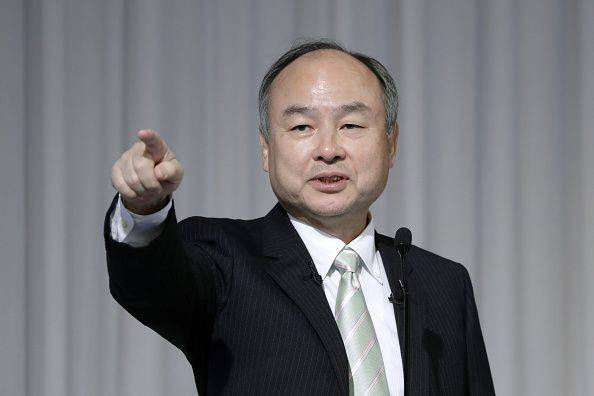
Masayoshi Son is a Korean-Japanese technology billionaire, financier, and investor. Masayoshi is the founder, chairman, and CEO of the Japanese holding corporation SoftBank, the Chairman of Arm Holdings, and the CEO of SoftBank Mobile.

Masayoshi Son
Image Source: japantimes.co.jp

Son has the recognition of having suffered the worst financial loss in history (about $70 billion during the dot-com crash of 2000), but as of September 2022, he is ranked 73rd on Forbes’ ranking of The World’s Billionaires 2022.

Early Life

Masayoshi Son was born into a second-generation Zainichi Korean family in Japan.

He was intelligent and inquisitive from an early age and was intrigued by America. He visited the US at the age of 16 years old for a short study abroad program. He subsequently decided to stop going to school in Japan and spend more time in the US. He made the decision to enroll at Holy Names University after high school.

He switched to the University of California after two years and studied computer science and economics there. During this time, he realized that microchips could help him become extremely wealthy and that computer technology will soon alter the business world. He decided to come up with a minimum of one business concept each day to maintain this spirit.

He had over 250 ideas toward the year-end, some of which would later result in enormous riches. In the year 1980, he earned a BA in economics.

Success Story

After earning his degree in 1980, he founded Unison in Oakland, California, which Kyocera eventually acquired. Despite his triumphs, Son left the USA. He established Softbank in Japan in 1981 with two part-time employees and a modest office. During that time, Softbank distributed software packages to Japanese customers.

Within one year, Softbank had already begun to diversify. In 1982, the company launched two monthly magazines concerning software and PCs. By the late 1980s, Softbank had developed an incredibly well-liked system that allowed customers all throughout Japan to select phone operators that offered the most affordable rates for local and long-distance calls.

But it was Softbank’s investment in Yahoo that gave it public attention. Yahoo’s largest shareholder, Softbank, established Yahoo Japan as its Japanese affiliate.

Between 1995-1998, Son staked $374 million on Yahoo, and at its height, his investment had generated a 50-fold profit. Son had made investments in several tech firms by the late 1990s, like Kozmo.com, SportsBrain, and More.com.

The dot-com crash

Son was particularly hard-hit by the dot-com crash in 2000. 99% of the value of Softbank’s shares was lost, according to experts, making it the largest single-person wealth loss in history. Although it was a devastating blow, Son was unflappable. He made an effort to restore his empire by starting a new company that offered broadband services in Japan.

Before being able to acquire Vodafone Japan in 2006 for almost $15 billion, SoftBank tried for years to break into the burgeoning mobile industry. At the time of its takeover, Vodafone Japan was right on the edge of bankruptcy, but Son nevertheless managed to position himself as a strong player in the Japanese phone industry.

Today, his company SoftBank Mobile is the most successful telecom company in Japan. In 2013, he acquired Sprint Nextel, an American telecoms holding company, for $22 billion in 2013. Sprint is currently the fourth-largest provider of wireless networks in the USA.

He also took another action during the 2000 dot-com crash that shaped his career for the following ten years. He invested over $30 million in Alibaba, a relatively unknown Chinese company at that time.

Alibaba has since grown to be among the most valuable businesses worldwide, and Softbank’s ownership has now reached an astounding $130 billion, representing a 2240x profit on his initial investment.

With the profits from Alibaba in hand, Softbank is now stepping up its attempts to invest in companies all around the world. It has started a $100 billion Vision Fund to guide the direction of global technological advancement.

Masayoshi Son is one of the most active investors and, through his company SoftBank, has the largest investments in firms like Yahoo! and Alibaba.