Your Tech Story

Tech Story

TikTok

Why Are US States Banning TikTok from official devices?

In response to growing security concerns, North Carolina and Wisconsin have become the latest US states to prohibit using TikTok on state-owned devices, following at least 25 other jurisdictions that have already taken some action.

Gov. Tony Evers of Wisconsin, a Democrat, raised privacy, security, and safety issues after discussing the app with the FBI and disaster management experts. With few exclusions, including criminal investigators who might be utilizing the app to follow particular people, Mr. Evers’ ruling applies to the majority of state agencies.

TikTok
Image Source: reuters.com

Additionally excluded is the University of Wisconsin System, which has 40,000 faculty and staff members on employment. Despite the exemption, a UW System representative said the institution was undertaking a review and working toward imposing limitations on the app’s use on devices in order to guard against major cybersecurity concerns.

Concerns that TikTok, a Chinese internet company owned by Bytedance, might be used to collect user information and data and give it to the Chinese Communist Party are a factor in the ban. Two-thirds of American teenagers use TikTok, making it the second most popular website around the globe.

But there has long been a bipartisan worry in Washington that the Chinese government may try to obtain American user data or spread false information by using its legal and regulatory authority. News allegations from last year that a Chinese team had inappropriately accessed the data of American TikTok users, namely two journalists, as part of a clandestine surveillance campaign to find the source of press leaks, fanned fears. Additionally, there are worries that the corporation is violating strict European privacy laws by sending vast amounts of customer data to China.

Some states, including Texas and Ohio, cited China’s 2017 National Intelligence Law, which obliges businesses with regional headquarters to cooperate with law enforcement by sharing user data with them.

Other Chinese-owned platforms and apps including Weibo, WeChat, Alibaba, and Huawei Technologies are also blocked in several jurisdictions. Chris Wray, the director of the FBI, issued a caution about the possibility of espionage using TikTok in December. He noted that China can “manipulate content, and if they want to, to use it for influence operations.”

In 2020, then-President Donald Trump and his government wanted to ban business with TikTok’s owner, compel the company to sell over its U.S. assets, and ban TikTok from app stores.

Courts had previously thwarted Mr. Trump’s attempts to outlaw TikTok. President Joe Biden reversed Mr. Trump’s orders after assuming office but requested a thorough investigation of the matter.

The sale of TikTok’s U.S. assets was postponed.  In December 2022, President Joe Biden signed a bill banning federal employees from using the TikTok app on government devices due to rising worries that the software would be used to spy on American users. As people became more aware of security risks, a number of jurisdictions started banning the app.

Jimmy Patronis, Florida’s chief financial officer, issued an order to the Florida Department of Financial Services in August 2020 prohibiting TikTok use on department-owned devices.

In August 2020, Nebraska was the second state to declare a ban on TikTok use on state-owned devices.

Apple

Is 2023 the year for Apple to launch its mixed-reality headset?

According to reports, the long-awaited AR/VR headset by Apple will be available this year. According to a recent Bloomberg article, the mixed reality device will finally be released in the fall of 2023 after a number of delays. The headset has apparently been under development for seven years, with Apple aiming for a 2019 release.

Apple
Image Source: macworld.com

Apple has been incorporating augmented reality into its products for years, but it appears that with the release of a long-anticipated mixed-reality headgear in 2023, the company will quickly advance into the area of Meta, Microsoft, and Magic Leap.

According to a previous story from The Information, the new gadget might resemble a set of ski goggles. It will have multiple cameras so the system can follow a user’s motions in real time and observe events outside of the home. Tim Cook, the CEO of Apple, has repeatedly said over the past few years that augmented reality is a viable technology.

However, it appears that Apple’s future device will provide a mixed-reality experience. Both augmented reality and virtual reality will be available to users. The new device, which Apple may call Reality Pro, will reportedly be unveiled in June during the opening keynote of the company’s Worldwide Developers Conference, according to Bloomberg.

The creation of apps for the new Apple platform has already begun by certain developers. xrOS could be the name of the new operating system for the Apple headset. Given how many developers are interested in this event and working on third-party applications for the iPhone, iPad, Mac, Apple TV, and Apple Watch, WWDC seems like the ideal venue for this type of product launch.

To ensure the long-term sustainability of the Apple headset, it will be crucial to have well-known games and apps for this latest Apple platform.

According to prior reports from Bloomberg, Apple’s mixed reality headgear would have a 3D video service and a unique take on the metaverse. The device’s built-in Mac-level M2 chip, over 10 cameras, and highest definition VR display, according to the report, will cost around $2000-$3000.

According to its most recent report, iOS 17 and iPad 17, the upcoming significant software updates for the iPhone and iPad, respectively, may contain fewer new features as a result of Apple’s concentration on the headset and its xrOS operating system.

Since it has been experimenting with augmented reality on its own iPhones and iPads for years, Apple has already left a tonne of hints about what its future in mixed reality might entail.

Probabilities are good that the headset will follow the same strategy as Meta’s most recent high-end headgear, the Quest Pro, with an emphasis on work, mixed reality, and eye tracking built in.

According to the majority of reports, Apple’s VR headset may likely be so costly and powerful that it will need to target a niche market rather than the general public.

If so, it may be aimed at the same commercial and creative workers as more sophisticated virtual reality headsets like the Varjo XR-3 and Meta Quest Pro.

Twitter

What Does Twitter 200 Million User Email Leak Actually Mean?

Researchers say that after reports surfaced at the end of 2022 that hackers were peddling data stolen from 400 million Twitter users, a widely publicized collection of email addresses linked to about 200 million users is likely a refined version of the larger collection with duplicate entries removed.

Although Twitter is yet to respond to the extensive disclosure, the cache of information underlines the extent of the leak and who may be most at risk as a result of it

Twitter
Image Source: techradar.com

A weakness in a Twitter application programming interface, or API, existed from June 2021 to January 2022 and allowed attackers to send contact information, such as email addresses, and receive the corresponding Twitter account, if any, in response.

Attackers used the vulnerability to “scrape” data from the social network before it was fixed.

The issue exposed the connection between Twitter accounts, which are frequently pseudonymous, and the email addresses and phone numbers attached to them, potentially identifying users, even if it did not allow hackers to access passwords or other sensitive information like DMs.

The vulnerability appeared to have been used by numerous actors to create various data sets while it was active. The email addresses and phone numbers of roughly 5.4 million Twitter users were contained in one that has been going around in criminal forums since the summer.

The vast, recently discovered cache appears to simply include email addresses.

The chance that the data will be used to support phishing attacks, identity theft efforts, and other forms of personal targeting is nonetheless increased by its widespread distribution.

Twitter is by no means the first platform to make data available for mass scraping via an API fault, and in such cases, it is typical for there to be a misunderstanding regarding the number of distinct data troves that truly exist as a result of criminal exploitation.

However, these occurrences continue to be important because they strengthen the vast volume of user-related stolen data that already exists in the criminal ecosystem by providing more links and validation.

As a result of the API vulnerability, Twitter expressed concern in an email to users in August that their pseudonymous accounts might be connected to their real identities. The organization said in a statement, “If you operate a pseudonymous Twitter account, we understand the risks an incident like this can introduce and deeply regret that this happened.

To keep your identity as veiled as possible, we recommend not adding a publicly known phone number or email address to your Twitter account.”

However, the advice is too late for those who weren’t already linking their Twitter accounts to burner email addresses at the time of the scraping. The social network announced in August that it was informing those who might be impacted about the problem. In light of the hundreds of millions of records that were exposed, the corporation has not indicated if it will send out more notifications.

The Data Protection Commission of Ireland announced last month that it is looking into the event that resulted in the collection of 5.4 million users’ email and phone numbers. The US Federal Trade Commission is also looking into whether Twitter broke the terms of a “consent decree” that required the firm to strengthen its user privacy and data protection policies.

CES 2023

What were the main highlights of CES 2023?

At the yearly Consumer Electronics Show or CES 2023 in Las Vegas, companies typically announce new products, and this year is no exception. As usual, the significant conference featured a number of extremely intriguing devices and technologies.

At CES 2023, Qualcomm unveiled Snapdragon Satellite, a feature that would essentially enable customers to communicate two-way text messages via satellites when they purchase new Android smartphones later this year.

CES 2023
Image Source: cnet.com

The feature is intended to be useful for people who need to connect but don’t have cellular connectivity. At the event, Google unveiled a brand-new feature called “uninterrupted listening,” which will seamlessly switch playing music or a podcast from one device to another based on the user’s location.

That means that customers who are committed to the Android ecosystem, could, for example, leave their car and have their music playback transfer automatically to their phone.

BMW displayed the I Vision Dee, a concept automobile that would let drivers mix and match up to 32 distinct colours. At CES 2023, Sony said that it will work with Honda to create the Afeela electric vehicle. A display integrated into the front bumper is only one of its many unique features.

It is slated to be delivered in 2026. Tech giant Lenovo showcased a variety of products, the strangest of which was perhaps a headset-free metaverse gadget. Project Chronos, as it is known undercover, would record a person’s actions and facial gestures so they could take part in an event that was taking place virtually.

Aeo, an adorable robot from Aeolus Robotics, demonstrated its capabilities for opening doors, carrying objects, and disinfecting surfaces.

Customers can now place a pre-order for a Ring Car Cam after several delays and failed attempts. The well-known security business owned by Amazon created a camera with a dual-facing lens, a break-in detection capability, and the option to check in with the automobile using the Ring app.

The Frenz brainband links to the phone and employs AI to select audio and calming sounds that are intended to improve your sleep. Through monitoring the pulse rate and other statistics, it will gradually learn what makes a user feel calm and productive.

At CES 2023, Sony announced intentions to create a gaming controller for those with disabilities. Project Leonardo, as it’s known, will be adaptable to aid with typical issues for gamers with poor motor control.

Relumino Mode, a feature that will aid people with low vision or limited vision, was showcased by Samsung. To make items onscreen easier to view, Relumino Mode accentuates contours, sharpens contrast, and enriches colours.

A trailer for Gran Turismo, the movie based on a video game starring David Harbour, Orlando Bloom, and Darren Barnet, was unveiled by Sony.

At CES 2023, Neutrogena unveiled a hip new piece of beauty technology. People can now get a customised skincare supplement “stack” through Neutrogena’s Skin360 App that looks somewhat like a little vitamin sandwich and can be 3D printed by Nourished, a business that makes “super nutrient” gummies.

instagram

Was the Instagram Shopping Tab a complete failure?

Instagram is replacing the Shop tab with the Create button in its main navigation. Instagram revealed that it will be deleting the Shop button from the main navigation of its mobile application in a post on its Help Center.

The Shop option has been a part of the app’s primary navigation since it was initially introduced in November 2020, therefore many people are surprised by this change.

Instagram
Image Source: easy2digital.com

According to The Information, Instagram, which is owned by Meta, intends to dramatically reduce its e-commerce shopping facilities and return its attention to the aspects that generate advertising money. The decision went on to say that the current Shopping page will soon be completely phased away, and it was communicated to staff via an internal memo.

Despite this, Instagram will still offer the ability to shop; it will just receive less attention as the company prepares to test a less complex, more generic version.

The company informed its workforce that these modifications are a part of “a new Northstar and goals for the commerce organization that is more directly tied to advertising revenue for Meta.”

According to the company, the Create button will be placed in the app’s central menu in February and take Reels’ place. Reels are not being removed from the main navigation, simply moved to the right. Instagram noted, “Starting in February, we are changing Instagram’s navigation to make it easier for people to share and connect with their friends and interests.

The navigation bar at the bottom of the app will now have the Create shortcut for creating content in the center and Reels to the right.”

Over the past few years, Instagram has significantly invested in enhancing its internal e-commerce functionality in addition to introducing the shop option to the main menu. In the past year alone, it has allowed users to shop inside of chats and tag brands in images that connect to a store page, but according to The Verge, the company was experimenting with a main feed without a shop tab as early as last September.

Instagram undoubtedly believed that there was a lot of revenue to be made in e-commerce at one point and for a while, but recently, as its holding company struggles with enormous losses brought on by bad business decisions, including the massive investment into the Metaverse, that has so far completely failed, priorities have changed.

While Instagram has stated that the navigation would change in February, it has not given a specific date for the transition. The announcement comes just after the company unveiled its new Notes tool, a feature reminiscent of MySpace that enables users to post a status with friends in order to spark conversation.

‘Shops,’ an in-app shopping tool that encouraged users to shop as they browsed, was introduced by Meta-owned Instagram in the midst of the pandemic in 2020.

Michael Rubin

Michael Rubin: Success Story of Fanatics’ Billionaire CEO

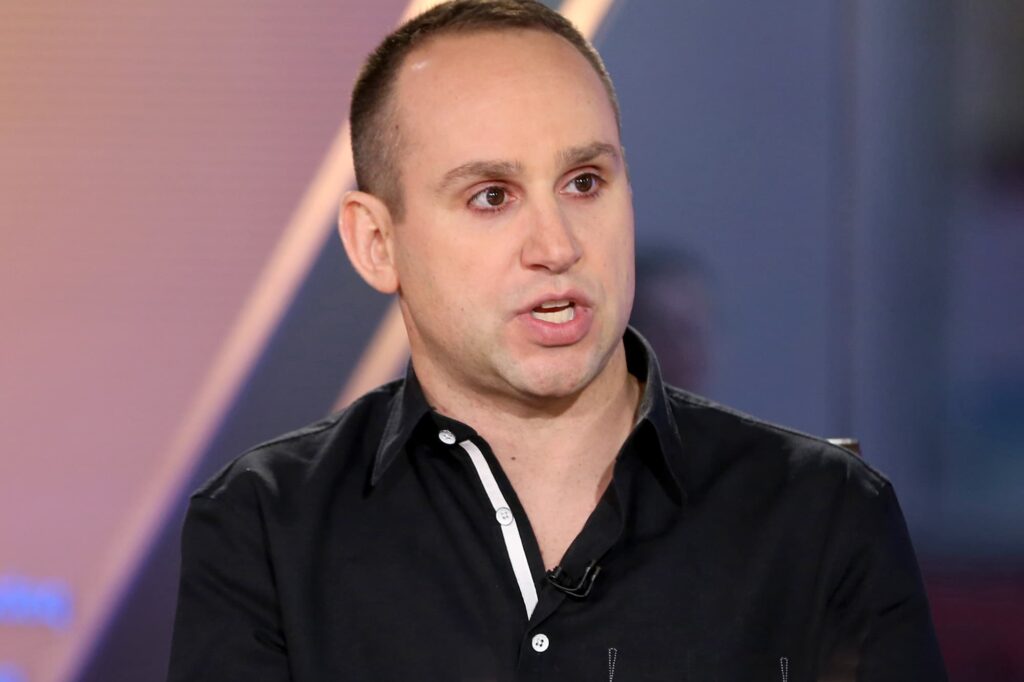
Michael Rubin is an American entrepreneur and philanthropist. He serves as the executive chairman of Rue Gilt Groupe, the top off-price e-commerce portfolio firm, which comprises RueLaLa.com, Gilt.com, and ShopPremiumOutlets.com, as well as the CEO of Fanatics, the largest retailer of officially licensed sports apparel in the world.

Michael Rubin
Image Source: cnbc.com

In 1998, he launched GSI Commerce, which he later sold to eBay for $2.4 billion. In order to fund $60 million to combat food insecurity during the COVID-19 pandemic, Rubin created the wildly popular “All In Challenge,” in which famous people, influencers, and corporations gave priceless items or once-in-a-lifetime experiences.

Success Story

After selling his ski stores and using the money from his chance overstock deal, he founded KPR Sports, a company that bought and sold overstock name-brand athletic equipment.

Michael Rubin acquired 40% of Rykä, a maker of sporting shoes for women, in 1995. Global Sports Incorporated, a clothing and shipping business founded by Rubin in 1998, subsequently evolved into the multibillion-dollar e-commerce giant GSI Commerce.

Rubin began working on strategies to move GSI online in 1999. Even before going online, the wholesale sports equipment shop never had any physical retail storefronts; instead, it sold to other retailers directly. Rubin’s company was acquired by eBay in 2011 for $2.4 billion.

Rubin held little under 10% of the company at the time. He repurchased Shop Runner, a retail rewards program; Rue La La, a flash seller; and Fanatics, Inc., a licensed sports merchandiser.

Michael Rubin is the CEO of Fanatics and the executive chairman of the board at Rue La La.

The partnership between Simon Property Group and Rubin to bring their mall inventory online and their $280 million investment in the project was revealed on CNBC in 2019.

FedEx bought ShopRunner in December 2020. Rubin arranged partnerships between Fanatics and more than 300 professional sports leagues, teams, and organizations.

These partnerships included agreements with Nike, the National Football League, and Major League Baseball, which gave Fanatics exclusive rights to design, produce, and sell all Nike fan gear for the two leagues. Rubin purchased a minority stake in the Philadelphia 76ers in October 2011.

Michael Rubin belongs to the investor group that successfully offered $280 million for the team.

Two years later, Rubin invested $320 million in the administration of the Prudential Center and a part of the New Jersey Devils hockey team as a part of the same investment group. In 2013, the NHL approved the agreement and made the announcement.

Due to potential conflicts between his position as CEO of the expanding Fanatics company and the regulations governing sports club ownership, Rubin surrendered his shares in both franchises in June 2022. At its Philadelphia Visionary Gala in 2011, the Network for Teaching Entrepreneurship (NFTE) recognized Rubin for inspiring its students and embodying “the true spirit and determination of an entrepreneur.”

He was one of the “20 Most Powerful CEOs 40 and Under” in 2011, as per Forbes. Rubin was included in the first Bleacher Report “Power 50” list of the most important sports figures in 2018. Between 2015 and 2019, Rubin was listed among the “Top 50 Most Influential People in Sports Business” list published by Sports Business Journal.