Your Tech Story

Tech Story

Robert Noyce : Co-Founder of Intel & Co-Inventor of the Integrated Circuit

A scuba diver, a pilot, an inventor and what not? Known as the Mayor of the Silicon Valley, the legendary inventor Robert Noyce made his mark in the history of Semiconductors. Noyce was a sharp student and had shown his traits as an inventor, from his childhood. From building a boy-sized aircraft to creating a transistor from scratch, he always loved playing with machines. Having a sharp mind, he also gained the name Rapid Robert from his classmates. This remarkable physicist had brought a revolution in the field of personal computers with its the first integrated circuit and gave Silicon Valley its name.

Early Life

Robert was born to Rev. Ralph Brewster Noyce and Harriet May Norton, on 12 December 1927, in Burlington, Iowa. He was the third of his three siblings, Donald Sterling Noyce, Gaylord Brewster Noyce and Ralph Harold Noyce. Noyce was a brilliant student, and was also, good at other co-curricular activities like sports, acting and singing. He completed his high school from Grinnell High School and enrolled himself into the physics course in Grinnell College. During his school days, he excelled in mathematics. Later, he joined MIT and received a PhD in solid-state physics in 1953.

Early Career

During his PhD, Noyce found his interest in transistors. After the completion of his PhD, he joined Philco Corporation in Philadelphia as the research engineer. In 1956, he left the job at Philco and joined the Shockley Semiconductor Laboratory in Mountain View, California, owned by the co-inventor of transistor and Nobel prize winner, William Shockley. He worked there for a year and left the company with the infamous ‘traitorous eight’ on having a dispute with William Shockley, on his way of working.

Founding Intel

After quitting the Shockley Semiconductor Laboratory, he co-founded a semiconductor company named Fairchild Semiconductor, with Sherman Fairchild, the owner of Fairchild Camera and Instrument, in 1957. At Fairchild Semiconductor, Noyce co-invented the first Integrated Circuit built with Silicon. During the invention of this IC, he also developed a planar process, that made it easy to develop the transistors at a lower cost.
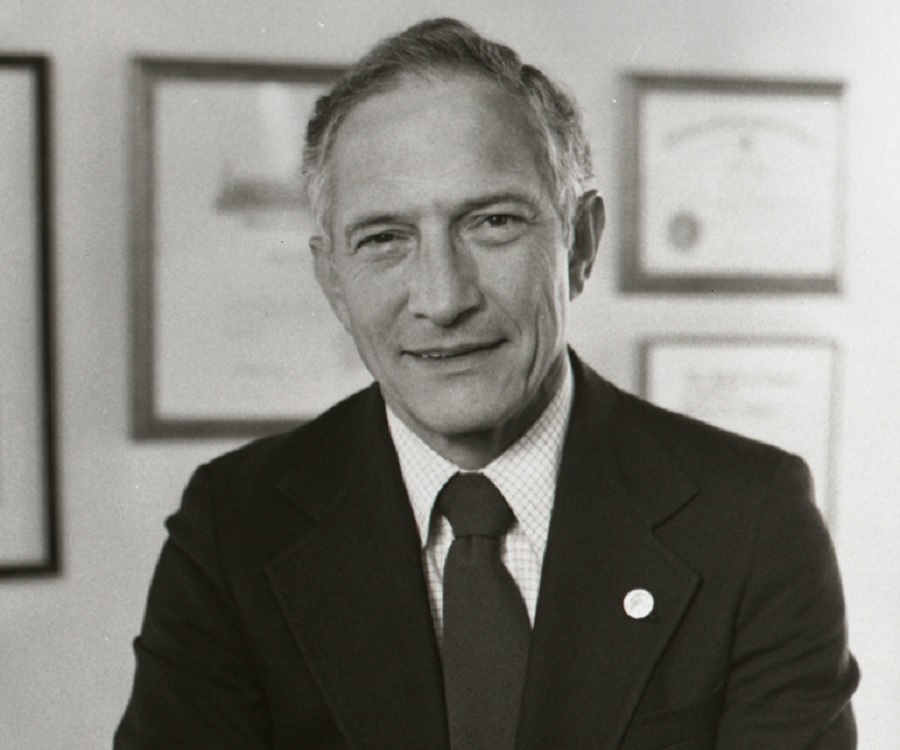
Robert Noyce
Image Source: thefamouspeople.com

Working for 9-long years, Noyce left the Fairchild Semiconductors and co-founded NM Electronics, with his former co-worker, Gordon Moore, from Shockley Semiconductor Labs, in 1968. Later, NM Electronics was renamed to Intel Corporation. Noyce served as the President of Intel till 1975 and in 1978, chaired the board of directors of Intel, till 1978.

The team intel invented the first commercially successful product, the 3101 Schottky bipolar 64-bit static random access memory (SRAM) chip, in May 1969. In 1971, Intel made the first single-chip microprocessor in the world, that made Intel more famous, that ignited the personal computer revolution.

Noyce was popular for his working style and employee administration, that was the main reason of his leaving the Shockley Semiconductor Labs. He provided the employees with rewards and bonuses to encourage teamwork. He created a relaxed working environment for the employees, and avoided any type of luxuries, to maintain equality among every employee.

In 1978, he left Intel and joined the Semiconductor Industry Association (SIA) as the chairman. In 1988, Noyce decided to get retired and established an association named SEMATECH, a semiconductor manufacturing consortium with the help of SIA and held the position of the President of the company.

Personal Life and Death

Noyce married Elizabeth Bottomley in 1953 and had four children with her. The two got divorced in 1974. Noyce on 27 November 1974, got married to Ann Schmaltz Bowers, who became the first Director of Personnel for Intel Corporation.

On 3 June 1990, Noyce died of heart attack, at the age of 62.

In his life, Noyce kept himself busy in various inventions and got his name recorded as a great inventor. He received many awards for his contribution to the technology, including the Stuart Ballantine Medal in 1966, IEEE Medal of Honor in 1978, National Medal of Science in 1979 and National Medal of Technology in 1987.

Hugh Herr: The Leader of the Bionic Age

There have been many scientists whom inventions by mixing the technology and biology has helped the humankind to achieve the things that were unimaginable at some time. The technology has become a helping hand for those who have born with disabilities or have got one due to some mishappening. Hugh Herr is one extraordinary person, who was born like any other fit person, but misfortune hit him bad. Even though the doctors had given up on him, he overcame his disability by inventing the perfect aid for himself, which now is also helping others as well.

Early Life

Herr was born and brought up in Lancaster, Pennsylvania, in a Christian family. In the beginning, he was not much into studies and found his love for rock climbing at an early age. At the tender age of 8, he climbed the face of Mount Temple (11,627-foot high) and became the best climbers in the United States, when he was just 17.

The Climb

In January 1982, with a fellow climber Jeff Batzer, Hugh caught into a blizzard, while climbing the Mount Washington, in New Hampshire. Due to the snowstorm, the two lost their ways and spent three nights into the Great Gulf, at a temperature of ?29 °C. On the fourth day, the rescue team found and saved them. Spending three days at such a lower temperature caused them major injuries. Due to the frostbite, Hugh was amputated below both of his legs and Jeff got his left leg, fingers of his right hand and the toe on his right foot, amputated.

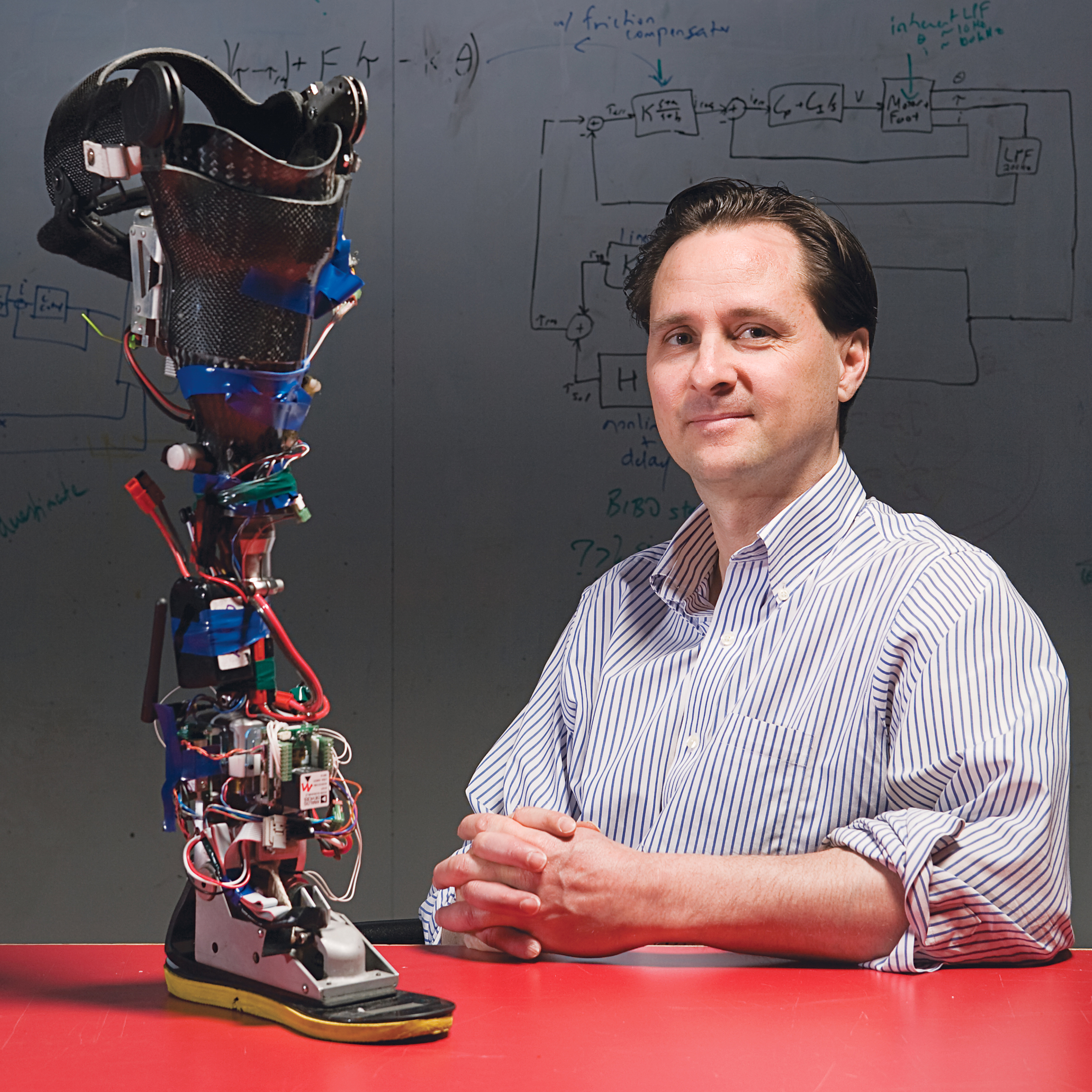
Hugh Herr
Image Source: bostonmagazine.com

Hugh went through a number of surgeries. The doctors could do everything but give him another pair of legs. Hugh could not climb the mountains anymore and had to be dependent on others. He could not accept that and, his love for mountaineering, made him create a specialized prostheses feet for himself. The prostheses feet helped him not only walk but, were also capable of ascending steep ice walls efficiently.

With time, Hugh managed to create a pair of feet that had toes with a high stiffness that could stand on a small rock of the size of a coin. He even scaled many, difficult to reach, mountains with the help of those titanium feet. Soon, he regained the title of the best climber of the US once again.

Career

Along with making improvements in his prostheses feet, Herr joined college and received a graduate degree in Physics. He then attended MIT, to pursue a degree in Mechanical Engineering and received a PhD in biophysics from Harvard University.

After obtaining his Doctorate degree, he started working on advanced leg prostheses and orthoses, at MIT. He headed the Biomechatronics research group at the MIT Media Lab. The group focusses on creating more functional and comfortable wearable robotic emulating devices for the disabled people.

Hugh founded BionX Medical Technologies, Inc. also known as iWalk, Inc. In 2006, that create devices that emulate and serve to supplement the human functionality. His company manufactures the computer-controlled assistive devices to aid the disabled persons.

Hugh Herr
is a true achiever, and his story is an inspiration for many. He has received numerous awards for his contribution to Science and Technology, including the 13th Annual Heinz Award in 2007, and the Popular Mechanics Breakthrough Leadership Award, in 2005.

Personal Life

Hugh is married to Patricia Ellis Herr, who is an author by profession. The couple has two daughters together. At present, Herr is working as the associate professor in MIT’s Program in Media Arts and Sciences. In 1991, Osius, Alison wrote his biography with title Second Ascent: The Story of Hugh Herr.

Will Shu : The Co-Founder of the Multi-Million Delivery Empire

Spotting a delivery boy, with his company’s branding food box, has become quite a common thing these days. But, a few years ago, these delivery services were limited to a few restaurants only. The saying ‘necessity is the mother of invention’ can’t be denied, if your late night craving leads you to launch a food delivery service very next day. Same happened with the founder of Deliveroo, Will Shu, who was working as an investment banker in London, and an idea to start a food delivery service clicked his mind, during one of his late night shifts.

Early Life

Will Shu aka William Shu, is a 38 years old American entrepreneur, who was born in 1979 in a Taiwanese household, in Connecticut, United States. He attended the Northwestern University, where he received a bachelor’s degree. After graduating in 2001, he started working at Morgan Stanley in New York as an investment banking analyst. After working for a few years, in 2010, he decided to return back to the US and completed a master’s degree in Business Administration from Wharton Business School.

After his MBA, he joined S.A.C. Capital Advisors as an analyst. In 2012, he started working as an investment banker at the London branch of Morgan Stanley.

Founding Deliveroo

While working for Morgan Stanley in London, Will Shu faced difficulty with arranging food at mid-nights at his office. An idea of starting a delivery service hit his mind and discussed the same with his childhood friend and software engineer, Greg Orlowski. The idea looked fine, and Will contacted his landlord who also owned a cafe. His landlord became his first client and ultimately, Shu became the company’s first delivery boy.

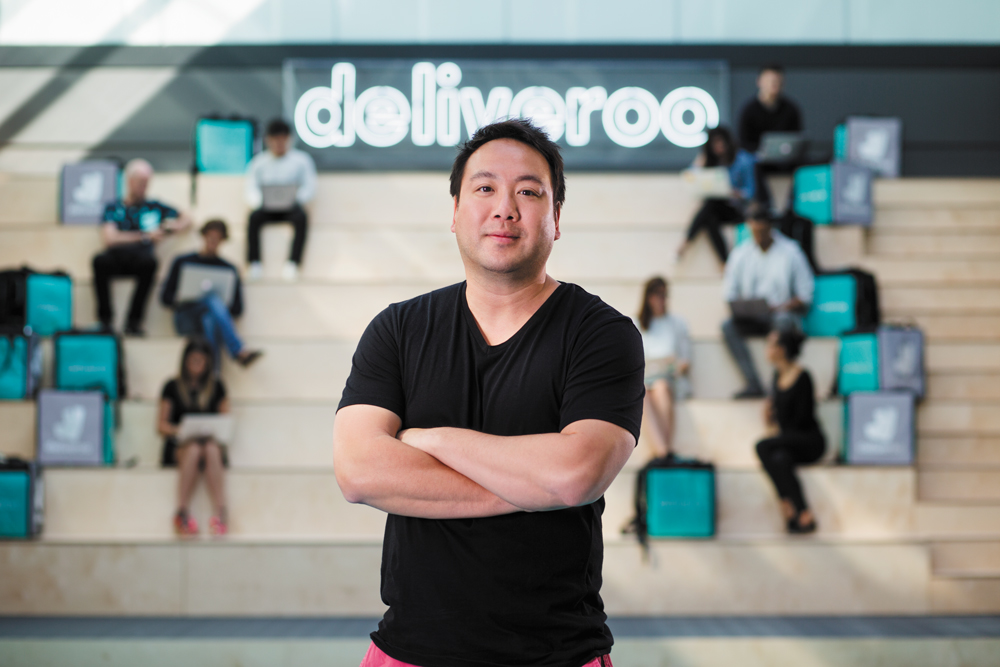
Will Shu
Image Source: whartonmagazine.com

The restaurants like Pizza Hut were already delivering food to their clients, but, Deliveroo became a delivery service that helped all size’s restaurants to deliver food to their customers through a single delivery service.

In the beginning, partnering with his landlord’s cafe, Will delivered food in the surrounding area, to understand the business on both the sides; the restaurant and the customer. Slowly, he reached more restaurant owners and managed to sign a contract with them. According to the contract, he would deliver the food to the customers that will cost a small amount to the restaurant. He worked, as a delivery boy, alone for 9 months and his delivery service became famous, receiving really good feedback from the customers. After nine months, he started hiring more employees for the company. By 2014, the service expanded to other cities of London and in 2015, Deliveroo reached Paris, Berlin and Dublin.

In 2017, the company’s worth was estimated to be around £1.5 billion, and it had expanded to 12 countries and was working in more than 150 cities. Deliveroo helped many independent restaurants to reach more customers, in the neighbouring localities. These small, independent restaurants, have always been the main focus of the business plan of Deliveroo. Will intends to build a separate kitchen for the delivery operations for those independent restaurants.

Personal Life

Will holds the American nationality and lives in Notting Hill, London. He still continues to deliver food once in two weeks for Deliveroo.

The Founders Behind the Worldwide e-Commerce Marketplace : Groupon

In the industry, where most of the businesses want to earn more profit by avoiding bargaining and discounts on their services, Groupon.com brought a new way of earning profits with their different business model. The company is solely based covering the idea of selling discount deals on the services of local as well as multinational companies. The idea was unusual which gained huge popularity and benefits in a short interval of time.

It was Andrew Mason, who came up with the idea of creating such a business model for his first start-up company. Andrew Mason, who was first appointed as the CEO of the company, convinced Eric Lefkofsky, to invest $1 million in the idea, making the latter the co-founder of Groupon.

Early Life

Andrew was born in Pennsylvania and did his schooling from Mt. Lebanon High School, in 1999. In 2003, he received a bachelor’s degree in music from Northwestern University. After graduating from college, he joined a web designing company InnerWorkings, as a web developer. The company owner, Eric Lefkofsky, became his future partner and co-founder of Groupon.com. Andrew left the job to join the University of Chicago’s Harris School of Public Policy to pursue a master’s degree. However, he dropped out from the course after a few months of joining and again started working at Lefkofsky’s.

Founding Groupon.com

In 2006, the time, Andrew was working as a web developer, he was also dealing with the cancellation of a cell phone contract. He became frustrated with the client service and was looking for a solution. Soon, an idea lit Andrew’s mind and he started working on ThePoint, his first entrepreneurial venture. Lefkofsky also became interested in the project and offered a $1 million amount for the start-up. The two along with another business partner of Lefkofsky, Brad Kwywell, became the co-founders of ThePoint.

ThePoint was a platform developed for the purpose of getting people together to accomplish a certain goal, using the social media. Eventually, the main objective of ThePoint became saving money through various discounts from local vendors. In 2008, ThePoint was renamed to Groupon and was launched as the platform that focussed entirely on group buying.

The idea of Groupon was new in the market, and, in just one and a half year, the company valued at over $1 billion. The company became the first one, to join the $1 billion club in such a small time. In November 2011, Groupon was public, having the biggest IPO by an Internet company, since Google (2004). The concept behind Groupon was to provide deals to the consumers and sell the services of the companies, taking 50 per cent of every deal. Till 2014, it was noted that the company revenue hiked by 25% every passing year.

To avoid any kind of competition, Andrew and Lefkofsky started acquiring the local deal-of-the-day companies. Starting with the Europe-based MyCityDeal in 2010, Groupon also acquired other companies like ClanDescuento, the Japanese service Qpod.jp, Russian Darberry.ru, the Singaporean Beeconomic.com and the Indian deal-of-the-day website SoSasta.com. By March 2015, Groupon expanded in 500 cities worldwide, has 48.1 million registered users.

On February 28, 2013, Mason was dismissed from his post of CEO. Lefkofsky and Brad Keywell remain as the major investors of the company, and the former is serving as the chairman of the company.

Eugene Kaspersky : Russian Entrepreneur & Cybersecurity Expert

The innovations in the technology have taken the human way ahead of his time. Today, the use of internet has increased tremendously, as the service is reaching to every corner of the world. And, the wireless technology is increasing this expansion, like never before. But, every innovation has an anti-hero, which makes things worse in the system. The similar anti-hero, in the internet place, is a virus. It has become a potentially dangerous threat that can bring down huge companies just in a matter of hours or sometimes less than that.

But, humans have always found a solution to the problem. Our capability of solving issues is unmatched and therefore, we are the most genius brains on this planet. A solution to eradicate, and even avoid, such dangerous viruses is an ‘anti-virus’. Today, world’s biggest cybersecurity companies are constantly developing programs to make the internet and the computers a safer place. Kaspersky is one such leading company, founded by a cybersecurity expert and a math genius, Eugene Kaspersky.

Early Life

Kaspersky was born on 4th October 1965 in Novorossiysk, Russia, to an engineer father and historical archivist mother. His family moved to Moscow when he was just nine. Kaspersky became interested in mathematics at an early age. He also got attracted towards technology, which would prove beneficial for him in his future. As his interest grew in mathematics, he started participating in competitions and soon, he won the second prize at the age of 14, in one of those competitions. The same year, he went to attend A. N. Kolmogorov School, specializing in mathematics, run by Moscow University.

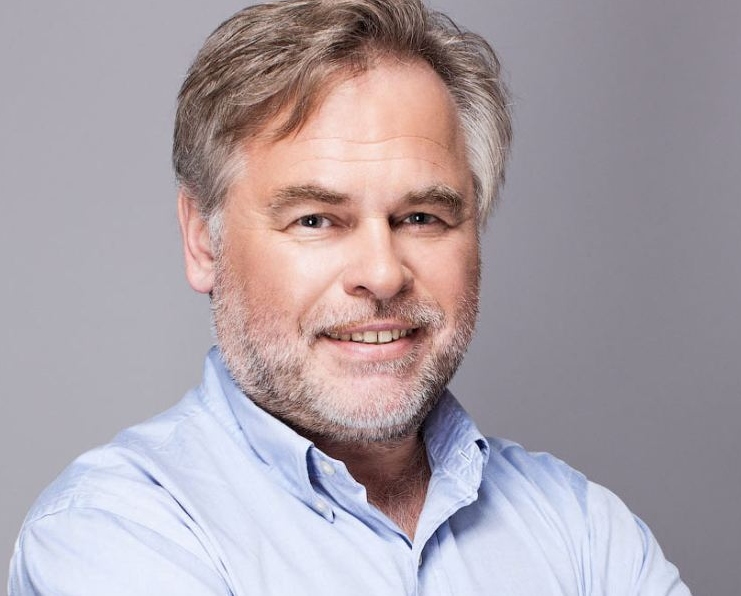
eugene kaspersky
Image Source: http://www.abc.net.au

Two years later, at the age of 16, Kaspersky got selected for a five-year program, with the technical faculty of KGB higher school. He was to be prepared for intelligence officer for the military of Russia and KGB.

In the year 1987, Kaspersky graduated in mathematical engineering from the Institute of Cryptography, Telecommunications, and Computer Science, Moscow. During his graduation, he gave special attention to cryptography and upcoming computer technologies.

Early Career

Kaspersky started working at a cryptography institute, sponsored by KGB. During this time he was introduced to computer viruses and quickly got attracted to solving these threats. His interest got serious when he first discovered a virus called Cascade Virus, in 1989. He went forward to analyze the virus and developed his first antivirus disinfection program. He kept on finding new viruses and subsequently, kept developing disinfection programs for the same.

He left the research institute in 1991 and took a job at Information Technology Center of KAMI, where he worked on his antivirus program full-time. Kaspersky set a base for what would be known as Kaspersky anti-virus company. He worked on AVP (Antivirus Toolkit Pro), which was also improved by his colleagues at KAMI. He released the product officially in 1992 and the product was sold to 10 clients, per month, bringing in the revenue of about $100. His clients mostly included companies from Ukraine and Russia.

Founding Kaspersky Anti-Virus

In 1997, Eugene Kaspersky decided to set up his own company. He co-founded AVP, along with his wife Natalya. This was due to the boost in sales, the product witnessed from 1994 when Hamburg University placed Kaspersky’s antivirus software at the first place. And, in 1995, Kaspersky’s software was only one software, which could get rid of the Chernobyl virus which made the software even more famous.

In 2000, AVP was renamed to Kaspersky Anti-Virus after its business was weakened, as an American man registered the AVP trademark. Soon, the company started growing in terms of employees and its software capabilities.

Finding Harmful Threats

Over the time, Kaspersky gained phenomenal success and fame by discovering cybersecurity threats. They brought down harmful threats one after another. The company hired a researcher, who discovered the Stuxnet worm, which destroyed Iranian centrifuges. In 2012, the company discovered another Stuxnet like virus called Flame.

Kaspersky was also successful in bringing down a group of hackers, Carbanak, who was stealing money from the bank. Kaspersky then became an internationally famous cybersecurity Russian company. Eugene Kaspersky became the CEO of the company, in 2007, and from 2012, he started working on software to protect important infrastructures, like power plants from cyber-warfare.

The company has over 3000 employees and has annual revenue of $711 million. Today, the company’s evaluation has reached $1 billion.

Personal Life

Kaspersky has a net worth of 1 billion dollars, and currently, lives in Moscow, Russia with his wife and five children. He divorced his first wife and the co-founder of the company, in 1998. After the incident, when his son was kidnapped, in 2011, Kaspersky travels with bodyguards.

Marc Andreessen : The Computer Scientist Who Founded Netscape

Inventor, entrepreneur and a super angel investor; Marc Andreessen is a complete package. The former had explored the world of computers and taught himself the basic of the programming language when he was in school. He became bored with computers even before he finished the high school, and when the interest in computers sparked again, he conquered the world of technology. He is the one who introduced the world to the first consumer-based web browser, Netscape Navigator.

Early Life

Marc was born in Cedar Falls, Iowa, on 9 July 1971, to Lowell Andreessen and Patricia Andreessen. Both his parents worked in a seed company, in New Lisbon, Wisconsin. He became familiar with computers at the age of nine. When he was in the last year of his school he was influenced by the fact that how the scientists at his school, used to send their piece of work to other Universities over the internet.

Marc became more interested in computers and went to pursue a bachelor’s degree in Computer Science from the University of Illinois at Urbana–Champaign. After graduating the college, in 1993, he started an internship at IBM in Austin, Texas and later, took a job with the AIX graphics software development group. At the time Tim Berners-Lee’s had recently launched the World Wide Web.

Invention of Netscape

Marc, living in California started working at Enterprise Integration Technologies. There, he constituted a team including Eric Bina, to create a web browser. After constantly working for almost two months, Marc developed a graphical and user-friendly browser that was compatible with a wide range of computers. He named it Mosaic Web browser. In the beginning, he gave away the browser for free and it earned over 2million users, within a few months.

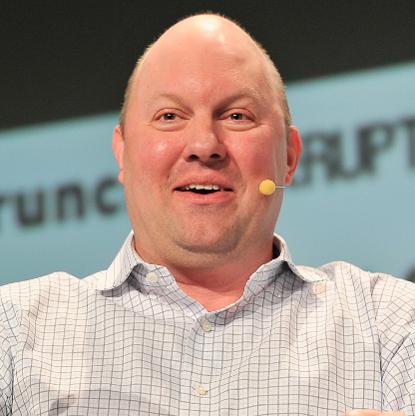
Marc Andreessen
Image Source: forbesimg.com

A former employee of the same company, Jim Clark, suggested Marc start his own software company. Following the suggestion, Marc started Mosaic Communications Corporation, that was later renamed to Netscape Communications. Also, the Mosaic web browser was renamed to Netscape Navigator.

Soon after the launch, the browser became quite popular. The browser was easy to use and pointed through information using mouse clicks and pictures. Many bigger companies bought the web server software and the related tools for their websites raising $56 million in the year of its initial release.

In 1999, AOL acquired Netscape for $4.2 billion, and Marc became the Chief Technology Officer of the company.

Other Ventures

In 1998, Andreessen along with Ben Horowitz, Tim Howes, and In Sik Rhee, founded another software company, named Loudcloud. The company was renamed as Opsware in 2003. In 2007, Hewlett-Packard acquired the company for $1.6 billion. Marc also co-founded another IT firm, Ning, that was acquired by Mode Media for $150 million, in September 2011.

In July 2007, Andreessen, with his partner Horowitz, started a capital venture, Andreessen Horowitz. Before this venture, they had already funded many start-ups. They together financed the major startups including Facebook, GitHub, Pinterest, Skype Twitter, and Honor, etc.

Andreessen serves as the advisor to Asana and director of CollabNet. He also sits on the board of directors of Facebook, eBay, Anki, Kno, Stanford Hospital, TinyCo, Bump Technologies, Dialpad, Oculus VR, and Hewlett Packard Enterprise.

Personal Life

In 2006, Marc married Laura Arrillaga, the daughter of Silicon Valley real estate billionaire John Arrillaga. She is also an entrepreneur and a philanthropist. The two have a son together.