Your Tech Story

Tech Story

Harsh Agarwal : The Success Story of Indian Blog Scientist & the Founder of ShoutMeLoud

“Follow your passion and the success will follow you!” the phrase that has become quite common today, and actually has done wonders for many. Same is the story of Delhi-based entrepreneur, Harsh Agarwal, who left a job (many of us dream of) just to follow his passion, and indeed the phrase set true for him, too.

Early Life

Born on 22 June 1987, Harsh Agarwal was a curious child and was always into learning new things. When he was 14, he became interested in computers and started saving to buy one. In 2002, he along with his family moved to Delhi, where he joined the Laxman Public School to pursue high school. After completing his school education, he joined the Sharda University and pursued a B.Tech degree in Information Technology.

Like any other parents, it was expected from him, too, to get a good job in an MNC and settle for a regular life. But it was not what Agarwal had ever thought. Having a curious mind, he was always into creative things and even got a certification in ethical hacking while in college.

Career

Soon the time for the placements came, his knowledge and creativity landed up him getting a job with one of the biggest MNCs, Accenture, in 2008. Since there was enough time between his graduation and joining with Accenture, he started working for Convergys.

harsh agarwal
Image Source: Twitter

Along with his job with Convergys, he started writing about things he knew and the things he was learning, at the BlogSpot platform. At that time, blogging was not as popular as it is today. Soon he also received his acceptance letter and joined a regular job at Accenture.

Along with his job, Agrawal was continuously working on his blog. He was interested in network and computer security, so he started a community named Underground World on Orkut. Soon the community started approaching more people, and Aggrwawal decided to build a blog with the same name. He tried to get a domain with the same name on BlogSpot, but the domain was not available, so he started a blog with name virgintech.blogspot. The first paycheque that he received from his online job was of $10, and the first money that he earned from AdSense was of $40.

Soon, the blog was making enough money with AdSense and other sources, such that Agarwal was able to pay his daily needs. After six months of his blogging career, he decided to devote all his time to his blog and left his job. His prime focus was to work on his blog, so he migrated his blog to a WordPress website and chose Shout-Me-Loud as the name for his blog.

Turning Point

On 29th June 2009, Agrawal met with a terrible accident, and the doctors advised him to stay on bed for the next six months. The accident was so bad that doctors had informed him that he won’t be able to walk again. Agarwal was shaken and had lost all hopes. But all he could do was try. Being bedridden, Agrawal had plenty of time to study and work on his blog. Along with working on his health, he was constantly working on the growth of his blog. According to Agarwal, it was a life-changing experience for him.

After seven months of practice and treatment, he was back on his feet. In December 2009, he met with another Blogger from Pune and partnered with him for a new venture. The two started working on a new project, and Agrawal became the B.D.O. of the firm. In just six months the company was financially independent, but the partnership was not going quite well. So, Agarwal decided to end the partnership and move back to Delhi.

ShoutMeLoud Growth

When Agarwal moved to Pune, he hardly got time for ShoutMeLoud, but when he came back to Delhi, it was the only thing which he was dedicated to. Soon the blog came back on track, and Agarwal started blogging to create awareness about making money from blogging. In just two years, ShoutMeLoud became one of the best blogs in India, and in 2013, even won the “Best Indian blog by Indiblogger” award.

By the year 2014-15, Agarwal received recognition as a public speaker, too. He organised plenty of workshops, and also, organised a blogger awareness trip ‘ShoutMeet’ from Delhi to Kanyakumari, in 2015.

Currently, ShoutMeLoud is operating under its parent company ShoutDreams and other than ShoutMeLoud, ShoutDreams is hosting WPhostingDiscount, ShoutMeTech, WPSutra, and CoinSutra blogs. In the past ten years, ShoutMeLoud has grown to a company of its own name, and many other bloggers are getting inspiration from the success story of Harsh Agarwal.

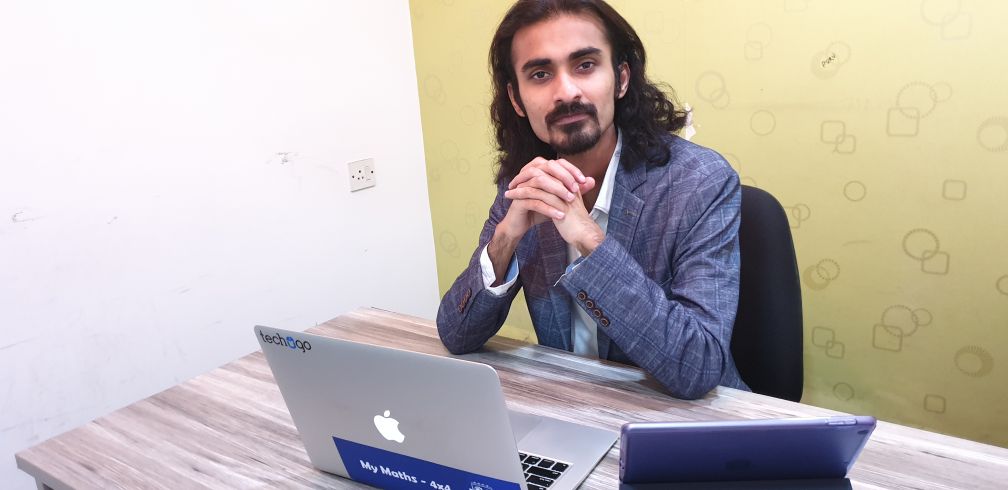
Ankit Singh : The Success Story of the Founder of Techugo

The Internet has helped many people to bring out the entrepreneur in them and establish their own startups successfully. The idea of a startup is interesting, but the obstacles that one has to face in this journey always get registered to a separate big book of failure and rejections. One such startup is Techugo, a four years old startup, which has established its name as one of the leading software development companies, despite going through big challenges and hurdles.

Ankit Singh, the founder of Techugo, was born in Varanasi, India, in a working-class joint family. He was born to a lawyer father and was pursuing electrical engineering from Uttar Pradesh Technical University (UPTU). Studying at the university, he was determined that after completing his education he will join an MNC. His aim was clear, but when the placements came, he found out that the students with a good personality and the ones who could present themselves well were getting the jobs, and even the toppers of the class were rejected at the placements.

Ankit Singh

It was a reality check for him, and Singh realized that this has been happening to many talented candidates for years. Even being much skilled, the ones lacking at personality were not able to get the opportunities. The incident was enough for him to rethink about working with an MNC. At the same time, Singh started thinking about ways to help such candidates with their interviews. He did not know about what but definitely wanted to do something for them.

Being good at academics as well as capable of representing himself in front of others, he was able to go through the interviews and get a job in a famous MNC at the placements. Even have got a good job, he was not excited about the opportunity he had received. Even before a week from the date of the joining, he became confused about joining the job or dropping the offer. But like any other college graduate, accepting the offer was more reasonable at the moment, and he became prepared for starting his career as an employee at the MNC.

“Just a day before my joining, I called my mother, and she sensed the agitation and discomfort in my Voice and without blinking the eye, she simply said, ‘Don’t you think somebody more deserving than you need this job? You are born to make it different in your family, go ahead, we are with you.’ ” said Singh in an interview.

This was the Eureka moment for Ankit, and he decided to drop the job and start his own company, where the candidates will be chosen on the basis of their talent.

A startup needs a good team, and before that a good investment. Being a fresher, and the owner of the idea of a startup, he only seemed to be an immature young graduate to the investors and was rejected at the very first business pitch. One after another, he was rejected by eleven investors. People learn from mistakes, and Ankit also was among those people. The 12th pitch he made became more polished than the previous ones, and within fifteen minutes of his presentation, the US-based investor Sumer offered him the initial investment.

Finally, on June 13th 2015, Ankit started his company from a shared office space, where at first he played the role the owner, HR and the office boy of the company. Sumer became the co-founder of the company and Ankit started hiring other people too. But again it was also not easy for a startup, as no experienced people wanted to join a freshly started company.

After becoming a team of three, Ankit hired one of his friends in college as the tester. Within the next fifteen days, the company had a CEO, CTO, a professional HR and started adding up more people in the Techugo family. Today the company has raised to 143 employees including Ankit, all under the age of 30.

With the inception of the company, Ankit has been hiring employees who are technically skilled, even if they are not good at communications. The company hires such candidates and help them to grow confidence and improve their communication skills with the help of personal training.

The company currently works on building mobile applications for its clients with businesses of every scale. The most successful project that the company carried out was Fanzir app which is powered by Euroleague. In the first five days of launch, the app received the 5,000+ installations, and in mere 15 days, it made $1M.

Techugo has provided its services for the Fortune 500 Company Airtel, Global 2000 Company like Godfrey Phillips, the largest political party in India BJP, and the budding and successful startups like Prozata, Fanzir and many more.

The company, currently, along with its India office has established its branch offices in the US and Dubai. Soon the company will also be opening its off-shore offices in Australia and Canada.

SoundCloud : The Success Story of YouTube of Music

Today, there are several audio streaming services, including Spotify, Apple Music, YouTube Music, and Amazon Unlimited, etc., available online, but there was a time when there was no such platform, where people could access audio music online. But then, in 2007, two students from Stockholm School of Economics, Alex Ljung and Eric Wahlforss, influenced with the success of YouTube and Flickr, realized the need for a music sharing website, where artists could connect, and founded SoundCloud.

The Founders

Alex Ljung and Eric Wahlforss, both belong to the Swedish descent and were always interested in music. Since his childhood, Ljung was interested in both music and technology and had decided to become a sound engineer in future. By the time, he had become quite skilled in the music creation and produced an album and was able to secure a job at a post-production studio, after completing his school education. But again, he was more concerned about his studies, so he joined the Royal Institute of Technology in Stockholm.

ljung and wahlforss
Image Source: sign-in-box.com

On the other hand, Wahlfros was also another alumni at the same institution pursuing a degree in MA. The two met at the college UNIX lab and found many things in common with each other, especially the passion for music. The two started spending more time together and did many university projects together.

Founding SoundCloud

At the time, Flickr was doing exceptionally well, and YouTube was emerging as a powerful video hosting platform. As the two were into music creation themselves, they thought of a new startup, through which they could make other music artists to share their music with other people and collaborate with different global artists, online.

After digging deep and working hard for a long time, the two launched SoundCloud, in 2007, keeping music and sound as its core objective. They founded SoundCloud in Stockholm, Sweden, but eventually established the headquarter of the company in Berlin in the same year.

In 2008, they launched the website for SoundCloud, where artists could share their creation and look for collaborations. But soon, the popularity of SoundCloud turned the platform into a music distribution platform.

The concept was unique, so it became popular in no time. In fact, in just two years, SoundCloud received worth €2.5 million investment from Doughty Hanson Technology Ventures, in the Series A funding. In 2010, the company reported one million registered users for the service. In 2011, in the Series B funding, SoundCloud raised a worth of US$10 million. In the same year, the company got raised to 10 million registered users, and in the next year, the number went to increase up to 15 million users.

Although since 2014, the company has been incapable of handling the huge empire it has built in a few years, SoundCloud is still working hard to maintain its spot in the music distribution industry. Even there has been the rise of several other new music platforms, it is SoundCloud that took the first step in providing the new artists to share their work on an online platform, and eventually, gave birth to new music distribution system.

SoundCloud has been the biggest medium for many artists to showcase their talent, and artists like Iza Lach from Poland and Lorde from New Zealand got their first break, through SoundCloud, and today are one of the most in-demand singers.

Alex Ljung served as the CEO of SoundCloud for almost a decade and stepped down from his position in 2017. Wahlforss holds the position of CPO in the company. He has also produced a few tracks that are available on SoundCloud itself.

Colin Huang : From Son of a Factory Worker to the CEO of a Billion Dollar Company ‘Pinduoduo’

There are rare chances that the destiny of a person meets his talent and help him achieve the things that at a point might be unimaginable. But there are real examples in the past that has proved that in the success of a person his hard work and talent work even more efficiently if his destiny is working with him too. The son of worker Parents, Colin Huang, would have never thought that his brilliance, and his destiny, will coincide and he will have his own rag to riches story. The 13th richest person in China, in just three years. The life story of Huang surely is a great example and inspiration for many.

Colin Huang was born in 1980, in Hangzhou, to the worker-class parents. While in school, he participated and won a medal in a Mathematics Olympiad, after demonstrating an aptitude in Mathematics. This was the point when his destiny started pushing him towards a good life. The prize of the Olympiad was a scholarship to a reputable school in Zhejiang province.

Colin Huang
Image Source: colinhuang.com

In the school, he got to know many elite students and was even introduced to the daughter of the Mayor of the school, as she too studied in his class. This helped him a lot to build up confidence in him and hence became more comfortable in interacting with the most brilliant students of the school.

As soon he completed his school, another opportunity came into his lap, and he was chosen to study at the prestigious Zhejiang University, where he pursued a degree in computer science. In his first year, he was also selected to be a part of the Melton Foundation.

During his college, he started an internship at Microsoft Beijing, where he earned the stipend worth 6,000 yuan. According to an interview, Huang accepted that the stipend he received for the internship was already greater than the salary of his parents altogether, at that time.

After completing his graduation, he went to the University of Wisconsin to pursue a master’s degree. At the university, he was doing exceptionally well, and his professor impressed by his brilliance provided him letters for the recommendation for a few of the biggest tech giants of that time.

After completing his education in 2004, he received the offer letters from three big companies, i.e. Oracle, Microsoft and IBM. Turning down all the three offers, he decided to work with Google, the company which had just filed its IPO in the same year.

Huang joined Google as an engineer. After working for three years with the company, in 2007, he resigned from his post, as he had got tired of flying back and forth, from the US to China, to resolve even the tiniest of matters. By the time, he had earned a lot of good money and was able to take the decision of quitting his job.

He flew back to China and started his first venture, an eCommerce website named Ouku. The website became popular soon, and after three years, in 2010, Huang sold the website. After Ouku, he founded Leqi, another website, and then, Xunmeng, a gaming studio.

All the three ventures he started, paid him well to lead to him to found another venture, Pinduoduo, which is also the most successful venture of the serial entrepreneur, Huang.

Pinduoduo is an eCommerce platform that provides its users with offers on group purchases. The company was founded in September 2015. Within a year, Huang was able to raise investments from the leading companies of China, i.e., Tencent, Gaochun and Xintianyu. The three companies alone invested a worth of US$110 million in company’s B round funding.

In 2018, the company reported the number of users, more than 200 million. On July 26, 2018, the company went public on NASDAQ, and with a US$1.6 billion IPO, it became the largest IPO of 2018. Pinduoduo is one of the youngest companies which is giving a tough competition to the more than a decade old eCommerce giants like Alibaba and JD.com. In fact, it is the third-largest e-commerce company in China by sales numbers, after the mentioned companies.

According to Huan, he had never thought of changing the world, but if he is contributing to that, there is nothing bad in that.

Pinduoduo, gets most of its traffic from the lower-tier cities, such that people belonging to the lower-class are also able to buy things on the website. The success of the company has even made Huang the 13th richest person in China. Currently, he is working as the CEO of the company, and his net worth is estimated to be $15.6 billion.

Duan Yongping : The Secretive Chinese Entrepreneur & the Founder of BBK Electronics

The competition is not always with others, there are many who wants to compete with their own self, to be their own improved version. The famous Chinese inventor and entrepreneur, Duan Yongping, has similar thoughts on self-improvement. According to him, he does not believe in surpassing anyone, but he focuses on self-improvement. He is the real example of simplicity and brilliance, all together. The chairman and the founder of BBK Electronics Corporation, Yongping, is an inspiring personality, and the source of motivation for many.

Early Life & Career

Duan Yongping was born on 10 March 1961, in Nanchang, Jiangxi, China. He received a graduate degree in wireless electronics engineering from Zhejiang University, in 1978.

duan yongping
Image Source: alchetron.com

As soon he graduated from college, he started his career as a teacher and joined the adult education centre of the Beijing Radio Tube Factory. But soon, he left the job and entered the Renmin University to pursue econometrics, and later, completed an EMBA from CEIBS.

After completing his education, he started working at the state-run vacuum tube plant.

Career as Entrepreneur

During the time Yongping was working at the plant, China was moving towards capitalism swiftly, leading to the formation of many private industries. Influenced by the same, in 1989, Yonping left his job and moved to Guangdong province to try his hands in the business.

In the same year, he joined a newly founded electronic plant in Zhongshan. Soon he became the CEO of the company and was the biggest influence in the success of the company. At the beginning of the company, it was under 2 million RMB debts, but in the leadership of Yongping, the company became one of the leading companies of that time, i.e. Subor Electronics Industry Corporation.

Subor developed the learning computers and was one of the biggest suppliers of the same in China. It also entered into the video-game facilities production market and built its first gaming console named “Subor” embedded with dual-cartridge slots. The console was an instant hit, and even, gave a tough competition to its rival Nintendo.

Yongping left the company on 28 August 1995, when the company was at the peak of success, to found his own venture named BBK. He founded BBK in Dongguan, Guangdong Province, and started with the production of DVD and MP3 players. BBK also started its subsidiary company, Bubugao Communication Equipment Co., that produced the feature-phones and became the biggest manufacturer of the same in the year 2000.

By the end of the same year, there was a fall in the sales, and Yongping was looking for peaceful ways to shut down the company, such that the employees stay unhurt. But then his protege Tony Chen advised him to start a new company.

In 2001, along with Chen Mingyong, Yongping founded Oppo to manufacture and sell music players. The company became the subsidiary of BBK.

At the same time, BBK also started the production of other electronic devices such as television sets, MP3 players, digital cameras, etc.

In 2007, with the launch of the first iPhone, like other cell phone producers, BBK was also inspired to start building those new and revamped smartphones. The famous smartphone manufacturing company Vivo is also the sister company of Oppo and another subsidiary of BBK. In 2009, both Oppo and Vivo started their operation in smartphone production and became the biggest pillars in the success of BBK and Yongping. Currently, both the brands are providing their service in over 100 countries and are among the best sellers.

In 2017, BBK was the second largest smartphone manufacturer in the world, ahead of Apple and Huawei, and sold 56.7 million smartphones in the first quarter of the year.

Currently, BBK is working on improving its smartphone lineup and involved in the R&D for the next-generation 5G network for smartphones. The headquarter of the company is located at Chang’an Dongguan.

Personal Life

Yongping is also active in the philanthropy works and donated US dollar 40 million to Zhejiang University in the year 2006. At the age of 40, he moved to California to focus more on investment and philanthropy works. He was the second largest individual shareholder of NetEase in the years 2002 to 2004.

Yongping is a private person and likes to keep away from the limelight. Even though, his life story is one of the most inspiring ones for not only the people of China but also the world.

Masaru Ibuka : Japanese Electronics Industrialist & Co-founder of Sony

Don’t work for the profits, work for innovation, this is what the Japanese researcher and the entrepreneur, Masaru Ibuka, had always followed. The co-founder of Sony Co. is one of the revolutionary figures of Japan’s electronics industry. The believer of hard work, Ibuka, is the biggest inspiration for not only the people of Japan but people from around the world. His dedication and hard work gave new means to the global electronics industry.

Early Life

Ibuka was born on 11 April 1908, in Nikko, Tochigi Prefecture, Japan. He was a studious kid at school and loved performing experiments in the labs. He completed his bachelor’s degree in electrical communications from the Waseda University, in 1933. During the college, he researched on experimental projection-type television system using a nitro-benzol Kerr cell and wrote his college thesis on the same.

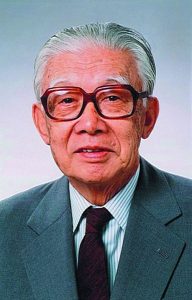
masaru ibuka
Image Source: prabook.com

After graduating from the college, Ibuka started working at the Photo-Chemical Laboratories Inc. He was employed as a researcher and was involved in the research work for the technology of sound recording on movie films. In 1937, he joined Nippon-Ko-On where he worked on the development of the home-based movie sound equipment. Later, in 1940 he left Nippon-Ko-On and joined the Japan Measuring Instrument Co., Ltd where he was involved in the research work on the mechano-electronic frequency-selective relays and telecommunication system. In the wake of World War II, he joined the department of Imperial Navy Wartime Research Committee.

Founding Sony

In 1945, Ibuka left his job in Navy and opened a radio repair shop at the Hirokiya Department Store in Nihonbashi, Tokyo. Later, with the capital of 190,000 Yen, he founded Tokyo-Tsushin Kenkyusho (Tokyo Telecommunications Laboratory) Co., following a merger into the Tokyo-Tsushin-Kogyo Co. In 1946, another Japanese researcher, Akio Morita, found out about Ibuka’s venture through the newspaper and was wanted to work with him. So he met Ibuka and the two co-founded Tokyo Telecommunications Engineering Corporation. Morita’s helped the two raise the funds for the company.

With the end of World War II and the big atom bomb attacks on Japan, the economy of Japan was devastated. Both the co-founders wanted to help in the economy of Japan and started their research work under the name of their newly founded company. In 1950, they were able to get a license to work on the transistor technology, becoming one of the first companies to use the transistor technology to non-military purposes. In the same year, the company launched Japan’s first tape recorder, the “G type.” In 1958, the company released another transistor radio, which was first of its kind. The company was soon providing its services to its international clients.

In 1958, the Tokyo Telecommunications Engineering Corporation was re-branded as Sony, after the co-founders realized that the Americans had trouble saying the name of the company. The next big invention of the company was the world’s first transistor television. In 1967, Sony Co. launched its first colour TV named Sony Trinitron.

Ibuka served the company as the president from 1950 to 1971, and then became the chairman of Sony from 1971, and retired in 1976.

Sony Co., released its first Walkman personal stereo in 1979, followed by a Handycam video camera in 1989, the famous PlayStation in 1994, and a Blu-ray Disc recorder in 2003. The company is a conglomerate and currently manufacture almost everything from a Smartphone to laptops, cameras to television, the electrical vehicle to home-based products. Sony Co. has built an international empire and has set its arms into the finance, entertainment and health sector as well.

According to the records, the company made a total revenue of 507.6 billion yen in the financial year 2017. In 2018, the company had 117,300 employees working in its different branches in different countries.

The company headquarter is located at Minato, Tokyo, Japan.

Personal Life

Ibuka was one of the prominent research engineers who brought innovation in the field of his interest. For his contributions in the rise of technology and the economy of Japan, he was awarded multiple awards. He even received the three doctorate degrees from three different institutions, i.e. from the Sophia University (1976), Tokyo, Waseda University, Tokyo (1979) and Brown University, US (1994). He also received the IEEE Founders Medal in 1972 from IEEE and the highest distinction of the Scout Association of Japan, the Golden Pheasant Award, in 1989.

Ibuka also wrote a book named ‘Kindergarten is Too Late’ in 1971. According to the book, the leaning for humans begins at the age of 3. On 19 December 1997, he died at the age of 89 in Tokyo, Japan.