Your Tech Story

Tech Story

WOW Air – The Success Story of the Ultra Low-Cost Airline

Travelling by air is leisure. The comfort it provides is ultimate in nature but this leisure comes at a pocket-emptying cost. Leisure flights’ tickets often come at a quite high-cost, disturbing one’s travel budgets. WOW Air was an Icelandic carrier service and a perfect solution to high-cost flights. It was an ultra-low-cost service that operated services across continents. Sadly, the company ceased its operations on 28th March 2019 due to some operational issues.

WOW Air was founded by Skúli Mogensen, an entrepreneur with an experience of years in the field. Mogensen was born on 18th September 1968 in Iceland and spent most of his childhood in Sweden with his father. He was an exchange student in San Diego in California, then studied philosophy at the University of Iceland. During his college time, he co-founded his first business ‘OZ.com.’ He dropped his college studies as soon as his business flourished.

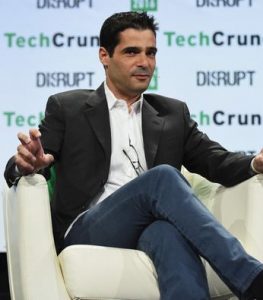
Skúli Mogensen
Image Source: independent.ie

Mogensen founded OZ.com, a software company which provides consumer mobile messaging solutions, in 1991. The service involves various telecommunication benefits for the consumer, including social networking, e-mail solutions, instant messaging communities. It has strategic partnerships with America Online, Inc., Microsoft, and Yahoo!. The company’s name was later changed to OZ Communications. Mogensen sold the company to Nokia Corp. on November 4, 2008.

Skúli also co-founded ‘Scandif hf’ and ‘Arctic Ventures’. He also led a buyout of MP Bank. After selling OZ Communication, Skúli had thought to retire. A few years into his retirement made him miserable, and he decided to return back to his entrepreneurship days. “I was a failure at retirement. I wanted to use technology and disrupt the market, and the airline industry is a good sector for that,” said Mogensen ensuring his return to the business market.

In 2011, Mogensen founded WOW Air. It had its first inaugural flight on May 31st, 2012 to Paris. The air service was surprisingly very cheap with fares as low as $99 from select US cities to Iceland and Europe. The fair provided the most basic seats and services.

In 2012, Mogensen took over the company as the CEO. In October of the same year, WOW Air acquired Iceland Express’s operations and network. At the end of the year, WOW Air expanded its services to Berlin, Kaunas, Salzburg and Warsaw. Flight frequencies to Gatwick and Copenhagen also saw an increase. A year later, in October 2013, the airline was awarded the Air Operator’s certificate (AOC) by the Icelandic Transport Authority.

The service rapidly became popular in Iceland and all over Europe. In 2013, it carried over 400,000 passengers and was the most punctual airline in Iceland. In December 2014, the company achieved a milestone by reaching its one-millionth passenger. In 2015, WOW Air expanded to North America and Canada the following year. Its annual passenger count increased from 740,000 in 2015 to 1.6 million in 2016. The airline went on to grow its annual passenger number to 3.5 million in 2018.

Mogensen spoke, “I often say it was a moment of insanity. When I started, everyone thought I was completely crazy and wanted to stay far away from me. I chose to go all in on my own,” on the success of the airline service.

In late 2018, Icelandair Group decided that it would acquire the entire share capital of WOW Air with both airlines operating under separate names. However, the conditions of the deal were unlikely to be met and Icelandair abandoned the deal. Indigo Partners, on the same day as the abandoning of the deal with Icelandair Group, reached a preliminary deal to buy WOW Air. The airline cut down its working staff, cancelled flight routes to Delhi, San Francisco, Los Angeles and Vancouver. The deal again was cancelled as Indigo Partners withdrew their offer to buy the company. The airline fell into multiple cancellations, technical failures and more knock-on effects. On 28th March 2019, WOW Air announced that they will be ceasing all the operations. The action left many passengers stranded as they were advised to book flights from other airline services.

Skúli wrote to his employees, expressing his regret for not acting sooner to stabilize the airline’s finances. “I will never be able to forgive myself for not taking action earlier, as it is obvious that WOW was an incredible airline, and we were on the right track to do great things again.”

In an interview with Business Insider, Mogensen said, “One of the mistakes that we made in the last 18 months, was that we were moving away from the low-cost model. Most significantly we made our fleet structure unnecessarily complex with the addition of the wide-body A330 to our fleet.”

However, Skúli is speculated to enter the airline industry soon with another brilliant idea. He was awarded Iceland’s Businessman of the Year in 2011 and 2016. The story of Skúli Mogensen speaks that failures are a part of the journey but can be avoided if suitable action is taken sooner.

The Success Journey of Freecharge from a Start-up to a $400 Million Business

Western civilisation had a huge impact on the Indian start-up culture. If you look around, you will find many Indian start-ups taking ideas from Silicon Valley projects like PayTM inspired by PayPal, OYO followed the business concept of Airbnb, and there are many more examples doing the same. This lead to the accusation for the Indian entrepreneurs of recreating ideas instead of digging a new one. In the midst, Kunal Shah and Sandeep Tandon proved everyone wrong and built a start-up to address payment related issues and launched a product called Freecharge, which later, took the digital market space like a wildfire.

Origin of Freecharge and initial success

The foundation of Freecharge started in the year 2010 when Sandeep was an angel investor and met Kunal at his BPO Company. Sandeep recognised Kunal’s potential and admired his entrepreneurship skills. In the year 2009, Kunal started with his own venture Paisaback. The idea was to give cash back to the customers through local business tie-ups. For instance, the customers used to get cash back if they visit any local fast food restaurant like KFC or McDonalds on the reference of Paisaback. However, the business ideas did not work out well and soon collapsed.

Kunal Shah
Image Source: ishaeducation.org

Later, Kunal wanted to make a technology, which would eventually minimize payment-coupled complexities and ease the payment process. His focus was especially on mobile phone recharges. He had analysed it as a million dollar idea which would disrupt the market. The idea gave birth to Freecharge. Both Kunal and Sandeep started with the product development phase. Within no time, they launched Freecharge on Independence Day i.e. 15 Aug 2011. McDonald became their key partner for initial days. For the project, they received an undisclosed amount of seed funding from American Venture Capital firm supported by Tandon Group and Sequoia Capitals. Freecharge tool off their business exponentially and grew into tech giant in coming years.

Investment from top firms to selling out the company

After successful three years from its inception, Freecharge received another round of Series B funding INR 220 Crores from their trusting partner Sequoia capitals, Sofina and Ru-Net. Because of their exceptional business delivery, Freecharge again received 535 crores form Hong-Kong based funding firm Tybourne Capital, Valiant Capital Management and from existing funding partners. The Freecharge was killing the market space and shut down many businesses. Many entrepreneurs saw Freecharge as a big opponent. As a result, in the year 2015, Snapdeal, after realising the potential of Freecharge, acquired the company. Snapdeal bought Freecharge for a whopping amount of INR 2700 crore, which also became the biggest takeover in the Indian history of the start-up.

Kunal’s vision for success entrepreneurship

Before stepping into the entrepreneurship journey, Kunal had taken a bold step, as he dropped out from Narsee Monjee Institute of Management Studies (NMIMS) while pursuing his MBA degree. Instead, he pursued an education in Philosophy, preferably. He holds a B.A degree in Philosophy from Wilson College, Mumbai, India. According to his controversial statement, he regarded the MBA as a waste of time and money. He believes students should reach out to running companies instead of wasting so much money while studying theoretical pieces of stuff. However, many intellectuals criticised his theory, he remains adamant. Today, he inspires many through his Freecharge success.

Kunal credit his self-devised Delta 4 theory for building Freecharge a successful start-up. It was Kunal and Sandeep homogenize vision, dedication and honest is the reason why Freecharge has become a global name in mobile-based application software. Today, Freecharge has grown a thousand times and has a customer base of more than 30 million people. Freecharge also awarded as the best consumer mobile service at IAMAI Digital Awards in 2015. The journey of a Freecharge is a lesson to many who want to explore the entrepreneurship journey.

Talmon Marco – The Co-Founder of Instant Messaging Software Application ‘Viber’

When technology, in its early years swooped into our lives and started developing, everyone hoped that it would connect people more efficiently than ever. The telephone was one of the best results produced from the growth of technology, but with the evolution of the internet, the demand for something new and instant started to increase. This demand sparked a lot of genius ideas across the world, which today, have given us n-number of mediums to connect that we operate on today. Talmon Marco, an American-Israeli entrepreneur, also had an idea in his mind, and that idea led to Viber, an interaction-based application software over call and messaging.

talmon marco
Image Source: zimbio.com

In 2010, Igor and Marco started their next startup, ‘Viber’. Viber is a cross-platform voice over IP and instant messaging software application. The inspiration for Viber was the love story of Talmon and his girlfriend (now wife). Talmon lived in New York, and his girlfriend lived in Hong Kong. They both talked a lot on the phone, which eventually, led to huge phone bills. This got Marco thinking that how he can stay in touch with his loved one without sacrificing much from the pocket.

The funds generated by iMesh supported the cause of Viber. Viber’s service started on December 2, 2010, in Israel, and it was rather a soft launch in a market that was willing to try a new app. The software uses telephone numbers to register, though it is accessible through desktop without needing any mobile connectivity. Viber did not receive any venture capital money, and the company was all funded by friends and family.

The company was producing a promising product from the very beginning, in fact, since it released its first iOS version. The latter gained Viber nearly 350 million users. The company also released an Android app six months later but at first, it was limited only to 50,000 users. A full version of the app was released a year later. In May 2012, Viber announced that it would be rolling out the software for Blackberry and Windows phones. In the span of two months, Viber gained a total of 90 million users. The company was progressing at a pace and decided to bring in the availability of high-definition voice calling, “Viber Out” and group messaging.

The app gave a tough competition to WhatsApp, Skype, and the other similar software present. It had an advantage over Skype. For using Skype, one had to register using password and had to maintain a buddy list, whereas to use Viber, the one simply needed to register using the phone number.

After 2 years, when the software established itself as one of the top connectivity apps, the company generated no revenue, and so it started to monetize itself via user payments for Viber Out voice and stickers store. The company’s support system was attacked by the Syrian Electronic Army. However, the company disclosed that there was no important information that was compromised.

On 13th February 2014, Viber was purchased by Japanese Electronic commerce and internet service ’Rakuten’ for a massive $900 million. The founders saw a 30-times return for what they invested. Rakuten merged its 200 million user client base with Viber. As of now, Viber has more than 650 million registered users. Marco stepped down as the company CEO in 2015.

The story of Talmon Marco’s founded Viber shows that anything can be done even when one has limited resources. All one needs is to find the light at the end of the tunnel.

Success Story of Jeremy Stoppelman and Russel Simmons – Founders of Yelp

The entrepreneurship journey of Jeremy Stoppelman and Russel Simmons, from working in PayPal to forming one of the world’s biggest business review website Yelp Inc., is a story of sheer dedication and creativity. It all started when both the founders who were working in PayPal as a software engineer dreamt of starting their own venture.

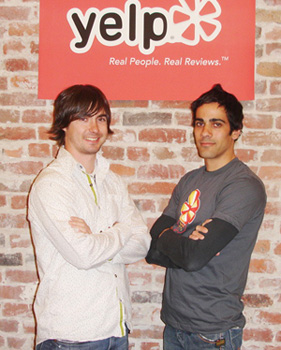
Russell and Jeremy
Image Source: http://brainprick.com

The inception of Yelp into market space

Jeremy attended Harvard Business School, after finishing his Computer Science degree from the University of Illinois. Meanwhile, Russel had already finished his bachelor’s degree, one year before Jeremy passed out from the college. He was working in PayPal as Lead Software Architect. Later when Jeremy joined PayPal, Russel and Jeremy get along really well and planned to start with their own venture. Their idea was to disrupt the market with a product that will help to resolve business issues. After endless brainstorming sessions in a business incubator, they founded Yelp in the year 2004. Initially, Yelp came out as an email recommendation service, and later, grew into a local business website for San Francisco.

Glory to success and eminence

After the inception of Yelp, it transformed drastically. By 2008, the company started offering services in most of the states of the U.S. By the end of the financial year, the co-founders started working on the Canadian project. Due to enormous success in such a short span, the vision of the company expanded to serve the world. In coming years, it grew exponentially and became an international social networking website as a local search tool. The success of Yelp did not stop just there; as a result, today, Yelp has more than 62 million unique visitors and approximately 177 million reviews on their website. Yelp has transformed into social networking, business review and local city guide, where people can search anything from finding a restaurant, shopping to almost anything. Yelp is now operational in more than 32 countries across the world and still holds the best interest of their customers.

Co-founders parting ways

Russel after serving several years as co-founder and CTO at Yelp, bid farewell to the company, in the year 2010. According to sources, he wanted to take time off to travel. Russel still holds significant shares of the company and continue his service as a consultant to the company. Jeremy, on the other side, still serving as a CEO to the company. There were several media trials on clashes between the two co-founders, but no evidence to solidify the case. Today, Yelp has the highest revenue per month compared to Facebook, Twitter, Snapchat, Instagram or any other major social networking platform. The company has a market cap of $3 billion and wish to grow more in the coming years.

Yelp business model captured the market with the ideology of solving customer’s issues, and hence, turn out to be one of the biggest social networking sites. The company is transforming with the introduction of Artificial Intelligence-based product and services. It will not be wrong to say that, the company has the potential to grow further. In the year 2009, the technology giant, Google, offered $500 million to buy Yelp. The CEOs politely declined the offer. Google is known for killing the completion; the gesture of buying Yelp shows its potential in the market.

Scott Lee – The Founder of the Startup Helping You Find Your Perfect GooRoo

Learning is a never-ending process. Constant learning generates brilliant minds and indigenous futures. Learning, with technology, i.e. alongside the internet has made it easier, portable, ageless, and does not require one to go to an institution. Everyone is capable of learning anything at any time and any place, by just simply having a smart device near them. GooRoo is one such leading service in terms of education with technology. It is AI-powered tutoring and learning platform with a strong focus on personalization, and the man behind this educational startup is Scott Lee. The success story of Lee, speaks up that challenges and life experiences often paves the best ways to success for you.

Scott Lee was born in Seoul, South Korea. As a child, he travelled to the United States to study in the Connecticut Boarding School. The problem for him was that he didn’t know a single word of English. That being so, navigating his way around the school was a challenge for him. After schooling, he went on to do graduation in engineering from Columbia University. After his sophomore year, Lee returned to Korea to serve the army for two years, in order to keep hold of his Korean citizenship.

Scott Lee
Image Source: newlearningtimes.com

After returning from the army, Scott started his first startup, ‘PeerTutor’, which was inspired by his ordeal in childhood. PeerTutor was meant for Korean students who could not speak English. The service-connected impoverished high school students to English tutors. He returned to the U.S. for his college and ended up working at JP Morgan & Chase as a financial analyst. Since the time he had come back from the army, Lee was encouraged to start his life as an entrepreneur, and it didn’t take long for him to quit his job to do so.

In June 2015, Scott launched his 2nd startup, ‘GooRoo’. GooRoo is a monthly subscription learning platform that matches you with the perfect tutor, the best learning programs and the most helpful educational guidance according to your needs – all with the help of AI.

GooRoo reflects on everyone deserves a good education and has a mission to cater to every student’s unique needs while bringing the excitement of learning to the world. “We believe everyone can succeed to fulfil their desired goals with flying colours. Whether it’s looking for a new hobby, to ace the next test, or an extra push, we’ve got you covered,” says the official site.

GooRoo implies four simple steps to work out perfectly for every individual. The first step is to request a GooRoo which is followed by receiving personalized matches in the second step. The third step involves to book and have a first session proceeded by receiving feedback and actionable recommendations.

GooRoo is a partner of Books for Africa (an initiative that donates one textbook to a child in need for every session completed), NYC Department of Education, NYC Department of Aging, TAL, Related Reality and CBN. Now, more families have access to high-quality tutors at affordable prices. The company has provided more than 3,500 tutoring sessions and has grown to have more than 1,000 tutors in New York City. GooRoo is looking forward to expanding to Boston and San Francisco.

The company has had only two funding rounds, in which they have raised about $4.2 million. GooRoo promises to be transparent and fair in the pricing to ensure that every individual gets an honest education.

Lee recalls his time in the army and explains how the experience shaped him to be an entrepreneur. “My time in the army tested my patience, resilience, and ability to adjust to changing conditions,” he said. He also added that the army taught him leadership, teamwork and humility. “The army works much like a startup -you are part of a small team with huge tasks, and you have to work together to problem solve on a daily basis. Needless to say, it was a life-changing experience,” Scott explained on his life in the Korean army.

GooRoo is available on both Android and iOS and makes it easier to find a tutor. Scott Lee, who turned his childhood struggle into a company, makes sure that it has a strong dedication towards the education that extends even beyond its tutoring services. He hopes that GooRoo continues its work at its best. Scott is surely someone to learn from.

Decoding the Life of Ruzwana Bashir: A Woman of Substance

Hailing from a tight-knit Pakistani community to co-founding PEEK—the story of Ruzwana Bashir is an inspiration to many. Life was not easy for her; she had a tough time growing up. She explained how freedom for women was dreaded upon in her community. It was until college when she started wearing western outfits. Before that, she was obtruded to wear Salwar Kameez and Burkha all the time. Wearing western outfits were not so popular in her family and forbidden in her community. Such inferior experience at a tender age changed her as a person.

Ruzwana Bashir
Image Source: purposegeneration.com

Ruzwana grew up in a small community in Skipton, outskirt of Rotherham. She enrolled in Skipton High School, North Yorkshire. Talking about her childhood, Ruzwana was a brilliant student. With assiduous commitment and sheer dedication, she managed to get into Oxford University. She took Philosophy, Economics and Politics as her major in college. She became second-ever Asian female president of the Oxford Union debating society and remained actively involved in numerous extracurricular activities. Because of her outgoing personality, she became a popular face inside the campus. According to Ruzwana, the turning part in her life came after she got the Fulbright Scholarship to pursue an MBA from Harvard University. There was no turning back after then. After finishing her professional degree, she started working as an investment banker intern at Goldman Sachs. She went on to work with Gilt Groupe and was the founding member of the team for Art.sy before starting with her own venture.

Found glory as an entrepreneur

Ruzwana entrepreneurship journey started in the year 2012. Her idea was to create a market space to connect travellers to local service providers offering booking services to holiday destinations. The ideas worked like a charm. She along with her fellow co-founder, Oskar Bruening, was able to attract investors like Eric Schmidt, Jack Dorsey, and David Bonderman for financial funding. By the end of 2013, Peek expanded exponentially by launching Peek Pro suite, an organized backend software to smooth tour related operations and at the same time launched a mobile application to maximize audience engagements.

In 2014, Peek received another $5 million round of funding. The success of Peek established Ruzwana as the most influential women in Silicon Valley alongside Marissa Mayer and Sheryl Sandberg. Apart from several corporate awards, the company emerged out as the top 10 most innovation website by Fast Company. TIME defined Peek to be the top 50 most creative website of 2014. The initial success made Ruzwana the superwomen of Silicon Valley, and later, awarded as the most prominent entrepreneur by Fortune. According to Ruzwana, smart work and vision to think differently is a magical potion to achieve success in life.

Spotlight and the Controversies

Bashir came into the spotlight on 29 August 2014, when she wrote an article in The Guardian, where she delineates her story of survival as a child. Her article on Rotherham’s Asian abuse camp misery gained nationwide attention. In addition, became a shred of prime evidence to initiate an investigation. Once the investigation authority started digging up, more victims came forward. The special team prepared combined testimony of several victims, and later, all perpetrators were sentenced guilty. The whole incident shocked the world. It became clear women suffered sexual abuse and exploitation in captivities. To make matter worse the victims were beaten to the extent that they refrain from registering their complaints. It was Ruzwana initiative that helped in solving several heinous cases.

According to Ruzwana, the struggles she had gone through her life really helped her out how to handle the extreme situation and remain composed. She utilised those experience on her journey to entrepreneurship. Her calm temperament shows her mental toughness, she is not just an amazing person but also a woman of a substance.