Your Tech Story

Tech Story

Inshorts : An App that Brings to You Crisped News from Around the World

Most of us, especially, the working class of our society, hardly get any time to go through the newspaper every morning. Reading each and every news in details and catching the office bus on time is next to impossible. But, it is like one of the fundamentals of our life to stay updated and follow up with the current news. Majority of the population rely on Google for that, just reading the headlines every day. But, India has brought something better for you.

An Indian company, Inshorts, has created a mobile app that summarizes the news for you in less than sixty words, covering all important highlights of the news. The app includes global news on business, education, politics, sports, technology, and everything you need to know about. The application is available for both Android and iOS.
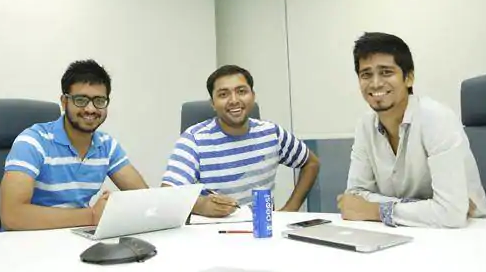
Inshorts founders
Image Source: financialexpress.com

Inshorts was founded in 2013, and within a span of six years, the app received more than 6 million users. The company was founded by Azhar Iqubal, Deepit Purkayastha and Anunay Arunav. All of them dropped out from Indian Institute of Technology to start a business of their own. Azhar Iqubal and his friend, Anunay Arunav, were from IIT Delhi, whereas Purkayastha was from IIT Kharagpur. These three young potential entrepreneurs were pursuing computer science.

History

All of it started with creating a Facebook page on 23rd March 2013. Iqubal created the page to deliver summarized news for the readers. This caught the attention of many social media users, as it helped them stay updated about the whereabouts, without spending too much time in reading the entire stories.

The company, first, released its application in 2013 for Android, and for iOS, in 2015. After Inshorts started gaining popularity, it was admitted to the TLabs startup accelerator (it helps new startups to reach their full potential by proving them with capital and proper mentor). Soon, the company was shortlisted as one of the Nasscom’s 10,100 startups, and by December 2014, the company’s app had 1 lakh subscribers. In the same year, the company received funding from Sachin and Binny Bansal, co-founders of Flipkart. Other early investors, include Gaurav Bhatnagar, Manish Dhingra, Ankush Nijhawan and Times Internet.

In February 2015, the company received funding from Tiger Global, Rebright Partners and raised $4 million in Series A funding, which was followed by raising another $20 million in Series B funding by the Bansal brothers and existing investor Tiger Global. In one of the interviews, Takeshi Ebihara, founder of Rebright Partners, said that Inshorts has a very bright and enthusiastic founding team, which is a pre-requisite for any startups at the initial stage. In the same year, the company was rebranded as Inshorts from its previous name News in Shorts.

The company announced that it intended to hire over a hundred content writers, by the end of 2015. In October 2015, Inshorts acquired a Bangalore-based company, Betaglide, the originator of Retention.ai. Retention.ai is, basically, a technology that helps to track the number of users uninstalling the app, the reason behind it and reducing the maintaining cost for the user. So, this was incorporated in the app of Inshorts to track the number of uninstallation, and thus, make strategies to perk up user retention.

By the end of 2015, the company already started adding images and videos along with the news, and also, added links which directed the user to the entire news if somebody wished to read it. Thus, the company collaborated with many news websites to ensure better news reporting. Though the company raised an appreciable amount of fund and reputation within a couple of years, there was a lot of criticism labelling Inshorts as a startup without a firm strategy. Iqubal, in response to these disparagements, said that they are looking forward to experimenting with the revenue models, and it might take another couple of year for the company to settle with one.

In 2016, the three co-founders got featured in Forbes magazine’s ’30 under 30′ list. They also received the award for ‘Best Innovation App’ by the Internet and Mobile Association of India.

Understanding that India has stepped into the digital era, wrapping it within the cloak of advertisement, it can bring massive profit to the company. So, in July 2016, the company launched the first ad on the platform, which ultimately ended up having more than a hundred advertising partner on board till 2018.

Future Plan of Inshorts

Since digitalized advertisement has become a key to make more profit, the company looks forward to luring more advertisers and increase the net revenue rate by four times. Also, the purchases through the app have increased significantly, and hence it plans to direct the readers to sites, like BookMyShow, MakeMyTrip, etc. The company also aims to incorporate more video contents, even for the ads, and put more emphasis on the regional languages. They are planning to curate more Hindi content as a major part of India’s population is still not comfortable with English. So, focusing on languages, apart from English, has produced more room for growth.

Yandex – The Google of Russia Simplifying the Lives of the Russians

In this era of the Internet, the importance of search engines cannot be adequately described. From finding your favourite restaurants, booking flight tickets to forecasting weather, its uses are infinite. Google, AOL, Bing, Yandex, Baidu (in China), and many more, flock the internet.

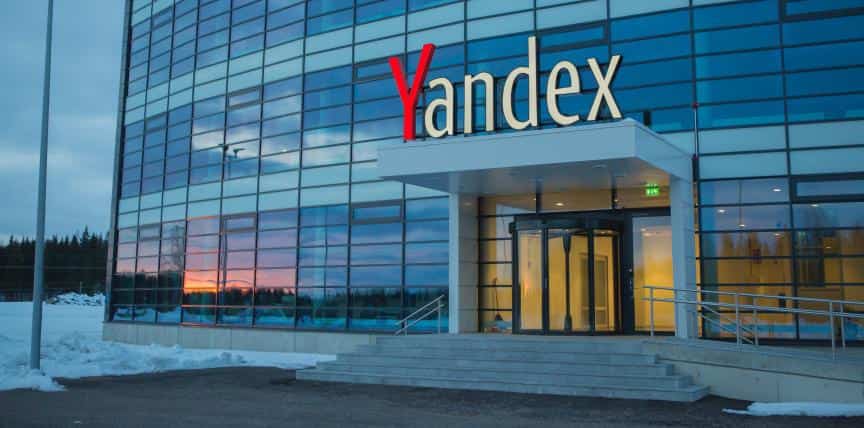
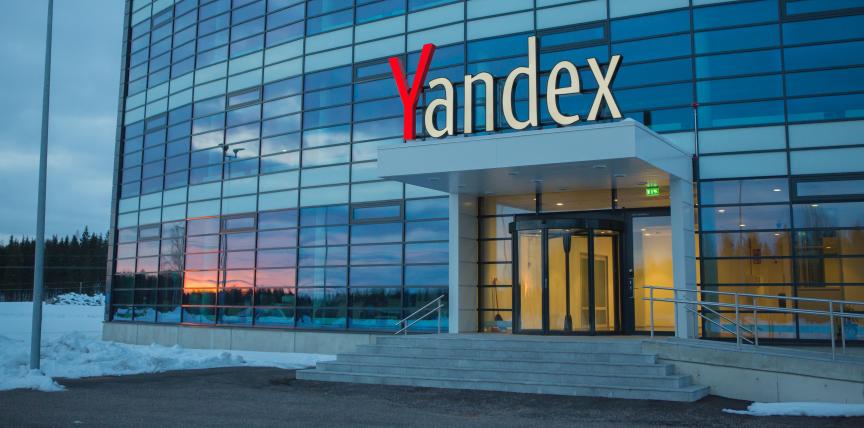
For the uninitiated, Yandex is the Google of Russian Internet or Ru-net. It is a search engine providing services such as Yandex Mail, Search, News, Video, Taxi, Traffic, Maps, etc., to the people of Russia.

yandex
Image Source: businesschief.com

Founding Yandex

It all started when two young boys, Arkady Volozh and Ilya Segalovich, both computer nerds, decided to make money by selling computers in the 1980s. Volozh and Segalovich, together, have co-founded several IT companies such as InfiNet Wireless, Comptek International, and Yandex is also one of them. The word “Yandex” has been derived from “Yet another Index”, indicating it to be one of the numerous search engines present at that time.

The first phase of Yandex’s success started with the Advertisement phase. The engine started displaying contextual advertisements. It pioneered the internet’s advertisement industry by boldly changing the dynamics. The majority of the company’s revenue came from such advertisements. They concentrated a large part of their resources on this venture, and it turned out to be a stroke of genius.

The second phase came soon in the year 2000, when the company announced the launch of several services such as Mail, News, Bookmarks. These services allowed people to access a unified interface for all their queries. The services were backed by unique marketing strategies, creating a lasting imprint on the minds of the Russian people.

The 2000s was a crucial period, including the Internet Revolution. The businesses had numerous growth opportunities, and the Internet had become a stepping stone for various corporations to expand their horizons. It was like a ‘rainbow on an already sunny day.’ The dependency on the Internet facilities was increasing. The year 2005 saw the upsurge in Yandex users, numerically 3 million. In 2009, the number reached 18 million users.

Apart from services, this tech giant also ventured in the field of education. Yandex started the school of Data Analytics in 2007 to support technology friendly academics, and “Yandex.Start” was launched to work with startups on newer projects. In 2014, it ventured with Moscow School of Economics to open a computer science facility. In 2016, It rolled out “Yandex.Lyceum” to teach coding and programming to young teenagers. It also provided CERN with computing resources. Yandex, a believer in Artificial Intelligence, has released “Alice” on the lines of Amazon’s Echo and Google Home.

The company has also been regularly updating its platforms. It recently launched Catboost, a new algorithm replacing the older MatrixNet. It is supposed to be faster and more precise. It released “Palekh”, a new search algorithm that uses neural networks to map information on the network.

The dynamics of Yandex’s success changed to good business deals from the quality substance. In 2011, Yandex offered its shares to the public. It raised north of 1 billion dollars. After the IPO, a larger resource pool was created. It partnered with Uber in multi-million dollar deals to share the taxi business. It also ventured into Turkey – providing Turkish people with its services.

Yandex had become a comprehensive search engine, touching every aspect of a person’s life. Timetables to Traffic, it had answers for everything. It concentrated keenly on search algorithms. Such ability must be attributed to the timely and efficient launch of its services. Another aspect of its success must be credited to its convenient linguistics. The ability to interpret local Russian language and provide accurate results was very well conceived. It overhauled the problems of people and provided holistic solutions. Such extensive and conscious effort towards improvement of technology services has certainly carved a niche in the minds of the people.

John McAfee : The American Computer Programmer and the Founder Antivirus Firm McAfee

The rise of the internet has brought a lot of facilities for humans. But for every good thing, one has to pay the price. With the increased facilities, there is another thing which is growing at a fast pace, i.e. Cyber Crime. As much as your valuables are important, your identity is too. But with cyber-crimes expanding, it is very hard to keep one’s identity inclosure. Hacking is at its prime with hackers have been spread all over the world. But how could it be possible that humans would not look out for a solution to this problem, too?

There exist antiviruses and several other safety measures that make one’s data safe from those hackers. One of these antiviruses is McAfee Antivirus, which, as of now, is the largest dedicated security technology. The founder of McAfee, John McAfee, also shares a story which is none the less than the rise and falls of a rollercoaster ride.

Early Life

McAfee was born in Forest of Dean, Gloucestershire, the United Kingdom on September 18, 1945. He was raised by his mother in Virginia. His father, at quite a young age, committed suicide. This incident left McAfee with a scar in his memory. He received a bachelor’s degree from Roanoke College. And, the same college awarded him with an honorary Sc.D. degree in 2008.

Career

McAfee always had an entrepreneurial spirit in him. During his college days, he started his business career by selling magazines door to door. Alongside, he started working at a company that coded punch card systems in the late 60s. With this job in the hand, he learnt basic computer operations. And, with this computing knowledge, he acquired a job at Missouri Pacific Railroad, where he helped the company to use IBM systems to calibrate train schedules. During this time, he got addicted to drugs and with time the addiction was only increasing.

John McAfee
Image Source: newyorker.com

One of the interesting stories that revolve around this is that once McAfee was sold a bag of DMT (Hallucinogenic drug). He sniffed a little bit of it and felt nothing. So he decided to sniff out the whole bag. When he did, the world around him changed as if the hell breaks loose. He ended up hiding behind a trash can hearing voices and hoping that no one would look at him.

After this incident, he never went back to the Pacific job. He moved to the Silicon Valley, in the 1970s, where he was employed as a programmer by NASA’s Institute for Space Studies in New York. McAfee switched many jobs starting from NASA to Univac as a software designer, to Xerox as an operating system architect, and then moving to Computer Sciences Corporation. He also worked for Booz Allen Hamilton. This was all going on, while he remained high on drugs. It was until 1983 that he got clean. While working for Lockheed, he came across the first computer virus. Computers in that era were still a new concept, but for McAfee, the virus situation became an opportunity. He decided to start his own company to fight back viruses.

Founding McAfee

In 1987, he founded McAfee Associates, a computer anti-virus company. He started working full time at the company. Initially, the company operated through his home in Santa Clara, California, which now is the headquarters of the company. By the end of the 1980s, the company made around $5 million and was the best anti-virus software that was in the market.

The company’s large popularity was due to the virus “Michelangelo”, which entered the digital scenario in 1992. Due to the rise of Michelangelo, McAfee Associates too rose, as the fever of security got into many minds. In 1992, it was incorporated in Delaware, and in 1994, McAfee resigned from the company keeping some shares to himself. As McAfee Associates became a multimillion-dollar business, the company went public, and McAfee sold all the remaining shares giving him nearly $100 million. McAfee Associates was merged with Network General to form Network Associates. In 2004, the name of the company changed to McAfee Inc.

In August 2010, Intel announced that it would be acquiring all the services of McAfee Inc., keeping the company separated. The deal was valued nearly $7.68 billion and $48 a share.

John, when asked about the acquisition, gave a surprising expression by saying, “I am now everlastingly grateful to Intel for freeing me from this terrible association with the worst software on the planet. These are not my words, but the words of millions of irate users.”

Life After McAfee

After leaving McAfee, John looked for a low-profile life. He started giving lectures at business schools, startup advice to the young and worked on his own projects. He worked on ‘Tribal Voice’ and ‘PowWow’ which, however, could not make the mainstream. In 2009, a report from The New York Times suggested that McAfee was hit hard by the global recession of 2008, which reduced his $100 million to a mere $4million. Although, McAfee denied the report and has always referred it to as false. In the late 2000s, McAfee sold his land and decided to move to Belize. He believed that he could enter the Antibiotics industry and make a product that would, eventually, cure illness using plants. In February 2010, he alongside his microbiologist friend Allison Adonizio opened a company, named QuorumEx. The company was headquartered in Belize and aimed to produce natural antibiotics.

The Journey of McAfee (The Company)

McAfee is premium in its services. It provides digital security tools for every bit of your computer. Some of the services that it provides are – IntruShield; McAfee Anti-Malware Engine Core; Change Control; DAT Reputation; Site Advisor; Virus Scan.

The company also has come with important acquisitions to strengthen its build. It acquired Nitro Security in October 2011, which enabled McAfee to provide high-performance security and event management solutions. Another acquisition that the company made is tenCube. This allowed it to provide mobile security for anti-theft and data security. Several other purchases the company made are Trust Digital, Sentrigo, ValidEdge, Stonesoft, Site Advisor, Foundstone, Onigma Ltd., TunnelBear, and many more. McAfee is today, the largest firm when it comes to security technology.

Hence, the story of the McAfee, the company, and its founder, John McAfee, vividly say that fortunes do come with hard work but they need to be preserved using one’s persona and attitude.

orkut

Orkut Buyukkokten : Founder of Orkut, One of the First Social Media Network

The power of social networking sites has made our public life more scintillating and invigorating. Updating every single incident occurring in our life and getting to know about other people’s status, all at once, have attracted the audience, especially, the youngsters around the globe. But the history of social media dates back to long before you used a filter on Instagram or even updated the status on Facebook. On 24th January 2004, Orkut Buyukkokten created one of the first social networking websites, Orkut, which was under the acquisition of Google. Buyukkokten is a software engineer who worked at Google and did much more than creating Orkut.

Early life of Buyukkokten

Orkut Buyukkokten was born on 6th February 1975, in Konya, Turkey. After a year of his birth, the family shifted to Germany and came back to Turkey a few years later. Buyukkokten had already adopted a German accent by then and got admitted in the second standard after they moved back to Turkey. Buyukkokten always maintained good grades in school and started coding when he was only in the fourth standard. Büyükkökten, in one of his interviews, said that a bunch of students always bullied him at school.

Higher studies and career

Buyukkokten went to Bilkent University in Ankara, from where he graduated with a B.Sc. degree in Computer Engineering and Information Science. The time he had to go for his master’s, he almost had thought of dropping the idea of applying in Stanford, due to the high application fee. But, he eventually applied and made it to Stanford University.

Orkut Buyukkokten
Image Source: vox.com

After completing his M.S, he pursued a PhD degree from Stanford as well. He researched mainly on how to create a better and more efficient way of web browsing based on the devices used by individuals. And during his days in Stanford, while working for his thesis, he created a social network, Club Nexus, in 2001, for the students of Stanford University. The students of the university used the platform for chatting, finding people with similar interests, buying and selling products and many other things. He received a good response from the students, especially the undergraduates, and by opening this platform, he actually enhanced the interaction between the undergraduates and graduates.

Buyukkokten also introduced another social network, inCircle, which was for the Stanford Alumni Association. He wrote the entire code for these networking websites in C#, and as the number of users increased rapidly, he started using different serves to reduce the traffic.

In 2002, When Buyukkokten was in his final year, he eventually, started receiving job offers, and finally, he ended up in Google. Even after he joined Google, he worked hard to develop better social networking sites. He believed in bringing the entire world together on a single platform where people can enjoy, make new friends and socialize. Buyukkokten also launched a company, Affinity Engines, which later, sued both Google and Buyukkokten for trading secrets.

Success of Orkut.com

Since Buyukkokten gave 20% of his time to create a new social networking site, he finally, built one and, named it Eden. And then, after a suggestion by Eric Schmidt and Marissa Mayer, the name was changed to Orkut.com. Google launched Orkut on 22nd January, Buyukkokten being the creator of the platform. Starting it as a 20% project, it turned into a massive success that the company and Büyükkökten, himself, never expected. Though Affinity engines claimed the code of Orkut to be theirs, the lawsuit they filed against Google and Buyukkokten was settled in 2006. A lot of new features were added once the website went live. A logo was resigned in 25th August 2007, followed by second redesigning in 27th October 2009.

As the number of people making profiles in Orkut increased, Buyukkokten declared that it will also be released in 6 different languages (Hindi, Bengali, Marathi, Tamil, Kannada and Telugu). Orkut was launched worldwide and gained the most popularity in Estonia, Brazil and India. Buyukkokten decided to leave the team of Orkut.com in 2008 and started working as a product manager at Google.

In 30th June 2014, Google announced that it will be closing Orkut.com by 30th September 2014. But for the time span it existed, Orkut changed the face of social media by giving the common people a real experience of communicating virtually and socializing.

Hello

Buyukkokten launched another social networking site Hello, in 2016, which is having users from all over the world, and he, still, thrive to make the world a better place by connecting people through technology.

Personal life

His parent’s names are still unknown to most of the world. He was in an openly gay relationship, and eventually, married to Derek Holbrook. But later, they got separated. He has two children.

Prezi : Communication Made Effective

Expressions are the prime contributors to effective communication. And, in professional life, presentations are the ones that help in expressing even the most complex terms in the most sorted manner. Presentations are considered as one of the best ways to communicate efficiently. Over the years, presentations have been recognised as the mainstream source for telling analytics, strategies and stories, because visual representation is always much better and interesting. One such tool which converts stories into visual presentations is Prezi.

Founding Prezi

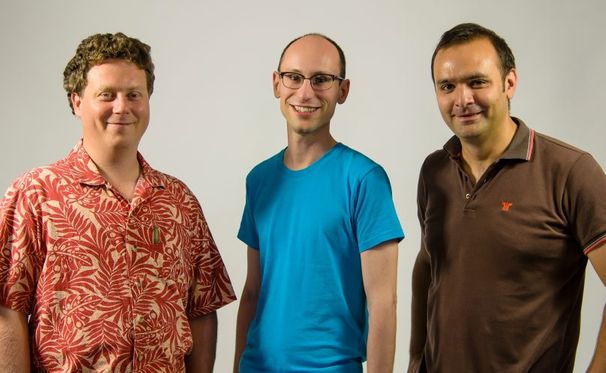
The story of Prezi falls back to 2007. In 2007, a Hungarian architect student, Adam Somlai-Fischer, who had a craving for innovation, was working over the design of a building. He, being creative, was not satisfied with the service that PowerPoint or Keynote would provide in terms of building a presentation. He wanted his viewers to look at the building in every possible angle and details of the buildings. So, he built a zooming presentation prototype that helped him achieve the vision he wanted to. Peter Halacsy, an engineer, saw one of these presentations and looked forward to improving the software. Soon enough, they were joined with Peter Arvai, who was an entrepreneur, in the journey of Prezi.

prezi founders
Image Source: hungarytoday.hu

The company was incorporated on May 20, 2009, with Peter Arvai, appointed as its CEO. The launch of the company took place at The Next Web Conference at Amsterdam, in April 2009. Prezi means ‘presentation’ in Hungarian. The very first office of Prezi in the US was launched in November 2009, after it received its first major investment from TED. Prezi is an out of the box software, which turns the boring presentation into interesting slides. As the website mentions, “Unlike slides, which literally box you in, Prezi gives you a limitless zoomable canvas, and the ability to show relationships between the big picture and fine details. The added depth and context make your message more likely to resonate, motivate, and get remembered, whether it’s your bread-and-butter sales pitch, a classroom lecture, or a TED Talk to the world’s foremost thinkers.

Peter Arvai once said, “Prezi helps you organize your thoughts and deliver them in a clearer way that really makes an impact on your audience and helps them reach that ‘ah-hah’ moment faster.”

Prezi has been growing ever since its foundation because of its reinvention of how one sees a presentation. It came to the mobile devices in 2011, when the company launched an iOS app for the iPads. The app gained $14 million in Series B venture capital funding. It also was indulged with Barack Obama’s ConnectED, promising over a $100M free licenses to Title1 schools.

Prezi has launched a number of services. It released an iPhone app in 2012, followed by the unveiling of ‘Nutshell’, a feature which helps in creating a mini-movie from one’s photos, and then an Android app in 2015. The company rolled out Prezi business in 2016.

Arvai admits that it was difficult to get funding from investors. He told that even though investors were impressed by the prospect of the software, they believed that it had no potential in the market. He also expressed that the company supports a healthy corporate environment. It allows employees to switch offices for a six-week period from San Francisco to Budapest and vice-versa. Prezi believes in the policy of inviting failure as a guest and learn from it.

Arvai is in the board of directors for WeAreOpen (Over 1000 companies coming together who aim to establish workspaces of openness) and Bridge Budapest (A group of entrepreneurs coming together to contribute to the future of Hungary). He remained a founder board member of Sanocore till February 2014. He was also the Vice President of Product Management at Mobispine. Peter approached companies via TED conference giving the common vision of promoting the open exchange of ideas. Also, in 2015, it came out that he was considered as a role model by Forbes for young people considering to be entrepreneurs.

The story of Prezi shows that creativity always makes way for innovation and freshness in the atmosphere of staleness. It has over 100 million users and has created over 350 million Prezis. It gives us a clear message that empty canvas and an artist can change the way one looks at the world with his/her astonishing ideas.

Asus: A Provider of Wide-Range Electronics and One of the Top IT Companies from Asia

Asus, a Taiwan-based multinational company, is known worldwide for manufacturing computer hardware and electronics. It has launched a vast range of smartphones, desktops, laptops, netbooks, tablets, networking equipment, and even, GPs devices. The company has reached apex for manufacturing ‘the best’ motherboard in the entire world, and also especially, by launching the Republic of Gamers, in 2006.

Asus was founded in 2nd April 1989 by Ted Hsu, M.T. Liao, Wayne Tsiah and T.H. Tung. The company has its headquarters in Beitou District, Taipei, Taiwan. In these 30 years of trade, the company has created a revolution in the IT industry with its impeccable designs and quality products.

History of the company

Before Asus was formed, the four founders worked together in Acer as hardware engineers. The company started with just the conversation over a coffee, and a strong passion to create something of their own. Right after the company was founded, they created their own motherboard using an Intel 486. It worked completely fine, despite even Intel faced issues with their own 486 motherboards. The first success of creating a motherboard was really an achievement, and starting from then, Asus received Intel’s prototypes before it reached any other competitors. Asus also launched Cache 386/33 motherboards in the same year.

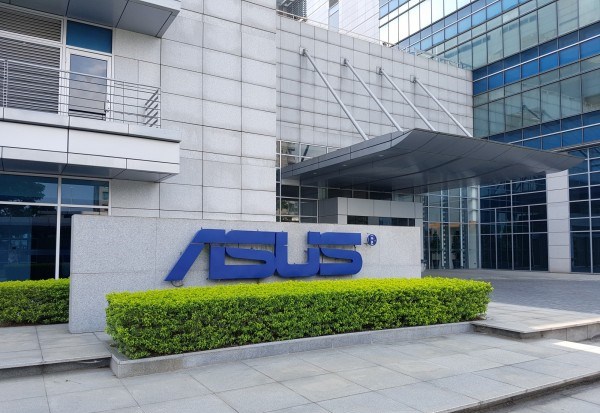
Asus
Image Source: taiwantoday.tw

In 1990, the company launched the most popular and widely used motherboard in the world, EISA 486. These motherboards were used in IBM and ALR products. The launch of these high-quality tech products helped Asus secure an admirable position in the world of IT companies. In 1992, Asus unveiled the 32-bit SCSI interface that incorporated IC software and in the very year, the company established a formal partnership with Intel. The company developed advanced Intel Pentium (586) motherboard, in the year 1993, and by 1995, Asus became the leading producer of motherboards throughout the world. In the same year, the company launched the first Asus dual socket Intel Pentium motherboard.

By this time, the company was expanding rapidly, and especially, under the supervision of Jonney Shih, the Chairperson of Asus, the company started focusing mainly on more advanced designing. He made a noteworthy investment in R&D to develop new technologies and take the company much ahead of its competitors. In 1996, Asus launched motherboards that have supported both single and dual Pentium CPUs and became a public company on Taiwan Stock Exchange. In 1997, Asus launched its first notebook which was followed by the invention of Intel Pentium II motherboards, in 1998. Since, Asus expanded the business beyond Taiwan, in the year 2000, it established various service centres in the Netherlands, United States, Czech Republic, Australia and Japan.

In 2001, The Asus Royal Club Association was formed to provide 24/7 customer care and technical support. In the same year, the company launched Asus CUSL2-C Black Pearl (all-black PCB motherboard). In 2002, Asus launched Asus MyPal A600A, a PDA that supports Intel 400MHz PXA250 CPU.

In the next year, the company launched its first 3G flip phone followed by Asus W1, world’s first notebook with an in-built TV tuner and many other extravagant facilities in 2004. In 2004, the company also became the world’s leading VGA display maker. Asus also launched three-RAID dual-LAN and fist multi-GPU motherboards in the same year. In 2005, the company launched its first environment-friendly motherboard and first laptop with an in-built webcam.

In 2006, apart from focusing on various electronic product lines, the company developed a sub-brand known as the Republic of Gamers (ROG). A separate committee was built to look into ROG to bring a revolution in the gaming world and provide gamers with cutting-edge products and the best experience of gaming. So, the new motherboard was launched exclusively for the gaming enthusiasts, and since then, a series of products has been built under ROG.

In January 2006, Asus came in partnership with Lamborghini to built VX laptop series. On the same year, Asus also announced a collaboration with Gigabyte Technology. The launch of Eee PC, in 2007, brought immense success to the company, including many international awards. The company also released its first camera, gaming notebooks, external graphics card dock, and many modified motherboards under the sub-brand ROG. In 2008, Eee PC was named product of the year by Forbes India. In this year, Asus launched its cloud service and more power efficient motherboards. In 2010, the company released the world’s first halogen-free LCD monitor and many other products under the Eee PC and ROG.

Position of the Company Today

Currently, Asus sells a wide range of smartphones (ZenFone), tablets, laptops, GPS devices etc. In 2016, the company set a record of winning 4,385 awards, and it was also named World’s most admired companies by Fortune magazine. The company earned approximately US$13.3 billion in revenue in the same year. The company also changed its taglines quite a few times and is now settled with ‘In Search of Incredible’. The success of Asus had made Taiwan one of the predominant IT hubs in the entire world. And, with a current asset of more than $333.6 billion and 1,500 employees, the company maintains its uniqueness and marches forward to achieve perfection.