Your Tech Story

Tech Story

N26

N26 : Transforming the Financial-services Industry in Europe and Beyond

There is no denial in the fact that technology has taken a huge leap in the past few years and has introduced us with many useful inventions. Whether it is booking a hotel online, getting food delivered at your doorstep, or making big financial decisions on a mobile app, everything is possible now. In simpler words, technology has made our life easier. One such convenient result driven by the use of technology is N26, a Berlin-based fin-tech mobile bank, that has changed the way people of Europe do banking.

N26 is a banking startup that was founded by Valentin Stalf and Maximilian Tayenthal in 2013. Stalf and Tayenthal both are natives of Vienna Austria. Stalf has got a master’s degree in accounting and finance from St. Gallen University in Switzerland, whereas Tayenthal is a Master’s degree holder in Law from the Vienna University.

After completing his education, Stalf started working with an investment bank. But soon, he moved to Berlin and joined a tech incubator called Rocket Internet, where he worked on fin-tech-related projects. The work he was doing here was quite different from what actually was done in the finance domain of the country. Here, he learned more about how technology can be mixed with finance. He realised that traditional banking is way more complicated, and technology can easily transform the outline of banking operations.

N26 Founders
Image Source: businessinsider.com

Stalf left his job in 2013 to found N26, and the together with Tayenthal, launched the first product of the company in 2015. Founding a fin-tech company in a city like Berlin, where people clearly avoid visiting a bank and does not even use credit or debit cards was not an easy task.

When the two were working on the startup, like every other newbie, they were looking for investors. According to the co-founder and CFO N26, Tayenthal, “They did not take us seriously. If we called ten banks while looking for a partner, about eight of them did not pick up the phone.”

It took them 12 months to launch their first product, and as soon it was launched, it was a huge success. The company gained over 80,000 users just in one year, and the next year, the number was doubled. According to the two co-founders, they never intended to build an online bank, but “Spotify” banking. Stalf calls Uber and Spotify the inspiration behind N26.

The N26 mobile app started with a collaboration with a local bank, and now, it has major names as its partners, like Mastercard, Clark, TransferWise and Auxmoney. Prominent investors, like the Chinese tech giant Tencent, German insurer Allianz, and Peter Thiel’s (PayPal co-founder) venture arm Valar Ventures, are backing the company.

The company does not have any physical bank branches, and there are no ATM machines have been installed in the cities. But the users can use other bank’s ATMs for the withdrawals, and the N26 credit/debit cards are accepted at over 7,000 affiliated retailers, without any extra usage fee. In fact, the users can open a bank account on the N26 app in just eight minutes.

N26 was named as one of the hottest fin-tech startups in 2016. In 2017, the company started its efforts to expand in the US and the UK. In 2018, Stalf received the ‘Founder of the Year’ award from the University of St.Gallen.

The basis of the success of this very app was the user-friendliness it provided to its users. According to the CEO, Stalf, they wanted to create an app that people would love to use, as most of the banking apps are complicated, and the users are bound to use these apps.

In January 2019, the company raised a good amount of $300 million from investors in a round of funding, and ultimately, valued at $2.7 billion, becoming the first fin-tech Unicorn in Europe. The company is currently operating in 24 European countries, including Germany, Austria, France, Spain, and Italy. It is providing its services to over 2 million users signed up to the app and is attracting 2000 users a day.

Since its inception, the company has raised more than $500 million, and over 1000 employees are, currently, working full-time for the company. The company is continuously working to maintain the security of the app and improving its service.

N26 co-founders count their startup among the breed of digital banking challengers, like Revolut, Monzo, Starling and Atom, who are on the mission of replacing the traditional way of banking.

Gogoro

Gogoro : Tesla of Scooters, Building Energy-efficient Smart Scooters

The environmental crisis is the biggest concern for humans, and soon, we are going to run out of many things that have become necessary for us. One such thing is fuel. In this growing world, the population is increasing, and so is the demand for fuel. Today, having a vehicle is a priority for people as it is not only comfortable to travel with personal transport, it is also a symbol of status. This has led to extra consumption of fuel, increased pollution as well as traffic. But, to help out all these situations, Gogoro has brought stylish electric scooters that are efficient and helps in saving the environment.

Gogoro was founded by Horace Luke and Matt Taylor, in 2011. It is a Taiwan based and venture-backed company that produces Smart scooters running on battery. Though there have been other electric two-wheeler manufacturers in the world, people using those electric scooters always complained about their mileage and efficiency. The two co-founders wanted to overcome these flaws for the e-scooters and build the energy-saving Smart scooters.

Luke and Taylor, before founding Gogoro, worked with major tech giants including Microsoft and HTC. Luke worked with Microsoft’s Xbox and Windows XP team, whereas Taylor was one of the key people involved in the development of Window’s Pocket PC “smartphones”. After working for ten years at Microsoft, Luke joined the developer team of HTC as the chief innovative officer that developed some of the Android smartphones. On the other hand, Taylor worked at HTC as the chief technologist.

gogoro founders
Image Source: gogoro.com

The two established the company in Taiwan, as it was the best place for accessing the most reliable supply-chain. The idea was quite promising, and that is why the company was able to raise a huge amount of $50 million from Dr Samuel Yin of Ruentex Group and Cher Wang as the seed funding. In fact, in the other rounds of funding the company raised a really good amount. In 2014, Gogoro raised $100 million in Series B funding from a collection of investors, followed by a $30 million round of investment from Panasonic and Taiwan’s National Development Fund. With a $300 million Series C round in 2017, the company’s collection reached the US $480 million.

Gogoro launched its first Smart scooter at the Consumer Electronics Show (CES) in Las Vegas in January 2015. The speciality of these scooters is that the batteries when drained can be exchanged with other batteries at a battery-swapping station named Gogoro Energy Network. The company has already built over 300 charging and battery swapping stations in Taiwan, and it will be adding 500 more stations to its charging and battery swapping network, soon. Gogoro has set up these stations at every 1.3 km distance from each other.

Gogoro Smart scooters are associated with an app. The company has launched the app to monitor the health of the scooter, adjust performance settings, check out for the nearest GoStation, see the correct statistics on battery reservations as well as check the vehicle’s battery level, etc. The scooters are for sure smart, as these can analyse riding patterns, optimize energy use, and dim its lights when necessary to maximize energy. These update their condition to the app every 10 minutes.

The batteries used in the scooter are the lithium-ion batteries that the company primarily purchases from Panasonic. In the year of its inception, the company sold over 4000 Smart scooters. According to Luke, the stylish and cool design of the scooter, and the comfort it gives to the users is the prime reason for its success. Also, people are saving a lot of money on fuel with the help of these scooters.

Being experienced enough, the two co-founders knew the real marketing strategy and built the scooters based on the users’ choice. The scooters are available in different colours and styles, including a few of its models, having the bike-type look. There are scooters also in pink colour to attract female customers.

Due to its energy-efficient model, Gogoro has also received the Government support as these help in reducing the greenhouse gas emissions. The Ministry of Economic Affairs has been supportive of Gogoro Smart scooters and have helped the company in establishing the Gogoro Energy Network in the country.

The company is already supplying its electronic products to other companies as well, and it plans to provide energy-support for offices, data centres and homes, with its lithium-ion batteries.

Gogoro has got its own retail stores where it sells its scooters, batteries and other electronic products. The company is called the Tesla of two-wheelers as it is similar to the former in many ways. Both the companies are working to find better power-saving technologies and builds the edgiest designs for its automobile.

The growth of the company and its reach can be the biggest benefit to the world, as with time we need more energy-efficient solutions for our daily needs.

dodge

Dodge: Story of Classic Vintage and Disputed Success Since 1900

The two brothers, John Francis Dodge and Horace Elgin Dodge, started carving a niche in the world of automobile, since 1900. And in this journey of 119 years, Dodge has become a connoisseur of high-style vehicles. It is well known for producing high-powered cars, trucks, SUVs, vans, and minivans. The company’s headquarters is based in Auburn Hills, Michigan, U.S.

Early History of Dodge Brothers

The Dodge brothers grew an interest and skill for machines from their father, who specialized in making engines for marine automobiles. Before founding Dodge, the two brothers worked at the Murphy Boiler Works, in Detroit. In 1897, they established Evans & Dodge Bicycle Company with Fred S. Evans but sold it after a couple of years.

In 1990, the two were established for manufacturing chassis components and other required parts for the automobile industries. The company started flourishing from the very beginning, due to their excellent work and two prime customers, Old Motors and Ford Motor. Initially, they had a workspace in the Boydell Building, but later a plant was built in Mark Avenue. Dodge started receiving huge contracts from Ford, and hence, the main factory was established in Hamtramck, in 1910, to sign in for even higher orders.

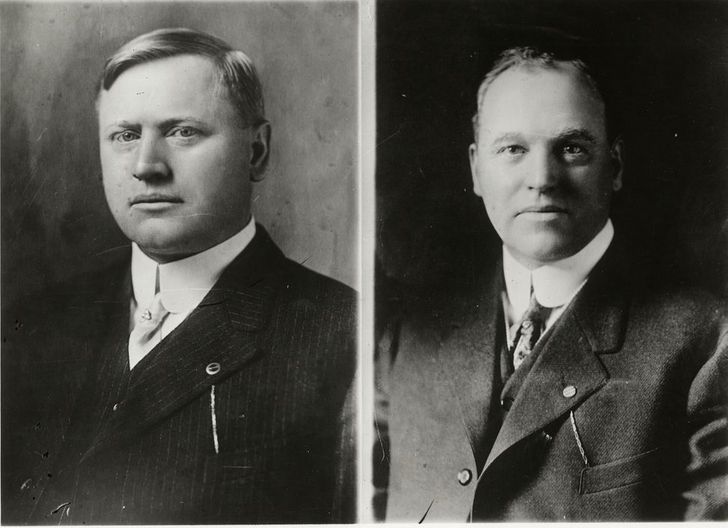
Dodge Brothers
Image Source: davidsiwik.net

Relationship with Ford

The once started contract with Ford, an investment of $10,000 brought the entrepreneurs $1.7 million profit and $3.8 million in dividends from their stock, in 1914. The business relationship between these two companies started becoming harsh after Ford reduced the dividends to the stockholders, and the brothers filed a suit in 1916 against the company. This lawsuit proved quite profitable to the company, as it received 10 per cent of the dividend $19 million in 1918. And later, they received a return of $32 million from their total production for Fords.

Founding Dodge Motors

In 1914, Dodge Motors was established with a capital of $5 million. In the same year, they designed their first car- Dodge Model 30/35 touring car. The two brothers already had a reputation in the U.S market for selling the best quality motor parts, and in 1916, their cars were ranked the second best in the U.S.

The company also supplied light wheeled vehicles to the U.S Army and nearly 12,800 cars and trucks were supplied during World War I.

The Unstable Acquisitions

The death of both the Dodge brothers in the year of 1920 led to the constant downfall of the company for the next few years. In 1925, from the second position in the U.S market, it shifted to the fifth place, resulting in selling the company to an investment group, Dillion, Read & Co. Frederick Haynes remained the president of the company, even after it was sold to a different owner.

In October 1925, Dodge acquired 51% interest in Graham brothers for $13 million, and later, acquired the remaining part in May 1926. The Graham brothers established Graham-Paige Company to build a new series of passenger cars, but none of this could take the company to its previous position. So, in 1928, Dodge was again sold to Chrysler Corporation, and it started building Chrysler trucks.

The Chrysler Age

Under the leadership of Chrysler, many new models were launched one modifying the other. In 1932, a new factory was built in Los Angeles, California, to build Chrysler, DeSoto, Dodge, and Plymouth vehicles.

Chrysler was very inventive about war vehicles, and Dodge was already popular for its contribution in the U.S army. During World War II, the company (Dodge America) built over 400,000 trucks for the war, and Chrysler Canada built over 180,000 Dodge trucks for British and the Commonwealth militaries.

Postwar, a lot of new models came up, and again, stabilized the name of the company. The Dodge Custom 4-door sedan (1946), Coronet (1956 ), and Coronet 440 sedan (1967) were some of the bestsellers of the comoany during that period.

The oil crisis of 1973 led to a change in the design of many car models, and the number of imported cars from the company’s Japanese partner, Mitsubishi increased. An entire series of luxurious cars were introduced, like Dodge Charger, 1977 Dodge Diplomat sedan, and 1976 Dart 4-door sedan.

Chrysler introduced ‘K-Car’ in the 1980s, but it was replaced by LH, a 1990s leading vehicle, to launch some of the high-rated cars, like LH Dodge Intrepid, Chrysler Concorde and Eagle Vision.

The Modern Age

In 1998, Chrysler Corporation merged with Daimler-Benz AG, and Dodge became the new company’s low-price division.

In 2009, Fiat came in a joint venture with Chrysler under Sergio Marchionne, with the UAW, and the U.S Government to form Chrysler Group LLC. For this partnership, the U.S government-provided a loan which was repaid with interest in 2011, five years prior to the date. In 2014, both Chrysler LLC and Fiat merged to form Fiat Chrysler Automobiles and announced that the company will be based in London.

canon

Canon: Embracing the Story of Your Photography

Thanks to the various social media sites, that most of the people are now able to showcase their photography talent. With this, we all have grown a craze for owing DSLRs and fancy lenses. Though there has been a professional photographer in the past, today, everyone has the liberty to flaunt their skill. It all started from primitive prototypes, and gradually, the prototypes transformed into high-quality digital cameras.

Canon is one of the camera manufacturing companies that contributed to the revolution in the world of photography. From pocket cameras to professional kits, Canon meets the demand of every aspiring photographer. Founded in the year 1937, it is one of the bestsellers of cameras around the world.

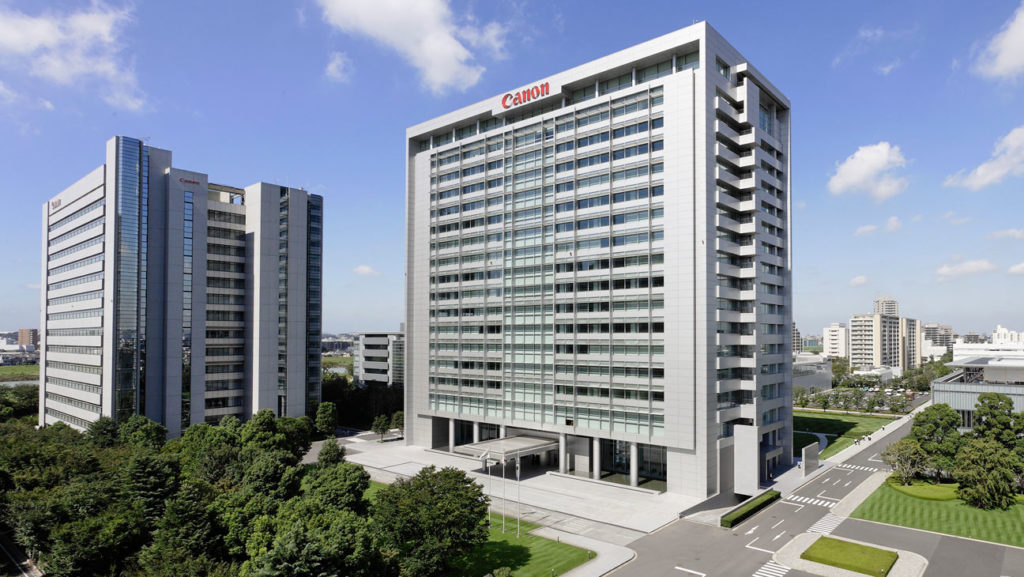
Canon is a Japan-based multinational company founded by Takeshi Mitarai, Goro Yoshida, Saburo Uchida and Takeo Maeda. It has its headquarters based in Tokyo.

Canon Headquarters Japan
Image Source: hollywoodreporter.com

Early History

When Leica Model II was introduced in the year 1932, a camera that was absolutely not affordable by the common people, it provoked Goro Yoshida to create something that everyone could pay for. He studied the model of Leica, and with the help of Saburo Uchida and Takeo Maeda, he started making affordable cameras. Eventually, in November 1933, he established Precision Optical Instrument Laboratory. However, Yoshida left it within a year.

Meanwhile, Precision Optical Instrument Laboratory faced some difficulties arranging lens and range finders for their cameras. This led the company to come to an agreement with Nikon Corporation and use Nikkor lenses for its cameras. After the agreement, the company produced its first camera under the name ‘Hansa Canon’ in 1936.

On 10th August 1937, the company was rebranded as Precision Optical Industry Co. Ltd., and the name of ‘Hansa Canon’ was changed to ‘Canon’. After this, the company released more models, resulting in the escalation of the sale of Canon cameras. The success of the company made it plan to expand its market outside Japan, which was then ruled by Leica and Contax.

Building the Basics

Canon started making its own lenses, and in 1940, the company released Japan’s first indirect X-ray camera. Canon was the name of the camera body, embedded with Serenar lenses and Precision Optical Industry Co. Ltd was producing these cameras. This created a lot of confusion among customers. And hence, in 1947 the name of the company was changed to Canon Camera Co. Ltd. Eventually, Serenar adopted the same name, Canon, in 1953. In 1951, Hiroshi Ito, an engineer who worked in Canon, created a high aperture lens that changed the entire fate of the company. With time, the company produced a wide range of lenses which helped it in producing even better cameras.

In 1958, the company launched Canonet, an easily affordable camera that went out of stock within a couple of hours. Canon also released Canon Demi- a lightweight small camera that was the best choice for personal use. These two models changed the entire market of cameras, giving a neck to neck competition to Leica. The company also launched a zoom lens for television broadcasting in the same year, followed by Reflex Zoom 8 (world’s first movie camera with a zoom lens) in 1959.

The launch of SLRs

In 1961, the company launched Canon 7, the Rangefinder camera and 50mm 1:0.95 lens. The company launched its first SLR camera (Canon Pellix) in 1965 followed by F-1, a high-end SLR camera in 1971, and the world’s first camera with an incorporated microcomputer, AE-1, in 1975.

In 1989, Canon launched EOS 1 Flagship Professional SLR and EOS RT, the world’s first AF SLR with a semi-transparent pellicle mirror. It then unveiled EOS 5, a camera with an eye-controlled AF and PowerShot 600, first digital camera, in the year 1992. The company came with the first commercial SLR lenses with internal image stabilization in 1995, and the next year, Canon launched a digital camera that could easily fit inside a pocket integrated with the Advanced Photo System.

Position of the Company Today

In 2002, Canon launched another eye candy for professional photographers, the EOS 1DS, a digital SLR camera with a plethora of high tech features.

In recent years, Canon has released EOS 6D Mark II with a full-frame sensor, dual pixel CMOS AF, and a Vari-angle touch panel. In 2018, it launched ‘Canon Club Elite’, a customer service program for the full-frame DSLR owners.

Since the very beginning of its journey, Canon’s goal has been to make excellent high-quality cameras in affordable ranges. Today, Canon has not only achieved its goal of making digital cameras available to common citizens, but it has also become one of the leading brands of professional camera kits.

habito

Daniel Hegarty : The Founder of Habito, UK’s Digital Mortgage Broker

Getting a lovely and comfortable house to live is still a dream for many, and it will continue to be one of the most required things for every person living. First, finding a house that goes with one’s requirements, and then buying that specific house is a quite a complicated task, as it takes a lot of efforts from finding the house, meeting the broker, finalising the price, and not to forget the tedious paperwork that everyone has to go through. To solve this very problem, a UK based musician, Daniel Hegarty, founded Habito- an online mortgage broker service.

Hegarty is a native of London, who left school at the age of sixteen to join a rock band as a guitarist. Though he was working locally with the band and was attending school alongside, after he became more involved in music, he got suspended by the school authorities for low attendance. His band name was Serum, and while touring with the band, he started earning good money. The band got signed by a record label, and his weekly earning reached £100.

Hegarty moved to LA, where he started playing with live bands. After working for over ten years with different artists, he started losing interest in the same kind of job. He returned to the UK in 2007 and started looking for a job other than in the music industry. He asked one of his friends about jobs in the UK, and she introduced him to the team of Wonga, an online loans lenders.

Habito Founder Daniel Hegarty-1
Image Source: businessinsider.in

The company was small and had been the centre of criticism for many reasons. But Hegarty liked his job, as he was in the designing, and the marketing team, at the company. In fact, while working with Wongo, he found out that there was something other than music that he could do well. To know the financial field, and also get better in web designing, he started taking online courses from Standford University and involved himself in mathematics. Hegarty continued to work with the firm for five years, and despite a lot of criticism, in 2013, the company had over 1000 employees.

After finding the job, it was the time to get that dream house that Hegarty and his wife always wanted. After looking for a few properties, the two finalised a house. But then, buying the house has never been so easy. The two had to go through a lot of paperwork filled with complex jargons. The legal work was going all wrong as the broker made the mistake with Hegarty’s wife’s name twice in the papers. The mistake by their broker lead them losing the house, and the couple was on the roads.

The thought of losing a house because of the mistake of the broker disgusted him, and he wanted to find out a better way to buy a house. This time, he was not ready to contact with a careless broker and lose the deal again.

So Hegarty decided to try his own hands in the same field. He started studying more about the mortgage and home loans. He even met many brokers and found out that these brokers always neglected the buyers. The only thing mattered to them was money. People had to waste a lot of their time and money to get a house for them. Buying even a small was like a nightmare for every person.

Hegarty finally founded Habito in January 2015 as a fee-free online mortgage broker with the help of investors Toby Coppel and Meyer Malka. In a year of its launch, the company was analysing over 60 applicants in seconds. The company launched a mortgage search and comparison service in April 2016 adjoining with over 70 mortgage lenders.

By September 2017, the company had lent £250m to 50,000 borrowers, and by November 2018, over 150,000 people had used the company’s website to get mortgage advice and applications. Since the inception of Habito, it has been growing with a rate of 20 per cent every year. Today, the number of employees at Habito has raised from 4 people to 160 people.

The company has created the world’s first artificially intelligent Digital Mortgage Adviser (DMA) for regulated mortgage advice. That means the users get their advice from the bots and unless necessary, there no human interaction with the user. Though every employee of the company plays the role of customer support every in every two weeks to provide personalised solutions to the customers.

Due to the robot-assistance, the company has faced a lot of criticism, but the ability to provide a customer with a solution within 8-10 days has made it the most efficient mortgage advice platform, whereas with the normal brokers the application process takes minimum 20 days.

The unusual idea of online mortgage advice and application processing has helped the company raise a total of £8.2 million in capital money from investors, like TransferWise CEO Taavet Hinrikus, Funding Circle CEO Samir Desai, and Yuri Milner of DST Global, etc., in just four years.

The most basic reason for the success of the Habito is that the people in the UK wanted a service that could help them with the difficult process of finding the right house at the right price, without wasting much time, and without the risk of losing the deal. And, this is what Habito is providing to them.

Ableton

Ableton : The Company that Revolutionised the Electronic Music Industry with Technology

The music industry is vast, and so are the range of instruments used to compose a masterpiece in the same. But arranging a whole lot orchestra to create a small music composition always cost a hefty amount, and sometimes it can cost even more. But with changing technology trends, the music industry has also got its own music software that helps musicians to produce the amazing music that was impossible without a professional music team. Ableton is such music software, and one of the earliest, that has been helping numerous musicians with their composing and music production work.

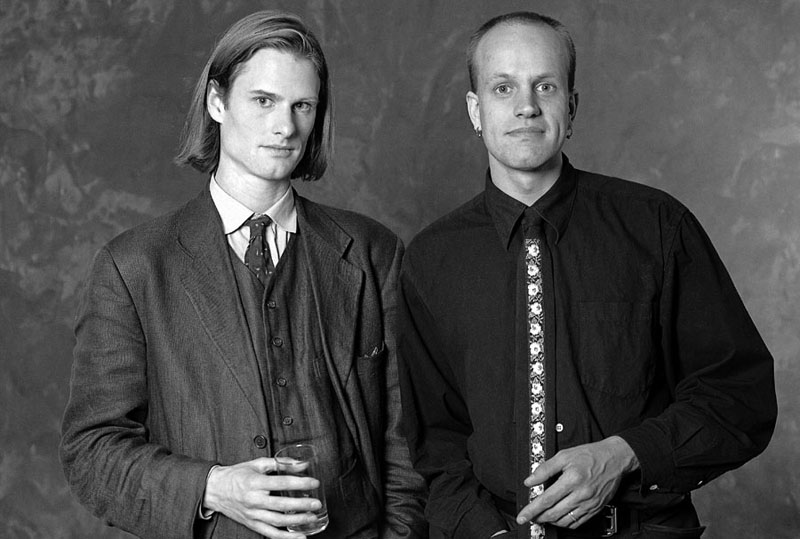
Ableton was founded by two computer music artists Robert Henke and Gerhard Behles. The two belonged to Munich, Germany, and had met through a common friend at the University of Munich, who ran an electronic music instruments store. At that time, they did not share good vibes with each other and had no plans to work together.

After some time, Behles moved to Holland, whereas Henke shifted to Berlin, for higher studies. Somehow, again, Behles had to move to Berlin, where he joined Computer Science same as Henke at Berlin’s technical university. This time, the two get along well, as both shared the common interest, i.e. Music. The university has a studio for electronic music, where the two started studying more about music and got introduced to a lot of electronic music. Here they began to design sounds and did a lot of installation work.

Ableton founders
Image Source: roberthenke.com

Henke and Behles collaborated in 1995, to produce electronic music under their Monolake project. At that time, they used Drum machines, synthesizers and software, like Cycling ’74/IRCAM’s music coding environment, to create music, but these could only create a limited type of music and was becoming boring with time. But being the computer engineers, the two were able to enhance the capability of the software and create better music.

With time, Henke and Behles started performing live and became famous. Some of the most popular creations of the two under Monolake includes Gravity (2000), Interstate (1998), Hongkong (1997), etc.

Even though the two were becoming popular with their compositions, they wanted something new and better for music creation. At that time, they used the Apple G3 laptop to compose music and play it live. This helped them to reduce the need to take big musical equipment with them.

Being engineers worked for them, and they developed software to create different transitions in music named PX-18, but purely for their personal use. The software worked on the Silicon Graphics workstation. For building the software, Behles met another software engineer and music enthusiast, Bernd Roggendorf, who also advised them to start a business of music software development.

The development of the software was to replace the big heavy instruments with computer and laptops. They created small pieces of programs to get the right sounds for their live performances. But still, they were not planning on selling those programs to other musicians.

But soon, they realised that there were no such programs at that time, and a new music software could do wonders for every other musician. So the two got convinced to commercialise their software, and the next step was to find investors for their idea.

The two partners participated in the trade show NAMM in 2001, with the beta version of their music software, named ‘Live’. Here they got to bag the first investment from Hans Zimmer, a German film score composer and record producer. After Hans Zimmer showed interest in their project, many other investors came forward to invest in the same. And in 2001, Henke and Behles founded Ableton the company and launched the first commercial version of the software, ‘Live’.

The two opened the first office of Ableton in the Mitte district of Berlin, Germany, Behles becoming the chief executive officer of the company. The software became famous in no time and was opted by big names in the field of music production.

The company joined its hands with Cycling ’74 in 2007 to build a new product, ‘Max for Live’, that they launched in 2009. The software creates Max/MSP patches directly inside of Live. Ableton has also developed many programs, that help the users to learn about how to use the Ableton software.

In June 2017, Ableton acquired Cycling ’74. Till now, the company has released ten updates to Ableton Live. The latest version of the software, Ableton Live 10, includes features like new melodic step sequencing layout and MIDI note view, etc.

The company sells three versions of the software, i.e., Live 10 Standard, Live 10 Suite and Live 10 Intro. The standard version is the core software for music performance and creation. The Suite version includes features like Ableton Live, Max for Live and all the Ableton software instruments as well as effects. The third version is the introductory version of Live and has the track and effect limitations.

Henke worked at Ableton for over ten years and continued to record and perform his own music. Henke left the company in 2009 to completely focus on music. Since then, he has been writing and speaking about sound engineering, specifically at the Berlin University of the Arts, and Stanford University, whereas Behles still serves as the CEO of Ableton.