Your Tech Story

Tech Story

Open DNS Logo

Serving Up Those Domains: How This Company Got So Big It Caught Cisco’s Attention

The Internet is an ever-changing environment with a lot of features and threats. Since the internet age started, more services have been shifting to digital platforms to grow and expand. Therefore, companies that provide services related to the internet have grown substantially in the last two decades. Today, we will be looking at one such company. Here’s how OpenDNS grew to become a multi-million-dollar business in the field of domain services.

What the Company Does

OpenDNS stands for Open Domain Name System. The company provides features such as protection against phishing content filtering. OpenDNS also has a product named Umbrella, which has tools providing cloud computing security. This product suite protects enterprise companies from all kinds of digital attacks including phishing, malware, and botnets. OpenDNS handles over 100 billion DNS queries daily and boasts of more than 85 million users around the world.

About the Founder

David Ulevitch grew up in Del Mar, California and showed an early interest in computers. He worked for a regional ISP, named ElectriCiti before starting high school. It was from here that he picked up his interest in network administration. While Ulevitch was at Washington University, he created EveryDNS to manage his DNS needs. The company grew from being a project to a company with over 100,000 users. In 2010, Dyn, Inc acquired EveryDNS. 

Launching OpenDNS

Launched in 2006, OpenDNS came to life due to the efforts of computer scientist David Ulevitch. The initial funding for the company came via venture capitalists like CNET founder, Halsey Minor. Later that year, they launched PhishTank. The service allows users to submit suspected phishing sites. The other members could then review these sites and decide whether it was a scam. 

In 2007, OpenDNS started a domain-blocking service to help users block and allow access to various sites. The categories of sites blocked worked on individually managed blacklists and whitelists that the company controlled. A year later, OpenDNS made the list community-driven allowing subscribers to suggest websites. If the site suggested got enough votes, then the site became a part of the blacklist, and subsequently blocked. By 2014, the list had grown and included over 60 categories. The former head of VMware, Nand Mulchandan joined OpenDNS as CEO in 2008, replacing David Ulevitch, who became the CTO. He resumed as CEO again in late 2009.

Continued Success 

Two years after launching the free DNS-O-Matic, they launched a premium service called Home VIP. The same year, in 2009, DNS started its foray into the world of enterprise network security through OpenDNS Enterprise. The suite included access managers, audit logs, statistic reports, and customized block page URLs. This product expanded in 2012 through the launch of OpenDNS Insights.

The new service integrated with Microsoft Active Directory, allowing admins granular control. The World Economic Forum named them a Technology Pioneer in 2011. Former CTO of Websense joined OpenDNS as CTO in 2012. Later that year, the company launched the Security Labs for research. They raised over $35 million via a Series C funding led by Glynn Capita, Northgate Capital and Cisco. 

Forming Umbrella

Their biggest launch came in 2012, in the form of Umbrella. The software helped enforce security guidelines for roaming devices like laptops, iPhones, iPads, and tablets. A year later, they came out with the OpenDNS Security Graph to further extend Umbrella. The same year, they introduced the Investigate feature which allowed teams to compare traffic data. Another feature came in 2014 via Intelligent Proxy, which provides proxies for suspicious domains.

Merger with Cisco

Owing to their massive success, industry giant Cisco acquired them in 2015, for US$635 million. The entire deal occurred via an all-cash transaction, and also included incentives for OpenDNS. After the acquisition, the company’s services became Cisco Umbrella, whereas home products remained under the OpenDNS name. Cisco clarified that they would continue developing cloud-based OpenDNS products. The company also mentioned that all existing services would be continued. After the acquisition, Ulevitch became the Senior VP and GM of Cisco’s Security Business in 2016. Two years later, he joined Andreessen Horowitz as a Partner. The company also mentioned that all existing services would be continued. After the acquisition, Ulevitch became the Senior VP and GM of Cisco’s Security Business in 2016. Two years later, he joined Andreessen Horowitz as a Partner. 

Ulevitch grew OpenDNS to become the world’s largest DNS service provider. The acquisition by Cisco is a testament to their growth and success in the field of security architecture.

Cloudflare Logo

Cloud-Troopers- How Cloudflare Keeps the Internet and Your Data Safe

Internet security and maintenance has never been more important than now. With most businesses and companies taking their markets online, ensuring that you have a great network is crucial to succeeding. It sure is a great time to be in the internet infrastructure business, and that is exactly what this company did right. They were in the right place at the right time and benefited from that immensely. Cloudflare, Inc. is a website security and infrastructure development company that provides various services. Here’s a look at how they shot up the ranks and got to where they are now.

Launching Cloudflare

In 2004, Matthew Prince and Lee Holloway built an application to analyze how spammers worked, creating Project Honey Pot. The project grew over the years and had participants from over 185 countries. All the websites which signed up requested the duo to not just track the villains, but also stop them. Fast forward five years, Matthew took a sabbatical to pursue an MBA from the Harvard Business School. Here he met Cloudflare’s COO Michelle Zatlyn. One day while talking, Matthew told Michelle about Project Honey Pot and she instantly connected with the idea. Soon the duo was working on a business plan to take the Project to the next level. A friend suggested the name Cloudflare as they were creating firewalls in the clouds, and the name stuck!

Heading West and Building the Brand

Meanwhile, Lee built the prototype and in 2009, Cloudflare won the Harvard Business Plan Competition. The trio then moved west and built their prototype. The company was formally launched at the 2010 Tech Crunch conference. In 2009, Cloudflare took help from Venrock and Pelion Ventures to raise over $2.1 million as Series A funding.

Two years later, they utilized New Enterprise Associates, Pelion Venture, and Venrock to raise another $20 million. A year later, the company ran into trouble for helping the hacking group LulzSec, with their website. They won the Wall Street Journal’s award for Most Innovative Internet Technology Company in 2011 and 2012.

In 2012, Cloudflare Inc collaborated with HostPapa, to bring into effect Railgun technology which boosts performance. Then, in 2012, the company raised $50 million via a Series C round adding Union Square Ventures and Greenspring as investors. Two years later, the company won laurels for mitigating the largest DDoS attack of the time. The attack peaked at 400 Gigabits/sec and targeted an undisclosed customer.

The same year, the company reported and mitigated another huge DDoS attack against independent media sites. The same year Cloudflare raised $110 million through Series D which saw them attract investors like Fidelity Investments, Microsoft and Qualcomm. Cloudflare acquired malware detection and removal software StopTheHacker in 2014. In 2015, Lee stepped down from the company due to Frontotemporal Dementia, which is a rare neurological disease.

Acquisitions and IPO

In December 2016, they acquired Eager to evolve their application platform. A year later, they acquired VPN startup Neumob. The company grew exponentially between 2015 and 2017 and provides services to over 12 million websites now. This year, Cloudflare raised $150 million via a Series E round, led by Franklin Templeton Investments. Their growth has been phenomenal as they add almost 10,000 new customers every day. The company went public in August this year on the New York Stock Exchange. They go by the ticker name NET and opened at $15 per share.

Controversies and Expansion

Cloudflare Inc provides DDoS mitigation, security, and domain server services throughout the world. Though headquartered in San Francisco, the company has offices around the world, including in Lisbon, London, Singapore, San Jose, New York City and Washington, D.C. Though they have faced their fair share of controversies, they have stood by the company and as a result, have been extremely successful. They did run into trouble in the late 2010s over supporting The Daily Stormer and 8chan. In 2017, the company severed all ties with The Daily Stormer. Two years later, Cloudflare stopped providing services for 8chan, helping to clear up their tarnished name.

In 2014, Cloudflare launched Project Galileo to prevent cyber-attacks against activists and human rights groups. The project allows such groups access to free services that help them protect their websites. Five years later, in 2019, they announced that the project now included over 600 users and organizations.

Since starting out as a prototype at a college fest, Cloudflare has gone on to launch several products and open offices in various countries. These efforts have helped Cloudflare improve its performance and reliability. The billion-dollar company now has over 250 employs and helps around 4 million websites. It will be interesting to see how this company grows further, pushing the boundaries of internet security.

LOGO

St Microelectronics – A European Semiconductor Conglomerate

The usage and importance of semiconductors have increased in the modern era. To suffice the need for efficient telecommunication, semiconductors are of utmost importance. From making an integrated circuit to transistors and microcontrollers, everything falls under the domain of electronics. The demand for electronics engineers and semiconductor companies is rising exponentially with every passing day.

Major semiconductor companies around the world have either emerged from the US (Broadcom) or Asia (Samsung). Japan and China have also proved their excellence in this part. Seeing this Europe finally stepped out and harnessed its potential.

In 1987, STMicroelectronics was established and in 1957 the parent companies of ST were established. The parent companies of ST are SGS Microelettronica and Thomson-CSF Semiconductor. The company is currently based in Geneva, Switzerland.

The parent companies

With America, Korea, and Japan making a significant presence in the global marketplace, Europe was lagging a bit in this field. The Italian and the French government ran SGS Microelettronica and Thomson-CSF Semiconductor respectively before merging. And, they decided to merge the two companies to create something huge and worthy that can compete in the current industrial competition.

SGS was established in 1957 in Olivetti for producing semiconductors and related products. The company didn’t expand because the manufacturing unit was developed only for the local area. In the 1960s it made an agreement with Fairchild Semiconductors and the company started growing. But, very soon it reached saturation and was still insignificant compared to the other companies in the market.

Thomson-CSF was born back in 1879 by Elihu Thomson and Edwin Houston. It was known as a major electronics and defense contractor in France. The company merged with General Electric in 1892 and since then multiple companies merged with it. In the next century, few divisions of this company were sold and the existing parts were divided before privatization.

Formation of STMicroelectronics

The merging took place in 1987. Previously, the name of the new Italian-French conglomerate was SGS-THOMSON which was changed to ST in May 1998. The company changed its fate once the production started. By 2014, the company was ranked 14th on the top semiconductor’s company list.

By the end of 2013, the company made a sale worth $850 million and the annual revenue summed up to $8 billion. In 2014, the company became the 9th largest semiconductor company worldwide in terms of revenue. By this time, ST not only went international but established a market in ten different countries including manufacturing units and research centers. Around 45,000 employees were hired and were in full shape to beat the competitors.

The Success

The company soon filed for an IPO and the first one was completed on 4th December 1994. In 2002, the company started a partnership with Motorola and TSMC. By 2005, ST’s only competitors were Toshiba, Intel, Samsung, and Texas Instruments. It became the largest semiconductor company in Europe famous for making semiconductor chips.

In 2007, ST and Intel started a joint venture and merged Intel Flash Memory activities. In April 2008, ST and NXP started a new partnership concerning mobile activities. The major shareholder was ST owning 80% of the company. Next year welcomed another joint venture of ST-NXP Wireless with Ericsson Mobile Platforms.

ST contributes a very considerable amount in R&D. The main R&D centers of ST are in Geneva, Tours, Milan, and Catania.

Current Status of STMicroelectronics

By 2018, ST hired 46,000 employees among which more than 7,000 worked in the R&D centers. The annual revenue has summed up to $9.66 billion. ST has expanded to thirty-five different countries with 80 marketing offices.

Apart from the main headquarters in Geneva, ST has other headquarters too. The company has established its US headquarters in Texas followed by other branches in Amsterdam, Tokyo, Singapore, and Shanghai. Three headquarters in Asia concludes a rich business in this region.

Towards a better world

With the increasing crisis in our planet for every existing non-renewable resource, ST is more inclined towards producing smart solutions. Sustainability is a key feature of ST and throughout this journey, ST has maintained strict sustainability strategies. ST is a signatory of the United Nations Global Compact for the last nineteen years. The company actively participates in any kind of challenge concerning environmental protection and finds a solution to it.

MOZ

The Wizards of Moz: Success Story of Moz

Moz began as an SEO service in 2004, but over time, grew to become one of the world’s leading SaaS companies. So much so, that they even launched their own Pro app! Started by a mother-son duo, Moz sells marketing analytics and SEO management software to their subscribers. So how did this mother and son, revolutionise the world of SEO marketing? Here’s a look at how the idea for Moz took shape, and the impact it made.

The Idea Hits

Rand Fishkin was an entrepreneur with a penchant for web design. In 2001, Fishkin realised the importance of organic search and web traffic. He learned about a variety of search engines like MSN Search, Yahoo!, and Google. This helped him develop SEO strategies and digital marketing analysis for clients. Eventually, as the demand for SEO specialists rose, so did Fishkin’s thirst for knowledge regarding the same.

After a while, he became not just proficient, but an authority on SEO. So. In 2004, he began SEOmoz as a way of helping people figure out the secretive world of SEO. The SEOmoz blog helped bring in a constant stream of clients. Since then, the once-struggling blog has become an SEO empire, bringing forth and introducing a slew of products. Read on to see how Moz grew from being a small experiment to one of the biggest SaaS companies in the world.

Humble Beginnings

Founded by Rand Fishkin and Gillian Muessig in 2004, Moz functions as a consulting firm which later became a software developer. The company now boasts of a massively successful online service, with a community of over 1 million digital marketers. The company started as SEOmoz in 2004, and three years later had their SEO-Pro app. In 2007, Moz launched a set of SEO-based tools and resources. This helped generate half their total revenue by the end of the year.

Towards the end of 2007, Ignition Partners and Curious Office, chipped in $1.1mm to help Moz grow. With a conversion rate of over 56%, Moz grew tremendously in the following years, and their subscribers grew with them. A year later, in 2008, they launched Mozscape which served as a scalable online crawl. The company was also able to grow its traffic at 54% during that same period.

Change of Hands

They even invented the TAGFEE code, and soon hit 5000 subscribers. In 2010, Moz became an Inc. 500 list website. In August of the same year, they launched their web app and followed it up in 2012 by acquiring Followewonk. The company received its first funding in 2007 and tried twice again in 2009 and 2011 to raise capital. The Foundry Group and Ignition partners helped them raise $18 million in 2012. Following this, Foundry employee Brad Feld Moz’s COO, Sarah Bird joined the board. This came as a result of Gillian Muessig stepping down from the helm the same year. Between 2008 and 2011, Moz grew from being a $1.5 million company to generating $11.4 million in revenue.

A Family Deal

Muessig co-founded Moz along with her eldest son, Rand Fishkin in Seattle 15 years ago. Since leaving the company in 2012, she worked as an advisor for various companies. She also sits on multiple boards, including Soro and Brettapproved. She is also the CEO of the venture capitalist firm Outlines Venture Group and co-founder of the Sybilla Masters Fund along with Microsoft veteran Alka Badshah and Anne Kennedy. In the early days of the company, Muessig’s youngest son would come to the office after work and did small duties for her. Her daughter too was huge support for her, being her cheerleader, always reassuring and comforting.

New Tools and Prolonged Success

The company rechristened itself Moz in 2013 and began to get more involved in inbound marketing. Later that year, they launched Moz Analytics, which used inbound marketing strategies to improve brand marketing. They followed this up, by launching Moz Local in 2014, which served as a platform to manage listings online. The company celebrated its tenth anniversary in 2014 by crossing 15,000 subscribers.

Their SEO Toolbox offers a variety of tools such as the Term Extractor, Trust factor and mozRank, which works like the Google Page Rank. An SEO audit tool, named YOUmoz, helps users learn about new trends in SEO. In 2014, Rand stepped won as CEO but continued to work at Moz in various other roles till 2018. With almost 85% of their users finding them through social media and organic search, Moz is a true social media sensation.

Moz currently has over 36,000 customers and 160 employees. Annual revenues are in the high 40’s with the company bringing in over $42 million in 2017. This was a steep rise from the $38 million they made the year before. Over the years, Moz has evolved to become a one-stop solution for all SEO and marketing needs, and the future looks brighter than ever before for the SaaS giant.

Paypal

Paypal – Say No To Traditional Payment Methods

Elon MuskOnline transaction is a boon in our everyday life. It has made our life better by saving us time and making transactions by a few clicks. One does not need to run to the bank or ATM in the eleventh hour for withdrawing cash. Applications like GooglePay, PhonePe have become some of the most popular interfaces for money transactions. But, way before these applications came into play, an American company, PayPal ruled the market.
Founded in 1998, PayPal serves the entire world with its payment services. It was a subsidiary of eBay for a long time. PayPal has launched many divisions of online payment in the last twenty years. The founders of the company are Elon Musk, Ken Howery, Luke Nosek, Max Levchin, Peter Thiel and Yu Pan. Currently, Dan Schulman serves as the President and CEO of the company. The company’s headquarters is based in San Jose, California.

Founders

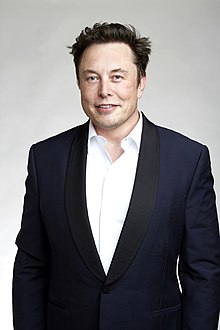
The world-famous tech pro, investor and entrepreneur, Elon Musk founded more than just one company. PayPal was his third start-up after co-founding Zip2 with his brother, Kimbal followed by founding X.com. Musk founded SpaceX, The Boring Company, Neuralink, and many more giant businesses.

Howery went to Stanford University and acquired a Bachelor’s degree in Economics. While he was a university student, he served as the managing editor of The Standard Review. Howery co-founded PayPal the very year he graduated. He was made Director of corporate development for eBay after it acquired PayPal.

Nosek is a computer engineer who co-founded SponsorNet New Media prior to co-founding PayPal. He served as PayPal’s vice president of marketing and strategy until the company was acquired by eBay.

Levchin has a degree in computer science who co-founded PayPal right after completing his graduation. He has also co-founded Slide, HVF, and Affirm. Levchin is mostly known for his efforts in managing fraud and contributions in CAPTCHA response.

The great venture capitalist and investor, Peter Thiel has a degree in law from Stanford. Before becoming a venture capitalist, Thiel served as a security lawyer. Thiel is a board member of Facebook, a partner at Founders Fund and a great philanthropist.

Pan has a degree in computer science from the University of Illinois. Pan served as a Google employee prior to co-founding PayPal. He was also hired by Youtube as a software engineer.

Early History

Back in 1998, the company was launched by the name Confinity. Confinity was founded to provide security software which later launched its money transfer service in 1999. BlueRun Ventures provided the initial funding for this new company.

After a year, Confinity merged with X.com, Musk’s online banking start-up. X.com had many other online payment services which Musk decided to shut down and focus exclusively on PayPal. In 2001, the company gained popularity as PayPal and not X.com anymore. It went public in 2002.

The major acquisition

In 3rd October 2002, eBay acquired PayPal for $1.5 billion. It was the biggest turning point in the success story of PayPal. After this business deal was closed, PayPal payments increased exponentially. Most of the eBay users paid through PayPal as it appeared as the default choice. Five years from buying PayPal, the company’s annual revenue summed up to $1.8 billion. In 2008, PayPal made two big acquisitions including Fraud Science (for managing frauds) and Bill Me Later.

Success of PayPal

The company reached 100 million active users from more than twenty-five different countries by 2010. Till now PayPal only provided online money transactions. In 2011, the company decided to provide offline services. The company wanted to deliver the advantage of paying in retail shops via PayPal. For launching this, PayPal came into a partnership with Discover Card in 2012. After the offline scheme was launched, it reached more than 7 million retail shops. This led the volume of PayPal’s payment transaction to $145 billion.

An independent company

In 2014, the company decided to establish itself independently. The spin-off was finally completed on 18th July 2015. After this agreement, Dan Schulman was made the CEO and President of the company and John Donahoe was declared as the Chairman.

he first acquisition made by PayPal as an independent entity was Xoom Corporation. Other acquisitions also include Hyperwallet, Simility, and GoPay, etc. The company today has more than 170 million active users and 21,000 employees approximately.

product hunt

Launch and Scavenge Every Day: Success Story of Product Hunt

Product Hunt entered the internet space in 2013 and is a website that allows users to share and discover new products, virtually every day. Founded by Ryan Hoover, and backed by Y Combinator, it allows users to submit products, and then issue polls much like Reddit. So, how did this innovative idea come to be, and what is the future of Product Hunt?

About the Founder

Ryan Hoover comes from an entrepreneurial household, wherein his parents ran their businesses. This gave him an early start in life as they encouraged him to start new projects and generate new ideas. He held several jobs before founding Product Hunt. This even includes running a gumball machine in his parent’s video game store when he was eleven. It was through such experiences that he learned to manage expenses and save money. He has also worked for a website that makes banner ads, done freelance yard work, and worked at a home improvement store.

After graduating from the University of Oregon, Hoover an internship at a startup which became a full-time job as a product manager in Portland. In 2010, he moved to San Francisco and joined the start-up PlayHaven as their tenth employee. Afterwards, he helped Nir Eyal write his book Hooked: How to Build Habit-Forming Products. Soon after, he founded Product Hunt, and the rest is history.

How it Works

Every day, the product which has the most votes becomes the daily winner and ends the day on the top of the list. Products usually fall under four main categories- hardware and software products, games, books and podcasts. All members of the community can submit products, and all it takes is a title, URL, and tagline. The website also sends out a daily newsletter highlighting the best product of the previous day.

Starting Strong

The website began as a simple mailing list utilising Linkydink. The idea took off, and a week later, the email list had over 100 participants. Two weeks, they had more than 170 subscribers and 30 contributors. A year later, they had Y Combinator backing them, thanks to the uniqueness of their idea. Nathan Bashaw and Ryan Hoover built the website over their Thanksgiving break in 2013. Meanwhile, Hoover was working on a community strategy to build Product Hunt’s online presence.

A year after launching, they went in for a funding round. Andreessen Horowitz helped them raise over $6.1 million. A year later, they won a Crunchie award for being the best new start-up on the block. The same year, the website started their podcast. However, they ended it soon as it was distracting users from the website’s main objective of introducing products.

A Resounding Success

By 2016, Product Hunt was so popular, that it had helped in discovering over 100 million products made by more than 50,000 companies. The same year, AngelList acquired the company for more than $20 million. A couple of months later, they redesigned their homepage and even launched an app for iOS users. In 2017, they launched Ship, which was a set of tools for creating demand for products. A year later, they launched a news aggregator called Sip. Recently, they launched a Launch Day initiative to help makers monitor their product on the website with ease.

Product Hunt has been so successful that the team even published a book, titled How to Build a Career in Tech. Ryan is behind one of the most unique and popular websites in the world, and the future looks bright for him, and his wacky idea. While the initial inspiration was to explore new technology, Product Hunt now helps entrepreneurs around the world launch their products with ease. With over 1 million registered users and more than 20,000 products launched on, it is safe to say that Product Hunt is here to stay!