Your Tech Story

Tech Story

SanDisk

Sanjay Mehrotra: Never-Ending Journey For A Better Digital World of SanDisk Founder

There are many persons who believe in innovations. Although, very few of them are responsible to make that happen. But the persons, who dare to transfer those inventions from lab to daily use, make the world a better place. So, they set their name in the list of influencing entrepreneurs. Sanjay Mehrotra is one of them, who not only believes in innovation but also devoted himself to deliver a better one. He is the co-founder and former CEO of SanDisk that replaces hard disk drives with flash memory in the 19th century.
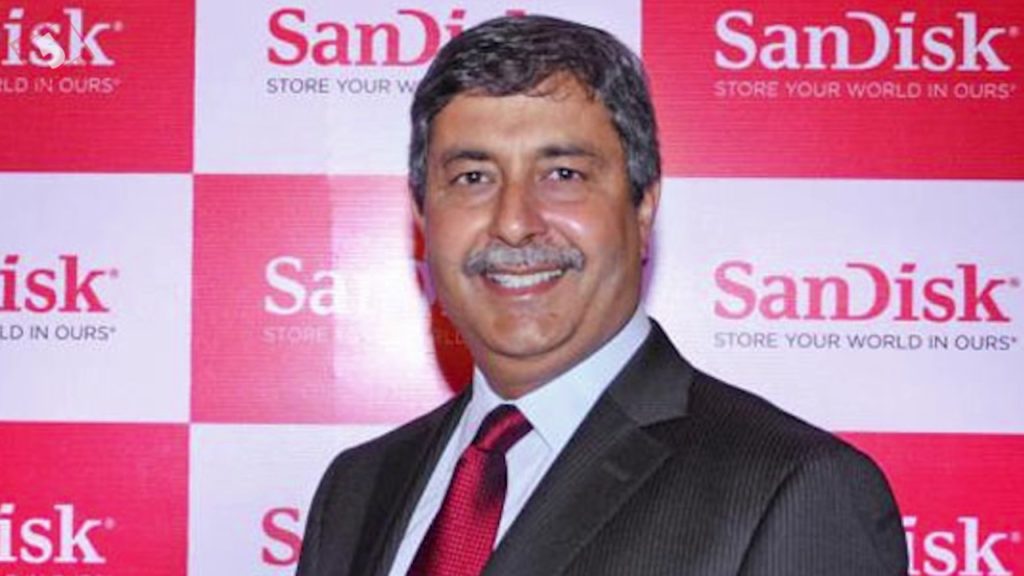
Image Source – Google

At present, he is the CEO of Micron Technology, which is one of the leading memory storage devices manufacturers. It has been never easy to climb the ladder of success. Yet, it is inspiring to know the untold journey of Sanjay Mehrotra.

Early life

He was born on 27th June 1958 in Kanpur, India. Sanjay spent his childhood days in the same city. Thereafter, the Mehrotra family shifted to Delhi due to his father’s work. He went to Delhi school for primary education. Also, at Sardar Patel Vidyalaya he completed secondary schooling.

UG course at the University of California

When the students were dreaming of post-graduation in foreign. At that time, Sanjay’s father inspired him for UG in a foreign country. BITS Pilani was well known for collaboration with international Universities. So, he took admission for UG program, in the hope of future chance to go abroad. He completed two years of Electrical engineering in Bits Pilani, and then the day came.

He grabbed the opportunity to study the remaining UG course at the University of California, Berkeley. Reaching there was not a cakewalk. At first, his visa got denied three times. But his father’s support and his ambitions do not let him stop. They had to request multiple times and countless meetings to the Indian US embassy. Finally, he got the passport and flight landed at the destination.

Earlier achievements

He applied for a master’s degree, at the same University as a UG program. During his master’s program, he worked on Integrated circuits. But his interest was more towards designing. Hence, he could not stop himself from discovering non-volatile memory design.

Sanjay named more than 70 patents. Also, he presented research papers on the Flash memory system and non-volatile memory design.

He joined Intel Corporation as a Non-Volatile design engineer in 1980. It was the opportunity to explore his area of interest in non-volatile memory design more.

What happens when one Indian, one Chinese, and one person from Israel meet? No idea. Well, when these three persons met, they founded SanDisk; that too in one different country.

Boom of SanDisk

In 1988, Sanjay Mehrotra, Eli Harari, and Jack Yuan started a small company in Silicon Valley. Initially, they wanted to replace hard disk drives with their flash solid-state drives (SSD). To achieve this, they designed the first flash-based SSD mounted in a 2.5inch hard drive for IBM. Though it was of only 20MB capacity, it was a great move to install the technology which was at the experimental state at that time.

The first product of SanDisk traded out for $1000. After that, they changed their products according to market needs. SanDisk boomed the digital industry with its first mega-market sale of open standard digital films.

The Journey Continues

In the year 2011, Sanjay Mehrotra acquired the position as CEO. Under his policies, the company gained most of the electronics market. In fact, in 2012 SanDisk was the third-highest among other consumer electronics companies.

In recent years, SanDisk working on SSD for cloud computing. Also, they produce more than 2 million USB flash drivers per day. In 2017, Sanjay Mehrotra assigned as the new Chief executive officer of Micron Inc. Also, he is the onboard member of SanDisk.

Zilingo

Zilingo – Indian Entrepreneurs Create New Style Statement

We all love talking about fashion. Many of us have the urge to recreate their wardrobe every season. From a 5-years old little girl to a 60-years old man, we all want to look classic. A perfect fashion icon speaks through the language of style.

Brands can never define fashion. The idea behind fashion is creative and one can get inspiration from anywhere. It is a form of art that seeks ideas from a high-class designer dress to some really cool street style. Ankiti Bose and Dhruv Kapoor proved that in front of the entire world.

Who are they?

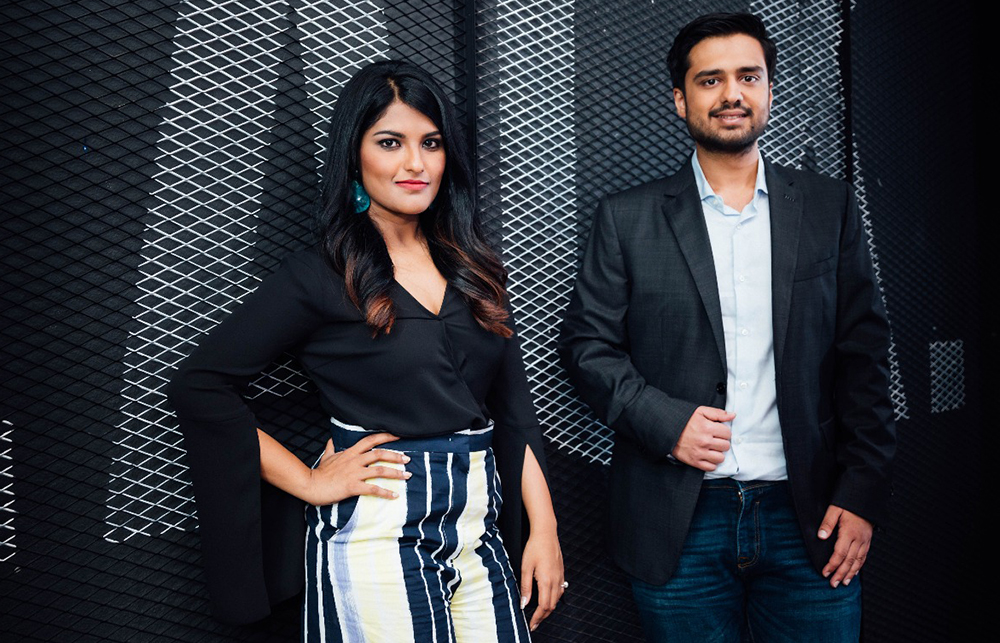
Ankiti Bose and Dhruv Kapoor are the founders of Zilingo, an online commerce platform for fashion. Though they are from different career background they hit it off pretty well.

Zilingo-Founders
Image Source – Google Images

Ankiti Bose

Before founding Zilingo, Ankiti Bose worked as an investment analyst Sequoia Capital. She worked at the Bangalore office. Bose studied Economics and Mathematics from St. Xavier’s College, Mumbai.

She is a fashion enthusiast. Her trip to Bangkok and witnessing their magnificent street fashion is what inspired her to create something of her own. She has also worked for McKinsey & Company.

Dhruv Kapoor

It is true that Engineers can be anywhere. One might get a B. Tech degree but for most of them, interest lies somewhere else. Dhruv Kapoor is an engineer who graduated from IIT, Guwahati. He studied Electrical and Electronic Engineering.

After graduating in 2012, Dhruv Kapoor joined Yahoo as a Software Engineer. After working there for a year, he joined Kiwi. Eventually, he met Bose, decided to quit the job and start a business.

The Back Story

None of them had the perfect plan to start a business. It happened all of a sudden. They trusted their guts and took the risk.

The story begins when Bose went on a Bangkok trip with her friends. It was back in 2014. She went shopping in a market called Chatuchak. According to her, it was the largest weekend market worldwide.

She witnessed more than 10,000 independent retailers with really inspiring designs. Unfortunately, none of them knew how to take their business online. This is when Bose thought of creating a platform where these powerful talents can be showcased and earned as well.

With the idea in her mind, she knew it would be better if she had a tech guy in her team. Because irrespective of the idea technology has a bigger role to play. After a few days, she met Kapoor at a party in her own flat. She shared her idea and Kapoor found it really interesting. They decided to take the next step.

The Beginning

They started with quitting their jobs. There wasn’t any second thought about their plan. Initially, they spend $30,000 each from their savings. Sequoia India backed Zilingo since Bose was a former employee. The company provided Zilingo the seed funding.

In 2015, Bose and Kapoor established Zilingo in Singapore.

What is Zilingo?

The company is a dream place for any potential designer who lacks a source. Zilingo is a fashion company that connects wholesalers, retailers and help them reach out to customers. It provides technical and financial support.

Within four years, the company has expanded to Hong Kong, Indonesia, Thailand, Philippines, Australia, India, and the U.S. Every company or the independent retailer who wishes to do sell their products go through strict scrutiny. Zilingo charges a commission of 10%-30% for all of them.

The Success

From the very beginning, Zilingo raised a good amount of funding. It raised around $8 million in Series A funding followed by $18 million in Series B funding. Zilingo’s Series C funding round took place in 2018 and it raised $54 million. The amount almost quadrupled in the Series D funding round.

Zilingo has become one of the highest capitalized start-ups in South East Asia. The company’s valuation became $970 million in February 2019.

Zilingo, today, has more than 600 employees working over eight nations. The company’s valuation is on the course to become $1 billion. Bose is the first Indian woman who co-founded a start-up of such valuation. She has become a role model for all young women entrepreneurs out there.

The company has created a sign of dignity for both its business strategy and technology. What can be a better combination than an economist and a software engineer? Zilingo’s team is full of creative, inspiring and passionate people.

Nikesh Arora – A Man from being jobless to lead Palo Alto Networks

There are very fewer people in the world who steps down from a higher position. Most of the successful people run behind more power and fame. In this world, it’s rare to find someone who quits and not chooses to compete.

Nikesh Arora is one such legendary figure who stepped down twice from an honorable position. He chose to leave Google and joined SoftBank. He resigned from SoftBank as well. Last year, Arora became the Chairman and CEO of Palo Alto Networks.

Childhood

Born on 9th February 1968, Arora became a worldwide significant figure. He was born into a family in Ghaziabad, Uttar Pradesh. Arora is the son of an Indian Air Force officer and he also has a sister.

Education

Arora did his schooling from The Air Force School, Delhi. After completing his high school Arora pursued engineering. He picked up the common choice of all the Indian youngsters. But, it worked out differently for him.

Arora went to IIT Varanasi (IIT BHU) which is one of the best Indian institutes for engineering. He graduated with a degree in Electrical and Electronics Engineering in 1989. After graduating he started working at Wipro.

Higher Studies

Arora quit his job shortly as he wanted to pursue higher education. In 1990, he left for Boston. He joined Northeastern University and acquired an MBA degree in 1992.

After completing his MBA in Marketing, Arora joined Fidelity Investments as an analyst. But, he wanted to continue his studies. So, he joined Boston College in the same year and attended classes at night. He went to a job and side by side studied for Master’s. He topped the class.

In 1994, he acquired a Master’s degree in Finance and became CFA. He struggled a lot during these two years. Arora’s job was going well. He received promotions several times. His last post in Fidelity was Vice President, Finance.

Early Career

After completing his Masters, he decided to leave Fidelity Investments. Arora joined Putnam Investments but left shortly. After this, he joined Deutsche Telekom.

In 2000, Arora founded a company, T-Motion PLC. He built the company mainly to provide services to the newly launched 3G products of Deutsche Telecom. After two years, these two companies merged. Arora stayed as a Board Member.

For the next couple of years, Arora didn’t take any big steps. In 2004, he came to know that Google was hiring. The company went public and it was hiring for its European office.

The Big Decision

When Nikesh joined Google it was a young company. So, this decision was life-changing. Arora chose to join Google over founding a new company.

He started managing the operations in Europe and continued for three years. Under his leadership, the success of Google in the European market grew rapidly. In 2007, he started managing the Middle East and European markets as well.

Promotions

Nikesh Arora got a big promotion in 2009. He became the President of Global Sales Operations and Business Development. In 2011, he got promoted to Senior Vice President and Chief Business Officer of Google. And this year he became the highest-paid executive of the company.

SoftBank

After working in Google for almost a decade, Arora resigned in 2014. He immediately joined SoftBank, a Japanese multinational company.

Nikesh Arora stepped up as the President and Chief Operating Officer of the company. Under Arora’s supervision, SoftBank grew bigger. Arora suggested the company to invest in start-ups. SoftBank invested in Ola, Grofers and etc.

Arora became the third highest-paid executive around the world after he received $73 million from SoftBank in 2016. This became very big news for the business world.

Palo Alto Networks

After achieving one of the most dignified positions in SoftBank, Nikesh Arora chose to resign. He joined Palo Alto Networks in June 2018 and currently serves as the CEO and Chairman of the company.

Palo Alto is a Santa Clara based company founded in 2005. The main products of the company are cybersecurity and cloud computing.

After Arora joined the company, it made the biggest acquisitions in its history. In 2018, Palo Alto ranked 8th in Forbes Digital 100. The company acquired Demisto for $560 million, Twistlock for $410 million and recently Aporeto for $150 million in 2019.

Nikesh Arora is a great leader. Under his leadership, Palo Alto is doing excellent. He has proved himself as a truly skilled individual.

Personal Life

Nikesh Arora’s first marriage didn’t work out. He later married Ayesha Thapar in 2014 who is a businesswoman. Arora has a daughter.

TripAdvisor

Unleash The Passionate Traveller Inside You With TripAdvisor

Is it for the sixth time you are canceling your Goa plan? The feeling is mutual my friend. All of us make a huge bucket list, but most of the plans aren’t executed. There is so much to explore, yet we are either too busy or too scared to step out. Every time we scroll down an Instagram profile of a traveler, we are highly tempted and intrigued. And, in our mind, we have already made a plan which ends up like ‘I wish I could, but TripAdvisor makes it easier to turn that in reality.

What are you scared of? With so many online travel companies coming up, traveling has honestly become way easier today. All you need is a week off from your job and some cash. Traveling is expensive but not all the time. And, once you do some thorough research about a place, there isn’t much to think about it.

TripAdvisor

TripAdvisor is the largest and the first ‘social travel website’ in the entire world. One of the best things about TripAdvisor is the contents are user-generated. So, you get completing honest reviews about any place you want to visit. The famous restaurants, the pocket-friendly hotels, the best trekking spots, water sports, and the best shopping sites, one gets to know everything.

Founded by Stephen Kaufer, the company was established in February 2000. The headquarters of TripAdvisor is based on Massachusetts, the U.S. The parent company of TripAdvisor is Tripadvisor Media Group which runs twenty-five travel brands. Some of them are BookingBuddy, Citymaps, TravelPod, etc.  

TripAdvisor
Image Source: Google Images

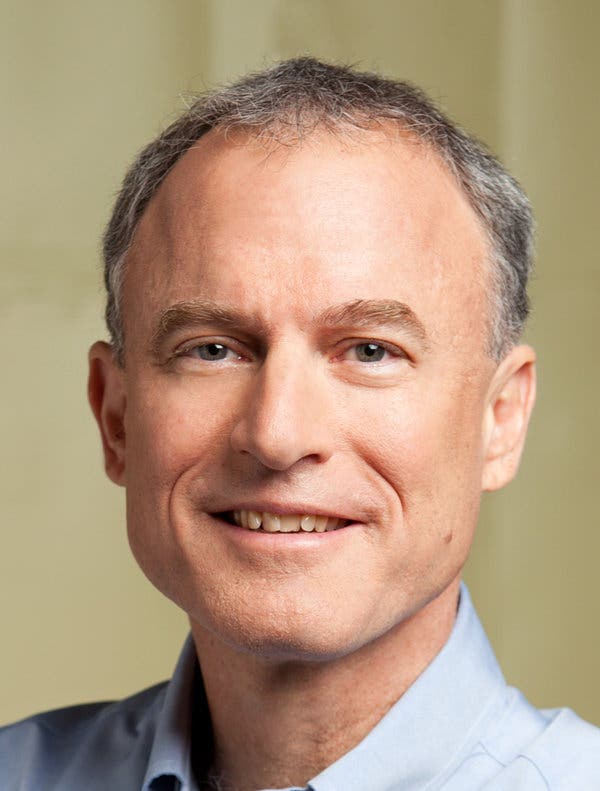
Stephen Kaufer

Kaufer received his Bachelor’s degree in Computer Science from Harvard College. After graduating in 1984, Kaufer joined CDS Ltd as its President. Before co-founding TripAdvisor, Kaufer also co-founded Centerline Software. 

Kaufer is a Board Member of Glassdoor, Cargurus, TripAdvisor and Caring for Carcinoid Foundation. Kaufer, in 2005 became Entrepreneur of the Year.

Why the Best?

The best feature of a travel website can have is user-generated content. TripAdvisor helps people to find the best accommodations suited for them and their reviews, in turn, helps out many more. The users are the ones making TripAdvisor get better and bigger every day.

Moreover, it doesn’t only help the users but also the hotels to improve themselves. Because one negative comment can easily turn a business upside down. The power lies in the hands of the customers.

Be it an appreciation, a criticism or a piece of advice, one can share everything in the platform of TripAdvisor. 

How did it start?

The company was set up in early 2000 with a funding of $3 million only. TripAdvisor was determined to post fully original reviews of the customers and not go for crowd-sourced content. Though it was considered not a good enough idea by some critics, the company went for it.

The website was free for every kind of user. But in 2001, Kaufer brought a little change and started charging small fees for per click. Every time a user clicked in the link of a specific hotel, charges summed up.

This strategy of Kuafer resulted in a huge profit. By 2004, the company witnessed 5 million active monthly visitors. In this same year, TripAdvisor was acquired by InterActiveCorp for $210 million. Nobody saw it coming and Kaufer regretted the decision later. 

Growing Bigger

After the acquisition, Kaufer was still the CEO of the company. Within the next few years, TripAdvisor hired more employees as it expanded. The company also built offices in India by 2008. After a couple of years, the company had 26 unique monthly visitors. It became the largest company in the world related to tours and travels making a yearly profit of $129 million.

In 2010, TripAdvisor acquired holidaylettings.co.uk which was the biggest independent rental website in the U.K. By the next year, TripAdvisor had 50 million monthly visitors and the company’s IPO was filed for $4 billion. When it became an independent business, TripAdvisor realized it lacked skilled leadership. But, the company managed itself well and now it has offices worldwide with more than 3,000 employees.

Acquisitions

After the acquisition of the U.K’s rental website in 2010, TripAdvisor bought Where I’ve Been (a Chicago-based app) in 2011. In the next couple of years, the company acquired Wanderfly, Jatesetter, GateGuru, Oyster.com, etc. The latest acquisition of TripAdvisor was in April 2018, Bokun, a travel management software. 

Criticism

TripAdvisor faced many difficulties and criticism in these span of almost two decades. It has been charged a few times for violating laws and lawsuits were also filed against it. But, every business goes through a downward spiral at some point. Its rigid pillars and strong foundation that has managed to keep it the best even now.

IBM

The Father of Trusts: How Charles Flint’s IBM Changed Computing

If you ever owned a desktop, used an ATM or Hard disk, chances are you used an IBM technology. The International Business Machines Corporation or IBM has been in the business for over a century with connections in over 170 countries. This American giant is one of the world’s largest manufacturers of computer hardware. So how did the company grow to become one of the biggest employers in the world? Here’s a look at the growth of IBM, and how the company changed the world.

Nicknamed Big Blue, IBM is a part of the Dow Jones Industrial Average and employs over 350,000 employees. The company is a research giant with employees having won Nobel Prizes, Turing Awards, and National Medals. All of this came to be thanks to a serial investor who had great business sense.

About the Founder

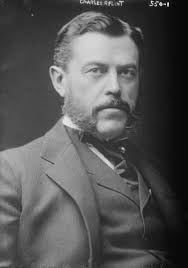
Charles Ranlett Flint was born in 1850 in Maine. The family soon moved to New York, where his father worked as the manager of a firm called Chapman & Flint. The family was business was set up in 1837, and served as a mercantile firm dealing in loans and fiscal help. Flint finished his graduation from the Brooklyn Polytechnic Institute in 1868, and two years later entered the shipping business. His first venture was as a partner in the firm Gilchrest, Flint & Co., which later became W.R. Grace & Co.
Between the years 1876 and 1879, he also served as the head Chilean consul at New York, and as a consul general for Nicaragua.

Image Source: Google

He brought several companies together via a merger and formed U.S. Rubber in 1892. A year later, he helped manufacture naval ships for the Brazilian Republic. He also helped Japan in the First Sino-Japanese War by getting them ships. His business acumen kept growing as he learned the ways of the trade. In 1899, he established American Chicle by merging Chiclets, Beemans, Dentyne and Adams Chewing Gum. He also played a part in the forming of American Woolen in the same year. But his greatest invention came a decade or so later.

Beginnings of IBM

Flint changed the way the world worked by forming the Computing-Tabulating-Recording Company in 1911. The company came to be via the merger of four different companies. This Goliath would later grow to become IBM, the company that revolutionized the field of personal computing! A decade later, CTR would rename itself International Business Machines, and the rest is history. Flint continued to work as a part of the board of directors at IBM until 1930.

Growth of IBM

Initially, the company made machinery like time recorders, slicers, and tabulators. After Thomas J. Watson, Sr became the President, the company went huge, bringing in $9 million, which is worth $130 million today every year.

The company also expanded to Europe, Asia, and Australia. Watson was also responsible for re-christening the Computing-Tabulating-Recording Company to International Business Machines. By 1937 IBM’s equipment was helping companies deal with massive amounts of data. They helped the US Government maintain employee records, and the names of Nazi sympathizers, during the 1940s.

Thomas Watson, Sr., stepped down in 1952, after 40 glorious years, and his son took over. By 1956 the company started working on artificial intelligence through IBM 704 and within a year, they developed FORTRAN. IBM was also responsible for the development of the highly successful Selectric typewriter. During the 1960’s IBM helped NASA with their logistics and was a part of the Gemini and Saturn flights.

Computer Revolution

They came out with the first PC in 1964, called the IBM System/360, following it up with the IBM System/370 in 1970. Both these models were responsible for making the concept of mainframe computing popular around the world. In 1993 IBM posted a US$8 billion loss which was the highest loss by an American company at the time. But the company turned its fortunes around through smart decision making.

In 2005 Lenovo acquired rights to IBM’s PC business and switched over to software development by acquiring SPSS Inc. The company celebrated its 100th anniversary in 2011, and bought SoftLayer Technologies, for $2 billion. They are now working in partnerships with several companies such as Apple Inc., Twitter, Cisco, and Facebook.

Flint’s fluency with handling financial dealings, earned him the nickname Father of Trusts. Honestly, if not for Flint, the world would still be decades behind with respect to computing technology. The company he formed changed the way people looked at personal computing. In many ways, Flint was responsible for starting the Digital Age, which we all cherish and celebrate!

In 2005 Lenovo acquired rights to IBM’s PC business and switched over to software development by acquiring SPSS Inc. The company celebrated its 100th anniversary in 2011, and bought SoftLayer Technologies, for $2 billion. They are now working in partnerships with several companies such as Apple Inc., Twitter, Cisco, and Facebook.

Flint’s fluency with handling financial dealings, earned him the nickname Father of Trusts. Honestly, if not for Flint, the world would still be decades behind with respect to computing technology. The company he formed changed the way people looked at personal computing. In many ways, Flint was responsible for starting the Digital Age, which we all cherish and celebrate!

Rolf-Schroemgens

Trivago N.V., Making Hotel Experience Better

The travel agents are in huge demand with development in the tourism industry. India’s travel and tourism attract millions of foreign travelers every year. Witnessing immense profit in the acreage of tourism, a lot of online travel companies has been launched within the past decade. The companies like Trivago provide an entire customized travel package for you.

But, Trivago is a company that exclusively makes hotel search better. Trivago founded in January 2005 is a hotel search engine provides services to more than fifty countries. Users can search hotels according to their convenience and book through Trivago’s online platform.

Trivago founders are Rolf Schroemgens, Stephan Stubner, Peter Vinnemeier, and Malte Siewert. Schroemgens is the CEO of the company. The company currently has around 1300 employees.

About the Founders

Rolf Schroemgens
Image Source: Google

Rolf Schroemgens went to the HHL-Leipzig Graduate School of Management. He graduated in the year 2000 and started working in Ciao.com. He worked as the VP of Product & Strategy. He left the company in 2001 and after a break of three years, he made a breakthrough. Schroemgens became the President of the Entrepreneur’s Organization in 2015.

Stubner completed his high school education from Munich and went to the University of Paderborn for studying business. After graduating he started launching many online start-ups from 1999. By the time, he co-founded Trivago he was surrounded by a whirlpool of entrepreneurial experience.

Vinnemeier also went to HHL-Leipzig Graduate School of Management and before that went to the University of Illinois, Chicago. He was also the co-founder and CTO of Ciao.com and left the company along with Schroemgens.

Siewert apart from co-founded Trivago also co-founded Monkish Equity. He is a Strategic Advisor at Well now.

The Beginning

Originating on the lands of Germany, Trivago N.V became the nation’s first website for searching hotels. The company was founded in January 2005 and the Expedia Group of America acquired a major stock of it after a few years. The company started with initial external funding of $1.2 million.

When the company was formed, Stubner was named the Managing Director. But, he quit both his position and company as well. The other three co-founders took the entire responsibility of making this hotel search engine famous.

Initially, the main investors of Trivago included Samwer brothers, Florian Heinemann and Christian Vollmann. But, in 2008 the more investors came in-house increasing the amount of funding. In 2008, Trivago raised $1.14 million from Series B funding led by HOWZAT Media LLC. This marked the starting of a new era.

Exponential Growth

Unlike most of the websites, Trivago didn’t rely on Google to drive traffic. The team decided to invest in the advertising sector and hence launched TV advertisements. The company didn’t follow any strict digital marketing strategies. Schroemgens, in an interview, said that there wasn’t much competition in the market when Trivago was formed. Thus, they relied on TV for expanding their audience and it worked out pretty well.

Once they started making a good amount of profit, they started pouring it to expand in other countries. The company sold one-fourth of it to a US investment fund in December 2010. The acquisition was made for $52.86 million. After a couple of years, the American company, Expedia Group declared that it would be buying a major stake in Trivago. The deal was officially completed in 2013 for $632 million.

Business Model

In 2015, Trivago announced that its annual revenue turned up to $573.4 million. And the sole reason behind it was Trivago’s business model. The company followed the cost-per-click business model. Since it is a site where users can compare hotel prices; every click signifies a certain amount of sum in Trivago’s pocket.

Advertisements

Every company invests in an advertisement. But, nothing can beat the success of Trivago’s ads brought by the famous ‘Trivago guy’ and the ‘Trivago girl’. The ‘Trivago guy’ especially got famous in India which is portrayed by Abhinav Kumar.

The Success

Trivago’s big acquisitions include Rheinfabrik (an app development company) and Base7booking (a part of this company was acquired). The company was listed in the NASDAQ exchange in December 2016.

Beating the competition in today’s market, Trivago is the largest hotel search engine site throughout the world. It compares the rate of more than 1 million hotels and has 250 booking sites.

Schroemgens said that the company will continue to invest more in TV advertisements.