Your Tech Story

Tech Story

LG Electronics

Koo In-Hwoi Who Set The Foundation of LG Electronics Which Is Ruling The Electronics Industry

LG is a well-known electronics and telecom company all over the world. Presently, the LG company has acquired a huge electronics market. Also, it holds several subsidiaries like LG display, Zenith, LG Chem. LG Electronics is the most successful segment among it. In fact, the company has many production units in more than 80 countries worldwide.

The backstory of LG foundation

South Korean businessman and entrepreneur Koo in-Hwoi founded LG 73 years back on5 January 1947. However, the story behind the formation of the LG group is interesting to know. The idea born when relative Huh Man-Jung visited him. The son of relative was just returned after studying in Japan and wanted to learn business tactics. So, Huh asked Koo in-Hwoi to invest in his business and offer a partnership. That’s how two families became partners for decades. In 1947, they set up a Lak Hui Chemical Industrial Corporation. Earlier, it rises as a cosmetics manufacturing business. The company enters the market with a face cream called Lucky. Shortly, this cosmetic product boomed the market because of its rich ingredients. But unfortunately, its sale lowers down because of lid discovery in the cream.

Eventually, after successfully setting several businesses, he founded Goldstar in 1958; it is presently known as LG Electronics.

Formation of LG- Top south Korean company

Initially, he started a plastic plan in Busan. It was a manufacturing unit of a plastic hairbrush. That time, it became a huge hit in the Korean market. After that, the company started manufacturing toothbrushes and washbowls. In 1958, Koo In-Hwoi expanded the production unit of Goldstar. The company manufactured the first homemade radio in Korea. Besides, the company started the production unit of electronics equipment like phones, fans, AC, TV, and refrigerators.

On the other hand, Koo In-Hwoi started the production of soap, toothpaste, as well as synthetic detergent. But it was trading under the name Lucky. It got famous for its products. In fact, some of the products of Lucky are sell in the Korean market. In the year 1995, it combined as Lucky Goldstar and renamed as “LG”. Also, adopted the tagline as ‘Life’s Good’.

Koo In-Hwoi – Founder of LG

Early Life and career

He was born on 27 August 1906 at the Korean Empire. In 1924, he completed secondary education at Seoul’s Central Normal Higher School. However, he started the business just after his secondary education. After returning to their hometown, he served as the head of the business corporative union of his village in 1926. Next year, he joined the Dong-A Ilbo newspaper, where he served as the head.
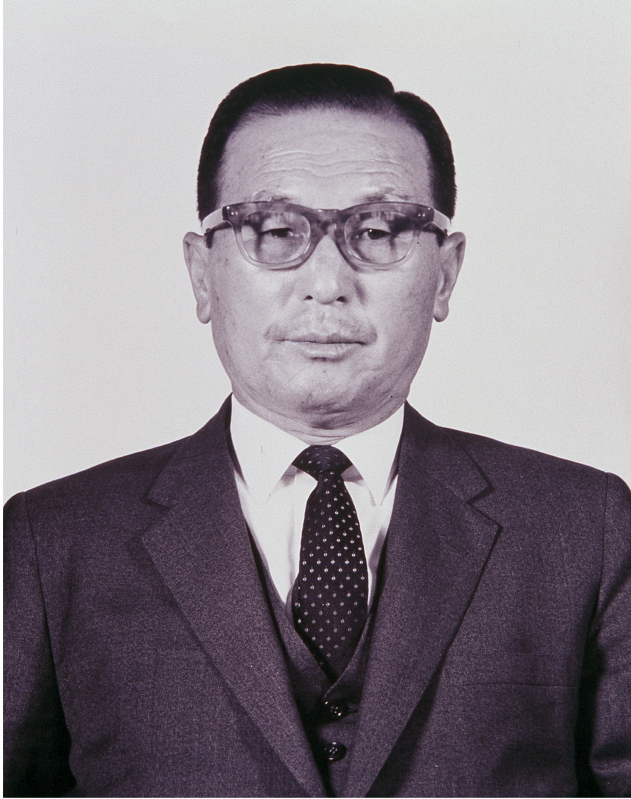
Koo In-Hwoi
Image Source – Google Images

First business

He entered the business world in 1931. At the start, he started a store in Jinju, South Gyeongsang. However, his younger brother Koo Chul-who was his partner. But they had to suffer huge losses. After that, he took a loan and continued with businesses. Finally, soon he found the opportunity to set business successfully.

Other achievements

Apart from businesses, with the help of independence fighter, he contributed to the Korean provisional government in Shanghai. He followed the path of his father who had done the same a decade earlier. However, his contribution helped him to build a network with several government authorities. Apparently, LG became the first Korean company to receive trade approval from the U.S. Army Ministry Government in Korea.

Later successes of LG

Today, LG operations popular as well as served globally. In fact, the company is holding as well as public type company, which is a popular choice in several fields. For example, electronics display, telecom, life sciences, solar energy, etc. Also, it has more than 220,000 employees and many want to become a part of it. Presently, the company acquired a huge electronics market. In fact, LG Electronics is one of the successful firms in the electronics industry.

Intex Technologies

Narendra Bansal – Founder of Intex Technologies: Journey and achievements of a born entrepreneur

Today, Narendra Bansal is one of the reputed names in the tech industry. He is the founder of Intex Technology which is a reputed smartphone manufacturing company in India. In fact, it’s the second-largest selling smartphone company in India. Bansal founded it back in 1996. But you will surprise to know that, this man once used to sell photographs in Birla temple, Delhi. However, using his knowledge and business skills he founded the company which is at a peak of 6,200 crores today.

Narendra Bansal- Founder of Intex Technology

He is a born entrepreneur, who wanted to make his own identity. Therefore, he refused to join his father’s business. Also, his ability to know the market appropriately, helped him a lot to start his businesses. As said before, he starts business from taking photographs and selling it.

Apart from that, he started many small businesses based on market demand. Obviously, he is a born businessman. So, it is inspiring to know the personal and professional journey of Narendra Bansal. An entrepreneur, who had an entrepreneurial streak from the very beginning.

Early life

In 1963, he was born at Rajasthan in Hanumargarh. Bhanwarlal, a father of Narendra was a businessman. Apparently, he learned some business skills from his father. However, his mother was a homemaker. He completed primary education at his native place. But after a few years, Bansal family moved to Nepal. So, he attended Vishwaniketan High school for secondary education. In the year 1980, the Bansal family returned to Delhi. Thus, he attended Swami Shraddhanand College for graduation in Commerce.

Narendra Bansal a Businessman

From the beginning, he wanted to start a business. But without any help from his father. So, during his college days, he started working on his business ideas. He has the ability to know what the market wants. In the 1980s, audio-video cassettes were the center of attraction. There was a huge demand for it. Being a keen market analyst, Narendra grabs this opportunity to start his business. That time, he started re-selling audio-video cassettes in the local retail markets of Delhi. Especially at Chandni Chowk, Palika Bazar, and South Extension. As the market changed, he started selling VCRs till 1987.

Narendra was a technology-oriented person. In 1987, floppy disks arrived in the market. Also, it was the start of a new era of technology. So, he expanded his business of trading and distribution with selling floppy disks. Later, he added hard drives and RAMs in his local retail selling.

International Impex

In 1994, Narendra started the company International Impex investing just 20,000 rupees. At starting, the Delhi based company offered the service in the import of basic electronic accessories. For example, ethernet cards, floppy disks, RAM, etc. After a few years, International Impex started assembling and selling of these accessories. Because Narendra was aware of the beginning of the computer era. Also, he builds contacts in Korean and Taiwan’s market which helped him to flourish the business further.

In fact, the company’s turnover crosses 3 million in a year. As per his basic skill to grow business step by step, he added other durable products to his business. Includes, DVD player, Multimedia speakers, etc.

Establishment of Intex Technologies

Narendra had the potential to run any business successfully. At the end of the 20th century, mobile phones and other IT accessories were gaining importance in the market. So, he bagged the golden chance and set up an Intex technology in 1996. The company started a manufacturing unit of IT accessories and consumer durables. In just one year, Intex achieved great success with the Intex Home Theater System. After that, the company has never looked back. Presently, the company is the second-largest smartphone manufacturing firm in India.

Narendra Bansal’s Awards and Achievements

In 2012, Cell IT Magazine honor Narendra Bansal with the Lifetime Achievement award. He was awarded for his contribution to the IT industry’s growth in India. Also, in 2016, he named many awards from several institutes for his contribution to the IT sector. Includes, Udyog Rattan Award, Distinguished Entrepreneurship Award, and Empresario Most Inspiring Entrepreneur award. In addition, he honored with Outstanding Contribution to Mobile Industry by CEAMA. In 2016, Exhibit Tech Awards honored him as a Johnnie Walker Best Entrepreneur of the Year.

Narendra Bansal
Narendra Bansal

Other social work

Narendra actively participates in many organizations that work for social clauses. Including, Manthan, Rotary club, and Rajasthan Club. Also, he is a member of Tie. In fact, he worked for the urban underprivileged people of Delhi to provide education and health facilities.

Electronic Arts

Trip Hawkins Says Accepting Failure Is The Path Of The Entrepreneurial Journey

When you are starting something way out of your league, patience is a very important factor. A part of our young generation is going to be future entrepreneurs. And, they are expected to accept failure and be optimistic at every moment of life. The entrepreneurial journey is not a bed of roses especially for those going unorthodox. Our society is not a huge fan of gaming. Building a career revolving around gaming is a far-fetched dream. But, Trip Hawkins proved that one can excel in any field if the person is dedicated to it. Trip Hawkins is the owner of more than one gaming company. But, he became famous all over the world for founding Electronic Arts.

Early Life

Born and brought up in a small of California, Trip Hawkins had a very bright and creative childhood. Both of his parents were equally artistic. Though his father was a part of the growing electronics industry, he later delved into becoming an artist. His mother was a great musician and also wrote poems. Maybe the creative family background of Trip gave him the idea of designing everything of his own.

Trip Hawkins
Image Source: Google Images

Into the gaming world

It was in the 1960s when Trip started playing simulation board games. He played many games but his favorite one was Strat-O-Matic. He became addicted to the game and more than that he was keen about how it is working. The designing part intrigued him and led him to build his own game of a similar type. It was in 1973 that he builds the gaming but failed to sell enough copies of it.

But, this was the eye-opening moment of his life. He was in school using computers like every other kid but in a more advanced way. He really enjoyed the entrepreneurial side of his life. Though he failed in the first try, he made up his mind.

The Perfect Business Mind

It was in the 1970s when Trip was working with computers, coding and game development in a full-fledged way. This was the time when microprocessors for the first time invaded the electronics market. So, this gave Trip the idea of doing thorough research on market demand.

Before launching his own company, Trip studied how many people are having internet access, the rate of public demand and how long it will be there.

Working at Apple Computer

Before founding Electronic Arts, Trip worked at Apple. But, his planning didn’t stop and it took him eleven years for implementing it. The trip also went to Harvard University and there he designed his own course for studying game theory. The trip also did an MBA because he was interested in the business market equally. But, he noticed nobody in Apple wasn’t really a gaming enthusiast.

A gaming Pro with a business degree thus left Apple after working for four years. But, Trip admits that working closely with Steve Jobs helped him a lot in building his own empire.

Founding Electronic Arts

In January 1982, Trip approached Don Valentine, a Silicon Valley Venture Capitalist. He offered Trip office space and he finally accepted it. When Trip established the company he named it Amazin’ Software which was later renamed Electronic Arts. When Trip founded the company he invested $200,000 from his own pocket.

Electronic Arts are headquartered in Redwood City, California. Today, it is known as the second-largest gaming company in the American and European markets in terms of revenue and market capitalization. In 2018, the company’s annual revenue summed up to $5.15 billion. There are almost 9,000 employees working for the company.

After Electronic Arts

In 1991, Trip formed 3DO, a video game console company. After a couple of years, it became the most powerful video game console. In 1996, 3DO became a video game developer but it went out of business in 2003.

But, Trip didn’t give up that easily. In late 2003, he came up with a new video game development company, Digital Chocolate. In 2012, Trip resigned from the company and joined the board of directors of Extreme Reality.

In 2005, Trip became the eighth person to get enrolled in the Academy of Interactive Arts and Science Hall of Fame.

ION Energy

Akhil Aryan: Founder of ION Energy who is helping to boost the sustainability of clean energy

Presently, electrical devices are used everywhere. If you visit any place, you can see half of the place is decorated with electrical devices. Additionally, the Indian government is focusing on promoting the use of electric vehicles all over India by 2030. Electric devices like Electric vehicles are shaping the future. However, the functionality of these devices is depending upon the battery. We can say that the battery is the heart of any electrical device. Therefore, battery management is most important for its better functionality. ION Energy is a well-known platform for advanced battery management for powering energy storage systems. Especially, electric vehicles. Also, it focused on technology that is essential to improve the performance and life of lithium-ion batteries. However, ION Energy is the culmination of Akhil Aryan’s childhood fascination with electrons as well as energy. 

What is ION Energy? 

ION Energy is an energy management company. Especially, it focused on electric battery management. Also, work on technologies that help to increase the life of lithium-ion batteries. In fact, ION energy provides the complete tool kit to build and manage world-class batteries. However, its main purpose is to provide high-performance batteries all over the world. Indirectly enabling electrical mobility and boosting the sustainability of clean energy.

Recently, the company launched UDYR. It’s their flagship battery that is built around Electro-Mechanical assembly and their proprietary BMS. 

The backstory of ION Energy foundation

Since childhood, Akhil Aryan is very fascinated by electrons and energy. He is always curious about the fact that everything we can see or not is made up of atoms. Also, he was well-known to the fact that electric energy is the future. However, the Indian government was promoting the use of Electrical vehicles all over the country. So, it was a great opportunity to set up a business in this field. But he realized that rather than developing electric vehicles, it is important to make them sustainable and efficient. As a result, he set up an energy management company called ION Energy in 2017. 

Akhil Aryan is a well-known serial entrepreneur. Because he successfully handled the establishment of miscellaneous companies across three continents. He founded ION Energy back in 2017 with the vision of eco-friendly energy management. 

Early Life

Akhil Aryan- ION Energy founder

Akhil Aryan is Born and brought up in Mumbai. In fact, he spent most of the time at a young age amongst Mumbai’s ambitious hustlers. During the teenage, he was one of the children that could not remain idle for a minute. He was fascinated with technical stuff. In mid of the 90s, his father brought a computer for him. So, it was the golden opportunity that helped his curious mind to learn technology. After a very short time, he built production software. At that time, Akhil was just 14 years old. He earned a degree in financial markets from Mumbai University. 

Career

At the age of 16, he did an internship at L Nagpal Developers. During the internship, he helped to generate one-million-dollar sales with his innovative idea. After that, he wanted to work at IGSL. This company was well-known for its advisory and trading services in cash. Also, derivatives equity & debt market, commodities as well as currency futures. However, his mother felt that he should complete his education first. Thus, to work with IGSL, Akhil had to promise his mother that he will complete his graduation. Akhil represented during the company’s Initial Public Offering (IPO). In fact, its IPO was oversubscribed 4.5 times. 

Other start-ups of Akhil Aryan

Akhil is the successful founder of several miscellaneous companies across the world. In fact, he co-founded the first company at the age of 18. Presently, he is handling many businesses successfully. Other than ION energy, he actively runs his other start-ups in various fields. Includes, technical training, finance as well as software developments.  

ION Education

It is an education space technology company. Akhil co-founded the company in 2010 with the help of Shanay Shah. In fact, it is the first interactive training institute in India that provides training in the Financial market and real-estate. Also, ION education promotes entrepreneurship as well as provide training. At starting, the company successfully trains more than 1300 students in one year. In addition, Ion education helps students to get industrial exposure by means of an internship.  

OneShop

In 2013, he started working on OneShop. OneShop provides a platform to add store to blogs or websites. It is started in San Francisco. But after the company won a SIRIUS program, it shifted to London. However, it helped Aryan to set his network in Europe.

Haptik

In 2015, Akhil returned to his motherland India. That time, he was consulting with some of the start-ups related to the ecosystem. He realized, conversational AI has scope in the future. As a result, he co-founded Haptik to provide a service of conversational AI. Today, it is the largest conversational AI platform in the world. Presently, it handles more than 3 million AI conversations per month.

Lyft

Lyft: Making Car-pools Comfortable and Profitable

Due to growing environmental concerns, more and more people are shifting to carpooling and ride-share options. Companies such as Uber and Ola have profited from this shift in perspective. There’s another company that joined this cab-share bubble, much before it was a viable investment option. Headquartered in California, Lyft is a ride-share company that operates in over 644 cities in the US. The Lyft mobile app has become a sensation, offering rides, car-pool options, and even food delivery services. Here’s a look at their climb to success and fame.

How the System Works

Lyft has the second-largest market share in the United States, following Uber closely controlling 28% of the market as per the Second Measure. Users download and install the Lyft app on their mobile devices. They then register on the system, sign-up with their mobile number, and verify a payment system. The app supports payment via cards, Apple Pay, Google Pay, and even PayPal.

They can then book their rides, and once the trip is complete, their account is debited. The app provides information such as driver name and photograph to ensure safety. Both drivers and passengers have the option to add their personal information such as hometown and music preferences. Users also have the option to pay their drivers tips as they seem fit.

About the Founders of Lyft

Logan Green grew up in California, graduating with a BA in Business Economics from the University of California. The inspiration for founding Zimride came from having spent most of his life stuck in traffic, as per Green. He started the company as a means to solve the state’s transportation faults and shortcomings. Due to the limitations of public transportation, he requested Zipper to work from UCSB but they couldn’t due to the shortage of vehicles. So, Green acquired some cars and began a car-sharing program that had over 2,000 participants. This idea later took shape and became Zimride in 2007.

Logan Green
Image Source: Google Images

John Zimmer grew up in Connecticut, graduating in Hotel Administration from Cornell University at the top of his class. He then worked as an analyst for Lehman Brothers in New York. He met Green via Facebook while at Lehman Brothers, opting to quit his job to focus on their company. Green and Zimmer later moved to Silicon Valley and shared an apartment to grow the company, without taking salaries for three years.

Launch and Early Beginnings of Lyft

Computer programmers John Zimmer and Logan Green founded Lyft in 2012 as a subsidiary of Zimride. The latter worked as a long-distance carpooling company founded by the duo in 2007. The idea for Zimride came to Green on one of his frequent travels from the University of California to Los Angeles to visit his girlfriend. He initially used Craigslist’s ride boards but faced anxiety as he knew neither the passenger nor the driver.

Facebook launching its API to developers served as Green’s motivation to set up such a company. Soon enough, Zimride grew to become US’s largest carpool company. Green met John Zimmer on Facebook via a mutual friend. The company’s name came from Zimbabwe, wherein Green saw locals sharing a minivan during his trip there in 2005. Zimride launched at Cornell University, and six months later, 20% of the company had hopped on. In 2013, the company legally changed its name to Lyft, and in July of the same year, Lyft sold Zimride to Enterprise Holdings.

Growth of Lyft

While Zimride focused on colleges, Lyft served as a company enabling shorter trips within cities. The large pink mustaches on the front of cars became a symbol for Lyft. In 2014, it launched in 24 US cities, overnight, bringing its overall total to 60 cities. The same year, Lyft hired lobbying agents to handle the resistance they had faced since launching.

By mid-2014, Lyft launched its shared-taxi plan to enable cheaper rides to customers. By the end of next year, Lyft became the only company allowed to pick passengers up from the airport at Los Angeles. In 2017, Lyft completed its 160 millionth ride and launched in another 100 cities, bringing its total to 200 cities.

By the end of 2017, Lyft expanded its services to several Canadian cities such as Ontario, Toronto, and Ottawa. The following year, they partnered with All scripts to facilitate rides for patients, serving over 2,500 hospitals and 7 million patients. They acquired a bicycle-sharing company Motivates in late 2018.

The company went public in 2018, the first ride-sharing company to do so at a valuation of $24.3 billion, raising $2.34 billion. Also, by 2019, the company successfully completed over 5000 rides via self-driving cars in Las Vegas and has since grown tremendously, providing over a million rides a day.

Ethan Marcotte

Gearing Up for the Future: Story of Responsive web design(RWD)

Web design hasn’t been around for all that while, but within that short period, it has already grown so much. Its short history was made even more eventful by Ethan Marcotte who is credited with having coined the term RWD “responsive web design”. Not only did Ethan just conjure up a new world, but he also helped create something that would change the way the web worked. Here’s a look at one of the newest trends out there and why it is so significant.

What is Responsive Web Design

The word Responsive Web Design, known commonly as RWD was coined by Ethan Marcotte in 2010. Essentially, RWD includes all philosophies, ideas, and technologies that allow websites to respond to user interaction. Until a few years ago, most browsers ran on computers whose displays were around 800 to 1024 pixels wide. Hence, most web-pages were built for these sizes. As per this system, the widths of the columns and images were pre-set. Problems started rising when users switched to different screen sizes. In the early 2000’s, to combat this issue, web designers resorted to techniques known as fluid design and liquid layout. 

These techniques circumnavigated the issue by relying on different methods to define the width or length of texts and images. For example, by using percentages to denote width, the image would be of the same size, no matter what the size of the screen. However, new problems arose when people started relying on their mobile phones to browse the internet. Even using these techniques made it difficult for users to navigate the web-page without having to zoom in and out.

About the Developer

Ethan Marcotte works as an independent web designer, who has clients such as the New York Magazine, Sundance Film Festival, and People Magazine. He is also an active Tweeter and runs a blog on Twitter that addresses doubts and updates in the field of RWD. He has also released a book called Responsive Web Design, which outlines the fundamentals of RWD. He also regularly speaks at conferences and has held workshops at Adobe MAX, and Webstock. 

What Ethan Did

The technologies required to create a responsive web was already existing before Ethan entered the scene. These include fluid grids, images, and media queries, which are all staple ingredients for any web-page. But what Ethan did, united these techniques and bring them all under a single umbrella- that of Responsive Web Design. This, in turn, led to a digital revolution that saw change the way they used to think about web design. That is why, in many ways, Ethan Marcotte is considered a magician who changed the future of web design. Ethan has constantly talked about how this idea came to him back in the late ’90s, and that John Allsopp’s article A Dao of Web Design, has been a huge inspiration for him.

Ethan was so inspired by John’s work that he actually switched to flexible layouts when it came to his own projects such as his blog, way back in 2000. But for the most part, most professional websites still relied on fixed-width layouts. It was when the mobile phone industry broke through that Ethan started using fluid grids for client projects. 

Creating RWD 

When mobile devices became a huge hit, users found it very difficult to access actual web-pages on them owing to size constraints. There were so many issues that it looked like mobile browsers just wouldn’t be worth the effort. But all this changed, when Marcotte published a paper in A List Apart, that suggested using responsive web design. The paper explained how due to the sudden and constant changes in the field of web design, the only way forward would be to rely on self-sufficient and intuitive systems.

Why RWD?

With the variety and number of devices trying to access the web growing every day, being able to cater the page to the most number of people becomes vital. This is where RWD becomes a critical tool for every web developer and designer. As companies need to adapt their websites for all devices, RWD helps designers create just one code or URL for a site that can be viewed on a multitude of devices with ease. Not only are they a cost-effective solution, but they are also easy to run, maintain and manage, allowing companies to focus on more important things such as content.

Leading the Way

Such websites are highly intuitive and adapt themselves according to the device a user is utilizing to view the web-page. The system automatically rearranges and re-orients the data on the web-page to suit the display or screen of the device, so that the website is an optimal visual experience for all users. The responsive design has grown to become a gold standard within the industry. It is now the design type that is preferred by almost all designers across the web, and around the world. So much so in fact, that Google’s new update will penalize any website that does utilize RWD.

Everyone knows that mobile users are slowly, yet surely, taking over the world wide web. Hence, to survive, companies must be able to provide their customers with a seamless user experience. This will not be possible in the years to come, without the help of RWD. Without Ethan Marcotte and his ideas on RWD, companies around the world would not have been able to create websites that users like and enjoy visiting. It goes without saying, that a few years down the line, Ethan Marcotte will be credited as having saved the World Wide Web from crashing!