Your Tech Story

Tech Story

Avira Antivirus

German company Avira famous for its antivirus software is acquired by Investcorp

Founded in 2006, Avira is a German software company mastering in the sector of the security system. The most famous product of Avira, Avira free antivirus application was developed during the 1980s by the predecessor company of Avira, H+BEDV Datentechnik GmbH. Over time it has been modified several times for Android, iOS, and Windows. Avira has also expanded its product spectrum entering the world of IoT. Avira used to support the Linux OS as well but discontinued it in 2013.

Tjark Auerbach is the founder of the company. Tjark is born in 1957 and he is currently famous as the Former CEO of Avira.

Avira antivirus

Success of Avira

Under the name of H+BEDV Datentechnik GmbH, Avira was introduced in the market in 1986. But, the software company Avira Operations GmbH & Co. KG was founded in 2006. It is a business in the field of security solutions providing software for phones, laptops, tablets, etc. It is a family business that has a market in various parts of the world.

Avira’s first and main headquarters are based on Tettnang, Germany. Apart from the country’s headquarters, the other offices are located in the USA, China, Romania, and the Netherlands. The free antivirus software of Avira became very famous and by 2012 it reached 100 million customers. Apart from software products, Avira also delivers cloud-based products. Well, every software company needs to update itself with time and it’s the motto of their sector.

In 2016, Avira become the sixth-largest antivirus in terms of market share and until today it maintains consistency. Some of the biggest partners of the company are IBM, Microsoft, Synergy Systems, Novell, etc. Avira is also famous for doing charitable work and promote art and culture apart from the growing technology.

Avira is the recipient of many prestigious awards for its brilliant and high-quality products. In 2008, it received a “gold” status from Anti-Malware Test Lab. In February 2010, Avira achieved a 99% score on a “malware on-demand” detection test conducted by AV-TEST. In 2016, it was named AV Product of the Year by AV-Comparatives.

To date, Avira experienced three major cyber attacks. In 2005, the company experienced a buffer overflow vulnerability followed by a compromise in 2010 in the Avira Management Console. And, in 2013, it suffered 0-day vulnerability that allowed attackers to get into the customer’s PC.

Main products of Avira

The main products that Avira provides for the Windows OS are Avira Free Antivirus, Avira Antivirus Pro, Avira System Speedup Free (Pro as well), Avira Internet Security Suite, Avira Ultimate Protection Suite, and Avira Rescue System. For OS X Avira provides Avira Free Mac Security that can be installed and run only in OS X 10.9 and above. Avira has free mobile security for iOS that can run on both iPhone and iPad. For Android, both free and pro versions of the software are available. The company also has Avira Phantom VPN for private networks.

Avira in the world of IoT

Entering into the world of IoT, Avira came up with a whole new approach to safeguard your house with Avira SafeThings. It is a software application that can be installed on routers and it will keep the connected devices safe in your home. With the Avira SafeThings customers don’t have to buy yet a new hardware and install it. With the use of AI and ML, Avira designed such a unique software to ensure safety at home.

Avira SafeThings performs four basic activities namely, Watches, Thinks, Acts, and Shares. First, it will tag all the connected devices at your home followed by learning their normal behavior using AI. Now, if they detect anything suspicious it will simply shut down that activity showing the user what is taking place in the network.

Acquisition of Avira by Investcorp

In April 2020, Bahrain based company Investcorp acquired Avira Holding for $180 million. By this time, Avira had over 500 million customers in various sectors including finances, online identity, malware detection, protecting private data, etc. Investcorp has a rich experience in working in the field of security and IoT and the company’s managing director said that it would help Avira expand and reach the targeted growth faster. Avira also has plans to expand in the Original Equipment Manufacturer (OEM) segment.

ServiceNow

Software Enterprise company ServiceNow is named Leader in the 2020 Magic Quadrant by Gartner

Cloud computing is very crucial since data has become the key asset for every individual or a gigantic nation. The business tycoons are also dependent on big cloud companies these days for IT services. Because, no matter in which field or what size of a business is, IT service is required by all of them. ServiceNow is a famous company based in Santa Clara, California that provides IT services around the world. It provides a cloud computing platform that enables better efficiency of a company by managing its digital workflow. Four founders, namely, Fred Luddy, David Loo, Don Goodliffe, and Bow Ruggeri officially founded the company in 2003. Since then the company has acquired many businesses, expanded geographically, and hired over 11,000 employees.

About the founders

Fred Luddy

Fred Luddy worked as a software developer at Amdahl Corporation for four years. In 1990, he joined Peregrine Systems as the CTO of the company and worked there for thirteen years followed by founding ServiceNow. Currently, Fred is the Chairman of the Board of Directors at Service Now.

David Loo

David Loo is famous for being the CEO of Perspectium in 2013. But, before that, he was the founding developer of ServiceNow and resigned from the company in 2012.

Don Goodliffe

Don Goodliffe is one of the founding members of ServiceNow who was hired by Fred during 2005. He is currently the VP of the J&D Goodliffe Association.

Bow Ruggeri

Bow Ruggeri started his career as a junior software developer at controlroom.com followed by a developer at CTSNet. He was the Principal Architect at ServiceNow for seven years before he founded another start-up, Dreamtsoft.

History of ServiceNow

With a lucrative career experience, Fred founded ServiceNow in 2003, and eventually, the other three joined in. So, we can say that Fred is originally the father of the company who started it from scratch and wanted to enforce similar services as Peregrine Systems. After a couple of years, he decided to perform the first round of hiring and ended up with five more people in the team. Till then he was the only employee of ServiceNow. When the company was founded it was known as Glidesoft Inc.

In 2005, the company raised $2.5 million from its first funding round from JMI Equity. Next year, the company changed its name to ServiceNow followed by opening its first office in 2007. The company’s profit was remarkable and in 2006 its annual revenue summed up to $13 million. Eventually, the number of offices started increasing, and by 2011 they had offices in San Diego, Atlanta, Chicago, New York, London, and Frankfurt with more than 250 employees.

Eventually, the company came into partnership with a few companies one of them being Accenture. The company decided to file an IPO and in 2012 became a publicly-traded company. This year, ServiceNow shifted its headquarters from San Diego to Santa Clara.

Expansion and Business model

In the industry, ServiceNow is one of the earliest companies that started providing IT management services. So, the success of the company skyrocketed over no time and even the founders were swept off their feet. Bow Ruggeri, in one of his interviews, said that he never expected the company’s growth to increase so rapidly. Maybe this is the reason he stepped out and embarked on a whole new venture with Jerrod Bennett to experience it all over again and do it better.

ServiceNow started acquiring many companies starting with Mirror42 in 2013 followed by Entries in 2015 and Brightpoint Security in 2016. With AI and ML growing and dominating the modern world, ServiceNow acquired a machine learning startup, DxContinuum in 2017. Later in 2017, the company acquired Telepathy, a human-centered design firm that doubled the size of ServiceNow’s internal design agency. The latest acquisition of the company was in June 2020 when it acquired Sweagle.

ServiceNow’s business model is based on Platform as a Service (PaaS) provider that allows a customer to use the platform for running and managing applications without worrying about the infrastructure. Fred said that to excel with this kind of business model it should provide real values to customers. So, sticking to the old code is not a good idea and one must keep redesigning to match with the pace of the clients.

ServiceNow and Zoom

With the pandemic taking a big toll on the world, Zoom’s popularity was increased by many folds. This month, Zoom introduced new hardware as a service offering in partnership with ServiceNow. The deal is a symbiotic relationship as both parties will be benefited. While this new service of Zoom will run on one of the platforms of ServiceNow, ServiceNow will use Zoom for all its internal communication purpose. With recent end-to-end encryption recently launched by Zoom for paid customers, ServiceNow will be hugely benefited.

parallel wireless

Rajesh Mishra’s Parallel Wireless is the future of the telecom industry

Parallel Wireless is the only company in the telecom sector to use OpenRAN architecture and build up a software-based solution for All G (2G/3G/4G/5G). It is the first company to date to challenge the biggest telecom companies and design solutions for all networks. Rajesh Mishra, founder of Parallel Wireless says that the OpenRAN ecosystem helps in cost-saving and easy to maintain as Wi-Fi at the same time. Founded in 2012, this US-based start-up has engaged in business with more than fifty leading network operators around the world. And, companies like Vodafone and Telefonica has named it the best performing vendor at this age. The products of Parallel Wireless has won many awards and recognition as network operators understand the importance and flexibility of open virtualized RAN solutions.

About Rajesh Mishra

Rajesh Mishra is an alumnus of IIT Roorkee who graduated with a bachelor’s degree in computer science in 1993. Rajesh started his career as Software Engineer at Hughes Network System and switched to Tellabs after a couple of years. He worked at many companies which include Sonus Networks, Cedarpoint Communications, Whaleback Systems, Powerwave Cognition, etc. Before founding Parallel Wireless he was the President of Bramhand Consultancy Services Inc. Currently, he is the President of Parallel Wireless.

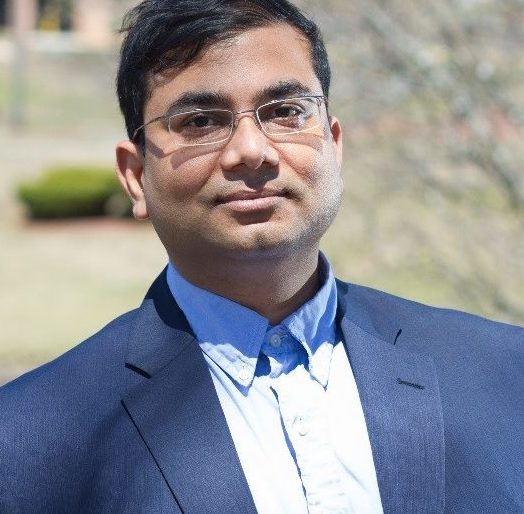
Rajesh Mishra
Image Source: digianalysys.com

Importance of Open RAN

The pandemic situation has increased the demand for efficient network connectivity. Most of the people are continuing work from home and the students are attending online classes as well. With existing 4G and 5G networks helping millions of users to connect and work, the telecom industry faces challenges like geopolitical stresses, 5G deployment challenges, etc.

And, all these challenges can be overcome by one simple solution, that is, Open RAN. The biggest trouble of network vendors limited to a certain geopolitical region can be solved by establishing an open market. Many network operators are supporting Open RAN and its commercialization. This had led to the development of the companies on a massive scale that builds equipment for Open RAN. The technology of Open RAN primarily concerns having more vendor choice but cost savings is also an important factor.

One must also understand that Open RAN is not a new technology and exists in the market for more than a decade. But, the current situation of the global pandemic and financial stress had led many operators to consider this option. Thus, it might mark a big change in the telecom industry inviting more players and broadening the market.

Expansion in Asia and Africa

Currently, Parallel Wireless is the leading company in the world in terms of delivering Open RAN solution for coverage and capacity. One of the biggest flaws in general network operators overcome by Open RAN solution is geopolitical stresses. Last year, Vodafone in collaboration with Parallel Wireless deployed a macro Parallel Wireless OpenRAN pilot in Turkey and the Democratic Republic of the Congo.

As the only company around the globe to provide ALL G cloud-native fully virtualized RAN solutions, it is doing a commendable job. The excellent team of Parallel Wireless has shown exceptional efficiency, top-class quality of the product, and along with that optimization the cost of it. Moreover, due to the disaggregation of hardware and software the deployment is fully virtual making it easy to install, maintain, and upgrade.

Partners and Funding 

Parallel Wireless has partnered with many prominent companies in the telecom industry to make cellular communication as easy and affordable as possible. Some of the major partners are Comba and KMW for Open RAN hardware ecosystem, Intel, Dell, and many others for baseband, RedHat, VMWare, Cisco for other aspects. To date, Parallel Wireless’s total funding is $8.8 million. The number of employees in the company is around 400.

Awards 

As the company is trying to reach many rural areas as well as targeting the countries in Africa mainly, it has received several awards for its breakthrough. Some of the most prestigious awards include Best Mobile Breakthrough Technology (20th Global Mobile Awards), Best Technical Platform Based on Network Intelligence for SDN/NFV in 2015, Winner Excellence in Commercial Deployment (Rural and Remote) in 2015, Most Innovative LTE Service, etc.

The recent awards bagged by the company are Aegis Graham Bell Award WINNER- Innovation in the cloud, WINNER of Best Network Software breakthrough, and shortlisted in Leading Lights Awards 2020.

Venminder

How Venminder Helps Companies Handle Vendors and Keep Risks at Bay

Around the world, everyone is taking their business online. There is so much competition now with regard to online stores that it is hard to stay on top. That is why we need to depend on automation services and other tools to differentiate ourselves from our competition. Venminder is one such tool that helps businesses automate, assess and keep track of their vendors. Here’s a look at how the company has been able to help companies from around the world.

What does Venminder do?

Venminder helps companies by centralising their data into one large reservoir. Furthermore, the company offers software solutions and platforms that allow businesses to automate their processes. Therefore, businesses get to assess, manage and keep track of their vendors with ease. This, in turn, helps them assess risks, avoid faulty endeavours, and stay on the road for success. The software handles the entire vendor lifecycle, from initialisation to final billing and delivery of services. 

The Venminder Team

The first person who comes to mind when someone talks of Venminder is Dana Bowers, who serves as the Chief Solutions Architect for the company. She is also a Founder and a Board Member who assists the company with formulating their long-term strategy. Bowers is also very active in product development, as she brings over 30 years’ worth of experience to the table. She has been with the company since its inception, bringing forth a revolution in the field of vendor management. 

Starting the Company

Dana was also the company’s CEO for around five years, until 2018. It was under her leadership that the company became a global brand with over 780 clients from around the world. Prior to founding Venminder, Bowers led iPay Technologies as its CEO, growing it to become one of America’s largest bill pay providers. It was the experience she gained working with such a high profile company that gave her the confidence to begin a venture like Venminder. Following iPay’s sale to Jack Henry, Dana leveraged her experience to start Venminder and make it a standard vendor management solution.

Current CEO, James Hyde brings with his boundless energy and passion. These qualities have helped James grow the company to its heights. He helped propel Braintree to become a global pioneer in the field of payment processing. This company was later sold to PayPal in 2016. Before this, he served as Senior Vice President of Sales at iPay. 

Kelly Vick serves as the President of the company, and she has over three decades’ worth of experience in finance. She served as the COO of iPay Technologies before making the transition. After iPay’s acquisition by Jack Henry in 2010, she worked there as Senior Director of Operations before making her way to Venminder.

Cindy Horn is Venminder’s COO, also being an iPay Technologies staff for over ten years. She began her career at Bluegrass Cellular joining iPay Technologies after nine years. Brian Adams joined the team in 2012 and now serves as the company’s CTO. Michael Campbell handles the company’s financial management and has more than 20 years’ worth of experience in finance.

Growth and Expansion

Venminder has had two major rounds of funding from various investors. Their Series B funding worth $4M came in December 2016 with the lead investors being MissionOG and Bain Capital Ventures. Their first round of funding occurred in September, 2012 wherein they raised$1M. The company has an office in Elizabethtown and employs over 85 people across the US. Venminder generates over $1.11 million in sales annually, being a major player in the vendor management business. 

Venminder’s software organises and centralises all data related to vendors. They help with risk assessment, contract management, questionnaire generation, and due diligence norms. They also offer various third-party outsourced services for due diligence, which helps with cybersecurity assessment and financial health reports. The company’s services help over 750 companies around the world in easing their workload and addressing tactical problems.

Venminder brought to the world a state-of-the-art approach to handling vendors. Their software and infrastructure helps thousands of businesspeople make the right decisions. It answers growing concerns that the industry has and helps companies overcome all their operational hurdles and challenges. Through the years, the company has helped both small and large enterprises from around the world. In the years to come, Venminder aims to reach out, and help even more companies fulfill their potential reach for the stars.

WorldRemmit

A UK-based start-up to make international remittance service easier

Many companies have been founded recently that provides the service of online money transfer. In this digital era, people are eventually becoming cashless thus depending on more on the wire transfer. Today, if we go for buying a cup of coffee we prefer paying through any application or simply swipe our card. Nobody wants to take the headache of counting cash anymore. But, apart from how our day-to-day dependence on electronic money transfer is growing deeper, international money transfer is also very important. When a migrant or a worker on foreign land sends money back to his native land it is called remittance money. Previously, the workers had to face a lot of trouble sending money back to his country. In 2010, a start-up called WorldRemit was founded to provide international remittance services.

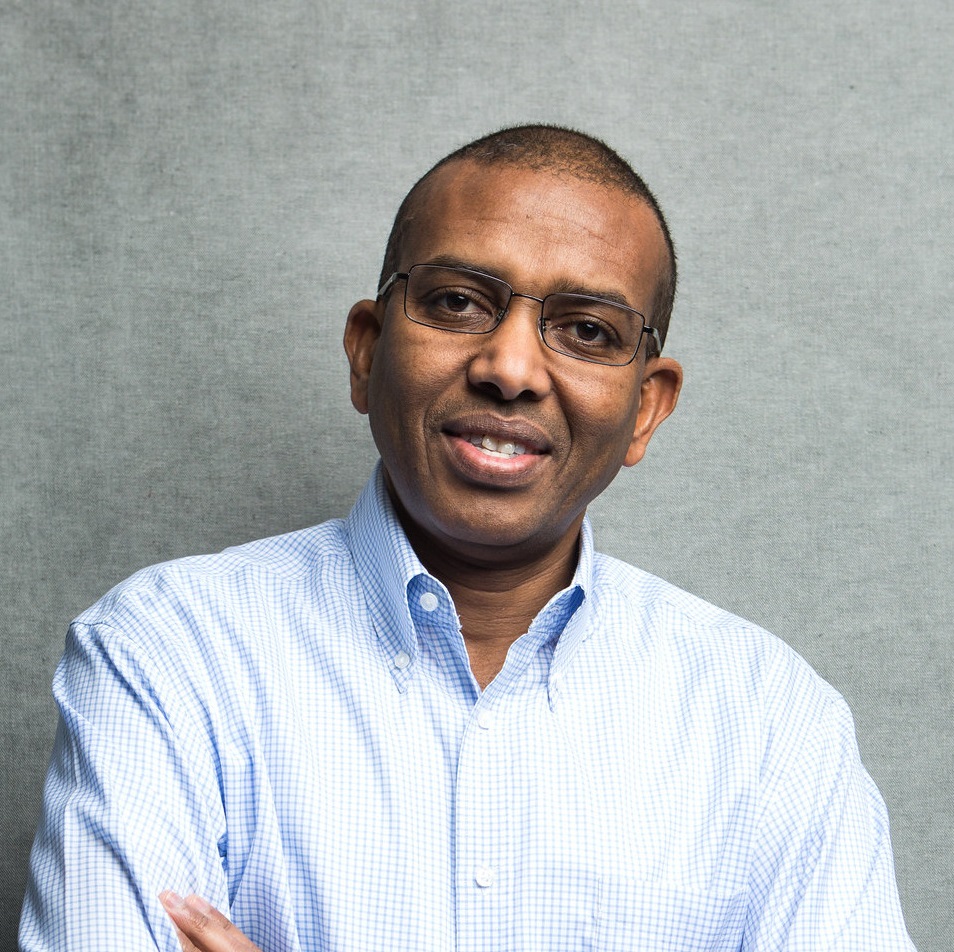
Ismail Ahmed, one of the founders of WorldRemit faced many problems to send money back to his native land, Somalia. So, he came up with this thoughtful idea which would especially help work migrants. Apart from Ismail, the other two founders of WorldRemit are Catherine Wines and Richard Igoe. Currently, Breon Corcoran is the CEO of the company. The headquarters of WorldRemit is based on London.

About the Founders of WorldRemit

Ismail Ahmed

Ismail received a prestigious scholarship that allowed him to study economics at the University of London. He was smuggled to the UK as a refugee after the Somali Civil War. He needed to send back money to his family which was very costly and time-consuming. He worked with the United Nations Development Programme and later went to the London School of Business for acquired his MBA. After graduating, he created a mobile app, WorldRemit, to make money transfer easier and affordable. Last year in October, Ismail appeared in Powerlist 2020.

Catherine Wines is one of the most powerful women in financial technology. She started as an Audit Manager in KPMG in 1989 and within ten years she became the Finance Director of City of Westminster College. She worked in many companies like Emile Woolf International, Universe Group plc, Prime Time Services, etc. Currently, she is the Director of WorldRemit.

Richard acquired a bachelor’s degree in economics from Exeter University. He worked at Dell and has more than 20 years of working experience in business and technology. Richard is the Head of Integrations at WorldRemit.  

Story behind WorldRemit

When Ismail came to the UK he worked part-time and arranged money for his family. Since he was an economics student the trouble for money transfer bothered him more than others and he wanted to come up with a viable solution. So, he carried on his further research in remittances at the University of Sussex. Ismail had a very clear idea about all the problems faced in the area of remittance services since he was a part of it. This problem led him to think about a fully digitized solution for money transfer.

He built a mobile app, WorldRemit to make money transfer easier and faster. With time it has come in partnership with many payment companies to make the entire process smoother. The remittance service with the help of WorldRemit has benefited many African countries and currently, the app is used in 47 countries of Africa.

Funding and expansion

WorldRemit represents one of the biggest networks for online money transfer on an international level. The company has come in partnership with M-Pesa in Kenya, MTN in Africa and Asia, and bKash in Bangladesh to meet customer requirements on a global level. Today, WorldRemit can remit money to around 115 countries around the world through mostly famous in Africa. But, some of the African countries where WorldRemit’s service is not provided are Sudan, South Sudan, Libya, Eritrea, Algeria, and Eswatini.

Some of the major investors of the company are Accel Partners, Technology Crossover Ventures, LeapFrog Investments, etc. Last year, it raised $175 million in Series D funding.

Why go cashless?

When the company was established it was fully cashless from the sender’s side. But, the receiver had plenty of options like cash collection, mobile money, bank deposit, etc. The company is trying to make the entire process 100% cashless because of the chances of corruption decrease with mobile money. Previously, when WorldRemit was founded, the company witnessed more than 90% transaction in cash. But, with time digital transactions have been preferred by customers to seek more transparency. Moreover, now with the power of AI and transaction history, the pattern of a profile can be determined. So, any transaction off the track can be immediately notified to the owner of the account, and then necessary steps can be taken.

CMR Surgical

CMR Surgical’s robotic system for surgery brings a new wave of technology in the medical world

The rate at which our technology is growing every day, it is difficult to predict what will happen after five years. How will the future look like? Will human labor be completely replaced by robots? AI and ML have transformed our life making unimaginable inventions in every aspect of life. Who could have imagined a decade earlier that we can make machines think like us and make them adapt our behavioral responses? With engineering making the greatest inventions and breaking its record every time, they are very versatile creators. On top of the list is the health industry that is highly benefited due to the inventions of smart devices and heavy equipment used in hospitals. So, some brilliant minds with knowledge in diverse fields came up with the idea of a robotic system to assist medical professionals to perform surgery. In 2014, five founders, namely, Martin Frost, Luke Hares, Keith Marshall, Paul Roberts, and Mark Slack founded CMR Surgical.

CMR Surgical is based on Cambridge and is famous for its robotic surgical system Versius. The company is founded with a vision to bring a robotic revolution in surgery. According to the founders, it would make a dramatic effect in the health industry if they can be assisted in surgeries by the robotic system. But, they also need to keep in mind a cost-effective versatile system that can prove advantageous to millions of common people in need. Let’s have a look at the success of CMR Surgical.

About the Founders of CMR Surgical

Martin Frost went to the Manchester Grammar School followed by the University of Cambridge. He has a great and rich experience in the professional world. Started as an Audit Senior in 1985 he became the Director of Chord Capital in 2005. He was also the CEO of Sagentia for a few years, co-founder of RedCloud Technology Limited, etc. Currently, he is associated with Peek Vision and CMR Surgical (Director).

Martin Frost
Image Source: businessweekly.co.uk

Luke Hares graduated from Cambridge in 1997. Before co-founding CMR Surgical he was a Senior Consultant at Sagentia.

Keith Marshall went to the University of Hertfordshire and graduated with a bachelor’s degree in Aerospace Engineering. He worked with Nokia Networks for almost a year followed by PML Flightlink, Xerox, and Sagentia. Currently, he is the Engineering Director of CMR Surgical.

Before co-founding CMR Surgical, Paul Roberts had ten years of experience in product and system development. He worked with Science Group PIc and built many complex medical devices. He is the Chief Customer Success Officer at CMR Surgical.  

Mark Slack is currently the Chief Medical Officer of CMR Surgical. He has a very rich medical background. Mark went to the College of Medicine of South Africa and he is a consultant gynecologist.

Versius Robotic System

Experts and medical professionals from around the world have given positive feedback about Versius. Versius is not like any other robotic system we have come across before. Versius provides maximum flexibility as its engineering allows both the arms to move effortlessly. This helps to save a lot of time and increases the efficiency within the OR suite. Versius is also designed perfectly with a footprint of 38cmX38cm. It doesn’t take up a lot of space and it is also transportable. Versius has ports and provides the freedom of the port placement as well. It automatically chooses a working position that provides the least amount of fatigue for the surgeons.

Apart from many cutting-edge features, the cost is a very essential factor. CMR Surgical claims that Versius can be afforded by who all are in need. It also provides a robotics programme for a fixed annual cost.  

A billion-dollar company

Last year, after the Series C funding of CMR Surgical the company hit a valuation of £1 billion. The last funding round where the company raised £195 million was the largest funding raised in Europe’s medical sector. Apart from launching Versius in the UK, clinical trials were carried out elsewhere in Europe and India. The product, Versius has three active arms during operation. The best part of this robotic system is they can not only be transformed from one O.T to another but also between hospitals.

The main investor for CMR Surgical is Cambridge Innovation Capital which raised £309 million for the company. Some of the other investors also include Escala Capital Investment, Vestland Invest, Watrium, etc.

India and CMR Surgical

In October 2019, India became the first country in the world to install Versius robotic system. Under the leadership of Dr. Shailesh Puntambekar in Galaxy Core Hospital, Pune, Versius successfully performed many surgical procedures which include mainly laparoscopy, myomectomies, and hysterectomies. Dr. Shailesh said that its compactness and cost-effectiveness will help meeting the surgical demand in India.