Your Tech Story

Tech Story

Applied Materials

The Journey of Applied Materials from a small start-up to a pioneer in the electronics industry

Applied Materials is one of the leading companies in the electronics industry to shape the future with excellent innovations in technology. Michael A. McNeilly founded the company in 1967 and since then it is striving to make our lives better in the modern era. The company not only aims to bring innovations but also works for making technology affordable for everyone. The contribution of the company forms the foundation of the most trending breakthroughs of this century like  Artificial Intelligence, Big Data, Augmented Reality, etc. The company mainly focuses on supplying equipment and software that are required to build semiconductor chips. Applied Materials is currently based in Santa Clara, California, U.S.

The Foundational Story of Applied Materials

Michael A. McKeilly founded the company in 1967 and it went public in 1972. The company started diversifying in the following years and shifted its main focus from semiconductors. But, in 1976 when James C. Morgan became the CEO of the company it again went back to semiconductors only and sales started rising subsequently. In 1984, Applied Materials made a breakthrough as it became the first U.S. semiconductor equipment manufacturing company to spread its branches in Japan and China.

Applied Materials
Image Source: barrons.com

In the next decade, the company acquired two big Israeli companies with $285million. The company has made several acquisitions since 2000. It acquired Etec Systems Inc., Oramir Semiconductor Equipment Ltd., Baccini, etc. Another huge achievement for Applied Materials was in 2009 when it opened the world’s largest commercial solar energy research center and development facility. This solar technology center was established in China. Later this year, the company acquired Semitool Inc and in 2011 it acquired Varian Semiconductor.

In 2013, the company merged with Tokyo Electron and planned to change the name of this merged conglomerate to Eteris. But, unfortunately in 2015, the merger was scrapped due to some antitrust issues. In 2018, the company was listed in FORTUNE World’s Most Admired Companies. Applied Materials has always shown interest in making investments towards better education and improving several communities for the better well-being of people. Currently, the CEO of the company is Gary E. Dickerson who is aligning more than 21,000 employees to work for a better future.

Founder of Applied Materials: Michael A. McNeilly

Michael A. McNeilly has a very rich entrepreneurial experience as he started very young in his journey to reach excellence. Before co-founding Applied Materials, Michael A. McNeilly founded Apogee Chemicals when he was twenty-five. After three years, he co-founded Applied Materials. Michael received a loan of $7,500 from his father-in-law to start Applied Materials. When the company has found the name of the company was Applied Materials Technology but while filing an IPO Michael changed the name to Applied Materials.

In his entrepreneurial journey in the semiconductor industry, Michael became the co-recipient of the first SEMI award in the category of “Outstanding Contributions to the Semiconductor Industry.” He also served as a member of the board of directors in more than 30 companies. His journey just began with Apogee Chemicals and Applied Materials as he founded fourteen more companies after it. While he was in Applied Materials he issued over twenty patents. Michael passed away in 2005 but before he passed away he majorly contributed to semiconductor technology. Michael was also the recipient of the “Outstanding Contributions to NASA Technology Commercialization” from NASA.

Vision and goal of the company

Applied Materials designs highly sophisticated technologies and software for complex chips and displays for many companies. The main goal of the company is to help their customers build large capacity and faster memory chips with the help of Applied Material’s technology. The company also works for making high integrated and more efficient processors. Apart from contributing to creating chips and processors, the company also designs technologies for high-resolution displays. Around 30% of the total number of employees are dedicated to research and development and the company invests around $2billion annually for the same purpose. Currently, the company has more than 12,500 patents.

The company has a strong vision towards solving high-value problems providing equal focus from research purposes to customer support. Applied Materials also believe in establishing high-value collaboration and developing a strong work culture globally.

Touch Surgery

Touch Surgery: Digital Innovation Empowering Medical Sciences

Edtech is one of the booming industries today, and would you believe it if we tell you that you can also learn the complete procedure of a surgery simulated in an operating room on your smartphones? Believable enough, but most of us would have not thought of it yet, right? Medical studies are the most expensive of all and getting to see and learn the procedure for all types of surgeries is not even possible for those studying medical sciences. The same thought came into the minds of two medical residents at the Imperial College London, Jean Nehme, and Andre Chow, and they end up developing Touch Surgery.

Touch Surgery

Touch Surgery has played a vital role in transforming the medical world with the help of digital technology. It is a training app for medical students that simulate surgical procedures, validated by 19 independent peer-reviewed publications. The company Digital Surgery LTD is the parent company of Touch Surgery, having its headquarters in three major cities, i.e. London, New York City, Auckland, and Sydney. In the beginning, the company name was Kinosis and later was changed to Digital Surgery, to reflect the border scope and mission of the company.

Digital Surgery is a healthcare technology company that is using digital technology to help in making all the surgeries even safer. The app includes a near to reality simulator and AI-powered surgical video management platform, offering accurate surgical content for the doctors to enhance their skills and for the medical students to practice in the operating room.

The interactive simulator of Touch Surgery helps the medical trainees to learn the step-by-step surgical procedure and test their knowledge and skills related to medical operations, through the simulator. Most importantly, it helps in enhancing their skills of decision-making in a real-time environment. The app has also proved to be useful for patients who are about to go under surgery. They use this app to know more about their surgical procedure.

Digital Surgery tied up with Microsoft in 2018 to use Microsoft’s under development Microsoft Hololens (mixed reality smartglasses for surgery) to accomplish the company’s mission of safe surgery for all. The app includes around two hundred surgery training in seventeen different specialties and is used by many medical institutions to provide the ‘to-be doctors’ with a great learning experience. Currently, the app has got over 2 million users registered to it. The Dublin-based Irish company Medtronic, a Medtech conglomerate, acquired Touch Surgery for an amount of $500 million in 2020.

The Idea Behind Touch Surgery

Jean Nehme and Andre Chow the co-founders of Touch Surgery was still working as medical residents at the Imperial College London when they thought of the idea. Since the two were residents, they did not have the access to the resources that could help them enhance their skills as a surgeon. They realized that most of the medical students do not get to try their hands on all types of surgical procedures lacking additional experience. The only source to help them to enhance their skills was surgical simulators, but these too were too expensive to get.

This led the two to think of a cheaper and more accessible simulator for all, i.e. Touch Surgery. They discussed the idea of Touch Surgery in 2010 and founded the app in 2012. The idea was innovative and useful so, they easily got connected to many investors for their research and development work too. Today, Touch Surgery has partnered with numerous surgeons, combining their expertise and digital technology to empower the surgical community.

The Founders Touch Surgery

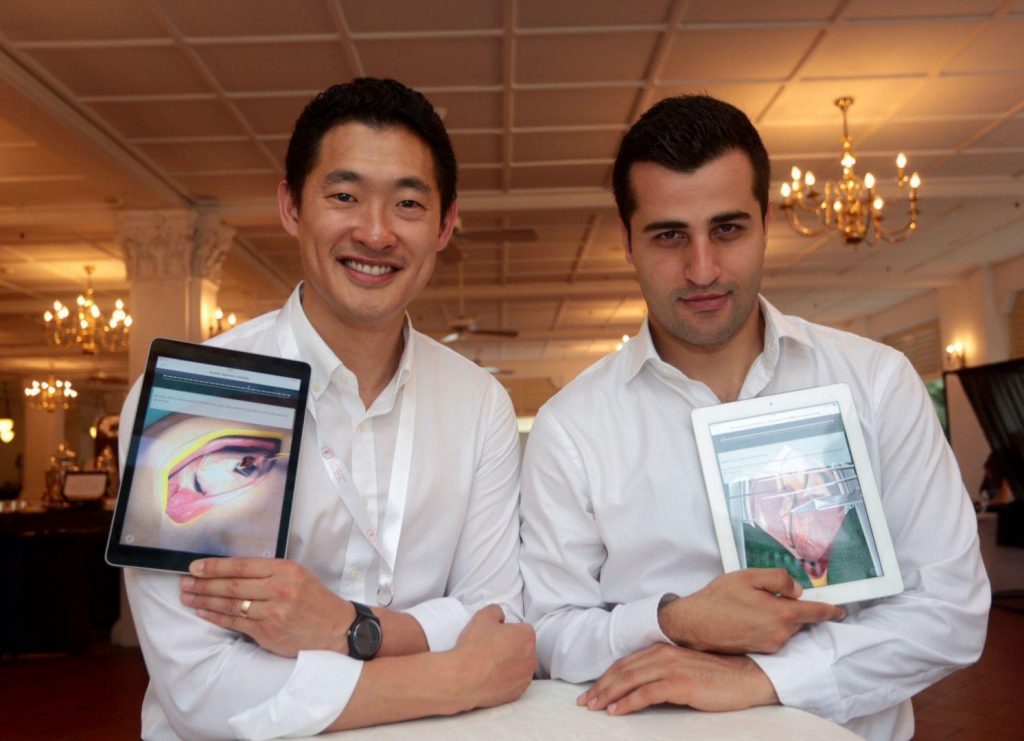
Jean Nehme has got an MBBS BSc MRCS MSc (Hons) and specializes in plastic surgery. Nehme is an awardee of multiple awards for his research work in innovation and his contribution to digitizing medical education. He has been named as one of the most influential 500 people in the UK by Debrett. On the other hand, Andre Chow is a general surgeon.

Touch Surgery Founders
Touch Surgery Founders: Andre Chow and Jean Nehme
Image Source: balderton.com

Both the co-founders graduated from the Imperial College School of Medicine in London. During the time, the two thought of developing Touch Surgery, Chow was pursuing a Ph.D. in Stem Cells and Biotechnology. Currently, Jean Nehme is working as the CEO, and Andre Chow is working as the COO of Touch Surgery.

BenevolentAI

BenevolentAI: Bringing Innovation in the Field of Bioscience

Artificial Intelligence is a wonder that people would have laughed about two decades ago, but today, this technology is attracting almost every other type of field. In the past, futuristic sci-fi movies did give us a glimpse of AI in the form of flying cars and automated homes, etc. But we did not know that this technology will be here so soon, making a mark in every category in the world. After bringing a revolution in the field of technology, automobile, and more, medicine and pharmaceutical companies are also up for investing in AI and machine learning to make their research and drug discovery even better and faster. One such drug discovery startup is BenevolentAI.

BenevolentAI

BenevolentAI is a London-based drug discovery startup, that has adopted Artificial Intelligence and machine learning to speed up medicinal research and reduce the overall cost to half. The company was founded by Ken Mulvany on 13 November 2013, in London with co-founders Michael Brennan and Ivan Griffin. It uses AI technology such as pattern recognition to find a match for existing genetic, metabolic, and clinical information in order to develop new drugs. According to the founder, the drug discovery industry has a vast amount of information, that is impossible to handle by humans alone, so using AI, this information can not only stored but also be used to target different diseases.

Most of the clinical trials are focused on hypotheses for a particular disease, but with the AI technology at BenevolentAI, the existing research is used for finding a new disease to target and for which the existing hypothesis fits the best. This way there is no waste of time in discovering a new compound from scratch, but the drugmakers can jump straight to the clinical trials to find new drug candidates from existing information. The company uses AI combined with the expertise of qualified scientists to make sure that the end result is effective.

Ken Mulvany founded the company with a target to find a cure for ALS and Alzheimer’s using AI, and in 2021, the company will also be starting clinical trials for excessive daytime sleepiness in Parkinson’s disease in the US. The company currently has got 90 people working for it in the UK and US. In September 2016, only after four years of its founding, it raised $1.4 billion, becoming a unicorn. In 2018, the company raised another $115 million and valued at $2 billion. Benevolent AI has also acquired the UK operations of Proximagen for an undisclosed sum.

Idea Behind BenevolentAI

BenevolentAI is a machine intelligence company with an aim to develop drugs for every existing disease in the world with the help of artificial intelligence. The company is focusing on using AI to mine and analyze the already existing biochemical information to develop new drugs for the diseases. According to Jackie Hunter, the Board director at BenevolentAI, every 30 seconds a research paper is published, and 95% of them fail. There is vast information about discovery and research for drugs that are going in vain. It takes about ten years and over $2.5 billion to develop, test, and get ‘the drug’ for a particular disease, but with AI and machine learning the time and the cost of producing a drug can be reduced by 30% to 50%.

BenevolentAI collects the already existing drug research data that was for a particular condition but could not yield the desired results. Though the research might have failed for a certain disease, BenevolentAI uses the same research and clinical trials data to test for other diseases, such that the deep research will not go waste, and the existing information is used to find new drug candidate for other diseases.

The Founder

Ken Mulvany has got more than 20 years of experience as an entrepreneur and investor. Currently, he sits as the Chairman of BenevolentAI. Before Benevolent AI, Mulvany also founded another biotech company named Proximagen and served as the CEO of the company. Proximagen was into developing the drugs for central nervous system disorders.  Mulvany sold Proximagen in 2012 to Upsher-Smith Laboratories for $553million.

BenevolentAI Founder
Image Source: miro.medium.com

Today, Mulvany is a member of various advisory boards of different organizations, including the UK Government on Artificial Intelligence and the Oxford Sciences Innovations advisory boards. Apart from that, he chaired the Trustees of the Cure Parkinson’s Trust and is also a member of the All-Party Parliamentary Group on Artificial Intelligence.

Glassdoor

Glassdoor: The Story Behind the Biggest Online Review Portal for Job Seekers

Years ago, people were practicing the traditional approach to finding jobs, i.e., through the newspaper classified section, local ads, brokers, or a reference from a friend or relative. But as the internet evolved with time, people started using online job portals, which became the most convenient method for all sorts of job seekers. Today millions of users, both employers and job seekers, can easily connect through such portals. In the same league, when one is looking for a job and gets an offer, they now can look for the company reviews on similar review-based websites, and easily make their mind on taking or not taking the offer. One such leading review-based online portal is Glassdoor.

Glassdoor is a review-based website that lets its users anonymously submit their reviews about a company, their experience, satisfaction with the company, salary, other workplace-related data, etc. This information is publicly available to job seekers, who want to know about the work environment of a certain company. The website also includes the feature to post or search for a job.

The Founders of Glassdoor

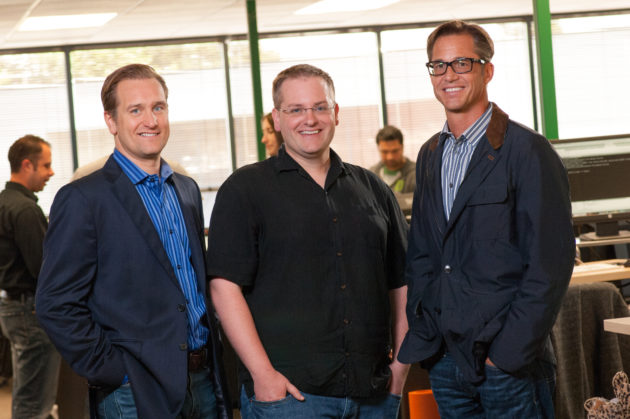
The co-founders of Glassdoor include Tim Besse, Robert Hohman, and Rich Barton. Both Robert Hohman and Rich Barton were working for Microsoft. Barton founded Expedia (a Microsoft spun-off company) in 1996, where Hohman was one of the team members. Later, after the spin-off, Barton became the chairman and Hohman the CEO of Expedia.

Glassdoor Founders
Glassdoor Founders: Robert Hohman, Tim Besse, and Rich Barton
Image Source: geekwire.com

On the other hand, Tim Besse met his future partners Hohman and Barton at Expedia only. He joined the company as his first job immediately after graduating from the Case Western Reserve University. Besse worked as the director of the Product Management and Online Marketing for the Asia Pacific division at Expedia.

The Story Behind

Rich Barton had been in the online business industry from before and had co-founded companies like Expedia and Zillow. He had a mind that would ask questions and try to answer them, even if he had to opt for an unconventional path. Going off track, with Expedia, he was providing airline ticket prices to the public and, with Zillow, he was revealing the exact real estate prices for the people. With Glassdoor too, he took an unconventional step.

During a brainstorming session for a new business idea in 2007, Barton and Hohman remembered an incident when Barton had left some employee survey data on the printer. This survey had information about employee satisfaction, their salaries, and reviews of their workplace. Though Barton’s assistant had grabbed that file safely, the two discussed the bad and the good aspects of that information going public. It was the trigger point for their new business idea. The two thought that even if that data had got revealed, it would have not caused any harm to anyone. In fact, if there was such a public platform, where people could submit such reviews of their companies, it would have been helpful for the job seekers to make better career choices.

The Working of Glassdoor

Tim Besse was impressed by the idea and left Expedia to join Hohman and Barton for their new business.  Finally, in June 2008, with an investment of around $10 million, they founded Glassdoor. The concept behind the platform was the anonymous rating of companies by the people who have worked with them. People now had a platform, where they could put their reviews on their experience with a company, how much they got paid, and how satisfied they were while working in it. Glassdoor also enabled the users to post any company-related media on the platform, to make their reviews more authentic.

The Platform uses smart technology and a team of people to filter the original reviews from original people so that the reviews are always trustworthy. With time, the platform started posting their rating for the companies, by averaging the reviews, salaries of employees, rating for the management, culture, etc. Later, based on the rating, Glassdoor started offering the ‘Best Places to Work Awards’ to the top listed companies.

The Journey of the Company in the Past Decade

In 2010, the company added a new feature to the website, i.e. Enhanced Employer Profiles. This new feature allows the users to add content other than reviews on the website. This feature is paid and offers the users to add content like social media links, interview questions, classified, etc. to their account. This paid content became useful for the people who wanted to prepare for a certain company interview. Glassdoor also provided features to submit a job opening for companies.

From 2012 to 2015, the company had raised around $160 million through venture capital. By 2015, Glassdoor had registered over 20 million users, and in the following two years, there were 41 million unique users at the platform. Glassdoor became a unicorn company within ten years of its founding. More than one-third of the biggest companies in the world have partnered with Glassdoor as its corporate clients. It has become the most trustworthy platform for job seekers. Glassdoor has been a winner of the Red Herring North America Award for Social Media Innovation 2013.

In June 2018, Recruit Holdings acquired Glassdoor for $1.2 billion in cash. Currently, Christian Sutherland-Wong is working as the CEO of Glassdoor.

Kronos

Kronos – Transformation from rising as foremost publicly held software firm to the private firm as Ultimate Kronos Group

Every industry whether it is manufacturing, healthcare, banking, entertainment, or any other demands skilled personnel. Why not so? To grow the business, it is necessary to have a capable workforce. Else, hiring unqualified people can cause a huge loss in terms of business and ultimately to the economy of the country. The solution to this problem is a better workforce and human capital management. Workforce Management helps to get the right workers in the right workplace at a right time. Thus, improvising the efficiency of the workforce as well, lower the cost of the unnecessary workforce. While in this modern world, the modern solution is needed to deal with this as Kronos does.

Kronos Incorporated headquartered in Lowell was known for providing cloud-based workforce management services. It has done excellent work in this field as well; it has developed several other innovative products. However, it has merged with Ultimate software in April 2020. Since then, it is known as Ultimate Kronos Group. At the time when it was an individual firm, Kronos employed 6000+ job seekers all across the world.

Backstory of Kronos

Best known as an American multinational company, it primarily offers cloud-based workforce management and human capital management. Kronos Incorporated was established in 1977. It was founded by Mark S. Ain, who was MIT and Simon Business School’s student. He served as a CEO for a long time, thereafter, his brother Aron Ain stepped up a CEO in 2005.

Just after two years of establishment, the firm has designed the world’s first-ever time clock using a microprocessor. Apart from that, it has created a Pc-based attendance product in 1985. As a matter of fact, Kronos set the record to earn profit and sustainable growth for long period, in spite of being publicly held firm in the history of the software industry. In 1992, it has offered a public listing on NASDAQ. 

Kronos Journey from being Public to Private firm

Started as a private firm, Kronos started public offering in 1992. Since then, it has operated as a public listed firm. However, in the middle of 2007, Kronos got investment from Hellman & Friedman, and JMI Equity. Thus, helped it to become a private firm. Again in 2014, GIC and Blackstone, well-known private equities also offered investment in the firm. From that time, it has started to generate over 1-billion-dollar annual revenue.

Apart from the public to private changes, Kronos also prefer to shift the headquarters to Cross Point Town in Massachusetts. The purpose behind the location change was to combine multiple offices under a single roof. Recently, the firm has merged with Ultimate Software causing the name change to Ultimate Kronos Group. Though the whole company will be directed by Aron Ain.

Product and services

The firm entered the market by manufacturing Time Clocks using a microprocessor. But presently, it is mostly focused on software development and offers related services. This software is design for the human workforce and capital management. Apart from that, it offers cloud applications in a similar field.  As well, Kronos offers other support services, consulting, and training to its clients.

Aron Ain- CEO

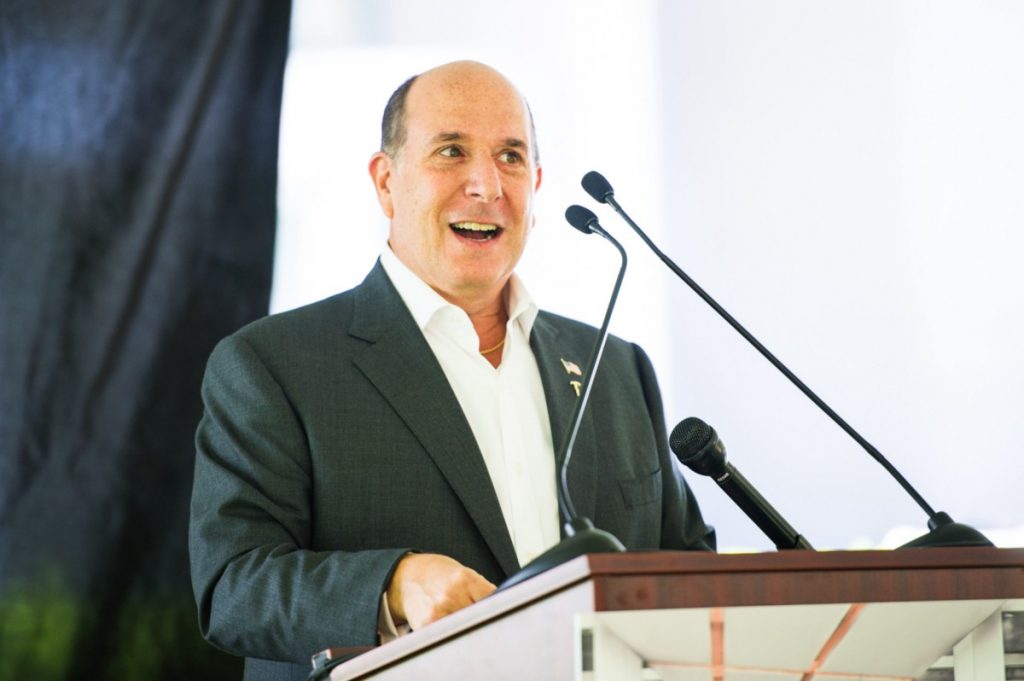
Kronos CEO
Image Source: thriveglobal.com

He is presently leading the Ultimate Kronos Group, born out of the merger of Ultimate software and Kronos. Apart from being a well-known software technology executive, Aron is a well-known American Author. In 2005, he became CEO at Kronos after his brother’s retirement. Since then, he guided the policies of the firm and explored the business all across continents. Throughout his career, he has been awarded many times. Aron was honored with the Ernst & Young Entrepreneur of the year award. Moreover, he was included in the list of Top 100 CEO in the U.S. in 2019 (Glassdoor).

Bottom Line

Under both Ain brothers’ policies, Kronos has used an acquisition strategy to explore the business. Acquisition of Principal Decision system international, Stromberg, SaaShr.com is some of the major acquisitions in the company’s history. As well, The Workforce Solution Software division of SimplexGrinnell, Optilink, empower software solution are few noticeable acquisitions made by Kronos.

Recently, the firm was the topic of discussion for its automated report-generating tool. It turned out useful to analyze attendance and work record of Covid-19 positive workers. Thus, it gets easy to detect potentially affected co-workers amid the pandemic.

Epic Logo

Epic Systems – The result of Judith Faulkner’s vision to make healthcare facilities more advance

In this pandemic, every individual realizes the importance of healthcare facilities. More healthcare facilities lower the risk to the patient’s life. Thus, making it an individual part of a human’s life. So, the firms that develop software to enable such healthcare services play an important role. Epic is developing healthcare software since 1979. It is a USA based firm whose developed software is used in most of the hospitals. More than 50% of patients’ medical records in America are stored in the Epic system’s software. Currently, it has offices in many countries, including, Netherland, UAE, Australia, and many more. As well, Epic’s office at Dhahran, Saudi Arabia, Melbourne, Singapore, and Denmark has significant importance there.

Backstory of Epic

In 1979, Judith Faulkner set up Epic in Madison in Wisconsin. At that time she put an investment of 70K dollars only. She only took help from friends and family to raise the fund and kept it as a private firm in the healthcare industry. Meanwhile, in 2005, the firm shifted its headquarters in Verona. The firm started as a small start-up grew into a large firm over the years. One more interesting thing about Epic is its theme infrastructure. The building of the firm has been designed like Harry Potter’s school building. As well, its cafeteria is designed to mimic the train station.

More about Epic

The firm is best known for developing software called Epic EMR. These are basically electronic medical record software. They are best known for chronicle database management. Other applications of the firm are design for registration, scheduling, and some other patient care purposes. As well, few are best known for clinical systems for emergency patients, doctors, nurses, and other care workers. Apart from that, it is also developing software for a medical billing system, pharmacies, radiology department, and many other hospital-related departments.

Other than that Epic is also active in cloud hosting. Thus, helping clients to maintain servers by themselves. It also provides optimization (Short term) through its very own Boost services. With all such services, the firm is rise as a tough rival to MEDITECH, Cerner, Allscripts, etc. In addition, IBM, McKesson, GE Healthcare, Siemens are other competitors of Epic.

Further exploration

As per the World report, many topmost hospitals use the software service of Epic. Kaiser Permanente, Cedras-Sinai Medical Center, UC Davis Medical center are some of the top medical facility providers that prefer Epic. Also, top hospitals like Johns Hopkins Hospital, Cleveland Clinic, and many Mayo clinics use electronic record systems of the firm. In 2015, Epic became part of a healthcare project with Partners HealthCare.

Controversies and Criticism faced by Epic

Care Everywhere, one of the information exchange software developed by Epic has been accused by many. Because Epic initially not allowed data sharing between non-epic systems. However, it, later on, charge money to transfer essential data to a non-epic system. This cost was as high as 5000$/year to an average size hospital. But later on, per transaction fees has canceled. Yet, customers have to pay a one-time fee to link Epic to non-epic systems. Other than this issue, Epic has faced many problems when its electronic health record system installation causes major failures in the UK.

This incident took place in 2015, where it had become unstable after sharing more than 2.1M health records. Thus, making the loss of 200 million euros to Cambridge University Hospitals NHS foundation trust, UK. Just after one year, Epic got stuck in more controversy due to improper translation causing incorrect medical reports.  Recently, about 90% of Epic’s employees raised a concern about the firm’s role in handling the covid-19 situation. They rigorously expressed dissatisfaction with Epic’s response to deal with a pandemic.

Judith Faulkner-Founder and CEO at Epic

Epic Founder and CEO Judith Faulkner
Image Source: healthcareitnews.com

Well-recognized businesswoman and billionaire in America, Judith is responsible for the re-shaping healthcare sector. In 1979, she built Epic under the name Human Services computing. The firm was set up to provide the service as per the name, i.e., human services computing. Her efforts make her the most powerful woman in healthcare, as per the Forbes 2013 report. As well, she got reorganization as one of the wealthiest self-made women in 2020.

Education and Career

Judith attended Moorestown Friends School for early education. Thereafter, she joined Dickinson College to study Mathematics. She also has a master’s degree in Computer science. Just after completing pf master’s degree, she plunged into entrepreneurship. As a result, established Epic aka Human Services Computing. Faulkner shares a great contribution to keep the firm as a private company since 1979.