Your Tech Story

Tech Story

Vivendi

Vivendi – A Conglomerate that is successfully fostering Entertainment and Cultural Diversity Globally.

Vivendi is a successfully established conglomerate in the mass media industry based in Paris, France. The company is currently pioneering in culture, media, entertainment, and communication by promoting the creations of more diverse groups of talented people. The main business of Vivendi revolves around music, television & camera, video games, and publishing. Vivendi has many different businesses and all of them work together to bring great content to people and reveal undiscovered talents. The founding story of Vivendi dates back to 1853 when an imperial decree of Napoleon III built a company called Compagnie Générale des Eaux (CGE).

The Founding Story of Vivendi

The origin of Vivendi started with the formation of the water company, CGE which after a year was granted a concession for supplying water in Lyon. Gradually the company started expanding and supplied water in many cities. From 1853 to 1976, the company remained exclusively focused on the water sector until Guy Dejouany became the CEO of the company. From the water sector, the company gradually expanded to waste management, energy, transport services, and construction. CGE acquired a series of companies and established the Energy Division of the company called Dalkia in 1998.

Vivendi
Image Source: midiaresearch.com

The expansion of the company in the media and telecommunication industry started in 1983 when CGE helped to establish Canal+ which was the first pay-TV channel in France. Later, the company acquired Babelsberg Studio and taking advantage of the deregulation of the French telecommunication market, expanded its growth in the media sector. In 1997, Compagnie Générale des Eaux was renamed as Vivendi and sold its property and construction division. After selling off the two divisions, Vivendi went on a spree to merge with companies like Maroc Telecom, Cendant Software, etc. From 1998, the company started launching digital channels in many countries like Poland, Italy, and Spain.

In January 2001, the media sector of Vivendi merged with the Canal+ television network and with the assets of Seagram Company Ltd formed Vivendi Universal SA. After forming the new company, Vivendi Universal acquired MP3.com and an American leading publisher Houghton Mifflin. In order to raise funds, the company decided to sell another two of its businesses.

Mergers and Acquisitions

Vivendi Universal sold off 80 percent of the company’s subsidiaries to General Electric which further formed NBC Universal. It sold stakes of other companies as well like Canal+, StudioCanal, Monaco Telecom, etc. The selling of stakes in these companies took place in 2004 and the company also let go of Babelsberg Studio. In 2005, Canal+ merged with TPS (France’s second-largest Pay-TV provider).

In 2006, the company changed its name from Vivendi Universal to Vivendi. The first partnership after the company renamed its name was Spiralfrog which was to distribute the company’s song online in the US and Canada. In 2007, the company decided to merge its game publishing unit with Activision for $18.8 billion. The deal was closed for almost half the actual figure and Vivendi got a majority stake for the newly merged company.

In the following years, the company acquired Global Village Telecom (a Brazilian phone operator) and Vodafone’s stake in SFR. But soon the company announced a demerger and SFR was spun off. From 2013, the main priority of the company became content and it started collaborating with content industries. We know the power of content marketing in today’s world and Vivendi took a very strategic decision back then. In recent years the company has acquired many companies like Flavorus, Paddington, The Copyrights Group, Editis, etc. Last year, Vivendi announced a deal to buy Prisma media and a 7.6 percent stake in Prisa (a Spanish company).

Vivendi Create Joy

Vivendi Create Joy is a program started in 2008 which supports and initiates training projects to help the sick, troubled, and disadvantaged young people from eleven to twenty-five years old. These projects are currently taking place in France, Great Britain, and Africa. These projects are initiated to help people take up vocational training and build up their professional networks. It is all about finding their talents and helping turn them into their passion.

Arnaud De Puyfontaine – CEO of Vivendi

Arnaud De Puyfontaine is the Chairman of the Management Board and CEO of Vivendi. Arnaud completed his studies at ESCP Europe followed by the Multimedia Institute and finally Harvard Business School. Earlier in his career, he started working as a consultant for Arthur Anderson and in 1990 he became the Executive Director of Le Figaro. Arnaud also served as the Chairman and CEO of Emap France and many other companies. In 2014, Arnaud joined Vivendi and since then he is serving as the CEO of the company.

Telenor

Telenor: One of the Largest and Globally known Mobile Telecommunications Company

Telenor ASA is one of the biggest mobile telecommunications firms in the world, with activities around the world but mostly in Scandinavia and Asia. It has 10-year-old research and business line for Machine-to-Machine technology, as well as vast broadband and TV distribution activities in four Nordic countries. Telenor manages and operates networks in nine countries.

Telenor, The Telephone Company

Telenor began as Telegrafverket, a state-owned monopoly provider of telegraph services, in 1855. Televerket started by linking Christiania (now Oslo) to Sweden, as well as Christiania and Drammen.

In 1878, the first telephone service in Norway was established between Arendal and Tvedestrand, and in 1893, the first international telephone service was established between Christiania and Stockholm. The telephone system was automated beginning in 1920 and completed in 1985.

Telenor
Image Source: typenetwork.com

Always Moving Forward with Telenor

In the Nordic countries, Telenor provides a wide range of telecommunication networks, including mobile and fixed telephony, Internet connectivity, and cable TV access and video. Facing competition from Telia and others, Telenor remains Norway’s largest player. The company has a significant presence in the Scandinavian broadband and television industry, both in terms of subscribers and service area. With operations in five Asian countries, Telenor is a major player in the region.

Telenor’s Asian business currently comprises around 1.2 billion people, of which around 150 million are Telenor subscribers. Less than 20 percent of them are active mobile data users. The company’s ‘Internet for All’ strategy aims to capitalize on this important revenue and growth potential in a region with low penetration of the fixed network and the decline in the prices of devices.

The company’s Asian markets have seen unprecedented growth and demand for mobile data over the past two years. The number of mobile broadband connections in the Asia-Pacific region is expected to double to 2.1 billion in 2017. Telenor Group is strategically managing the voice-to-data transition, focusing on delivering innovative telecommunications and digital services based on the real needs of people in their markets.

Thailand and Malaysia are currently leading Telenor’s growth in the region. 32% and 37% of customers, respectively, are active mobile data users. However, the pace is accelerating in all Asian companies. In Bangladesh, 5.2 million are currently active data users, or 11 percent, while Uninor in India and Telenor Pakistan have 4.7 million and 5.3 million active users, or 15 percent, respectively.

Working for the Crowd

In order to achieve a profitable expansion of the mobile Internet, the Telenor Group has identified four key elements: building efficient, faster, and more intelligent networks, right prices and packages, increasing device quality, and using digital services and partnerships for a quick introduction.

To promote usage and meet customer needs, Telenor works with social media and entertainment players like Facebook, Wikipedia, and WhatsApp, targeting other digital offerings, including financial services, access to knowledge, and affordable and accessible health services.

The CEO: Sigve Brekke

On December 15, 1959, Sigve Brekke was born. He is the President and CEO of Telenor Group, a multinational telecommunications firm with operations in 13 Nordic, European, and Asian countries.

He was formerly the EVP and Head of Region Asia. He has played a key role in expanding Telenor’s presence in the area. He has been a key driver and shaper in transforming Telenor into a leading power in key Asian markets since helping to set the initial trajectory in 1999.

He began his career with Telenor as an analyst, later rising to the role of Manager for Business Development, where he was instrumental in developing the company’s Asian growth strategy. He has been the CEO of Dtac and Uninor since then. He’s already been involved in mergers and acquisitions, and he’s recently entered the Myanmar market.

Fortive

Fortive: A Five-year-old start-up is named as one of the world’s most admired companies by Fortune.

Fortive is a huge success in the technology industry currently controlling many businesses in Instrumentation, transportation, automation, franchise distribution, etc. The company was founded in 2016 by the current CEO of the company, Jim Lico. Fortive was a part of Danaher Corporation, an American diversified conglomerate that spun off the former in 2016. The headquarters of Fortive Corporation is based in Washington. For two consecutive years, Fortive was named as a Future 50 Company by Fortune. This young industrial conglomerate is also on the Fortune 500 list.

About Fortive Corporation

Fortive was created by Danaher Corporation by spinning off a few subsidiaries which include Matco and AMMCO-COATS. The main aim of Fortive is to deliver innovative technologies to its customers and solve pressing challenges.  Fortive works in various fields satisfying a wide range of customers. There are three main segments in which Fortive’s operating companies are divided. The first is Intelligent Operating Solutions which is responsible for ensuring better security and compliance and energy efficiency. Secondly, Precision Technologies solves very tough technical challenges thus a significant part of research and product development, and lastly, Advanced Healthcare Solutions ensures timely delivery of safe healthcare for the patients.

Fortive
Image Source: fortive.com

Growth and Strategic Acquisitions

Fortive is a very young company and since its foundation, the company has focused on acquiring other businesses from various fields. After it was spun off in June 2016, Fluke Corporation (a subsidiary of Fortive) acquired eMaint, a CMMS IIoT system. After a month, Global Transportation Technologies (GTT) was acquired which is a company in the traffic management sector. In July 2017, Fortive acquired Industrial Scientific, a Pittsburgh-based gas detection and safety-as-a-service company. The company also acquired Landauer for $770 million. It is a company that provides services to determine radiation exposure both at the occupational and environmental levels. Gilbarco Veeder Root, a subsidiary of Fortive acquired Orpak Systems which is known for delivering technical solutions to oil companies and commercial fleets.

In 2018, Fortive bought a software firm called Accruent for $2billion. This year Tektronix, another subsidiary of Fortive acquired Initial State which is a data streaming and visualization platform. Fortive Corporation has many subsidiaries acquiring companies in different fields which made it a big success within five years of its establishment. The company entered the healthcare sector after its acquisition of Johnson & Johnson’s Advanced Sterilization Products (ASP) business. This deal was closed in April 2019 and in the same year, Fortive acquired Censis Technologies, which is a SaaS company providing inventory guides in the surgical field.

In September 2019, Fortive announced that it will be splitting into two different publicly traded companies. Last year, Vontier, the new company was announced. Fortive has a very strong working culture and it significantly invests its time and energy in doing social work as well. As a socially responsible company, it tries to minimize waste production and avoid pollution along with adopting sustainable practices. In 2020, Fortive was named as one of the 500 most responsible companies by Newsweek.

About Danaher Corporation

Danaher Corporation is an American diversified conglomerate with its headquarters based in Washington, D.C. The company is divided into four platforms, namely, Life Sciences, Diagnostic, Water Quality, and Environmental & Applied Solutions. Danaher is known as one of the best companies for diverse employees. The founders of the company are Steven M. Rales and Mitchell Rales. It was founded back in 1969 as a real estate investment trust. The company was on a spree to acquire new companies and currently has an arsenal of subsidiaries. Danaher became one of the first companies in North America to adopt ‘Kaizen’ which is a Japanese philosophy of lean manufacturing. Both Danaher and Fortive believe in a sustainable way of manufacturing products. 

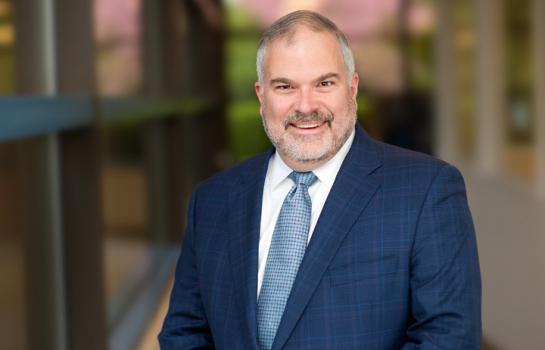
Jim Lico – Founder and CEO of Fortive Corporation

Fortive Founder and CEO
Image Source: fortive.com

The full name of Jim Lico is James A. Lico who is the founding president and CEO of the Fortive Corporation. He was a part of Danaher since 1996 and joined the company as Vice President Operations of Veeder-Root in Altoona, Pennsylvania. He participated in a broad chain of responsibilities in Danaher which includes running Danaher Business System (DSS) for a year, executive leader for the Emerging Market Regional Boards of China, Japan, India and Middle East, etc. Jim graduated with a BS degree from the University of Michigan and a Masters in Management from Northwestern University.

Fujitsu

Fujitsu: The Makers of World’s Most Powerful Computers.

Fujitsu is one of the leading IT services providers in the world and also ranked fourth by annual revenue among the largest IT service companies in 2018. The company has been in the business for the past ninety-plus years, and apart from IT services, the company specializes in hardware products manufacturing, like personal and enterprise computing products.

 Fujitsu has been ranked among the Global 500 companies by Fortune, and the latter has also named it as one of the world’s most admired companies. The company has expanded its operations in almost 100 countries, and around 132,138 employees work for the company in its global offices. The company recorded total revenue of $35.492B in the year 2020. The company headquarter is situated at Shiodome City Center, Minato, Tokyo, Japan.

Products and Services

Fujitsu started as a manufacturer and supplier of the automatic switching system, but later, the company tried its hands in products like computers, telecommunication equipment, cloud computing, AI as well as telecommunication IT services. The company is one of the largest computer manufacturers and also specializes in the development of the microprocessor. These microprocessors by Fujitsu include SPARC-compliant CPU (SPARClite), the Venus, Fujitsu FR, FR-V, and ARM architecture, etc.

PRIMERGY is the company’s computer line, and it launched its Windows phones under the ETERNUS series. LifeBook and Amilo are the famous notebook series from Fujitsu. The company is also in the cloud service business and has its data centers established in Japan, Australia, Singapore, the U.S, Germany, and the U.K.

The Establishment of Fujitsu

Fujitsu is a spin-off company that came out of a joint venture named Fuji Electric Company between Furukawa Electric Company and the German conglomerate Siemens, founded in 1923. The company was founded on 20 June 1935 as Fuji Telecommunications Equipment Manufacturing. It started as an automatic switching system manufacturers, and in 1938, established its first manufacturing plant in Kawasaki. The next years, it entered into the radio transmission field and also started the production of the power-line carrier devices.

In 1954, the company launched FACOM 100 mainframe, Japan’s first computer. Only after five years, Fujitsu also started to work on second-generation computers, and in 1961, it came out with FACOM 222 mainframe. The company continued to manufacture mainframe computers till 2002 and experimented with all generation computers.

Fujitsu
Image Source: senseiprojectsolutions.com

Fuji Telecommunications Equipment Manufacturing was rebranded as Fujitsu in 1967. In 1971, the company partnered with CCL, a Canadian company, and started the distribution of the latter’s data entry device, Key-Edit. The company also joined its hands with The Queen’s University of Belfast business incubation unit to form a joint venture named Kaino. In 1990, the company launched the series of the world’s fastest mainframe computers. Fujitsu also came with the world’s first 21-inch full-color plasma display in 1992. During the same time, it made acquisitions like ICL (a British company) and KME-CS (a Russian company).

Fujitsu established a joint venture named Spansion with AMD in 1993 and started to manufacture flash memory devices. By this time, the company had also launched its manufacturing units and R&D centers in countries like Texas, Thailand, Malaysia, and China. In June 1999, Siemens (previously the parent company of Fujitsu) partnered with Fujitsu to form a joint venture for their European computer operations with the name Fujitsu Siemens Computers. The two companies owned equal shares in Fujitsu Siemens Computers.

In 2007, the company partnered with Reuters Group to access its IT services. The same year, the company also established a development center in Noida, India. The company sold its HDD business to Toshiba and acquired the complete operations of Fujitsu Siemens Computers, turning the latter into Fujitsu Technology Solutions in 2009. It also acquired an Australian company named Supply Chain Consulting and the Telstra subsidiary Kaz in the same year.

In 2015, the company partnered with VMware and acquired USharesoft. The company started to manufacture the 5G telecommunication equipment in 2019, NTT Docomo and NEC being its major customers. In June 2020, Fujitsu manufactured the world’s most powerful supercomputer named Fugaku in collaboration with the RIKEN research institute. The company has also started to work on Artificial Intelligence and has built an AI monitor to recognize complex hand movements.

The CEO: Takahito Tokita

Takahito Tokita is the current CEO, President, and Chief DX Officer of Fujitsu Ltd. He has been working with Fujitsu since 1988, and since then, he has been appointed to many leadership posts. Tokita has got a Bachelor’s degree in Metallurgical Engineering from the Tokyo Institute of Technology. He has years of experience as a systems engineer and in the financial services sector.

Micron Technology

Micron Technology: From a Budding Consulting Firm to Largest Semiconductor Producers.

There have been incidents where except the founder of a company, nobody believes in their idea. But as time passes, people start recognizing the ability of the company and the potential of its back idea. A similar case happened with the American semiconductor and memory device manufacturer Micron Technology, as people mocked the founders for thinking of diving into the huge competition. But later, they realized the worth of the company and the vision of the founders. Micron Technology started as a semiconductor consulting business, and with time, became the largest semiconductor and memory chip producer in the industry.

A Brief Introduction

Micron Technology is an America-based memory device and semiconductor manufacturer, with its headquarter located in Boise, Idaho, U.S. The company specializes in the manufacturing of dynamic random-access memory, flash memory, and USB flash drives. As of 2020, the total recorded revenue of the company was US$21.44 billion, and around 40,000 people are working for the company.

Micron Technology
Image Source: businesskorea.co.kr

The Founding of Micron Technology

Four design engineers Ward Parkinson, Joe Parkinson, Dennis Wilson, and Doug Pitman from Mostek Corporation, left their well-paying job to establish Micron Technology in 1978. The company started its operations as a semiconductor design consulting company from the basement of a dentist’s office in Boise, Idaho. It raised its initial funding from some local investors as not many were interested in investing in a new company.

Eventually, Micron Technology successfully established its first wafer fabrication unit in 1981 and started manufacturing the 64K DRAM chips. Just in one year, the company manufactured and supplied around one million chips in 1982. The idea of starting their own manufacturing unit helped the company go public in just six years of its inception.

At the beginning of the 90s, the chips from Micron Technology made their way into the manufacturing of newly introduced personal computers. The growing demand for Micron chips led the company to establish a new manufacturing unit worth 1.3 billion in Utah. In order to expand its operation, the company acquired Texas Instruments’ memory division in 1998.

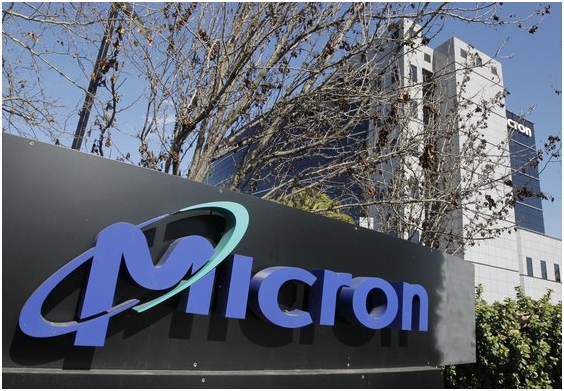
Micron Technology
Image Source: events.wsu.edu

At the beginning of the 2000s, Micron Technology started to manufacture atomic layer deposition high-k films for DRAM memory devices as well as the 30-nm class NAND flash memory. The latter has been a popular discovery among manufacturers worldwide. In 2005, the company joined its hands with Intel to establish a joint venture named IM Flash Technologies. The next year, Micron went on to acquire Lexar, and in 2008, the company bought the stakes of Qimonda in Inotera technologies. In the next 5-7 years, the company acquired names like Displaytech, Numonyx, Inotera Memories, Elpida Memory, etc.

Micron Technology partnered with Intel in May 2018 and launched the QLC NAND memory, equipment to enhance the storage density. The same year, Micron Technology was among the top 500 companies on the Fortune 500 USA list. In 2019, the company introduced the first 1TB microSD card, and the next year, the company’s 3.84TB Micron 5210 Ion became the world’s cheapest but large capacity SSD. The same year Micron technology joined its hands with NVIDIA to enter the field of graphics processing unit manufacturing and also introduced its latest 176-layer 3D NAND chip with better read and write latency.

The CEO: Sanjay Mehrotra

Sanjay Mehrotra is the serving CEO of Micron Technology. He is an Indian-born American entrepreneur, who is also known as the co-founder of the flash memory products manufacturer company, SanDisk. Mehrotra completed his high school education from Sardar Patel Vidyalaya, Lodhi Road, Delhi, and joined BITS Pilani to pursue his graduation. Later he got transferred to the University of California, Berkeley, where he completed a bachelors’ as well as a master’s degree in Electrical Engineering and Computer Sciences.

In 1988, he co-founded SanDisk and held many important roles at the company. For a period from 2011 to 2016, he served the company as the president and the CEO. He left SanDisk after it was acquired by Western Digital in 2016. In May 2017, he was appointed as the chief executive officer of Micron Technology.

Recruit Holdings

Recruit Holdings: A Japanese company thriving in the publishing Media Industry.

Back in the 1960s, people didn’t have the internet to look for jobs and other opportunities. Most of them either preferred reading newspapers or magazines to find a suitable job for themselves. During this time, a Japanese company called Daigaku Shimbun Koukokusha (current-day Recruit Holdings) was founded in Japan to help out job seekers find suitable jobs. Later, the company expanded and started publishing magazines not only in the job sector but overseas travel, automobiles, etc. The company, Recruit Holdings was founded by Hiromasa Ezoe in 1960.

About Recruit Holdings

Hiromasa Ezoe was an advertising agent who founded the company Recruit Holdings and as its first product launched a job-hunting magazine for university students. The magazine was called Invitation to Companies and its main target was to create an open job market for fresh graduates. Last year, the company celebrated its 60th anniversary of bringing new services and solutions to people around the world.

Recruit Holdings main mission is to create opportunities for life by prioritizing several factors like social values, delivering information at a very fast speed, convenience, and broadening the scope of opportunities.  The company is trying to evolve and make its solutions easier and more accessible while syncing with digital transformation and globalization.

History of Recruit Holdings

In 1960, the company Daigaku Shimbun Koukokusha was founded and two years later the magazine, Invitation to Companies was rolled out mainly for university students and fresh graduates. Recruit Holdings has always been very enthusiastic about digital transformation and valued the need for evolving with time. In 1968, Recruit Holdings was the first company in Japan to introduce IBM 1130 computing system in its company. In 1971, the company established Recruit Computer Print, a company for digitized pre-production processes.

Recruit Holdings
Image Source: commons.wikimedia.org

After the great recession, Recruit expanded its business and in 1976 started launching information in the housing industry which became a huge success. In 1980, the company launched another new magazine Travail which was Japan’s first career choice magazine for women. In the consecutive years, Recruit introduced another new magazine called Car Sensor and launched Information Network Service. In 1985, Recruit Holdings established Recruit USA in order to support Japanese companies by local hiring in the US.

Growth and Expansion

Focusing on the digital transformation and the high data-driven society that was slowly approaching the late twentieth century, Recruit Holdings established Supercomputers Research Institute to gain more insights on the same. This is one of the best qualities of Recruit Holdings that it not only evolved with time but knew how to think ahead of it. In 1990, the company took a step forward on expanding its business and launched Jalan, an innovative travel magazine. After a couple of years, the company again launched a new magazine, Zexy which was for bridal information. In 1995, the company established a strong online presence by starting its online media business called Mix Juice (now ISIZE).

In 1996, the company digitized its job hunting magazines which were followed by launching a brand new lifestyle magazine called Hot Pepper. Expanding the online media, Recruit opened a new platform for booking accommodations and doing reservations online. Recruit launched its bridal magazine in China in 2004 but it failed after a few years.

Globalization

Recruit Holdings is a very forward-looking company that acquired The CSI Companies, a US-based staffing company. In 2011, the company acquired Staffmark Group and Advantage Resourcing Europe to expand its business in the US and Europe. One of the most remarkable acquisitions in the history of Recruit was acquiring Indeed, a job search engine based in the US. In 2015, the company established Megagon Labs to connect with other organizations for AI developments, sensors, and other new technologies. Recently, the company had acquired Glassdoor, a famous company information site.

Masumi Minegishi – Chairperson of Recruit Holdings

Masumi Minegishi joined the company in 1987 and since then significantly contributed to the success of Recruit Holdings and making it a global tech. He served as the CEO, Chairperson, and representative director of the board in Recruit Holdings. He contributed significantly during the launch of Zexy and his business strategies and corporate plannings are brilliant.