Your Tech Story

Tech Story

ServiceNow

ServiceNow – One of the Fastest Growing Cloud-Computing Company

Cloud computing has changed the face of the IT industry. It has increased the scope for software companies and the people seeking innovation. ServiceNow is one such company that saw the scope in cloud computing and decided to move forward to work in software-as-a-service. In fact, ServiceNow is known as one of the pioneers of software-as-a-service. The company came into being in 2003, and ever since, it has been growing towards its goal of clients’ satisfaction. Fred Luddy founded ServiceNow, and the company headquarter is located in Santa Clara, California.

ServiceNow, today, deals in platform-as-a-service operations like Cloud computing, technical management support, IT service management, and Enterprise Service Management and is currently serving over 6000 customers worldwide. The company has also started to incorporate artificial intelligence technology into its cloud computing service to yield more practical solutions. ServiceNow employs over 12000 people, and as of 2019, made revenues worth US$3,460,437,000.

Broke to Billionaire Story of ServiceNow

Fred Luddy, the founder of ServiceNow, has a real ‘rags to riches story and has also given us an example of “the age is just a number”. Luddy founded the company, after he went through a $35 million personal fortune loss, because of a fraud in his previous company, Peregrine Systems, around fourteen years ago. He was was the CTO at the company and lost his money due to accounting fraud.

But later, Luddy geared up and started to work on the next project, i.e. a cloud-based product (software-as-a-service) to ease out operations for the average office worker. Luddy founded the software company Glidesoft, Inc. in 2003, just before Luddy turned 50, discarding the psychological thing for people that 50 years is too late for starting a business. In 2004, the company name was changed to ServiceNow, and till 2005, the founder was working on software that the company was going to sell.

ServiceNow
Image Source: plat4mation.com

In 2005, ServiceNow hired its first five employees (Luddy’s brother Rob being one of them) and raised US$2.5 million in venture capital. Rob joined the company as the first sales representative, who took the product into the market, making first of the sales for the company.

In just two years after raising the money and going into the market, ServiceNow made revenues worth US$13 million. In 2007, the company moved to San Jose, Silicon Valley, and the company started to make profits. ServiceNow had a D series fundraising lead by Sequoia Capital in 2009, where it raised 41.4 million.

By 2011, ServiceNow had opened offices in places like San Diego, Chicago, New York, Atlanta, London and Frankfurt. The same year, it partnered with Accenture such that the former was offering consulting services to the latter through its hundred dedicated employees.

In 2012, ServiceNow had its first IPO, and the same year its headquarter was moved to Santa Clara, California. ServiceNow made revenues worth 1.39 billion in 2016 and reached the market cap of 12.34 billion. The company also ranked number 1 on the  Forbes Most Innovative Companies list in 2018, and in 2021, it was among the world’s most admired companies for the 2021 list of Fortune Magazine.

Acquisitions

In the year 2013, ServiceNow started to make acquisitions to encourage company growth. Mirror42 (2013), Neebula Systems (2014), Intréis (2015), Brightpoint Security (2016), DxContinuum (2017), VendorHawk (2018), Parlo (2018), Appsee Ltd. (2019), Loom Systems and Passage AI (2020), Attivio (2020), Element AI (2020), Intellibot (2021), and Lightstep (2021) are some of the names of its acquired companies.

The Founder: Fred Luddy

Fred Luddy, the founder of ServiceNow is known as one of the software-as-a-service pioneers. He is an American national and grew up in New Castle, Indiana. Luddy completed his high school at a local public school and has always been interested in computer programming. He joined Indiana University but left his studies in between to work more on his programming skills.

Before starting ServiceNow, he was working at Peregrine Systems as the CTO. But in 2003, due to accounting fraud, he lost money worth $35 million in the same company. After starting ServiceNow, he served the company as the CEO till 2011 and then started working an advisory role for ServiceNow till 2016.

Telus Communications

Telus Communications Inc. – The Largest Telecom and Internet Network in Canada

Telus Communications Inc. is a Canada-based telecommunications company founded in 1990 in Edmonton, Alberta, Canada. The company is the second-largest telecommunication company in Canada and offers its services on an international level as well. The company is a leading telecom company in Canada, making billions of revenues every year. As of 2020, Telus earned worth C$15.34 billion in revenues.

Telus Communications is among the top 100 best companies for employees, and as of 2019, over 65,000 people are working for it globally. Public Mobile, Alarmforce Canada, and Koodo Mobile are some of its major subsidiaries, providing services in the field of mobility, TV, internet/fiber, smart home security, healthcare, etc. Earlier, the company headquarters was in Alberta, which now has been moved to Vancouver, British Columbia, Canada.

The Founding of Telus Communications

The government of Alberta founded Telus as Telus Corp in 1990. The company was founded to encourage the privatization of the government-owned Alberta Government Telephones (AGT). This service was the most used telephone service in Alberta, except in Edmonton. Telus Communications is among the top 100 best companies for employees, and as of 2019, over 65,000 people are working for it globally. was a holding company, and to expand its operations into Edmonton, Telus acquired Edmonton Telephones Corporation (EdTel) in 1995. The same year, the company established the consumer internet service, and the next year, it launched Canada’s first Internet Yellow page service, i.e., Alberta.com. By 1996, AGT and EdTel had become a part of Telus.

The year 1997, Telus received approval for running multimedia service trials in Edmonton and Calgary from the CRTC. In 1999, Telus had a merger with BC Tel resulting in another big expansion for Telus, making it the second-largest telephone service in Canada. The same year, Telus Corp was renamed Telus Communications.

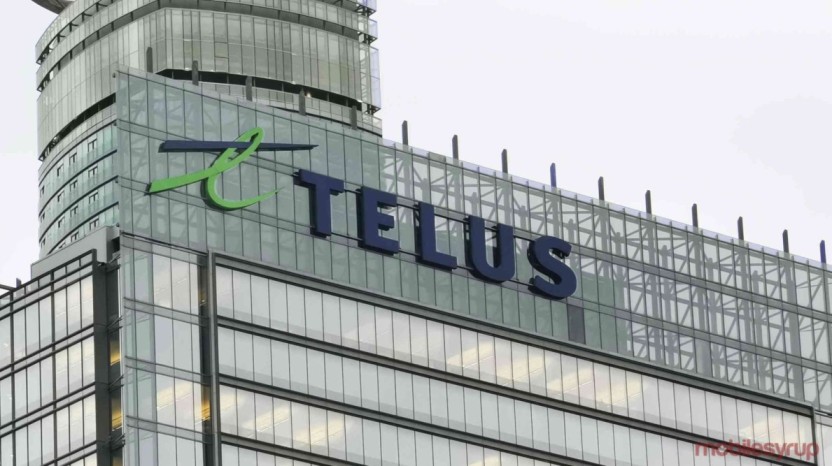
Telus Communications
Image Source: en.wikipedia.org

Telus, in 2005, merged its mobility department, Telus Mobility, with Telus Communications, resulting in the integration of the wireline and wireless segments of the company.  In 2009, the company launched a 3G+ wireless network, becoming the largest 3G+ network in Canada. Telus Communications won the most outstanding philanthropic corporation with a global award in 2010.

Telus Health launched an electronic service (first of its kind in Canada) for people to track their health in 2010. The next year, Telus launched the 4G+ wireless network in Canada, offering up to 42 Mbps downloading speed. Telus also became the first company to offer the Facebook app on its TV service in 2012. The same year, it launched the 4G LTE wireless network in 14 metropolitan cities in Canada.

Telus Communications Acquisitions

In June 2000, Telus acquired the market-leading bill integration firm CAG-TAMS. It also acquired the shares of GTE in Québec Téléphone (one of the oldest telecom companies in Quebec) in August 2000 and later renamed it to Telus Québec on April 2, 2001. On 25 October 2000, Telus acquired Clearnet to launch a wireless service in Canada. The next year Telus went on to acquire more companies, including Northwest Digital (NWD) Systems Inc., Columbus Group., PSINet’s Canadian operations and facilities, Daedalian Solutions Inc., Arqana Technologies Inc., and QuebecTel.

In the further years, Telus made some other acquisitions, including  ADCOM, Inc. (2004), Assurent Secure Technologies (2006), Emergis (2008), Black’s Photography (2009), Public Mobile (2013), etc.

The CEO: Darren Entwistle

Darren Entwistle is the CEO and the President of Telus Communications. He is a native of Montreal, Quebec, and completed his high school education at a local public school. Darren has a Bachelor’s degree in Economics (Honours) from Concordia University and an MBA (Finance) from the McGill University Desautels Faculty of Management. He also has got a diploma in Network Engineering from the University of Toronto.

Darren joined Telus in 2000, and before that, he had been with companies like George Weston Ltd., the Business Council of Canada, TD Bank Financial Group, McGill University Board of Governors, and Bell Cablemedia Plc. Bell Cablemedia Plc is a UK-based company, where Darren served as an executive. Being with Telus for the past 20 years has made Darren the longest-serving CEO amongst all the telecommunication companies worldwide.

BOE Technology

BOE Technology – The Largest Display Panel Maker in the World.

BOE Technology Group Co., Ltd., also known as Jingdongfang, is a China-based electronics and semiconductor company with its headquarters located in Beijing, China. Being an electronics company, BOE Technology exactly knows how much effort it takes to stay strong among great competition from its peers. And, it is tougher to be popular and stay relevant, when the big names from foreign countries are your competitors. BOE Technology is one of the biggest examples of how local products can also be the best, and how buying local products can help the country’s economy, too.

About more than twenty years ago, the company was struggling to make its mark in the industry as the competition was tough. But with constant efforts, BOE Technology is now known on the international level, and companies like Apple Inc. are its permanent customers.

About BOE Technology

BOE Technology is among the leading electronics company in China and expertise in electronics health care, the internet of things, and photovoltaics, such that it produces products like interface devices, smart medicine, smart IoT systems as well as engineering integration-related products. BOE Technology is also famous as the largest supplier of LCD, OED, and flexible/foldable displays. The company also manufactures and sells fingerprint sensors, optoelectronic sensors, and solar panels.

BOE Technology
Image Source: upload.wikimedia.org

BOE Technology has expanded overseas to 19 countries and has over 65,000 people working for it. Looking at the 2018 records, the company earned revenues worth US$14.56 billion and values at US$18 billion. SES-imagotag and Varitronix are its major subsidiaries.

The Founding of BOE Technology

Wang Dongsheng, who was an accountant, founded BOE Technology as Beijing Oriental Electronics Group Co., Ltd in April 1993. He opened the company by overtaking an ailing vacuum tube factory and raising money from his subordinates. Though, in the beginning, the founder had to sell mouthwash to generate extra income, the company soon was manufacturing and selling the products it intended to, i.e. TV and monitor displays.

The sudden rise in revenues helped BOE Technology list the B shares on the Shenzhen Stock Exchange, in 1997. The company was then renamed BOE Technology Group Co., Ltd. in 2001. It made its first acquisition in the same year, where it bought the LCD and OLED businesses of SK Hynix for US$22.5 million. In the next two years, the company also bought the flat-panel display business of the same company. In 2009, BOE Technology also acquired the Taipei-based Display Research Center and AIO Manufacturing Plant of Suzhou Gaochuang Electronics.

BOE Technology put the foundation of the BOE Energy Technology Co., Ltd and entered the photovoltaic business in 2009. The company expanded overseas when it opened its branch and an R&D center in Tokyo, Japan (2011) and Santa Clara in Silicon Valley, California (2012). In 2015 and 2016, BOE Technology opened offices in Frankfurt Germany, and New Delhi, India, respectively. In the following years, the company expanded to Dubai, Brazil, Indonesia, South Africa, etc.

The company partnered with the Universal Display Corporation for the supplies of phosphorescent OLED materials. It also entered into a joint venture with Kopin Corporation and Olightek to extend its operations in micro-displays manufacturing. The same year, BOE Technology became the world’s largest LCD TV and monitor producer. As of 2019, the company holds second place on shipping the smartphone OLED panel, Huawei and Samsung being few of its customers.

Acquisitions

In the past decade, BOE Technology has made some of the biggest acquisitions, which have contributed to the growth of the company. K-Tronics (2010), OASIS International Hospital (2015), Varitronix (2016),  SES-imagotag (2018) are some of the BOE’s acquired companies.

The Founder: Wang Dongsheng

Wang Dongsheng founded BOE Technology around 26 years ago at the age of 35. He was working as an accountant in a state-owned vacuum-tube factory, which he took over later to found BOE Technology. Before starting the company, he sold mouthwash for extra income and borrowed money from his subordinates from his former company to start the business. Today, after 26 years, after all the efforts of Dongsheng, BOE Technology is not only the largest electronics and semiconductor company in China but is among the largest LCD-LED suppliers in the world.

HCL Technologies

HCL Technologies – The Foundation Stone of the Pillar Of Indian IT Industry

HCL Technologies is an Indian IT services and consulting company, the foundation stone of the Indian IT industry and way ahead of its time. Shiv Nadar founded HCL 44 years ago on 11 August 1976, with the idea of making computer hardware easily accessible to Indian consumers and HCL a common household brand. HCL Technologies is a multinational company with its headquarters located in Noida, India. The company specializes in software development, computer hardware manufacturing, outsourcing, consulting managed services, etc.

About HCL Technologies

HCL Technologies has a huge client base across the world, over 250 Fortune 500 companies being some of them. The company has expanded its operations overseas and has its offices located in countries like the US, the UK, France, Germany, etc., and over 160,00 people are working for it globally. The fields the company works in include banking, capital market, defense, aerospace, healthcare, hi-tech, insurance, media and entertainment, telecom, travel, etc. As of 2021, the company made revenues worth US$11 billion and owns total equity worth US$8.3 billion.

HCL Technologies
Image Source: glassdoor.co.in

The Back Story of HCL Technologies

In 1976, Shiv Nadar lead a team of five people, all colleagues from  Delhi Cloth & General Mills, to establish a teledigital calculators selling company named Microcomp Limited. The sole reason behind founding the company was to achieve their dream of starting up a computer manufacturing and selling company and raise money for it. On 11 August the same year, Nadar renamed Microcomp Limited to Hindustan Computer Limited.

Yet again, another name change took place, when in 1991 the founder built another company to provide technology development services with the name HCL Overseas Limited. This was the beginning of a new chapter as the new company was doing exactly what the founders had dreamt of, making and selling computers. In 1992, the company received the certificate of commencement of business, and the company started its journey as an authorized computer manufacturer and seller. The company became HCL Consulting Limited in 1994.             

In 1999 the R&D department of the HCL group became HCL Technologies Limited. HCL Technologies, HCL Infosystems, HCL Healthcare, HCL TalentCare are the four divisions of HCL Corporation. HCL Technologies is specifically into software services, business process outsourcing, and infrastructure services. The company is credited as the pioneer of the development and growth of the IT and computer industry in India.

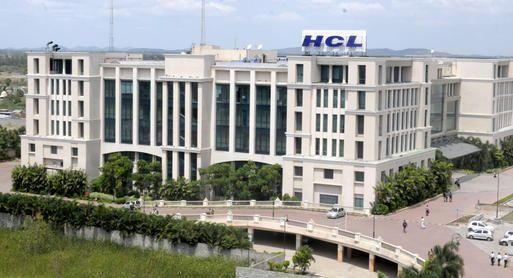
HCL Technologies
Image SOurce: assets.entrepreneur.com

Though during the initial years of the company, Hindustan Computer Limited was selling teledigital calculators, the company’s focus was entirely on building personal computers and related hardware. It developed an indigenous microcomputer in 1978, and in 1980, the company opened its first international company branch in Singapore to sell IT hardware, with the name Far East Computers.

In 1983, it also introduced a networking OS and client-server architecture. During the 90s, the company targeted the software solutions development for its US and European clients as well as the APAC market. On 10 November 1999, HCL had its first IPO, and it also established a development center in Chennai in 2000.

Acquisitions

Starting from the year 2000, HCL has made some big acquisitions in the field of service outsourcing, telecommunication services, SAP, CRM-consulting, automation, IT and engineering service, etc. It acquired Gulf Computers Inc. in 2002. Between 2008 to 2009, the company made acquisitions like Capital Stream Inc., Liberata Financial Service, Control Point Solutions, Inc., Axon Group Plc. and UCS Group’s Enterprise Solutions SAP Practice.

In 2015, the company acquired Concept to Silicon Systems and PowerObjects, followed by the acquisition of Geometric Ltd (2016), Part of Volvo IT (2016), Butler America Aerospace  (2017), H&D International Group (2018), Actian (2018), and Sankalp Semiconductor (2019), etc.

The Founder: Shiv Nadar

Shiv Nadar is a famous Indian businessman who founded HCL Technologies in 1976. He is known for his innovative approach to business and is credited for his contribution to the growth of the IT industry in India. He is one of the richest people in India and has won one of the biggest honors of India, Padma Bhushan, for his efforts in the development of the IT industry in India.

Nadar was born on 14 July 1945, in Moolaipozhi, Tamil Nadu, India. During his childhood, he switched between multiple schools and completed his high school education at St. Joseph Boys Higher Secondary School, Trichy. He earned a pre-university degree in the American College, Madurai, and completed a bachelor’s degree in Electrical and Electronics Engineering from PSG College of Technology, Coimbatore.

Nadar started his career at Walchand group’s College of Engineering, Pune (COEP), in 1967, but left the job to found his own company, which today is known as HCL Technologies.

Teradata Corporation

Teradata Corporation – A Data Analytics company formed by the significant contributions from Caltech and Citibank.

Back in the late 1970s, the researchers in the California Institute of Technology along with an advanced tech group of Citibank collaborated to establish Teradata. Teradata Corporation is a company in the data warehousing sector that offers database analytics software and services as its main products. The three main services provided by the company are business analytics, cloud products, and consulting. Teradata’s headquarters is based in San Diego, the US, and its market is expanded to America (North and Latin), Asia, Europe, the Middle East, and Africa. The idea behind Teradata was born more than forty years ago, so let’s have a look at how the company was built.

Founding History of Teradata Corporation

From 1976, the researchers of Caltech and an advanced group of Citibank were working together to develop an unparalleled database management system. The team finally made a breakthrough in 1979 when they made a database management system capable of parallel processing with multiprocessors for design support. The company was launched in July 1979 named Teradata as the system had the ability to manage terabytes of data. A group of seven people opened the office of the company for the first time in a garage at Brentwood, CA. After struggling for a year, Teradata gathered a fund of $150,000 which helped the company make progress.

Teradata Corporation
Image Source: teradata.com

Growth of Teradata Corporation

After one year of establishment, the company successfully raised $2.5 million and with this funding hired the R&D team. After three years of research and testing its products, the company offered its first beta system to Wells Fargo in 1983. The company was making an impressive amount of profit and it was named “Product of the Year” by Fortune magazine in 1986. Next year, the company filed an IPO and it is traded in the NYSE as TDC. In 1989, the company went into a joint venture with NCR Corporation to build powerful database computers. After a couple of years, AT&T acquired NCR which in turn acquired Teradata Corporation in the same year.

The company made a great achievement in 1992 when it offered a database system of over 1 terabyte at Wal-Mart. In 1997, NCR was spun off from AT&T and thus it became an independent company once again. This year Teradata received two prestigious awards, namely, The Data Warehouse Institute’s Best Practices Award and DBMS Readers’ Choice Award.

Beginning of a New Era

In 2000, Teradata built its first enterprise-class application called Value Analyzer. This software was built so that the customer can check thorough profitability measurement and the first customer who used this application was the Royal Bank of Canada. The same year, Teradata acquired Stirling Douglas Group of Canada and added Demand Chain Management software to the list of its enterprise applications. Next year, the company introduced another new solution called Financial Management which included both hardware and software services.

In 2002, Teradata launched Teradata Warehouse 7.0 which extended the company’s decision-making just beyond corporate management. In 2003, more than 120 companies switched from Oracle to Teradata as the company launched the Oracle-to-Teradata Migration Program. A huge network was built by the company which involved academic institutes as well. The next year witnessed Teradata’s partnership with SAP and also with Siebel Systems to build integrated and optimized products.

In 2005, the company brought the Linux operating system to its enterprise-class data and next year launched the Enterprise Master Data Management (MDM) solution. With every step Teradata took into the realms of the management system, it delivered products with better performance, easy enterprise integration, etc. In 2007, Teradata and NCR became two separate entities, and the former established a partnership with Agilent Technologies.

Present Day

In 2010, the company was named as one of the world’s most ethical companies by the Ethisphere Institute highlighting the quality of the company in doing ethical business. In 2011, the company acquired Aprimo and launched many new brands. The company has recently partnered with Google Cloud and also joined the NVIDIA partner program to take the company forward in terms of AI and Deep Learning as well.

The company is currently under the leadership of Steve McMillan (President and CEO of Teradata since 2020). He worked at F5 Networks before joining Teradata and also worked with Oracle and IBM.

ZTE Corporation

ZTE Corporation – One of the Largest Smartphone Manufacturing and Telecommunication Company.

ZTE Corporation is a Chinese telecommunication company, with its headquarters located in South Shenzhen, Guangdong. It is a 36 years old company, which is partially owned by the Chinese government. The company is counted among one of the leading telecom companies in China and is actively working overseas to expand its boundaries.

Hou Weigui founded ZTE Corporation in 1985 as Zhongxing Semiconductor Co., Ltd. Today the company is known as the biggest manufactures of mobile phones, smartphones, tablets, computer hardware, etc. It is also a leading software service provider to global telecommunications service companies and enterprises. The company is operating worldwide, and over 68000 people are working for it. As of 2019, the company made revenues worth  CN¥90.740 billion/S $13.2 billion, and it owned assets worth CN¥141.202 billion. ZTE trades on the Shenzhen and Hong Kong stock exchanges.

The Founding of ZTE Corporation

A group of investors, including Hou Weigui, from the Ministry of Aerospace Industry of the People’s Republic of China, started Corporation ZTE as Zhongxing Semiconductor Co., Ltd in 1985. The company name was changed to Zhongxing New Telecommunications Equipment Co. Ltd when it also started to build telecom equipment and had some of its shares owned by the government. ZTE had its first IPO  on the Shenzhen stock exchange in 1997.

ZTE Corporation
Image Source: en.wikipedia.org

Till 2004, ZTE was running within the country, but in December 2004, it stepped out of the state and traded on the Hong Kong stock exchange. In 2006, the company shipped 40% of its telecom equipment overseas, leading to a further international expansion. Canadian state telecommunications company Telus, UK’s Vodafone, Spain’s Telefónica, and the Australian Telstra are few of the first international customers of ZTE. With its new customers, the company also entered into a Wi-Fi Alliance in the same year. By 2008, the company had engaged with customers in 140 countries for its CDMA equipment.

In 2009, ZTE was the third-largest GSM telecom equipment seller in the world. The company is also credited to manufacture the world’s first smartphone with dual GPS/GLONASS navigation. The smartphone was called MTS 945. As of 2011, the company held 7% of the major LTE patents. As of 2012 and 2013, ZTE was the fourth-largest smartphone manufacturer in the world. In 2014, the company partnered with Microsoft to launch Windows smartphones in Spain.

ZTE along with having multiple manufacturing units has its 13 R&D centers located in various countries, including the USA, Sweden, and Korea. The company carries out the R&D work in partnership with companies like IBM, Intel, Microsoft, and Qualcomm.

Products and Services

ZTE is one of the largest smartphone manufacturers (4th largest as of 2012 and 2013). The company also manufactures Tablets and computer hardware. Recently it launched a two-screen smartphone named Axon M, which could run two applications separately on both screens at the same time. Apart from smartphones, the company also develop Hotspot equipment, network operator equipment, network nodes, and network elements, etc. GGSN, PGW, PDSN, ZTE ZXR10-Series, MPLS, and legacy WAP are some of the core routing and core networking equipment made by ZTE. ZTE is also active as a software as well as a telecommunications service provider in China and other countries.

ZTE Corporation Subsidiaries

ZTE is operational in countries like the US, India, Korea, Spain, Germany, Australia, Singapore, etc. The company has not only opened offices in those countries, but it has also made some acquisitions and held subsidiaries there. ZTESoft, Nubia Technology, Zonergy, Netaş Telekomünikasyon A.Ş are the names of some of its international subsidiaries.

ZTE Corporation
Image Source: upload.wikimedia.org

The Chairman at ZTE Corporation

Yin Yimin is the Chairman at ZTE, who replaced Zhao Xianming in 2017. Before becoming the Chairman of ZTE, Yimin was serving the company as the President. Yimin has been with ZTE for the past 30 years. He joined the company in 1991, and since then, he has been appointed to different prime positions in ZTE. He has worked as an executive director for the company for 20 years. He was also the leader of ZTE Corporation for its product development and marketing between 2004 and 2010. He is also responsible for setting up the Shenzhen ZTE Venture Capital Fund Management Co., Ltd in 2010.