Your Tech Story

Tech News

Features of Freshly Launched Samsung Galaxy Note 9
Samsung Galaxy Note 9
Image Source: theverge.com

After the launch of Android Pie on 7 August 2018, now Samsung has come up with the launch of its flagship Smartphone, addition to its Samsung Galaxy 9 family. The smartphone was launched at the Barclays Center in New York. The online booking of the phone is already started and will be available in the market from the 24 August 2018. It is the last member of the Samsung Galaxy 9 family and costlier than the previous editions of the Samsung phones. The cost for the 128GB / 6GB RAM model will start from $999 (Appro. INR 68000) and 512GB / 8GB RAM version for $1,250. (Appro. INR 86000) Yes, you read it right. I don’t know what attracted your attention more the price or space, but both are too high. Along with the increased space, Samsung has launched its new baby with the following features added to it:

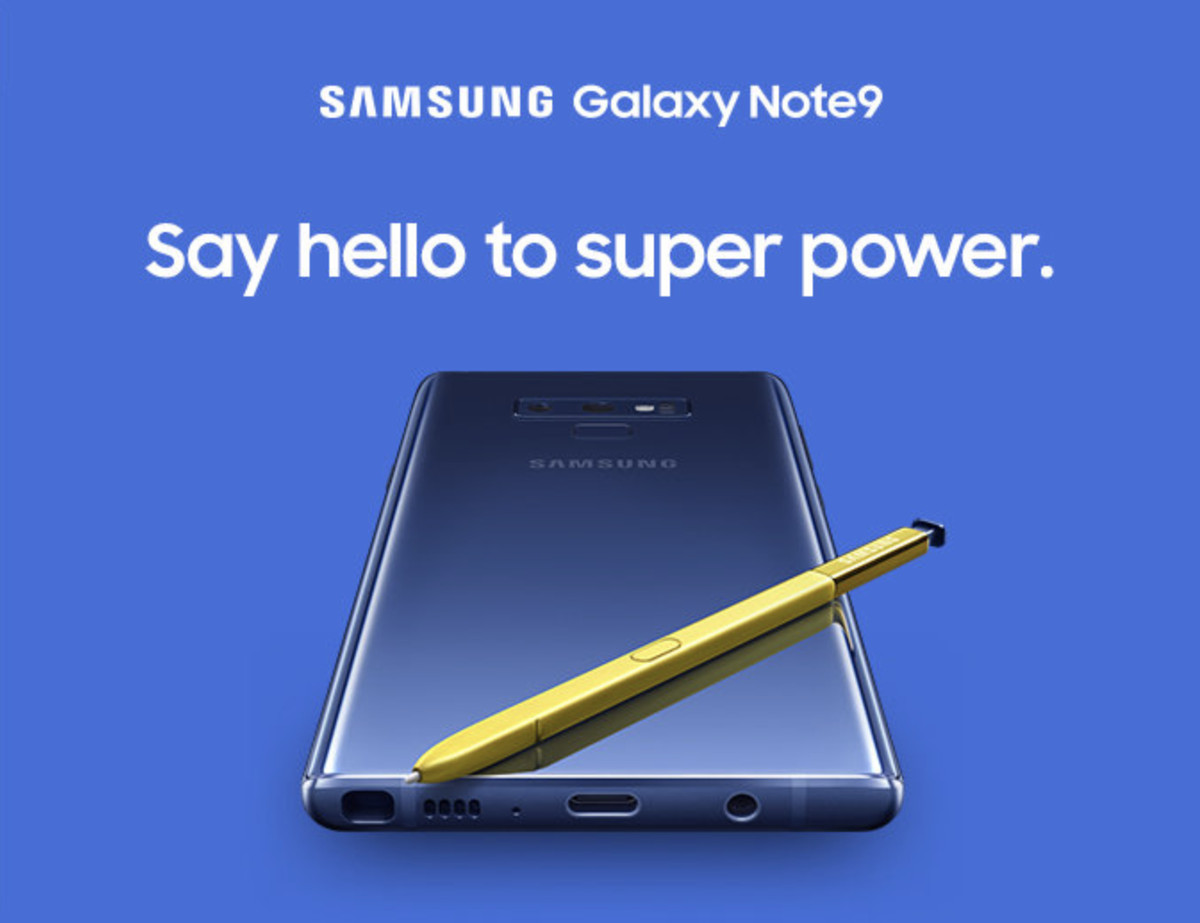
Look, Size & Color: The new Samsung Galaxy Note 9 is quite a colourful range including Midnight Black, Metallic Copper, Ocean Blue, and Lavender Purple. The famous S Pens of the Note series are of the same colours as the phone, except the Ocean Blue phone is having a yellow stylus. Now talking about the look of the phone, likewise, Note 9 is no different than the Galaxy 8 and 9 series which is a disappointment, but, the size of this phone is little bigger comparatively.

Camera Added With New AI Features: Except the new AI features embedded in it, its camera is no different from the Note S9 camera. It still has the 8-megapixel selfie camera, with the dual 12-megapixel camera on the back. But AI has enabled it to detect what you actually need to capture and bring that thing into focus. It has also got a Flaw Detection feature that prompts when there is a flaw in the captured image, like the blink of the eye. Also, it has got a scene optimizer to adjust the white balance, saturation and contrast. Also, it can identify 20 scenarios like snowflakes, fire, food, pets, sunsets, plants, cityscapes, etc.

Bluetooth Stylus: The Note 9 SPen is all similar to the other SPens of the Note series with an addition of Bluetooth to it. With the help of the Bluetooth, the Stylus is turned into a remote control which can be used to click pictures, slide the presentations, play/pause your music apps and also, you can use it to open any app by creating a shortcut for the apps.

DeX software embedded to Note 9: Now this time the DeX software resides inside the Note 9 phone itself, so you can connect the phone to monitor independently using a USB, for the desktop-experience without a dock.

Samsung has claimed to replace the laptops with their Galaxy Note 9 by including with a high-performance processor, Qualcomm Snapdragon 835 processor and battery is also bigger than before i.e. 4,000-mAh. The position of its Fingerprint reader has also moved to below the camera whereas it was on the side of the camera in the S8 and S9 series. Samsung Galaxy Note 9 will be the last of its series as Samsung has announced the launch of Galaxy S10 by the month of March next year. Till then Note 9 will be their latest innovation of 2018. Though it is on the high end due to its price maybe it will be able to grab customers with its new features.

Android 9 Pie – The Latest Version of Android Hitting the Market

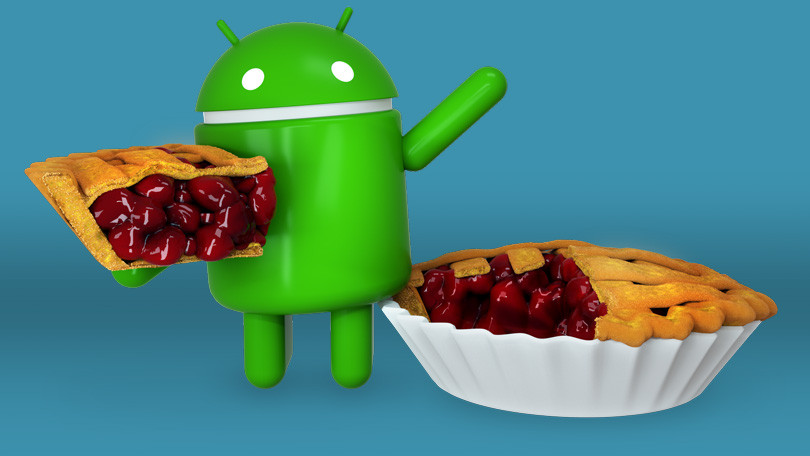
After Oreo, Google is back with its another desert, I mean the latest edition of Android – Android 9 Pie. It was launched on Tuesday and, is already rolling out on Google’s Pixel smartphones and will be available for most Android smartphones by the end of the year. This new version of Android is powered by artificial intelligence and, has come with many additional features that claim to help the users to reduce their smartphone addiction to an extent. Let’s see what Google has brought for us with its latest Android version:

1) App Dashboard: The new features of the Android 9, include an App Dashboard, showing various apps, that you have used, from most to least, the whole day long. The dashboard can also tell the number of times you have unlocked your phone, which can be an eye-opener for many, as people spent a lot of time on their smartphones these days.

2) Digital Well Being: The Digital Wellbeing, display a multicoloured circle, each colour representing a particular app, that you use on the daily basis, and between the circle, the total time, the phone screen is opened. You can tap on the colours, to further see the details about the app and set a limit for its usage.

Android Pie
Image Source: Image Source: Pcmag

3) App Timer: App Timer is another Android feature that will help to decrease your mobile usage. The timer is available on the App Dashboard, and you can set a time limit on a particular app so that when you have reached the limit, the app will grey out and you will not be able to start it again until the next set time.

4) Adaptive Battery: Android has come with another feature of saving the battery that works according to your app preferences. The earlier versions of Android also had a similar feature but in this one, with the aid of artificial intelligence, the phone will adapt your app usage practices and will divide the battery control according to the most to least used apps. This will ensure that the apps you need will use the battery.

5) App Actions: App Action also based on your daily app habits and creates shortcuts for your most used apps and activities you do on an app. It will result in the quick launch for even your daily activity inside a particular app.

Along with all the above features it has got a few more features like Gesture, Wind Down, Do Not Disturb, Adaptive Brightness, New Navigation System, etc. Most of them are using the artificial intelligence for making the smartphones more intimate part of our lives so that it can work according to our habits and can help us reduce our Smartphone addiction. Also by the end of the year, Google is going to add a few more features to Android Pie and Android Pie will be available for most of the Android users by the fall.

Get Your Dream Job With AI Driven Job Search Engine From GOOGLE

Finding a suitable job which does justice to your skill set and work experience is what everyone desires. And believe me, it’s getting harder with every passing day. Few vacancies and so many qualified candidates, you got to act fast, else, another opportunity will slip through your fingers. Although, we have so many job portals to apparently make our hunt for jobs easier, but even checking all the listings on every such site is in itself quite tedious. Not anymore! Google, as always, has something which will surely bring us all some relief.

On 20th June 2017, Google launched an AI (Artificial Intelligence) driven job search aid, integrated within the search engine itself, which is going to virtually combine together the results from major job search boards like LinkedIn, WayUp, Direct Employers, Monster, CareerBuilder, Facebook for your ease. With this all new feature, you no more need to look into all the sites separately. Just a simple Google search and you got the most relevant job postings within a second or less. Not just the results from other sites, Google is also going to show you the jobs posted on a company’s official wall.

You just need to type a simple query like “jobs near me,” “writing jobs”, “jobs in ABC company” etc. into the search bar and you will be redirected to the widget showing the most relevant postings matching your keywords. It is AI’s job to identify that you are looking for jobs and thus, need the help of Google’s job search feature and it won’t stop there. Within the widget you will be provided with different categories and choices like title, date of posting, location etc. in order to get a better idea of what you are actually looking for. Once that’s done, you can even save that final query and Google will make sure to remind you if there is something new matching your description of job requirement.

Zakrasek, Google’s product manager for this project, told TechCrunch “Finding a job is like dating, each person has a unique set of preferences and it only takes one person to fill this job.”

In order to be completely reliable, Google has to filter through duplicate results and show only those which provide complete and true job bio. And that’s what they are working on. Moreover, Google showed no interest in becoming a sort of job portal in itself. They are an add company and that’s what this feature will be doing without getting in way of other job portals.

“We want the players in the ecosystem to be more successful. Anything beyond that is not in Google’s wheelhouse” Zakrasek added

For now, the feature is only available in US  and most likely will be rolled out to other countries in phases.


MobiKwik to take on Paytm with new funding round

Paytm, India’s leading wallet and payments company now backed by high-profile investors like Alibaba and Softbank, has always been on the top when it comes to digital payment market in India. Call it the first mover’s advantage at work. On top of that, last year’s demonetization came like a sweet spring for the whole online transaction business in India. Paytm was the biggest gainer of demonetization among all wallet businesses in India. But, there is another wallet and payments solution that is growing quickly, MobiKwik.

MobiKwik- the brand which focuses entirely on mobile payments and stands second to Paytm in India- is pretty confident that the company can convert their unidirectional approach towards online payments into an advantage when competition is focusing more towards diversifying into other fields like e-commerce and banking.

Recently, in a talk with TechCrunch, Co-founder Upasana Taku confirmed that they are currently in a negotiation for an investment of $100 million-$150 million which is going to come at a valuation of $1 billion. Taku declined, when asked about the major names her company is going to receive funds from, but made it clear that there is only one major strategic investor involved along with some financial institutions. Expect the round to be closed in next couple of months, putting the company into much valued tech unicorns club.

Well, that’s a lot of money to put into a strategy and we hope MobiKwik has a polished one as they are going against Paytm; top of the league. As of now, plan is to invest around $45 million on expanding the brand’s presence and offices to new users and merchants.

Paytm is pushing its business into e-commerce, influenced by Alibaba’s presence. That’s not it, they are stepping into digital banking as well and if the sources are correct, there is yet another project which is going to launch soon and drives heavily from Chinese market.

“It is reneging on payments while it is pushing bank and e-commerce services. Something’s got to give, it is not possible to do justice on 10 different verticals.” She told to Techcrunch. She also quoted Ola money’s example to justify her statement. “I don’t see Ola Money accepted in many places”

Upasana Taku  also opened up about the company’s future goal of providing financial services like insurance, loans, and investing alongside partners, all via co-branded wallet app. Today digital payment accounts for just 15 percent of the total amount of $1.5 trillion in India and she believes that number can increase up to even 70 percent in next few years.

The Impact Of WannaCry Or WannaCrypto Ransomware

WannaCry or WannaCrypto ransomware attack took the world by storm this year taking down more than 230,000 computers within a day! The attack was reported on 12th May, 2017 and since then, the malware has spread globally affecting organizations, banks and services all over the world. NHS or British National Health Service has been compromised due to the attack. They are not even able to accept patients or perform operations due to the damage done to their systems. Starting with NHS the attack didn’t stop there. Other companies affected by the attacks included the Spanish telecommunications company, Telefonica, Gas Natural and electricity provider Iberdrola. Add FedEx in the U.S. and Renault in France to the list as well.

Those who still don’t know, Ransomware is a malware that causes data unavailability either by completely locking a computer or encrypting a part of the data storage. All this in order to pull a ransom out of your pockets in exchange of providing the access again. But, there is no guarantee whatsoever that you are going to get your confidential data back once you pay the money, which makes it even more haunting.

WannaCry affects PCs in a similar fashion. When it successfully hacks the storage, that is within seconds, a pop up comes up demanding a ransom of $300 in Bitcoins to restore access. The payment has to be done within three days of the attack or the amount doubles. That said, if one fails to pay even in a week’s time, data is permanently deleted, according to the pop up.

Recently came into light, WannaCry was first reported in March being leaked from NSA (National Security Agency), USA. It utilizes a flaw in Microsoft OS (named EternalBlue) discovered by NSA which hackers converted into a ransomware. Although, Microsoft was quick enough to release the patches for Windows OS, even for the outdated ones to provide overall safety, within the month of March itself, but not everyone was aware of what’s coming and didn’t provide the much-needed update to their system.

According to Microsoft’s president and chief legal officer Brad Smith, government agencies are to blame for the massive cyber attack. He clearly spoke his heart out through a post on Microsoft’s website about it. He wrote:

Finally, this attack provides yet another example of why the stockpiling of vulnerabilities by governments is such a problem. This is an emerging pattern in 2017. We have seen vulnerabilities stored by the CIA show up on WikiLeaks, and now this vulnerability stolen from the NSA has affected customers around the world. Repeatedly, exploits in the hands of governments have leaked into the public domain and caused widespread damage. An equivalent scenario with conventional weapons would be the U.S. military having some of its Tomahawk missiles stolen. And this most recent attack represents a completely unintended but disconcerting link between the two most serious forms of cyber security threats in the world today – nation-state action and organized criminal action.

As of now, a so called “kill switch” has been discovered accidentally, by a cyber security specialist, which has halted the spread, but that’s not the end in any sense. Ransomware attacks form a really good business by the way (if you got the skills) and people are willing to pay for their private data. Considering how convenient it has become to launch an attack like that in this era of internet, there will be many more ransomware attacks in near future. Coming to prevention, it’s the same for any virus attack and most probably you know what you have to do to stay protected. Don’t be lazy! Take the measures and remain safe.

Facebook’s Express Wi-fi; All you need to know

Everyone loves free Wi-Fi. Internet giants like Facebook and Google has been pushing for internet penetration around the world for many years.

Facebook started internet.org in 2013 to get about 4.5 billion unconnected people on internet. Since then, the company is moving straight towards its goal of bringing more population online with services like Free Basics and Facebook’s Express Wi-Fi. These programs are designed to provide fast, reliable and affordable internet to people from developing or underdeveloped nations, thus tempting them to at least try the basic online services including entertainment, study material, online booking, e-commerce etc. When it comes to developing nations, India is always there in top few. But even in India, out of 1.3 billion, only around 400 million people are online; says a report from Telecom Regulatory authority of India (TRAI).

Facebook’s Express Wi-Fi comes as a flexible solution to poor connectivity problem of India by taking help from local entrepreneurs in establishing Wi-fi hotspots in their localities. The program started testing with various ISPs (Internet Service Providers) in India way back in 2015 and after 2 years of development, there are in total 700 Express hotspots at service spread over four states- Uttarakhand, Rajasthan, Gujrat and Meghalaya.

Just Few days back, Facebook signed a huge deal with Airtel to plant additional 20,000 hotspots which is going to spread Express Wi-fi’s umbrella over other states in the country.  Although 4G network is growing really fast in India, but it will take years to become a mainstream option. Till then, Express Wi-fi will serve the needs of fast and affordable internet without any need of 4G device.  Munish Seth, head of connectivity solutions at Facebook, said about country’s connectivity problem.

One can say Wi-fi is the easiest possible way to access high speed internet. You don’t need a 4G sim card, or a LAN connection. Just you and your device supporting Wi-fi feature will do the job. The initiative will also bring new earning medium for local retailers who can resell internet to get a steady income stream. Moreover, Facebook is providing all the necessary software and data analytics free of cost along with giving full control of data prices to the entrepreneur.

“Anyone can access the Express Wi-fi network by signing up with an Express Wi-fi retailer and purchasing a daily, weekly or monthly data pack at a rate set by the local service provider. They will then be able to connect to the Express Wi-fi hotspot, register/ create an account, login and start browsing or use any app on the internet”. Seth further added explaining the whole process of getting internet over Express Wi-fi.

Free Basics was another such initiative from Facebook which didn’t get a green signal from TRAI for violating net neutrality. Hopefully, Express Wi-fi doesn’t face any issues in future and runs smoothly. As of now, besides India, the service is live in Kenya, Tanzania, Nigeria And Indonesia.