Your Tech Story

Tech News

Social Media

The Conservatives Vs. Social Media Biases

Social media has evolved to become an essential tool for the younger generation. So much so that a large percentage of the world’s population seems to be on some kind of social media platform. Generally regarded as a platform to express themselves, social media comes with a fair share of rules. For instance, these networking sites can remove user accounts and take down posts for a multitude of reasons. For example, these platforms can ban users and their posts if they post anything offensive, off-color, or racist. However, users do not seem to have the same power as most cases against Facebook and Twitter fizzle out. Here’s a look at how conservative social media biases affect the community and how the judiciary handles them.

Loomer and her Rights

People keep filing lawsuits against social media sites even when the precedence is against them. Just yesterday, another popular plea was shot down by the judiciary, and yet the people don’t seem to be stopping. So what makes people file such suits against these large corporations? A court in Washington rejected a lawsuit filed by a conservative activist, Laura Loomer. Twitter banned Loomer for her anti-Muslim tweets, and she retaliated by chaining herself to Twitter’s headquarters as a sign of protest. Loomer, in her plea, argued that corporations like Facebook, Google, and Twitter work together to stifle conservative content. She believes that this is a direct violating of her First Amendment rights. However, the court disagreed and threw her plea right out, without even allowing it to go up the legal chain.

The President Agrees

Recently, President Donald Trump has also been blasting Twitter by suggesting that it has a bias. Trump even went as far as to threaten Twitter because it fact-checked his tweets. He issued a warning stating that he would find some way to actively regulate the microblogging site, which tries to silence conservative voices. Anti-bias lawsuits wherein people accuse social media sites of discriminating against them due to their stands on issues are quickly becoming popular. However, courts around the world have repeatedly defended the rights of such sites to ban as per their regulations. Here is a look at some of the most famous cases.

Charles C Vs. Twitter

Conservative activist Charles Johnson has filed multiple lawsuits in his career, with the most famous being one against Twitter. In this plea, he claimed that Twitter of violating his rights for free speech by banning him in 2015. However, Twitter made it clear that Johnson had violated its rules by posting threats. The court ruled in favour of Twitter by stating that it was Twitter’s right to terminate a user’s account.

Jared Taylor Vs. Twitter

Far-right activist and nationalist Jared Taylor, sued Twitter for discriminating against him when they banned him in 2018. However, Twitter stated that they did so due to his racist views on topics and inflammatory posts. While the Judge in California allowed the case to go ahead, the appeals court said it doesn’t hold as Twitter has the right to do so as per Section 230 of the Communications Decency Act.

Federal Agency of News Vs. Facebook

Federal Agency of News, which has ties to the Russian Internet Research Agency filed a suit against Facebook for removing its page in 2016. Facebook did a clean-up in 2016, which removed many propaganda pages, such as that of FAN. FAN sued Facebook for a breach of contract, and Judge Lucy Koh responded by striking it down, once in 2019 and again a year later.

Craig Brittain Vs. Twitter

Commonly regarded as Revenge Porn King, Craig Brittain, filed a suit against Twitter for banning him. He had run for a Senate seat in Arizona and filed a suit against Twitter for violating his rights and causing him emotional stress. However, the court quickly threw out the case as it didn’t have enough points.

Prager University Vs. Google

Conservative group Prager University filed a bias suit against Google in 2017, because they believed YouTube had restricted access to their videos. Much like Lommer, PragerU stated that Google had violated the First Amendment and the Lanham Act as a result of false advertising. However, in 2018, Judge Lucy Koh dismissed the case as Google was a private entity with the power to regulate its own content. An appeals court upheld the decision in a couple of months back, putting to rest any chance they had.

Tulsi Gabbard Vs. Google

Democratic politician and Presidential candidate Tulsi Gabbard filed a lawsuit against Google in 2019 for suspending her ad account. She stated in her plea that the company was trying to undermine her efforts for the election. However, California Judge Stephen Wilson dismissed the case and stated that Google is not an agency run by the US government. He also used the PragerU case to set a legal precedent and concluded that Google is a private organisation.

As you can see, conservatives love filing suits against social media sites. However, why does this keep happening? Though some of these look like publicity stunts, others come from people genuinely confused regarding the law. As more and more politicians keep pushing misinformation about laws and internet regulations, this seems to be a trend that will be on the rise.

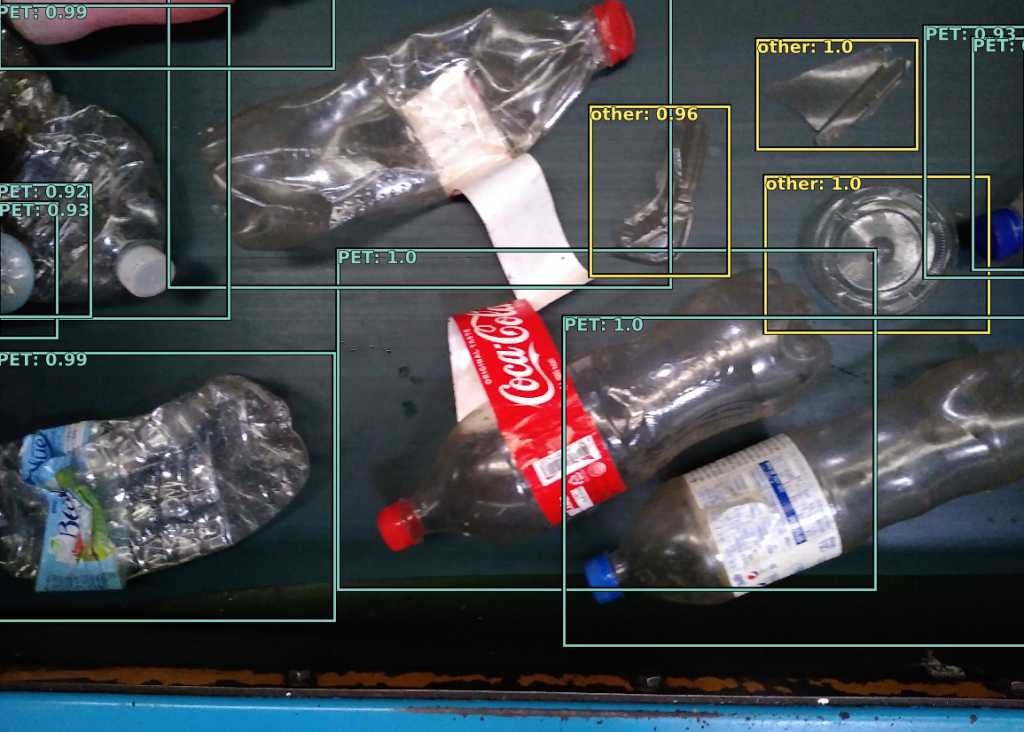
AI model - Detecting impurities in Plastics PET line

Greyparrot Raises Funding Against the Tide to Grow Their Recycling Technology

Greyparrot team
Image Source: greyparrot.ai

Startups around the world trying to raise money have been finding things to be difficult in the last few months. The massive drop in venture capital funding, due to the coronavirus pandemic is threatening a whole generation of entrepreneurs. Studies show that funding for startups in the UK has fallen by over 83% between March and May. Therefore, a large number of early-stage companies have been negatively affected. However, amidst such glim news, one UK-based company seems to be going against the tide. AI-based startup Greyparrot was able to raise £1.825m in seed funding round recently. Here’s a look at what that means for the company and its future.

Funding Woes

Greyparrot aims to revolutionise recycling by utilising waste recognition software. Their most recent round of funding was led by Speedinvest, and the extra cash will fuel Greyparrot’s expansion. Speedinvest is a prominent early-stage tech investor, and the seed round also saw the participation of Force Over Mass. Their AI technology will help bring a lot more transparency and automation into the world of recycling. The company, based in the UK, has been growing from strength to strength in recent years, working in tandem with waste management companies across Europe and Asia. Their ultimate aim is to help digitise waste flow systems to ensure maximum efficiency. There has been a growing demand for such technology due to inefficiencies in the current system of recycling, increasing environmental regulation, and pressures from consumers.

Founder Mikela Druckman Headshot - Colour
Image Source – greyparrot.ai

Digitising Recycling

The company raised £1.825m and will use this money to tackle the growing waste crisis. They plan on automating the process of waste management and recycling. The additional funding will help develop, scale, and optimise Greyparrot’s technology, helping them revolutionise the work of recycling through the use of artificial intelligence. Greyparrot’s software helps monitor and sort waste at large scales. Their initial product, an Automated Waste Monitoring System, is now helping recycling stations go through large amounts of scrap. The technology is deployed on conveyor belts helps measure large waste flows and automatically identify various types of waste. The system provides composition information and other analytics to increase recycling rates.

Need for Efficient Waste Management

Studies show that over 60% of the 2 billion tonnes of solid waste produced does not get recycled. Instead, it ends up in large dumps, landfills, and open spaces, causing environmental impact. As companies chase economic viability rather than economic prosperity, globally, the recycling rate is as low as 14%. Such a flat rate is mostly due to inefficient handling, high labour costs, and stringent quality requirements of recycled substances.

Greyparrot, which launched in 2019, has helped transform the waste management industry. In the UK, the year they were formed saw regulations such as the banning of waste exports to China come into play. This, coupled with the introduction of strict recycling goals and objectives, led to the transformation within the industry. Such laws brought forth an urgent need to recycle efficiently and locally. Furthermore, BBC’s TV series named ‘Blue Planet’ gave consumers concerns regarding climate change, which led to producers aiming for zero-waste-to-landfill goals. This made the environment conducive for a company like Greyparrot, which focuses on improving existing waste and recycling systems.

The company helps solve issues related to the lack of data by providing better insights that aid in transitioning to a more circular economy. The company has partnered with ACI, one of the world’s largest firms working in the recycling space. Greyparrot provides intelligent software that is highly-customisable and easily integrable with hardware available across the globe. Greyparrot will use the new funds to develop its product and scale globally to become the world’s most accurate waste management software.

youtube

YouTube is automatically deleting comments that can harm China’s Communist Party

The pandemic caused due to the novel coronavirus has exposed China’s political system to a rough situation. The spread of coronavirus from the Wuhan city of China has made people believe that the novel coronavirus might be a bio-weapon after all. In this vulnerable situation, the rage of people towards China has increased which led to posting, commenting, and sharing content that holds the nation guilty.

In the meantime, YouTube is automatically deleting the two phrase comments in the Chinese language that is insulting to the CCP. The platform and its users have witnessed that within seconds these two phrase remarks are automatically vanishing from the comment section.

Is it a glitch on the system?

YouTube in response to the automatic deletion of specific Chinese comments said that it is an error in the system. The company reported to The Verge that it is a glitch on the system and they are looking into it already. According to a YouTube spokesperson, the investigation has begun and confirmed that this act is certainly not a result of any changes in the moderation policy.

A few months back YouTube declared to make some changes in its community guidelines in response to the content related to coronavirus. The spread of conspiracy theories was increasing from this platform hence they decided to use automated filters to remove them. On 16th March 2020, YouTube declared that it will remove some contents immediately without any human review if found against the guidelines. So, the company, this time said that since they are more dependent on automated filters based on AI. So, it will delete even the positive comments including those two-phrase.

User says the problem existed for a long time now

But, many of the users have also reported that it is not a recent “error” or “practice” of YouTube. Evidence shows that YouTube is responsible for deleting such comments for the past six months or more. Many users raised this issue on the official help page of the platform demanding a proper explanation for this problem. But, the issue has finally got voice when Palmer Lucky, U.S. technologist tweeted about it. Thorough investigation shows that human right activist; Jennifer Zeng raised the same issue a few weeks back.

But, the question is why YouTube would do it intentionally given that the platform is currently blocked in China. So, deleting or establishing censorship to save the reputation of the current ruling party of China should be of no concern for Google. This is very disturbing for the users of every other nation and questions the integrity of the company.

The two phrase comments

According to the reports, the Google-owned-platform, YouTube is specifically deleting comments like “wu mao” and “communist bandit” written in Chinese. The former term is a slang often used to insult the Communist Party of China. The latter was mostly used when the Chinese Nationalist government ruled the nation. The slang “wu mao” means “50-cent party” which is often used for the paid internet users that direct any kind of criticism regarding CCP away from the discussion. People believe they are paid 50 Chinese cents per post and thus the name-calling.

The human rights activist, Jennifer Zeng who spotted this mishap also posted relevant screenshots. She commented on the same phrase three times and YouTube automatically deleted it within fifteen seconds. This is not the first time that Google is criticized for censoring content that goes against CCP. Project Dragonfly launched in 2018 is proof of it.

Also read: Steve Chen – Co-Founder of YouTube

Project Dragonfly

In August 2018, Google launched a censored version of its search engine in China. It was for more than a decade that citizens of China were barred from accessing Google’s search engine. Hence, this censored search engine, also known as Project dragonfly was maybe an attempt by the company to re-establish itself in the Chinese market. But, this act of Google’s raised many questions about public interest and transparency.

Google accepting even the strictest policies of China’s search engine rules questioned its moral principles. This act of Google’s received criticism not only from many politicians but also from its employees. Hence, in June 2019, Google declared that it has dropped the Project Dragonfly and has no plan to launch China.

Virgin Orbit

Virgin Orbit’s Rocket Launch Fails to Impress As Rocket Stutters Instead of Heading To Outer Space

Enthusiasts who want to fly to outer space might have to wait a little while longer. As reports, the test launch done by Virgin Orbit ended up failing, after the Boeing 747 dropped the LauncherOne rocket from it. Soon after the test, Virgin Orbit confirmed that while the drop was successful, the rocket suffered an anomaly. Here’s a look at what happened and what it could mean for the company, which aims to send tourists to space soon enough. 

Not There Yet

The test flight happened yesterday, and the rocket after being dropped was to take off and ignite. However, the company confirmed that while it successfully ignited, some anomaly caused the rocket to then fall. The company has said that they will look into the data, to try to figure out what went wrong, and later try again. Virgin Orbit also made it clear that the test’s failure had not left anyone hurt or injured. William Pomerantz, VP of Special Operations at Virgin Orbit, tweeted that the team would go to bed wiser than they were in the morning. He stated that while the mission wasn’t a complete success, they were able to tackle one of the most significant technical hurdles associated with the launch.

To The Stars

Virgin Orbit, is a sister company to Richard Branson’s space tourism firm Virgin Galactic, which plans to send people to outer space. The company was out on Monday to test its small satellite launcher and rocket, which it had been developing over the last six years. The company was hoping to see the rocket successfully detach itself, ignite and then launch itself. However, while it did two of the first two correctly, some anomaly caused it to fail while in air. 

How The Virgin Orbit’s Mission Plan Looks

The main rocket used by Virgin Orbit, LauncherOne, has the capacity to launch small and medium-sized payloads. The rocket can handle payloads that are as big as a washing machine and can launch them into outer space. The rocket utilises some unique science to do so, as it does not launch itself straight from the ground. Instead, LauncherOne starts its flight from under the wing of a Boeing 747 plane. 

Nicknamed the Cosmic Girl, the Boeing 747 can carry the LauncherOne up to a maximum of 35,000 feet. Once the plane reaches that altitude, it pulls up and angles itself correctly so that the rocket can drop away. Once it falls, the LauncherOne’s engine ignites and propels ut towards outer space, along with its payload. Virgin Orbit’s CEO, Dan Hart, says that this unique science helps them stand apart. Due to this technology, they can launch outer space rockets from anywhere, as all they need is a suitable Boeing 747 plane. Therefore, this new technology gives the company incredible flexibility and accessibility.

Way Ahead

However, while this is how the technology should work, yesterday’s failure has highlighted the errors in their judgement. The test launch yesterday was the first time the Virgin Orbit would have put anything into orbit, which the LauncherOne is yet to achieve. While the company has been testing its hardware for a while, they are yet to breach the limits of space. Some of the tests that ended successfully were ignition tests for the LauncherOne engine, named NewtonThree. These tests were mainly done at Virgin Orbit’s facility situated at the Mojave Air and Space Port.

Moving Ahead

The Cosmic Girl is handled and flown by their chief pilot, Kelly Latimer, who has taken the main role in several launches. The team had even successfully launched a dummy rocket a while back to ensure that it fell the way they wanted it to. In essence, the team had tested everything except the rocket’s ignition, which is where things went wrong.

The way here has been a long one for Virgin Orbit, which had anticipated to test the LauncherOne much earlier. However, they were held up due to work developing the rocket. Additionally, the COVID-19 pandemic led to the company halting its operations in Virgin Orbit factories along Long Beach. During the test, the LauncherOne carried a weighted payload that resembled a customer’s satellite. Though it did not end up how they planned, the company aims to learn from this failure and analyse what went wrong. Since more than half inaugural launches of new rockets fail, the team is prepared to rework the rocket and try again.

Once the rockets clear the test, the company’s first commercial service is launching over 10 satellites for NASA, via mission ELaNa XX.  Once that is done, the company will then move on to launching small payloads into orbit. The other significant players in this market include Elon Musk-founded SpaceX, which is also trying to launch vehicles into space. We will have to see how all these plans pan out in the future. But for now, Virgin Orbit needs to focus on getting their launching right!

Encryption

Google’s end-to-end encryption for messages may finally be rolling out anytime soon

Google has been working on its messaging system for a while now. The company’s target is to establish end-to-end encryption for RCS. Yesterday, Google decided to bring the latest news of its messaging system under the spotlight. And, there are high chances the company might be finally achieving end-to-end encryption for RCS.

Since, RCS has the true potential to wipe out the existence of SMS and MMS, providing end-to-end encryption will be cherry on the cake. Google, in 2018, has launched a chat platform with end-to-end encryption for RCS which reached the U.S customers next year. In 2019, many companies like AT&T, Verizon, and T-Mobile also assured its customers of new RCS standards. But, currently Google is up to some real change for RCS.

What is RCS end-to-end encryption?

RCS stands for Rich Communication Services and is the future of messaging. Though it can replace SMS and MMS, the adaptation rate for RCS is relatively slow. If en-to-end encryption is incorporated in the RCS it will give a strong competition to iMessage. For all these years iMessage has provided end-to-end encryption unlike RCS. End-to-end encryption means the message sent will be encrypted from the sender’s device and can only be decrypted from the receiver’s device. This ensures privacy and a secure system to reduce the chances of leaking information.

For this purpose, Google has built Google Messages 6.2 which will ensure end-to-end encryption for RCS. The app includes 12 new strings that refer to encryption. The question that still lies unanswered is if both the sender and the recipient need to use the Google Messages app. The exact requirements to use this feature are yet to be revealed.

Google mentioned that a good internet connection is mandatory for both the sender and the receiver. If a strong internet connection is not established, Google Messages will offer you an alternate option for sending the message. It can be in the form of either SMS or MMS which won’t be encrypted. Hence, the app will ask for your consent before sending the message without encrypted RCS.

Google’s first RCS chat platform dates back to 2018

In 2018, Google launched some new features for making the messaging experience better for Android phones. For the first time, Google introduced RCS and named it “Chat” for the consumers. It didn’t release a new app but tried to modify the existing Android messages. Google has always been a fan of RCS and tried convincing other big companies in the world to do so as well. But, Google has to admit it is Apple that came up with end-to-end encryption for iMessage in the first place.

Many people might have confusion if Chat is different from Google Chat. The answer is yes as Chat is carrier-based service. But, back in 2018, Chat wasn’t end-to-end encrypted. After one year, in 2019, Google announced that the RCS chat will become Android’s primary texting app. But, this service only rolled out for the people of the U.S. One of the biggest advantages of the chat was that the users didn’t need to download an extra app to enable chat features. The Android users use the default messaging app so only a good internet connection was a pre-requisite.

Challenges faced by RCS

Previously, the challenges faced by RCS were there weren’t enough carriers who wanted to switch to RCS. Moreover, they were not end-to-end encrypted making it easier for the government to demand information. Throughout all these years with Google trying its best to establish RCS, Apple hasn’t spoken a single word in this matter. But, now the scenario is different.

In 2019, the four biggest U.S carriers namely Verizon, AT&T, T-Mobile, and Sprint also announced that they will over RCS in 2020. But, RCS faced many problems in the past and still things might turn a little messy. The main reason to expect the probability of success for RCS to be low because these companies will release their app.

Conclusion

If the RCS for the app created by other companies intersects and generate conflict with that of Google’s RCS, everything will become a big mess. Fingers crossed that the Android users just don’t end up preferring iPhone over Android to avoid this chaos. If this happens Google’s attempt to establish secure end-to-end encryption for RCS will go in vain.

microsoft

Microsoft Surprises Windows Users with a New Windows Package Manager

Windows users are in for a significant surprise. Microsoft surprised users Windows worldwide by announcing a new package manner on Tuesday. Essentially, the package manager is a command-line tool that gives developers and users the ability to install apps using simple commands. If you have manually wiped a Windows device clean and reset it, you will know how time-consuming it was. Well, users never have to endure the pain of finding download links and reinstalling ever again. Let us take a look at what the new package manager brings with it, and how it helps!

Windows Manager to the Rescue

The Windows Package Manager will remove the hurdles associated with reinstalling and resetting your devices. It is a platform to create simple scripts that will allow you to install apps you want. While the Windows Store should have been the go-to location for all applications, that wasn’t the case. Microsoft’s Universal Windows Platform ensured that useful win32 apps were not a part of the Store. Therefore, users had to individually download and install these apps, as and when they needed them. However, this system ended after the launch of Windows 10, but developers still didn’t consider the Store their go-to place. Most users downloaded apps from online or used managers like Chocolatey to set up their machines. 

Why It Is Important

But now, Microsoft has come out with its own Windows Package Manager. The winget works as a command-line tool, allowing you to install apps quickly and conveniently. For instance, just go to command prompt and input “winget install Steam,” to install Valve’s latest Steam app on your system. While Zoom, Steam, Logitech Remote, and WinRAR are absent on the Store, they are accessible through the manager. The manager helps you save time and prevents frustration by automating the process of getting apps installed on your machine. All developers have to do is specify what they want installed, and the manager installs the latest version. As of now, the Manager’s preview is available from a GitHub repository- https://github.com/microsoft/winget-cli. You can also get the Manager by joining any Windows Insider rings. Another way to get your hands on it is by sending your Account details to feedback@microsoft.com and request for access.

Preview Phase

Since the manager has been around only for a day, it doesn’t have all the apps you need just yet. A lot of the apps found on the Windows Store haven’t found their way onto the winget. However, Microsoft is setting up a repository of validated apps, and so app support will come as a future update. Also, since the project is open-source, developers will be able to leverage other packages and use the manager as a distribution channel. However, using the manager requires you to trust Microsoft, as they are the ones validating the apps. Microsoft uses SmartScreen, hash validation, static analysis, and certain other processes to check for malicious software, and prevent its entry into your system. 

Wake-Up Call for the Windows Store

These managers help developers build their own dev box by adding and installing their favorite apps. The Windows Store messes this up by not creating a sustainable repository, with most users complaining that their library is empty. The Windows Package Manager will help developers personalize their dev box, and it also serves as a wake-up call for the Windows Store, which isn’t working as well as it should. 

Soon enough, we might see the Manager and Store working in tandem to provide developers everything they need. This would make it a lot easier for developers to access the desktop apps that they need, and do so with ease!