Your Tech Story

Tech News

facebook logo

Facebook Takes the Battle to the Government by Planning to Block Australian Publishers from Sharing Articles

Facebook in a new statement has announced that it will block publishers and users from Australia from sharing news pieces and articles. However, this move will serve as a significant pushback against a newly proposed law that will force Facebook to pay media companies for their articles and content. Furthermore, this new announcement will also escalate tensions between the tech giant and the Australian government. Both parties have been caught in a bitter antitrust battle, with the government holding Google and Facebook responsible for paying publishers for the content they provide these platforms. Here’s a look at how the battle came to heads and what this move could mean to users and publishers.

New Law In-Play

The Australian government is yet to approve and ass the new legislation. However, an arbitration panel tasked with working out the by-laws and clauses has proposed that tech companies must pay their content publishers if the two sides cannot agree. Facebook hit back through a blog post yesterday, claiming that such a proposal was hugely unfair. The social media giant also stated that such a law would allow content creators and publishers to charge any amount they wanted. Furthermore, the company said that if the law did come through, it would be forced to prevent Australians from sharing any media on Facebook and Instagram. 

Facebook Takes A Stand

Facebook’s VP of Global News, Campbell Brown, said that this decision was hard to take for the company. However, he reiterated that it was the only way to protect Facebook against a move that would hurt them and Australia’s media outlets. She went ahead to state that the social media giant was still working on a full-proof method to block Australian media from sharing articles. Following this announcement, Josh Frydenberg, who serves as Australia’s Treasurer, said that these were nothing but heavy-handed threats.
facebook

Instead, he stated that such a law would help make the media landscape more sustainable as digital platforms would have to pay for the content they put out. Rod Sims, who serves as Australia’s competition regulator, also said that such threats were misconceived and ill-timed. He went on to say that the newly proposed law would go a long way in ensuring that the media remains fair and transparent.

Google Follows Suit

Since the Australian legislation will also affect the Alphabet’s Google, the tech giant has also been vocal about its displeasure regarding such a law. They too raised alarms and said that such a measure would force them to put out much less efficient versions of Google Search and YouTube. As a result, such a move, Google Australia and New Zealand MD, Mel Silva, said would critically damage the use of free internet services, like Google in Australia. 

Fighting for Transparency

The Aussie government claims it is only trying to make things more fair and transparent for its media bodies. Furthermore, it states that such a law would help level the playing field and give local media a chance against large tech companies. For instance, the local media is struggling as a result of the free sharing of news by such tech giants with News Corp, a media agency owned by Rupert Murdoch planning to cut jobs in Australia.

Murdoch’s decision will result in the closing down of over 100 regional and local newspapers in Australia, putting these media persons at risk. Murdoch has long asked Facebook and Google to pay for the articles, news pieces and content that appear on their platforms. Hence, it was obvious that New Corp would laud the government’s efforts to make this a reality. Michael Miller, who serves as the executive chairman of News Corp, stated that such a move would put an end to the tech giant’s free-riding on the content created by others. Since such companies derive a lot of benefit from such content, it is only fair that they pay the people making such content out of their own pockets.

Impact and After-Effect

However, if Facebook does follow through with its plans as per the announcement, publishers would no longer have access to a broad audience. Facebook claims that in just the first five months of this year, it sent over 2.3 billion clicks to news websites based in Australia from its News Feed. As a result, blocking such news from their feed could result in a massive loss of audience for news channels, while also limiting the appeal the platform enjoys in Australia. Australia’s new rules come as a part of a global push to make tech giants more accountable and regulated.

France came out with a statement asking Google to pay media companies for the articles it shares in April. Two months later, Google said it would start paying for certain news services in Brazil and Germany. Facebook came out with its separate News Feed last October and pays certain publishers for stories. The tech giant is also in plans to extend this News tab on a global basis but will block the sharing of news if governments try to intervene in its efforts. It will be interesting to see whether the social media giant is capable of halting this global push for more regulation and whether that would be a wise choice for the consumers.

neuralink

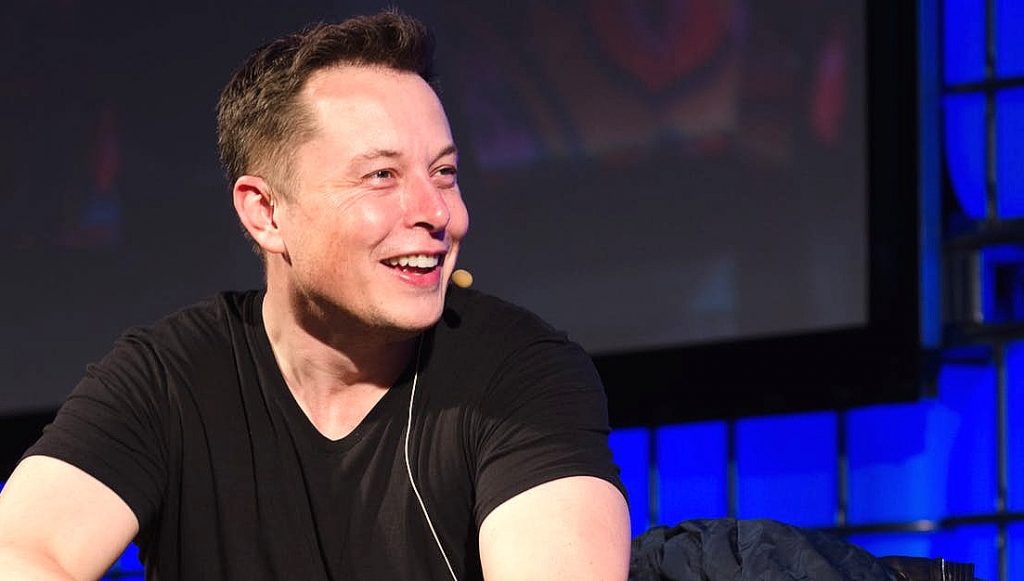
Elon Musk’s Neuralink puts computer chips in a Pig’s brain to treat disease.

On 29th August 2020, Elon Musk’s startup, Neuralink revealed a big experiment they are carrying out. The main source of the news is Reuters. Neuralink has put a coin-sized computer chip inside a pig’s brain for the past two months. The name of the pig is Gertrude and it is in the early stage of the experiment to analyze if the same concept can be applicable for human brains. According to Elon Musk, this can be a way to cure many diseases in the human body.

Neuralink is a neuroscience-based startup founded in 2016 by Tesla Inc and Elon Musk. Current experimentation of the company involves treating major human diseases by implanting wireless brain-computer interfaces. Musk delivered this news on a webcast last Friday. The timeline for human trials has not been mentioned yet.

Three little pigs

Musk has given a presentation virtually and it is called “three little pigs” demo. The demo showed Gertrude, the pig whose brain has been implanted with the computer chip in a position that controls the snout. After some coaxing by Elon Musk, it began performing some activities like eating off a stool and sniffing the straws which led to show striking changes in the graphs monitoring the neural activity.

Musk also revealed that the experimentation has been carried out in three such pigs having two brain implants each. The implanted pigs are physically indistinguishable from any regular pigs and there are no abnormalities in them. Moreover, the pigs with implantation have shown greater accuracy in limb movement during a treadmill run. The conclusion has been reached using the implant data. These pigs are now often described as “Cypork”.

Human trial

Previously, Musk has mentioned about the human trials beginning at the end of this year. But, on Friday, Elon Musk has not mentioned any specific timeline for the beginning of the human trail. Dr. Matthew MacDougall, the head surgeon of Neuralink said that the first clinical trial on humans will focus on a small group of patients suffering from paraplegia or paralysis. The company also confirmed that it has made many great innovations for the past four years and the long studies have come to an end. This might mean that the trails will begin shortly since the implantation in animals has shown positive results.

Elon Musk
Image Source: teslarati.com

Treating several diseases 

Elon Musk has said the implantation device can solve many actual diseases in the human body like memory loss, hearing aid, depression, and insomnia. There are thousands of electrodes present in the computer chip which interacts with the human brain to cure complex neurological problems. Severe conditions like Alzheimer’s disease, dementia, spinal cord, injuries, etc can be cured as well. The size of the Neuralink’s chip is approximately 23 mm in diameter. Musk described it as “a Fitbit in your skull with tiny wires.” So, it is impossible to distinguish a person with implantation from a normal person. In 2020, around 5.8 million Americans are diagnosed with Alzheimer’s dementia. So, an invention like this will be a big scientific and medical breakthrough. But, once it becomes a success, viability will be the main concern.

Expert’s feedback

In response to the high success rate of this experimentation, Graeme Moffat, a neuroscience research fellow from the University of Toronto said that Neuralink’s advancements are ahead of its time. The superior design of the computer chip with efficient power management, wireless technology, and smaller size makes it very innovative and impactful. One of the neuroscientists from Stanford University said that the company has made huge progress since last year’s demonstration about the chip.

But, some of them have contradicted the statement regarding the end of longer studies. A few fellow researchers around the world said longer studies might be required to determine the longevity of the device. Since the experts can read the brain waves after the chip has been implanted it will lead to a better understanding of the brain activity while suffering a disease.

Similar advancements

Musk’s neuroscience start-up, Neuralink has received $158 million in funding. But, he said that the main reason for Friday’s event was recruiting and not fundraising. Musk also spoke about AI and its role in this new Neuralink’s chip. He also said other companies like Kernel and Paradromics are carrying out similar experiments.

Google

US Government Accuses Google of Tying Products and Blocking Competitors.

The recent weeks have seen a rise in political unrest and the issuing of executive orders from the United States of America. The BLM protests have also set alight discussions and debates regarding news, biases on social media, and the freedom of speech. Meanwhile, the American government officials have been building a case against Google with regards to antitrust issues. The government is trying to prove that the search engine is bundling products together, and helping certain players have a competitive advantage over the others. The charges also claim that Google blocks out competitors using such strategies, making the market place unfair and uncompetitive. Here’s a look at what the case claims, and how it could impact the functioning of Google.

Case Builds Momentum

The Justice Department, in coercion with State attorneys, have asked executives from various firms to testify regarding how such practices have impacted them. They have also asked these firms regarding the operations of the Network Division, run by Google. The Network Division sells various services that concern itself with everything from brand strategy to advertisement publishing. These inquiries also focus on discounts, coupons, and features that Google offers advertisers using its products. Regulators are also asking how Google’s search business interferes with the Network Division and the way it sends out targeted ads. However, these executives have asked agencies not to mention their names and designations as they wish such information to remain private. 

Tying Products

Tying certain products together makes the sale of one conditional depending on the purchase of another. While this process isn’t illegal, using it to establish market dominance could be considered a breach of law. As per Gene Kimmelman, who serves as a senior adviser for the Public Knowledge Think Tank believes that using tools to maintain or create a monopoly by restricting entry of new players and blocking rivals could result in antitrust violations. As a result, American regulators are looking to file a lawsuit regarding competition against Google in the weeks to come. Once filed, this lawsuit will become the most massive monopoly suit since the American government sued Microsoft in 1998. That case as well focused on the tying of products that Microsoft made use of to promote Windows systems. 

Google in Similar Trouble

Google is now being asked the same questions, about two decades later. The interviewing of rivals started in July, and each round of questioning has become more detailed and distinct. Reports claim that several respondents used whiteboards to explain the more complicated processes regarding the ad tech market. However, Julie McAlister, who serves as the spokeswoman for Google, stated that Google’s digital ad tech service works across several crowded industries. As a result, these ads compete with thousands of rivals, leading to heavy competition and subsequent lowering of prices and the availability of improved choices for consumers. 

Google

Major Business

The Network Division is a highly successful service for Google, bringing in over $21 billion as revenue last year. However, the growth enjoyed by the same has been on the slower side, when compared to Google’s other ventures and services. Google always frames the Network Division as an aid to publishers who depend on Google for their digital ads. However, critics are quick to point out that Google owns and exploits much of the market. As a result, most advertisers end up being forced to use more Google products, rather than competing or rival products. The regulators are looking at sell-side, buy-side, and exchange-side software, all of which help the ad tech market in pushing out ads. Interestingly, Google offers and owns tools that help with all of these services and processes.

Problem Statement

According to Pramila Jayapal, who serves as a Democratic Representative, the major problem here is that Google controls all these entities. She also mentioned that this makes the ad tech sector sound like the stock market, without any regulation to ensure transparency and fair competition. Hence, to ensure the same, the government regulators are now asking Google about how it waives fees to publishers who use its tools and auction space on Google’s exchange software. They have also questioned the search engine’s decision to limit ad space buying on YouTube via its tool DV360 in 2015. Most rivals have stated that this move led to them losing out on a lot of video ad inventory. Google countered that most social media sites work similarly and that rival Amazon had found a way to grow even without accessing YouTube. 

Insider Trading Issues

Competitors also claim that Google utilizes its search engine to display ads unfairly. Such leveraging of their search business has helped Google account for a whopping 10% of the total publisher revenue on the internet. Rival firms also complained that this forced them to pay for Google’s ad exchange software because the search engine has made itself the most prime real estate for ads. Complaints also focused on how Google passes information between its arms, leading to customer targeting and insider trading. The same complaint was raised by the UK Market Authority’s report on Google’s conflict of interest published last year.

In July, CEO Sundar Pichai dodged several of Jayapal’s major questions regarding Google’s market share. Rather, he focused on how Google shares its revenue with other websites, making it a low-margin business for them. The hearing also brought out several internal emails from Google that proved claims regarding insider information trading. It will be interesting to see what more information future hearings will unearth. Also, we will have to wait to see how the hearings might level the playing field by restricting Google’s access and control over the ad tech market.

tiktok

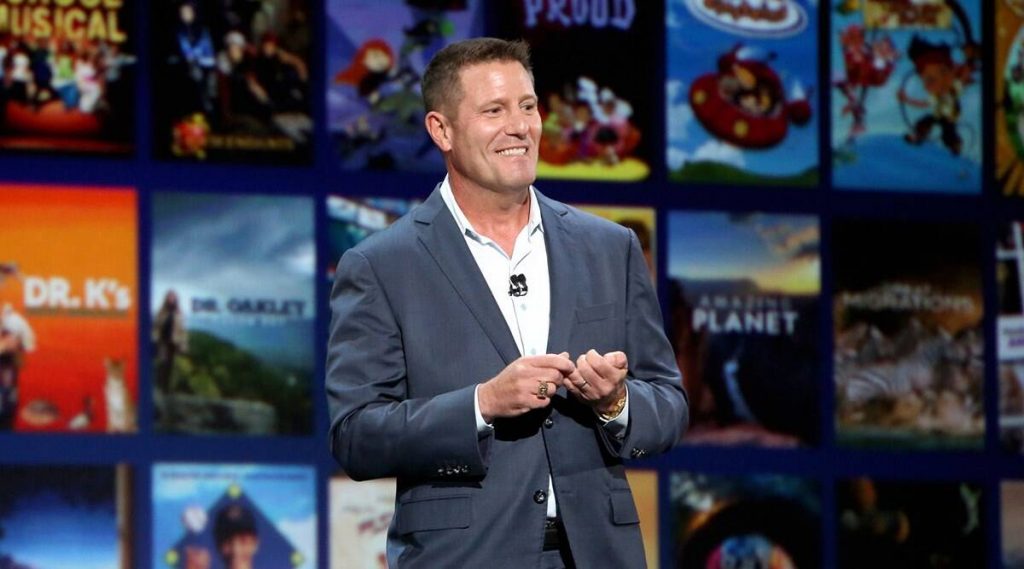
Kevin Mayer TikTok CEO resigns as Trump administration plans to ban.

Media has been flooding with the news regarding Chinese apps and its role in privacy breaches since the outburst of the novel coronavirus. Once the pandemic took a toll on all our lives, from vivid facts to conspiracy theories have come up regarding China being responsible for this havoc. Though the other nations suspect COVID-19 as a biological weapon, there is no strong evidence supporting it. But, seeing China as a threat to the world especially the U.S., Trump administration decided to ban the Chinese apps mainly TikTok and WeChat.

The Big news 

The relationship between China and the U.S has gotten stale with Trump announcing the ban on Chinese apps. To expand the Clean Network, Trump gave a deadline until mid-September to sell the assets of TikTok to any other company. With Trump accusing such Chinese apps of information theft, political battles have increased since the last month. Amongst this grave tension, Kevin Mayer, the new CEO of TikTok decided to step down yesterday. In the meantime, Vanessa Papas, the current general manager of TikTok will take his position as the interim head.

Why Kevin Mayer stepped down?

It has been only 100 days since Kevin Mayer, former Disney executive joined the most famous small video making Chinese app, TikTok owned by ByteDance. Kevin Mayer made a big decision resigning from Disney to become the CEO of TikTok, but unfortunately, everything went haywire. After Trump gave an order earlier this month to ban the Chinese apps like TikTok and WeChat, the disturbance created between Beijing and Washington.

Before the ban of TikTok in the U.S., India banned all the Chinese apps mainly because of the dispute regarding the LAC. With all these political tensions not stopping anytime sooner, Kevin’s scope in TikTok might not go as expected. So, his decision to step down from the company is completely understandable, said a TikTok’s spokesperson to TechCrunch. Moreover, only a few days back TikTok sued the U.S. government for false accusations against the company.

Kevin Mayer
Image Source: indianexpress.com

The fight that both the TikTok and the U.S. government have picked up will have harsh consequences in the future for both sides. Kevin Mayer didn’t expect political tension of this intensity to fall upon his reign and hence he decided to step down. Moreover, the timeline of becoming the newest CEO of the company and the political rivalry has clashed coincidentally. But, Kevin has all the right to get far away from this growing tension and seek a better career opportunity.

Why did Trump order a ban on Chinese apps?

On 6th August 2020, Trump signed an executive order thus banning TikTok and WeChat within a timeline of 45 days. Trump accused these Chinese apps of stealing data that might harm the privacy of the U.S. citizens and compromise the national security of the nation. He also supported India’s act of banning 59 Chinese apps and decided it is time the U.S. takes some strict action against this information theft. It banned all U.S. citizens to conduct any transaction through these platforms or any brand from the U.S. to advertise their products.

This was a big blow for TikTok as the U.S. served as one of the biggest markets for the platform. In 2020, TikTok gained revenue of $200 million for the U.S. alone. Getting banned from the U.S. brought a huge loss for the company. Moreover, with China being thrashed everywhere in social media for the COVID-19 pandemic, the company should keep fingers crossed until any other nation takes a bold step.

Bargaining over the U.S. assets of TikTok

After Trump administration imposed banned on the U.S. operations of TikTok, many companies have come forward for buying them. Microsoft being the first company to take interest in buying the U.S. operations of TikTok, Trump was interested to sell it. Meanwhile, Twitter showed interest in buying the company’s U.S. assets but this decision was questioned. The market capitalization of Twitter is almost equal to the TikTok’s value of U.S. operation while Microsoft’s valuation is in trillions. So, it becomes crystal clear who might win the bidding. Apart from Microsoft and Twitter, Oracle is the third bidder. But, till now Microsoft is winning the race.

whatsapp

Whatsapp Aims to Improve Its Interface with New Beta Version for Android

Whatsapp is coming out with a new beta version for Android that has some new updates and features. The latest update which came out today features a new group call ringtone and also has new sticker animation features. Furthermore, the update, which is Version v2.20.198.11 is a significant sign that the messaging app is working on improving its intuitiveness and interface with regards to calling. Here’s a look at the significant additions and updates that the beta version brings with it.

New Update of Whatsapp

If anything, this new version is proof that the voice, video and text messaging application is looking to improve user experience. The beta version also tests out a new Call UI which will feature all buttons at the screen’s bottom. Moreover, WhatsApp’s beta version has some significant tweaks for animated stickers. While animations of shorter duration will now loop for a maximum of eight times, longer animations will have shorter loop cycles or iterations. Since the animation feature is a recent roll-out by Whatsapp, the new update will try to make the experience smoother for users. The recently launched animated stickers have been quite a hit with users, and the update will only help them grow in popularity. Hence, sticker users will laud the update for making their experience better. The same change will feature in WhatsApp v2.20.198.11 beta, and experts expect these versions to become stable in the coming weeks.

Better UI for Calls

Furthermore, v2.20.198.11 beta also features new ringtones for group calls and will help differentiate between private, and group calls on WhatsApp. All these new changes will go a long way in assisting WhatsApp to improve its user interface for calls. The shifting of buttons to the bottom of the screen will make it easier for users to control the application while on a call. Screenshots released by beta testers show the screen having five buttons at the bottom. The five buttons displayed include information, audio, video, messaging and camera switch buttons. However, since this feature is still in development, it is not a part of the newest beta released by WhatsApp. 

Disappearing Texts

WABetaInfo, a website that follows feature updates for WhatsApp, also reported that the new update features the ability to disappear texts after a preset time. This new feature has been much talked about by fans, as it resembles a texting option that Instagram offers. As per their reports, the new feature will allow users to send text messages that disappear after a while. However, they also state that users have not received any information regarding this feature, making a few believe that it will not be a part of the new update.

Further Changes

Also, the new update sees WhatsApp making the camera shortcut available to users. The messaging application has brought the camera icon in place of the Rooms shortcut, helping make it easier to access. As a result, the new update will feature Camera, Audio, Contacts, Gallery, Audio, Room, Location and Document shortcuts. Such an update follows WhatsApp’s advanced search characteristic. The new search feature makes it easier for people to search for items within the app by filtering various kinds of media. It also allows users to search for documents and links. However, users must note that all these features are a part of the beta version of the application. The company will continue to work on them and refine them before they make them a part of the actual app. While experts expect the stable version to drop within a few weeks, some of these features might not make it in time for the launch. In such cases, we will have to wait for the next update to use them.

WhatsApp keeps releasing beta versions to test new features and improve user experience. Over the years, they have rolled out several important updates that added a sleuth of new features to the application. The messaging application, therefore, takes an active effort to provide users with a seamless and well-integrated user experience. Also, since the company has not officially released a statement regarding the features to expect, it is safe to assume that a few are still under development. While official reports have not hit the news yet, experts do believe that most of these features will find a place for themselves in the new update. The advanced search option, new ringtone and animation features along with a better UI for calls will ensure that users stay satisfied with their experience using the application. 

tiktok

TikTok Strikes Back by Suing the Trump Administration for Ban

The COVID-19 situation has led to several political and economic issues with certain nations beginning a trade war with China. The US has been very vocal with its displeasure regarding Chinese handling of the health pandemic. This has led to the souring of the economic and political relationship between the two nations. As a result, President Donald Trump stated that certain Chinese products and services would now not be available in the US. Furthermore, the American government has banned Chinese manufacturers from making excessive use of American technology. The most shocking of these moves was the one to ban TikTok in the US. However, reports state that TikTok has sued the Trump Administration for the same. Here’s a look at how the situation played out and what it could mean for the viral video platform.

TikTok Strikes Back

Reports state that the viral video-sharing platform filed a lawsuit on Monday against the executive order brought out by Trump. The lawsuit says that the order does not have enough evidence to deploy such strong measures against the use of the app. The company also states that the imminent ban on the app from September 20th violated its right to function within the US. TikTok has been facing scrutiny from around the world due to its ownership by ByteDance, a Chinese tech company. The lawsuit was filed in the US District Court of California, and lashes back at the executive order that came out on August 6th. It further claims that the executive order did not follow the due procedure or prove that the app was a threat to American security

Politics, Not Science

TikTok is an immensely popular video sharing platform that boasts of over 100 million users in America. The lawsuit filed by them claims that the company did not get an opportunity to put across their point. Furthermore, the lawsuit states that concerns regarding national security did not have any merit as there is no data to back these claims. The complaint also says that the order holds no value as it is a political stunt rather than an action taken due to fear for national security. The company also wrote that IT experts had rejected the order stating that it was more of a political tool rather than one backed by actual scientific data.

Executive Order by Trump

President Trump’s executive order, if it does come into effect will lead to a ban on American companies to engage or be a part of transactions with ByteDance, the company that owns TikTok. The order said that the data collected by TikTok from American users would help the Chinese Communist Party gain insights into personal details of American citizens. It also blamed the Party for snooping on US citizens, making the application a threat to national security, unless it changes ownership to an American company. 

Similar Views in India

The executive order came right after India banned TikTok in June, along with another 58 Chinese applications. India too had cited national integrity and security as reasons for banning the application. However, TikTok has vehemently denied both these claims and says that it has no ties with the Chinese government. Furthermore, TikTok also refuted claims that it always censored content that was critical of the Chinese system or government. However, CIA analysts reported to the White House that the Chinese Intelligence services could exploit the data that TikTok possesses.

Global Interest

TikTok had also put out a blog earlier this month wherein it called Trump’s order a political move that undermines global companies, and their trust in the US. However, as a result of these events, tech giant Microsoft had expressed an interest to purchase TikTok’s American, Canadian, Australian and New Zealand divisions. But the deal by Microsoft requires the acquisition to happen before September 15th, which is the date the order comes into effect. 

The Wall Street Journal also reported that Twitter was in talks to acquire the video platform, but that chances of the deal happening were low. While Apple denied having any interest, Alphabet, which owns Google too had expressed an early interest. However, as of now, there is no confirmation or signs that any of these talks have gotten very far. Also, the filing of this lawsuit shows that TikTok wants to preserve its identity, rather than selling out to an American company. It will be interesting to see whether the American courts take the lawsuit seriously, owing to how the order comes directly from the President.