Your Tech Story

Tech News

Google

Google Trusted Contact Service is going to be discontinued from December 2020

On 16th October 2020, Google announced that it will be shutting down the company’s trusted contact service. Google’s trusted contact service was launched in 2016 to enable location sharing for friends, family, and emergency contacts. A service that was solely focused on location sharing so that you feel safe when you are outside or send your location so that your family can track you for your safety is now shutting down. The main reason behind the ceasing operations of Google’s trusted contact is the same functionality can be carried out by Google Maps nowadays. This service was available for both iOS and Android where the activity and device battery status of your trusted people were visible.

Google’s Trusted Contact Service will stop working on 1st December 2020. Till then you can still use the service on your smartphone to share the location. One disadvantage or at times advantage of using trusted contact service is that if someone requested your location and you didn’t respond, they will receive your location automatically. At the time of emergencies, when one is unable to respond this feature is a savior.

Google Trusted Contact Service

In December 2016, Google rolled out the app of trusted contacts to keep track of friends and family. With an increasing number of crimes outside our home especially against women, this was a thoughtful initiative taken by Google. Moreover, by installing and using this app the parents can also track the activity of their kids. If you are in danger, chances are you won’t be able to pick up a call leading to growing tension in your family. So, if they know your location it will be easier for them to reach you.

Using this app, you can create a list of trusted people who can request your location. The users will have to approve the list of people manually who can send the request for location. And, once a user sent a location request you will have five minutes to accept and request or deny it. If the person didn’t opt for any option then the location will be sent automatically to the requested person. If the network connectively is poor or completely cut off the other user will receive the person’s last updated location. There is also a feature of live tracking in the app. When the app was launched, it was made free.

Google

Sharing location in Google Maps

Now that after a month we won’t be able to use the trusted contact app of Google, we need to have a look at our alternate option. Google Maps is a very diverse app with new features getting added at quick intervals. If you don’t use Google Maps, it is better to get a hang of it as it is easy to use and gives you location privacy as well.

How to share your location with someone using Google Maps?

  • First, open the Google Map on your phone and sign in.
  • Tap on the profile picture icon followed by location sharing.
  • Click on New share to send your location to someone.
  • If the person is in your Google contacts you can easily find him or her.
  • Create a time limit you want to avail for location sharing and then select the contact and tap on Share.
  • If the person doesn’t have a Google account then you can simply copy the location link by tapping on Copy to Clipboard.
  • You can then send the link via any social media or phone messaging.
  • If you want to stop sharing the location then again open the app, go to location sharing, and click on Stop.

How to request someone’s location on Google Maps?

  • First, open Google Maps and click on the profile picture icon.
  • Go to location sharing and select the contact with whom you one to request location.
  • Tap on the Request option.
  • The person will receive a notification with your email address and that you requested the location.
  • Then the person can check your profile, accept the request, deny the request, or block your profile so that you cannot request anymore.

There are many other features on Google Maps that can come in handy. But, these two are the very basic and most important features you should know how to use.

Zoom

Zoom is finally rolling out its first phase of End-to-End Encryption offering

On 14th October 2020, Zoom announced that it will be rolling out End-to-End Encryption (E2EE) from next week. From the beginning of the pandemic this year till now, Zoom has experienced both high stiff success and failure simultaneously. In the first few months, the new users in the Zoom platform accelerated at a very high rate. But, after the security system of the Zoom has been compromised, people started withdrawing from the platform as their privacy was at risk. Soon after the Zoombombing, we heard that Zoom launched End-to-End Encryption which was nothing but a hoax. But this time Zoom is genuinely starting E2E for the participants using the platform.

Zoom, in one of its blog posts, said that they are excited to roll out the E2EE in the coming week as a technical preview. For the first 30 days, they will be soliciting feedback from the users both free and paid. Zoom is rolling out the feature across the world and the host can add a maximum of 200 participants in an E2EE meeting and enjoy a more private and secured meeting. This is Phase 1 of the E2EE offering. There are three more on its way. Eric S. Yuan, CEO of Zoom, said that the company is rolling out E2EE to make Zoom the most secure communication platform in the world.

More about the Zoom E2EE offering

In a Zoom meeting, the Zoom cloud generates encryption keys that are distributed among the participants attending the meeting via the Zoom app. But, with the E2EE offering of the platform, the host will generate the encryption keys which will be distributed among other participants using public-key cryptography (generated in the device of the individual participant). This way the encryption keys cannot be decrypted and the content will become less vulnerable to leakage. The E2EE offering provided by Phase 1 is the same as the end-to-end encryption provided by any messaging platform. Zoom is striving to roll out this offering since May as the reputation went down due to compromised security.

Who gets the accessibility? 

At first, the company decided to roll out this feature exclusively for paid users. But, after receiving plenty of criticism the company has decided to make it available for both paid and free users. In this case, the free users need to go through an extra verification process to make sure that the user is genuine and to reduce the chances of any abusive content. To create or join an E2EE meeting, the user might need to verify the phone number or provide any additional piece of information.

Zoom
Image Source: prosyscom.tech

How to enable E2EE?

To participate in an E2EE meeting, the user must enable the E2EE meeting at the account level. Under Encryption select “End-to-end encryption” and opt-in to the same on a per meeting basis. If you are hosting a meeting, you can enable the E2EE setting for account, group, and user-level and the same can be locked at account or group level. The participants can join an E2EE meeting via Zoom desktop client, mobile apps, or Zoom Rooms.

After you enter an E2EE meeting, you can look at the upper left corner where you will find a green shield logo with a padlock in the middle of it. This is the indication that your meeting is E2E encrypted. This is similar to the GCM encryption logo but here the checkmark has been replaced with the padlock. The security code of the host is also visible to the participants so that they can verify if all the participants can see the same code. Before rolling out Phase 2, this is the level of security Zoom will provide to each one of its users.

Accessing Features

Since this encryption is the first phase of the four, there are certain limitations. Some of the limitations are you won’t be able to join before host, you will not have access to cloud recording, no access to streaming, live transcription, Breakout Rooms, polling, private chats, and meeting reaction. Though you will have an option to enable E2EE, one must prioritize if accessing all these features is more important than an extra layer of security. The next phase of the E2EE offering is tentatively scheduled for 2021.

DJI

DJI Announces two new gimbals: Ronin S 2 and Ronin SC 2

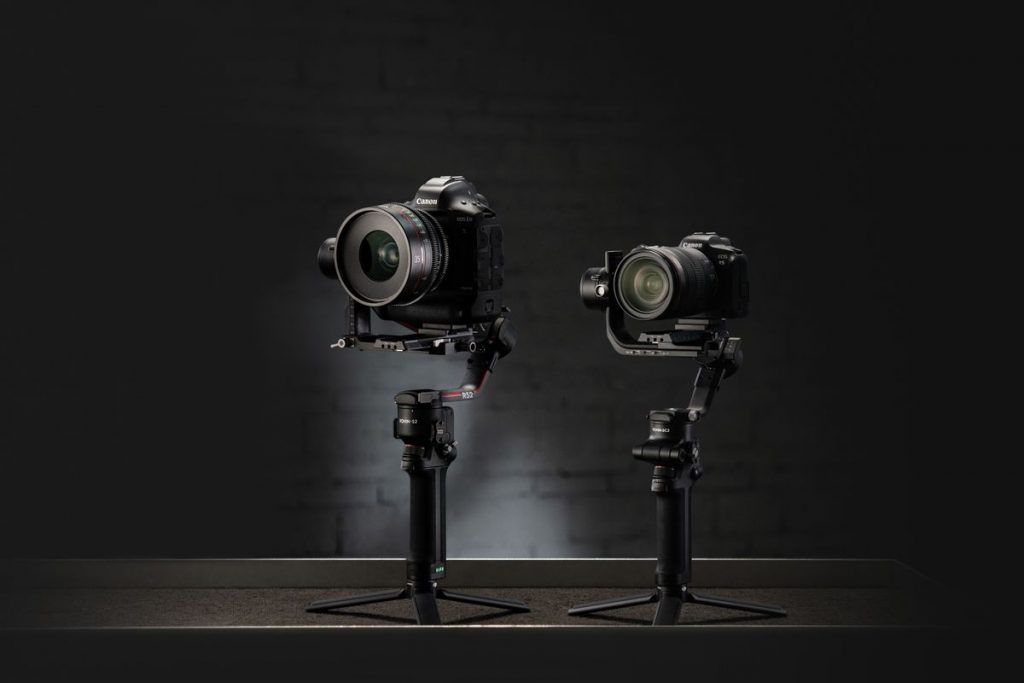
Camera enthusiasts have been expecting good news regarding DJI’s new cameras for a while now. The company teased information back in September, promising some new products in October.  While enthusiasts have been waiting patiently for the drop, there were a lot of speculations regarding the new gimbals. Well, DJI has quelled all rumors by announcing the new models themselves. On Wednesday, DJI announced the release of two gimbals, named Ronin S2 and a smaller model named Ronin SC 2. Here’s a look at everything you need to know about the gimbals and their prices.

DJI New Gimbals

DJI New Gimbals
Image Source: theverge.com

Both the Ronin S 2 and the Ronin SC 2 are three-axis gimbals that have a variety of upgrades. For instance, both of them feature heavier payload capacities, improved motors, lighter materials, and software updates. Let us look at some of the hardware changes implemented on the RS 2.

Deeper Look at RS 2

The RS 2 is the more professional out of the two, being made out of carbon fiber. The usage of such a light-weight, yet strong material makes the RS 2 1.3 lbs lighter than the Ronin S. The RS 2 weighs only 2.8 lbs, and can support a payload of 10 lbs. While DJI claims the gimbal can hold hearing rigs, that might not showcase ideal performance due to the added weight. The device comes with a 1.4-inch touchscreen display situated above the joystick. The touchscreen displays the camera data, device settings and can transmit what the camera is recording as a live feed. However, the main purpose of the display is to enable active tracking without attaching smartphones to the top of the camera.

Further Updates

DJI is adding a unique Titan Stabilization Algorithm, which will help optimize the shooting style. This predictive technology will help cut down on the requirement for manual user input regarding acceleration, speed, and deadband settings. Another software enhancement the device features is the SuperSmooth capability. It helps smooth movements out when shooting lenses of focal length up to 100mm. Other changes that will help filmmakers include the movement of the focus wheel onto the front of the handle. This positioning makes it easy for users to interact with the wheel using their index finger. Furthermore, both models are compatible with both Arca Swiss and Manfrotto plates. The balancing knob allows users to fine-tune their axis, helping reduce set-up time between shots. 

Closer Look at the Ronin SC 2

The RSC 2 is a smaller model built for mirrorless cameras of smaller dimensions. The new design features a foldable design and several software updates. The device weighs 2.65 lbs, considerably lighter than the RS 2 but more massive than its predecessor which weighed only 2.4 lbs. The introduction of improved motors allows it to carry a payload of weight 6.6 lbs. Furthermore, DJI says the gimbal is perfect for more powerful camera-lens combos, with an example being the Panasonic SH1 with a lens of focal length between 24 and 70mm. The foldable design allows users to hold the device in sling mode, making it easier to shoot closer to the ground. Furthermore, there is no i-inch screen above the handle, making low shots easier and more comfortable.

Extra Features

Both gimbals have built-in batteries that last for 12 hours and come with an upgraded quick charge function. This function enables users to charge the device for two hours’ worth of usage within fifteen minutes! Along with the usual modes such as panorama, vertical and time-lapse, DJI is adding a Time Tunnel mode. Time Tunnel essentially captures hyper lapses while doing a 30-degree camera roll.

Both the models go on sale today and will cost users $849 and $499 respectively. DJI is also releasing a Pro Combo package that includes a RavenEye Image Transmitter, phone holder, carrying case, and separate focus motor. The entire package will set filmmakers back by $999 for the RS 2 and $739 for the RSC 2. The images of both gimbals leaked online one day before their unveiling, through the Twitter account of user OsitaLV. The images seem to be from a DJI store in China, and the pictures quickly went viral on social media. With all this interest and buzz on social media, both these gimbals look like they will become hits with the film and photography fraternity!

Apple

Apple iPhone 12 launch event revealed a lot of new and affordable tech

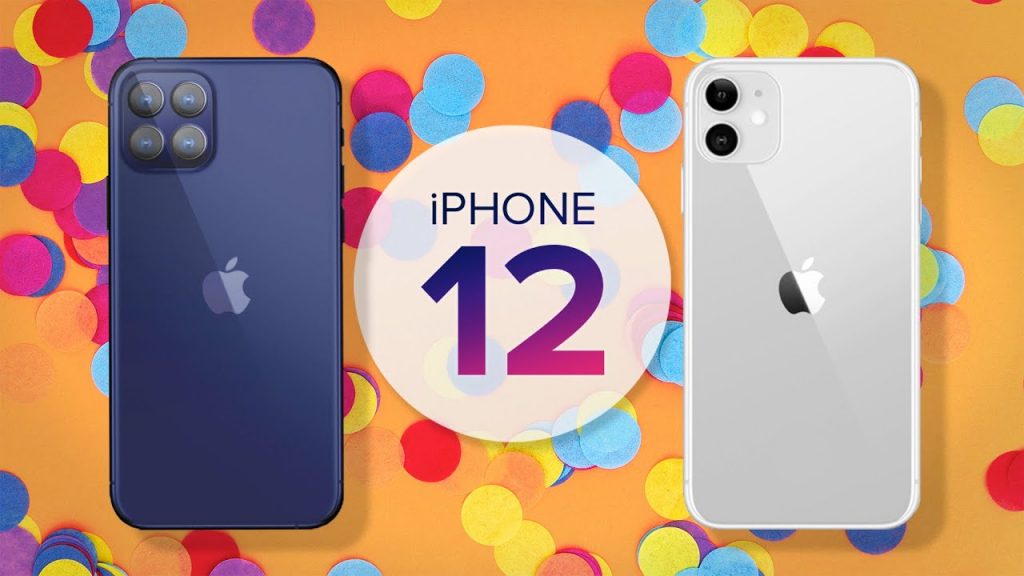
The Apple iPhone 12 launch event revealed a series of new gadgets especially the mini version of the existing smart devices. They are affordable and are equally efficient that gives the users an authentic iPhone experience. The iPhone 12 series along with the pro-line-up consists of 4 smartphones including iPhone 12, iPhone 12 Mini, iPhone Pro, and iPhone Pro Max. Apart from the launch of the iPhone 12 series, Apple also launched HomePod Mini, a smaller and affordable version of the HomePod. Also, this is for the first time in Apple, that the new smartphones will have 5G connectivity.

There are many modifications in the iPhone 12 series starting with larger screens, better camera systems, new A14 Bionic processors, etc. So, let us have a detailed look at the specifications of these devices and prices in India as well.

Specifications of Apple iPhone 12 series

Apart from the fact that the iPhone 12 series supports 5G connectivity it also supports mmWave 5G in the United States. iPhone 12 comes with an OLED display screen and Ceramic Shield glass technology making it more durable. All the smartphones will have iOS 14 along with the new A14 Bionic SoC. This new A14 is a six-core processor with a four-core GPU which will make these smartphones the fastest of all. The new camera system of the iPhone 12 consists of two wide-angle sensors of 12 megapixels each. The photography results are claimed to be better in low-light photography as compared to the smartphones of the previous series. The company has also enabled its night mode for the front camera and also for video recording. It is a brilliant choice for users to do videography, especially in low-light. The new MagSafe charging support of the iPhone provides a maximum of 15W of wireless charging. The company is also working towards releasing a charger that will allow the user to charge iPhone 12 and Apple watch using the same charger. Apple will not provide headphones and charging adaptor in the box this time.

Apple
Image Source: cnet.com

The iPhone 12 mini has the same design, camera quality, processor, Super Retina XDR-display, and connectivity as that of the iPhone 12. The main differences between these two products are different in price and size. The iPhone 12 Mini comes with a 5.4-inch display and a lot lighter in weight.

The size of the iPhone 12 Pro is 6.1 inch and that of the iPhone 12 Pro Max is 6.7 inches. Apple has incorporated its Deep Fusion machine learning technology in the cameras to make the overall picture and video quality better. iPhone 12 Pro has three triple rear cameras (two wide-angle, one telephoto) while the telephoto sensor of the iPhone 12 Pro Max is better with a 5x zoom range and 2.5x optical range. The Pro series also has the option of HDR video recording and Dolby Vision HDR.

The price range of the new iPhone 12 series

Starting with the cheapest and smallest of all, the price of the iPhone 12 Mini in the Indian market is approximately Rs 69,900 for 64GB, and that for iPhone 12 is Rs 79,900. Outside India, the price of the iPhone 12 Mini is $699 and that of the iPhone 12 is $799. In India, the price of iPhone 12 Pro is Rs 1,19,000 (starting price) for 128GB base variant and for the iPhone 12 Pro Max is Rs 1,29,000 (starting price). Outside the Indian market, the price range is $999 for iPhone 12 Pro and $1,099 for iPhone 12 Pro Max.

Features of the HomePod Mini

Apple incorporated the S5 processor in HomePod Mini. The company has invested more time to improve the audio quality of the device. The new HomePod mini has computational audio technology that can automatically optimize the sound for your room. Moreover, if you turn on two HomePod Mini in one room, they will sync automatically and play music like a stereo pair. The HomePod mini will go through a major upgrade when iPhone’s U1 ultra wideband chip will be able to establish a stable connection with HomePod Mini helping to send feedback and audio handoff. Siri is the most important part of HomePod Mini as it will also recognize the voice of your family members and will give you a summary of the day when asked for an update. The price of Apple HomePod Mini in India is Rs 9,900.

Digital Tax

All You Need to Know About OECD’s Digital Tax Reform

It looks like the tech giants will have to wait for another year to see how the impending digital tax reforms will take place. The world is witnessing a significant shift in the way it views Big Tech. With the EU planning on implementing a digital tax on such companies, most experts were looking forward to seeing how the reforms will take shape. However, the OECD released a statement saying that the new global tax will not come into force this year. Here’s a look at everything you need to know about the Digital Tax and its impact on tech giants.

A Year’s Wait Left for Digital Tax

The Paris-based OECD was to head a panel that would lead negotiations between countries to establish the Digital Tax. The organization would have been in touch with over 140 different nations to solve the taxation issue faced by Big Tech. The Digital Tax reform would for once standardize the taxation norms of companies such as Google and Facebook. However, the organization released a statement on Monday stating it would require an additional year to finalize the deal. Pascal Saint-Amans, who servers as OECD’s Head of Tax Policy, said that the glass was half-full. While the deal is nearly ready, it still requires political accord to push through and become a law, according to Pascal. He went on to say that the organization expects the deal to come out ‘sometime in 2021’.

Future in the Balance

Most experts were hoping the bill would attain resolution by the end of this year. The law is a move by the EU to ensure that large technology companies pay the fair share of tax as per their operations in the countries they function. Most EU officials believe that such companies are not paying the right amount, and that tax calculation should occur in the location of their activity, and not just their headquarters. This would extensively enlarge the sphere of taxation of such companies, as they are prevalent throughout the EU.

Digital Tax
Image Source: Pixabay.com

OECD for All

Throughout the whole discussion, the OECD has acted as a marshal demanding more accountability from the Big Tech. They are pushing for standardized tax rules and regimes on a global level due to the ever-reaching impact of such large tech firms. However, the various governments will have to agree to their proposals before they can become a law, and in turn, a reality. Angel Gurria, who serves as the head of the OECD, believes that lack of such a bill will lead to a trade war. However, the slow progress of such reform has led to several countries implementing changes of their own accord. The UK has been a vocal supporter of such a Digital Tax. However, the slow progress finally led to the country announcing its own Digital Services Tax at the beginning of the year.

Trump Wages War

Such a taxation reform led to complaints from the US, which called it an unfair levy that needed a trade probe before implementation. The Trump administration went as far as to threaten products from Europe with additional tariffs unless they withdraw the reform bill. The US believes that such laws deliberately and specifically and target American corporations. Trump also stated that the US was considering imposing further taxes on French wine sold in the States.  Since the US is the biggest market for French wine, making up almost 25% of total sales in 2018, this could turn into a massive trade war. However, President Macron’s office stated that it would stay firm in its stand, and would try to reach an amicable decision through bilateral talks.

Furthermore, the French Parliament passed a law that taxes digital companies if their French revenue goes over €25 million and if global income exceeds €750 million. While the law does not target companies of any nationality, it could have an impact on Big Tech firms, such as Facebook, Google, Amazon, and Apple. All these moves will help prevent such companies from avoiding stringent taxation by setting up headquarters in low-tax territories. Countries, such as Austria and Spain, have also vowed to implement Digital Tax laws, like Britain and France.

The OECD has been trying for two years to set up a global front to ensure all such companies may appropriate taxes. While the tax laws might take a year more to bear fruition, the result could have a massive impact on global economics. However, one this is for certain. Global opinion regarding the power yielded by big tech corporations is changing. While people never batted their eyelids regarding the growing influence of such companies, the tides seem to be shifting. Calls for better regulation regarding data privacy and data taxation might lead to the dawn of a new digital revolution.

Oxygen OS 11

Oxygen OS 11 rolling out for OnePlus 8 and 8 Pro Smartphone.

On 10th October 2020, OnePlus announced that the company will be rolling out Oxygen OS 11 for OnePlus 8 and OnePlus 8 Pro in India. The operating system Oxygen 11 is build based on stable Android 11 and this is for the first time the world is witnessing the fastest rollouts of Android 11 for a smartphone. With the launch of Oxygen OS 11 last week, and the scheduled launch of OnePlus 8T on 14th October, we can assume that OnePlus 8T will come with Oxygen OS 11.

In August of this year, the company launched the developer version of the OS followed by launching two open Betas for Oxygen OS 11 in September. Now, the stable version of the OS has been finally released which will also available for OnePlus 7T, OnePlus 7T Pro, OnePlus 7, OnePlus 7 Pro, OnePlus 6, OnePlus 6T, and OnePlus Nord in near future. The OS comes with many modified and new features and the company says that while installation the users must make sure the battery is a minimum of 30% in phone and storage of a minimum of 3GB is available.

Oxygen OS Features in the Beta 2 version

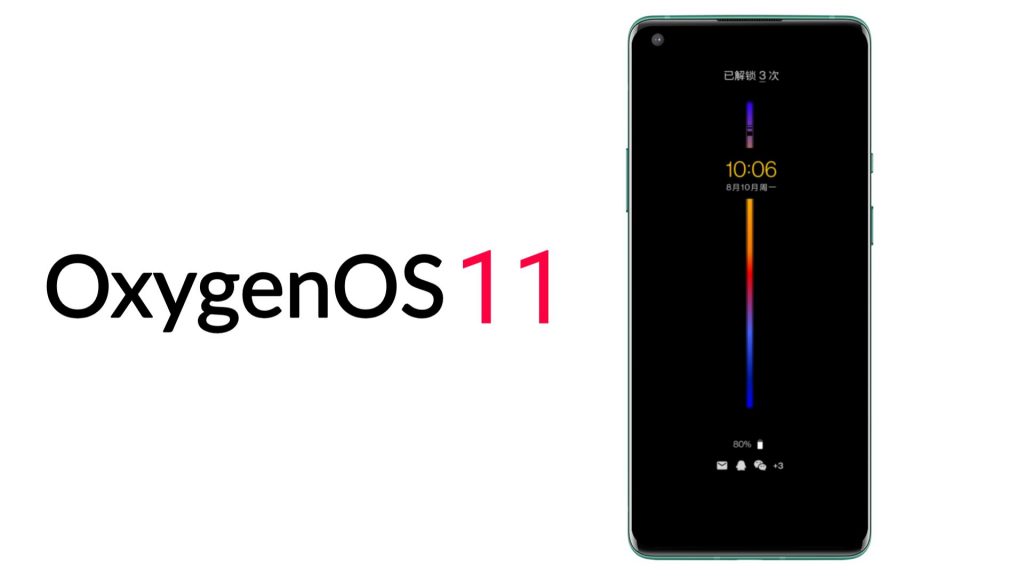
The Beta version of the Oxygen OS 11 was released in September and it came with a handful of new features. While releasing the Beta version of this OS, the company made many fixes for system optimization. Some of these fixes included repairing the black screen issue that the users face while clicking on the ‘Tips & Support’. Another major failure in the Beta one version of OS 11 is that it failed to activate Google Assistant in many situations which were fixed in this version. An ambient display feature was added to bring some chic style to your smartphone. This display feature was brand new and it is known as the ‘canvas’ feature which “can automatically draw a wireframe picture based on a lock screen photo on your phone”.

Before releasing the Open Beta 2, the HD icon was not centered on the call log and there were some issues with widgets not responding at times. They were all fixed in the new version. The company also fixed the system stability and optimized the power consumption for the latest 5G connectivity. Now, let’s have a look at the stable version of Oxygen OS 11 that rolled out last week.

Features of Oxygen OS 11

Oxygen OS 11
Image Source: gizchina.com
  • System Updates

Oxygen OS 11 comes with a brand new UI design so that the users get more comfortable using it. The company added a new weather UI that dynamically switches between sunrise and sunset. It has also improved efficiency and optimization for many third-party applications.

  • The Smart Display

A new feature, Always-on ambient Display has been added. All you have to do is go to Settings followed by Display and then turn on the Ambient Display. With the collaboration of Parsons School of Design, the new OS has added a new clock feature that changes according to the amount of data used. To enable this feature go to Settings followed by Customization and Clock Styles.

  • Modes for your different moods

With every application and OS eventually adding the dark mode, we are kind of getting addicted to it. So, the company has added a new shortcut to enable the dark mode in your phone. You can also enable the ‘turn on automatically’ feature that also helps in changing the mode from sunrise to sunset automatically. Apart from the dark mode, OnePlus also included 5 new themes under Zen mode. A group feature has been included in the Zen mode which allows you to invite friends and enable this mode together.

  • The Gaming arena

OnePlus has added three new ways of notification so that you have an uninterrupted gaming experience. The options are text-only, heads up, and block. Many new gaming tools have also been added for the Fnatic mode. A quick reply feature has also been added for Whatsapp and Instagram along with a mis-touch prevention feature.

Apart from all these new features, the gallery has also been optimized to create weekly videos automatically from saved pictures and videos. The image preview is also faster.